稀缺性

Search documents
帮主郑重:比特币年内涨幅全蒸发,机会还是陷阱?
Sou Hu Cai Jing· 2025-11-17 06:08
Core Viewpoint - Bitcoin has experienced a significant decline, dropping from a historical high of $126,000 in early October to below $93,700, erasing over 30% of its gains for the year and entering a "technical bear market" [1] Group 1: Reasons for the Decline - Institutional investors are withdrawing large amounts of capital, leading to a loss of core market support, with Bitcoin ETF inflows shifting from stable to net outflows [3] - Changes in the macroeconomic environment, including the impact of Trump's tariff policies and a cooling of Federal Reserve rate cut expectations, have negatively affected risk assets, with Bitcoin being sold off as a high-risk asset [3] - A leveraged bubble has burst, resulting in 160,000 liquidations within 24 hours and a total liquidation amount of $580 million, exacerbating losses and triggering a chain reaction of sell-offs [3] - Long-term holders are accelerating their sell-off, with some early investors viewing $100,000 as a psychological profit-taking point, selling at a rate of over 1,000 BTC per hour [4] Group 2: Implications for Medium to Long-term Investors - Caution is advised for short-term investors as market sentiment is extremely pessimistic and institutional funds have not yet returned, suggesting a need to wait for stabilization signals before attempting to buy the dip [6] - The long-term investment thesis remains intact due to Bitcoin's scarcity and institutional demand, with potential buying opportunities if prices drop to key support levels (e.g., $60,000 to $65,000) [6] - Investors should be wary of high leverage traps, as the volatility in cryptocurrency markets can lead to significant losses; focusing on spot trading is recommended [7]

“冰箱贴比冰箱贵”,背后藏着哪些市场密码
Xin Jing Bao· 2025-10-14 08:13
Core Insights - The rising trend of refrigerator magnets being more expensive than refrigerators reflects a shift in consumer behavior and market dynamics [1][6] - The price increase of refrigerator magnets is driven by high profit margins on low-cost items and the emotional value they provide to consumers [2][7] Profit Margins and Market Dynamics - The profit margin for refrigerator magnets is significantly higher than that of refrigerators, with the latter's gross margin declining from 19.94% in 2016 to 11.15% in 2024 due to market saturation and competition [2] - In contrast, low-cost items like refrigerator magnets can have profit margins that reach several hundred percent, making them more lucrative for retailers [2] Manufacturing Costs - Manufacturing costs for refrigerator magnets include direct material, labor, and manufacturing expenses, which can be substantial despite the low material costs [3][4] - The complexity of designs and the need for manual coloring contribute to higher production costs, with some molds costing between 200,000 to 500,000 yuan [3][4] Cultural and Emotional Value - Refrigerator magnets serve as cultural and emotional artifacts, often linked to travel experiences, which enhances their perceived value [7][8] - The trend of collecting and showcasing refrigerator magnets on social media platforms indicates a growing consumer preference for items that carry personal significance [7][8] Market Trends and Consumer Behavior - The increasing size of refrigerators means that consumers are willing to spend more on magnets, with some high-end or limited-edition magnets priced significantly higher than standard ones [5][6] - The market for refrigerator magnets is influenced by their scarcity and cultural significance, leading to higher prices for unique or IP-linked designs [8] Broader Implications for Manufacturing - The distinction between traditional manufacturing and value-added manufacturing is highlighted by the success of refrigerator magnets, which combine design, marketing, and cultural elements [9] - The evolution of manufacturing in China reflects a shift towards products with higher emotional and cultural value, as seen in the rising prices of refrigerator magnets compared to the declining prices of refrigerators [9]
巨震之下!乱世“稀土+黄金”
格隆汇APP· 2025-10-13 10:27
Group 1: Rare Earths - The strategic value of rare earths is highlighted as an irreplaceable "countermeasure" in geopolitical conflicts, particularly in the context of US-China trade tensions [8][14]. - The recent announcement of strict export controls on rare earths by the Chinese government has significantly increased market expectations for potential export restrictions to the US, driving up the prices and interest in rare earth stocks [16][39]. - Demand for rare earths is expected to surge due to global energy transitions and technological advancements, particularly in electric vehicles, wind energy, and military applications [20][23][31]. - China dominates the global rare earth supply chain, controlling over 60% of production and 85% of refining capacity, creating a significant barrier for other countries attempting to establish their own supply chains [25][27]. - Recent price increases for rare earths have been substantial, with prices for certain elements like dysprosium and praseodymium skyrocketing, reflecting the supply-demand imbalance [32][34]. Group 2: Gold - Gold prices have reached historical highs, driven by increased demand for safe-haven assets amid geopolitical tensions and economic uncertainty [43][45]. - Factors supporting gold price increases include expectations of interest rate cuts by the Federal Reserve and a global trend towards "de-dollarization," leading central banks to diversify their reserves [44]. - The performance of gold ETFs, particularly the gold ETF (518680), has been strong, with significant net inflows and a high annual growth rate, making it an attractive investment option [48][50]. - The strategic role of gold in investment portfolios is emphasized, with recommendations for a substantial allocation to hedge against risks associated with credit assets [46]. Group 3: Investment Opportunities - Both rare earths and gold are identified as key strategic assets in the current market environment, offering unique investment opportunities amid ongoing geopolitical and economic uncertainties [51][53]. - The contrasting roles of rare earths as a growth asset and gold as a defensive asset provide investors with a balanced approach to navigating market volatility [51][52].



当你彻底理解“稀缺性”,你就离1000万不远了
Sou Hu Cai Jing· 2025-10-12 15:56
Core Concept - The article emphasizes the importance of scarcity in determining value and wealth accumulation, suggesting that understanding and leveraging scarcity can significantly shorten the distance to financial success [1][3][18] Group 1: Definition and Importance of Scarcity - Scarcity is defined as "less is more," where valuable resources are limited, leading to higher demand and value [3] - Examples of scarcity include gold, which symbolizes wealth due to its limited availability, and real estate in prime locations, which retains value because of finite land [3][8] Group 2: Types of Scarcity - **Resource Scarcity**: Limited natural resources such as prime school district properties and rare minerals can stabilize or increase in value when acquired [7][8] - **Skill Scarcity**: Individuals who possess unique problem-solving abilities or leadership skills are considered scarce talents, commanding higher salaries compared to their peers [9] - **Cognitive Scarcity**: Those who can foresee trends and adapt accordingly, such as early adopters of mobile internet or AI, demonstrate a form of scarcity in knowledge [10] Group 3: Creating Personal Scarcity - To become irreplaceable in a primary job, individuals should focus on solving problems that others cannot, thereby increasing their value [12] - In secondary ventures, finding niche markets with high barriers to entry can create differentiation and scarcity [13] - Aligning oneself with emerging trends allows individuals to capitalize on scarcity by becoming a connector in new markets [14] Group 4: Wealth Accumulation through Scarcity - Wealth accumulation is not evenly distributed; it tends to favor those who provide scarce value, explaining why a small percentage of people hold a majority of wealth [16] - To achieve significant financial goals, such as earning 10 million, one must focus on providing scarce resources rather than relying solely on hard work [16][18]

黄金 BTC 联手疯涨,为什么偏偏是黄金和 BTC?购买力保卫战已打响
Sou Hu Cai Jing· 2025-10-10 02:49
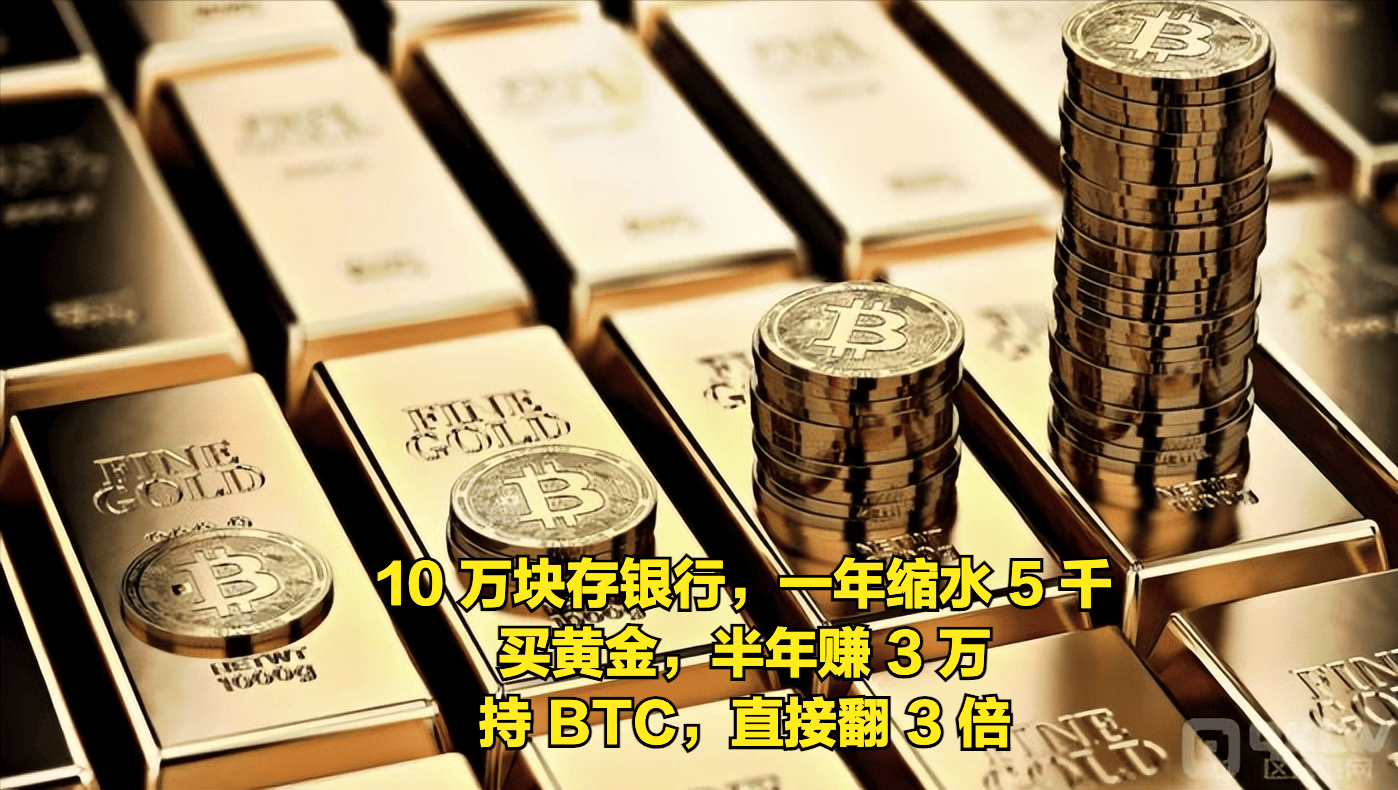
Core Insights - Financial markets have experienced a significant upheaval since October, with gold prices surpassing $4000 per ounce, marking a 50% increase year-to-date, and Bitcoin reaching a peak of $115,700, leading to $400 million in liquidations for short sellers [1][3][5] Group 1: Market Dynamics - The surge in gold and Bitcoin prices is attributed to the fundamental principle that valuable assets are limited in supply, especially in the context of ongoing money printing by governments [3][5] - Central banks, including China's, have been increasing their gold reserves for 11 consecutive months, with a notable increase in diversification efforts despite a slight decrease in September [5][14] - The current gold reserve percentage in China stands at 7.7%, significantly lower than the global average of 15%, indicating substantial room for future increases [5] Group 2: Investment Trends - The market is witnessing a shift towards assets with inherent scarcity, such as gold and Bitcoin, as inflation erodes the purchasing power of fiat currencies [9][11] - Predictions suggest that Bitcoin's price could exceed $120,000 in the fourth quarter, driven by anticipated supply cuts and continued monetary easing [7][14] - Institutional interest in both gold and Bitcoin is growing, with emerging market central banks projected to purchase 70 tons of gold annually and significant increases in Bitcoin holdings by entities like Grayscale [14] Group 3: Investment Strategies - Recommended asset allocation includes a conservative approach of investing 10% of household funds in physical gold or gold ETFs, while a more aggressive strategy suggests allocating 5% to Bitcoin [17][21] - Investors are advised to avoid high-risk products such as gold futures and Bitcoin contracts, which have led to significant losses for many traders [19][21] - Long-term holding strategies are emphasized, with data indicating that investors who hold gold for five years or Bitcoin for three years tend to achieve substantial returns [21]
小小宋 向各位叔叔阿姨问好
叫小宋 别叫总· 2025-10-08 23:59
Group 1 - The article expresses gratitude towards the author's wife for her support during challenging times, particularly regarding family health issues and the decision to have a child [14][15] - The author emphasizes the importance of independent thinking and self-discovery for the child, encouraging them to explore their own identity rather than conforming to parental expectations [10][11][20] - The author highlights the significance of education that promotes exploration and understanding of diverse perspectives, rather than rote learning [19][20] Group 2 - The author reflects on the value of life experiences over theoretical knowledge, wishing to share insights gained from personal journeys in the future [22] - The article conveys a commitment to being a supportive and understanding parent, aiming to foster a nurturing environment for the child's growth [25]

孙潇雅:对机器人板块的最新调研和思考
Ge Long Hui· 2025-10-07 07:27
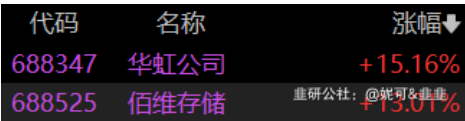
Group 1 - The article discusses the recent investment paradigm shift in the robotics sector, emphasizing the importance of "certainty" and "scarcity" in attracting market capital [1] - The performance of domestic chip manufacturers has been strong, with a notable increase in the stock prices of Huahong and Baiwei, achieving a floating profit of 39% since the investment [1] - The article highlights the competitive landscape in the GPU market, noting that companies like Cambricon and Haiguang have significantly lower market shares compared to leading players [3] Group 2 - The analysis draws parallels between the current robotics sector and the electric vehicle industry in late 2019, suggesting that the entry of major players like Tesla and OAI could lead to substantial market changes [6] - The focus is on identifying key players in the robotics sector, with an emphasis on the importance of selecting the right "track" over individual stocks, similar to the early investments in companies like CATL and BYD in the electric vehicle space [8] - Recommendations include Tier 1 companies such as Topband and Zhejiang Rongtai, as well as mid-cap firms with potential for growth, indicating a strategic approach to investment in the robotics industry [8][9]



茅台库存爆表!稀缺神话塌方,消费降级有多吓人?
Sou Hu Cai Jing· 2025-09-19 09:22
Core Viewpoint - Scarcity is not a permanent condition but a phase that can change over time, as evidenced by the declining wholesale price of Moutai liquor, which challenges the notion of its uniqueness and value [1][3][13] Group 1: Dynamics of Scarcity - Scarcity is defined as a situation where supply is insufficient relative to demand, but for investors, a more practical standard includes limited supply, lack of substitutes, stable or growing demand, and time constraints [5] - The value of scarcity is temporary and can shift from being a wealth generator to a liability depending on market conditions [5][11] Group 2: Forms of Scarcity - Geographic scarcity is influenced by unique production conditions, as seen with Moutai from Guizhou, but can collapse under increased production and declining consumption [7] - Technological scarcity can lead to excess returns, exemplified by Microsoft's operating system dominance and Nvidia's AI chip success, while Intel's strategic missteps illustrate the loss of scarcity [7][9] - Non-renewable resources like rare metals and energy can also experience price drops due to over-extraction, undermining their perceived scarcity [9] Group 3: Impact of Economic Conditions - During economic downturns, high-end consumer goods are the first to feel the impact, leading to reduced demand for luxury items like Moutai, resulting in increased inventory and falling prices [11] - Understanding scarcity requires recognizing it as a dynamic balance rather than a fixed advantage, with the need to monitor supply-demand relationships and potential technological disruptions [11][13] Group 4: Conclusion on Scarcity - Scarcity is a cyclical phenomenon influenced by technological advancements, supply expansions, or shifts in consumer behavior, necessitating timely strategy adjustments by investors [13] - The true wisdom lies in identifying new forms of scarcity and seizing opportunities before they dissipate, rather than clinging to outdated beliefs [13]

稀缺性在坍塌,只因消费降级?
Sou Hu Cai Jing· 2025-09-17 18:33
Core Viewpoint - The article discusses the changing nature of scarcity in the market, emphasizing that scarcity is not eternal and is influenced by time, supply and demand, and substitutes. It highlights the decline in the price of Moutai liquor due to reduced demand and increased supply, suggesting that businesses must adapt to consumer trends to remain competitive [2][24]. Group 1: Definition of Scarcity - Scarcity is defined as the limitation in obtaining resources needed by people, where supply is insufficient relative to demand. It can be categorized into absolute scarcity and relative scarcity [7]. - In investment terms, scarcity refers to a situation where demand for a product remains stable or grows while supply cannot keep pace, often due to a lack of substitutes [8][9]. Group 2: Types of Scarcity - Geographic scarcity occurs when a product is unique to a specific location, such as Moutai liquor, which can only be produced in Guizhou [11]. - Technological scarcity is characterized by monopolistic advantages in technology, as seen with companies like Nvidia and Microsoft, which have maintained strong market positions due to their technological innovations [12][15]. - Non-renewable scarcity refers to resources that are limited and deplete over time, such as indium, which has a finite supply and is crucial for various technologies [21]. Group 3: Market Dynamics and Trends - The article notes that supply growth can destroy scarcity, as seen with rare earth elements, where excessive mining has led to a decrease in perceived value [22]. - The demand for cocoa has surged due to its limited supply and environmental vulnerabilities, leading to significant price increases [23]. - The decline in demand for high-end products, such as Moutai, due to anti-corruption measures and consumer downgrading, has resulted in a collapse of its scarcity and a drop in prices [24][25].





五年后,500万投哪类资产最值钱?
Sou Hu Cai Jing· 2025-09-12 12:05
Group 1 - The article discusses the performance of seven asset classes over a period of one and a half years, originally valued at 5 million [2][4] - The seven asset classes include stocks (Moutai, Nvidia, Microsoft), cryptocurrencies (Bitcoin), precious metals (gold), real estate (small apartment in Beijing), and luxury goods (LV bags) [2][3] - Nvidia has shown the highest return, with a price increase of 100.1%, while the real estate investment has suffered the most with a decline of 17.9% [5][6] Group 2 - Nvidia is highlighted as a leader in the AI sector, with expectations of a price increase of 50%-100% over the next 3-5 years, despite potential risks from competition and policy changes [10][12] - Bitcoin has experienced significant volatility, with a historical increase of 600% over the past decade, but it faces risks related to regulatory scrutiny and market consensus [13][15] - Microsoft benefits from its Azure cloud services and plans to increase subscription prices, although it faces intense competition from Amazon and Google [16] Group 3 - Gold prices have surged significantly, with a current price of 3644 USD per ounce, driven by factors such as increased money supply and central bank purchases [17][20][21] - Moutai, as a leading domestic liquor brand, has seen a decline in stock price and sales, but it retains a strong market position due to its brand value and cultural significance [23][27] - Luxury goods, particularly LV bags, are generally not good investments due to depreciation, but limited edition items may retain or increase in value [28] Group 4 - Real estate investments in core urban areas like Beijing have shown poor performance, with low rental yields and depreciation concerns [30][32] - The article suggests that each asset class has its own logic and cycle, emphasizing the importance of diversification in investment strategies [34]