
绿色智能消费

Search documents
从“买得到”到“买得好”,从“烟火气”到“文化味”,年货中见消费新意与活力
Sou Hu Cai Jing· 2026-02-11 01:25
Core Viewpoint - The upcoming Spring Festival in 2026 is expected to see a vibrant and upgraded consumer market, characterized by a blend of traditional customs and innovative consumption patterns, laying a solid foundation for boosting consumption throughout the year [1][5]. Group 1: Market Dynamics - The integration of online and offline channels is a prominent feature of the year-end goods market upgrade, enhancing the festive shopping experience with cultural elements and creating a closed-loop of "online traffic and offline experience" [3]. - The Ministry of Commerce and other departments are promoting the "2026 National Online New Year Goods Festival," aligning with consumer needs across various sectors, thereby effectively releasing greater potential in the year-end goods market [3]. Group 2: Policy Support - The National Development and Reform Commission and the Ministry of Finance have issued 625 billion yuan in long-term special bonds to support the replacement of old consumer goods, ensuring policy continuity and aligning with industrial upgrades [3]. - Subsidies for replacing old automobiles and six categories of major household appliances are being implemented nationwide, providing confidence to businesses and directing policy benefits towards high-quality development areas [3]. Group 3: Consumer Trends - There is a noticeable shift in consumer preferences from basic necessities to quality experiences, with service consumption, such as travel and cinema, becoming popular choices for the Spring Festival [4]. - The demand for high-quality products, such as energy-efficient appliances and organic agricultural products, is increasing, reflecting a growing health consciousness among consumers [4]. Group 4: Market Potential - The retail sales of consumer goods are projected to exceed 50 trillion yuan by 2025, with consumption contributing 52% to economic growth, indicating significant untapped consumer potential [5]. - The integration of national trends and consumer scenarios is creating new growth points, emphasizing the importance of optimizing the supply system to fully unleash the potential of the vast market [5].

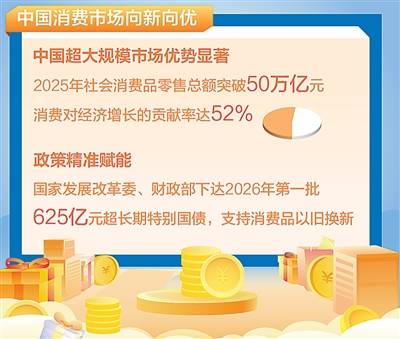
从年货市场看消费新意与活力(每周经济评论)
Ren Min Ri Bao· 2026-02-10 22:37
Group 1 - The core viewpoint of the articles highlights the vibrant and evolving nature of the Chinese New Year goods market, showcasing a strong demand and supply dynamic that supports consumption upgrades and cultural integration [1][4] - The integration of online and offline channels is a prominent feature of the New Year goods market upgrade, with initiatives like the "2026 National Online New Year Goods Festival" enhancing consumer experience through cultural elements and digital engagement [1][2] - The government is actively supporting consumption through policies such as the 625 billion yuan special bonds for consumer goods exchange programs, which aim to stimulate demand in high-quality sectors like energy-efficient appliances and new energy vehicles [2][4] Group 2 - There is a noticeable shift in consumer preferences towards high-quality products, with increased demand for energy-efficient appliances and organic products, reflecting a growing health consciousness among consumers [3][4] - Service consumption is becoming increasingly popular during the New Year, with experiences such as travel and cinema gaining traction, indicating a transition from basic needs to quality experiences [2][3] - The market conditions for consumption in 2026 are robust, with a projected retail sales total exceeding 50 trillion yuan by 2025, and consumption contributing 52% to economic growth, highlighting significant untapped potential [4]
第29届四川年货节启幕 释放春节消费新活力
Zhong Guo Xin Wen Wang· 2026-01-30 09:17
Core Insights - The 29th China (Sichuan) New Year Goods Shopping Festival opened in Chengdu, themed "Shopping Global New Year Goods, Sharing a Beautiful Life" [1] - The festival features a large exhibition area of 50,000 square meters, showcasing over 100,000 quality New Year goods from around the world [1] - The event emphasizes internationalization and aims to create a "global New Year flavor" experience, with products from 36 countries and regions [1] Group 1: Event Highlights - The festival includes participation from nearly 1,000 domestic and foreign enterprises, representing 30 provinces and regions, and 21 cities in Sichuan [1] - A significant focus is on green and smart consumption, with policies supporting the replacement of old appliances, leading to strong performance in major goods sectors like home appliances and automobiles [1] - Brands such as Changhong, Midea, and NIO are showcasing their latest technological innovations, promoting the concept of upgrading to smart appliances and new energy vehicles for the New Year [1] Group 2: Cultural and Social Aspects - The festival features a dedicated area for renowned Chinese liquor, highlighting the cultural significance of liquor in social interactions during the New Year [2] - The event aims to bridge the gap between liquor producers and consumers, enhancing the market for Sichuan liquor and promoting its quality and reputation [2] - A notable change in this year's festival is the integration of shopping, entertainment, and social interaction, creating a multifaceted consumer experience [3] - Traditional performances and food events are incorporated, enhancing the interactive experience for attendees beyond mere shopping [3]
2025年江苏地区生产总值超14万亿元
Xin Hua Ri Bao· 2026-01-28 22:00
Economic Overview - Jiangsu Province achieved a GDP of 14.23515 trillion yuan in 2025, marking a 5.3% year-on-year growth, demonstrating resilience and vitality in economic performance [1] - The province's economic total increased from 10.5 trillion yuan in 2020 to 14.2 trillion yuan in 2025, crossing four trillion yuan milestones in five years [1] Industry Performance - The agricultural sector maintained stability with a total output value of 952.61 billion yuan in 2025, and grain production saw increases in both area and total yield [2] - Industrial production grew rapidly, with the added value of industrial enterprises above designated size increasing by 6.5%, and 75% of 40 major industrial categories reported growth [2] - Private and joint-stock enterprises led the growth, with the equipment manufacturing sector's added value increasing by 8.8%, contributing 74.6% to the growth of industrial enterprises [2] - The service sector showed positive momentum, with significant growth in wholesale and retail, and a 9.4% increase in revenue from productive services [2] Advanced Manufacturing and Digital Economy - The high-tech industry accounted for 52.1% of the added value of industrial enterprises above designated size, an increase of 1.4 percentage points from the previous year [2] - The added value of high-tech manufacturing increased by 11.9%, contributing 2.8 percentage points to the overall growth of industrial enterprises [2] - The digital economy experienced rapid growth, with the added value of core digital products manufacturing increasing by 10.2%, outperforming the overall industrial growth by 3.7 percentage points [2] Consumer Market and Income - The total retail sales of consumer goods reached 4.63942 trillion yuan in 2025, with a year-on-year growth of 3.3%, and rural consumption growth outpaced urban areas [3] - Green and smart consumption emerged as new trends, with retail sales of new energy vehicles and energy-efficient appliances growing by 21.2% and 39.5%, respectively [3] - Per capita disposable income in the province was 57,971 yuan, reflecting a 4.6% year-on-year increase, with income growth rates for wages and net transfers exceeding 5% [3] - The income gap between urban and rural areas continued to narrow, with the income ratio dropping to 2.02 [3] Foreign Trade - Jiangsu's total foreign trade value reached 5.95 trillion yuan in 2025, with a year-on-year growth of 6%, surpassing the national average by 2.2 percentage points and accounting for 13.1% of the national total [3]

政策市场双赋能 国货借消费变革实现全域崛起
Sou Hu Cai Jing· 2026-01-22 05:28
Core Insights - The Chinese consumer market is experiencing a revitalization, with domestic brands leveraging policy support and market dynamics to enhance quality and cultural significance, marking a new phase of growth [1] - The State Council's action plan aims to cultivate a thousand high-quality domestic brands, with policies like appliance recycling driving consumer engagement [1][5] - The retail sales of social consumer goods are projected to reach 50,120.2 billion yuan by 2025, reflecting a 3.7% year-on-year growth, with categories like communication equipment seeing a 20.9% increase [2] Group 1: Market Dynamics - The appliance recycling policy has led to the replacement of 192 million units from 2024 to 2025, with over 90% of sales in energy-efficient domestic products [1] - The shift in consumer behavior is evident as purchasing decisions are increasingly influenced by emotional resonance rather than just functional value, indicating a deeper transformation in consumption logic [3] - The four key development directions for domestic brands are identified as "healthier," "cultural," "smarter," and "brand globalization," which align with current market trends [3][4] Group 2: Consumer Trends - The "healthier" focus reflects a growing demand for health-related products, with categories like outdoor sports and health supplements leading the growth [4] - The "cultural" aspect highlights the integration of traditional aesthetics and heritage crafts into consumer products, appealing to younger consumers' cultural identity [4] - The "smarter" trend emphasizes the integration of AI and IoT technologies in domestic products, enhancing market competitiveness and accelerating upgrades [4] Group 3: Policy and Ecosystem - The dual forces of policy guidance and market dynamics have fostered a diverse and regionally concentrated development landscape for domestic products [5] - Key regions like Guangdong, Zhejiang, and Shanghai are emerging as innovation hubs for domestic brands, supported by robust industrial foundations and favorable policies [5] - The overall growth of domestic brands is seen as a result of the restructuring of consumption logic and supply-side upgrades, with 2026 marking a pivotal year for further development [5][6]
钱花哪里了?甘肃人2025年消费账单出炉
Sou Hu Cai Jing· 2026-01-20 22:22
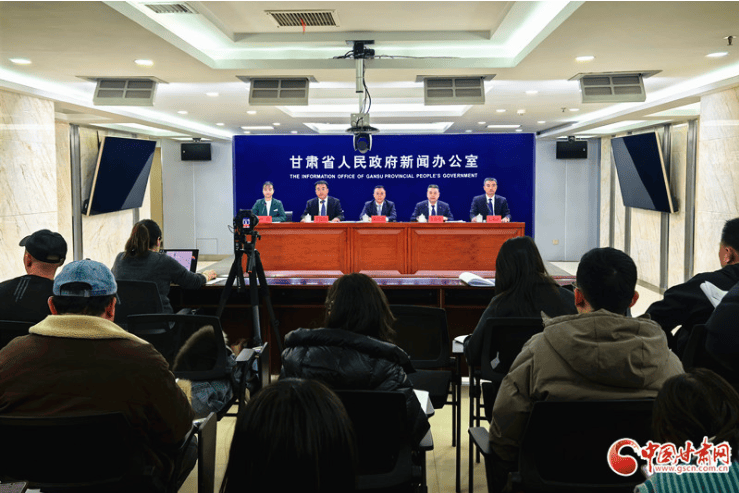
Core Insights - The total retail sales of consumer goods in the province reached 423.76 billion yuan in 2025, representing a growth of 2.5% compared to the previous year [2] Group 1: Consumer Goods Performance - Basic living and upgraded goods showed strong growth, with retail sales of daily necessities, gold and silver jewelry, and grain and oil food increasing by 17.9%, 10.2%, and 9.7% respectively [2] - The policy promoting the replacement of old consumer goods has led to continued double-digit growth in retail sales of communication equipment, building decoration materials, home appliances, and audio-visual equipment [2] Group 2: Green and Smart Consumption - The demand for green and smart consumption is increasingly being released, with retail sales of new energy vehicles, smartphones, wearable smart devices, and high-efficiency appliances all experiencing double-digit growth [2] Group 3: E-commerce Growth - The retail sales of the wholesale and retail catering industry through public networks increased by 29.0% compared to the previous year [2]
去年江苏社零总额达四点六万亿元 首次领跑全国消费市场
Xin Hua Ri Bao· 2026-01-20 00:12
Group 1 - The core viewpoint of the articles highlights Jiangsu's retail sales reaching 4.6 trillion yuan in 2025, marking a 3.3% year-on-year growth, positioning it as the top province in China for retail sales [1] - Jiangsu's "Su New Consumption" initiative will host over 6,800 promotional activities throughout the year, aimed at stimulating consumer enthusiasm across urban and rural areas [1] - The province's policies, such as the trade-in program, have significantly boosted sales by over 230 billion yuan, benefiting more than 18.1 million people [1] Group 2 - In 2026, Jiangsu plans to enhance the "Su New Consumption" brand by organizing over 3,000 unique promotional events and integrating it with local sports events to spread consumer vitality [2] - The province has designated this year as the "Service Consumption Breakthrough Year," focusing on six key areas including transportation and inbound consumption, while also targeting potential sectors like performances and experiential services [2] - Jiangsu aims to upgrade its commercial infrastructure by enhancing pedestrian street (business circle) formats and promoting the "one-quarter-hour" convenient living circles in cities like Nanjing and Suzhou [2]
12万笔以旧换新补贴撬动5亿元消费
Sou Hu Cai Jing· 2026-01-15 00:57
Core Insights - Chongqing has launched a new round of consumer subsidies for replacing old products with new ones, covering various sectors including home appliances and digital smart products, which has led to a significant increase in consumer enthusiasm and sales [1][2][3] Group 1: Home Appliances - As of January 11, the total number of transactions for home appliance replacements reached 60,870, with subsidies amounting to approximately 46 million yuan, directly driving sales of 324.6 million yuan [2][3] - The implementation of the policy has resulted in a 110% increase in foot traffic and sales at stores, with consumers shifting their purchasing mindset towards high-quality, energy-efficient products, which now account for 65% of sales [1][3] Group 2: Digital Smart Products - The total number of transactions for digital and smart product subsidies reached 61,990, with a total subsidy amount of about 25 million yuan, directly boosting sales by 206.7 million yuan [3][4] - The policy has stimulated demand for new smartphones and tablets, with many stores offering additional incentives such as trade-in bonuses and interest-free installment plans to lower the cost for consumers [2][3] Group 3: Market Trends and Future Plans - The sales data reflects a strong consumer demand for high-quality green smart products, prompting the local government to enhance policy promotion and encourage more businesses to participate [3] - The inclusion of smart glasses in the subsidy program has led to a doubling of sales for these products during the holiday period, indicating a growing interest in smart wearable devices [2]

经济大省挑大梁│江苏南京:“国补”激发活力,消费市场持续焕新
Nan Jing Ri Bao· 2026-01-12 13:01
Core Viewpoint - The implementation of the "National Subsidy" policy at the beginning of the year is driving consumer enthusiasm in sectors such as automotive, home appliances, and digital products, promoting a shift towards greener and smarter consumption [1][5]. Group 1: Consumer Behavior and Sales Data - The "National Subsidy" policy has led to a significant increase in consumer activity, with Su Ning Yi Gou reporting a 110% increase in foot traffic in stores from January 1 to 3 [2]. - Sales of energy-efficient appliances have surged, with 92% of sold products being of the first energy/water efficiency level, and sales of refrigerators, washing machines, air conditioners, televisions, and water heaters have doubled [2]. - Mobile phone and smart watch sales saw remarkable growth, with increases of 170% and 115% respectively [2]. Group 2: Automotive Sector Impact - The new automotive subsidy policy has enhanced consumer interest, with the proportion of customers opting for vehicle scrappage and replacement rising from 10% to 30% [3][4]. - The updated subsidy structure allows for higher benefits, with scrappage subsidies reaching up to 20,000 yuan and replacement subsidies up to 15,000 yuan [3]. - The automotive market has experienced a 50% increase in foot traffic during the New Year period, indicating a strong consumer response to the subsidy [4]. Group 3: Policy Implications and Market Trends - The "National Subsidy" policy is aligned with the central government's focus on boosting domestic demand and upgrading industries, with over 2.6 trillion yuan in sales from related products in 2025 benefiting over 360 million people [5]. - The policy is designed to enhance product quality and promote the adoption of new technologies, contributing to a green and low-carbon transition [5][6]. - Retailers are adapting by offering integrated services such as free old appliance collection and on-site activation for new devices, enhancing the consumer experience [2][6].

家电、3C、汽车消费补贴落地,政策红利精准滴灌
Nan Jing Ri Bao· 2026-01-12 03:02
Group 1 - The "National Subsidy" policy has been implemented at the beginning of the year, stimulating consumer activity in sectors such as automotive, home appliances, and digital products, leading to a shift towards greener and smarter consumption [1][2] - Consumers are benefiting from significant savings, with reports of individuals saving up to 1,000 yuan on purchases by combining the "National Subsidy" with store discounts [2] - Sales data indicates a substantial increase in consumer traffic and sales volume, with a 110% increase in foot traffic at stores and a notable rise in sales of energy-efficient appliances and smart devices [2][3] Group 2 - The automotive subsidy policy has been upgraded, allowing for higher subsidies based on the price of new vehicles, with maximum subsidies of 20,000 yuan for scrapping old cars and 15,000 yuan for trade-ins [4][5] - The proportion of consumers opting for scrapping or trading in vehicles has increased from 10% to 30%, indicating a growing enthusiasm for new car purchases [5] - The "National Subsidy" policy is expected to drive further growth in the automotive market, with dealers reporting a 50% increase in customer traffic following the policy's implementation [5] Group 3 - The "National Subsidy" policy is aligned with the central government's focus on boosting domestic demand and upgrading industries, with over 2.6 trillion yuan in sales related to the trade-in program benefiting over 360 million people in the previous year [5][6] - The policy emphasizes quality upgrades and the adoption of new technologies, promoting energy-efficient and environmentally friendly products, which is expected to enhance consumer experience and drive long-term industry upgrades [6] - Retailers are adapting to the new policy by enhancing their service offerings, including integrated services for old product recycling and new product activation, to improve customer satisfaction [3][6]