芯片自主化

Search documents
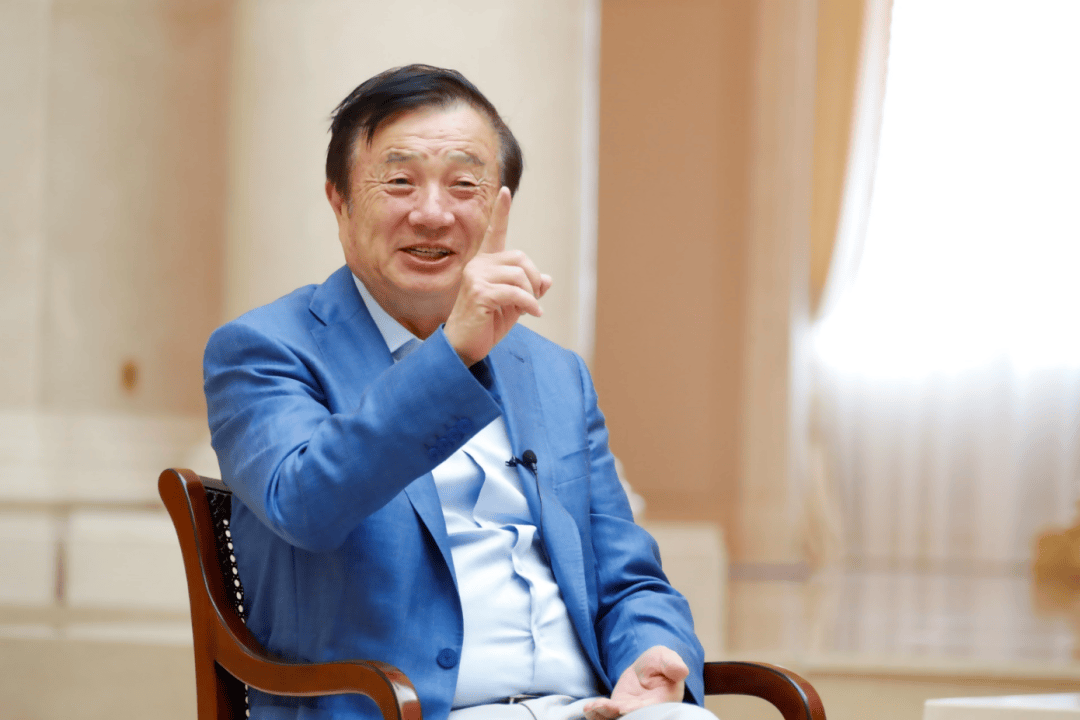
81岁的任正非,为何仍劝我们别恨美国?还要多用美国的技术和芯片
Sou Hu Cai Jing· 2025-12-07 09:42
Core Viewpoint - Huawei's founder Ren Zhengfei emphasizes the importance of utilizing American technology and talent, advocating for a balanced approach rather than a confrontational stance against the U.S. tech industry [4][6][9]. Group 1: Huawei's Position on U.S. Technology - Ren Zhengfei acknowledges the significant impact of U.S. sanctions on Huawei, leading to a push for "self-reliance" in technology [3][4]. - He argues that the desire for complete domestic substitution of U.S. technology may not be practical, suggesting that leveraging American technology is beneficial for Chinese companies [6][9]. - Ren's perspective reflects a broader sentiment among Chinese citizens who are skeptical of U.S. technology, yet he advocates for a more open and collaborative approach [4][9]. Group 2: Talent Mobility and Globalization - Ren views the migration of top talent to the U.S. as a positive development, as it allows for knowledge and innovation to flow back to China, benefiting the global tech landscape [15][16]. - He highlights that the domestic market in China is large enough to retain talent, reducing the necessity for strict measures to keep talent from leaving [15][16]. - The emphasis is on the importance of continuous learning and growth, regardless of geographical location, which aligns with the global nature of talent mobility [18][20]. Group 3: Strategic Insights for the Future - Ren stresses that true strength comes from openness and learning rather than isolation and resentment towards competitors [18][20]. - He encourages young people to seek opportunities where they can maximize their potential, whether domestically or internationally [18]. - The call for a balanced approach to competition and collaboration suggests a strategic mindset that prioritizes long-term growth over immediate emotional responses [20].

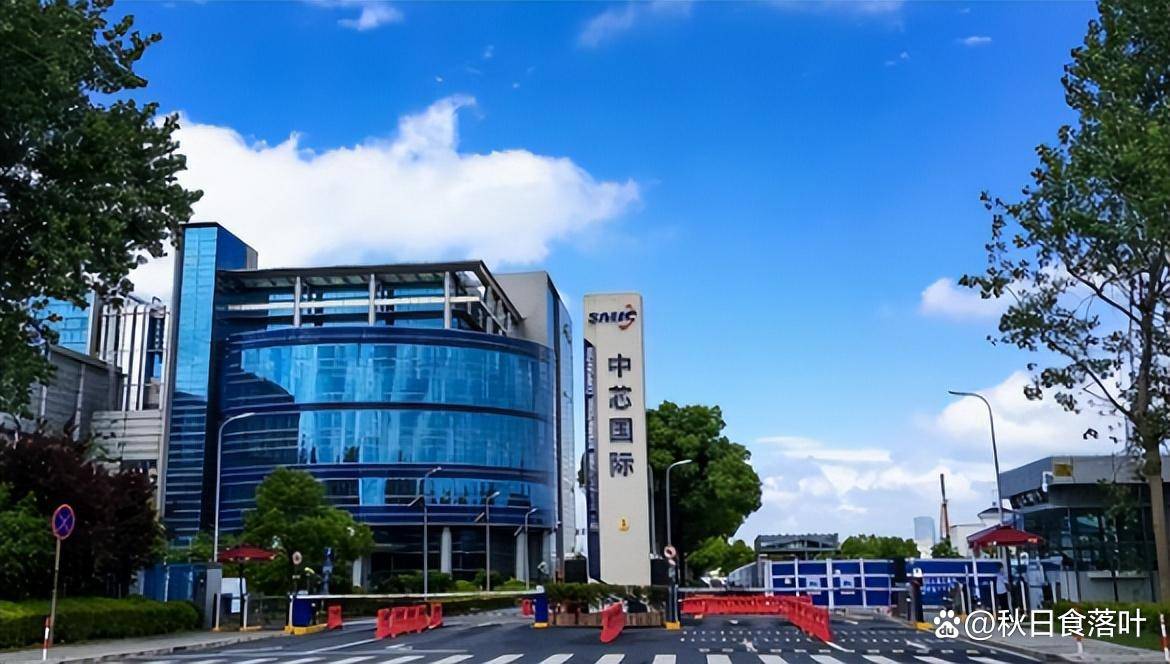
近3年中芯国际收入断崖:22年495亿,23年跌至452亿,24年如何
Sou Hu Cai Jing· 2025-12-02 11:09
Core Viewpoint - SMIC has experienced significant fluctuations in revenue and profit over the years, reflecting the broader trends in the semiconductor industry and the impact of domestic policies on its operations [1][8][19] Group 1: Company Growth and Development - SMIC, established in 2000, has become the largest foundry in mainland China, initially focusing on logic and memory chips [1] - The company progressed from 0.35-micron technology to 28-nanometer processes, expanding its production capacity across multiple cities in China [3] - By 2022, during the global chip shortage, SMIC's revenue surged to 495.16 billion yuan, with a net profit of 121.33 billion yuan and a gross margin of 38% [4][6] Group 2: Challenges and Declines - In 2023, SMIC faced a downturn with revenue dropping to 452.50 billion yuan, an 8.6% year-on-year decline, and net profit plummeting by 60% to 48.23 billion yuan [8][10] - The company struggled with reduced demand due to inventory adjustments in the smartphone market, leading to a price war and decreased capacity utilization [8][10] Group 3: Strategic Adjustments and Future Outlook - Despite the challenges, SMIC continued to invest heavily in capacity expansion, maintaining high capital expenditures to secure its market position [10][14] - In 2024, revenue rebounded to 577.96 billion yuan, a 27.7% increase, although net profit fell to 36.99 billion yuan, reflecting ongoing pressures from high depreciation costs [12][14] - By 2025, SMIC showed signs of recovery with a 16.2% year-on-year revenue increase in Q2, driven by strong domestic demand and improved capacity utilization [16][18]

特朗普考虑批准对华销售先进芯片,仅凭这一条理由,中国就可以拒之门外
Sou Hu Cai Jing· 2025-11-23 01:10
Group 1 - The core point of the article highlights the significant turning point in China's AI chip market amid escalating global tech competition, particularly in the context of U.S.-China relations and the potential approval of NVIDIA's H200 chip sales to China [1][3][9] - The current size of China's AI chip market is estimated to be nearly $50 billion, with projections to soar to $200 billion by 2030, indicating substantial growth potential that attracts interest from business leaders [3][7] - The internal discussions within the U.S. government regarding the approval of the H200 chip are complex, with the Commerce Department reviewing existing policies, and potential political backlash due to upcoming midterm elections [3][4] Group 2 - Technically, while the H200 chip is considered a top product in AI, it is not the most advanced compared to NVIDIA's latest Blackwell architecture, reflecting a cautious approach by the U.S. in navigating the export of high-end chips to China [4][6] - The introduction of the H200 chip may serve as a strategic move by the U.S. to weaken China's domestic chip development, potentially leading to increased dependency on U.S. technology [6][9] - Regardless of the U.S. government's decision, China's path towards chip self-sufficiency is irreversible, with significant investments made in chip technology to reduce reliance on external sources [7][9]

华为Mate X7官宣,从芯片到生态:四大技术护城河,改写高端手机规则
Xin Lang Cai Jing· 2025-11-18 02:26
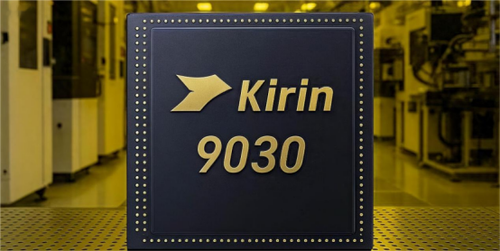
Core Viewpoint - Huawei is set to launch the new dual-foldable flagship Mate X7, featuring the new Kirin 9030 chip, marking a significant advancement in the high-end smartphone market and indicating a potential reshaping of market dynamics [1][12]. Group 1: Product and Technology Advancements - The Mate X7 represents not just an iteration of the X series but a technological declaration, showcasing breakthroughs in screen and system experience [1]. - The Kirin 9030 chip signifies Huawei's transition from "technical experimentation" to "mass production practicality," enhancing the user experience in foldable devices [3]. - The self-developed Kirin chip allows for tailored performance and power management, addressing user pain points related to high performance and battery life [6]. Group 2: Ecosystem and User Experience - The integration of the Kirin 9030 chip with HarmonyOS ensures a seamless ecosystem experience, enhancing connectivity and interaction across Huawei devices [6]. - As of September 2025, the number of native HarmonyOS applications is expected to exceed 20,000, with major apps like WeChat and Douyin optimizing for foldable screens [7]. Group 3: Supply Chain and Strategic Positioning - The self-developed chip provides Huawei with supply chain security, allowing for greater control over technology iteration and production [9]. - The launch of the Kirin 9030 chip is anticipated to stimulate advancements in domestic supply chains, benefiting upstream suppliers [9]. Group 4: Market Dynamics and Competitive Landscape - The introduction of the Mate X7 is expected to shift the foldable smartphone market from superficial competition based on specifications to a focus on core technological capabilities [11]. - Huawei is redefining the standards for high-end foldable devices, emphasizing chip autonomy, ecosystem synergy, and unique user experiences [11][12]. - The strategic significance of the Mate X7 extends beyond a single device, symbolizing Huawei's return to chip autonomy and a milestone in the evolution of foldable technology [12].
造芯,马斯克是“来真的”,2026年
硬AI· 2025-11-16 14:20
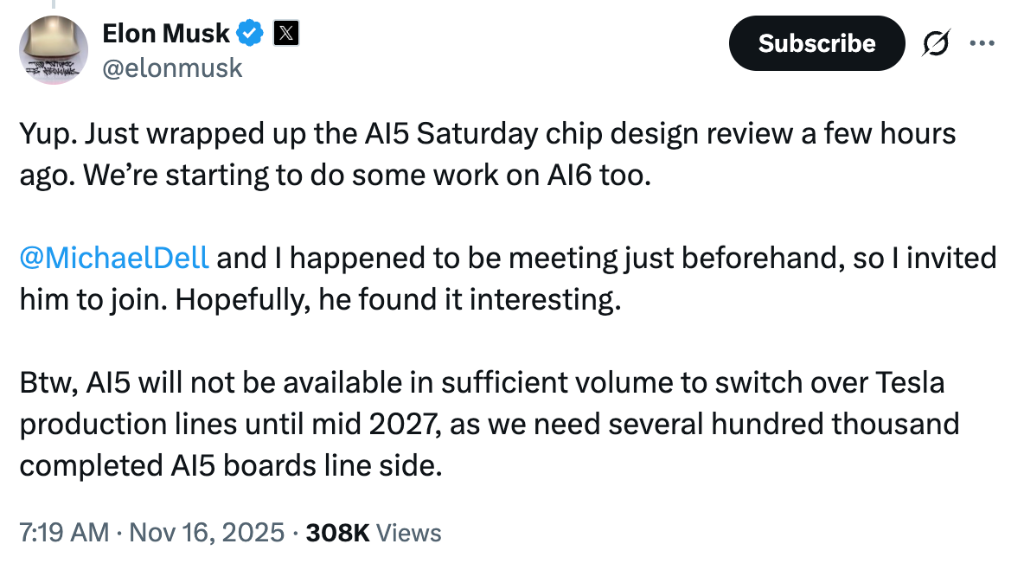
Core Viewpoint - Musk is accelerating the establishment of a complete autonomous chip supply chain in the U.S., aiming to reduce external dependencies and address AI computing demands while mitigating geopolitical risks [2][3]. Group 1: Chip Supply Chain Development - The new PCB center in Texas is now operational, and the FOPLP factory is in the equipment installation phase, expected to achieve small-scale production by Q3 2026 [3][6]. - SpaceX is a key driver of this strategy, aiming to integrate satellite chip packaging processes to lower costs and gain full control over Starlink components [6][10]. - Musk has recruited technical personnel from Intel, TSMC, and Samsung, indicating the high importance placed on the chip business [7]. Group 2: Wafer Factory Goals - A large wafer factory is planned, with an initial monthly production target of 100,000 units, ultimately aiming for a capacity of 1 million units [9]. - Although the factory may not compete with TSMC in advanced process nodes, it will have production capabilities for 14nm and more advanced processes, sufficient to support robotics, autonomous driving, and satellite network needs [9][10]. Group 3: Strategic Response to AI Demand - The establishment of an autonomous supply chain aligns with Musk's goal to address the anticipated surge in AI demand, as reliance on external suppliers may lead to delivery bottlenecks during peak demand periods [12]. - Starting in the second half of 2026, Musk's companies will gradually withdraw production orders from partners and shift to internal manufacturing, impacting existing suppliers and accelerating the trend of autonomy in the chip sector [12].

造芯,马斯克是“来真的”,2026年
Hua Er Jie Jian Wen· 2025-11-16 05:09
Core Insights - Elon Musk is accelerating his chip self-sufficiency strategy by establishing a complete chip supply chain in the U.S., including PCB, FOPLP, and wafer manufacturing, to reduce reliance on external suppliers [1][4]. Group 1: Production Facilities - The PCB center in Texas is now operational, providing foundational support for future production [2]. - The FOPLP factory is currently in the equipment installation phase, with limited production expected to start in Q3 2026 [2]. Group 2: Strategic Drivers - SpaceX is a key driver of this strategy, aiming to integrate satellite chip packaging processes to lower costs and achieve full control over Starlink components [3]. - Musk has recruited talent from Intel, TSMC, and Samsung, indicating a strong commitment to the chip business [3]. Group 3: Wafer Factory Goals - Musk plans to build a large wafer factory with an initial monthly production target of 100,000 wafers, ultimately aiming for a capacity of 1 million wafers [4]. - The factory will have production capabilities of 14nm and more advanced processes, supporting the needs of robotics, autonomous driving, and satellite networks [4]. Group 4: Supply Chain Autonomy - The strategy to establish a self-sufficient supply chain aligns with Musk's goal to address the anticipated surge in AI demand, as chip requirements are expected to rise significantly [5]. - Starting in the second half of 2026, Musk's companies will gradually withdraw production orders from partners and shift to in-house manufacturing, impacting existing suppliers [5].

2000份稀土订单,中方批了一半,欧盟被玩弄于股掌,还得感谢中国
Sou Hu Cai Jing· 2025-11-07 08:15
Core Insights - The EU is increasingly anxious about China's rare earth export policies, which appear to be targeted specifically at the US rather than globally [1] - The EU aims to secure "special treatment" from China similar to that of the US to alleviate concerns over rare earth supply [1] Group 1: EU's Engagement with China - The EU has established a "special communication channel" with China to ensure a continuous supply of critical rare earth materials for European industries [3] - Over 2,000 applications for rare earth exports from European companies have been submitted to China, with more than half already approved [3] Group 2: Approval Process and Strategy - The EU is satisfied with the partial consensus reached with China regarding rare earth procurement, as over half of the orders from EU companies have been approved [4] - China's approval of over 1,000 rare earth orders from European companies indicates a strategic approach, allowing approvals as long as companies comply with reporting requirements [4][6] Group 3: China's Position and Strategy - China's strategy of maintaining a 50% approval rate for rare earth orders prevents European companies from stockpiling, thereby managing their anxiety over supply [6] - This approach reinforces China's dominant position in the global rare earth supply chain and delays the EU's efforts to achieve supply chain autonomy [6] Group 4: Comparison with US Policies - The situation mirrors the US's approach to technology exports, where the US seeks to maintain its market dominance over China, similar to how China manages its rare earth exports to the EU [10] - The dynamics suggest that China is effectively leveraging its position to influence EU and US relations, compelling them to adopt a more cautious stance [10]

台基股份前三季度净利润增长205.58%
Ju Chao Zi Xun· 2025-10-22 12:41
Core Insights - The company, Taiji Co., Ltd. (300046.SZ), reported a net profit of 56.6853 million yuan for the first three quarters of 2025, representing a year-on-year increase of 205.58% [1][3] - The overall business operation is stable, and the financial condition continues to improve [1] Financial Performance - Total operating revenue for the first three quarters reached 271 million yuan, with a year-on-year growth of 5.85% [3] - Basic earnings per share stood at 0.24 yuan [3] - Total assets at the end of the period amounted to 1.261 billion yuan, with accounts receivable of 137 million yuan [3] - Net cash flow from operating activities was 6.653 million yuan [3] Financial Highlights - The average year-on-year growth rate of net profit is 85.96%, indicating strong growth capability [3] - The company has a debt-to-equity ratio of 0, suggesting low debt repayment pressure [3] - Current ratio is 10.36, reflecting excellent short-term debt repayment ability [3] - Operating profit increased by 223.54% year-on-year, showing significant profit growth [3] Risk Indicators - The average cash collection ratio for the main business is 61.57%, indicating relatively weak cash flow, which is the only risk item identified [3] - Overall, the company demonstrates strong growth potential, a stable asset structure, and low financial risk [3] Industry Position - Taiji Co., Ltd. ranks prominently in the semiconductor and component industry, with an overall financial score of 3.36 [3] - With the advancement of industrial upgrades and the domestic chip self-sufficiency process, the company is expected to further enhance its profitability and market competitiveness [3]


帝奥微收购荣湃半导体背后,“小米系”资本浮出水面
Huan Qiu Lao Hu Cai Jing· 2025-10-21 11:43
Core Viewpoint - The acquisition of Rongpai Semiconductor by Diaowei marks a significant consolidation in the analog chip industry, enhancing Diaowei's competitive edge in the market [1][2]. Group 1: Acquisition Details - Diaowei plans to acquire 100% of Rongpai Semiconductor through a combination of issuing shares and cash payments, while also raising additional funds from specific investors [2]. - Following the acquisition, Rongpai Semiconductor will become a wholly-owned subsidiary of Diaowei, with the stock price of Diaowei rising by 5.66% to 29.70 yuan per share on the day of the announcement [2]. - The share issuance price for the acquisition has been preliminarily set at 19.84 yuan per share, subject to regulatory approval [2]. Group 2: Financial Performance - Rongpai Semiconductor has shown rapid revenue growth, achieving revenues of 61.10 million yuan and 99.08 million yuan for 2023 and 2024, respectively, although it has reported net losses that are narrowing [3]. - In the first half of 2025, Diaowei reported revenues of 51.99 million yuan with a net loss of 8.23 million yuan, indicating ongoing challenges despite revenue growth [4][9]. Group 3: Strategic Implications - The acquisition will allow Diaowei to quickly enter the isolator chip market and enhance its product offerings by integrating Rongpai's established technologies and resources [4]. - Diaowei has recently launched a new eUSB2 repeater product, further strengthening its position in the high-speed interface chip sector [5]. Group 4: Xiaomi's Involvement - Xiaomi Changjiang Industrial Fund holds shares in both Diaowei and Rongpai Semiconductor, having invested approximately 89.56 million yuan in Diaowei since 2020 [6][8]. - The fund's involvement may indicate a strategic partnership, as Diaowei is also a key supplier for Xiaomi [8].

黄仁勋:中国芯片潜力无穷,仅落后美国“几纳秒”
半导体行业观察· 2025-09-29 01:37
Core Viewpoint - The article discusses the impact of U.S. export controls on China's semiconductor industry, suggesting that these measures may inadvertently accelerate China's push for self-sufficiency and "de-Americanization" in technology [1][2]. Group 1: U.S. Export Controls and China's Response - The U.S. government has implemented a series of export controls aimed at restricting semiconductor technology to China, intending to hinder the development of its chip industry [1]. - Experts, including NVIDIA CEO Jensen Huang, argue that these restrictions may be counterproductive, as they could drive China to enhance its own semiconductor capabilities [1][2]. - Huang claims that China is only "a few nanoseconds" behind the U.S. in chip technology, highlighting the potential for rapid advancements in China's semiconductor sector [1][2]. Group 2: NVIDIA's Strategy and Market Dynamics - NVIDIA is planning to resume shipments of its H20 AI GPU to Chinese customers after a pause due to U.S. export regulations, indicating a willingness to adapt to the changing market [2]. - The company is also developing a new chip that complies with current restrictions while aiming to deliver higher performance, showcasing its commitment to maintaining a presence in the Chinese market [2]. - Huang emphasizes that foreign companies should be allowed to invest and compete in China, as this aligns with China's interests and could foster a more dynamic competitive environment [2][3]. Group 3: China's Semiconductor Development - Chinese companies are increasingly investing in custom chips, either through internal teams or by funding startups, to support their ambitious development plans [3]. - Huawei has launched its Atlas 900 A3 SuperPoD system, featuring the Ascend 910B chip, and aims to achieve or exceed current chip performance levels by 2027 [2][3]. - This shift towards self-sufficiency and the development of proprietary technology poses a significant challenge to NVIDIA, which previously held a 95% market share in China [2].