
资产负债表修复

Search documents
最低只需1年社保或个税缴纳,北京重磅出手!放宽非京籍家庭购房条件
Jin Rong Jie· 2025-12-24 10:50
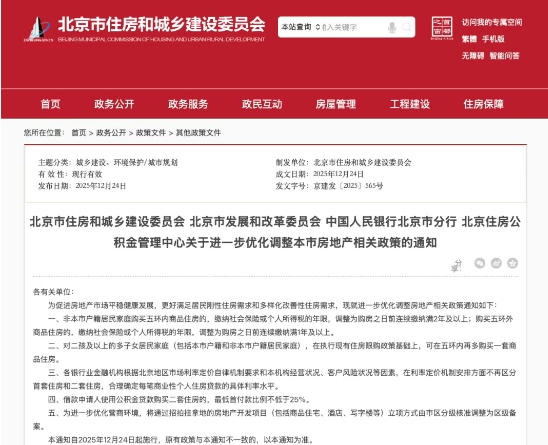
Group 1 - Beijing has announced a significant adjustment to its housing policies, reducing the social security or individual tax payment requirements for non-Beijing households to purchase homes within the city [1] - Non-Beijing families can now buy homes in the inner city with only 2 years of social security or tax payments, and just 1 year for homes outside the inner city [1] - Families with two or more children will have increased purchasing power, allowing them to buy additional properties in the inner city [1] Group 2 - Financial institutions in Beijing will no longer differentiate between first and second home loans in their interest rate pricing, with a minimum down payment of 25% for second home purchases using public housing funds [3] - In November, new residential prices in 70 cities showed slight improvement, with new homes decreasing by 0.4% month-on-month, while second-hand homes fell by 0.7% [3] - First-tier cities are experiencing a more significant decline in second-hand home prices, with a 1.1% drop, while second and third-tier cities are seeing smaller declines [3] Group 3 - Experts predict that other first-tier cities like Shanghai and Shenzhen may follow Beijing's lead in relaxing housing purchase restrictions [4] - The recent central government guidelines emphasize the need for a new model in real estate development and the removal of unreasonable consumption restrictions [4] - The housing supply structure is under scrutiny, with a focus on meeting the long-term housing needs of new urban residents and young people [5] Group 4 - By 2026, real estate companies may enter a critical phase of balance sheet recovery, with some firms potentially reaching a profitability bottom [5] - Companies that have strategically positioned themselves in well-performing cities and hold valuable real estate assets are expected to recover more effectively [5]

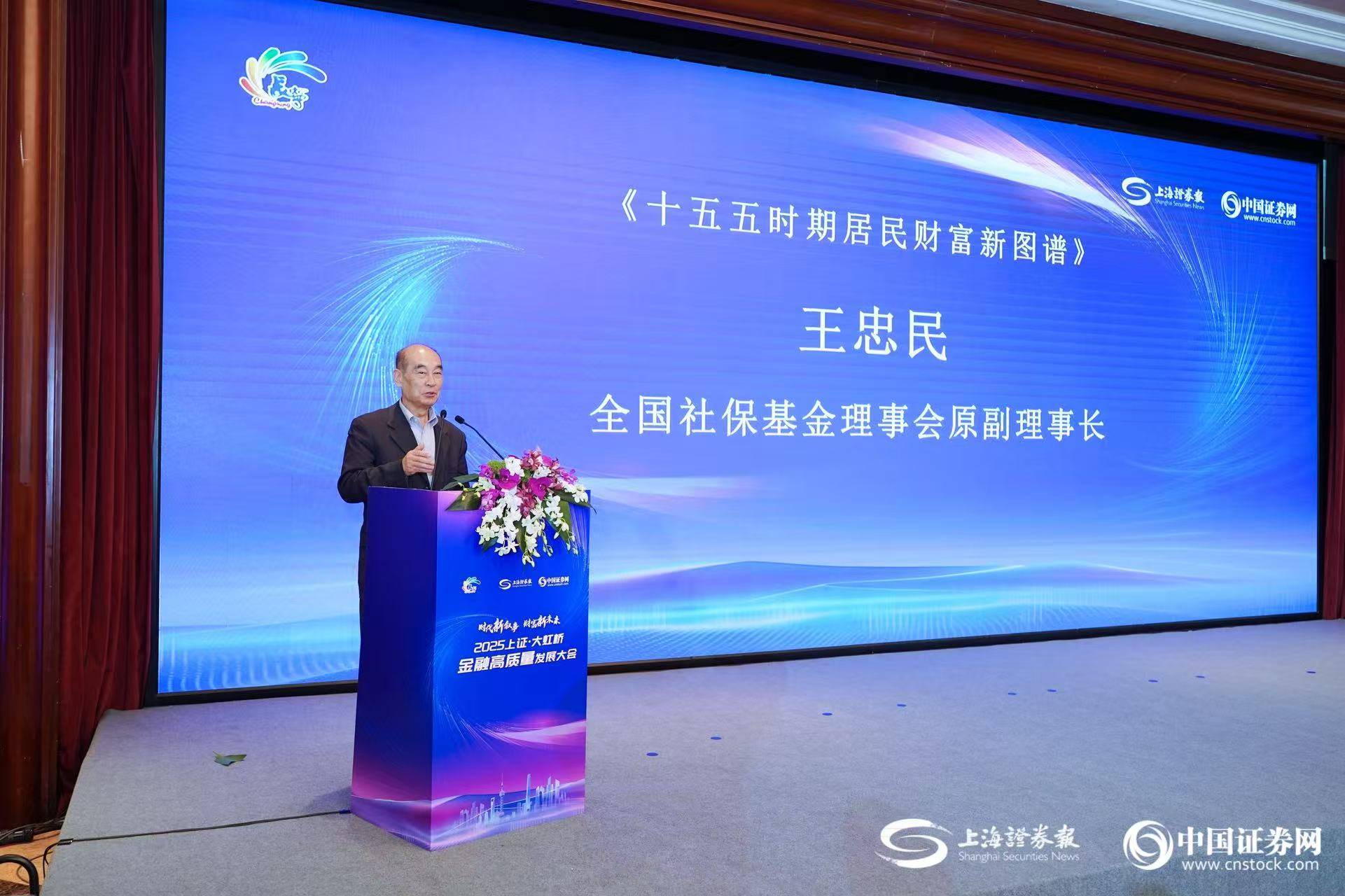
全国社保基金理事会原副理事长王忠民:“十五五”时期居民财富管理面临重构 修复资产负债表与拥抱AI资产成关键
Sou Hu Cai Jing· 2025-12-14 08:24
Core Viewpoint - The upcoming "15th Five-Year Plan" period is seen as a critical transition phase for wealth management in China, shifting from reliance on single asset appreciation to a focus on overall health and dynamic optimization of asset-liability balance, alongside recognition and allocation of frontier assets [1][6] Group 1: Changes in Household Asset-Liability Structure - Over the past decade, Chinese households have faced "threefold shocks" impacting their asset-liability balance: declining risk-free interest rates, adjustments in the real estate market, and bottlenecks in traditional financial product supply [3][4] - Approximately 70% of household assets are allocated in real estate, creating dual leverage risks for both residents and developers [3] Group 2: Policy Responses and Asset Management Industry Responsibilities - Recent policies from the central government aim to repair household asset-liability balances, with measures including innovative monetary tools and fiscal strategies to alleviate local debt risks and enhance household income [4] - The asset management industry is urged to enhance its professional capabilities to provide resilient financial products that meet the evolving needs of residents [4][6] Group 3: Future Directions and Innovations - The focus on household asset-liability health will drive economic growth, with real estate asset revitalization and the development of a multi-tiered pension system as key areas of focus [5] - The emergence of AI as a new asset class is highlighted, with personal data potentially being valued and converted into data asset equity, allowing individuals to share in the growth of related technology companies [5][6] - Long-term funds, such as pensions, should actively invest in AI and other new productive assets to enable residents to benefit from long-term investments [6]
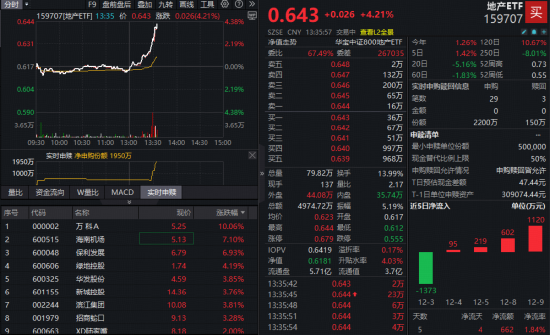
资金抄底!万科A涨停!全市场唯一地产ETF(159707)午后暴涨超4%,资金净申购2000万份
Xin Lang Cai Jing· 2025-12-10 05:56
Group 1 - The real estate sector experienced a significant surge on December 10, with the CSI 800 Real Estate Index rising over 4%, and major companies like Vanke A and Hainan Airport seeing gains of over 5% [1][4] - The only ETF tracking the CSI 800 Real Estate Index, the real estate ETF (159707), saw a remarkable rebound of over 4% in the afternoon, with a net subscription of 20 million units [1][4] - Data from the Shanghai E-House Real Estate Research Institute indicated that as of November, the cumulative transaction of second-hand homes in four first-tier cities reached 519,000 units, surpassing the same period in 2024 and breaking the 510,000 unit mark for the first time in four years [1][4] Group 2 - CITIC Securities predicts that 2026 may be a critical year for real estate companies to enter a balance sheet repair phase, with some firms potentially reaching a long-term profit bottom [2][6] - Companies that are likely to recover first are those with well-placed assets in good cities, operational investment properties, or financial assets with appreciation potential [2][6] - The real estate ETF (159707) is highlighted for its concentration on top-tier real estate firms, with over 90% of the weight in the top ten constituent stocks, indicating a strong focus on central state-owned enterprises and quality real estate companies [2][6]

中信证券:2026年房地产企业可能进入资产负债表修复的关键一年
Zheng Quan Shi Bao Wang· 2025-11-06 00:29
Core Viewpoint - The real estate market supply and demand situation has improved, and adjustments are considered sufficient, with expectations for stabilization by 2026 [1] Group 1: Market Outlook - The year 2026 is anticipated to be a critical year for real estate companies to repair their balance sheets, with some companies potentially reaching the bottom of their profit cycles [1] - Companies that are the first to recover are likely to be those with well-positioned assets in good cities, operational investment properties, or financial assets with appreciation potential [1] Group 2: Investment Focus - There is a positive outlook for companies characterized by strong regions, good business models, and effective operations, referred to as the "three good companies" [1]

房地产观察:居民资产负债表仍需修复
集思录· 2025-08-07 14:47
Group 1 - The overall sentiment in the real estate market is pessimistic, with new homes struggling to sell and many large private developers facing debt defaults [1] - In Weihai, all new projects observed were completed homes, with no pre-sale properties available, indicating a lack of buyer confidence [1] - The second-hand housing market is also weak, with significant price drops and low transaction volumes, leading to frustration among real estate agents [1] Group 2 - Major real estate companies are facing substantial debt burdens, with Evergrande and Country Garden among those with significant outstanding debt [2][3] - The debt levels of various developers are alarming, with Evergrande's total debt reaching approximately 1937.73 billion yuan, and Country Garden's at 971.5 billion yuan [2][3] - The restructuring of debts by companies like Sunac has only temporarily alleviated their financial issues, as they have lost access to future financing [1][6] Group 3 - The government has been actively supporting the securities market to stimulate economic growth, as the real estate sector requires long-term recovery [8] - The decline in consumer confidence is linked to the need for both developers and homeowners to repair their balance sheets after significant losses in property values [9] - The real estate market is expected to return to a more normalized state, with long-term implications for property prices and investment strategies [8][9] Group 4 - The demand for high-end properties in major cities like Beijing and Shanghai remains relatively strong, despite the overall market downturn [7] - The market for luxury apartments continues to attract wealthy buyers, indicating a potential divergence in demand based on property type and location [7] - The trend of declining prices in secondary markets is more pronounced, particularly in lower-tier cities, where transaction volumes have plummeted [12][14]

国泰海通研究|一周研选0607-0613
国泰海通证券研究· 2025-06-13 13:40
Group 1 - The global industrial chain, monetary system, and asset analysis framework are undergoing reconstruction due to diminishing trust among countries, with gold potentially entering a long-term bull market driven by de-dollarization and ongoing central bank purchases [3] - Domestic economic demand remains to be boosted, and policies are expected to maintain a gradually positive tone [3] - Inflation is hovering at low levels, with the key to its rebound lying internally rather than externally, suggesting that policy efforts may become more aggressive in the second half of the year [5] Group 2 - May export growth has slowed, not due to previous over-shipments or temporary fluctuations, but rather due to the peak and subsequent decline of tariff expectations, indicating a resilient export sector despite a lower central tendency [9] - The high-interest rate environment caused by recent dollar credit discounts has led to a notable slowdown in private credit expansion in the U.S., creating a fragile balance that requires careful policy management to avoid potential debt crises [11] - The market for human-robot bearings is expected to see significant growth due to the development of humanoid robots, with domestic replacement opportunities becoming increasingly prominent [27] Group 3 - The recent trading heat in Chinese assets has increased, with a notable inflow of financing funds and new equity fund issuances exceeding 10 billion [13] - The Hong Kong stock market is emerging as a key battleground in the current bull market, driven by the scarcity of attractive assets and supportive domestic policies [16] - The expansion of ETFs is beneficial for credit bonds, with significant differences in duration and component concentration between Shanghai and Shenzhen market indices [20]

2025年5月物价数据点评:通胀低位:利率下行仍有空间
Haitong Securities International· 2025-06-12 02:06
Group 1: Inflation Overview - May CPI year-on-year growth is -0.1%, with a month-on-month decline of -0.2%[5] - May PPI year-on-year growth is -3.3%, with a month-on-month decline of -0.4%[16] - The gap between CPI and core CPI year-on-year continues to widen, indicating resilient service prices supporting inflation recovery[26] Group 2: CPI Analysis - Food prices remain stable, while oil prices exert downward pressure; service prices show resilience[6] - Transportation and communication prices decreased significantly, contributing -0.62% to the CPI[6] - Core CPI month-on-month fell to 0.0% (previously 0.2%), with a slight year-on-year increase to 0.6%[12] Group 3: PPI Analysis - PPI recovery is hindered by multiple factors, including falling international commodity prices and weak construction activity[16] - Coal and cement prices showed significant weakness in May, with coal mining prices down -3.0% month-on-month[16] - Export decline exacerbates supply-demand mismatch, with May exports showing a slight month-on-month decrease[16] Group 4: Market Sentiment and Risks - Trade tensions easing has not significantly aided the recovery of private sector balance sheets[27] - Private sector risk appetite has declined post negotiations, currently below levels prior to tariff increases[27] - Ongoing real estate pressures and weaker-than-expected consumer recovery remain key risks[31]
国泰海通|宏观:通胀低位:利率下行仍有空间——2025年5月物价数据点评
国泰海通证券研究· 2025-06-10 12:09
Core Viewpoint - Despite the easing of trade tensions, the private sector's risk appetite has rebounded and then declined, with limited progress in balance sheet repair, leading to persistently low inflation. The key to inflation recovery lies internally rather than externally, with more proactive policy measures expected in the second half of the year [1]. CPI Analysis - CPI remained low in May, with seasonal declines in food prices and input pressures from international oil prices. Service prices showed resilience, leading to an expanding gap between CPI and core CPI year-on-year [1][2]. - The transportation and communication prices decreased due to national subsidies and falling oil prices, which significantly impacted May's CPI. Core CPI remained flat at 0.0% month-on-month, with a slight year-on-year increase to 0.6% [3]. PPI Analysis - PPI recovery faced multiple constraints, including a decline in international commodity prices affecting domestic industries, particularly in oil and gas extraction, which saw significant month-on-month price drops [4][5]. - Adverse weather conditions impacted the peak season for coal demand, leading to a continued weakening trend in extraction prices, with construction materials like cement and rebar also showing notable declines in May [5]. - A slight month-on-month decline in exports exacerbated supply-demand mismatches, with tariff impacts on exports becoming more apparent. The easing of trade tensions has not significantly aided the repair of private sector balance sheets, as evidenced by a drop in risk appetite indicators [6].

如何布局下半年?开源证券2025年中期策略会透露这些信息
Zheng Quan Ri Bao· 2025-05-08 11:47
Group 1 - The 2025 Mid-Year Strategy Conference hosted by Kaiyuan Securities focused on investment opportunities in humanoid robots, AI computing power, and pharmaceutical innovation, amidst discussions on China's high-quality economic development [1] - The conference highlighted a 5.4% year-on-year GDP growth in Q1 2025, indicating a positive economic outlook for China despite external challenges [1] - Kaiyuan Securities' Vice President Sun Jinjv emphasized the adaptability of policy measures to support economic stability and growth in response to changing circumstances [1] Group 2 - Chief Macro Analyst He Ning proposed a strategy centered on self-reliance, focusing on six policy dimensions to support the real economy, including monetary easing and targeted assistance for export enterprises [2] - Chief Strategist Wei Jixing introduced a "bottom-line thinking" approach, suggesting that the investment paradigm should adapt to include geopolitical risk premiums and focus on domestic demand recovery [2] - Wei Jixing outlined a "4+1" investment framework for H2 2025, emphasizing sectors such as consumer goods, technology, cost improvement, and structural opportunities in exports [3] Group 3 - The real estate sector is expected to benefit from a loosening policy environment, with significant fiscal and monetary support anticipated to stimulate demand [3] - Fixed income analyst Chen Xi projected GDP growth to remain above 5% in Q2 and Q3 2025, indicating a stable economic outlook [3] - Kaiyuan Securities aims to enhance its research capabilities and service offerings, positioning itself as a leading research institution with market influence and pricing power [4]
温氏股份(300498):生猪与黄鸡养殖成绩改善 资产负债表稳步修复
Xin Lang Cai Jing· 2025-05-07 12:42
Group 1 - The company achieved a turnaround in net profit for 2024, with a year-on-year increase in revenue of 16.68% to 104.92 billion yuan and a net profit of 9.23 billion yuan [1] - The improvement in profitability is attributed to the recovery in meat pig prices and better livestock production performance, with estimated comprehensive costs for pig farming in Q1 2025 around 12.6-12.8 yuan/kg, a decrease of nearly 0.8 yuan/kg from the previous quarter [1] - The company has a competitive advantage in pig farming, with selling prices approximately 0.5 yuan/kg higher than peers, leading to superior profitability per head [1] Group 2 - The company's financial situation is strong, with a debt-to-asset ratio of 51.45% as of Q1 2025, a decrease of 1.69 percentage points from the end of 2024, and cash reserves of 5.781 billion yuan, up 29.62% from the end of 2024 [2] - The company plans to expand production steadily, with a fixed asset investment of about 5 billion yuan in 2025, focusing on the construction and upgrading of pig farms, chicken farms, slaughterhouses, and egg-laying facilities [2] - In 2024, the company sold 30.1827 million pigs, a year-on-year increase of 14.93%, and 1.208 billion chickens, a growth of 2.09%, with sales targets for 2025 set at 33-35 million pigs and a growth of 5% or more for chicken sales [2]
