
资本外逃

Search documents
美国救助、米莱大胜、华尔街赚翻,贝森特“助攻”老朋友?
Hua Er Jie Jian Wen· 2025-10-28 02:15
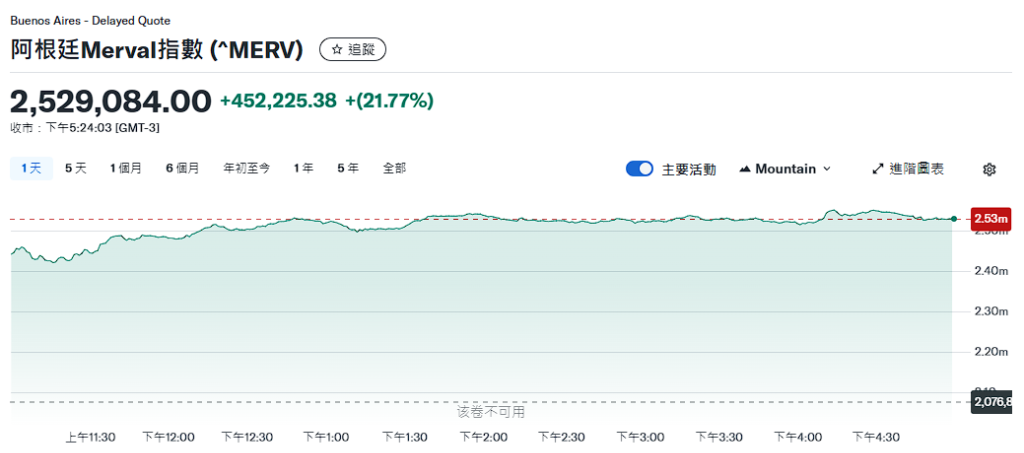
Core Viewpoint - The $20 billion aid plan from the U.S. to Argentina is seen as a controversial move that primarily benefits hedge funds heavily invested in Argentine assets, rather than the Argentine economy itself [1][2][9]. Group 1: U.S. Aid and Market Reactions - Argentina's recent midterm election results, where President Milei's party secured 41% of the votes and 64 seats in the House, have provided a crucial endorsement for his aggressive austerity policies, easing concerns for U.S. officials [1][4]. - Following the election, the Argentine peso appreciated by approximately 4%, and the 2046 U.S. dollar-denominated government bonds rose by 11 cents to about 67 cents, while the benchmark Merval index surged by 22% [4][6]. - U.S. mutual funds and ETFs hold about $5 billion in Argentine sovereign debt, with major players like Pimco, Fidelity, and BlackRock heavily invested [1][5]. Group 2: Criticism of the Aid Mechanism - Critics, including economist Paul Krugman, have labeled the aid as a "scam" designed to bail out hedge funds, suggesting that U.S. taxpayer money is merely propping up the peso to allow these funds to sell their Argentine assets at inflated prices [2][8]. - The U.S. Treasury is still deliberating on the collateral that Argentina can provide to protect U.S. taxpayers from potential losses, delaying the disbursement of the aid [2][7]. Group 3: Investor Sentiment and Future Prospects - Investors are optimistic about the potential for a rebound in Argentine assets, with some already increasing their positions in Argentine pesos and dollar-denominated bonds ahead of the elections [5][6]. - If President Milei can successfully implement his economic turnaround plans, mutual funds and hedge funds could see even greater returns on their investments [6][11]. - The aid is intended to stabilize Argentina's fiscal situation and may help replenish dwindling foreign exchange reserves needed for upcoming debt repayments [10].

中企“出海热”的冷思考:要有长期规划,不要把出海当跳板
Nan Fang Du Shi Bao· 2025-10-22 10:07
Core Insights - The trend of Chinese companies "going global" is driven by the need to avoid tariffs in markets like the U.S. and to seek new growth opportunities outside of China [4][6] - The release of the "White Paper on Financial Services for Enterprises Going Global" highlights both opportunities and challenges in the context of Sino-Thai cooperation [3][4] Group 1: Investment Trends - ASEAN countries have become the preferred destination for many Chinese enterprises, with ASEAN now being China's largest trading partner [4] - From 2020 to 2024, China's cumulative greenfield investment in ASEAN's manufacturing sector is projected to reach $65.91 billion, with $42.26 billion (64.1%) allocated to the "new three types" of industries: new energy vehicles, lithium batteries, and photovoltaics [4][6] Group 2: Local Concerns - The presence of Chinese companies in Thailand has raised concerns among local businesses, particularly regarding competitive pricing that threatens the survival of Thai SMEs [5][6] - Chinese enterprises often rely on domestic supply chains and do not sufficiently engage with local suppliers, which has led to criticism from the Thai business community [6] Group 3: Recommendations for Chinese Companies - Chinese companies are advised to avoid treating foreign markets merely as a "springboard" for tax evasion or re-exporting, and instead, they should develop long-term strategies that align their growth with local development [6][9] - Experts suggest that both Chinese and Thai entities need to adapt to each other to foster better business relations and mutual understanding [6][9] Group 4: Financial Ecosystem - The financial ecosystem supporting Chinese enterprises in Thailand is characterized by fragmentation and high costs, with 73% of surveyed large enterprises indicating that financing costs in Thailand are higher than in China [9] - Recommendations include modernizing regulations, improving cross-border payment infrastructure, and enhancing collaboration with Chinese financial institutions to create a resilient and efficient investment ecosystem [9]

听说美国人要买,阿根廷人“狂卖”比索
Hua Er Jie Jian Wen· 2025-10-17 00:46
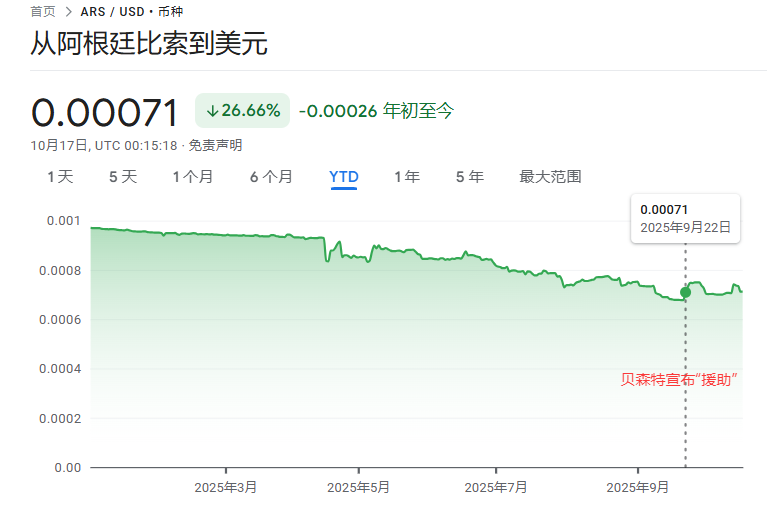
Core Viewpoint - The U.S. intervention to stabilize the Argentine peso has failed to restore public confidence, leading to a market battle characterized by a "buy-sell" dynamic among investors [1]. Group 1: U.S. Intervention Efforts - U.S. Treasury Secretary Becerra has taken actions to prevent the depreciation of the peso, including direct market purchases and declaring it "undervalued" [1]. - The U.S. is considering expanding the initial $20 billion swap facility to $40 billion through private arrangements with international banks [1]. Group 2: Market Reactions - Despite initial rebounds in the peso following Becerra's commitment for assistance, the currency has depreciated against the dollar almost every trading day since September 29 [2]. - Market skepticism is reflected in the soaring short-term interest rates, which reached an alarming 157%, further straining the fragile economy [1]. Group 3: Election Impact and Capital Flight - The upcoming legislative elections are a central variable in market pricing, with fears that President Milei's potential defeat could lead to increased capital flight and further depreciation of the peso [6]. - Data from the Argentine Central Bank indicates that citizens have net purchased $18 billion over five months, averaging about $400 per resident, highlighting a trend of capital outflow [4]. Group 4: Economic Fundamentals - The peso's exchange rate does not adequately reflect the country's high inflation, which has risen by 12% since April, suggesting that the currency is overvalued [7]. - Historical parallels are drawn to past currency defense efforts, with analysts recalling the 1992 pound crisis as a cautionary tale for current interventions [6].
200亿美元“输血”阿根廷,贝森特救米莱,还是救他的对冲基金老朋友?
Hua Er Jie Jian Wen· 2025-10-10 03:16
Core Viewpoint - The $20 billion aid to Argentina from the U.S. Treasury is under scrutiny, with critics suggesting that the real beneficiaries may be hedge funds rather than the Argentine economy itself [1][2]. Group 1: Aid Details - U.S. Treasury Secretary Basant announced the purchase of Argentine pesos in the spot market and finalized a $20 billion currency swap framework with the Argentine central bank to support President Milei's economic reforms [1]. - Critics argue that the aid may primarily benefit hedge funds that heavily invested in Argentine assets after Milei's election, which are now facing losses due to bleak reform prospects [1]. Group 2: Economic Criticism - Economist Paul Krugman criticized the aid as a "scam" aimed at rescuing hedge funds rather than addressing humanitarian needs, highlighting the lack of strategic value in supporting Argentina [2]. - Krugman compared the current situation to Argentina's 2001 financial crisis, suggesting that the aid will not save Milei's failing economic strategy [2][3]. Group 3: Mechanism of Aid - The aid mechanism is described as potentially allowing capital flight, where funds provided to the Argentine government would quickly exit the country as investors take advantage of the artificially supported peso [3]. Group 4: Connections and Conflicts - Basant has close ties with hedge fund managers who stand to benefit from the aid, raising concerns about conflicts of interest [4][5]. - Prior to the announcement, discussions occurred between Basant and hedge fund managers regarding the implications of a potential currency collapse in Argentina [5]. Group 5: Political Reactions - Basant defended the aid as a means to protect U.S. strategic interests in the Western Hemisphere, rejecting claims that it primarily benefits wealthy investors [6]. - Political backlash includes proposed legislation from Democratic senators aimed at preventing the use of U.S. funds for the aid, emphasizing the perception of prioritizing wealthy investors over American citizens [6].
天风证券:如果美联储独立性削弱 有何潜在影响?附三位主要候选人近期观点
Xin Lang Cai Jing· 2025-08-24 01:42
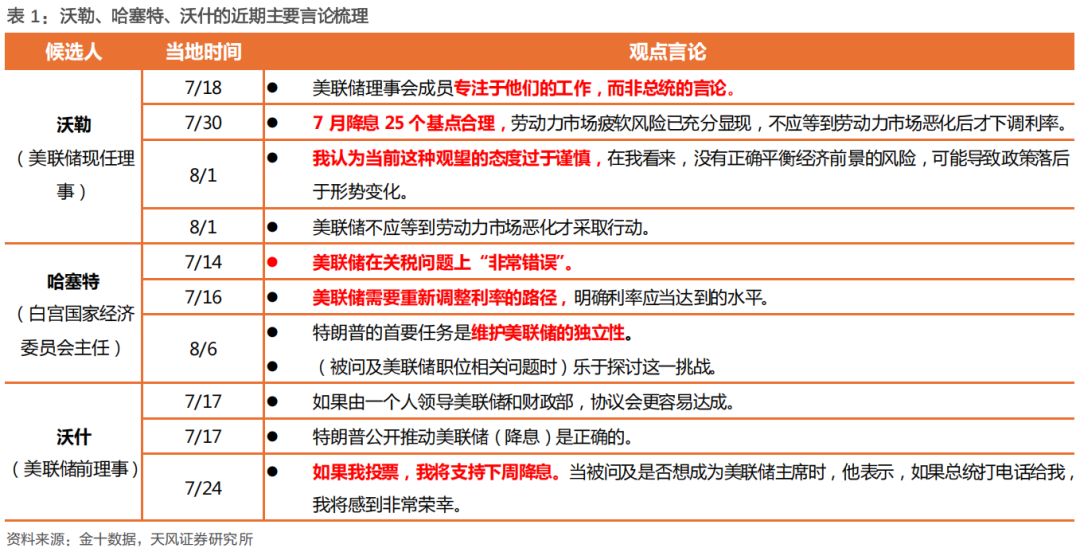
Core Viewpoint - The potential nomination of a new Federal Reserve Chair by Trump raises concerns about the independence of monetary policy, with possible implications for inflation, fiscal stability, the dollar's status, and market performance [1] Group 1: Potential Impacts of a New Fed Chair - Increased risk of stagflation due to potential policy shifts [1] - Heightened fiscal concerns as a result of a politically influenced Fed [1] - Weakened dollar and capital flight if the Fed's independence is compromised [1] - Possible market turmoil leading to simultaneous declines in U.S. stocks, bonds, and the dollar [1] Group 2: Candidates for Fed Chair - Main candidates include Waller, Hassett, and Walsh, with Milan emerging as a potential dark horse due to his dovish stance and advocacy for reduced Fed independence [1] - Other candidates consist of current Fed officials like Bowman, Jefferson, and Logan, as well as financial institution representatives and former government economists [1] Group 3: Candidate Statements - Waller emphasizes the need for the Fed to focus on its work rather than presidential comments, suggesting a 25 basis point rate cut in July is reasonable [2] - Hassett acknowledges the importance of maintaining the Fed's independence while also advocating for a reassessment of interest rate paths [2] - Walsh supports the idea of a rate cut and expresses willingness to lead the Fed if called upon by the President [2]

天风证券:如果美联储独立性削弱 有何潜在影响?
智通财经网· 2025-08-23 23:24
Core Viewpoint - The potential nomination of a new Federal Reserve Chair by Trump raises concerns about the independence of monetary policy, which could lead to increased risks of stagflation, heightened fiscal worries, a weakened dollar, capital flight, and a possible sell-off in U.S. stocks, bonds, and the dollar [1][6]. Candidate Profiles - Three main candidates for the Federal Reserve Chair are Waller, Hassett, and Walsh. Waller is a current Fed governor with a dovish stance and close alignment with Trump's views, which may raise questions about central bank independence [2][3]. Hassett, former NEC director, has significant economic policy experience but lacks monetary policy expertise [2]. Walsh has a diverse background in finance and government but has not served in Trump's administration [2]. Additional Candidates - Other potential candidates include current Fed officials and former government economists, with Milan emerging as a dark horse due to his advocacy for policies that could undermine Fed independence [4][5]. Nomination Process - The nomination process typically takes 3-6 months, with an average of 4 months from nomination to appointment. If Trump announces a candidate by September-October, it may raise concerns about his urgency in establishing a "shadow Fed" [5]. Potential Impacts of Reduced Independence - If a MAGA-aligned candidate is appointed, it could lead to: 1. Increased stagflation risks, reminiscent of Nixon's interference in the 1970s [6]. 2. Heightened fiscal concerns due to rising debt and deficits, potentially exacerbating fears of a debt crisis [6]. 3. A weakened dollar and capital flight as the Fed's credibility diminishes, prompting investors to seek alternative assets [6]. 4. A potential sell-off in U.S. equities, bonds, and the dollar, reflecting market sensitivity to Fed independence [6].
说几句纯净水企业闹剧
Hu Xiu· 2025-07-21 03:05
Group 1 - The article discusses the implications of wealthy individuals transferring their assets abroad, highlighting that a truly open and free market can benefit a country's economy by encouraging investment rather than capital flight [2][3][5] - Japan is presented as a case study where capital flows freely, and despite economic stagnation, wealthy individuals tend to reinvest their earnings domestically, contrasting with India's historical strict foreign exchange controls that deterred foreign investment [4][5] - The article emphasizes that while there are regulations in place to prevent financial risks, the country has successfully attracted significant foreign investment due to relatively fewer restrictions [5] Group 2 - A specific company in the bottled water industry is scrutinized for its ties to state-owned enterprises, raising concerns about potential legal issues related to state asset loss and tax evasion [6][7][8] - The article criticizes the company's actions as being contrary to the social responsibility of utilizing national resources for public benefit, suggesting that their asset transfer behavior contradicts their public image [9][10] - It is noted that the company's marketing strategies have relied heavily on moral narratives, which may backfire and damage public trust if found to be insincere [23][24] Group 3 - The article reflects on the importance of legal stability and predictability in attracting investments, using the United States as an example where a strong legal framework fosters confidence among wealthy individuals [11] - It suggests that the country could learn from the U.S. by enhancing transparency regarding overseas assets and establishing clearer regulations to differentiate between legal and illegal capital outflows [11] - The discussion includes the potential long-term damage to public trust in corporations if they exploit moral narratives for marketing while engaging in questionable practices [23][27] Group 4 - The article concludes that the current environment necessitates a return to traditional values such as responsibility and loyalty, which are essential for societal cohesion [26] - It suggests that the company in question should be subject to legal scrutiny to determine any wrongdoing, rather than being dismantled entirely, as it employs a significant workforce [25]
43亿美元打水漂,印度对准华尔街开火!美国集体沉默,背后不简单
Sou Hu Cai Jing· 2025-07-13 05:44
Group 1 - India has taken a strong stance against US financial firms, specifically targeting JaneStreet with significant fines and trading bans, indicating a shift in its approach to foreign investment [1] - JaneStreet earned $4.3 billion in profits within two years in India but faced a temporary trading ban and the confiscation of $5.8 billion (484 crore INR) due to alleged market manipulation, leading to total losses of approximately $4.87 billion [1] - The incident reflects a broader trend where foreign companies are struggling in the Indian market, with 2,783 foreign firms shutting down operations in the past seven years, averaging one exit every eight hours [5][4] Group 2 - The Indian market has become increasingly hostile for foreign businesses, with significant challenges such as tax intimidation and regulatory hurdles, exemplified by Xiaomi's assets being frozen and high-profile executives being arrested [7] - In 2024, foreign direct investment in India plummeted to just $2.6 billion, a nearly 90% decrease year-on-year, indicating a severe decline in investor confidence [8] - Major companies like Ford and Disney have exited the Indian market after incurring substantial losses, highlighting the difficulties faced by foreign enterprises [5] Group 3 - India's regulatory environment is perceived as a double-edged sword, as it seeks to attract Western capital while simultaneously fearing loss of economic sovereignty, with foreign ownership constituting 18% of the Indian stock market [12] - The country is experiencing a capital flight risk, with external debt significantly exceeding foreign exchange reserves, raising concerns about potential financial crises [12] - The Indian government's attempts to stimulate manufacturing through initiatives like the Production-Linked Incentive (PLI) scheme have largely failed, with over half of the participating companies not meeting their targets [10][11]
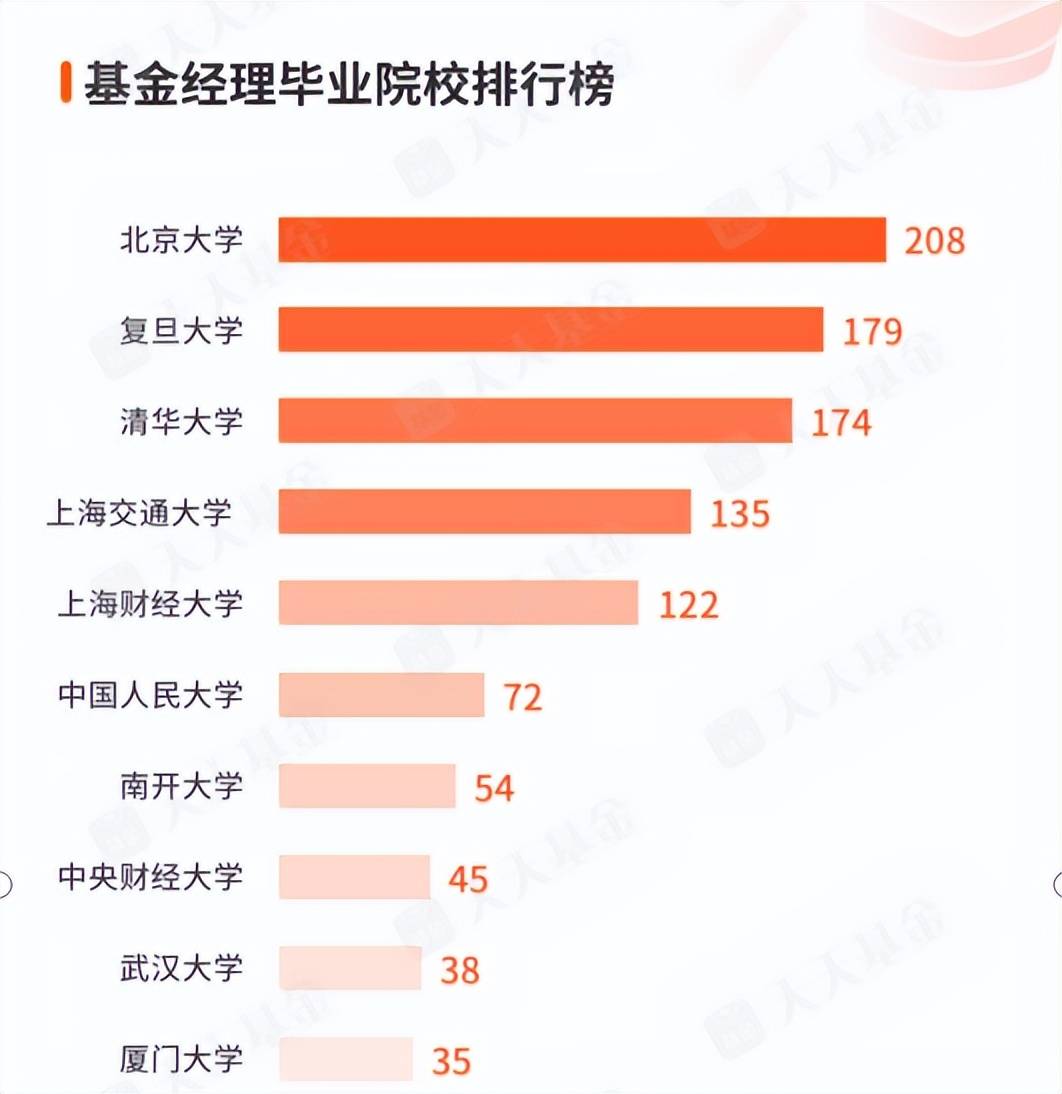
每周回顾 美国资产在全球吸引力下降;输送基金经理最多的前五家高校
Sou Hu Cai Jing· 2025-06-06 08:02
Industry - The attractiveness of US assets is declining globally due to high foreign exchange hedging costs, leading investors to prefer their own country's bonds for better returns [1] - The US Treasury market is facing challenges from a deteriorating budget outlook and trade tensions, with foreign investors showing caution despite not fearing a default [1] - In the Hong Kong IPO market, 29 companies have listed this year, with 27 through IPOs, raising a total of HKD 77.346 billion, nearing last year's total [2] - Chinese investment banks are becoming dominant players in the Hong Kong IPO scene, with over half of the underwriting firms being Chinese, marking a shift from foreign banks [2] - A total of 171 companies have submitted applications to list on the Hong Kong Stock Exchange, with 145 currently in the hearing process [2] - In the electronics sector, 30 companies are expected to see net profit growth exceeding 50% this year, with significant interest from institutional investors [3] - The North American electronics industry's capital expenditures are expected to exceed forecasts, prompting domestic companies to follow suit [3] Company - Circle, the first stablecoin company, saw its stock surge 122.58% on its first day of trading on the NYSE, closing at USD 83.23, a 168.5% increase [4] - Circle's market capitalization exceeded USD 18 billion on its debut, with trading volume reaching approximately 46 million shares [4] - Controversy surrounds Kelun Pharmaceutical's ergothioneine capsules, with accusations of being a "fake drug" from a prominent academic, leading to a significant stock price increase for the company [5] - Following the death of its founder, Wahaha Group is undergoing a "de-Wahaha" transformation, with over 15 companies in its system ceasing operations and facing quality control issues [6]






高盛市场雷达:美国债务的外国持有者是谁? --- GS Market Radar_ Who are the foreign holders of US debt_
Goldman Sachs· 2025-05-15 13:48
Investment Rating - The report does not explicitly provide an investment rating for the industry Core Insights - Foreign private investors have become the dominant holders of US debt, with their holdings growing significantly since 2010, now totaling approximately $8.5 trillion, surpassing official holdings by $1 trillion [4][11] - The US external debt has surged 1.5 times since 2020, now nearing $10 trillion, indicating a growing reliance on foreign private creditors to service this debt [2][6] Summary by Sections Foreign Holdings of US Debt - Foreign investors hold around $8.5 trillion of US treasury debt, with private creditors holding $4.7 trillion and official creditors holding $3.8 trillion [4][11] - Over 60% of these foreign holdings have maturities within 5 years [4] Maturity Distribution - The weighted average maturity of US debt portfolios for foreign private investors is 10 years, compared to 8 years for foreign official investors, reflecting differing investment priorities [5][21] - Most foreign-held treasury securities with maturities longer than 20 years are held by private investors, with private holdings at $450 billion versus $130 billion for official investors [15][16] Short and Long-Term Debt - Private foreign investors exhibit greater exposure to both short-term (less than 1 year) and long-term (more than 15 years) maturities compared to official institutions, holding approximately $1 trillion in short-term debt [24][25] - The report highlights that the US external debt service payments (principal + interest) have increased significantly, indicating potential challenges in refinancing and servicing this debt [29][31]
