
跨界合作

Search documents
证券账户能买分红险 办手机卡推销健康险 跨界玩家密集进场卖保险
Nan Fang Du Shi Bao· 2026-02-03 23:16
Core Viewpoint - The insurance industry is experiencing an innovative trend of "cross-industry collaboration," with various sectors such as securities firms and telecommunications companies entering the insurance market, leading to a multi-channel integration of insurance sales [2][3][10]. Industry Trends - Multiple securities firms have quietly launched "insurance sections" in their official apps, with one leading firm offering 18 insurance products, including 13 dividend-type products [3]. - China Mobile has opted for a "offline trial sales" model, starting in January 2026, selling insurance products directly in its service outlets [3]. - Other capital players, such as Guangzhou Yuexiu Group and Midea Group, are also making significant investments in the insurance sector through acquisitions [3][4]. Market Impact - The entry of cross-industry players is reshaping traditional insurance sales channels, with a notable shift in market dynamics. The insurance sales market may evolve into a layered structure, where cross-industry platforms focus on standardized products while traditional agents emphasize complex risk management [6][10]. - The insurance sales channels are undergoing a profound transformation, with the bancassurance channel surpassing individual insurance channels in new premium scale for the first time in 14 years [5]. Opportunities - The current scale of insurance sales through cross-industry channels remains relatively small, with securities firms' insurance sales accounting for less than 5% of their total sales revenue [9]. - The integration of insurance into daily life through cross-industry platforms is seen as a strategic move to enhance user engagement and create new revenue streams for companies facing growth pressures in their core businesses [9][10]. Challenges - While cross-industry collaboration makes purchasing insurance easier, it also complicates the process of selecting the right insurance, as consumers may overlook their actual needs due to the convenience of embedded insurance offerings [10][11]. - There are concerns regarding the potential dilution of sales professionalism and service responsibilities, which could undermine consumer trust in the insurance industry [11][12].




Levi’s launches immersive pop-up experience ahead of the Super Bowl
Retail Dive· 2026-02-03 15:30
Group 1 - Levi's is leveraging Super Bowl week to promote San Francisco as a cultural hub, emphasizing its significance beyond just sports [2][3] - The company is launching a Starter collaboration of NFL team jackets in select Bay Area stores, with more collaborative releases planned throughout the week [3] - Levi's has been focusing on collaborations with celebrities and retailers, including a marketing campaign with Beyoncé and a partnership with Nike for footwear and apparel [4] Group 2 - In Q4, Levi's reported a 1% year-over-year revenue increase to $1.8 billion, with a 7% decline in U.S. revenue, while DTC revenue grew by 8% and wholesale dropped by 5% [5] - The company anticipates revenue growth of 5% to 6% for fiscal 2026 [5] - An immersive pop-up experience called "Home Turf" will be held in San Francisco, featuring live music, exclusive sneaker collaborations, and discussions related to the company's initiatives [6]
洽洽食品业绩退回11年前
Shen Zhen Shang Bao· 2026-01-30 12:48
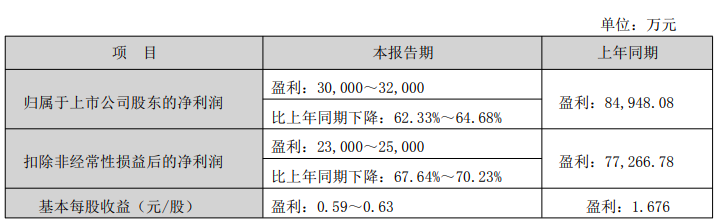
Core Viewpoint - The leading snack food company Qiaqia Foods (002557) has forecasted a significant decline in its 2025 net profit, projecting a decrease of 62.33% to 64.68% year-on-year, which reflects a return to profit levels not seen in 11 years [1][2]. Financial Performance - The expected net profit attributable to shareholders is approximately 300 million to 320 million yuan, down from 849.48 million yuan in the previous year [2]. - The net profit after deducting non-recurring gains and losses is projected to be between 230 million and 250 million yuan, a decline of 67.64% to 70.23% compared to 772.67 million yuan last year [2]. - Basic earnings per share are expected to be between 0.59 and 0.63 yuan, down from 1.676 yuan [2]. Margin Analysis - The company has experienced a downward trend in gross margin over recent years, with gross margins of 31.96%, 26.75%, and 28.78% for 2022 to 2024, respectively [2]. - In 2025, the gross margin is expected to drop sharply, with the first quarter showing a gross margin of 19.47%, a year-on-year decrease of approximately 11 percentage points [3]. - By the third quarter of 2025, the gross margin slightly recovered to 24.52%, but still represented a year-on-year decline of 8.59 percentage points [3]. Revenue and Profit Decline - For the first three quarters of 2025, the company reported a revenue of 4.501 billion yuan, a year-on-year decrease of 5.38% [3]. - The net profit attributable to shareholders for the same period was only 168 million yuan, reflecting a dramatic decline of 73.17% [3]. - The net profit after deducting non-recurring gains and losses saw an even steeper decline of 79.46% [3]. Strategic Initiatives - In response to declining performance, Qiaqia Foods is seeking new growth opportunities through cross-industry collaborations, such as a joint venture with Chengdu Zhengchuang Laomofang to enter the konjac food sector [3]. - The konjac market has a size of 18.3 billion yuan, but the competitive landscape is already established, with major players like Weilong and Yanjinpuzi holding over 50% of the market share [3][4]. - The rising prices of raw materials, including konjac flour, are adding cost pressures to industry participants, with over thirty brands now competing in this field [4].

美菱跨界携手老乡鸡 赋能餐饮共促发展
Sou Hu Wang· 2026-01-30 09:26
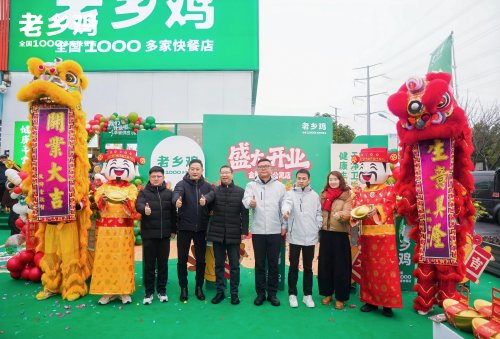
Core Viewpoint - The opening of the Laoxiangji Meiling Apartment store marks a significant collaboration between Meiling and Laoxiangji, enhancing the living amenities in the Meiling community and showcasing Meiling's advancements in cold chain services and cross-industry partnerships [1][3]. Group 1: Collaboration and Brand Synergy - The partnership between Meiling and Laoxiangji reflects a commitment to consumer needs and continuous upgrades, creating a complementary brand synergy that injects new vitality into both companies' high-quality development [3]. - The Meiling Laoxiangji Apartment store features comprehensive operational support from Meiling, including kitchen refrigerators, workstations, central air conditioning, and water heaters, establishing a one-stop service for food preservation and operational efficiency [3][5]. Group 2: Cold Chain Technology and Food Freshness - Meiling leverages over 40 years of expertise in refrigeration to provide tailored preservation solutions for Laoxiangji, ensuring optimal temperature control and long-lasting freshness of ingredients, thereby enhancing the dining experience for customers [5]. - The store manager of Laoxiangji Meiling Apartment highlighted the effectiveness of Meiling's kitchen refrigerators in meeting the freshness standards required for their food offerings, emphasizing the role of Meiling's equipment in delivering fresh and delicious meals [5]. Group 3: Expansion and Future Plans - This collaboration is not Meiling's first foray into the food service sector; the company has previously partnered with leading brands such as Shuanghui, Jinluo, and Daitou Lu Cai, focusing on preserving food freshness through professional solutions [7]. - The partnership with Laoxiangji exemplifies the mutual growth of local brands and represents an important step for Meiling in expanding its service offerings and deepening its cold chain service layout, with plans to continue innovating and collaborating with more quality dining brands [7].

券商、运营商密集跨界卖保险,消费者选择困难症来了?
Nan Fang Du Shi Bao· 2026-01-29 06:33
Core Viewpoint - The insurance industry is experiencing an innovative trend of "cross-industry collaboration," with various sectors such as securities firms and telecommunications companies entering the insurance market, leading to a multi-channel integration of insurance sales [2][5][10]. Group 1: Cross-Industry Participation - Major securities firms have launched "insurance sections" in their official apps, with one leading firm offering 18 insurance products, including 13 dividend-type products [3]. - China Mobile has begun selling insurance products in its offline stores, integrating insurance sales with telecommunications services [3][10]. - Other capital players, such as Yuexiu Group and Midea Group, are also making significant investments in the insurance sector through acquisitions [3][5]. Group 2: Market Dynamics and Consumer Behavior - The entry of cross-industry players is reshaping traditional insurance sales channels, which have historically relied on individual agents, bank insurance, and brokerage channels [6][7]. - The insurance market is witnessing a shift, with the bank insurance channel surpassing individual insurance channels in new premium scale for the first time in 14 years, while individual channels have seen a 16.6% decline [6]. - Consumers are finding it easier to purchase insurance but are increasingly concerned about making the right choices, as the integration of insurance into daily life may lead to oversimplified decision-making [11][12]. Group 3: Implications for Traditional Channels - The emergence of cross-industry channels is expected to challenge traditional agents and brokers, particularly in the distribution of standardized insurance products [7][10]. - Experts suggest that while cross-industry platforms may dominate simple insurance products, the value of professional agents will become more pronounced in complex risk management and long-term service [7][13]. - The market may evolve into a structure where cross-industry channels focus on lower-end products for younger demographics, while traditional channels cater to high-net-worth clients with complex needs [7][10]. Group 4: Regulatory and Strategic Considerations - The regulatory environment is evolving to support the expansion of insurance sales by securities firms, with new guidelines set to take effect in February 2026 [9]. - The push for cross-industry collaboration is driven by the need for traditional firms to diversify revenue streams amid declining income, with insurance sales seen as a key strategy for wealth management [9][10]. - The integration of insurance into telecommunications and financial services is viewed as a strategic move to create new growth avenues in a saturated market [10][13].

大润发首次跨界合作蛋仔派对 游戏寻宝创新年货消费体验
Yang Zi Wan Bao Wang· 2026-01-23 05:53
Group 1 - The core collaboration between Gao Xin Retail's brand RT-Mart and the popular game IP "Egg Party" aims to enhance the shopping experience during the Chinese New Year by introducing an interactive treasure hunt activity [1] - The partnership leverages the traditional "New Year Goods Street" concept, which is a key shopping scene for families, and aligns with the exploration and treasure-hunting elements of the game, appealing to young families and Generation Z [1] - Six co-branded custom cakes have been launched, including cranberry star cakes and sea salt explosion puffs, catering to the preferences of younger consumers while transforming the shopping process into a family-oriented activity [1] Group 2 - This cross-industry collaboration represents a strategic market innovation and brand rejuvenation for RT-Mart, following a recent management transition [2] - The new CEO has emphasized enhancing supplier collaboration, improving product quality and differentiation, and empowering consumer experiences through cultural engagement [2] - The partnership with a trendy IP is a key step in materializing the "experience empowerment" strategy, aiming to create emotional connections and unique offline experiences by gamifying traditional retail settings [2]
逆势而动还是顺势而为 起底2025元气森林异业合作
Zhong Guo Jing Ji Wang· 2026-01-16 06:32
Core Insights - The opening of the "Yuanqi Forest Atlantis" youth music nightlife space in Hefei marks a significant move in Yuanqi Forest's cross-industry collaboration strategy, aligning with local economic initiatives [1] - The brand's approach to cross-industry partnerships has shifted from aggressive collaboration to a more measured and strategic focus on long-term engagement with consumers [4] Group 1: Cross-Industry Collaborations - Yuanqi Forest has launched various collaborations in 2025, including partnerships with music festivals, stationery brands, gaming IPs, and even Disney, indicating a focus on engaging younger audiences [3] - The number of cross-industry collaborations has decreased significantly, with new tea beverage industry collaborations dropping from 149 in the first half of 2024 to 72 in the same period in 2025, reflecting a broader trend of reduced collaboration activity [4] Group 2: Strategic Shift - The brand's recent collaborations emphasize building long-term emotional connections with consumers rather than merely leveraging traffic, showcasing a shift towards a more sustainable and meaningful engagement strategy [4] - The development of the Hefei project took a year and a half, highlighting the brand's commitment to thorough market research and careful planning in its cross-industry initiatives [4] Group 3: Industry Trends - The trend of reduced collaboration activity is not unique to Yuanqi Forest but is observed across the new tea beverage industry, suggesting a collective move towards more strategic and less frequent partnerships [4][5] - The focus on deep interaction and emotional resonance in brand collaborations is becoming a common strategy among new consumer brands, indicating a potential shift towards a "long-term relationship" era in cross-industry marketing [5]
联名狂热退潮,看元气森林如何通过精选IP与年轻人深度共鸣
Jin Rong Jie Zi Xun· 2026-01-15 11:33
Core Insights - The opening of the "Yuanqi Forest Atlantis" youth music nightlife space in Hefei marks a significant move in Yuanqi Forest's cross-industry collaboration strategy, aligning with local economic initiatives [1] - Yuanqi Forest's approach to cross-industry partnerships has shifted from aggressive collaboration to a more measured and strategic focus on long-term engagement with consumers [10] Group 1: Cross-Industry Collaborations - The new Hefei location is part of Yuanqi Forest's strategy to create unique IPs, such as the Yuanqi Forest livehouse, which emphasizes youth culture and music [1] - In 2025, Yuanqi Forest engaged in various collaborations, including partnerships with music festivals, educational products from recycled materials, and gaming IPs, but the number of collaborations has significantly decreased to single digits [7][9] - The trend of high-frequency collaborations in the beverage industry is declining, with a reported drop of over 50% in collaboration events in the new tea beverage sector from the previous year [9] Group 2: Consumer Engagement and Market Trends - A survey indicated that a significant portion of consumers (23.85%) felt indifferent towards IP collaborations, suggesting a growing fatigue with frequent brand partnerships [10] - Yuanqi Forest's strategy now focuses on building long-term emotional connections with consumers rather than merely leveraging short-term traffic from collaborations [10] - The emphasis on deep interaction and immersive experiences reflects a broader trend among new consumer brands moving towards sustained partnerships rather than one-off collaborations [10]

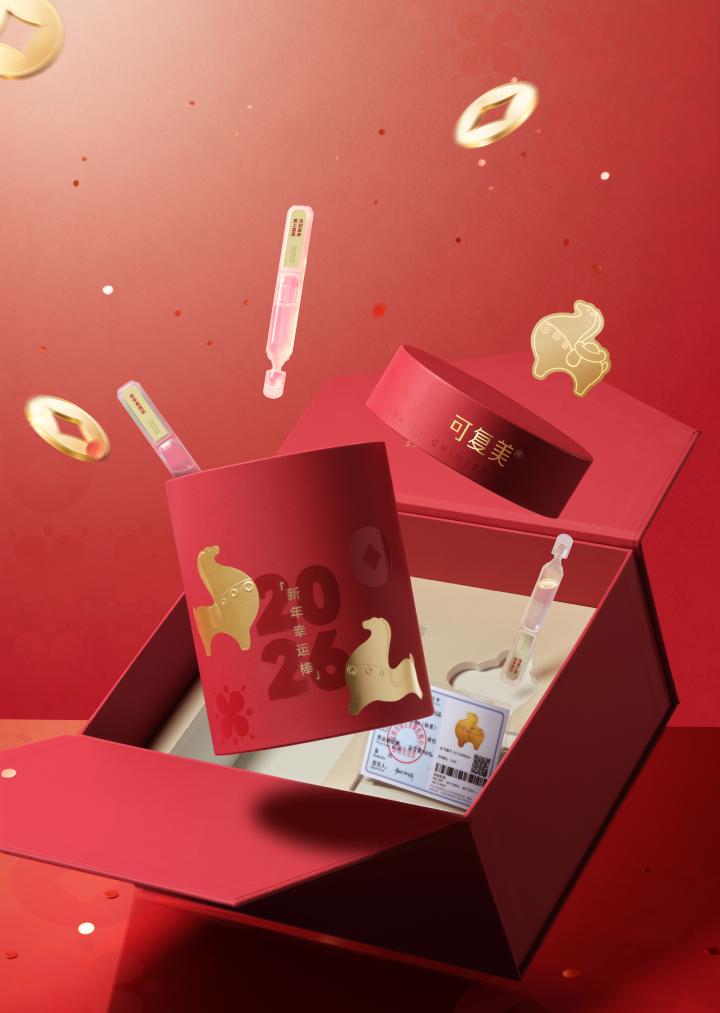
“心价比”时代的礼赠革新:可复美×潮宏基跨界礼盒的商业之道
Jin Rong Jie· 2026-01-12 01:47
Core Insights - The consumer market in 2026 shows a clear trend towards "value for money," where consumers prioritize emotional value, practicality, and preservation over mere functionality [1] - The collaboration between skincare brand Kefu Mei and jewelry brand Chao Hong Ji has resulted in a customized New Year gift box that combines functional skincare with emotional and collectible gold jewelry [1][3] Group 1: Product Innovation - The gift box features 60 Kefu Mei collagen sticks, each with different blessings, and a gold horse-shaped ornament from Chao Hong Ji, symbolizing good fortune and prosperity [1][4] - This is the first time Kefu Mei has integrated functional skincare products with emotionally valuable gold jewelry, targeting the light luxury consumer segment and the gift market [1][4] Group 2: Strategic Significance - The choice to incorporate gold is based on a deep understanding of the current economic environment and consumer psychology, as gold serves as a "hard currency" that provides value stability and anti-inflation properties [3] - This strategy transcends traditional holiday marketing, offering a dual financial and emotional value proposition for Kefu Mei's skincare products [3] Group 3: Brand Collaboration - Chao Hong Ji's craftsmanship and brand reputation provide strong quality assurance for Kefu Mei, enhancing the emotional significance of the gift box [4] - The gold ornament embodies traditional cultural values, transforming the functional aspect of the collagen sticks into a heartfelt wish for enduring friendship and well-being [4] Group 4: Marketing Strategy - The emotional TV commercial featuring Li Jiaqi and his mother deepens the emotional connection, elevating the product from a mere skincare tool to a medium of intergenerational love [6] - This marketing approach not only enhances the emotional attributes of the product but also resonates with the cultural phenomenon of "young people managing the New Year" [6] Group 5: Commercial Value Logic - The combination of collagen sticks and gold jewelry reflects a complementary value logic, addressing consumer concerns about practicality and emotional significance in gift-giving [8][9] - The design of 60 collagen sticks ensures high usage frequency, while the gold ornament adds asset value, creating a dual certainty of utility and emotional connection for gift-givers [9] Group 6: Market Segmentation - Kefu Mei's innovative practice has successfully opened a new niche market that bridges beauty, light luxury jewelry, and gifting, characterized by high certainty in expressing intentions [10] - This collaboration creates a threefold value unit of "daily usability," "emotional significance," and "asset value," addressing the utility anxiety in gift-giving scenarios [10] Group 7: Industry Implications - The trend of consumer upgrading indicates that purely functional products can no longer meet diverse consumer needs, necessitating cross-industry collaboration and scene innovation for value breakthroughs [11] - Kefu Mei's approach demonstrates that functional brands can expand emotional and cultural value while maintaining professionalism, potentially defining the next consumer paradigm [11]

神州租车联名18大品牌共筑“玩在一起”自驾生态 重新定义出行生活方式
Zheng Quan Ri Bao Wang· 2026-01-05 03:39
Core Insights - Shenzhou Car Rental launched a "New Year Journey" brand collaboration event during the New Year holiday, partnering with 18 brands to transform car rental into a customizable lifestyle entry point, enhancing winter tourism consumption potential [1][2] - The event's theme, "Come to Shenzhou to Play Together," integrates car rental services with accommodation, technology experiences, health protection, and cultural entertainment, creating a one-stop self-driving exploration solution for users [1] Group 1 - The collaboration includes brands such as Qiu Guo Hotel, Ziroom, Meituan Homestay, Tujia Homestay, Yush Robot, and iFlytek, allowing users to flexibly combine services based on their needs [1] - Users can access a variety of offerings, from quality accommodations to smart interactions and health support, catering to diverse interests like technology, food, and outdoor activities [1] Group 2 - Shenzhou Car Rental is providing multiple benefits to users, including discounts on Meituan Homestay, health product promotions, and travel vouchers, as part of the brand collaboration [2] - The CEO of Shenzhou Car Rental emphasized the goal of creating a complete closed-loop experience for users, integrating car rental with travel consumption [2] - Industry analysts note that the integration of cross-industry resources is key to enhancing user experience, with Shenzhou Car Rental's extensive user base and travel scene advantages laying a solid foundation for building a "Travel+" service ecosystem [2]