
通胀压力

Search documents
中美俄2025年GDP预测:美国216万亿,俄罗斯16万亿,中国令人意外
Sou Hu Cai Jing· 2025-10-14 11:18
Group 1 - The global economic landscape in 2025 will prominently feature the performances of the US, China, and Russia, with the US maintaining a GDP of approximately 216 trillion RMB, showcasing its strong economic power [3] - China's GDP is projected to reach around 141.75 trillion RMB, with a growth target of 5% for 2025, reflecting a robust economic stance [3][16] - Russia's GDP is expected to decline to 16 trillion RMB, with a growth forecast reduced from 2.5% to 1.5%, indicating significant economic challenges [5][13] Group 2 - The US economy, while appearing strong with a GDP of 216 trillion RMB, faces underlying issues such as persistent inflation and declining domestic purchasing power [7][9] - The US national debt has surpassed 37 trillion USD, leading to an average debt burden of 110,000 USD per citizen, raising concerns about fiscal sustainability [9] - In contrast, China is effectively managing its local debt and is close to completing a 2 trillion RMB debt swap, indicating a healthier fiscal position compared to the US [20] Group 3 - China's economic resilience is attributed to technological advancements and industrial upgrades, with significant growth in exports, particularly in automobiles and ships [18] - The shift in China's export structure and its non-hegemonic approach to international relations contribute to its stable economic growth [18][22] - Russia's economy, while showing some resilience through increased oil exports and new trade partnerships, remains heavily impacted by sanctions and military expenditures [15][22] Group 4 - The contrasting economic trajectories of the three nations highlight the importance of long-term sustainability over short-term gains, with the US facing "low growth, high consumption" challenges, Russia struggling under sanctions, and China demonstrating steady progress [20][24] - The future global economic order will depend on each country's ability to address internal challenges and seize development opportunities [24]

海外周报20251012:如何看待本轮特朗普的关税威胁?-20251012
Soochow Securities· 2025-10-12 13:32
Group 1: Political and Economic Context - Trump threatens to impose a 100% tariff on Chinese imports starting November 1, 2025, due to dissatisfaction with rare earth controls[1] - The geopolitical pressure on the U.S. has eased following a ceasefire agreement in the Israel-Palestine conflict, allowing Trump to refocus on U.S.-China trade[1] - The U.S. government is still in a shutdown, with predictions that it may last until at least October 15, 2025, prompting Trump to shift attention to external conflicts[1] Group 2: Market Reactions - Following Trump's announcement, U.S. stock markets, copper, oil, and the dollar index all declined, while gold prices increased by 3.38% to $4017 per ounce[2] - The 10-year U.S. Treasury yield fell by 8.70 basis points to 4.032%, and the 2-year yield decreased by 7.43 basis points to 3.501%[2] - The S&P 500 and Nasdaq indices dropped by 2.43% and 2.53%, respectively, indicating a strong market reaction to the tariff threat[2] Group 3: Economic Implications - The impact of the new tariffs on U.S.-China trade is expected to be limited due to a prior rush in trade activity earlier in the year and the upcoming seasonal slowdown[1] - Inflation risks are rising again, particularly for imported goods from China, which may complicate future Federal Reserve interest rate cuts[1] - The Federal Reserve's internal discussions show a divide on future interest rate paths, with some officials concerned about persistent inflation risks[2] Group 4: Future Considerations - Attention should be paid to potential retaliatory measures from China and the escalation of trade conflicts into critical sectors like rare earths and semiconductors[3] - The upcoming APEC meeting may provide a platform for high-level discussions between the U.S. and China, which could influence market sentiment[3] - Long-term, the experience from the 2018-2019 trade conflicts suggests that tariff threats will likely continue and may fluctuate[3]
全球经济的真正考验可能即将到来
Ren Min Ri Bao Hai Wai Ban· 2025-10-10 22:10
Group 1 - The global economy is performing better than expected but has not reached the necessary level, with signs of potential challenges ahead [1] - Current global uncertainties are rising due to geopolitical changes, technological revolutions, demographic shifts, and environmental damage [1] - Tariff policies have not fully manifested their effects, with potential inflationary pressures arising from compressed corporate profits in the U.S. [1] - A loose financial environment is masking underlying weaknesses, and a significant valuation correction could hinder global economic growth, particularly affecting developing countries [1] - Despite disruptions, most global trade continues to follow established rules, and there is a call to maintain trade as a key driver of economic growth [1] Group 2 - The International Monetary Fund (IMF) projected a global GDP growth rate of 3% for this year, with a slowdown expected in 2024 [2] - The IMF will update its economic growth forecasts during its annual meeting in Washington from October 13 to 18 [2]
黄金结束四连涨跌破4000关口后企稳 美元走强与股市波动引发多头平仓
智通财经网· 2025-10-10 01:58
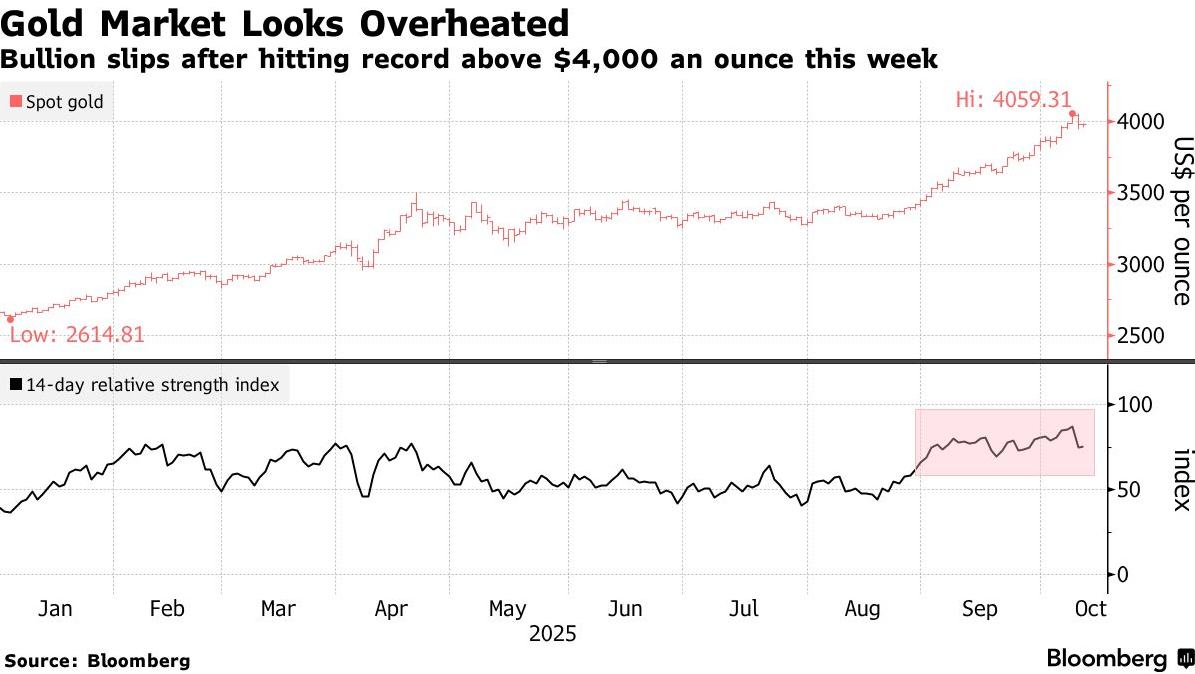
Core Viewpoint - Gold prices stabilized after falling below $4000 per ounce, closing at $3987.04, down 1.6% from the previous day, following a four-day rally that peaked at a historical high of $4059.31 per ounce [1][4] Group 1: Gold Market Dynamics - Gold prices experienced a significant drop after reaching a historical high, indicating a potential profit-taking behavior among investors due to overbought conditions [1][4] - Despite the recent decline, gold is expected to achieve its eighth consecutive week of gains, reflecting ongoing investor interest [4] Group 2: Silver Market Insights - Silver prices also fell after hitting a 40-year high of $51.235 per ounce, although it has seen a cumulative increase of approximately 70% this year, outperforming gold [1][4] - The silver market is facing a supply-demand imbalance, with predictions of a fifth consecutive year of supply shortages by 2025 [6] Group 3: Market Influences - The recent fluctuations in precious metals coincided with a downturn in the U.S. stock market, highlighting gold's dual role as a safe-haven asset and a risk asset during market corrections [4] - Concerns over inflation, unsustainable U.S. fiscal policies, and threats to the Federal Reserve's independence have increased the attractiveness of precious metals [4] Group 4: Industrial Demand for Silver - Silver's industrial applications, particularly in solar panels and wind turbines, account for over half of its total demand, emphasizing its importance beyond just investment [6] - The London silver market is experiencing unprecedented tightness, with rising borrowing costs and fears of potential tariffs on silver imports to the U.S. leading to rapid depletion of inventories [6]
IMF总裁:世界经济好于预期 但真正的考验可能即将到来
Sou Hu Cai Jing· 2025-10-09 09:07
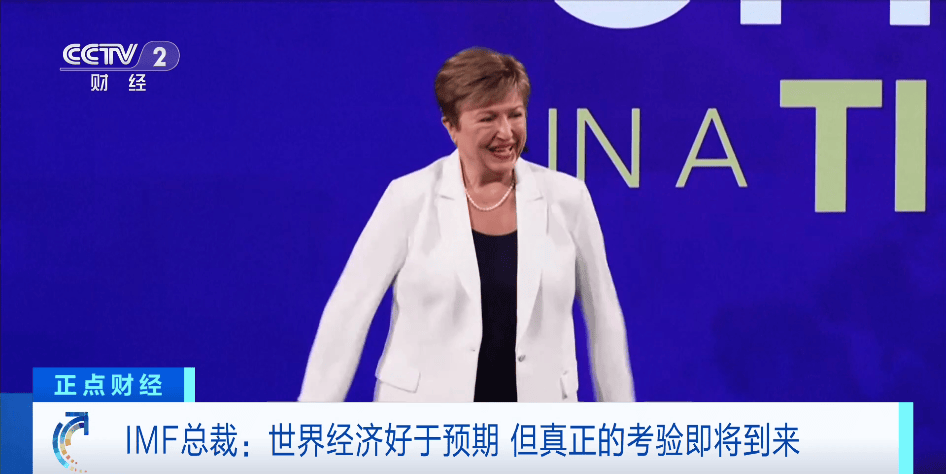
Group 1 - The global economy is performing better than expected but has not reached the desired level, with signs indicating that a true test may be imminent [1][5] - Current global conditions are characterized by significant changes due to geopolitical factors, technological revolutions, and demographic shifts, leading to a sharp increase in uncertainty [3] - The IMF President highlighted that the effects of tariff policies have not fully manifested, with potential inflationary pressures arising from compressed corporate profits in the U.S. [5] Group 2 - A loose financial environment is masking underlying weaknesses, and a significant correction in valuations could tighten financial conditions, adversely affecting global economic growth, particularly in developing countries [7] - The IMF's July World Economic Outlook projected a global GDP growth rate of 3% for this year, with a slowdown expected in 2024, and updates to these forecasts will be provided during the upcoming annual meeting [7]
IMF总裁:全球经济好于预期 但真正的考验即将到来
Yang Shi Wang· 2025-10-09 08:07
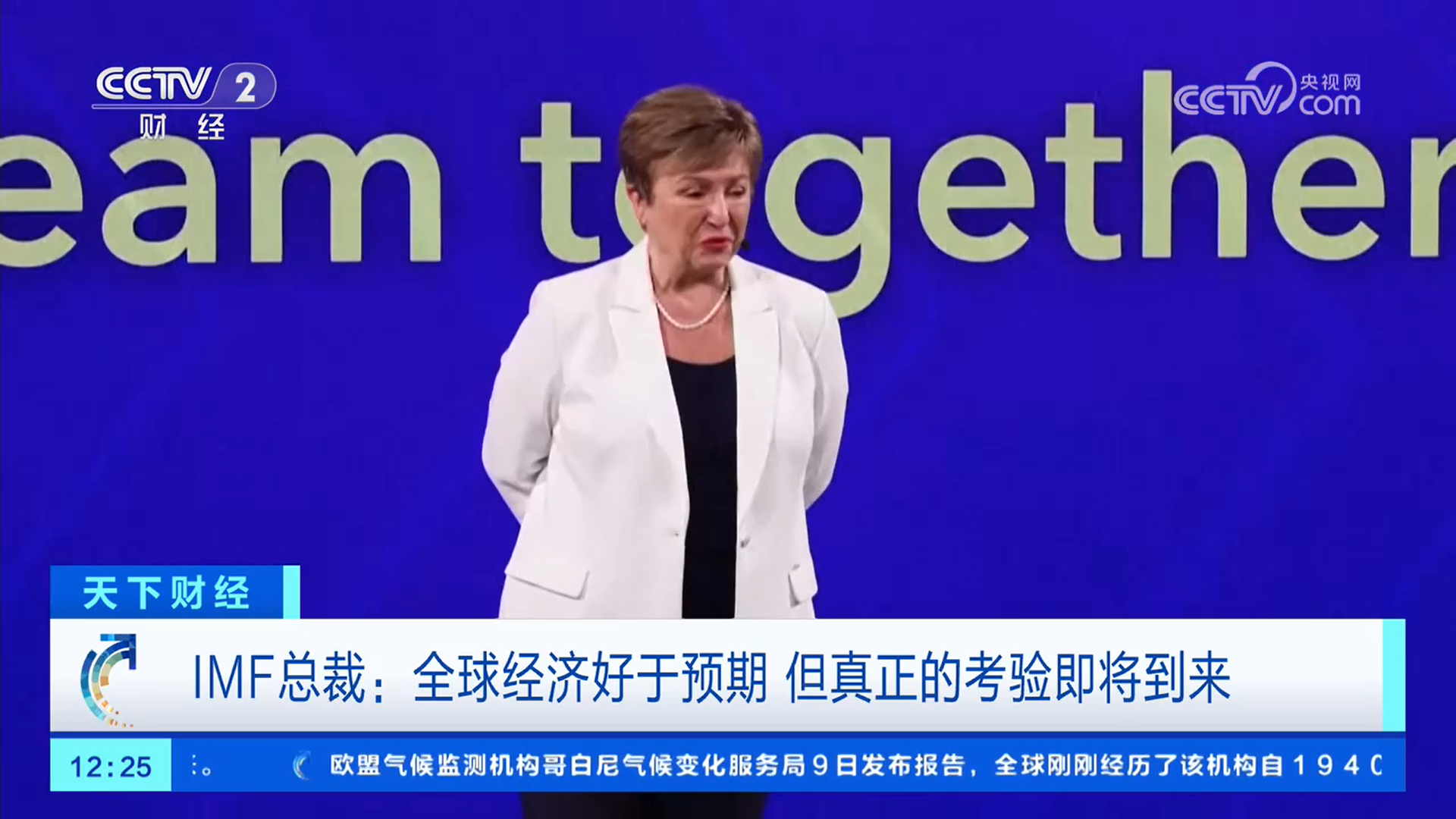
Group 1 - The global economy is performing better than expected but has not reached the necessary levels, indicating that a true test may be approaching [1][3] - Current global changes are influenced by geopolitical factors, technological revolutions, demographic shifts, and environmental damage, leading to a significant increase in uncertainty [3] - Tariff policies have not fully manifested their effects, with potential inflationary pressures arising from compressed corporate profits in the U.S. [4] Group 2 - A loose financial environment is masking underlying weak trends, and a significant valuation correction could tighten financial conditions, adversely affecting global economic growth, particularly for developing countries [4] - The IMF projects a global GDP growth rate of 3% for this year, with a slowdown expected in 2024, and will update its economic growth forecasts during the annual meeting from October 13 to 18 [4]
【百利好黄金专题】强化降息预期 黄金剑指4000
Sou Hu Cai Jing· 2025-10-09 03:00
Group 1 - Gold prices have been rising since August 22, closing September with a strong bullish trend, indicating robust market momentum [1] - The Federal Reserve lowered interest rates by 25 basis points during the September meeting, with expectations for further rate cuts increasing due to ongoing labor market weakness [1][4] - As of late October, the probability of a rate cut has risen to nearly 100%, with a 99.4% chance of a 25 basis point cut in October [4] Group 2 - The labor market is showing signs of weakness, with non-farm payrolls increasing by only 22,000 in August and a decrease of 32,000 in September's ADP data [3] - Revised data from the Labor Department indicates a reduction of 911,000 in actual non-farm employment over the past year, with an average monthly increase of only 71,000 [3] - Job openings rose to 7.23 million in August, but hiring plans have dropped to the lowest level since June of the previous year, indicating fewer opportunities for job seekers [3] Group 3 - The recent government shutdown on October 1 has raised concerns about delayed data releases, further increasing the likelihood of a dovish shift from the Federal Reserve [4] - Analysts suggest that if unemployment rates rise significantly, the Federal Reserve may need to adopt more aggressive rate cuts, potentially leading to market volatility [4] - Technically, gold is showing a bullish trend on both weekly and monthly charts, with expectations of reaching around $4,000 in the short term [4]

IMF总裁:全球经济的真正考验可能即将到来
Sou Hu Cai Jing· 2025-10-08 20:51
Group 1 - The core viewpoint is that the global economy is better than expected but has not reached the necessary level, with signs of potential challenges ahead [1] - The current global landscape is undergoing profound changes due to geopolitical factors, technological revolutions, demographic shifts, and environmental damage, leading to a significant rise in uncertainty [1] - The impact of tariff policies has not yet fully manifested, with potential inflationary pressures arising from compressed corporate profits in the U.S. and a shift of goods to other markets [1] Group 2 - A loose financial environment is masking underlying weaknesses, and a significant valuation correction could tighten financial conditions, adversely affecting global economic growth, particularly for developing countries [1] - Despite disruptions, global trade largely continues to follow established rules, and there is a call for countries to maintain trade as a key engine for economic growth [1] - The International Monetary Fund (IMF) predicts a global GDP growth rate of 3% for this year, with a slowdown expected in 2024, and will update its economic growth forecasts during the upcoming annual meeting [2]
【真灼机构观点】 周二美股收低,美国政府停摆市场不确定性加剧
Xin Lang Cai Jing· 2025-10-08 04:39
Group 1 - The U.S. stock market closed lower on Tuesday, with the S&P 500 index declining by 0.4% [3] - The government shutdown, stemming from budget disputes in Congress, has entered its third day, leading to delays in key economic data releases such as employment reports, which increases market uncertainty [3] - Historical performance of the S&P 500 index during non-recession periods shows that average returns remain positive, but an extended shutdown could trigger a debt ceiling crisis, amplify inflationary pressures, and weaken consumer confidence [3] Group 2 - The Hong Kong Stock Connect is suspended due to a public holiday in the domestic market [3]

【财经分析】英国经济增长动能持续疲弱:私人消费不足 企业投资积极性受挫
Xin Hua Cai Jing· 2025-10-02 07:20
Economic Growth Trends - The UK economy's growth momentum is showing signs of continued weakness, with a quarterly growth rate of 0.7% in Q1 slowing to 0.3% in Q2 [1] - Current data indicates that the growth rate is further declining in Q3, with July showing zero growth and PMI data suggesting a continued slowdown in August and September [1] Manufacturing Sector Challenges - The manufacturing PMI for September dropped to 46.2, marking a five-month low, indicating significant challenges for UK manufacturers due to low market sentiment and rising costs [1] - Manufacturers' confidence for the next 12 months remains low, reflecting ongoing difficulties in the sector [1] Retail Sector Performance - Retail sales in the UK fell by 0.1% from June to August, with a 0.6% decline from May to July, indicating a prolonged downturn in retail traffic [2] - The increase in household savings, which rose by 0.2 percentage points to 10.7%, suggests that consumers are prioritizing savings over spending [2] Inflation Impact - The UK's CPI remained at 3.8% year-on-year in July and August, contributing to weakened consumer confidence, particularly in food prices which rose by 4.2% [3] - Rising energy bills and concerns over potential tax increases are adding to consumer pressure [3] Business Investment Decline - Private sector investment fell by 1.1% in Q2, contrasting with a 3% increase in the same period last year, primarily due to reduced investment in equipment [4] - Government investment was the main contributor to the 0.3% growth in Q2, but overall fixed asset investment remains significantly lower compared to previous years [4] Recommendations for Economic Stability - To stabilize economic growth, it is crucial to enhance private consumption and business investment, with a focus on controlling inflation and stabilizing policy expectations [5] - The government is urged to utilize policy tools to lower costs for businesses and stimulate investment, particularly in the upcoming autumn budget [5]