产能去化

Search documents
反内卷+全面亏损,生猪行业迎剧变!全市场唯一农牧渔ETF(159275)随市回调,机构高呼布局时机或至!
Xin Lang Ji Jin· 2025-10-28 12:12
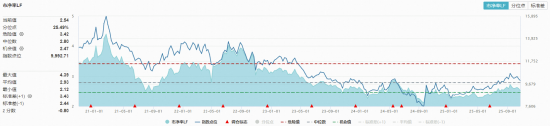
Group 1 - The agricultural, animal husbandry, and fishery sector experienced a market-wide pullback, with the only agricultural ETF (159275) closing down by 0.7% [1] - Key stocks in the sector, including animal health, broiler farming, and agricultural product processing, saw significant declines, with Bio-Stock dropping by 4.06% and several others falling over 2% [3] - The overall trend in pig prices remains downward, with current prices for fat pigs nearing 11 yuan/kg and weaned piglets dropping to around 150 yuan/head, indicating a phase of comprehensive losses in the industry [3] Group 2 - The agricultural sector's valuation is currently at a relatively low level, suggesting a good time for investment, with the agricultural ETF's index price-to-book ratio at 2.57, positioned at the 30.08 percentile over the past decade [3] - Guosen Securities is optimistic about the reversal of the livestock cycle by 2025, highlighting the potential for domestic beef and raw milk markets to rise [4] - The industry is expected to undergo a quality improvement and efficiency enhancement trend, with outdated capacities gradually being eliminated, leading to an increase in market share for financially stable producers [4] Group 3 - The agricultural ETF (159275) tracks the CSI Agricultural Index, with major holdings including leading companies in the sector, and approximately 40% exposure to pig-related stocks [5] - The index covers a wide range of industries within the agricultural sector, providing a comprehensive opportunity to capture the recovery of the entire agricultural value chain [5] - The ETF is the first and only one tracking the CSI Agricultural Index, which was established on December 31, 2004, and published on December 12, 2016 [8]


港股异动 | 乳业股午前普涨 原奶价格近期迎阶段性稳定 行业下半年去化有望提速
Xin Lang Cai Jing· 2025-10-28 04:04
Group 1 - Dairy stocks experienced a midday surge, with Yurun Dairy rising by 5.74% to HKD 3.13, Modern Dairy up by 3.36% to HKD 1.23, China Feihe increasing by 1.95% to HKD 4.18, and China Shengmu rising by 1.59% to HKD 0.32 [1] - Guosheng Securities reported that after a four-year decline, raw milk prices have recently stabilized, with the national average price increasing from CNY 3.02/kg on August 1 to CNY 3.04/kg by the end of September, and prices in Ningxia rising from CNY 2.1-2.2/kg to CNY 3.5-3.7/kg [1] - The increase in milk prices is attributed to demand from the Mid-Autumn Festival and National Day gifts, as well as a natural decrease in supply due to the "heat stress" phase for dairy cows from July to September [1] Group 2 - Tianfeng Securities noted that since September, while some regions have seen a rebound in raw milk prices due to pre-holiday stocking and student milk production demand, overall prices in major production areas remain stable [2] - Current milk prices are still below the cost line, leading to ongoing industry losses and financial pressure from silage, with a 0.18% month-on-month decrease in dairy cow inventory in September, following a 0.2% decline in August, totaling an approximate 8% reduction [2] - Despite short-term support for milk prices from holiday factors, the trend of capacity reduction in dairy companies continues, and the end of the capacity reduction cycle may be nearing, making a price cycle turning point worth anticipating [2]
银河证券:10月亏损加剧或将加速生猪养殖产能去化
Zheng Quan Shi Bao Wang· 2025-10-28 00:29
Group 1 - The core viewpoint of the article highlights that the intensified losses in October may accelerate the capacity reduction in the pig farming industry [1] - The report emphasizes the dual opportunities in the pig farming sector, considering the value of breeding sows and farming efficiency, predicting a year-on-year decline in pig prices by 2025 [1] - The focus is on high-quality pig enterprises with significant changes in marginal costs and good financial conditions due to policy-driven capacity reduction and industry losses [1] Group 2 - The pet food industry is in a growth phase, with an increasing market share for quality enterprises [1] - Attention is drawn to the post-cycle of the farming chain, recommending leading feed company Haida Group (002311) and animal vaccine-related enterprises [1] - Given the relatively low supply of yellow-feathered chickens and the upcoming peak season, high prices may continue in the future [1]

华福证券:情绪助推猪价反弹 关注二育进场持续性
智通财经网· 2025-10-27 06:15
Core Viewpoint - The recent increase in pig prices is driven by emotional factors and seasonal consumption recovery, with a focus on the sustainability of secondary fattening entry [2][3] Pig Farming Sector - The concentration of large pig sales has led to a decrease in large pig inventory, widening the price gap and increasing the enthusiasm for secondary fattening, with a sales proportion of 2.09% from October 11-20, up by 1.07 percentage points [1][2] - The national average pig price on October 24 was 11.81 yuan/kg, an increase of 0.63 yuan/kg week-on-week [2] - The average weight of pigs sold continues to decline, with an average weight of 127.90 kg for the week of October 24, down by 0.35 kg week-on-week [2] - Long-term expectations indicate a downward shift in pig prices, with increasing losses in farming and enhanced expectations for capacity reduction policies, which may lead to a long-term upward shift in the price center [1][3] Cattle Sector - Short-term prices for beef cattle have slightly declined, while long-term trends suggest a potential upward cycle for beef prices due to previous long-term losses leading to capacity clearance [4] Dairy Sector - Raw milk prices are currently at a cyclical low, with a price of 3.04 yuan/kg as of October 17, remaining stable week-on-week but down 31% from the cyclical high [4] - The ongoing losses in raw milk are expected to drive continued capacity reduction, potentially stabilizing prices in the future [4] Poultry Sector - The price of white chickens remains stable, with a price of 6.88 yuan/kg as of October 24, reflecting a slight increase week-on-week [5] - Egg prices have decreased, with an average price of 6.06 yuan/kg, while chick prices remain stable [5] Agricultural Products - Soybean meal prices have rebounded from a low, with a current price of 2984 yuan/ton as of October 24, down by 26 yuan/ton week-on-week [7] - The futures market for soybean meal showed a recovery, with the main contract closing at 2933 yuan/ton, up by 65 yuan/ton week-on-week [7]
农牧渔板块强势爆发,高“含猪量”农牧渔ETF(159275)盘中涨近2%!布局时机或至?
Xin Lang Ji Jin· 2025-10-27 05:26
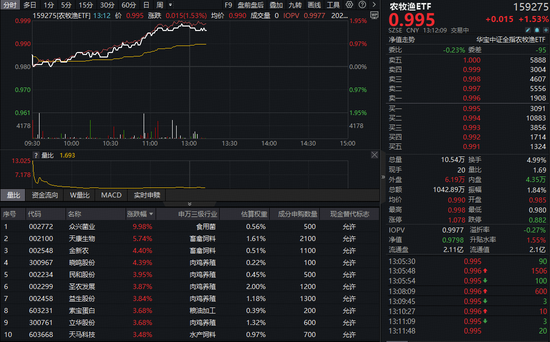
Core Viewpoint - The agricultural, animal husbandry, and fishery sector is experiencing a strong upward trend, with the first agricultural ETF (159275) showing significant gains, driven by rising prices in key components like edible fungi and poultry feed [1][3]. Market Performance - The agricultural ETF (159275) opened with a maximum intraday increase of 1.84%, closing with a gain of 1.53% [1]. - Key stocks in the sector, such as Zhongxing Junye and Tiankang Biology, saw substantial increases, with some stocks reaching their daily limit [1]. Price Trends - As of October 24, 2025, the average price of live pigs in China was 11.81 CNY/kg, reflecting a week-on-week increase of 0.63 CNY/kg but a year-on-year decrease of 5.74 CNY/kg [2][3]. Industry Insights - Short-term price increases in pig farming are attributed to seasonal consumption recovery and heightened second fattening sentiment, while long-term trends indicate a downward shift in pig prices, leading to increased production losses [3]. - The agricultural sector's valuation remains relatively low, with the market's first agricultural ETF showing a price-to-book ratio of 2.53, placing it in the lower 25.1% of the past decade [3]. Future Outlook - Analysts suggest that the current low prices of live pigs are putting pressure on cash flow for farming entities, potentially accelerating capacity reduction in the industry [4]. - Continuous monitoring of breeding sow inventory is recommended as the industry faces significant losses and ongoing regulatory policies [4]. - The agricultural ETF (159275) is highlighted as a key investment opportunity, tracking the CSI Agricultural Index, with a focus on leading companies in the sector [5].
期货市场交易指引2025年10月27日-20251027
Chang Jiang Qi Huo· 2025-10-27 03:58
Report Industry Investment Ratings - **Macro Finance**: Long-term bullish on stock indices, hold a wait-and-see attitude towards treasury bonds [1][5] - **Black Building Materials**: Range trading for coking coal and rebar, sell call options for glass [1][7][8] - **Non-ferrous Metals**: Cautiously hold long positions in copper on dips, buy aluminum on dips after pullbacks, hold a wait-and-see attitude or short nickel on rallies, range trade tin, gold, and silver [1][10][12] - **Energy and Chemicals**: PVC, caustic soda, styrene, rubber, urea, methanol, and PTA are expected to fluctuate; short the 01 contract of soda ash [1][21][23][34] - **Cotton Spinning Industry Chain**: Cotton and cotton yarn are expected to fluctuate strongly; PTA is expected to fluctuate at a low level; apples are expected to fluctuate strongly; dates are expected to fluctuate [1][37][38][39] - **Agriculture and Animal Husbandry**: Short pigs on rallies, short eggs on rallies, corn is expected to fluctuate weakly, bean meal is expected to fluctuate at a low level, and oils are expected to have limited corrections [1][40][42][46] Core Views - The report provides investment strategies and market outlooks for various futures products, taking into account factors such as supply and demand, macroeconomic conditions, and policy changes [1][5][7] - It suggests specific trading strategies for each product, such as range trading, buying on dips, or selling call options [1][7][8] - The report also highlights key factors to watch for each product, including macro data, policy changes, and supply and demand dynamics [22][24][25] Summary by Category Macro Finance - **Stock Indices**: Expected to fluctuate strongly in the short term and be bullish in the long term. Consider buying on dips [1][5] - **Treasury Bonds**: Expected to fluctuate. Hold a wait-and-see attitude and pay attention to important financial policies [1][5] Black Building Materials - **Coking Coal and Coke**: Market sentiment is bullish, and prices are expected to be strong in the short term due to tight supply [6][7] - **Rebar**: Futures prices are expected to fluctuate at a low level. Consider buying the RB2601 contract near 3000 [7] - **Glass**: Fundamental conditions are deteriorating, and the market is expected to be weak. Consider selling call options on the 01 contract [8][9] Non-ferrous Metals - **Copper**: Prices are expected to fluctuate higher in the short term. Consider holding a small long position on dips and avoid chasing highs [10] - **Aluminum**: Prices are expected to fluctuate at a high level. Consider taking profits on long positions on rallies and pay attention to tariff developments [12] - **Nickel**: Supply is expected to be abundant in the long term. Hold a wait-and-see attitude or short on rallies [17] - **Tin**: Prices are expected to fluctuate. Range trade with reference to the 12 contract's range of 270,000 - 290,000 yuan/ton [18] - **Gold and Silver**: Prices are expected to have support in the medium term but are in a short-term adjustment. Range trade and pay attention to the Fed's interest rate decision [19][20] Energy and Chemicals - **PVC**: Expected to fluctuate. The 01 contract is temporarily watched in the range of 4600 - 4800 [21][22] - **Caustic Soda**: Expected to fluctuate weakly. The 01 contract is temporarily watched for resistance at 2450 [23][24] - **Styrene**: Expected to fluctuate. Watch the range of 6300 - 6700 [24][25] - **Rubber**: Expected to fluctuate. Watch for support at 15,000 [26][27] - **Urea**: Expected to fluctuate. The 01 contract's range is referenced at 1600 - 1700 [28][29] - **Methanol**: Expected to fluctuate. The 01 contract's operating range is referenced at 2230 - 2330 [30][31] - **Polyolefins**: Expected to fluctuate weakly. The L2601 contract is watched for support at 7000, and the PP2601 contract is watched for support at 6600 [31][32] - **Soda Ash**: Adopt a short strategy for the 01 contract [34][35][36] Cotton Spinning Industry Chain - **Cotton and Cotton Yarn**: Expected to fluctuate strongly due to positive factors such as production and trade negotiations [37] - **PTA**: Expected to fluctuate at a low level. Watch the range of 4400 - 4700 [37][38] - **Apples**: Prices are expected to be strong due to factors such as quality and delivery costs [38] - **Dates**: Expected to fluctuate. Pay attention to price changes after the new season's centralized listing [39] Agriculture and Animal Husbandry - **Pigs**: Prices are under pressure in the medium term. Adopt a short strategy for the 01, 03, and 05 contracts and be cautious about bottom-fishing for the 07 and 09 contracts [40][41][42] - **Eggs**: Prices are expected to rebound under pressure. Short on rallies for the 12 and 01 contracts and pay attention to factors such as culling and policies [42] - **Corn**: Expected to fluctuate weakly. Adopt a short strategy for the 11 contract and watch for the 1 - 5 reverse spread [43][44] - **Bean Meal**: Expected to fluctuate at a low level. Consider buying on dips for the M2601 contract and use options to hedge risks [44][45][46] - **Oils**: Expected to have limited corrections. Wait for the correction to end and then go long for the 01 contracts of soybean, palm, and rapeseed oils [46][51]
东方证券农林牧渔行业周报(20250920-20251026):二育及需求传导下猪价企稳,反弹力度或有限-20251026
Orient Securities· 2025-10-26 09:50
Investment Rating - The report maintains a "Positive" investment rating for the agriculture industry [5] Core Viewpoints - The pig farming sector is expected to benefit from recent policies and market forces that promote capacity reduction, leading to long-term performance improvements [3][36] - The current trend in grain prices is upward, indicating a favorable fundamental outlook for planting and seed industries, highlighting significant investment opportunities [3][36] - The pet food sector is experiencing growth, with increasing recognition of domestic brands and continuous market expansion [3][36] Summary by Relevant Sections Pig Farming - The current pig price is weak, with the average price for external three yuan pigs at 11.82 yuan/kg, a week-on-week increase of 5.82% [10][44] - The industry is entering a phase of capacity reduction, with pig prices expected to stabilize and potentially rise in the long term due to policy support [7][10] Poultry - White feather broiler prices have shown slight increases, with the current price at 6.88 yuan/kg, reflecting a week-on-week rise of 0.15% [13][44] - The yellow feather broiler prices continue to remain strong, indicating a stable market environment [21][44] Feed Sector - Corn prices have decreased slightly, while soybean meal and wheat prices have increased, indicating a mixed market for feed ingredients [23][44] - The average price of pig feed is 3.37 yuan/kg, showing a slight decrease of 0.30% [44] Bulk Agricultural Products - Natural rubber prices have risen, with the current price at 15,335 yuan/ton, a week-on-week increase of 4.36% [30][44] - The report indicates that the down cycle for bulk agricultural products is nearing its end, with signs of recovery in certain segments [30][44]


农林牧渔行业研究:猪价底部震荡,关注产能去化情况
SINOLINK SECURITIES· 2025-10-26 09:34
Investment Rating - The report indicates a neutral investment rating for the agricultural sector, with expectations of limited price fluctuations in the near term [71]. Core Insights - The agricultural sector index has underperformed compared to the Shanghai Composite Index, with a weekly decline of 1.36% [13][14]. - The report highlights a downward trend in pig prices, with the industry currently facing losses, and anticipates further price declines in the short term [3][20]. - The poultry sector shows signs of stabilization, particularly for yellow-feathered chickens, while white-feathered chickens continue to face price pressures [4][34]. - The beef market is expected to see price increases as it enters the consumption peak season, despite ongoing losses in the dairy sector [5][39]. - The planting industry is experiencing short-term supply pressures, but there is potential for improvement if grain production decreases significantly [6][46]. - Feed prices have stabilized, and the aquaculture sector is showing positive price trends for certain species [58]. Summary by Sections 1. Market Review - The agricultural index closed at 2889.08 points, down 1.36% week-on-week, while the Shanghai Composite Index rose by 2.88% [13][14]. 2. Key Data Tracking 2.1 Swine Farming - National pig prices are at 11.82 yuan/kg, with a weekly increase of 5.82%. The average weight of pigs at slaughter is 127.90 kg, indicating high inventory levels despite price declines [20][21]. - The industry is expected to continue facing losses, with a recommendation to focus on low-cost, high-quality enterprises like Muyuan Foods and Wens Foodstuffs [3][21]. 2.2 Poultry Farming - The average price for white feather chickens is 6.88 yuan/kg, showing slight increases, while profits for parent stock chickens have improved [32][34]. - The report suggests that if consumer demand recovers, poultry prices may rebound [34]. 2.3 Livestock - Live cattle prices in Shandong are at 27.12 yuan/kg, with expectations for price increases as the consumption season approaches [5][39]. - The dairy sector is under pressure, but there are signs of potential recovery in raw milk prices next year [5][39]. 2.4 Planting Industry - Domestic corn prices are at 2174.29 yuan/ton, with fluctuations expected due to new crop releases and external uncertainties [45][46]. - The report emphasizes the importance of monitoring grain prices and potential production declines [46]. 2.5 Feed and Aquaculture - Feed prices remain stable, with specific fish prices showing upward trends, particularly for shrimp and certain fish species [58][63].
世界猪博会开幕+新希望加码养殖!农牧渔ETF(159275)微涨0.4%!机构:产能去化加速
Xin Lang Ji Jin· 2025-10-24 01:57
Group 1 - The agricultural and fishery ETF (159275) showed stable performance with a price increase of 0.4% and a trading volume of 696,000 yuan, bringing the fund's total size to 207 million yuan [1] - Key performing stocks included Honghui Fruits and Vegetables, Yisheng Shares, and Zhongxing Mushroom Industry, with increases of 3.28%, 3.13%, and 1.66% respectively [1] - Conversely, stocks such as Xiaoming Shares, COFCO Technology, and Zhongshui Fishery experienced declines of 4.07%, 3.53%, and 1.8% respectively [1] Group 2 - The 14th World Pig Industry Expo will be held from October 18 to 20, 2025, in Changsha, showcasing over 800 global enterprises and focusing on new technologies in the pig farming industry [1] - New Hope Liuhe invested 20 million yuan in September to establish a biotechnology company, enhancing its feed production and aquaculture business [1] - The pig farming industry is facing supply pressure with ongoing price declines, while poultry farming is impacted by avian influenza, creating uncertainty in breeding stock [2] Group 3 - The pig industry is entering a regulatory phase, with authorities aiming to stabilize prices through capacity reduction, although short-term pressures remain due to increased market supply [2] - The animal health sector is seeing improved competition dynamics, with clinical trials for African swine fever vaccines enhancing market expectations [2] - The pet food market is experiencing rapid growth, with domestic brands gaining traction despite limited impacts from tariffs on exports [2]

高层召开重磅会议!农牧渔板块持续盘整,资金接连加码!机构高呼底部或现
Xin Lang Ji Jin· 2025-10-24 01:25
Group 1 - The agricultural sector is experiencing adjustments, yet funds are increasingly investing in related ETFs, with nearly 2 billion yuan accumulated since September 29 [1] - The Ministry of Agriculture and Rural Affairs held a meeting on October 21 to enhance grain yield through technology integration and support for genetically modified crops, benefiting related seed and planting companies [1] - In September, listed pig companies reported a decline in sales revenue, totaling 21.647 billion yuan, a year-on-year decrease of 18.74% and a month-on-month decrease of 10.77%, primarily due to falling pig prices [2] Group 2 - The average selling price of pigs dropped over 30% year-on-year and 5.42% month-on-month, reaching the lowest level since 2022 [2] - The Ministry of Agriculture and other authorities are focusing on controlling production capacity and reducing weight, which is expected to accelerate capacity reduction in the fourth quarter [2] - The current valuation of the agricultural sector is relatively low, with the agricultural ETF's price-to-book ratio at 2.54, indicating a good investment opportunity [2] Group 3 - Recent fluctuations in pork and piglet prices, along with increased slaughter rates, indicate a tightening supply in the pig farming industry [3] - The number of breeding sows is decreasing, and self-breeding operations are facing losses, leading to enhanced capacity reduction motivation [3] - In the livestock sector, beef prices are expected to rise in the medium to long term, while dairy prices remain low, and poultry prices are stable [3] Group 4 - The first agricultural ETF (159275) tracks the CSI Agricultural Index, with major holdings in leading companies like Muyuan Foods and Wens Foodstuffs, comprising about 40% of the index [4] - The ETF focuses on high-concentration industries, with over 90% of the top ten industries in agriculture, breeding, and feed sectors [4] - Investors can also access the agricultural ETF through linked funds for broader exposure [4]