
供给侧结构性改革

Search documents
中美差距开始缩小!我国GDP爆增3.36万亿,再次接近美国70%水平
Sou Hu Cai Jing· 2025-11-16 13:49
Economic Comparison - The U.S. economy faces multiple constraints, with public debt exceeding $34 trillion and interest payments accounting for 3.5% of GDP, limiting fiscal space and resulting in a mere 2.1% growth in infrastructure investment [1] - In contrast, China's fixed asset investment maintains a growth rate of 6.3%, supported by supply-side structural reforms, highlighting its resilience in the global value chain [1] GDP Revision Insights - The revision of China's GDP in 2023 reflects a comprehensive coverage from the fifth national economic census, increasing sample enterprises from 800,000 to 1 million and enhancing statistical accuracy by 15% [3] - The adjustment raised the value added of the tertiary industry by 1.1 trillion yuan, with significant contributions from the information transmission and software service sectors, driven by the deployment of over 3.2 million 5G base stations [3] Structural Adjustments - The share of the secondary industry remains stable at 37.9%, but there is a shift from traditional steel to high-tech sectors like photovoltaic cells, with a 20% increase in export volume [5] - The contribution rate of consumption in China has risen to 52%, with e-commerce transactions growing by 12%, compensating for fluctuations in exports [5] Employment and Investment - China's infrastructure investment in 2023 reached 10 trillion yuan, creating employment for 100 million people, while R&D expenditure accounted for 2.64% of GDP [7] - The high-tech manufacturing sector saw a significant increase, with the added value reaching 16.3% of industrial output, indicating a shift towards digital and intelligent manufacturing [9] Trade Resilience - In 2023, China's goods trade amounted to $5.3 trillion, with service trade contributing an additional $50 billion, showcasing resilience amid U.S.-China trade tensions [13] - The digital silk road facilitated over $100 billion in exports of 5G equipment, supporting digitalization along the Belt and Road [13] Cultural and Tourism Recovery - The cultural and tourism sectors demonstrated strong recovery, with domestic tourism generating 5 trillion yuan and digital content reaching 150 billion yuan [15] - Employment in the platform economy has expanded to 200 million, reflecting the robust growth of flexible employment opportunities [15] Future Projections - By 2025, China's GDP is projected to reach 141 trillion yuan, with a growth rate of 5.2%, while the U.S. is expected to grow at 1.9%, indicating a narrowing gap between the two economies [17] - This trend is expected to enhance China's global influence and provide a stable economic model for future development [17]

2025年10月经济数据点评:10月经济放缓:稳投资还是稳消费?
Minsheng Securities· 2025-11-14 09:16
Economic Performance Overview - In October, the industrial added value increased by 4.9% year-on-year and 0.17% month-on-month[1] - The total retail sales of consumer goods reached 46,291 billion yuan, growing by 2.9% year-on-year and 0.16% month-on-month[1] - From January to October, fixed asset investment (excluding rural households) totaled 408,914 billion yuan, showing a year-on-year decline of 1.7%[1] Investment and Consumption Trends - Historical data suggests that investment growth typically rebounds first during economic stabilization periods, as seen in 2008-09 and 2020-21[2] - Manufacturing investment saw a significant decline, with a year-on-year drop from -1.9% in September to -6.7% in October[3] - Infrastructure investment growth decreased from -4.6% in September to -8.9% in October, indicating a low level of infrastructure activity[3] Consumer Behavior Insights - The retail sales growth rate slightly declined to 2.9% in October, influenced by a high base from the previous year and the waning effects of the "old-for-new" policy[4] - The early "Double Eleven" shopping festival helped mitigate the decline in retail sales growth, which did not significantly worsen despite multiple pressures[4] Real Estate Market Dynamics - From January to October, real estate investment cumulative growth fell to -14.7%, down from -13.9% previously, reflecting weak demand and high base effects from last year[5] - The need for further policy support in the real estate sector is emphasized to balance supply and demand and promote high-quality development[5] Risk Factors - Potential risks include policies falling short of expectations, unexpected changes in the domestic economic situation, and fluctuations in exports[6]
尿素 供应持续增长
Qi Huo Ri Bao· 2025-11-13 01:54
Group 1 - Urea prices have been weak this year, with production profits for fixed-bed and natural gas-based urea at -210 CNY/ton and -167 CNY/ton respectively [1] - Since mid-October, urea prices have started to rise due to news from Indian tenders, but high inventory levels in urea plants limit the potential for price rebounds [1] - From January to September 2025, China's urea production reached 53.18 million tons, an increase of 4.31 million tons or 8.1% year-on-year, with daily operating rates at 85.15%, up 3.58 percentage points year-on-year [1] Group 2 - The urea industry has experienced severe overcapacity after years of rapid growth, leading to significant losses for companies [2] - The government has implemented supply-side structural reforms, eliminating 16.22 million tons of urea capacity during the 13th Five-Year Plan [2] - New capacity additions are planned for the coming years, with 394,000 tons in 2024, 380,000 tons in 2025, 688,000 tons in 2026, and 590,000 tons in 2027, resulting in an average annual production growth of about 5% [2] Group 3 - In 2024, domestic controls on urea exports will be strengthened, with a complete suspension of exports in the second half of the year [3] - The export policy is expected to remain unchanged, with a limited and orderly export model, and the total export volume is anticipated to be constrained [3] - Overall demand growth for urea is expected to remain around 3%, while production growth is projected at approximately 5%, leading to excess supply that needs to be managed through exports [3]
联化科技注销1145.99万股股份果断“瘦身”,股本精简迎发展新机
Quan Jing Wang· 2025-11-12 15:01
Core Viewpoint - The company has completed the cancellation of 11.4599 million shares, reducing its total share capital from 911 million to 899 million shares, which aims to enhance shareholder value and long-term investment potential [1][4] Group 1: Share Buyback and Cancellation - The share cancellation was a strategic decision made in October, shifting from an employee stock ownership plan to direct cancellation, reflecting the company's commitment to shareholder interests [1][3] - The company spent approximately 79.9967 million yuan on the repurchase, with an average price of 6.98 yuan per share, which will directly improve key financial metrics such as earnings per share [1][3] Group 2: Business Strategy and Acquisitions - The company has acquired a 20% stake in JunTai Pharmaceutical for 25 million yuan, achieving 100% ownership, which allows for better integration of resources in the pharmaceutical sector [2] - This acquisition aligns with the company's strategy to strengthen its position in the pharmaceutical and chemical industry, laying a solid foundation for long-term growth [2] Group 3: Industry Context and Future Outlook - The Ministry of Industry and Information Technology has set a target for the petrochemical industry to achieve an average annual growth of over 5% from 2025 to 2026, emphasizing supply-side structural reforms [2] - The company is well-positioned to benefit from industry consolidation and policy improvements, particularly in the pharmaceutical CDMO sector, which is expected to gain market share amid industry changes [3][4]

促民间投资发展“13条”发布,多位权威专家解读
Zheng Quan Shi Bao· 2025-11-11 07:33
Core Points - The State Council has issued measures to stimulate private investment, addressing key issues such as market access, fair competition, and service optimization, with 13 specific initiatives aimed at stabilizing employment, enterprises, markets, and expectations [1][2] - The measures aim to eliminate barriers to private investment, encouraging participation in key sectors traditionally dominated by state capital, particularly in urban infrastructure projects [2][3] - The initiatives extend to low-altitude economy infrastructure and service market access, as well as major scientific research infrastructure, reflecting a comprehensive approach to opening investment opportunities [3] Investment and Financing Focus - The measures focus on addressing the "investment" and "financing" concerns of private investors, ensuring legal rights in various sectors and supporting the establishment of significant pilot platforms [4] - On the investment side, the measures propose increased central budget support for qualifying private investment projects and the use of new policy financial tools to enhance project capital [4][5] - On the financing side, the measures emphasize the implementation of inclusive credit policies and support for technology-driven enterprises, including the issuance of real estate investment trusts (REITs) [4][6] Economic Impact - Private capital contributes to half of fixed asset investment and provides over 80% of urban employment, indicating that stimulating private investment is crucial for economic growth and industrial transformation [7] - The active participation of private capital is expected to expand overall investment scale and effectively boost short-term economic growth, playing a vital role in supply-side structural reform [7] - The measures signify the government's commitment to deepening reforms and supporting the development of the private economy, facilitating its involvement in infrastructure and new industries [7]
促民间投资发展“13条”发布!多位权威专家解读
Zheng Quan Shi Bao· 2025-11-11 05:09
Core Viewpoint - The State Council has issued measures to stimulate private investment, addressing key issues such as market access, fair competition, and service optimization, which will significantly impact the development of the private economy [1] Group 1: Market Access and Investment Opportunities - The measures aim to eliminate hidden barriers to private investment, encouraging participation in key sectors like railways and nuclear power, with a minimum private capital stake of over 10% for eligible projects [2] - The initiative opens up opportunities for private capital in urban infrastructure projects, reflecting a strong commitment from the state to support private enterprises in this area [2][3] Group 2: Focus on Investment and Financing - The measures emphasize addressing the core concerns of private investment, particularly in the areas of investment and financing, by enhancing support for eligible projects through central budget investments and new policy financial tools [4] - It includes provisions for improving access to financing for private enterprises, such as implementing inclusive credit policies and supporting the issuance of real estate investment trusts (REITs) [4][5][6] Group 3: Economic Impact and Development - Private capital contributes to half of fixed asset investments and over 80% of urban employment, indicating that stimulating private investment is crucial for economic growth and industrial transformation [7] - The measures are expected to enhance the role of private investment in driving economic growth and supporting structural reforms, thereby promoting sustainable economic development [7]
深化新时代做好经济工作的规律性认识
Jing Ji Ri Bao· 2025-11-11 00:10
Core Insights - The article emphasizes the significance of Xi Jinping's economic thought as a guiding framework for China's economic development, highlighting its historical achievements and transformative changes since the 18th National Congress of the Communist Party of China [1][10]. Group 1: Centralized Leadership - The necessity of maintaining the Party's centralized leadership over economic work is a key original contribution of Xi Jinping's economic thought, ensuring that the economy develops in the correct direction [3][4]. - The central economic work meetings have consistently reinforced this principle, emphasizing the Party's authoritative role during critical historical moments [3][4]. Group 2: High-Quality Development - Xi Jinping's assertion that China's economy has transitioned from a phase of rapid growth to one of high-quality development is a pivotal recognition, shaping economic policies and macroeconomic adjustments [4][5]. - Subsequent meetings have reiterated the importance of high-quality development as the primary task for economic construction, linking it to the broader goals of modernization and sustainable growth [4][5]. Group 3: People-Centric Development - The principle of development for the people is a fundamental aspect of Xi Jinping's economic thought, emphasizing the need to prioritize people's interests in economic decision-making [5][6]. - This approach has been integrated into various strategic frameworks, ensuring that economic policies align with the needs and aspirations of the populace [5][6]. Group 4: Macroeconomic Governance - The introduction of supply-side structural reforms marks a significant advancement in macroeconomic governance, moving beyond traditional demand management approaches [6][7]. - The emphasis on balancing total supply and demand, along with proactive policy adjustments, reflects a mature approach to economic governance [6][7]. Group 5: Reform and Opening-Up - The recognition that deepening reform and opening-up is essential for enhancing economic vitality is a critical aspect of Xi Jinping's economic thought [7][8]. - This includes addressing systemic barriers to development and leveraging institutional advantages to foster collective strength in overcoming challenges [7][8]. Group 6: Development and Security - The increasing importance of balancing development and security in the face of global uncertainties is highlighted, with a focus on risk awareness and proactive measures to safeguard economic stability [8][9]. - The interaction between high-quality development and high-level security is emphasized as essential for sustainable progress [8][9]. Group 7: Methodological Insights - A problem-oriented approach to economic strategy, emphasizing stability and progress, is a key methodological insight from Xi Jinping's economic thought [9][10]. - The integration of systematic thinking and coordinated efforts in policy implementation is crucial for achieving economic objectives [9][10].
21评论丨需将潜在消费需求转为增长动力
2 1 Shi Ji Jing Ji Bao Dao· 2025-11-10 23:31
Core Insights - The overall price level in China is showing signs of recovery, indicating an improvement in terminal demand, as evidenced by the CPI turning positive and a narrowing decline in PPI [1][2] Group 1: Consumer Trends - The robust increase in service consumption prices reflects a significant recovery in the service sector, driven by short-term consumption during holidays and a long-term shift towards service-oriented consumption [1][2] - During the National Day and Mid-Autumn Festival, travel-related prices surged, with hotel accommodation, flight tickets, and tourism prices rising by 8.6%, 4.5%, and 2.5% respectively, indicating strong holiday economic growth [1] Group 2: Structural Changes in Consumption - There is a clear structural shift from physical goods consumption to service consumption, with prices for medical and domestic services showing a consistent upward trend, supported by rising income levels and favorable policies [2][3] - Policies aimed at boosting consumption have effectively stimulated demand in certain industrial consumer goods, with prices for home appliances and durable goods rising between 2.4% and 5% [2] Group 3: Supply and Demand Dynamics - The ongoing capacity management in key industries is promoting a rebalancing of market supply and demand, leading to price stabilization in sectors like coal, photovoltaic, cement, and lithium batteries [3] - The current price recovery reflects substantial improvements in domestic demand, although the recovery momentum is still accumulating and shows structural differentiation [4] Group 4: Policy Recommendations - To sustain the positive trend in domestic demand, macro policies should continue to focus on optimizing consumption promotion strategies, especially during peak shopping seasons like "Double Eleven" and New Year [4] - Long-term policies should emphasize structural reforms on the supply side while closely integrating with demand recovery efforts to enhance consumer and business confidence [4]
光伏ETF上周领涨,机构称产业链或迎价值重构丨ETF基金周报
2 1 Shi Ji Jing Ji Bao Dao· 2025-11-10 03:08
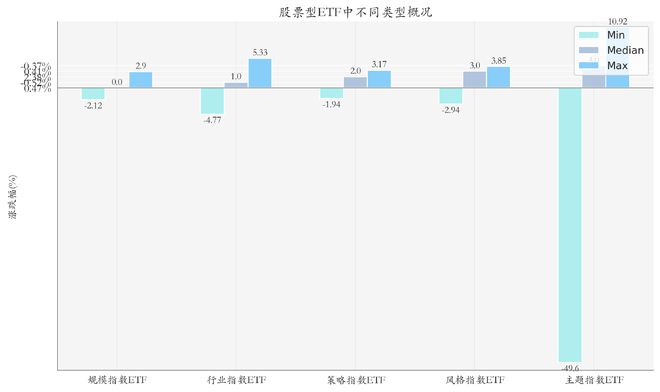
Market Performance - The Shanghai Composite Index rose by 1.08% last week, closing at 3997.56 points, with a peak of 4012.01 points [1] - The Shenzhen Component Index increased by 0.19%, closing at 13404.06 points, with a high of 13496.7 points [1] - The ChiNext Index saw a rise of 0.65%, ending at 3208.21 points, with a maximum of 3240.34 points [1] - In contrast, major global indices experienced declines, with the Nasdaq Composite down 3.04%, the Dow Jones Industrial Average down 1.21%, and the S&P 500 down 1.63% [1] ETF Market Performance - The median weekly return for stock ETFs was 0.31% [2] - The highest weekly return among scale index ETFs was 2.9% for the Penghua CSI 800 Free Cash Flow ETF [2] - The top-performing industry index ETF was the Southern CSI New Energy ETF, with a return of 5.33% [2] - The highest return in thematic index ETFs was 10.92% for the Huaxia CSI Electric Grid Equipment Thematic ETF [4] ETF Liquidity and Fund Flow - Average daily trading volume for stock ETFs decreased by 15.7%, while average daily trading volume increased by 9.3% [6] - The top five stock ETFs with the highest inflows included the Guotai CSI All-Share Securities Company ETF, which saw an inflow of 400 million yuan [9] - The top five stock ETFs with the largest outflows included the E Fund ChiNext ETF, which experienced an outflow of 290 million yuan [10] ETF Financing and Margin Trading - The financing balance for stock ETFs decreased from 49.1454 billion yuan to 47.9148 billion yuan [11] - The highest financing buy amount was 486 million yuan for the Huaxia SSE Sci-Tech 50 ETF [11] ETF Market Size and Composition - The total market size for ETFs reached 572.989 billion yuan, with stock ETFs accounting for 373.4058 billion yuan [14] - Stock ETFs represent 79.0% of the total number of ETFs and 65.2% of the total market size [16] New ETF Issuance - No new ETFs were issued last week, but eight new ETFs were established, including the Huaxia CSI Photovoltaic Industry ETF [17] Industry Insights - Industrial chain restructuring in the photovoltaic sector is anticipated, with Q3 showing a trend of reduced losses in the main chain [17] - The supply-demand relationship in the photovoltaic industry is expected to recover rapidly, driven by supply-side structural reforms and new technological changes [17]
成本支撑将显现 PVC后续下行空间相对有限
Zhong Guo Jin Rong Xin Xi Wang· 2025-11-09 23:36
Core Viewpoint - The PVC market has experienced a significant decline, with prices dropping to around 4600 yuan/ton, nearing a ten-year low, primarily driven by weak demand and unfavorable fundamental factors rather than seasonal expectations [1] Supply and Production - The PVC industry is facing a substantial increase in production capacity, with nine new plants expected to be operational in 2025, adding nearly 2.5 million tons of capacity, which is projected to exceed a 10% growth rate [1] - New production facilities have already been launched in 2023, including 200,000 tons/year from Qingdao Bay and 250,000 tons/year from Xinpu Chemical, with more significant plants scheduled to come online in the second half of the year [1] Demand Dynamics - Weak demand has become a norm in the PVC market, heavily influenced by the sluggish real estate and infrastructure sectors, which account for 80% of PVC's downstream demand [2] - Despite government policies aimed at stimulating the market, core data such as new construction starts remain low, limiting effective demand growth [2] - PVC exports have increased significantly, with over 2.6 million tons expected in 2024, but recent trade barriers, particularly from India, have complicated export dynamics [2] Operating Rates and Financial Health - The operating rate for PVC has decreased to around 76%, reflecting a historical low, with production temporarily dropping to approximately 470,000 tons per week [3] - The industry has faced ongoing financial pressure, with losses in PVC production reaching around 800 yuan/ton, leading to some companies reducing production loads [4] - The combined profitability of PVC and caustic soda has been negative for a month, indicating a challenging financial environment for producers [3][4] Market Outlook - The continuous decline in PVC prices has absorbed current market negative factors, and while the industry is experiencing heightened losses, the potential for further price drops appears limited [4] - If measures to address overcapacity and improve supply-demand dynamics are implemented, there may be a fundamental shift in the PVC market's long-term performance [4]