新消费

Search documents
新消费驱动酒店场景创新
Xin Lang Cai Jing· 2026-01-07 23:23
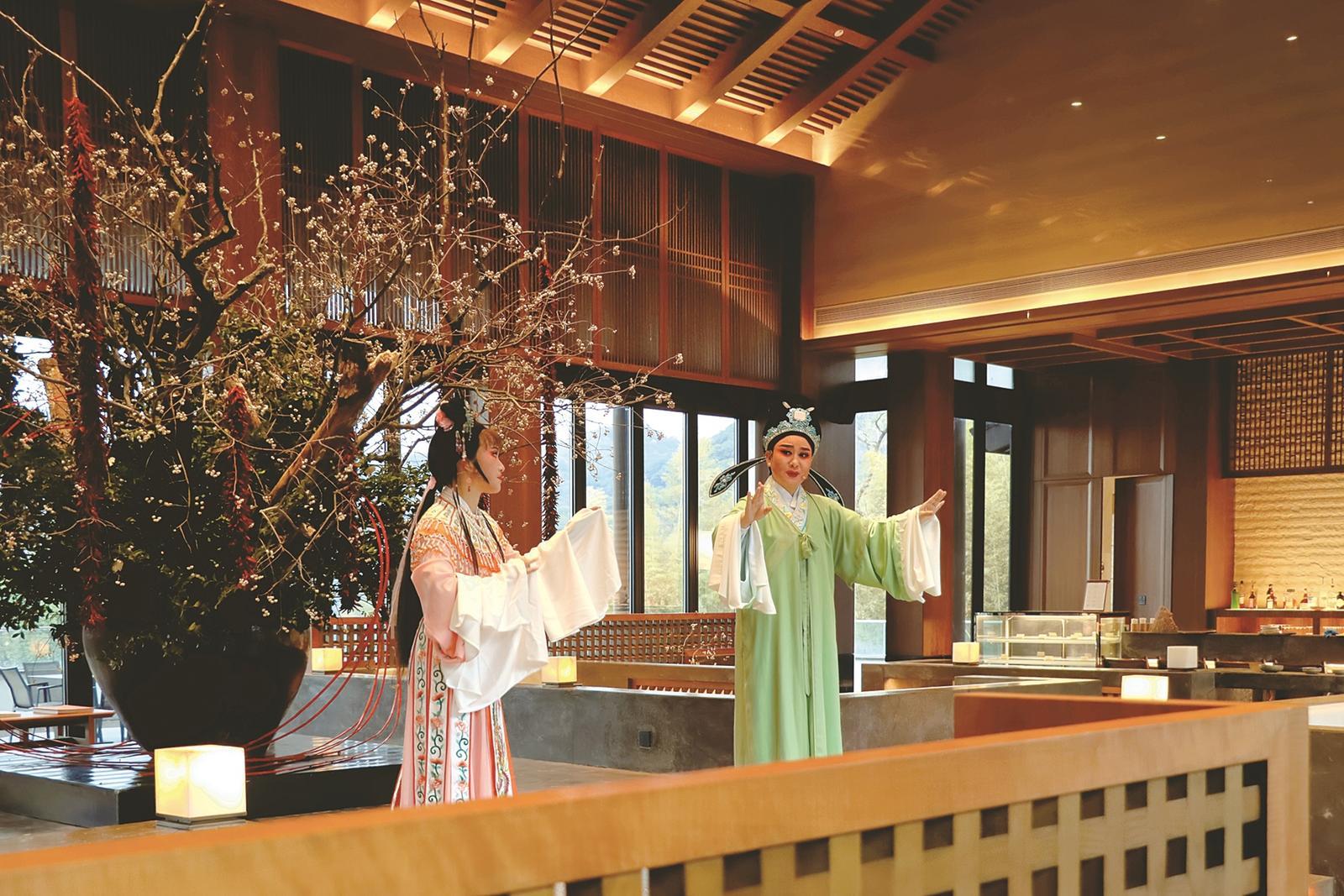
Core Insights - The article discusses the emerging trend of "self-consumption" among young consumers, indicating a shift from functional and material consumption to emotional, experiential consumption in the hotel industry [3][4]. Group 1: New Consumer Demands - Hotels need to understand what guests are willing to pay for beyond basic accommodation and dining, focusing on creating new value through unique experiences and emotional engagement [3]. - Data from an OTA shows that guests are willing to pay more for unique "viewing spots" or "ceremonial experiences," highlighting the emotional value sought by consumers [3]. Group 2: Market Segmentation - There are various micro-segments among young consumers, such as those seeking companionship from pets, stress relief, or cultural experiences, which hotels can target using AI technology for better understanding and personalized services [4]. - Recognizing these micro-segment demands is crucial for hotels to identify new growth opportunities [4]. Group 3: Design and Innovation - The hotel industry must emphasize design thinking and innovation capabilities to create new consumption scenarios that resonate with guests [5]. - Space is a core resource for hotels, and they should design environments that stimulate consumption and cater to lifestyle needs, utilizing principles from design psychology [5]. Group 4: Experience and Engagement - Hotels should create "Instagrammable" spaces that encourage guests to share their experiences on social media, enhancing emotional engagement and social interaction [5]. - Professional photography services and AI tools can enhance guest experiences and contribute to innovative business models [5]. Group 5: Resource Utilization - High-end hotel facilities like swimming pools and spas should be repurposed during off-peak seasons to meet the therapeutic needs of guests, creating themed relaxation environments [6]. - This approach can lead to additional revenue streams through service fees for specialized experiences [6]. Group 6: Organizational Innovation - The hotel industry should explore innovative organizational structures, such as the "host" model, to enhance creativity in service delivery and guest interaction [6]. - Aligning incentive systems with this new structure can further drive innovation in service and experience design [6]. Group 7: Marketing and Job Creation - Hotels can innovate marketing strategies through blind box promotions that incorporate cultural elements, enhancing guest engagement [7]. - New job roles such as experience designers and service customizers can be created to support this innovative approach [7]. Group 8: AI Integration - AI technology can play a significant role in personalizing guest experiences from the booking stage, acting as a "virtual butler" to understand and cater to individual preferences [7]. - The integration of AI in service delivery can enhance operational efficiency and guest satisfaction [7]. Group 9: Space Optimization - Hotels can optimize the use of various spaces like lobbies and meeting rooms to meet diverse guest needs, utilizing AI for real-time demand analysis and layout adjustments [8]. - This flexibility can include creating multifunctional spaces for co-working, themed meetings, and social interactions [8].

2026年A股“第一枪”:沪指重返4000点,情绪与资金共振回暖 | 市场观察
私募排排网· 2026-01-06 10:00
以下文章来源于公募排排网 ,作者排排产品研究中心 公募排排网 . 看财经、查排名、买基金,就上公募排排网,申购费低至0.001折。 本文首发于公众号"公募排排网"。(点击↑↑上图查看详情) 2026年首个交易日,A股迎来"开门红" 2026年首个交易日,A股迎来"开门红"。 在节前上涨趋势延续的背景下,三大指数高开高走, 上证指数盘中重返4000点, 节前积累的风险偏 好在节后集中释放,市场情绪明显修复。 从结构看,科技与成长板块成为主要做多力量。 AI、半导体、脑机接口等科技与新兴产业板块表现突出,多只核心标的涨停或领涨,对指数形成显著拉动效应,也进一步强化了市场对中长期产 业趋势的定价。 资金层面,人民币汇率企稳回升提供边际支撑。 近期人民币对美元汇率呈现稳中有升态势,在岸汇率一度回到6.98区间下方,有助于改善跨境资金预期,提升以人民币计价资产的相对吸引力, 为外资回流与流动性修复创造有利环境。 外部环境方面,港股与海外市场形成正向联动。 一是科技成长方向, 包括人工智能全产业链,以及半导体设备、材料等国产替代环节; 二是先进制造领域, 关注储能、光伏出海及新能源汽车智能驾驶渗透率提升; 三是顺周期与消 ...

研究了10000名消费者,我们为2026写下30条新消费暴利的秘密
3 6 Ke· 2026-01-06 03:15
Core Insights - The Chinese consumer market in 2026 will be driven by five core consumer groups, shifting from "cost-performance" and "emotional value" to "quality-price ratio" and "holistic self-consumption" [1] - Consumers will prioritize rationality and quality, expecting brands to be both functional and emotionally resonant [1] Group 1: Generation Z (Ages 18-27) - Consumption for Generation Z is a means of self-expression and social identity, where purchases serve as "social currency" to enter specific circles [3][5] - They are willing to spend significantly on items that symbolize their identity, such as limited edition sneakers or local cultural products, reflecting their values and community [5][6] - The rise of "identity consumption" indicates that purchases are more about expressing beliefs and belonging than fulfilling needs [6] - The "谷子经济" (Guzi Economy) represents a mature emotional currency system, with a market size projected to reach 200 billion, driven by fandom and collectibles [9] - Young consumers are increasingly skeptical of influencer marketing, preferring authentic and relatable brand interactions [10][11] - The trend of "micro-luxury" consumption allows young consumers to find joy in small, affordable indulgences, enhancing their daily lives [12] - There is a growing demand for time-saving solutions, with consumers willing to pay for convenience in their daily routines [13][15][17] - The second-hand market is thriving, combining environmental consciousness with unique personal style, as consumers seek vintage items for both quality and social status [18][19] - Digital ownership, such as collecting unplayed games or apps, provides a sense of security and potential [20] - Aesthetic preferences are shifting towards simplicity and authenticity, rejecting excessive packaging and marketing [21][23][24] - Young consumers are exploring less commercialized areas for authentic experiences, seeking a contrast to urban life [25][26] Group 2: Small Town Middle-Aged Consumers - This demographic is characterized by stable income, property ownership, and a strong sense of local pride, making them a foundational consumer group [30] - Their purchasing decisions heavily rely on recommendations from friends and family, emphasizing trust over advertising [30] - Leisure activities define their consumption patterns, focusing on local experiences and community engagement [31][32] - Social currency is significant, with purchases serving to enhance their social image within their communities [33] Group 3: Millennials - There is a polarization in spending habits, with consumers seeking high value in everyday items while indulging in premium products for self-care and family [40][42] - Service consumption is on the rise, as consumers prefer to pay for convenience and quality outcomes rather than doing tasks themselves [43][44] - The "healing economy" is emerging, with consumers regularly engaging in emotional wellness activities, indicating a shift towards prioritizing mental health [46] - Anti-aging products are becoming more sophisticated, with consumers investing in comprehensive health management systems [47] - Membership-based shopping models are gaining traction, as consumers value curated selections that save time and ensure quality [49] - The revival of physical media, such as books and vinyl records, reflects a desire for tangible experiences and meaningful consumption [50] Group 4: New Middle-Class Women - The concept of "self-pleasure" is evolving into a comprehensive investment in personal growth, encompassing various aspects of life [51][52] - Women are increasingly investing in education, fitness, mental health, and skincare, seeking holistic self-improvement [52] - Brands must shift from merely meeting needs to providing integrated solutions that empower consumers [52]

生态协同 创造消费新范式
Mei Ri Shang Bao· 2026-01-05 23:35
Core Viewpoint - The sustainable development of new consumption relies on a multi-dimensional ecological collaboration involving policy, market, and regulation. Despite the flourishing of new consumption scenarios, challenges such as insufficient consumer capacity and willingness, a relative shortage of high-quality supply, and the need for an optimized consumption environment persist. To invigorate consumption, a systematic ecology must be established, focusing on income support, regulatory oversight, policy empowerment, and building trust [1]. Group 1 - The primary task of ecological collaboration is to strengthen income support for residents, providing a solid foundation for consumption. The core of consumption is demand, which is fundamentally based on income. The Central Economic Work Conference has emphasized promoting reasonable growth in wage income and broadening channels for property income [1]. - A key aspect of ecological collaboration is improving the regulatory environment for consumption, ensuring that consumers feel more secure. As consumption scenarios continue to innovate, issues such as prepaid consumption risks, digital privacy breaches, and the lack of service standards in new scenarios have become increasingly prominent. Local governments are accelerating the establishment of a comprehensive, multi-layered regulatory system [1][2]. Group 2 - An example of effective implementation is found in Shishe Village, where "trustworthy consumption" is integrated into grassroots governance and business practices, supporting rural revitalization. The village, once considered "hollow," now attracts over one million visitors annually, with a stable and transparent consumption environment being a crucial factor for its sustained appeal [1][2]. - The important guarantee for ecological collaboration is to strengthen cross-departmental policy coordination, making development more robust. The cultivation of new consumption scenarios involves multiple departments, including commerce, culture, tourism, sports, technology, and market regulation, necessitating the breaking down of silos to form a collaborative effort. The National Development and Reform Commission has issued measures to create new consumption scenarios, clarifying departmental responsibilities and cooperation mechanisms [2]. Group 3 - Recent reports from the Zhejiang New Consumption Brand Research Institute indicate that the development of new consumption in Zhejiang is transitioning from "single-point innovation" to "ecological co-prosperity." The boundaries of industries are being fundamentally reshaped, creating new scenarios and redefining value chains [2][3]. - For instance, the integration of "agriculture, commerce, and tourism" has become a new paradigm, exemplified by the brand Panda Pig, which has created an industrial complex with an annual revenue exceeding 350 million, achieving value creation through synergy. Additionally, the "culture, commerce, and tourism" integration has opened new avenues, as seen in the M511 Light and Shadow Hub in Hangzhou, which combines cultural, technological, and commercial elements into a new consumer experience [3].
新消费派 |新消费时代观察——强IP与地方经济的融合共生
Sou Hu Cai Jing· 2026-01-05 14:53
Core Viewpoint - The integration of the panda IP with cultural tourism innovation is driving economic transformation, making pandas a key engine for local economic growth and cultural heritage [1][14]. Group 1: Panda IP and Tourism Growth - The panda IP has a natural global appeal and cultural affinity, which enhances local tourism development [2]. - In the first three quarters of 2025, domestic tourism in China reached 4.998 billion trips, an 18% increase year-on-year, providing an excellent market environment for panda IP [4]. - The panda IP's deep experience projects significantly increase visitor spending, with conversion rates for secondary consumption being 3 to 5 times higher than ordinary tourist attractions [4][5]. Group 2: Economic Impact and Consumer Behavior - In 2024, Ya'an city received 30 million tourists, generating a total tourism expenditure of 31.519 billion yuan, reflecting a year-on-year growth of 27.17% and 39.12% respectively [5]. - The new consumption model emphasizes personalization, scene-based experiences, and participation, aligning well with the panda tourism innovation direction [6]. - The cultural IP derivative consumption market is expected to exceed 120 billion yuan by 2025, with nearly 40% of the market share coming from cultural tourism scenarios [8]. Group 3: Integration of IP with Broader Economic Sectors - The panda IP's value extends beyond tourism, reshaping local economic structures through a "cultural tourism + all industries" integration model [14]. - The panda-themed educational bases and cultural parks are fostering local tourism market entities, while rural areas are leveraging panda-related content for economic advantages [14]. - The panda IP is becoming a "connector" for ecological protection, cultural transmission, and economic development, creating a virtuous cycle [15]. Group 4: Future Prospects and Technological Integration - The panda IP is expected to leverage technologies like the metaverse and digital twins to create diverse consumption scenarios [16]. - The integration of cultural symbols with new consumer demands is anticipated to drive not only local economic growth but also a new future of ecological, cultural, and economic synergy [16].

第19届亚洲金融论坛将在港举行 首设“全球产业峰会”
Xin Hua Wang· 2026-01-05 14:13
Core Viewpoint - The 19th Asian Financial Forum, organized by the Hong Kong Trade Development Council and the Hong Kong SAR government, will take place on January 26-27, 2023, attracting over 3,600 participants globally, focusing on themes of collaboration and opportunities in changing geopolitical and macroeconomic landscapes [1][2]. Group 1: Event Overview - The forum will feature over 100 global political and business leaders and financial experts as speakers, discussing geopolitical changes, macroeconomic trends, and potential investment opportunities [1]. - The theme for this year's forum is "Empowering Industries through Finance," highlighting the integration of finance with core economic sectors [1]. Group 2: Special Features - A new "Global Industry Summit" will be introduced, focusing on the deep integration of finance and industry, aiming to amplify high-value industry potential and drive innovation [1]. - Topics at the summit will include artificial intelligence, robotics, new consumption trends, and biomedicine and healthcare, exploring opportunities for domestic companies to expand internationally and for international companies to enter the Chinese market [1]. Group 3: Engagement Opportunities - Attendees will have the chance to engage directly with industry leaders driving changes in technology, consumer goods, healthcare, and finance, while gaining insights into Hong Kong's latest developments [2]. - The forum will include multiple discussions, keynote speeches, and thematic luncheons and breakfasts, addressing global economic trends and various hot topics in finance and industry [2].

回望新消费:风停了,猪会摔下来
虎嗅APP· 2026-01-05 13:28
Core Viewpoint - The article discusses the dramatic shift in the new consumption sector from a period of rapid growth and high valuations to a phase of significant decline and business failures, emphasizing that while some brands thrived, many others collapsed under unsustainable business models and market conditions [5][24]. Group 1: Market Trends and Brand Performance - In 2021, the new consumption sector experienced a frenzy with 842 financing events totaling over 900 billion yuan, leading to inflated valuations for brands with minimal sales [11]. - By 2025, many once-prominent brands like墨茉点心局 and 钟薛高 faced severe operational challenges, with墨茉点心局 reducing its stores from a nationwide presence to just 29, primarily in its home city of Changsha [6][8]. - The consumer market in 2025 is undergoing a harsh selection process, with a significant number of previously sought-after unicorns facing closure and valuation drops [8]. Group 2: Reasons for Business Failures - The rapid decline of brands can be attributed to several factors: high operational costs, severe product homogeneity, and a faster-than-expected consumer downgrade [19]. - The cost of maintaining storefronts in high-rent areas is unsustainable for low-margin products like 30 yuan noodles, leading to financial strain [19]. - The oversaturation of similar products in the market has made it difficult for brands to differentiate themselves, resulting in a loss of consumer interest [19]. Group 3: Survivors and Their Strategies - Brands like 蜜雪冰城 have emerged as winners by maintaining a cautious approach to capital and focusing on sustainable business practices, such as building their supply chains [21][23]. - Traditional brands like 泸溪河 have also thrived, with over 600 stores nationwide, demonstrating resilience against the backdrop of newer, capital-driven brands [21]. - The article highlights a shift in consumer behavior, where repeat purchases are essential for business sustainability, contrasting with brands that relied heavily on initial consumer interest without fostering loyalty [23][24].

研究了10000名消费者,我们为2026写下30条新消费暴利的秘密 |「万字长文」
新消费智库· 2026-01-05 13:23
Group 1 - The core consumption logic in China is shifting from "cost-performance" and "emotional value" to "quality-price ratio" and "comprehensive self-satisfaction" as consumers become more rational and discerning in their purchases [2][3] - The Z generation (ages 18-27) views consumption as a means of expressing identity and belonging, prioritizing "identity consumption" over mere "need consumption" [4][6][10] - The "谷子经济" (Guzi Economy) is emerging as a significant market, driven by emotional value and the willingness of consumers, especially the Z generation, to pay for intangible assets like fandom and community [10][11] Group 2 - The Z generation is increasingly skeptical of influencer marketing, with only 11% trusting recommendations from online personalities, preferring authentic and relatable brand interactions [12][13] - The trend of "micro-luxury" consumption is rising, where consumers seek small indulgences that provide immediate happiness and a sense of control over their lives [12][13] - The demand for convenience is leading to a rise in "extreme time-saving" solutions, with consumers willing to pay for products that simplify their daily routines [15][16] Group 3 - The second-hand market is gaining traction as consumers seek unique, high-quality items while also valuing sustainability, with platforms for vintage and second-hand goods becoming social hubs [16][17] - Digital assets are being accumulated for their potential future value, with consumers finding satisfaction in owning a vast array of digital content, even if unused [18][19] - A trend towards "aesthetic minimalism" is emerging, with consumers favoring simpler, less polished designs that emphasize authenticity over excessive packaging [20][23] Group 4 - The younger generation is increasingly seeking authentic experiences, often traveling to less commercialized areas to escape urban monotony and engage with local cultures [24][25] - The Z generation is characterized by "precise ambiguity," using specific labels to express their multifaceted identities, which brands must understand and respect [26][27] - The "小镇中年" (Small Town Middle-Aged) demographic is becoming a stable consumer base, relying heavily on community recommendations and valuing local pride [30][32] Group 5 - The "leisure economy" is thriving, with consumers prioritizing leisure activities that enhance their quality of life, such as local dining and short trips [33][34] - Social currency is becoming a key driver of consumption, where purchases are made not just for personal use but also to enhance social standing within local communities [35][36] - The preference for trusted national brands is evident, with consumers favoring mid-range products that offer reliability and value for money [36][37] Group 6 - The rise of service consumption reflects a shift towards valuing time and convenience, with consumers willing to pay for services that simplify their lives [46][47] - The "healing economy" is emerging as a significant market, with consumers regularly engaging in emotional wellness activities to cope with modern stressors [48][50] - Anti-aging products are evolving into a more systematic and scientific approach, with consumers investing in comprehensive anti-aging solutions [51][52] Group 7 - Membership-based shopping models are gaining popularity, as consumers seek curated selections that save time and ensure quality [52][54] - The revival of physical media, such as books and vinyl records, highlights a desire for tangible experiences and the ritualistic aspects of consumption [57][58] - The "new middle-class women" are redefining self-satisfaction, investing in holistic self-improvement across various aspects of life [61][62]

港股投资策略报告:“年关”已过,港股新一轮攻势有望启动-20260105
INDUSTRIAL SECURITIES· 2026-01-05 11:29
Group 1 - Since late November, the Hong Kong stock market has weakened due to a slowdown in southbound capital inflows as the year-end approaches, leading to a decline in market risk appetite [3][14] - The three main concerns affecting the market include foreign capital reducing positions before the Christmas holiday, hedge funds shorting due to uncertainties, and worries about new regulations on mainland public funds potentially increasing selling pressure on Hong Kong stocks [3][14] Group 2 - With the new year, a new round of upward momentum in the Hong Kong stock market is expected, driven by seasonal inflows from insurance funds and the long-term allocation logic from the switch to IFRS9 accounting standards for non-listed insurance companies [5][31] - The market sentiment has dropped to a low point, significantly improving the risk-reward ratio, with signs of short covering in major tech stocks [6][18] - The proportion of short positions in leading internet stocks has shown signs of decline, indicating a potential rebound in stock prices as they reach attractive valuation levels [6][19] Group 3 - The expectation of RMB appreciation is expected to enhance the attractiveness of RMB assets, driving foreign capital inflows into Hong Kong stocks [7][42] - Historical data shows that during previous RMB appreciation cycles, the Hong Kong stock market has consistently performed well, particularly in the information technology sector [7][43] - The RMB is projected to appreciate against the USD, potentially returning to the "6" range, which could further incentivize foreign investment in Chinese equities [7][47] Group 4 - Investment recommendations suggest a bullish stance on Hong Kong stocks, particularly led by the Hang Seng Technology Index, with expectations of continued market growth driven by earnings and liquidity [52] - Key investment opportunities include leading internet companies in the AI sector, which are expected to benefit from both domestic and foreign capital inflows [53][54] - High dividend assets are highlighted as strategic investments in a low-interest-rate environment, with a current dividend yield of 6.70% for the Hang Seng High Dividend Yield Index [58][60] - New consumption trends are emerging, focusing on traditional service consumption transformation, Z-generation spending habits, and high-end consumption recovery [61][64]




2025年股基状元李进:2026年布局这四大核心赛道
Xin Lang Cai Jing· 2026-01-05 08:57
Group 1 - The core viewpoint is that the A-share market's upward trend is likely to continue, with overall valuations remaining reasonable [2][11] - The focus of investment has been on artificial intelligence (AI) and related sectors, with significant growth observed in AI computing power [2][12] - The manager emphasizes a diversified approach, investing in multiple sectors including new energy, innovative pharmaceuticals, and new consumption [1][11] Group 2 - AI computing power is expected to maintain high growth rates, with specific products like 800G and 1.6T driving demand in the light module and PCB sectors [4][14] - The valuation of leading companies in the AI sector is projected to be around 20 times PE in 2026, indicating reasonable levels despite recent price increases [3][13] - The light module segment is identified as having the highest valuation elasticity due to increasing demand driven by the growth of mainstream large models [3][13] Group 3 - The manager has expressed cautious optimism regarding the new consumption and innovative pharmaceutical sectors, having reduced exposure due to high valuations and underperformance in earnings [4][14] - The energy storage sector is highlighted as a potential second growth point, with increasing profitability driven by market dynamics [4][14] - The investment strategy focuses on identifying strong competitive companies while avoiding higher volatility in smaller firms [6][15] Group 4 - The AI sector is expected to outperform innovative pharmaceuticals and new consumption in 2026, with key risks centered around industry growth performance and technological advancements [6][16] - The investment approach includes a balanced allocation across growth sectors, focusing on leading companies and dynamic adjustments based on market conditions [6][15] - Continuous monitoring of industry trends and consumer demand shifts is crucial for identifying investment opportunities [6][15]