汽车智能化

Search documents
经销商再现“跑路” 保时捷在华渠道体系正经历阵痛
Zheng Quan Ri Bao· 2025-12-29 17:00
Core Viewpoint - The sudden closure of Porsche dealerships in Zhengzhou and Guiyang has raised concerns about the financial stability of the authorized dealers and the impact on consumers [1][2][3] Group 1: Incident Overview - Multiple reports on social media indicated that the Zhengzhou Zhongyuan Porsche Center abruptly closed, with vehicles removed and staff unreachable [1] - Porsche China acknowledged the situation and stated they are cooperating with police and relevant authorities to investigate [1][2] - The Zhengzhou Zhongyuan Porsche Center's parent company, Dong'an Holdings Group, announced the suspension of operations for multiple dealerships due to operational difficulties [2][3] Group 2: Financial and Operational Context - Dong'an Holdings Group experienced a management change shortly before the incident, with the departure of the general manager [2] - The Zhengzhou Zhongyuan Porsche Center's closure is suspected to be linked to a cash flow crisis, with local authorities advising consumers to seek legal recourse [2][3] - Porsche's dealer network in China is set to shrink from 120 to 80 by the end of 2026, reflecting a broader trend of dealership closures [3][4] Group 3: Sales Performance and Market Challenges - Porsche's sales in China fell by 26% year-on-year in the first three quarters, leading to a 99% drop in overall operating profit [5][6] - The brand's reliance on traditional fuel vehicles and slow adaptation to electric vehicle trends has contributed to its declining market position [5][6] - Increased competition from other luxury brands, such as Maserati, has pressured Porsche's pricing and sales strategies [5][6]
21对话|魏建军回应魏牌人事更迭:我们都有高估能力的幻觉
2 1 Shi Ji Jing Ji Bao Dao· 2025-12-29 11:23
Core Viewpoint - Wey brand has undergone significant leadership changes, with the latest CEO appointment reflecting the challenges of establishing a high-end automotive brand in China. The brand's journey since its inception in 2016 has been marked by struggles to define its market position and operational efficiency [1][5]. Group 1: Leadership Changes and Strategy - Wey brand has seen its tenth CEO in eight years, indicating a high turnover rate in leadership roles, which is uncommon in the industry [1][2]. - The new CEO, Zhao Yongpo, aims to leverage his experience from the Haval brand to enhance the operational efficiency of Wey [1][3]. - The brand's high-end positioning remains unchanged, focusing on the "large six-seat SUV" segment and investing heavily in direct sales channels [2][3]. Group 2: Sales Performance and Financials - Wey brand's sales reached 89,000 units in the first eleven months of the year, marking a 93.34% year-on-year increase, significantly outpacing other brands like Tank and Haval [2]. - Despite revenue growth, Great Wall Motors reported a decline in net profit, with sales expenses rising to 7.95 billion yuan, a 55.6% increase from the previous year [2][4]. - The company's revenue for the first three quarters was 153.58 billion yuan, up 7.96% year-on-year, while net profit fell by 16.97% to 8.64 billion yuan [2]. Group 3: Brand Positioning and Market Challenges - The CEO emphasized that establishing a luxury brand requires clear value recognition among consumers, which is currently lacking in the Chinese automotive market [3][12]. - Great Wall Motors has the highest average selling price among traditional Chinese automakers, exceeding 180,000 yuan in international markets and 200,000 yuan domestically [3][14]. - The brand's strategy includes a focus on product differentiation and value creation, rather than merely positioning as a high-end brand [12][14]. Group 4: Future Outlook and Goals - Great Wall Motors has set ambitious targets for 2026, aiming for sales of at least 1.8 million units and a net profit of no less than 10 billion yuan [4]. - The company is investing heavily in direct sales, with at least 2 billion yuan allocated to this initiative, reflecting a commitment to enhancing customer engagement and brand loyalty [2][7]. - The upcoming launch of the new Blue Mountain model, featuring advanced AI capabilities, is part of the brand's strategy to improve its technological offerings and market competitiveness [3][15].

同济大学汽车学院教授朱西产:新能源汽车创新应保安全、促实用
Xin Hua Cai Jing· 2025-12-29 09:03
Core Viewpoint - The innovation in new energy vehicles (NEVs) should prioritize safety and practicality, avoiding "pseudo-innovation" that could lead to safety hazards [1][2] Group 1: Innovation and Safety - NEVs should not solely pursue the highest performance metrics in terms of range and charging speed; instead, they should find a "greatest common divisor" suitable for user scenarios through extended range, fast charging, and battery swapping [1] - The development of intelligent NEVs is highlighted as a significant achievement for China's automotive industry, with nearly 60% penetration of new NEVs in the market [1] Group 2: Challenges in the Industry - The Chinese automotive industry faces low profit margins due to internal competition, while leading companies from Europe, the US, and Japan leverage high profits from traditional fuel vehicles to compete in the Chinese market [1] - There is a need to address human factors in safety concerning human-machine collaboration in intelligent NEVs, emphasizing that drivers remain the primary responsible party [2] Group 3: Global Expansion of Chinese NEVs - Successful international expansion of Chinese automotive brands relies on government top-level design and collaboration among domestic enterprises [2] - It is essential to plan the industrial chain effectively, ensuring the development of core technologies and key components that can counter foreign competition [2] - Supporting measures such as maintenance and local talent training must accompany the internationalization of Chinese automotive products [2]
伯特利加码人形机器人产业布局,5000万元投资睿尔曼智能
Ju Chao Zi Xun· 2025-12-29 08:02
Group 1 - The core investment announcement by the company involves a partnership with Xiamen Zongheng Jinding Private Equity Fund Management Co., Ltd., leading to the establishment of a joint venture focused on emerging fields such as humanoid robots and low-altitude economy [2] - The investment in Ruierman Intelligent Technology (Beijing) Co., Ltd. amounts to 50 million yuan, marking a significant step in the company's strategic expansion into humanoid robotics and related technologies [2] - The joint venture aims to invest in high-growth unlisted companies and compliant investment opportunities, including those listed on the New Third Board [2] Group 2 - The investment aligns with the company's strategic development plan and business synergy needs, enhancing the efficiency of its own capital usage while expanding its business boundaries [3] - The company has cumulatively invested 100 million yuan through the joint venture, with the recent investment in Ruierman being the second key focus after a previous investment in Shanghai Wolante Aviation Technology Co., Ltd. [3] - These investments highlight the company's diversified strategy in emerging industries, specifically targeting low-altitude economy and humanoid robotics [3]


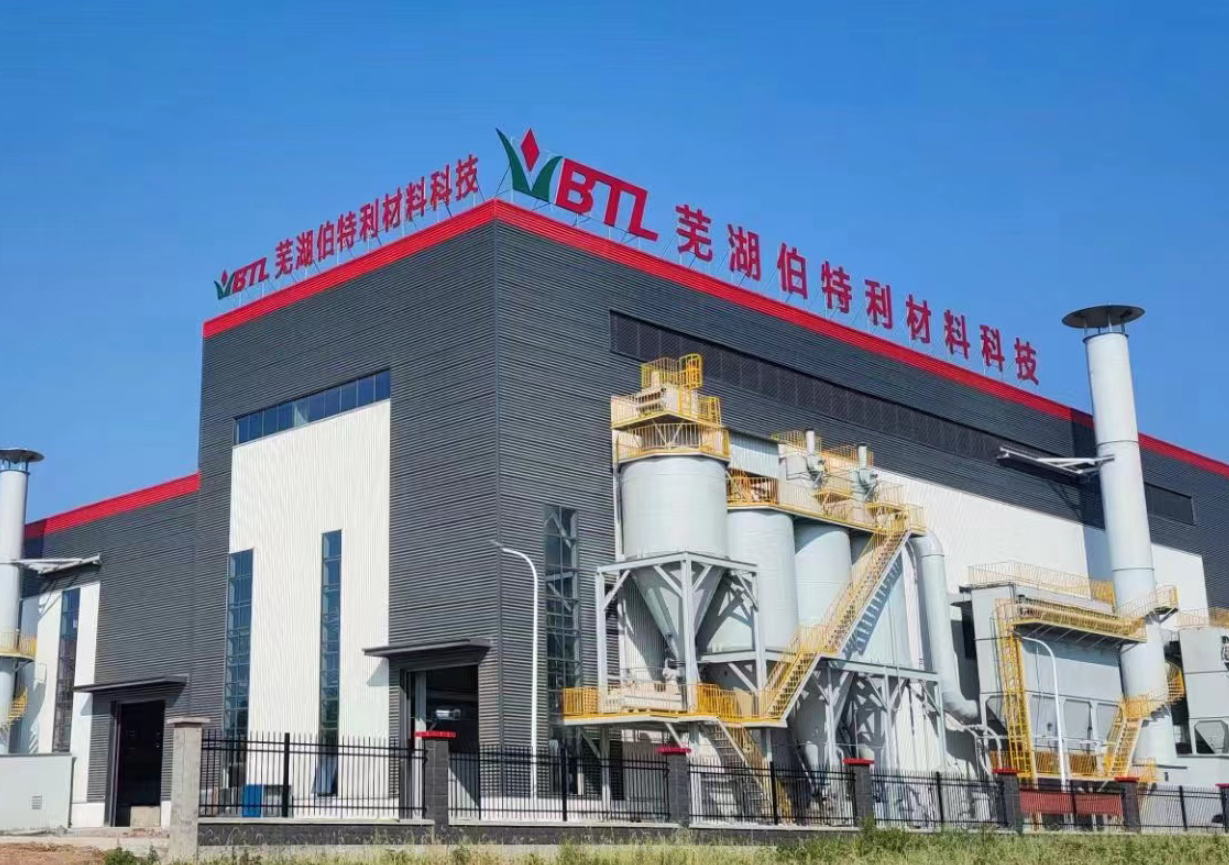
芜湖伯特利汽车安全系统股份有限公司与私募基金合作投资事项进展公告
Shang Hai Zheng Quan Bao· 2025-12-28 19:32
Group 1 - The company, Wuhu Berteli Automotive Safety Systems Co., Ltd., is collaborating with Xiamen Zongheng Jinding Private Equity Fund Management Co., Ltd. to establish a joint investment partnership named "Bojin Venture Capital" to invest in high-growth unlisted companies in emerging fields such as humanoid robots and automotive intelligence [2][3] - The recent investment by Bojin Venture Capital was made in Ruierman Intelligent Technology (Beijing) Co., Ltd., which specializes in technology services and the development of intelligent robots [3][4] - The investment aims to enhance the company's capital efficiency, expand new business areas, and strengthen its core competitiveness while ensuring that the main business operations remain unaffected [5][6] Group 2 - The company has issued convertible bonds named "B25 Convertible Bonds" with a total issuance amount of RMB 280,200,000, and the bonds will be convertible into shares starting from January 7, 2026, at a conversion price of RMB 52.42 per share [8][9] - The bonds have a maturity period of six years, from July 1, 2025, to June 30, 2031, with a tiered interest rate structure starting from 0.1% in the first year to 2.0% in the sixth year [10][19] - The company will adjust the conversion price based on specific corporate actions such as stock dividends or new share issuances, ensuring that the interests of bondholders are protected [20][22]
——汽车行业周报:吉利汽车与极氪整合完成,多地部署2026新国补-20251228
Guohai Securities· 2025-12-28 14:04
Investment Rating - The report maintains a "Recommended" rating for the automotive industry [1] Core Insights - The automotive sector is expected to face a decline in passenger car year-on-year growth by the end of 2025 due to high base effects and the temporary withdrawal of some local trade-in subsidies. However, the high-end market is anticipated to perform relatively better in 2026, particularly for domestic brands with quality offerings priced above 300,000 yuan [4][14] - The integration of Geely Auto and Zeekr has been completed, marking a new phase for Geely, which aims to enhance collaboration across technology, products, supply chains, manufacturing, marketing, and international resources [6][12][29] - The central government has confirmed the continuation of the "National Subsidy" policy for 2026, with multiple cities already beginning to deploy new trade-in platforms [6][12][30] Summary by Sections Passenger Vehicles - By the end of 2025, the year-on-year growth rate for passenger vehicles may decline due to high base effects and the temporary exit of some trade-in subsidies. The high-end market is expected to see better performance in 2026, with recommendations for companies like JAC Motors, Geely, Xpeng, Great Wall Motors, SAIC Motor, Li Auto, Seres, and BYD [4][14][15] Auto Parts - High-level intelligence is penetrating lower-priced models, benefiting related auto parts. Recommended companies include Huayang Group, Desay SV, Kobot, and Jingwei Hirain. Companies with strong operational cycles such as Fuyao Glass, Yinlun, Bojun Technology, Wuxi Zhenhua, Songyuan Safety, and Xingyu are also recommended [4][15] Commercial Vehicles - The demand for heavy trucks is expected to recover in 2025, with recommendations for companies like Weichai Power, Foton Motor, and China National Heavy Duty Truck Group. The bus sector is also expected to see growth in both domestic and export markets, with Yutong Bus as a leading recommendation [4][15] Market Performance - From December 22 to December 26, 2025, the automotive sector outperformed the Shanghai Composite Index, with the automotive index rising by 2.7% compared to the index's 1.9% increase. The passenger vehicle segment saw a 3.3% increase, while commercial vehicles remained stable [6][16]
汽车行业 2026 年度投资策略报告:不必悲观,结构存机会-20251227
Guohai Securities· 2025-12-27 13:27
Core Insights - The report maintains a "Recommended" rating for the automotive industry, emphasizing that there are opportunities despite potential challenges in 2026 [1][2] - The automotive sector showed a 20% increase over the past 12 months, outperforming the Shanghai and Shenzhen 300 index, which increased by 16.8% [3] Group 1: Industry Overview - The automotive industry is expected to experience a strong performance in commercial vehicles while passenger vehicles may face challenges in 2026 [4] - The report highlights that the passenger vehicle market in 2025 was supported by trade-in policies, leading to stable performance, but anticipates pressure on total volume in 2026 [4] - The heavy truck segment is projected to see positive growth in 2026, driven by domestic demand recovery and increased exports [4] Group 2: Opportunities in Passenger Vehicles - The report identifies a significant opportunity in the high-end passenger vehicle market, particularly for models priced above 300,000 yuan, which is expected to continue to grow [4][5] - Domestic brands are anticipated to make substantial advancements in the high-end market with new models launching in 2026 [5] Group 3: Heavy Truck Market Insights - The heavy truck market is expected to benefit from a recovery in domestic demand and a favorable export environment, with wholesale volumes projected to grow positively in 2026 [4][5] - The report notes that the penetration rate of electric heavy trucks may stabilize in 2026 after significant increases in 2025, which could positively impact profitability [5] Group 4: Smart Driving and Technology - The report discusses the acceleration of high-level autonomous driving technology penetrating lower-priced models, which is expected to drive volume growth in 2026 [5] - The introduction of new AI-driven cockpit technologies is anticipated to enhance the value of smart cabins, creating additional investment opportunities in related components [5] Group 5: Robotics Sector - The report indicates that the humanoid robotics sector is entering a new phase, with significant growth potential for leading manufacturers and their supply chains [5] - The collaboration between domestic and international manufacturers is expected to enhance production capabilities and technological advancements in humanoid robots [5] Group 6: Investment Recommendations - The report recommends several companies for investment, including Jianghuai Automobile, Top Group, and BYD, highlighting their potential in the evolving automotive landscape [6][9] - Specific recommendations for heavy truck manufacturers include China National Heavy Duty Truck Group and Weichai Power, which are expected to benefit from industry growth [6][9]





鸿海接棒纳智捷!首款纯电车型发布
Xin Lang Cai Jing· 2025-12-26 12:21
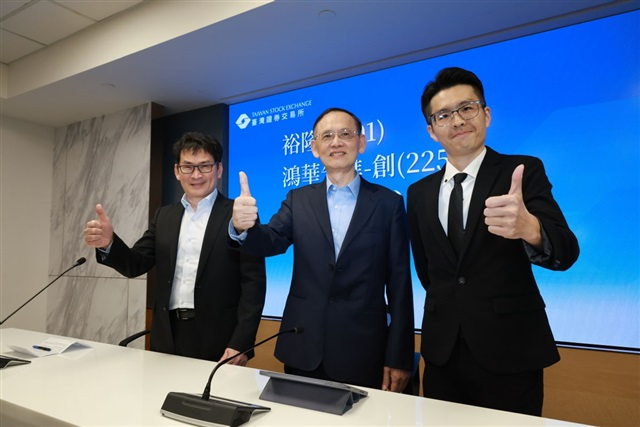
纳智捷的兴衰,是传统车企在汽车产业变革浪潮中折戟的典型样本。2009年,裕隆集团发布纳智捷品牌,定位高端自主汽车品牌,试图在德系、日系等外 资品牌之外开辟本土赛道。2010年,东风汽车与裕隆集团携手成立东风裕隆,纳智捷以"两岸合作汽车品牌"的独特身份叩开大陆市场大门。恰逢SUV赛道 爆发,纳智捷大7SUV凭借越级电子配置与宽敞驾乘空间迅速走红,成为当时的现象级车型,2015年品牌在大陆市场的销量达6.03万辆巅峰。 备受关注的纳智捷收购案近日正式落锤。裕隆集团以7.876亿元新台币(约合人民币1.76亿元),将纳智捷100%股权出售给鸿海科技集团(富士康)与裕 隆集团合资成立的鸿华先进科技公司。 不过,光鲜销量的背后,技术硬伤早已埋下隐患。其搭载的2.2T发动机技术陈旧,匹配低效传动系统,拥堵路况下百公里油耗逼近20L,"油老虎"的调侃 在互联网快速发酵,成为品牌难以摆脱的负面标签,叠加二手车残值率极低,加剧品牌口碑崩塌,销量自2016年起持续断崖式下滑。 在行业向高效、电动化、智能化转型的关键期,纳智捷未能跟上技术迭代节奏。当主流车企纷纷攻坚发动机热效率提升、轻量化设计与电动化技术时,纳 智捷仍执着于电子配 ...
双重弹性驱动价值重估 宝鼎科技迎高端材料与金矿资源增长机遇
Quan Jing Wang· 2025-12-26 12:09
Core Viewpoint - Baoding Technology (宝鼎科技) is strategically positioned to benefit from the growing demand for HVLP copper foil, which is essential for 5G infrastructure and other advanced applications, with significant market growth projected in the coming years [1][6]. Group 1: HVLP Copper Foil Market - The global HVLP copper foil market is expected to grow from approximately $1.45 billion in 2024 to $2.8 billion by 2033, with a compound annual growth rate (CAGR) of about 8.3% from 2026 to 2033 [1]. - Baoding Technology's subsidiary, Jinbao Electronics, produces HVLP copper foil primarily for 5G base stations and antennas, indicating a strong alignment with market needs [1][2]. - The company has established advanced production capacity with a project set to complete by the end of 2024, aiming to significantly increase output to meet the rising demand from 5G upgrades [2]. Group 2: Product Quality and Competitive Advantage - Jinbao Electronics' products, such as high-temperature high-elongation copper foil (HTE foil) and FR-4 copper-clad laminates, demonstrate superior technical specifications compared to industry standards, enhancing their competitive position [3]. - Key performance metrics for HTE foil include a uniform density control of 285±5 g/m² and a peel strength of 2.2 N/mm, both exceeding comparable companies' standards [3]. - The FR-4 product also surpasses industry benchmarks, with a Tg value of 160°C and a heat resistance duration exceeding 80 minutes, showcasing the company's commitment to high-quality production [3]. Group 3: Strategic Industry Positioning - The electronic copper foil and copper-clad laminate sectors are integral to various high-growth industries, including 5G communication, consumer electronics, and automotive electronics, supported by government policies [4]. - Baoding Technology's subsidiary, Hexi Gold Mine, contributes to the company's growth with significant gold reserves, enhancing its financial stability and growth potential [4][5]. - The completion of the Hexi Gold Mine's resource integration project is expected to increase gold production capacity, positively impacting the company's revenue and profitability [5]. Group 4: Future Outlook - The company is well-positioned to benefit from the accelerated upgrade of 5G infrastructure and the explosive growth of strategic emerging industries, which will likely enhance its market share and business scale [6]. - Rising gold prices, driven by global economic uncertainties and increased demand for safe-haven assets, are expected to provide significant performance elasticity and asset revaluation opportunities for Baoding Technology [5][6].

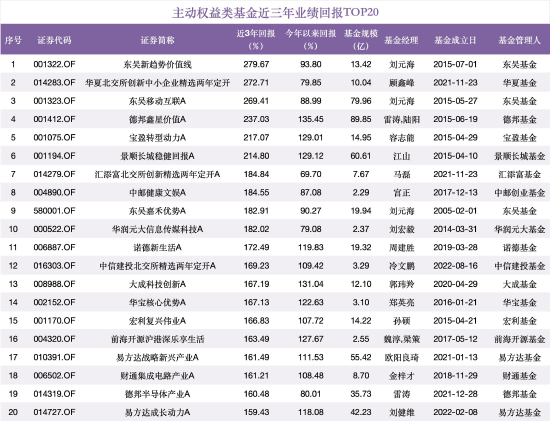
主动权益类基金三年期战报:AI科技与北交所成主线,东吴新趋势价值线涨280%居首,德邦、易方达多只产品上榜
Xin Lang Cai Jing· 2025-12-26 10:16
Core Viewpoint - The A-share market is experiencing a comprehensive upward trend in 2025, with significant recovery in market sentiment, as evidenced by the performance of active equity funds [1][6]. Fund Performance - As of December 25, 2025, nearly 4,700 active equity funds have been analyzed, with only 194 showing negative returns this year, while over 4,500 funds achieved positive returns [1][6]. - Among these, 83 funds have returns exceeding 100%, with the top ten funds all surpassing 144%. The fund "Yongying Technology Smart A" leads with a return of 237.66% [1][6]. - Over a three-year period, the top twenty funds have all returned over 160%, with an average return of 193%. "Dongwu New Trend Value Line" tops this list with a return of 279.67% [2][7]. Fund Types and Strategies - Flexible allocation funds have shown significant adaptability, with ten such funds in the top twenty achieving an average return of 208%, outperforming eight equity mixed funds at 183% and two ordinary stock funds at 161% [2][7]. - Notably, funds focused on the Beijing Stock Exchange have performed well, with three funds averaging a three-year return of 208%, including "Huaxia Beijing Stock Exchange Innovation Small and Medium Enterprises Selected" at 272.71% [2][7]. Fund Size and Management - "Debang Xinxing Value A" leads in size with 8.985 billion yuan, followed by "Dongwu Mobile Internet A" at 7.996 billion yuan, and "Jingshun Longcheng Stable Return A" at 6.061 billion yuan [3][8]. - Fund manager Liu Yuanhai from Dongwu Fund has notably managed three funds that made the list, achieving an average three-year return of 243% [3][8]. Investment Themes - The investment focus is shifting towards AI and technology growth, with an emphasis on sectors such as AI hardware, smart driving, and humanoid robots, as highlighted by Liu Yuanhai [4][9]. - The automotive intelligence industry is expected to reach a pivotal point in 2025, transitioning from a nurturing phase to rapid growth, with significant increases in penetration rates anticipated [10]. Future Outlook - The leading active equity funds illustrate two main investment themes: technology growth centered on AI and the "specialized and innovative" focus of the Beijing Stock Exchange [11]. - The fund assessment system is evolving towards greater precision and transparency, with a trend towards longer evaluation periods, emphasizing three-year or longer performance metrics [11].