经济衰退

Search documents
91万就业岗位“蒸发”,美联储“豪赌”50基点降息?
Hu Xiu· 2025-09-13 11:33
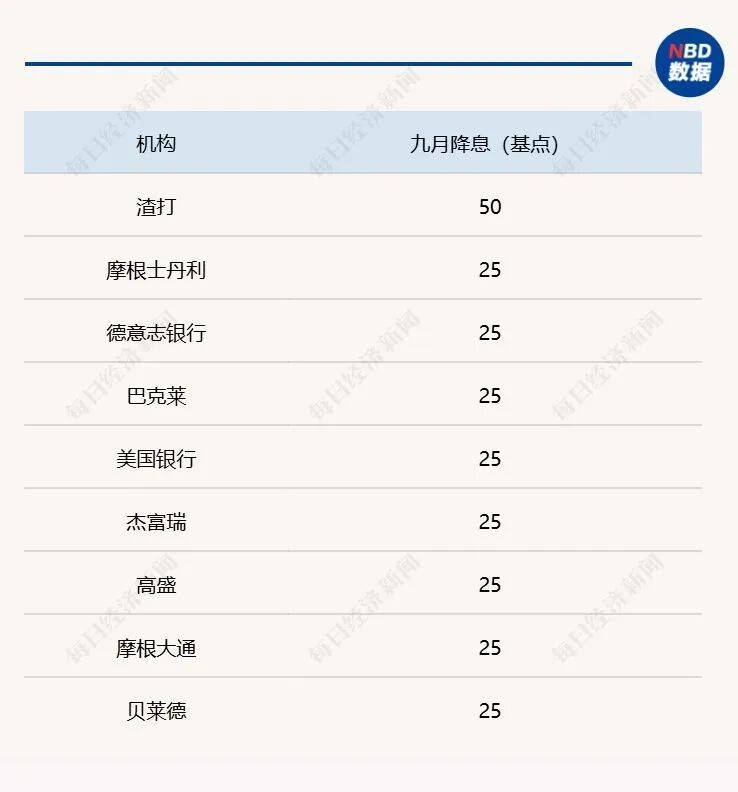
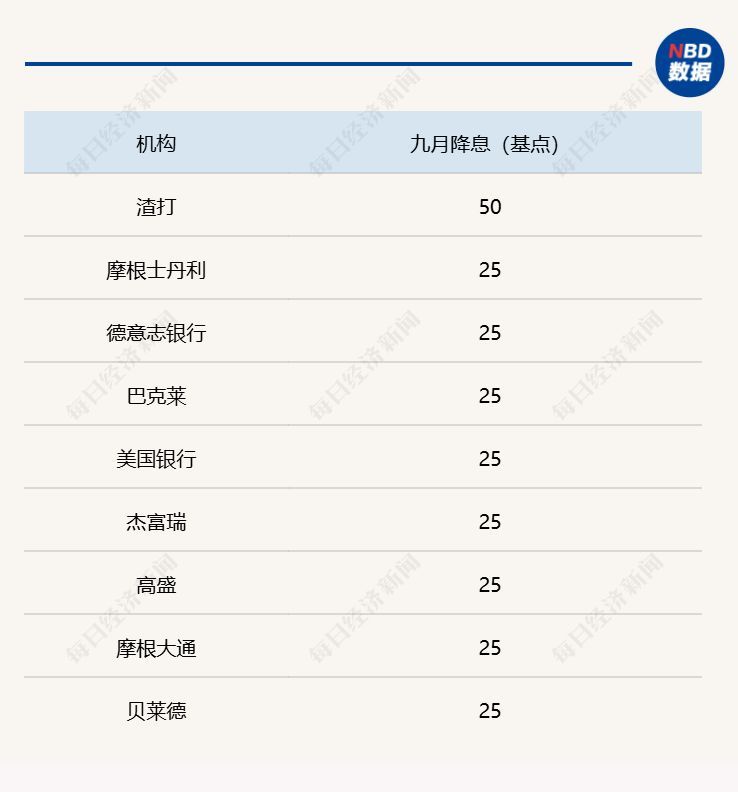
Core Viewpoint - The Federal Reserve is expected to lower interest rates next week, with debates intensifying over whether the reduction will be 25 or 50 basis points, influenced by economic data and political pressures [2][6]. Group 1: Economic Data and Predictions - Recent economic data, including a surprising drop in the Producer Price Index (PPI) and a significant downward revision of non-farm employment figures, suggest a weakening labor market, paving the way for a potential 50 basis point rate cut [5][8]. - Various financial institutions have differing predictions for the rate cut, with Standard Chartered predicting 50 basis points, while others like Deutsche Bank and Barclays expect 25 basis points [7][10]. - The probability of a 25 basis point cut is currently at 90%, while the chance of a 50 basis point cut has risen to 10% according to CME FedWatch [11]. Group 2: Political Influences - Federal Reserve Chairman Jerome Powell faces political pressure, particularly from the Trump administration, which may influence the decision to implement a larger rate cut as a show of loyalty [15][16]. - Powell's recent shift towards a more dovish stance at the Jackson Hole meeting has raised expectations for a more aggressive rate cut, as he expressed concern over the labor market [13][14]. Group 3: Historical Context and Implications - Historical data indicates that every time the Fed has initiated a rate cut of 50 basis points since 1987, it has been followed by an economic recession [4][17]. - Some analysts warn that a 50 basis point cut could send a negative signal to the markets, suggesting severe economic distress, while others argue it could be seen as a proactive measure to support employment growth [18][19]. - The Fed's past rate cut cycles show that rate reductions do not always correlate with stock market gains, as evidenced by four instances of market declines during previous cut cycles [27][28].

中东首富卡塔尔,以色列说炸就炸;遭父亲“举报”,柯克枪击案22岁嫌疑人落网;特斯拉大涨,马斯克稳坐世界首富 | 一周国际财经
Mei Ri Jing Ji Xin Wen· 2025-09-13 11:00
Group 1 - The Federal Reserve is expected to lower interest rates next week, with a high probability of a 50 basis point cut due to weak economic data, although there is debate over the extent of the cut [4][5][8] - Historical data shows that every time the Fed has initiated a rate cut of 50 basis points since 1987, it has been followed by an economic recession [6][15] - The recent employment data indicates a significant downward revision of 919,000 jobs, suggesting previous employment figures were inflated, which may pave the way for a larger rate cut [8][9] Group 2 - Various financial institutions have differing predictions regarding the rate cut, with Standard Chartered recently changing its forecast from 25 to 50 basis points, citing a rapid shift in the labor market [9][10] - Political pressure from the Trump administration is influencing Fed Chair Powell's decision-making, with expectations that a larger cut would signal loyalty to the administration [13][14] - The upcoming Fed meeting is seen as a critical event that will impact global financial markets and reveal the Fed's policy direction amid economic and political pressures [23]
91万就业岗位“蒸发”,美联储下周“豪赌”50基点降息?
Mei Ri Jing Ji Xin Wen· 2025-09-13 06:47
Core Viewpoint - The Federal Reserve is expected to lower interest rates next week, with debates intensifying over whether the reduction will be 25 or 50 basis points, influenced by economic data and political pressures [1][3][21] Economic Data - Recent economic indicators show a weakening labor market, with the unemployment rate rising to 4.3%, the highest in nearly four years, and a significant downward revision of 919,000 in projected non-farm payrolls for 2024-2025 [2][3] - The Producer Price Index (PPI) unexpectedly turned negative in August, marking the first decline in four months [2] Predictions on Rate Cuts - Standard Chartered has revised its forecast from a 25 basis point cut to a 50 basis point cut, citing a rapid shift in the labor market from robust to weak [5] - Various institutions have differing predictions, with some, like Morgan Stanley and Deutsche Bank, suggesting that the August employment report does not warrant a 50 basis point cut, while acknowledging the possibility of consecutive cuts [5][6] Political Influences - Federal Reserve Chairman Jerome Powell faces political pressure from the Trump administration, which has been vocal about the need for significant rate cuts [10][11] - Analysts suggest that a 50 basis point cut could be seen as a political statement of loyalty to Trump, rather than purely an economic decision [10] Historical Context - Historical data indicates that every time the Federal Reserve has initiated a rate cut cycle with a 50 basis point reduction since 1987, it has been followed by an economic recession [12] - The potential for a 50 basis point cut raises concerns about signaling a severe economic downturn, which could lead to market panic [12][13] Market Reactions - The market is currently pricing in a 90% probability of a 25 basis point cut and a 10% probability of a 50 basis point cut [7] - The upcoming Federal Reserve meeting is anticipated to have significant implications for global financial markets, affecting stocks, bonds, currencies, and commodities [21]
自特朗普发动关税战以来,美国哪些行业失业最严重?
财富FORTUNE· 2025-09-11 13:10
Core Insights - The trade war initiated by Donald Trump has led to significant job losses in industries affected by tariffs, with a net reduction of 90,100 jobs since February [2][4] - The overall employment growth in the U.S. has been positive, with an increase of 385,000 jobs during the same period, driven mainly by sectors less impacted by tariffs, such as healthcare and hospitality [4] - The unemployment rate has slightly increased to 4.3%, marking a four-year high [2] Industry Impact - Industries directly affected by tariffs include manufacturing, mining and logging, construction, wholesale trade, retail trade, transportation, and warehousing [3] - Manufacturing has seen a loss of 41,000 jobs, while wholesale trade has lost 34,000 jobs [4] - In contrast, retail trade has added 19,000 jobs, and construction employment has remained stable [4] Economic Outlook - Despite job losses in tariff-impacted sectors, there are layoffs in other industries due to overall economic uncertainty stemming from the trade war [5] - Moody's Analytics warns that the current trend of more layoffs than new jobs typically occurs during economic recessions [5] - The Trump administration claims that tax cuts and deregulation will stimulate economic growth and ultimately create more jobs [5]

美联储降息等于美股大涨?有一个重要前提和关键指标
Hua Er Jie Jian Wen· 2025-09-11 07:29
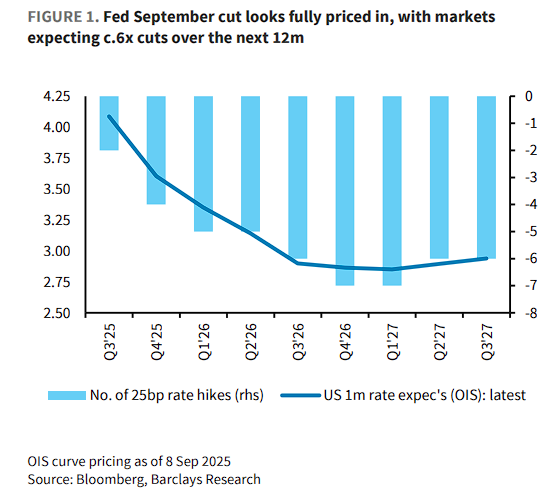
Core Viewpoint - The performance of the stock market after the Federal Reserve resumes interest rate cuts is heavily dependent on whether the economy enters a recession, with the unemployment rate being a key indicator for determining the economic trajectory [1][3]. Economic Conditions - Historical data shows that in the past fifty years, there have been seven instances where the Fed resumed rate cuts after a significant pause. Out of these, four were accompanied by economic recessions, while three saw continued economic expansion, leading to vastly different stock market performances [1][7]. - In scenarios without a recession, the MSCI World Index showed average performance increases of 1%, 2%, 8%, and 17% over 1 month, 3 months, 6 months, and 12 months respectively after rate cuts. In contrast, during recessionary periods, the average performance was -2%, 2%, 0%, and 6% [7][10]. Unemployment Rate - The unemployment rate is highlighted as a critical variable for distinguishing between recession and economic expansion. During recessions, the unemployment rate tends to rise for nearly a year after rate cuts, accumulating an increase of 2-3 percentage points. Conversely, in expanding economies, the unemployment rate only sees a slight increase before declining within a few quarters [3][14][17]. Market Expectations - Currently, the U.S. unemployment rate has risen to 4.3%, which is a significant factor driving market expectations for the Fed to resume rate cuts. Barclays economists predict that the Fed may lower the federal funds rate to 3.0% by the end of 2026 as the labor market slows [17]. Yield Curve and Sector Performance - The shape of the yield curve significantly influences sector performance. Historically, a flattening yield curve during bull markets is most favorable for the stock market, while cyclical sectors perform best during steepening phases in bear markets [6][20]. - In the absence of a recession, the yield curve tends to steepen moderately after rate cuts, while in recession scenarios, it initially steepens before flattening out, transitioning to a steepening phase again as the economy recovers [20][24].
美联储降息=美股大涨?有一个重要前提和关键指标
Sou Hu Cai Jing· 2025-09-11 02:56
Core Viewpoint - The performance of the stock market after the Federal Reserve resumes interest rate cuts is heavily dependent on whether the economy enters a recession, with the unemployment rate being a key indicator for determining the economic trajectory [1][3]. Economic Conditions and Stock Market Performance - Historical data shows that in the past fifty years, there have been seven instances where the Fed paused and then resumed rate cuts. Out of these, four were accompanied by economic recessions, while three saw continued economic expansion, leading to vastly different stock market performances [1][6]. - In scenarios without a recession, the MSCI World Index showed average performance of 1%, 2%, 8%, and 17% over 1 month, 3 months, 6 months, and 12 months post-rate cut, respectively. In contrast, during recessions, the performance was -2%, 2%, 0%, and 6% [6][9]. Unemployment Rate as a Key Indicator - The unemployment rate is crucial for distinguishing between recession and economic expansion. Historical data indicates that during recessions, the unemployment rate tends to rise for nearly a year after rate cuts, accumulating an increase of 2-3 percentage points. Conversely, during economic expansions, the unemployment rate only sees a slight increase before declining within a few quarters [3][13][16]. Yield Curve and Sector Performance - The shape of the yield curve significantly influences sector performance. Historically, a flattening yield curve during bull markets is most favorable for the stock market, while cyclical sectors perform best during steepening phases in bear markets [5][19]. - If current interest rate pricing remains unchanged, a bull market flattening trend may continue to support the stock market [5][22]. Cross-Asset Performance - In non-recession scenarios, stocks typically outperform bonds, with the S&P 500 index showing a 12-month performance of 16%, while the 10-year U.S. Treasury yield remains nearly flat. During recessions, bonds perform better, with Treasury yields rising by 8 percentage points, while the S&P 500 index only sees a 12% increase over 12 months [9][12]. Economic Activity Indicators - Economic activity indicators, such as the ISM manufacturing index, typically improve about a quarter after rate cuts in non-recession scenarios. However, during recessions, this index tends to decline for several quarters before bottoming out and recovering [16].
美国就业数据大幅修正引发比特币震荡:BTC 接下来何去何从?
Sou Hu Cai Jing· 2025-09-11 02:14
比特币(BTC)跌破111,000美元,走势与美国股市同步下挫。此前,美国劳工统计局(BLS)从就业数据中削减了911,000个岗位,创历史最大降幅。 美联储可能在美国就业数据疲软的背景下降息,这有望推动比特币(BTC)新一轮上涨。 比特币(BTC)在守住关键支撑位后,于楔形形态中反弹,目标指向129,000美元。 BTC/USD 日线价格图。来源:TradingView 随着美国经济衰退风险增加,比特币会进一步下跌吗?让我们来分析一下。 美国劳工统计局在2025年3月基准修订中,将私营部门岗位削减了880,000个,政府部门削减31,000个。失业率升至4.3%,8月雇主仅新增22,000个岗位,远低 于预期的75,000个。 核心个人消费支出(PCE)通胀维持在2.9%,加大了经济衰退风险,除非美联储采取更宽松的货币政策。 债券交易员已押注美联储官员将在9月批准降息25个基点,截至周二概率升至92%。CME数据显示,到2025年底,可能还会有两次降息。 9月美联储会议的目标利率概率。来源:CME 市场评论员The Kobeissi Letter表示:"美联储将在高通胀环境下降息,因为劳动力市场疲软,"并补 ...
就业低迷,美国这个“圣诞季”消费增速或创疫情来最低
Hua Er Jie Jian Wen· 2025-09-11 01:15
美国正在显现更多消费主导的经济放缓迹象。 德勤最新发布的预测报告指出,从今年11月到明年1月,美国假日季销售额预计将仅增长2.9%至3.4%, 显著低于去年4.2%的增幅,为疫情以来最慢的增速。这相当于销售总额从去年的1.57万亿美元增至1.61 万亿至1.62万亿美元。 由于消费者支出约占美国GDP的68%,假日季销售的放缓在"黑色星期五"和圣诞购物季之前是一个重要 的警示信号。 实际上,多重因素正在挤压美国消费者的预算。 购物者不仅要应对高企的借贷成本,还面临着储蓄耗尽、信用卡债务达到上限以及持续的通货膨胀压 力。宏观经济的普遍不确定性也削弱了他们的消费信心。 普华永道近日的一项调查预测显示,Z世代购物者在假日季的支出降幅将是所有年龄段中最陡峭的。 企业层面也反映了这种不确定性,包括百思买、塔吉特、沃尔玛、梅西百货和美泰在内的消费公司,普 遍在进入秋季返校季时发布了喜忧参半的业绩指引。 就业数据大幅下修引发衰退担忧 与此同时,美国劳动力市场也正发出危险信号。周二,美国劳工部近期对其截至今年3月的年度就业数 据进行了历史性的下修,表明商业周期可能已在2024年春季见顶。 这些动态共同指向一个方向:作为美国经 ...
数据腰斩,多方解读:“美国经济正滑向衰退边缘”
Huan Qiu Shi Bao· 2025-09-10 22:45
Group 1 - The U.S. labor market is showing signs of weakness, with a significant downward adjustment of 911,000 jobs in the non-farm employment data over the past year, leading to a reduction in the overall employment rate by approximately 0.6 percentage points, the largest decline since 2009 [1] - The average monthly addition of non-farm jobs has dropped to 71,000, a decrease of 76,000 from the previously reported figure of 147,000 [1] - The unemployment rate has risen to 4.3%, nearing a four-year high, indicating a slowdown in job growth and raising concerns about the health of the U.S. economy [1] Group 2 - Economic experts are warning that the U.S. economy is on the brink of recession, with companies slowing down hiring and facing uncertainty due to trade policies and immigration controls [2] - The current labor market issues are exacerbated by the ongoing transition to artificial intelligence and automation, which is suppressing labor demand [2] - Analysts suggest that the actual economic conditions for many businesses and consumers are worse than what is reflected in nominal GDP and employment statistics [2]
Executives from JPMorgan Chase, BlackRock and more talk rate cuts, the consumer and the economy
Youtube· 2025-09-10 18:53
I think the economy is weakening, you know, whether that is on the way to recession or just weakening, I don't know, and that just confirms what we already thought, kind of. And I know that's a big revision. And speaking of kind of what we were going back to with the state of the economy, the difficulty predicting one of the questions people have is what's going on with the consumer right now.They're still spending money. It's a little bit different depending on what income set they're coming from. They sti ...