首店经济

Search documents
从两个“超一千”看外资对上海“信任票”
Jie Fang Ri Bao· 2025-11-25 01:33
Group 1 - BASF integrates its Asia-based tetrahydrofuran business into its Caojing facility in China, ceasing production in Ulsan, South Korea, reflecting confidence in China's development amid global economic challenges [1] - Shanghai's foreign investment performance is strong, with 4,764 new foreign enterprises established in the first three quarters of the year, a 5.5% year-on-year increase, and actual foreign investment exceeding $380 billion [1] - Shanghai's actual foreign investment during the "14th Five-Year Plan" period has surpassed $100 billion, reaching $100.33 billion, ahead of schedule [1] Group 2 - Shanghai has the highest concentration of regional headquarters for multinational companies in mainland China, with 44 new recognitions this year, totaling 1,060 [2] - The business services sector, driven by headquarters economy, accounted for 58.83 billion USD in actual foreign investment, with its share rising from 40.7% to 48.8%, a year-on-year increase of 68.8% [2] - Policies supporting multinational company headquarters have been implemented to enhance their capabilities in various functions, including R&D and financial management [2] Group 3 - Roche invested 2.04 billion CNY in a biopharmaceutical base in Shanghai, expected to be completed by 2029 and operational by 2031, highlighting ongoing foreign investment in China's healthcare sector [3] - High-tech industries are becoming a new focus for foreign investment in Shanghai, with the share of high-tech industry investment rising from 23% during the "13th Five-Year Plan" to 33% during the "14th Five-Year Plan" [3] Group 4 - The establishment of the only Asian technology center by Evonik in Shanghai's Songjiang District signifies the city's attractiveness for foreign investment in new materials [4][5] - Zeiss signed a land use agreement for its largest infrastructure investment in China, marking significant progress for its Greater China headquarters project [5] Group 5 - Shanghai's consumer market is vibrant, with 848 new flagship stores opened from January to October, including 498 in the food and beverage sector and 275 in retail [6] - The opening of the world's largest LEGO theme park in Jinshan and the upcoming "Harry Potter Studio Tour" in Shanghai reflect the city's growing appeal in the tourism sector [6] Group 6 - The opening of the Waldorf Astoria in Shanghai adds to the city's status as a major destination for high-end tourism, with confidence expressed by Hilton's Asia-Pacific president [7]
新品“挑花眼”、首展首秀亮点频出 多样首发活动释放消费新潜力
Yang Shi Wang· 2025-11-24 11:12
Core Insights - Guangzhou is becoming a preferred location for international brands to open their first stores, with over 600 international brands entering the market from 2021 to 2024, reflecting an annual growth rate of 25% in the number of first stores [1][4] - In 2025, Guangzhou was selected as one of the first pilot cities for national retail innovation, with the number of duty-free shops increasing to 1,305 [4] - The city is also hosting various promotional events, such as themed pop-up activities in shopping centers, to enhance consumer engagement and showcase new products [5] Group 1 - Guangzhou is hosting a series of inaugural events in multiple commercial districts to boost consumer potential [1] - The city has seen a significant increase in the number of first stores, with a focus on international brands [1] - Duty-free shopping options are expanding, contributing to Guangzhou's attractiveness for new retail ventures [4] Group 2 - The shopping centers in Guangzhou are actively organizing themed events to attract consumers and promote new product launches [5] - The growth in first stores and retail innovation initiatives indicates a robust retail environment in Guangzhou [4][1]

“强信心 促发展——全媒体看首府”第三期集中采访走进商业一线 探寻青城消费新活力
Sou Hu Cai Jing· 2025-11-22 05:41
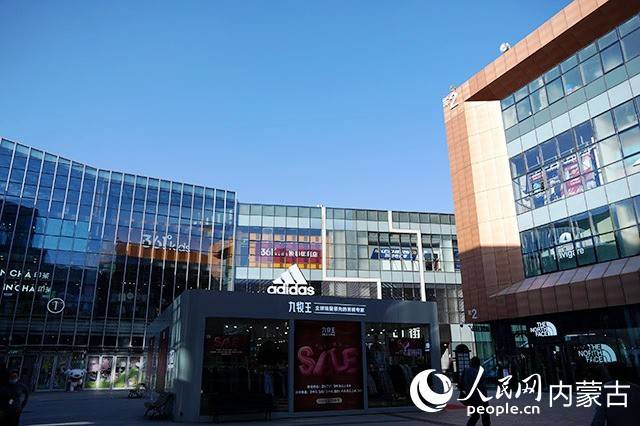
Group 1 - The article highlights the implementation of the outbound tax refund policy in Hohhot, which began on November 1, marking a significant step in promoting consumption among international travelers and enhancing the city's commercial landscape [1][8] - The Wangfujing Outlet and Zhenhua Plaza are among the first stores to offer this tax refund service, indicating a collaborative effort by the municipal commerce bureau and various departments to improve service quality [1] - Hohhot's social retail sales reached 66.63 billion yuan from January to July 2025, showing a year-on-year growth of 9.8%, reflecting the city's economic vitality and consumer confidence [8] Group 2 - The Saishang Old Street, with over 400 years of history, has successfully integrated smart tourism and culture, focusing on ethnic handicrafts and cultural products, and has been recognized as a national-level cultural tourism area [3][8] - During the May Day holiday, the Saishang Old Street attracted approximately 850,000 visitors, generating tourism revenue of 20 million yuan, showcasing the area's modern operational vitality [3] - The Huaren Wanshang City, a strategic commercial complex, opened in July 2025, achieving remarkable performance with over 200,000 visitors on opening day and retail sales exceeding 1 billion yuan within six days [7][8] Group 3 - The article emphasizes the synergy between commercial innovation and urban cultural identity, as seen in the collaboration between Huaren Wanshang City and local landmarks for promotional activities, achieving nearly 2 million exposures [8] - Hohhot is developing a commercial landscape characterized by two major commercial cores and multiple key business districts, serving a consumer population of over 10 million [8] - The city's efforts to optimize the business environment and promote innovative business models are expected to inject new momentum into regional economic and social development [8]
加速消费能级跃升 苏州中心商场以创新实践融入长三角一体化
Zhong Guo Jing Ying Bao· 2025-11-21 15:20
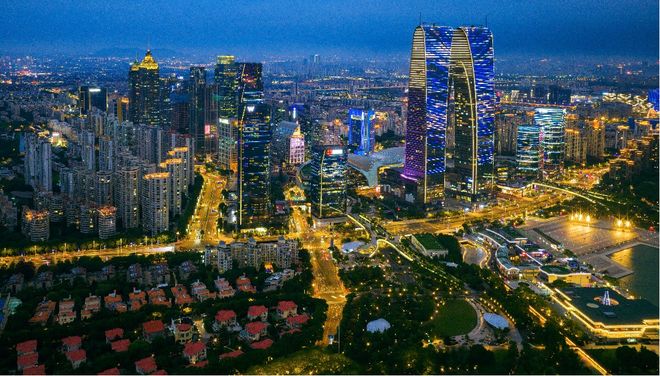
Core Insights - Suzhou Center Mall has become a significant driver of economic growth and a symbol of urban lifestyle in Suzhou, continuously promoting the "first store economy" and leading consumption trends [1][3] Economic Impact - The mall celebrated its eighth anniversary and launched a co-branded credit card with ICBC Suzhou, aiming to implement national strategies to expand domestic demand and promote consumption [3] - The collaboration seeks to integrate financial resources with the commercial ecosystem, enhancing consumer experiences and accelerating consumption levels [3] Brand and Retail Development - Suzhou Center Mall has introduced over 850 new brands since its opening, with more than 50% being first stores, including 30% that are first in Jiangsu or nationwide [4] - By 2025, the mall plans to introduce over 100 new brands, with approximately 60% being new to Suzhou, indicating a strong consumer pull with nearly 100% sales growth for newly introduced brands [4] Sales and Visitor Projections - The mall's total sales for 2025 are projected to reach 4.3 billion yuan, with expected visitor numbers exceeding 73 million [5] - VIP/SVIP consumer spending is anticipated to increase by over 34% year-on-year, showcasing the mall's appeal to high-value customers [5] Cultural and Tourism Integration - Suzhou Center Mall is actively integrating into the Yangtze River Delta's development, collaborating with Wuxi Airport Group to enhance international tourism consumption [7] - The mall is set to establish a departure tax refund service center and optimize international payment services, aiming to unlock tourism consumption potential [7] - During the "Golden Autumn Three Lakes Carnival," the mall attracted significant visitor numbers, with a 7.67% increase in foot traffic, highlighting its role in promoting cultural tourism [7]
浙江宁波:“首店经济”瞄准智慧新场景
Cai Jing Wang· 2025-11-21 07:07
Core Insights - The FotileStyle Ningbo showroom officially opened on November 18, showcasing a new model of smart consumption in line with Zhejiang's "first store economy" strategy and national policies promoting new scene applications [1][3] - The showroom emphasizes "smart scenes, cabinet-electrical integration, and emotional aesthetics," moving away from traditional home retail models to create a "first store sample" that reflects contemporary consumer needs [1][2] Group 1 - The showroom spans over 700 square meters and features innovative solutions such as the "Mushitag" series and the award-winning "Namunani" series, enhancing the concept of "smart single products" into "full-domain smart scenes" [1][2] - The integration of smart systems allows for multifunctional spaces, such as transforming a decorative storage cabinet into a home theater, thereby improving space utilization and enhancing the user experience [2] - The design philosophy focuses on emotional connection, with the aim of making design prioritize human care over mere object creation, as stated by FotileStyle's brand and marketing head [2] Group 2 - The opening of the Ningbo showroom represents a significant step in the evolution of Zhejiang's "first store economy" towards a more intelligent and experiential model, validating the effectiveness of the "policy guidance - scene innovation - consumption upgrade" approach [3] - The establishment of more smart scene "first stores" in Ningbo is expected to further unleash consumer potential and inject new momentum into the high-quality development of traditional industries such as home furnishings [3]
海口消费市场有三热
Hai Nan Ri Bao· 2025-11-20 01:54
Core Insights - The article highlights the vibrant consumer market in Haikou, driven by policies such as trade-in programs, the promotion of "first" economy, and enhancements in duty-free shopping [3][4][8] Trade-in Policy - Haikou has implemented a trade-in policy that has significantly boosted consumer engagement, with events attracting many participants and offering various subsidies across multiple categories including automobiles and electronics [4][5] - The trade-in activities have generated a total consumption of 29.762 billion yuan, with notable retail growth in categories such as automobiles (up 48.3%), home appliances (up 118.6%), and communication devices (up 47.1%) from January to September [5] "First" Economy - The "first" economy is being cultivated in Haikou, with the introduction of numerous first stores and brands, enhancing the city's commercial landscape and providing new consumer experiences [6][7] - In 2023, Haikou has welcomed 75 first stores across various sectors, including high-end retail and unique dining options, contributing to the city's economic dynamism [6] Duty-Free Shopping - The optimization of the duty-free shopping policy has made it more convenient for local residents, allowing for a broader range of products and increased purchasing opportunities [8][9] - Following the new policy implementation on November 1, the duty-free shopping revenue reached 50.6 million yuan in the first week, with a 34.86% increase in shopping numbers compared to the previous year [9] Future Initiatives - The Haikou Municipal Bureau of Commerce plans to continue enhancing consumer experiences by promoting trade-in programs and optimizing duty-free shopping, aiming to attract more international brands and improve the integration of duty-free shopping with cultural tourism [10]
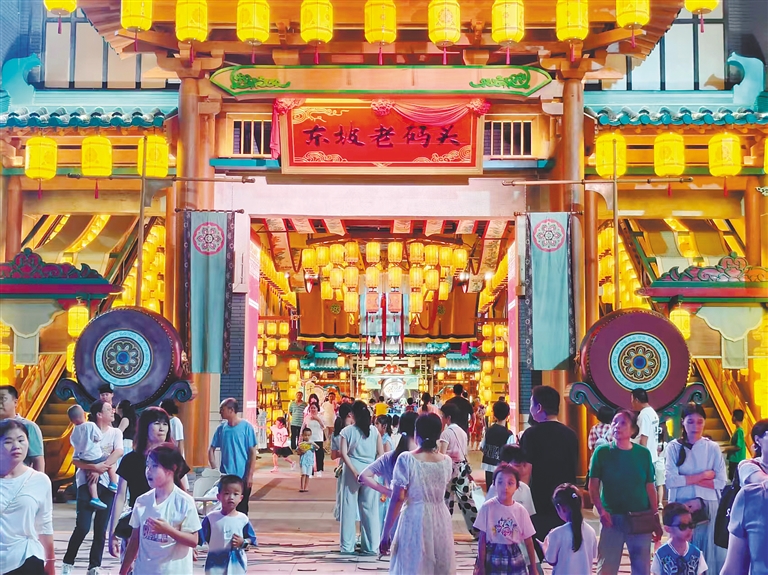
餐饮空间IP化,购物中心开卷“漂亮饭”了!
Sou Hu Cai Jing· 2025-11-19 11:39
来源:铱星云商 盘点年内13家购物中心餐饮区域调改与"餐饮空间IP化"趋势。 主编:曹婕 撰文&编辑:刘瑾 南京德基广场 这些商场的美食区域有了新变化 在存量时代下,众多购物中心正通过自主调改来提升消费体验,以保持市场竞争力。从市场表现来看,无论是高端购物中心还是大众型购物中心,餐饮区 域的优化都已成为调改的重点。据铱星云商不完全统计,今年以来,至少已有13家购物中心对餐饮区域进行了不同程度的调整。 7家高端购物中心餐饮区域调改情况 近两年,随着消费者消费理念趋于理性,在购物中心的众多业态中,餐饮业态凭借强烈的线下体验属性愈发受到重视,甚至出现了购物中心正演变为"美 食城"的市场声音。 7家高端购物中心餐饮区域调改情况 这一趋势在短期数据中已初现端倪。据铱星云商《全国商场2025年客流报告·品牌开关店》对30个中等体量购物中心的监测,第三季度餐饮业态新开门店 表现持续亮眼:7月新开门店数量位居各业态第一;8月整体热度环比放缓,但部分餐饮品牌表现依然强劲;9月餐饮业态新开门店总数回升至第二位。 具体到实际项目中,无论是高端商场还是大众化项目,都在积极通过餐饮区域的调改,提升线下吸引力与市场竞争力。 | | 7家 ...
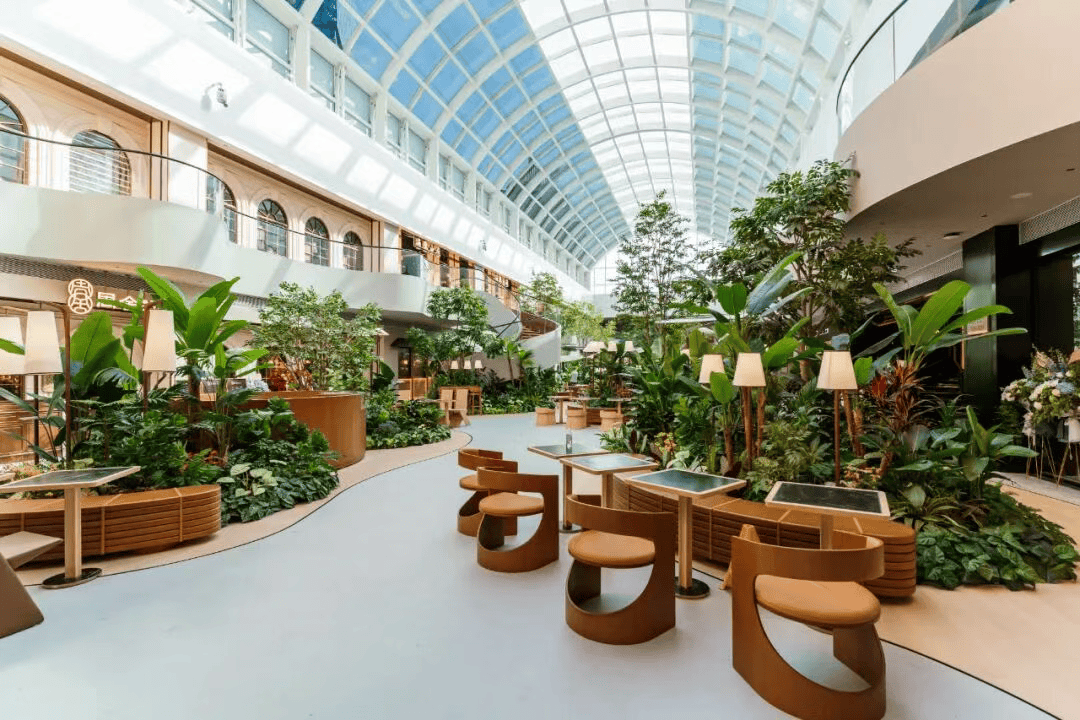
北京王府井商圈的“五大王牌”都有了新变化
3 6 Ke· 2025-11-19 02:20
Core Insights - Wangfujing area is undergoing a new round of public space renovation, with major commercial projects simultaneously upgrading and refreshing their offerings [1] Group 1: Wangfujing Zhonghuan - Wangfujing Zhonghuan is optimizing its brand matrix, with the luxury brand Loewe's original location now under renovation, and several brands like Solar lab and DVF have exited [2] - In the dining sector, the last store of nama cocoa has closed, making way for BLACK TREE Thai Tea's first store in Beijing, alongside new tea brands and restaurants [4] Group 2: Beijing APM - Beijing APM is enhancing its sports brand matrix, with HOKA ONE ONE prominently positioned on the first floor, while several brands like Burberry Beauty have exited [5] - The dining options are expanding with new entries like Peppers Water Boiled Fish, while several other restaurants have closed [5] Group 3: Wangfujing Yintai in88 - Wangfujing Yintai in88 is introducing over 10 new dining brands on the fourth floor, which was previously not a commercial space, including several first stores in Beijing [8] Group 4: Dongfang Xintiandi - Dongfang Xintiandi is shifting towards a more accessible brand lineup, with new openings like COCOON and Zhengda Coffee, while several brands have closed [10] Group 5: Wangfujing Joy City - Wangfujing Joy City is adjusting its second-floor and first-floor dining matrices, with a new Disney pop-up store attracting attention, and a large KKV replacing previous retail spaces [12] Group 6: Visitor Statistics - Official data indicates that the Wangfujing area is expected to receive 130 million visitors in 2024, with a daily average of 355,000 visitors, marking a 30% year-on-year increase [13]

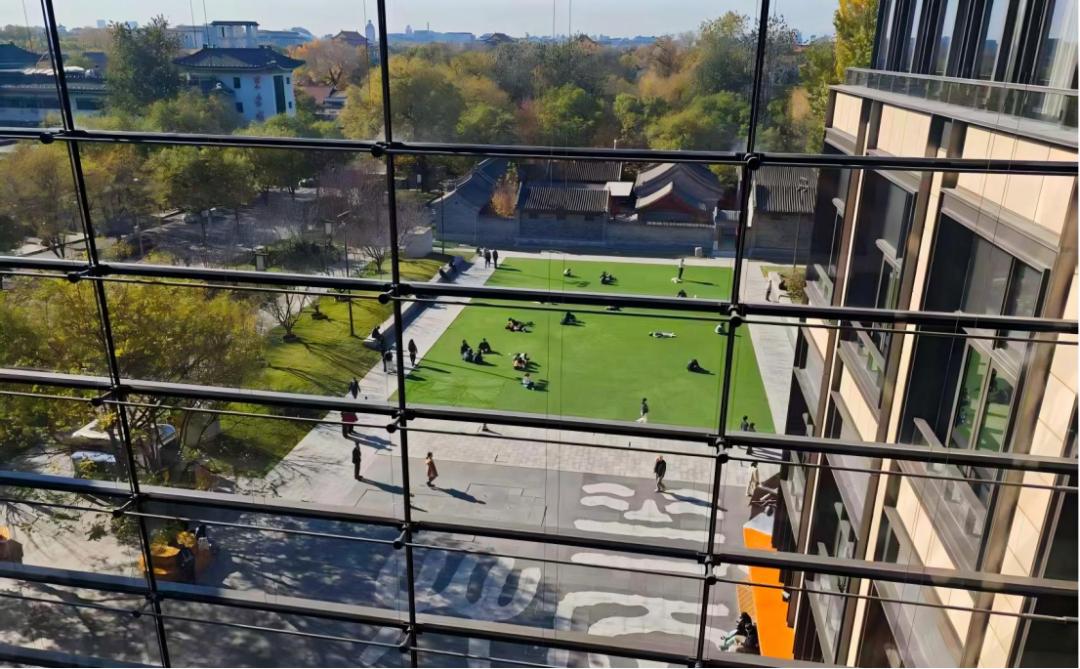
存量时代倒逼运营升级 商业地产迈入“精耕细作”阶段
Zhong Guo Jing Ying Bao· 2025-11-18 03:00
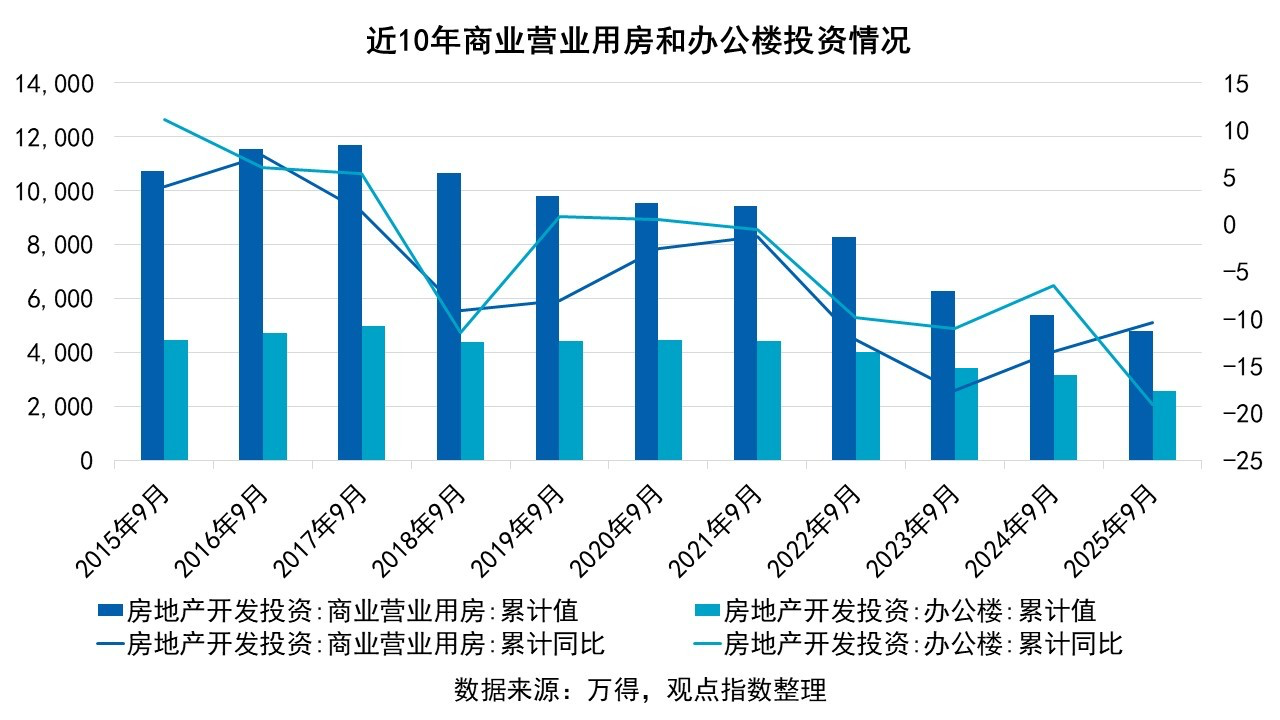
Core Insights - The "14th Five-Year Plan" emphasizes expanding domestic demand as a strategic foundation, focusing on improving people's livelihoods and promoting consumption, which presents new opportunities for retail real estate [2][3] - The commercial real estate sector is entering a phase of differentiation and revitalization, with some companies recovering investment activities despite facing revenue challenges [2][3] - The demand for experiential consumption is increasing, indicating a shift in consumer preferences that retail commercial real estate must adapt to [3][4] Group 1: Market Trends - The total retail sales of consumer goods reached 36.5877 trillion yuan from January to September 2025, with a growth rate of 4.46% [3] - During the recent 8-day National Day and Mid-Autumn Festival holiday, domestic travel reached 888 million people, an increase of 123 million compared to the previous year, with total spending of 809 billion yuan, up 108.2 billion yuan [3] - The commercial real estate development investment is still facing growth challenges, with large enterprises capturing market share but struggling for continuous revenue growth, while small and medium-sized enterprises face operational difficulties [3][5] Group 2: Consumer Behavior - The middle-aged and elderly population, along with young consumers, are identified as key demographics with significant spending potential [4] - The middle-class consumer group is experiencing structural shifts, leading to a complex consumption mindset characterized by a desire for diverse products and services [4] - Companies are adopting strategies that integrate social media and personalized services to enhance customer engagement and attract consumers [4][5] Group 3: Business Strategies - Companies are focusing on optimizing existing assets and exploring new business models, such as the "light asset" approach to expand their market presence [5] - The competition in the commercial sector is intensifying, requiring businesses to innovate in content creation, unique experiences, and refined operations [5][6] - The overall short-term policy effects on consumption are becoming evident, although the recovery of investment remains slow, indicating a gradual restoration of market confidence [6]



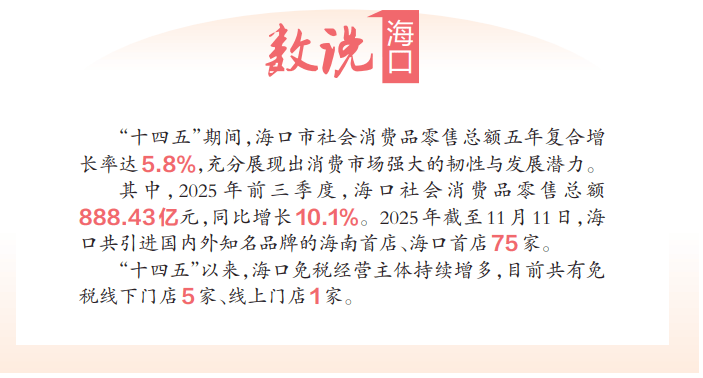
奋进的海口·我们的“十四五”②丨海口以场景升级激发市场新活力
Sou Hu Cai Jing· 2025-11-14 09:12
Core Insights - The article highlights the vibrant consumption landscape in Haikou, showcasing the city's efforts to enhance its status as an international tourism consumption center during the 14th Five-Year Plan period [1][12][13] Consumption Market Dynamics - Haikou's consumption structure has been optimized and upgraded, with a continuous release of quality demand and the emergence of new consumption scenarios and business formats [1][12] - The implementation of the new duty-free policy on November 1 has significantly boosted consumer interest, with sales reaching 78.54 million yuan on the first day, a 6.1% increase from the previous day [5][12] - The first week of the new policy saw sales of 506 million yuan and 72,900 shoppers, marking a year-on-year growth of 34.86% and 3.37% respectively [5][12] Duty-Free Market Expansion - The duty-free shopping policy has been adjusted to include a wider range of products and allow for the sale of six categories of domestic goods, enhancing the shopping experience for both residents and tourists [5][6] - The opening of new duty-free stores, such as CDF Haikou International Duty-Free City, has contributed to a diversified duty-free market landscape [3][5] Retail and Brand Development - Haikou is actively attracting flagship stores and experience-based retail formats, with 75 new brand stores introduced this year, covering high-end retail, specialty dining, and cultural experiences [6][8] - The launch of the Elastic Dream Factory Sports Park, which features over 30 innovative sports projects, exemplifies the city's strategy to cater to diverse consumer needs [6][8] Cultural and Entertainment Integration - The integration of cultural, sports, and entertainment activities has enhanced consumer engagement, with events like concerts driving foot traffic to shopping areas [9][11] - The city is creating immersive shopping experiences that combine shopping with cultural and entertainment elements, transforming commercial areas into comprehensive leisure destinations [9][11] Economic Growth Indicators - Haikou's total retail sales of consumer goods reached 88.843 billion yuan in the first three quarters of the year, reflecting a year-on-year growth of 10.1% [12] - The "old-for-new" policy has spurred significant growth in retail sales across various sectors, including automotive and electronics, with increases of 50.4%, 54.1%, and 147.6% respectively [11][12]