L4级自动驾驶

Search documents
哈啰2027年将部署超5万辆Robotaxi车型
Bei Ke Cai Jing· 2025-09-12 01:45
Core Insights - Hello has officially launched its Robotaxi strategic plan, introducing its first mass-produced Robotaxi model "HR1" with plans for mass production by 2026 and deployment of over 50,000 units by 2027 [1] Group 1: Strategic Partnerships - Hello has signed strategic cooperation agreements with several companies including Qichen Automotive, Alibaba Cloud, Horizon Robotics, and Hesai [1] - The collaboration with Horizon focuses on L4 autonomous driving solutions, including software algorithms and hardware integration for the Robotaxi fleet [1] Group 2: Business Goals and Roadmap - The company aims to scale its Robotaxi business within two years, having already initiated a pilot operation in Zhuzhou, Hunan [1] - By 2026, Hello plans to achieve SOP mass production of its front-mounted models, covering over 10 cities and reaching a fleet size of 10,000 units, with a global deployment of over 50,000 units by 2027 [1]
深圳:开通首条L4级自动驾驶公交专线
Jing Ji Guan Cha Bao· 2025-08-28 08:21
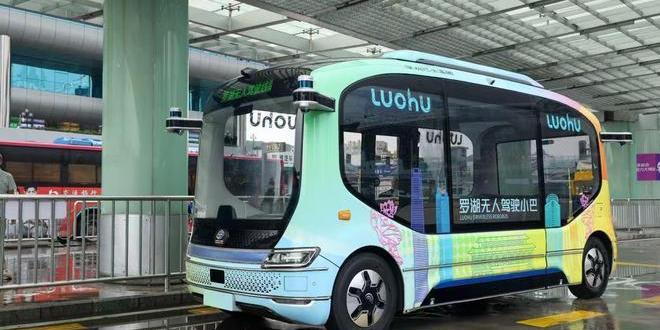
Core Insights - WeRide has launched Shenzhen's first L4 autonomous driving bus route, B888, in partnership with Shenzhen Bus Group, marking a significant milestone in urban autonomous transportation [2] - The B888 route connects key locations in the Luohu district, allowing citizens to book free rides via the "Shenba Travel" app, with travel times ranging from 25 to 30 minutes [2] - The autonomous minibuses are equipped with over 20 sensors, including LiDAR and high-definition cameras, enabling comprehensive 360-degree perception and advanced traffic sign recognition [2] Summary by Categories Company Developments - WeRide has officially opened the B888 autonomous bus route, the first of its kind in Shenzhen's bustling city center [2] - The service operates between Luohu Port and Wanxiang Shijia, covering significant commercial and cultural landmarks [2] Technology and Operations - The minibuses utilize more than 20 sensors for enhanced situational awareness, capable of detecting lane markings and traffic light statuses [2] - The vehicles can handle complex scenarios such as obstructed traffic lights and flashing signals while adhering strictly to traffic regulations [2]

小鹏汽车ROBOARK商标注册成功,可应用于机器人
Xin Lang Cai Jing· 2025-08-28 06:11
Core Insights - Guangdong Xiaopeng Motors Technology Group Co., Ltd. has successfully registered the trademark "ROBOARK," which is classified under category 9 for scientific instruments [1] - The registered goods/services include security monitoring robots, humanoid robots with communication and learning functions for human assistance and entertainment, laboratory robots, and microchips [1] - The name "ROBO" (robot) combined with "ARK" (ark) is speculated to indicate a Level 4 autonomous driving solution or a robotics technology platform [1]


小马智行:一线城市全布局 深度合作整车厂商助力实现盈亏平衡
Zheng Quan Shi Bao Wang· 2025-08-27 14:55
Core Insights - Pony.ai has launched a 24/7 autonomous driving service in Shenzhen, aiming to expand its fleet to over 1,000 vehicles by the end of 2025, accelerating the commercialization of autonomous driving [2][3] - The company has established a comprehensive autonomous driving service network across major Chinese cities, covering over 2,000 square kilometers, with plans for further expansion [4] - Pony.ai's technology includes a "world model" for virtual simulations and a remote assistance system, enhancing safety and operational efficiency [5][6] Domestic Expansion - Pony.ai operates in four major cities (Beijing, Shanghai, Guangzhou, and Shenzhen) with a focus on gradual commercialization and regulatory collaboration [4] - The company has received support from Shenzhen's local government, which has established regulations for autonomous driving, facilitating industry growth [3] Technology Development - The "world model" allows for extensive virtual training, achieving a safety level ten times higher than that of human drivers [6] - The remote assistance system enables real-time support for vehicles in complex situations, allowing for efficient management of multiple vehicles by a single operator [6] Product and International Expansion - The seventh generation of autonomous vehicles has been developed in collaboration with major automotive manufacturers, with over 200 units produced and plans for deployment in major cities by 2025 [7] - Pony.ai is expanding internationally, conducting road tests in Dubai, Seoul, and Luxembourg, while sharing regulatory experiences with foreign authorities [7] Future Outlook - The company is pursuing deep collaborations with automotive manufacturers to reduce costs and achieve profitability [8] - Industry experts believe that safety must remain a priority in the pursuit of scaling autonomous driving services, especially in light of recent developments in the U.S. market [9]
小鹏汽车(XPEV):2025 年二季度业绩点评:25Q2毛利率创历史新高,经营质量持续优化
Haitong Securities International· 2025-08-25 14:08
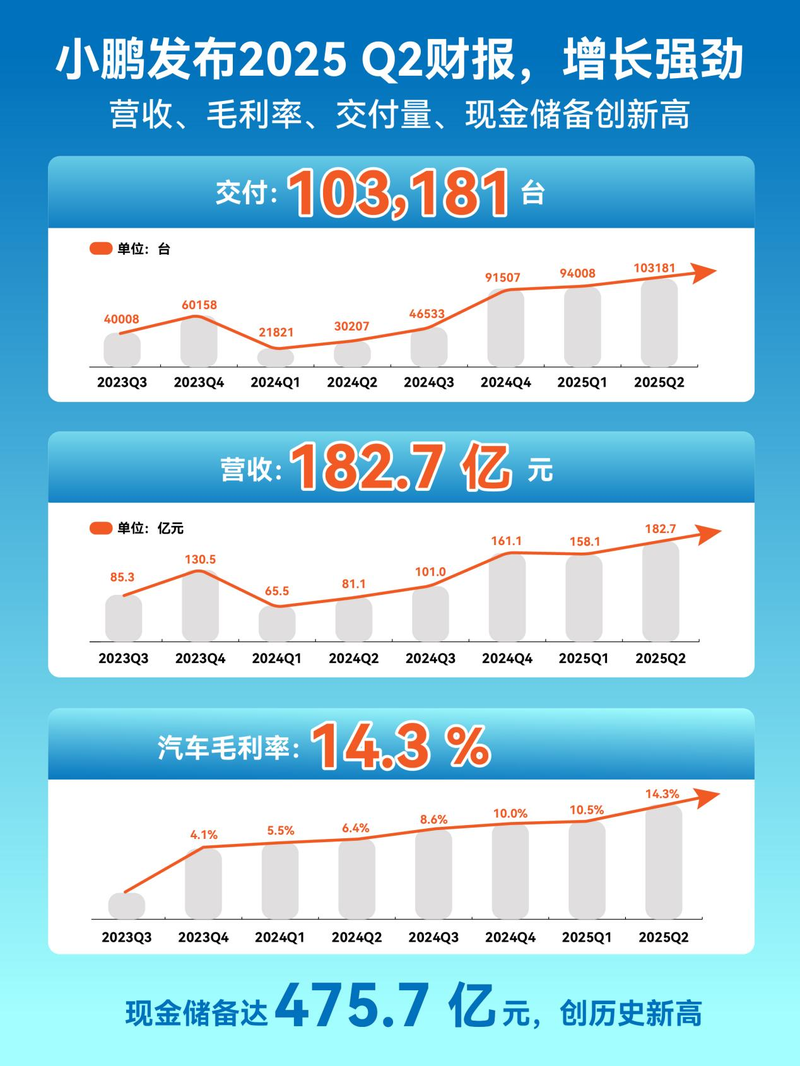
Investment Rating - The report maintains an "Outperform" rating for the company [1][9]. Core Insights - The company achieved a record gross margin of 17.3% in Q2 2025, with a year-on-year increase of 3.3 percentage points and a quarter-on-quarter increase of 1.8 percentage points [4][9]. - The net loss for Q2 2025 narrowed to 0.48 billion RMB, showing improvement compared to previous periods [4][9]. - The company is experiencing a strong product cycle with significant upgrades and new model launches, which are expected to drive sales growth [4][9]. - The partnership with Volkswagen has been expanded, which is anticipated to enhance service revenue [4][9]. Financial Summary - Revenue for Q2 2025 reached 18.27 billion RMB, representing a 125% increase year-on-year and a 16% increase quarter-on-quarter [4][9]. - The projected revenues for 2025, 2026, and 2027 are 90.90 billion RMB, 130.30 billion RMB, and 152.70 billion RMB, respectively [4][9]. - The net profit attributable to shareholders is projected to be -1.00 billion RMB in 2025, 3.30 billion RMB in 2026, and 6.80 billion RMB in 2027 [4][9]. - The company expects Q3 2025 deliveries to be between 113,000 and 118,000 units, a year-on-year increase of 143% to 154% [4][9].
小马智行二季度营收2150亿美元 亏损却多达5330万美元 CEO彭军着急吗?
Sou Hu Cai Jing· 2025-08-25 09:13
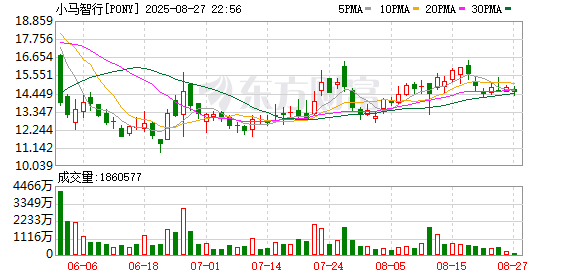
Group 1 - The core viewpoint of the article highlights that Xiaoma Zhixing reported a total revenue of $21.5 million in Q2 2025, representing a 75.9% increase compared to $12.2 million in Q2 2024, despite still being in a loss position [1][3] - The company's revenue growth is driven by a significant increase in Robotaxi charging revenue, which grew by over 300% [3] - CEO Peng Jun expressed confidence in achieving a fleet of 1,000 Robotaxis by the end of the year, despite the current challenge of having over 200 units deployed [3] Group 2 - The net loss for the company in Q2 2025 was $53.3 million, primarily due to increased R&D and operational expenses [3] - Peng Jun believes that 2025 will be the year of mass production for Robotaxis and anticipates reaching breakeven within three years [3] - Peng Jun's background includes a degree from Stanford University and seven years at Google, where he focused on advertising systems, before co-founding Xiaoma Zhixing in 2016 [3][4]
头部企业掀融资热潮 无人物流配送大规模商业化近了?
Jing Ji Guan Cha Bao· 2025-08-25 02:00
Core Insights - Baixinou Technology has completed a B+ round of financing, raising nearly 500 million RMB in total for its B round, with continued investment from existing shareholders and new investors joining [1][2] - The funds will be primarily allocated to the development of vehicle-grade autonomous vehicle products, continuous iteration of AI technology, and expansion of commercial scenarios, aiming for large-scale implementation in last-mile logistics [1][2] - The company plans to increase its active vehicle fleet from approximately 1,000 to 5,000 by 2026, expanding its focus from express delivery to broader urban delivery scenarios [1][2] Company Overview - Founded in 2019, Baixinou initially focused on supermarket deliveries and has since shifted to express logistics, partnering with major retail companies [1][2] - The company has undergone seven rounds of financing since its inception, with disclosed funding exceeding 600 million RMB [2] - Baixinou's technological advantages lie in its scene-based engineering capabilities and data loop efficiency, particularly in complex urban environments [2] Industry Trends - The logistics delivery autonomous driving sector is experiencing significant investment, with major players like Baixinou and others receiving substantial funding in 2025 [3][4] - The competition landscape includes a mix of technology-driven companies and logistics giants, with various strategies being employed to achieve profitability [4][5] - Future competition will focus on technological adaptability, cost control, and policy collaboration, with companies that possess comprehensive self-research capabilities likely to succeed [5]
老黄刚投了无人配送,复旦校友创办的
3 6 Ke· 2025-08-24 23:54
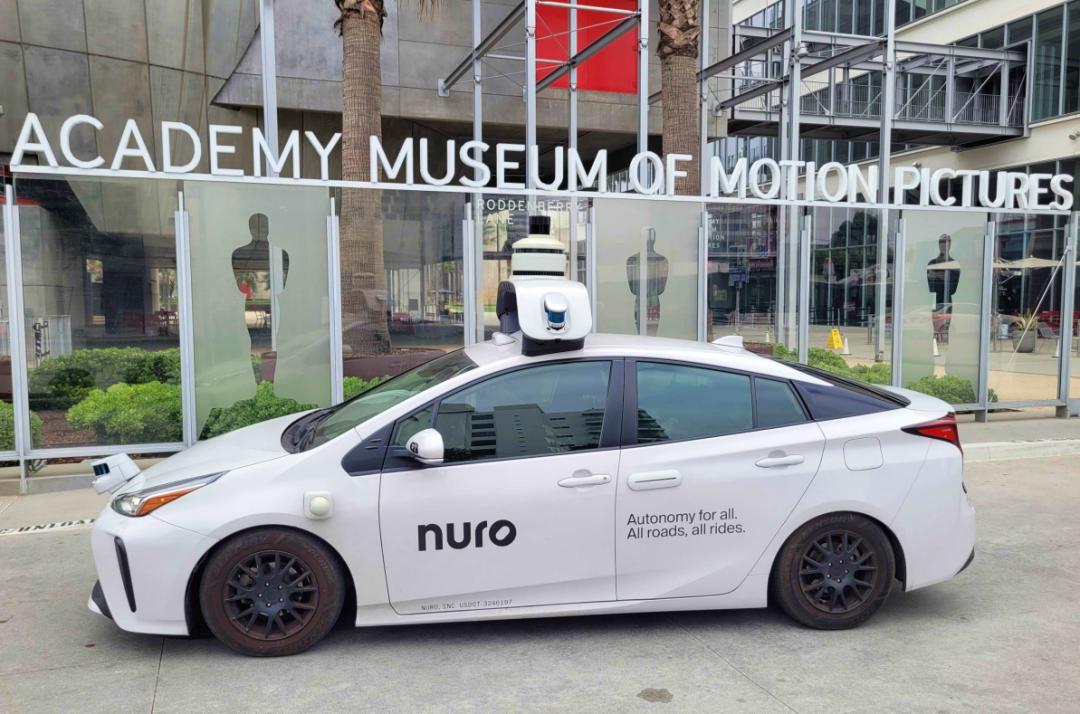
Core Insights - Nuro, a leading L4 autonomous delivery startup based in California, has successfully completed a Series E funding round, raising $203 million (approximately 1.46 billion RMB) [1][2] - The funding was completed in two parts: $106 million (approximately 761 million RMB) in April and $97 million (approximately 697 million RMB) recently [2] - Notable investors include both existing shareholders and new entrants, with Nvidia being a significant new participant, highlighting a long-standing partnership [4][6] Company Overview - Nuro was founded by two former Google engineers, with a focus on "last-mile autonomous delivery" using self-driving vehicles [8] - The company has raised approximately $2.3 billion (around 16.52 billion RMB) to date, with a current valuation of $6 billion (approximately 43.1 billion RMB), reflecting a 30% decrease from its previous valuation of $8.6 billion (approximately 61.8 billion RMB) in 2021 [10] Business Model Evolution - Nuro has shifted its business model from manufacturing its own delivery vehicles to becoming a technology supplier, providing L4 autonomous driving systems to ride-hailing and delivery companies [21] - The company has begun road testing in over 59 cities across the U.S. and has expanded its operations to Japan [21] Market Context - The autonomous delivery sector has seen significant changes over the past few years, with many startups facing challenges due to economic downturns and rising energy prices [18][19] - Despite these challenges, there is renewed interest and investment in the autonomous delivery space, as evidenced by recent funding rounds for other players in the market [27][28]

80页深度 | 文远知行:全球L4级自动驾驶产品及解决方案先行者【国信汽车】
车中旭霞· 2025-08-24 15:57
Core Viewpoints - WeRide (WRD.O) is a global leader in L4 autonomous driving products and solutions, focusing on Robotaxi, Robobus, Robovan, Robosweeper, and service businesses [2][3] - The company has expanded its operations to 30 cities across 10 countries, providing a range of autonomous driving products from L2 to L4 levels [3][12] - In H1 2025, WeRide reported revenue of 200 million yuan, a year-on-year increase of 33%, with a gross margin of 30.6% [3][37] Company Overview - WeRide is recognized as a pioneer in L4 autonomous driving solutions, holding licenses in multiple countries including China, UAE, Singapore, France, the US, and Saudi Arabia [12] - The company has developed the WeRide One platform, which supports a variety of autonomous driving applications [6][12] Financial Analysis - In H1 2025, WeRide's revenue reached 200 million yuan, with a net loss of 790 million yuan, showing a decrease in loss compared to the previous year [3][39] - The revenue from Robotaxi increased by 364% year-on-year, contributing significantly to the overall revenue [3][37] - The company’s gross margin has fluctuated, with a decline to 31% in 2024, influenced by product mix and pricing strategies [47] Industry Insights - The L4 autonomous driving market is projected to reach trillions globally by 2030, with significant growth potential in the domestic market for Robotaxi, Robobus, Robovan, and Robosweeper [4][5] - The competitive landscape includes players like WeRide, Pony.ai, and Baidu Apollo, with a focus on accelerating commercialization [5][4] Product and Service Overview - WeRide's main products include Robotaxi, Robobus, Robovan, and Robosweeper, with a service business that encompasses operational and technical support [21][26] - The company has established a robust ecosystem with partnerships across the automotive and transportation sectors [21][30] Technological Advancements - The WeRide One platform enables the development of a diverse range of L4 products, enhancing the company's product matrix [6][28] - WeRide has launched the WePilot AiDrive, an advanced driver assistance system (ADAS) that aims to improve the efficiency and safety of autonomous driving [28][30] Market Dynamics - The Robo-X industry is characterized by long-term growth potential, driven by technological advancements, cost reductions, and supportive policies [4][58] - The transition to L4 and L5 levels of automation is expected to revolutionize transportation across various applications, including passenger and freight services [56][58]

势能持续释放,小鹏汽车率先驶向L4的星辰大海
Xin Jing Bao· 2025-08-21 05:23
Core Insights - Xiaopeng Motors is confident in achieving scale leadership and entering a new phase of self-sustaining profitability, supported by improving financial data and enhanced commercial capabilities [1][6][10] - The company reported historic breakthroughs in financial and operational metrics in the first half of 2025, with a significant increase in delivery volume and gross margins [1][10][11] Financial Performance - In Q2 2025, Xiaopeng Motors achieved total revenue of 18.27 billion yuan, a year-on-year increase of 125.3% and a quarter-on-quarter increase of 15.6% [10] - Vehicle sales revenue was 16.88 billion yuan, up 147.6% year-on-year and 17.5% quarter-on-quarter, driven by a record delivery of over 103,000 vehicles in Q2 [11] - The gross margin for vehicles reached 14.3%, an increase of 7.9 percentage points year-on-year, while overall gross margin rose to 17.3%, marking a historic high [11] Market Strategy and Product Development - Xiaopeng Motors plans to launch multiple new models in 2025, aiming for monthly delivery volumes to exceed 40,000 units starting in September [12][15] - The company emphasizes "emotional value" in its new models, reflecting a shift in consumer preferences towards design and personalized features [14][15] - The upcoming launch of the Kunpeng Super Electric model X9 is expected to enhance the product lineup, featuring a pure electric range exceeding 450 kilometers [15] Technological Advancements - Xiaopeng Motors is transitioning towards becoming a global AI automotive company, with plans to mass-produce L4 autonomous vehicles by 2026 and initiate Robotaxi services [17][18] - The company aims to leverage its proprietary technology and AI capabilities to create a competitive edge in the evolving automotive landscape [18][19] Future Outlook - Over the next three years, Xiaopeng Motors intends to accelerate its market expansion both domestically and internationally, driven by innovative AI technology [16][19] - The company is focused on building a robust ecosystem that integrates advanced driving technologies and enhances user experience [18][19]