中长期资金入市

Search documents
鑫闻界丨中邮人寿年内第三次举牌,险资举牌上市公司再掀高潮
Qi Lu Wan Bao· 2025-10-23 12:59
Group 1 - Zhongyou Life Insurance Co., Ltd. announced its third stake increase in China Communication Technology Co., Ltd. H-shares this year, following previous increases in May and July for Eastern Airlines Logistics A-shares and Green Power Environmental H-shares [1] - The trend of insurance capital frequently increasing stakes in listed companies is evident, with over 30 instances recorded this year, surpassing last year's total of 20 [1] - Insurance capital is primarily focusing on sectors such as banking, public utilities, and environmental protection, with a particular preference for H-shares, as evidenced by 30 out of the 30 stake increases targeting H-shares [1] Group 2 - Multiple insurance companies, including China Ping An Life Insurance Co., Ltd., Great Wall Life Insurance Co., Ltd., and Zhongyou Life Insurance, have conducted several stake increases in various listed companies this year, with some exceeding the 5% threshold for stake increases [2] - The regulatory environment has been supportive of insurance capital entering the market, with initiatives from the Central Financial Office and the Financial Regulatory Bureau aimed at increasing long-term investments [1]

保险业深度报告:负债端景气延续,资产端驱动估值修复
Dongguan Securities· 2025-10-23 07:19
Investment Rating - The report maintains an "Overweight" rating for the insurance industry [1] Core Viewpoints - The life insurance sector is expected to continue its growth momentum, driven by effective cost control and product optimization, which will enhance the new business value margin (NBVM) and new business value (NBV) [3][5] - Non-auto insurance is emerging as a new growth driver, with increasing premium contributions and regulatory support expected to improve underwriting performance [3][5] - Investment strategies will be crucial for valuation recovery, with a focus on long-term interest rates and equity market performance [3][5] Summary by Sections 1. Policy and Market Overview - The insurance sector has seen a significant increase in stock prices, with the Shenwan Insurance Index rising by 18.79% year-to-date, outperforming the CSI 300 Index [11] - Regulatory policies are encouraging long-term capital inflows into the market, with insurance companies' investment in stocks and equity funds exceeding 4.4 trillion yuan, accounting for 12% of their total investments [12][15] 2. Asset Side: Stability in Fixed Income, Growth in Equity - The net investment yield for major insurance companies has faced pressure, with varying total investment returns across firms [27][28] - The insurance industry is expected to increase its allocation to equity assets, with an average investment weight of 13.75% in stocks and funds as of mid-2025, reflecting a 1.07 percentage point increase from 2024 [34][38] 3. Liability Side: Easing Cost Pressures and Expanding Spread - Life insurance companies have reported positive growth in new premium income, particularly in the bancassurance channel, while the individual insurance channel has faced challenges [44][46] - The shift towards participating insurance products is evident, with significant increases in their share of new premiums, indicating a strategic response to lower interest rates [51]




提振投资者信心久久为功
Zheng Quan Ri Bao· 2025-10-22 16:47
Core Viewpoint - The active capital market is closely linked to investor confidence, with significant increases in trading volume in the Shanghai and Shenzhen stock markets during the first three quarters of the year, reflecting positive market outlook among investors [1][2]. Group 1: Capital Market Reforms - Continuous promotion of capital market reforms is essential, enhancing the inclusiveness of the system and accelerating support for technological innovation, with over 90% of new listed companies being tech-related [1][3]. - The market capitalization of the technology sector now exceeds 25% of the total A-share market, surpassing the combined market cap of banking, non-banking financial, and real estate sectors [1]. Group 2: Quality of Listed Companies - Improving the quality of listed companies is crucial for activating the capital market and boosting social confidence, with regulatory measures aimed at enhancing governance, return capabilities, and investment value [3]. - As of October 21, 843 A-share companies announced 850 interim dividend plans, totaling 662.03 billion yuan, showcasing a commitment to returning value to investors [3]. Group 3: Long-term Capital Inflow - The implementation of guidelines to encourage long-term capital inflow has shown significant progress, with various types of long-term funds holding approximately 21.4 trillion yuan in A-share market value, a 32% increase since the end of the 13th Five-Year Plan [4]. Group 4: Regulatory Measures - Strengthening regulatory measures to combat illegal activities is vital for maintaining market order and protecting investor interests, with increased enforcement actions and a commitment to enhancing the detection of violations [5]. - The active capital market and investor confidence require a collaborative effort from regulatory bodies and market participants to ensure stability [5].
投资收益大幅提升 上市险企三季报接连“预喜”
Jin Rong Shi Bao· 2025-10-22 06:15
Core Viewpoint - China Life Insurance Company expects a significant increase in net profit for the first three quarters of 2025, projecting a range of approximately 156.79 billion to 177.69 billion yuan, representing a year-on-year growth of about 50% to 70% compared to 2024 [1] Group 1: Performance Forecasts - China Life is the third listed insurance company to announce a profit increase for the third quarter [2] - People's Insurance Company of China (PICC) anticipates a net profit of 26.75 billion yuan for the first three quarters, with a growth of 40% to 60% compared to 2024 [2] - New China Life Insurance expects a net profit between 29.99 billion and 34.12 billion yuan, with an increase of 9.31 billion to 13.44 billion yuan, reflecting a year-on-year growth of 45% to 65% [2] Group 2: Reasons for Profit Increase - The three insurance companies attribute their profit increases to two main factors [3] - The first factor is the optimization of financial operations and structural reforms in the insurance supply side, with a focus on value creation and efficiency improvement [4] - China Life emphasizes its role as an economic stabilizer and its commitment to enhancing sustainable development capabilities through diversified products and services [4] - The second factor is the proactive entry of medium- and long-term funds into the market, leading to a significant increase in investment returns [5] - China Life and PICC have both focused on long-term, value-oriented investments, enhancing their investment portfolios to improve stability and long-term returns [5] - Analysts expect that the overall positive performance of the equity market will further accelerate profit growth for listed insurance companies in the third quarter [5]

东吴证券陈刚:中长期资金入市将推动权重股走强
Zhong Zheng Wang· 2025-10-21 13:52
Core Insights - The long-term investment behavior of institutions such as insurance and public funds contributes to the construction of a high-quality ecosystem in the capital market [1] - Continuous inflow of long-term funds is expected to further strengthen the performance of blue-chip stocks [1]

ETF及指数产品网格策略周报(2025/10/21)
华宝财富魔方· 2025-10-21 09:08
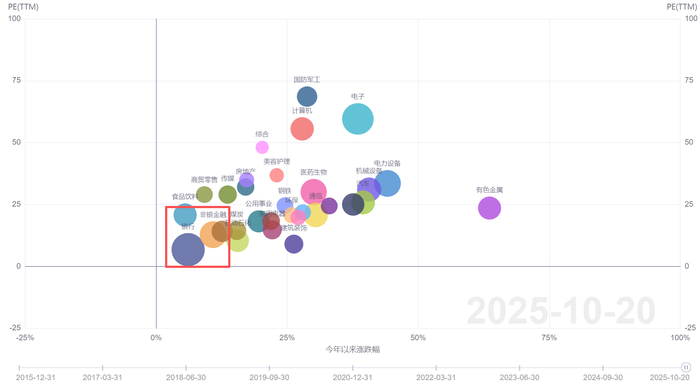
Core Viewpoint - The article discusses various ETFs that are positioned to benefit from specific economic trends and government policies, highlighting their potential for investment returns. Group 1: Saudi ETF (159329.SZ) - Saudi Arabia's "Vision 2030" aims to diversify its economy away from oil dependency, targeting a non-oil GDP export share increase from 16% to at least 50% [3] - The ETF's holdings reflect this diversification, with over 40% in the financial sector and more than 20% in consumer and technology sectors, while traditional fossil fuels account for only about 10% [3] - A proposed amendment by the Saudi Capital Market Authority could allow foreign ownership in listed companies to exceed 50%, potentially attracting more foreign investment [4] Group 2: Bank ETF (512800.SH) - A policy initiative encourages large state-owned insurance companies to increase their investments in A-shares, which may lead to a sustained inflow of long-term capital [6] - The ETF tracks the CSI 800 Bank Index, which had a dividend yield of 4.40% as of September 30, 2025, significantly higher than the market average and the yield on ten-year government bonds [7] Group 3: Military Industry ETF (515660.SH) - China's defense budget for 2025 is set at 1.81 trillion yuan, a 7.2% increase, but still below 1.3% of GDP, compared to 3.5% for the U.S. and 6.3% for Russia [10] - The ETF tracks the CSI Defense Index, focusing on core areas such as aviation equipment, missiles, and new materials, which are expected to benefit from improvements in the defense sector's fundamentals [10]

三季度业绩大超预期,“深蹲起跳”的非银金融有哪些标的值得关注?
Xin Lang Cai Jing· 2025-10-21 08:38
Core Viewpoint - The non-bank financial sector in China is showing signs of recovery, particularly in the insurance segment, which has outperformed the broader market indices recently, indicating potential investment opportunities [1][3]. Performance Analysis - As of October 14, 2025, the Wind All A Index has increased by 23.5% year-to-date, while the SW Non-Bank Financial sector has only risen by 10.6%, suggesting a lag in performance that may present investment opportunities [1]. - During the trading period from October 13 to October 17, 2025, the insurance sector within the non-bank financial sector rose by 3.73%, while the CSI 300 Index fell by 2.22%, indicating a positive trend for insurance stocks [3]. Earnings Forecast - Major insurance companies have reported strong earnings forecasts for the first three quarters of 2025, with China Life expecting a net profit increase of 50% to 70%, New China Life projecting a 45% to 65% growth, and China Pacific Insurance anticipating a 40% to 60% rise [3][4]. - The growth in net profits is attributed to strong performance in equity investments, which have significantly boosted earnings [3]. Asset Allocation Trends - The equity holdings of major insurers have seen substantial year-on-year growth, with China Life, Ping An, and China Taiping reporting increases of 35.7%, 75.9%, and 25.4% respectively in their "stocks + equity funds" holdings [4]. - The total deposits in non-bank financial institutions increased by 4.69 trillion yuan in 2025, up from 2.96 trillion yuan in the previous year, indicating a shift of funds from traditional savings to higher-yield financial products [5]. Investment Products - The Guangfa CSI Hong Kong Stock Connect Non-Bank Financial ETF has a scale exceeding 20 billion yuan and has achieved over 40% returns this year, making it a standout product in its category [6]. - The E Fund CSI 300 Non-Bank Financial ETF, with a scale over 13 billion yuan, has also performed steadily with nearly 8% positive returns this year [6]. Market Sentiment - Institutional investors are increasingly optimistic about the insurance sector, as it provides stable cash flow through regular premium income, making it less volatile compared to brokerage firms that rely heavily on bullish market conditions [7]. - The Hong Kong Stock Connect Non-Bank Financial ETF has a significant allocation to Hong Kong Exchanges and Clearing, benefiting from southbound capital flows and the favorable impact of U.S. Federal Reserve rate cuts [7]. Asset Management Trends - By the end of 2024, the balance of insurance funds is expected to reach 33.26 trillion yuan, reflecting a year-on-year growth of 15.08%, which is higher than the average growth rate in the asset management industry [8]. - The asset allocation of insurance funds is shifting towards bonds, with the bond allocation rising to 50.7% and equity allocation increasing to 8.3%, alongside a notable rise in H-shares and Hong Kong stock allocations [8].
又一险企预告:业绩大增!
Jin Rong Shi Bao· 2025-10-20 07:46
Core Viewpoint - China Life Insurance Company expects a significant increase in net profit for the first three quarters of 2025, projecting a range of approximately 156.79 billion to 177.69 billion yuan, representing a year-on-year growth of about 50% to 70% compared to the same period in 2024 [1] Group 1: Performance Forecasts - China Life is the third listed insurance company to announce a profit increase for the third quarter [1] - People's Insurance Company of China (PICC) anticipates a net profit of 26.75 billion yuan for the first three quarters, with an expected increase of 40% to 60% year-on-year [1] - New China Life Insurance forecasts a net profit between 29.99 billion and 34.12 billion yuan, expecting a year-on-year increase of 45% to 65% [1] Group 2: Reasons for Performance Increase - Reason One: Enhancing the supply-side structural reform of insurance through the "Five Major Articles" in finance, focusing on value creation and efficiency improvement [2] - China Life emphasizes its role as an economic stabilizer and is committed to deepening product and business diversification [2] - PICC aims to optimize management and enhance strategic layout in key areas, leading to significant growth in underwriting profits [2] - New China Life focuses on improving market competitiveness and advancing high-quality, sustainable development [2] Group 3: Investment Strategies - Reason Two: Actively promoting long-term capital market investments, resulting in a substantial increase in investment returns [3] - China Life adheres to long-term, value, and stable investment principles, enhancing investment portfolio stability and long-term return potential [3] - PICC is increasing its allocation to high-quality equity assets while maintaining liquidity safety margins [3] - New China Life is optimizing asset allocation to counter low-interest rate challenges, solidifying its long-term return foundation [3] - All three companies benefited from the capital market's rise in the first three quarters, leading to significant growth in net profits [3]
上交所:持续提升上市公司质量 营造中长期资金入市良好生态
Shang Hai Zheng Quan Bao· 2025-10-20 00:39
Core Viewpoint - The Shanghai Stock Exchange (SSE) aims to enhance the quality of listed companies and create a favorable environment for long-term capital investment, aligning with national strategies for high-quality development [1][2]. Group 1: Quality Improvement Initiatives - SSE is implementing a three-year action plan to improve the quality of listed companies, focusing on establishing a solid foundation for long-term development [1]. - The establishment of the Sci-Tech Innovation Board is a significant reform aimed at enhancing the quality and efficiency of services for technological innovation and new productive forces [1]. Group 2: Financial Product Development - SSE is continuously improving the ETF product spectrum, increasing innovation in low-volatility products, and promoting diversification of investment tools. The scale of ETFs in the Shanghai market has grown from less than 1 trillion yuan in 2020 to over 4 trillion yuan as of September [2]. - SSE is optimizing the market environment for long-term capital investment by enhancing the market-making mechanism and constructing a comprehensive ecosystem from indices to index products and ETF options [2]. Group 3: Institutional Investor Engagement - SSE has conducted over a hundred visits to institutional investors this year and organized a series of long-term investment brand activities to better understand their needs, addressing pain points and enhancing the willingness for long-term capital investment [2].
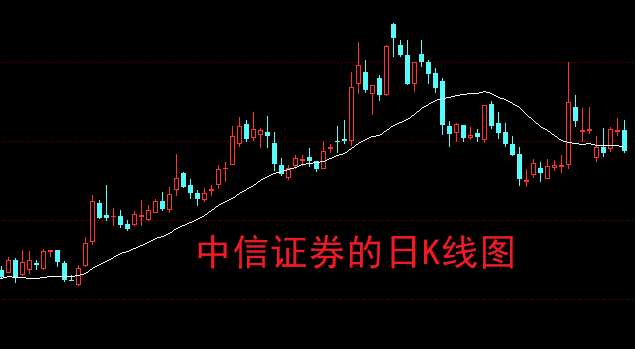
A股:券商股不涨的原因找到了,股民可能还没有想到!
Sou Hu Cai Jing· 2025-10-19 13:09
Group 1 - The core viewpoint is that despite a bullish market sentiment, brokerage stocks have not performed well, leading to questions about their lagging performance compared to other financial sectors like banks and insurance [1][6]. - Dongwu Securities' third-quarter earnings forecast indicates a profit of 2.748 billion to 3.023 billion yuan, with a significant portion already earned in the first half, suggesting only 810 million to 990 million yuan in the third quarter, which is a stagnation compared to the second quarter's 952 million yuan [3][5]. - The year-on-year profit growth of 25% to 50% compared to last year's 666 million yuan appears decent, but it pales in comparison to the substantial growth seen in the first half of the year, indicating a lack of momentum [5][6]. Group 2 - The brokerage sector is not entirely stagnant, but its growth has not kept pace with major indices, leading to a perception of underperformance [6][8]. - The market's outdated view of brokerages as merely dependent on market conditions is shifting, with upcoming reforms and increased demand for wealth management providing new growth opportunities [6][8]. - Brokerages that have strong compliance, innovation capabilities, and early wealth management strategies are evolving from traditional service providers to comprehensive financial service firms, positioning themselves as key players in the capital market [8].