Workflow
产能去化
icon
Search documents
需求表现偏弱,???位震荡运
Zhong Xin Qi Huo· 2025-08-08 05:04
1. Report Industry Investment Rating - The mid - term outlook for the black building materials industry is "shock". Specific varieties such as steel, iron ore, scrap steel, coke, coking coal, glass, soda ash, manganese silicon, and ferrosilicon all have a mid - term outlook of "shock" [6][8][9][10][11][12][14][15]. 2. Core View of the Report - The demand performance of the black building materials industry is weak, and the prices are in high - level shock. Although the fundamentals of individual varieties change little, there are still certain support factors, and the prices may rebound before the spot pressure appears. The market is mainly dominated by capital behavior, and it is recommended to wait and see to avoid risks. Subsequently, the implementation of policies and terminal demand performance should be mainly concerned [1][6]. 3. Summary According to the Catalog 3.1 Iron Element - **Supply**: Overseas mine shipments decreased month - on - month, but after the typhoon disturbance, the arrival volume at 45 ports increased significantly, and the iron ore port area's total inventory increased, with a limited overall inventory accumulation range [2]. - **Demand**: The profitability rate of steel enterprises has risen to the highest level in the same period in the past three years. Due to routine maintenance of steel mills, the molten iron output decreased slightly, remaining at a high level year - on - year. The possibility of production reduction in the short term due to profit reasons is small. Attention should be paid to whether there are production - restriction policies in the second half of the month [2]. - **Outlook**: With limited bearish driving forces in the fundamentals, the future price is expected to fluctuate [2]. 3.2 Carbon Element - **Supply**: The "276 - working - day" production organization plan of some coal mines in Shanxi has emerged, and the supply - side disturbance continues. The output of some local coal mines is limited due to underground and other factors, and the output of some coal mines will be reduced to a certain extent in the second half of the year under the influence of over - production verification. The supply of Fenwei sample coal mines decreased month - on - month this week. The import of Mongolian coal at the Ganqimaodu port has been maintaining more than a thousand trucks [2]. - **Demand**: After the previous centralized purchasing, downstream users are currently purchasing on demand. There were many pre - sold orders in coal mines before, and the upstream coal mines are still destocking [2]. - **Outlook**: Currently, the supply - demand contradiction in the fundamentals is not prominent. Subsequently, regulatory policies, coal mine resumption, and Mongolian coal import conditions should be concerned [2]. 3.3 Alloys Manganese Silicon - **Cost**: The price of coke has been continuously increased, and the cost support for manganese silicon has been continuously strengthened. The manganese ore market is more wait - and - see, but traders are still reluctant to sell at low prices, and the port ore price remains firm [3]. - **Supply - demand**: Steel mills have good profit conditions, and the output of finished products remains stable at a high level. The downstream demand for manganese silicon is still resilient. However, in an environment of profit repair, the resumption process of manufacturers continues to advance, and the supply - demand relationship of manganese silicon may gradually become looser [3]. - **Outlook**: The contradictions in the current spot fundamentals are limited. In the short term, the price of manganese silicon is expected to fluctuate following the performance of the sector [3]. Ferrosilicon - **Supply**: The output of ferrosilicon is expected to accelerate the recovery. Attention should be paid to the anti - involution policy related to specific production - restriction requirements [15]. - **Demand**: The output of steel products remains stable at a relatively high level, and the downstream steel - making demand is still resilient. In the metal magnesium market, due to tight supply, magnesium plants' price - holding sentiment remains strong, but high - level transactions in the market are relatively cold, and the game between upstream and downstream in the magnesium market continues [15]. - **Outlook**: The current supply - demand relationship of ferrosilicon is relatively healthy. In the short term, the price is expected to fluctuate following the performance of the sector. In the medium - to - long term, the upside space of the price needs to be viewed with caution, and the dynamics of the coal market and the adjustment of electricity costs should be concerned [15]. 3.4 Glass - **Supply**: There are still 2 production lines waiting to produce glass, and 1 production line has been cold - repaired. The overall daily melting volume is expected to remain stable, and the upstream inventory has decreased slightly [6]. - **Demand**: In the off - season, the demand has declined, the deep - processing orders have decreased month - on - month, and the inventory days of original glass have increased month - on - month, indicating downstream speculative purchases. After the decline of the futures price, the sentiment in the spot market has declined, the middle - stream shipments have increased, and the upstream production and sales have declined significantly [6]. - **Outlook**: In the short term, the futures and spot prices are expected to fluctuate widely. In the long run, the price center will still decline, promoting capacity reduction [6]. 3.5 Soda Ash - **Supply**: The over - supply pattern has not changed. The production capacity has not been cleared, and there is still long - term pressure. The output is running at a high level, and the supply pressure still exists. Some manufacturers' production has recovered today, and the output is expected to continue to increase in the future [6]. - **Demand**: The demand for heavy soda ash is expected to maintain rigid procurement. There are still ignition production lines that have not produced glass. The expected daily melting volume of float glass is stable, and the daily melting volume of photovoltaic glass has continued to decline, falling below 90,000 tons this week, with the current daily melting volume at 89,800 tons. The demand for heavy soda ash has weakened. The downstream procurement of light soda ash has weakened, and the overall downstream demand is poor, mainly for periodic restocking [6]. - **Outlook**: In the short term, after the rapid decline of the price, it is at a discount to the spot price, and it is expected to fluctuate in the future. In the long run, the price center will still decline, promoting capacity reduction [6]. 3.6 Steel - **Supply**: Some steel mills have resumed production, and there is a transfer of molten iron. The output of rebar has increased, and the output of hot - rolled coils has decreased [8]. - **Demand**: Affected by the weakening of the typhoon, the apparent demand for rebar has rebounded, but the inventory continues to accumulate. In the off - season, the apparent demand for hot - rolled coils has decreased, and the inventory continues to accumulate. The supply of the five major steel products has increased, the demand has decreased, and the inventory has accumulated, showing off - season characteristics [8]. - **Outlook**: The anti - involution sentiment in the steel and coal industries is still high. Currently, the fundamentals of steel have weakened marginally, but the inventory is low, and there are still production - restriction disturbances before the military parade. The short - term futures price still has support. Subsequently, attention should be paid to the steel mills' production - restriction situation and terminal demand performance [8]. 3.7 Scrap Steel - **Supply**: This week, the market sentiment is relatively optimistic, and the willingness to ship is low. The arrival volume of scrap steel has continued to decline [9]. - **Demand**: The profit of electric furnaces is good, and the daily consumption has increased to a high level in the same period. In terms of blast furnaces, the molten iron output has decreased, and the daily consumption of scrap steel in long - process steelmaking has also decreased slightly. The total daily consumption of scrap steel in long - and short - process steelmaking has increased slightly [9]. - **Outlook**: The supply of scrap steel has decreased, and the demand has increased. The fundamentals have strengthened marginally, and the market sentiment is optimistic. The price is expected to fluctuate [9]. 3.8 Coke - **Supply**: After the full implementation of the fifth round of price increases, the profits of coking enterprises have been alleviated, and their production starts have improved. The coke output has temporarily stabilized [9]. - **Demand**: Downstream steel mills have good profits and are actively producing. The molten iron output has decreased slightly month - on - month but remains at a high level. Upstream coking enterprises have smooth shipments, and their inventory has been continuously reduced. Mid - stream futures - spot traders have gradually released their goods, and the arrival of goods at downstream steel mills has improved [9]. - **Outlook**: The current supply - demand structure of coke is still tight, and the short - term price still has support. Some coking enterprises still have the intention to increase the price for the sixth round. Subsequently, the possible military parade production - restriction policy should be concerned [9]. 3.9 Coking Coal - **Supply**: The "276 - working - day" production organization plan of some coal mines in Shanxi has emerged, and the supply - side disturbance continues. The output of some local coal mines is limited due to underground and other factors, and the output of some coal mines will be reduced to a certain extent in the second half of the year under the influence of over - production verification. The supply of Fenwei sample coal mines decreased month - on - month this week. The import of Mongolian coal at the Ganqimaodu port has been maintaining more than a thousand trucks [11]. - **Demand**: The coke output has temporarily stabilized, and the rigid demand for coking coal is strong. After the previous centralized purchasing, downstream users are currently purchasing on demand. There were many pre - sold orders in coal mines before, and the upstream coal mines are still destocking [11]. - **Outlook**: Under the influence of over - production verification of coal mines, the recovery of coking coal supply is expected to be slow. With the poor supply expectation, the market sentiment has warmed up. In the short term, the futures price is expected to be easy to rise but difficult to fall [11].
猪企7月销售量减价低持续,行业仍在底部盘整
Sou Hu Cai Jing· 2025-08-08 04:55
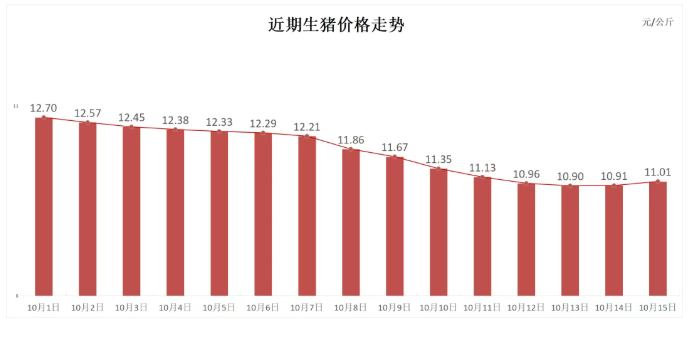
Core Viewpoint - The pig farming industry is still in a cyclical low, with most listed pig companies reporting a decline in sales volume and low prices, indicating ongoing profitability pressure despite some recovery in futures prices [1][3][6]. Group 1: Sales Performance - In July, most listed pig companies reported a month-on-month decline in sales volume, reflecting an adjustment in output rhythm in a low-price environment [2]. - Among the leading companies, Muyuan Foods and New Hope saw a month-on-month decrease in sales volume, while Wen's Foodstuffs achieved a month-on-month increase [2]. - Specific sales figures include: Muyuan Foods sold 6.355 million pigs (down 9.5% month-on-month), New Hope sold 1.3025 million pigs (down 2.06% month-on-month), and Wen's Foodstuffs sold 3.1648 million pigs (up 5.24% month-on-month) [2]. Group 2: Revenue and Pricing - Despite year-on-year sales growth, the persistent low prices of pigs led to a decline in sales revenue for most companies in July [3]. - Sales revenue figures include: Muyuan Foods at 11.639 billion yuan (down 10.41% year-on-year, down 9.1% month-on-month), Wen's Foodstuffs at 4.877 billion yuan (down 8.72% year-on-year, down 0.87% month-on-month), and New Hope at 1.802 billion yuan (down 24.62% year-on-year, down 3.67% month-on-month) [3]. Group 3: Market Conditions - The current pig farming industry is experiencing deep losses, with some small to medium-sized farmers exiting the market, while leading companies face significant financial pressure [6]. - The market price for pigs was reported at 14.34 yuan/kg as of August 7, which is significantly lower than the previous year's high of 21 yuan/kg [3]. - The futures market has shown signs of recovery, with the main contract price rising to 14,100 yuan/ton, reflecting an increase of over 8% from the low point in late May [8]. Group 4: Future Outlook - The industry is in a deep adjustment phase, with ongoing capacity reduction and efforts by leading companies to optimize output structure and increase the proportion of piglet sales to mitigate price pressures [8]. - The future recovery of pig prices will depend on the pace of capacity reduction and the recovery of consumer demand [8].
减产预期扰动,生猪盘面反弹
Zhong Xin Qi Huo· 2025-08-07 02:37
1. Report Industry Investment Ratings - **Oils and Fats**: Oscillating with a slight upward bias [8] - **Protein Meal**: Oscillating [9] - **Corn/Starch**: Oscillating with a slight downward bias [10] - **Hogs**: Oscillating [11] - **Natural Rubber**: Oscillating [13] - **Synthetic Rubber**: Oscillating [15] - **Cotton**: Oscillating [16] - **Sugar**: Long - term: oscillating with a downward bias; Short - term: maintain the view of shorting on rebounds [17] - **Pulp**: Oscillating [18] - **Logs**: Oscillating with a slight downward bias [19] 2. Core Views of the Report The report analyzes multiple agricultural products, including oils and fats, protein meal, corn/starch, hogs, rubber, cotton, sugar, pulp, and logs. It provides insights into their market trends, supply - demand relationships, and price outlooks. For example, the hog market shows a pattern of "weak present + strong future" due to policy - induced production - cut expectations; the oils and fats market is expected to be oscillating with a slight upward bias considering overseas bio - diesel demand and domestic export expectations [11][8]. 3. Summary According to Relevant Catalogs 3.1 Market Views 3.1.1 Oils and Fats - **Industry Information**: MPOA data shows a 9.01% month - on - month increase in estimated Malaysian palm oil production in July. The overall estimated production is 1.84 million tons. ITS and AmSpec data indicate a decline in July's Malaysian palm oil exports [8]. - **Logic**: Due to the expected high yield of US soybeans and concerns about demand, US soybeans fell on Tuesday. Domestic oils showed a differentiated trend, with soybean oil being stronger. The global and domestic supply - demand situation of different oils varies, with soybean oil having inventory increases and export expectations, palm oil facing inventory pressure, and rapeseed oil having high inventory [8]. - **Outlook**: In the short - term, palm oil and soybean oil are likely to be stronger, influenced by the expected increase in overseas bio - diesel demand and domestic soybean oil export expectations [8]. 3.1.2 Protein Meal - **Industry Information**: On August 6, 2025, international soybean trade premiums and discounts showed different trends. The average profit of Chinese imported soybean crushing increased [9]. - **Logic**: Internationally, the good growth of US soybeans and the expected high yield, along with changes in trade relations and CFTC net short positions, affect the market. Domestically, in the short - term, due to the peak season of aquaculture, rapeseed meal is stronger than soybean meal. In the long - term, there is a potential supply gap in the fourth quarter [9]. - **Outlook**: In the next two weeks, the inventory of soybean meal may reach a peak. Spot and basis prices may oscillate at a low level. The far - month contracts are expected to strengthen [9]. 3.1.3 Corn/Starch - **Industry Information**: The average domestic corn price and the closing price of the main contract decreased [10]. - **Logic**: On the supply side, there are differences in the judgment of channel inventory, and the auction transaction rate of imported corn is low. On the demand side, downstream acceptance of high - priced grains is low. Policy - wise, the transaction rate and premium of imported corn are decreasing [10]. - **Outlook**: In the short - term, there is uncertainty in the old - crop inventory reduction. After the new - crop is listed, there is a downward pressure on prices [10]. 3.1.4 Hogs - **Industry Information**: On August 6, the spot price of hogs in Henan decreased slightly, while the futures closing price increased [11]. - **Logic**: The proposed meeting by the China Animal Husbandry Association to discuss sow production cuts triggered market sentiment. In the short - term, large - scale farms are actively reducing weight and inventory, but the inventory of secondary - fattening by smallholders is high. In the medium - term, the supply is expected to increase. In the long - term, policies may lead to a reduction in production capacity [11]. - **Outlook**: The hog market shows large fluctuations. The spot and near - month contracts are under pressure, while the far - month contracts are influenced by production - cut expectations [11]. 3.1.5 Natural Rubber - **Industry Information**: The prices of various rubber products in Qingdao Free Trade Zone remained stable, and the prices of raw materials in the Thai market increased slightly [13]. - **Logic**: The macro - environment is favorable, and there is some speculative sentiment in the market. The supply is limited due to the rainy season, and the demand is relatively stable in the short - term [13]. - **Outlook**: In the short - term, it follows the overall commodity sentiment, and attention should be paid to capital sentiment [13]. 3.1.6 Synthetic Rubber - **Industry Information**: The prices of butadiene rubber and butadiene showed different trends [15]. - **Logic**: The BR futures rose slightly, driven by natural rubber and the macro - environment, and supported by the tight supply of butadiene. However, the fundamental driving force is not clear [15]. - **Outlook**: It will generally maintain an oscillating range, and attention should be paid to device changes [15]. 3.1.7 Cotton - **Industry Information**: As of August 6, the number of registered warrants and the closing price of Zhengzhou cotton increased slightly [16]. - **Logic**: In the 2025/2026 season, the global cotton supply is expected to be abundant. The downstream demand is in the off - season, and the inventory is at a low level compared to the same period. The price is oscillating within a range [16]. - **Outlook**: It will oscillate within the range of 13,500 - 14,300 yuan/ton, and attention should be paid to the 11 - 1 reverse spread [16]. 3.1.8 Sugar - **Industry Information**: On August 6, the closing price of Zhengzhou sugar decreased [17]. - **Logic**: In the long - term, the new season is expected to have a loose supply. In the short - term, the supply pressure will increase due to the peak production and export season in Brazil and the concentrated import in China [17]. - **Outlook**: In the long - term, the price is expected to oscillate with a downward bias. In the short - term, it is recommended to short on rebounds [17]. 3.1.9 Pulp - **Industry Information**: The prices of various pulp products in Shandong remained stable or decreased slightly [18]. - **Logic**: The futures price fluctuated at a low level. The supply of broad - leaf pulp is abundant, the demand is weak, and the overseas market is also weak. However, the recent increase in domestic broad - leaf pulp prices is worth noting [18]. - **Outlook**: It is expected to oscillate widely, and attention can be paid to the low - absorption long - matching opportunity when the main contract falls to 5,200 - 5,250 yuan/ton [18]. 3.1.10 Logs - **Industry Information**: After the first - month delivery of logs, the short - term fundamentals changed little [19]. - **Logic**: The new foreign quotation has increased, but the domestic market is in the off - season. There are both positive and negative factors in the market, and the supply pressure is gradually easing [19]. - **Outlook**: The market is intertwined with multiple factors. It is recommended to operate within the range of 800 - 850, and the industrial side can participate in hedging according to its own costs [19]. 3.2 Variety Data Monitoring The report also mentions data monitoring for various products such as oils and fats, corn/starch, hogs, rubber, cotton, sugar, pulp, and logs, but specific data details are not provided in the text [22][53][72].
豆粕周报:主要逻辑及投机支撑阻力-20250805
Zhong Hui Qi Huo· 2025-08-05 01:44
1. Report Industry Investment Ratings The provided content does not mention any industry investment ratings. 2. Core Views of the Report - **Beans and Meal Products**: Both soybean meal and rapeseed meal are expected to experience large - range oscillations. For soybean meal, the weak fundamentals and the cost support from Sino - US trade tariffs lead to this situation. For rapeseed meal, factors such as the recovery of global rapeseed production, import tariffs, and the substitution effect of soybean meal contribute to the multi - empty factor entanglement [1][3][7]. - **Palm Oil**: It is in a short - term adjustment phase. Although the biodiesel policies in Indonesia and Malaysia are favorable for the consumption of the palm oil market, the possible inventory accumulation in July in Malaysia may suppress short - term prices [1][8][9]. - **Cotton**: It is recommended to be cautiously bullish. The new cotton growth in the US is still good despite a slight decline in the excellent - good rate. In China, the increase in sown area and yield, along with the fast commercial de - stocking and the recovery of demand, limit the downside space before the new cotton is launched [1][11][12]. - **Red Dates**: It is also recommended to be cautiously bullish. There are still large differences in the market regarding the reduction in production, and high inventory restricts the rebound height. However, there are still risks of speculation [1][15][16]. - **Hogs**: It is recommended to be cautiously bullish. The short - term acceleration of the slaughter rhythm may lead to price drops, but the speculation of secondary fattening provides some support. In the medium and long term, attention should be paid to the capacity reduction [1][18][19]. 3. Summaries Based on Relevant Catalogs 3.1 Soybean Meal - **Market Data**: The futures price of the main contract of soybean meal closed at 3024 yuan/ton, up 0.47% from the previous day. The national average spot price was 2994.29 yuan/ton, up 0.56%. The national average soybean crushing profit increased by 20.70 yuan/ton [2]. - **Inventory Situation**: As of July 25, 2025, the national port soybean inventory was 808.5 million tons, an increase of 10.60 million tons from the previous week. The soybean inventory of 125 oil mills was 645.59 million tons, an increase of 3.35 million tons. The soybean meal inventory was 104.31 million tons, an increase of 4.47 million tons [3]. - **Market Outlook**: In the short term, it maintains a slightly bullish rebound trend, but the upward space is limited. Attention should be paid to the USDA monthly supply - demand report next week [1][3]. 3.2 Rapeseed Meal - **Market Data**: The futures price of the main contract of rapeseed meal closed at 2678 yuan/ton, up 0.11% from the previous day. The national average spot price was 2667.89 yuan/ton, up 0.36%. The national average rapeseed spot crushing profit increased by 5.21 yuan/ton [4]. - **Inventory Situation**: As of July 25, the coastal area's main oil - mill rapeseed inventory was 13.7 million tons, a decrease of 2.5 million tons from the previous week. The rapeseed meal inventory was 1.9 million tons, an increase of 0.7 million tons. The total rapeseed meal inventory in major regions was 66.54 million tons, a decrease of 1.33 million tons [7]. - **Market Outlook**: It is a large - range market under the entanglement of multi - empty factors. Attention should be paid to the rapeseed planting weather in Canada, the improvement of Sino - Canadian relations, and the follow - up progress of Sino - Australian relations [1][7]. 3.3 Palm Oil - **Market Data**: The futures price of the main contract of palm oil closed at 8838 yuan/ton, down 0.81% from the previous day. The national average price was 8860 yuan/ton, down 1.45%. The national daily trading volume was 1650 contracts, an increase of 1150 contracts [8]. - **Inventory Situation**: As of July 25, 2025, the national key area's palm oil commercial inventory was 61.55 million tons, an increase of 2.41 million tons from the previous week [9]. - **Market Outlook**: The short - term price may be suppressed due to possible inventory accumulation in July in Malaysia. Be cautious about chasing up, and pay attention to the buying situation of domestic palm oil in the past three months and beware of the risk of cornering the market [1][8][9]. 3.4 Cotton - **Market Data**: The main contract of Zhengzhou cotton, CF2509, closed at 13675 yuan/ton, up 0.66% from the previous day. The domestic spot price was 15172 yuan/ton, down 0.64%. The main contract of ICE cotton closed at 66.62 cents/pound, up 0.39% [10][11]. - **Growth and Inventory**: In the US, the non - drought rate in the cotton - growing area decreased by 4% to 89%, and the excellent - good rate decreased by 2% to 55%. In China, the new cotton yield is expected to increase to over 740 million tons. The commercial inventory decreased to 215.71 million tons [11][12]. - **Market Outlook**: The US cotton may show a weak oscillation. In China, before the new cotton is launched, the downside space is limited. It is recommended to gradually stop losses on previous short positions and consider cautiously going long at low prices [1][12][13]. 3.5 Red Dates - **Market Data**: The main contract of red dates, CJ2601, closed at 10860 yuan/ton, down 0.55% from the previous day. The arrival volume at Guangdong Ruyifang was 5 trucks, an increase of 4 trucks [14]. - **Production and Inventory**: The new - season red dates are in the fruit - setting period. The estimated new - season production is 56 - 62 million tons, with a decrease of 20 - 25% compared to 2024. The physical inventory of 36 sample points this week was 10039 tons, a decrease of 51 tons [15]. - **Market Outlook**: There are still large differences in the market regarding the reduction in production, and high inventory restricts the rebound height. This week, it is recommended to cautiously try to go long [1][15][16]. 3.6 Hogs - **Market Data**: The main contract of hogs, Lh2509, closed at 13940 yuan/ton, down 0.82% from the previous day. The national average spot price of live hogs was 14340 yuan/ton, unchanged from the previous day [17]. - **Inventory and Supply**: The national sample enterprise's monthly pig inventory was 3719.93 million tons, an increase of 0.31%. The monthly pig slaughter volume was 1125.59 million tons, an increase of 1.51%. The monthly inventory of breeding sows was 4043 million tons, an increase of 0.02% [17]. - **Market Outlook**: In the short term, the price may be under pressure, but there is support from secondary fattening. In the medium and long term, pay attention to capacity reduction. It is recommended to gradually stop losses on short positions in the near - month contracts and consider going long in the far - month contracts at low prices [1][18][19].
五矿期货农产品早报-20250805
Wu Kuang Qi Huo· 2025-08-05 01:01
Report Summary 1. Report Industry Investment Rating No investment rating information is provided in the report. 2. Core Viewpoints - The soybean market is in a state of low valuation and oversupply, with no clear directional driver. The domestic soybean import cost is rising slightly due to a single - supply source. The soybean meal market is mixed with long and short factors [2][4]. - The fundamentals support the central price of oils and fats. However, the current high valuation limits the upward space, and the market should be viewed as volatile [9]. - The price of white sugar futures is expected to continue to decline, given factors such as increased imports and expected growth in domestic planting area [11][12]. - The cotton market is bearish in the short - term, with weak downstream consumption and a slowdown in inventory reduction [14][15]. - The egg market has an oversupply situation. In the short - term, short - position holders can reduce positions, and in the medium - term, short - selling after a rebound is advisable [17][18]. - The pig market is in the process of restructuring, with more attention on the opportunities of the spread between different contract months [21]. 3. Summaries by Category Soybean/Meal - **Important Information**: On Monday night, the US soybeans rebounded. The US - China trade negotiation has not provided benefits for US soybean exports. The domestic soybean meal inventory decreased slightly last week due to good apparent consumption and reduced crushing volume. The US soybean production area is expected to have slightly less rainfall in the next two weeks, and the Brazilian soybean planting area in the 2025/26 season is expected to increase [2][7]. - **Trading Strategy**: It is recommended to go long on soybean meal at the low end of the cost range and pay attention to the crushing profit and supply pressure at the high end. For arbitrage, consider expanding the spread between soybean meal and rapeseed meal 09 contracts [4]. Oils and Fats - **Important Information**: Malaysia's palm oil export data shows a decline trend in June. In July, Malaysia's palm oil production increased. India's palm oil imports in July decreased by 10% month - on - month. The domestic spot basis of oils and fats is stable at a low level [6][8]. - **Trading Strategy**: The fundamentals support the central price of oils and fats. Palm oil may maintain stable inventory in the 7 - 9 months and has a rising expectation in the fourth quarter due to the Indonesian B50 policy. However, the current high valuation restricts the upward space, and the market should be viewed as volatile [9]. White Sugar - **Important Information**: On Monday, the Zhengzhou white sugar futures price continued to fall. The sugar production in the central and southern regions of Brazil in the first half of July increased by 15.07% year - on - year, and India's net sugar production in the 2025/26 season is expected to increase [11]. - **Trading Strategy**: The price of Zhengzhou white sugar futures is likely to continue to decline, considering factors such as increased imports and expected growth in domestic planting area [12]. Cotton - **Important Information**: On Monday, the Zhengzhou cotton futures price rebounded slightly. The downstream开机率 is at a low level, and the cotton inventory decreased last week [14]. - **Trading Strategy**: The cotton market is bearish in the short - term, with weak downstream consumption and a slowdown in inventory reduction [15]. Eggs - **Important Information**: The national egg price mostly fell, with sufficient supply and slow market digestion. The egg price may be stable in most areas and weak in a few areas today [17]. - **Trading Strategy**: In the short - term, short - position holders can reduce positions, and in the medium - term, short - selling after a rebound is advisable, considering the large supply and market expectations [18]. Pigs - **Important Information**: The domestic pig price mainly fell yesterday, with some areas rising slightly. After the continuous decline of pig prices, farmers are reluctant to sell, and the pig price may stabilize today [20]. - **Trading Strategy**: The market is trading on the policy's intervention in capacity reduction. The spread between different contract months should be focused on, with more uncertainty in the single - side trading [21].
生猪周报:关注月差波动-20250802
Wu Kuang Qi Huo· 2025-08-02 14:33
1. Report Industry Investment Rating No relevant content provided. 2. Core View of the Report The market is trading the policy intervention in capacity reduction, and the original oversupply logic has been restructured. The valuations of futures contracts have increased significantly, especially for the far - end contracts. For near - term contracts, although the theoretical supply in the fourth quarter will increase, the possibility of significant inventory reduction in the early fourth quarter has decreased, and the month - spread may move towards a positive spread structure. For far - month contracts, the long - term policy regulation of sow capacity cannot be falsified for the time being, and the month - spread tends to be in a reverse spread. Due to the ongoing industrial restructuring, the uncertainty of single - side trading has increased, and more attention should be paid to month - spread opportunities [11][12]. 3. Summary According to the Table of Contents 3.1. Weekly Assessment and Strategy Recommendation - **Spot Market**: Last week, pig prices rebounded after a decline. With continuous weight reduction by enterprises and limited demand highlights, pig prices initially fell. However, towards the end of the month, the slowdown in the slaughter rhythm and increased downstream procurement difficulty led to a price rebound. The weekly average price in Henan increased by 0.1 yuan to 14.3 yuan/kg, in Sichuan by 0.06 yuan to 13.66 yuan/kg, and in Guangdong by 0.18 yuan to 15.76 yuan/kg. At the beginning of the month, limited supply and upstream reluctance to sell may support prices, but as the supply recovers and market stocking weakens, pig prices may remain weak in the first half of the month [11]. - **Supply Side**: In June, the official sow inventory was 40.43 million, slightly up month - on - month and 3.7% higher than the normal level. The continuous increase in sow capacity since last year may lead to a weaker fundamental situation in 2025 than in 2024. However, the strong expectation of policy - forced capacity reduction may improve the supply situation next year. From the piglet data, the theoretical supply in July and August is relatively stable, but there will be a significant increase from September to the end of the year. Currently, some supply is advanced, which may partially offset the future pressure. Recently, slaughter volume has increased slightly month - on - month, and the average weight has decreased [11]. - **Demand Side**: The overall consumption environment is weak, and changes in consumption habits are unfavorable to pork consumption. Although pork consumption has been decreasing year - on - year, the impact of festival consumption on pig prices should be noted on a month - on - month basis [11]. - **Trading Strategy**: There is no recommendation for single - side trading currently; instead, focus on the support level of the November contract. For arbitrage, consider a 3 - 5 reverse spread or an 11 - 01 positive spread in August, with a profit - loss ratio of 2:1, a recommended cycle of 2 months, and a core driving logic related to policies, weight, basic supply, and the fat - standard price difference [13]. 3.2. Futures and Spot Market - **Spot Price Movement**: Pig prices rebounded after a decline last week. With continuous weight reduction by enterprises and limited demand, prices initially fell but rebounded towards the end of the month. The slaughter volume remained high, the average trading weight continued to decline, and the weight of individual farmers increased. The fat - standard price difference remained high. Although the spot price is weak, there is an expectation of a price increase in August [22][25]. - **Basis and Spread Movement**: The spot price is weak, but there is an expectation of a price increase in August [25]. - **Prices of Piglets and Sows**: Relevant price charts are provided, but no specific analysis is given in the text [27][28]. 3.3. Supply Side - **Reproductive Sows and Changes**: In June, the official sow inventory was 40.43 million, slightly up month - on - month and 3.7% higher than the normal level. The continuous increase in sow capacity since last year may lead to a weaker fundamental situation in 2025 than in 2024. However, the strong expectation of policy - forced capacity reduction may improve the supply situation next year [33]. - **Inventory and Slaughter**: From the piglet data, the theoretical supply in July and August is relatively stable, but there will be a significant increase from September to the end of the year. Currently, some supply is advanced, which may partially offset the future pressure. Recently, slaughter volume has increased slightly month - on - month, and the average weight has decreased [42][49]. - **Theoretical Slaughter Volume**: The theoretical supply in July and August is relatively stable, but there will be a significant increase from September to the end of the year. Currently, some supply is advanced, which may partially offset the future pressure [42]. - **Proportion of Small and Large Pigs in Slaughter**: The proportion of small pigs in slaughter is low, indicating low epidemic pressure; the proportion of large pigs has slightly increased, indicating that the proportion of large pigs is gradually increasing as the weight increases [45]. - **Trading and Average Weight after Slaughter**: Recently, slaughter volume has increased slightly month - on - month, and the average weight has decreased, indicating that the market is actively increasing supply [49]. - **Import and Pig Feed Month - on - Month**: Relevant data charts are provided, but no specific analysis is given in the text [51]. - **Secondary Fattening and Barn Utilization**: Relevant data charts are provided, but no specific analysis is given in the text [53]. 3.4. Demand Side The overall consumption environment is weak, and changes in consumption habits are unfavorable to pork consumption. Although pork consumption has been decreasing year - on - year, the impact of festival consumption on pig prices should be noted on a month - on - month basis [58]. 3.5. Cost and Profit Costs have slightly rebounded after reaching the bottom and are generally lower year - on - year. Due to the lagged effect of low costs, although pig prices are weak, the breeding profit is the highest in recent years [69]. 3.6. Inventory Side Frozen pork inventory is moderately low but is slowly increasing [74].
农林牧渔行业双周报(2025、7、18-2025、7、31):政策助力促进农产品消费-20250801
Dongguan Securities· 2025-08-01 10:19
Investment Rating - The report maintains an "Overweight" rating for the agriculture, forestry, animal husbandry, and fishery industry [1][42]. Core Insights - The SW agriculture, forestry, animal husbandry, and fishery industry slightly outperformed the CSI 300 index, with an increase of 1.06% from July 18 to July 31, 2025, surpassing the index by approximately 0.05 percentage points [3][10]. - Most sub-sectors recorded positive returns during the same period, with fisheries, aquaculture, planting, and feed sectors rising by 2.04%, 1.79%, 1.6%, and 0.64% respectively, while agricultural products processing and animal health sectors saw declines of 0.74% and 3.21% [11][12]. - Approximately 57% of stocks in the industry achieved positive returns, indicating a favorable market sentiment [12]. Industry Data Summary - **Pig Farming**: - The average price of external three-breed pigs decreased from 14.37 CNY/kg to 14.21 CNY/kg between July 18 and July 31, 2025 [21]. - The cost of corn was reported at 2402.02 CNY/ton, showing a slight decline, while soybean meal prices increased to 2984 CNY/ton [22]. - Profitability for self-bred pigs was 43.85 CNY/head, while purchasing piglets resulted in a loss of 116.78 CNY/head [26]. - **Poultry Farming**: - The average price of broiler chicks rose to 2.57 CNY/chick, while egg-laying chicks averaged 3.85 CNY/chick [28]. - The average price for broiler chickens increased to 6.83 CNY/kg, with a slight improvement in profitability to -0.43 CNY/chick [31]. - **Aquaculture**: - The average wholesale price for crucian carp was 22.69 CNY/kg, while carp saw a slight increase to 15.82 CNY/kg [33]. Industry News - The Ministry of Agriculture and Rural Affairs and nine other departments released a plan to promote agricultural product consumption, focusing on optimizing supply, innovating distribution, and activating market demand [35]. - Among the companies reporting mid-year results, Haida Group achieved a revenue of 588.31 billion CNY, a year-on-year increase of 12.5%, with a net profit of 26.39 billion CNY, up 24.16% [36]. Company Insights - Key companies to watch include: - Muyuan Foods (002714): A leading pig farming company with cost and scale advantages [43]. - Haida Group (002311): A top feed company expected to maintain steady market share growth [43]. - Lihua Co. (300761): A leading yellow feather chicken farming company with integrated advantages [43]. - Reap Bio (300119): A leader in the animal health sector with a growing product matrix for pet health [43]. - Zhongchong Co. (002891): A leading pet food company with strong domestic growth prospects [43].
2025年1-6月工业企业利润分析:利润降幅收窄“反内卷”初步体现
Yin He Zheng Quan· 2025-07-27 14:24
Group 1: Profit and Revenue Analysis - In the first half of 2025, industrial enterprises achieved a total profit of CNY 34,365.0 billion, a year-on-year decline of 1.8% (previous value: -1.1%) [1] - Total operating revenue reached CNY 66.78 trillion, reflecting a year-on-year growth of 2.5% (previous value: 2.7%) [1] - In June, profits decreased by 4.3% year-on-year, an improvement from the previous decline of 9.1% [1] Group 2: Production and Price Dynamics - Industrial production accelerated, with a 6.8% year-on-year increase in June's added value, driven by strong export performance and domestic demand during the 618 shopping festival [1] - The Producer Price Index (PPI) fell by 3.6% year-on-year in June, continuing to exert pressure on profit recovery [1] - The cumulative profit margin for January to June was recorded at 5.15%, with a year-on-year decline of 0.26 percentage points [1] Group 3: Inventory and Receivables Management - Finished goods inventory reached CNY 6.60 trillion, growing by 3.1% year-on-year, indicating a slowdown in nominal inventory growth [1] - The average accounts receivable collection period decreased to 69.8 days in June, marking the first drop below 70 days in 2025, although it still increased by 3.6 days year-on-year [1] - The turnover days for finished goods inventory were recorded at 20.4 days, a decrease of 0.4 days month-on-month [1] Group 4: Sector Performance Insights - The equipment manufacturing sector showed significant profit growth, with a 9.6% increase in June, contributing 3.8 percentage points to overall industrial profit growth [2] - The "two new" policies positively impacted profit improvements in sectors like medical equipment and consumer electronics, with profits in smart drones and computers growing by 160.0% and 97.2% respectively [2] - However, downstream consumer goods manufacturing sectors such as furniture and textiles experienced negative profit growth [2]
生猪周报:关注月差波动-20250726
Wu Kuang Qi Huo· 2025-07-26 13:08
Group 1: Report Industry Investment Rating - No relevant information provided Group 2: Core Viewpoints of the Report - The market is trading the policy intervention in capacity reduction, reconstructing the original oversupply logic, and significantly increasing the valuation of each contract on the futures market, especially for the far - end contracts [12][14] - For near - end contracts, although the theoretical supply in the fourth quarter increases, after the current active weight reduction to relieve pressure in advance and considering the possibility of active weight gain due to a large fat - standard price difference, the possibility of significant inventory reduction in the early fourth quarter decreases, and the monthly spread may move towards a positive spread structure [12][14] - For far - end contracts, the long - term policy regulation of sow capacity cannot be falsified for now, and the monthly spread tends to be in a reverse spread [12][14] - The industrial structure is being reconstructed, the uncertainty of unilateral trading increases, and more attention should be paid to monthly spread opportunities [12][14] Group 3: Summary by Directory 3.1 Weekly Assessment and Strategy Recommendation - **Spot Market**: Last week, the spot pig price continued to decline. Due to enterprises reducing weight, the slaughter volume remained high, the weight mainly decreased, the demand was average, and the price trend was weak. The fat - standard price difference decreased month - on - month but was higher year - on - year. The average price in Henan decreased by 0.26 yuan to 14.2 yuan/kg, in Sichuan by 0.16 yuan to 13.6 yuan/kg, and in Guangdong increased by 0.08 yuan to 15.58 yuan/kg. Affected by policies, the market's enthusiasm for slaughter remained high, but the supply may narrow near the end of the month. With the decline in pig prices, low prices may attract second - round fattening. It is expected that the pig price will first decline and then slightly increase next week [12][23] - **Supply Side**: In June, the official sow inventory was 40.43 million heads, a slight increase month - on - month, still 3.7% more than the normal level. Since last year, the sow production capacity has continued to increase, which may lead to a weaker fundamental situation in 2025 than in 2024. However, the current expectation of policy - forced capacity reduction is strong, which may improve the supply next year. From the piglet data, the theoretical supply in July and August is relatively stable, but there will be a significant increase in the basic supply from September to the end of the year. Currently, there is a pre - supply volume that can partially offset the pressure. In the short - term, the slaughter volume increased slightly month - on - month, and the weight decreased, indicating active market supply [12] - **Demand Side**: The overall consumption environment is weak, and changes in consumption habits are unfavorable for pork consumption. Pork consumption has been decreasing year - on - year, but the impact of festival consumption on pig prices should be noted month - on - month [12][60] - **Trading Strategy**: For unilateral trading, there is no recommendation for now. For arbitrage, a 3 - 5 reverse spread or an 11 - 01 positive spread is recommended, with a profit - loss ratio of 2:1, a recommended cycle of 2 months, and the core driving logic including policies, weight, basic supply, and fat - standard price difference [15] 3.2 Futures and Spot Market - **Spot Price Trend**: The spot price continued to decline last week, with different price changes in different regions. It is expected to first decline and then slightly increase next week. Although the current trend is weak, there is still an expectation of a price increase in August [23][26] - **Basis and Spread Trend**: The spot price trend is weak, but there is an expectation of a price increase in August [26] - **Prices of Piglets and Sows**: Relevant price trend charts are provided, but no specific textual analysis is given in the text [28] - **Prices of Back - up and Culled Sows**: Relevant price and ratio trend charts are provided, but no specific textual analysis is given in the text [30] 3.3 Supply Side - **Reproductive Sows and Changes**: In June, the official sow inventory was 40.43 million heads, a slight increase month - on - month, still 3.7% more than the normal level. The policy - forced capacity reduction expectation is strong, and the implementation of policies in the next few months needs attention [35] - **Inventory and Slaughter**: Relevant inventory and slaughter volume trend charts are provided, but no specific textual analysis is given in the text [37] - **Sow Culling and Sales**: Relevant culling and sales volume trend charts are provided, but no specific textual analysis is given in the text [40] - **Theoretical Slaughter Volume**: From the piglet data, the theoretical supply in July and August is relatively stable, but there will be a significant increase in the basic supply from September to the end of the year. Currently, there is a pre - supply volume that can partially offset the pressure [44] - **Proportion of Small and Large Pigs in Slaughter**: The proportion of small pigs in slaughter is low, indicating low epidemic pressure; the proportion of large pigs has slightly increased, indicating that the proportion of large pigs gradually increases as the weight increases [47] - **Trading and Average Carcass Weight**: In the short - term, the slaughter volume increased slightly month - on - month, and the weight decreased, indicating active market supply [51] - **Import and Pig Feed Ratio**: Relevant import volume and feed ratio trend charts are provided, but no specific textual analysis is given in the text [53] - **Second - Round Fattening and Barn Utilization**: Relevant ratio and utilization rate trend charts are provided, but no specific textual analysis is given in the text [55] 3.4 Demand Side - **Slaughter Volume**: The overall consumption environment is weak, and changes in consumption habits are unfavorable for pork consumption. Pork consumption has been decreasing year - on - year, but the impact of festival consumption on pig prices should be noted month - on - month [60] - **Slaughtering Rate and Gross Margin**: Relevant rate and margin trend charts are provided, but no specific textual analysis is given in the text [62] - **Spread and Price - Volume Relationship**: Relevant spread and price - volume relationship trend charts are provided, but no specific textual analysis is given in the text [64] - **Fresh - Frozen Spread and Fresh Sales Rate**: Relevant spread and sales rate trend charts are provided, but no specific textual analysis is given in the text [66] 3.5 Cost and Profit - The cost bottomed out and then slightly rebounded, remaining relatively low year - on - year. Affected by the lag effect of low costs, although the pig price is weak, the breeding profit is the highest in recent years [71] 3.6 Inventory Side - The frozen product inventory is moderately low but is in a slow recovery state [76]
饲料养殖产业日报-20250725
Chang Jiang Qi Huo· 2025-07-25 01:39
1. Report Industry Investment Rating No information provided in the content. 2. Core Views of the Report - The pig market is currently under pressure due to strong supply and weak demand in the short - term, with a near - weak and far - strong trend in the futures market. Egg prices may rise in the short - term but are limited by supply pressure, and the supply pressure may ease in the fourth quarter. The short - term trend of edible oils is high - level oscillation with upward potential after a correction, with palm oil expected to be the strongest, followed by soybean oil, and rapeseed oil being relatively weak. The short - term trend of soybean meal is range - bound, and it is expected to strengthen in the medium - to - long - term. The short - term trend of corn is a tug - of - war between supply and demand, and it is expected to rise in the medium - to - long - term, but the upside is limited [1][2][6][7]. 3. Summary by Related Catalogs Pig - On July 25, the spot prices of pigs in Liaoning, Henan, and Guangdong decreased, while that in Sichuan remained stable. In the short - term, supply is strong and demand is weak, and the pig price will be adjusted slightly. In the medium - to - long - term, the supply will gradually increase in the second half of the year. The futures market shows a near - weak and far - strong trend. It is recommended to go short on 09 and 11 contracts when they rebound under pressure and wait and see on the 01 contract, and also consider the strategy of shorting 09, 11 and longing 01 [1]. Egg - On July 25, the egg prices in Shandong Dezhou and Beijing remained stable. In the short - term, the egg price has an upward drive but is limited by supply. In the medium - term, the supply will increase in the future. In the long - term, the supply may decrease. It is recommended to take a short position on the 09 contract and wait for a long - position opportunity on the 12 and 01 contracts [2]. Edible Oils Palm Oil - On July 24, the Malaysian palm oil futures price rose. Although the export decreased and the production increased from July 1 - 20, multiple factors support the short - term strong - side oscillation of Malaysian palm oil. In China, the supply of palm oil will be abundant in August. It is recommended to focus on the 4400 pressure level of the 10 - contract [4]. Soybean Oil - In the short - term, the U.S. soybean may have limited decline and will be range - bound. In China, the soybean oil inventory is expected to accumulate in the short - term, but the long - term supply is uncertain. The 11 - contract has support at 1000 - 1020 [5]. Rapeseed Oil - The Canadian rapeseed futures price will continue to oscillate in the short - term. In China, the supply of rapeseed oil will tighten, and the possibility of importing Australian rapeseed has increased. It is recommended to focus on the July 25 - 26 Canadian supply - demand report [6]. Soybean Meal - On July 24, the U.S. soybean futures price rose. In the short - term, the U.S. soybean will be range - bound, and the domestic soybean meal spot price increase is limited, while the futures price is relatively strong. In the medium - to - long - term, the cost will rise, and the price is expected to strengthen. It is recommended to go long on the M2509 contract at low levels and consider the M2511 and M2601 contracts at low levels [7]. Corn - On July 24, the corn purchase prices in Jinzhou Port and Shandong Weifang Xingmao rose. In the short - term, the supply - demand tug - of - war is intensifying, and the price range is limited. In the medium - to - long - term, the supply - demand relationship will tighten, and the price will rise, but the upside is limited. It is recommended to be cautious about going long on the 09 contract and consider the 9 - 1 reverse spread [7]. Today's Futures Market Overview - The report provides the closing prices, price changes, and other information of various futures and spot varieties on the previous trading day and the day before the previous trading day, including CBOT soybeans, soybean meal, corn, etc. [8]