信用修复

Search documents
市监总局:破产重整企业将纳入信用修复范围,可暂时屏蔽失信信息
2 1 Shi Ji Jing Ji Bao Dao· 2025-12-02 12:09
全国统一平台"统一入口、异地修复" 2025年3月,市场监管总局上线运行了信用修复全国统一平台。市场监管总局网数中心副主任熊文介 绍,平台向广大经营主体提供了统一的市场监管信用修复入口,方便经营主体查询获取名下的违法失信 信息、开展信用修复申请,并且提供了统一规范的修复文书下载,实现了经营主体统一入口登录、一键 获取违法失信信息,一键申请市场监管部门信用修复。 截至2025年10月底,全国市场监管部门累计修复4416万户经营主体。目前,市场监管信用修复全国统一 平台(二期)建设任务正在进行申报审批。接下来,市场监管总局将会同网数中心、标准化研究院等, 加快制定信用修复相关国家标准,并加强探索人工智能等新技术在信用修复工作中的运用。 新《办法》将违法失信信息划分为"轻微、一般、严重"三类,按照过罚相当原则,分别设置不同的公示 期限和修复条件,提升了信用修复精细化管理水平。原则上,轻微违法失信的可不予公示或公示满3个 月后即停止公示;一般违法失信的最短公示期为3个月,最长公示期为1年;严重违法失信的最短公示期 为1年,最长公示期为3年。 新《办法》将一般行政处罚信息最短公示期由六个月缩短为三个月,将行政处罚信息和 ...
“信用重塑”更加规范化
Ren Min Ri Bao· 2025-12-01 19:11
据介绍,近年来,中国社会信用体系建设日臻完善,已成为重要的经济社会治理机制。与此同时,各地 区各部门信用修复制度规则不统一等问题,对部分信用主体的权益保护造成了一定的困扰。《办法》共 计六章30条,分别对信用修复总体要求、失信信息的分类标准和公示期限、信用修复的办理、信用修复 的协同联动、信用修复的监督管理与诚信教育、附则等问题进行了明确规定,自2026年4月1日起施行。 根据《办法》,失信信息按照失信严重程度实行分类管理,原则上划分为"轻微、一般、严重"三类,按 照过罚相当原则,分别设置不同的公示期限。轻微失信信息原则上不予公示;行业主管部门认为确有必 要公示的,公示期最长不超过3个月,且法定责任履行完毕即可申请修复。一般失信信息的最短公示期 为3个月,最长为1年。严重失信信息的最短公示期为1年,最长为3年。 符合有关条件的信用主体,可以向"信用中国"网站申请信用修复。这些条件包括:达到最短公示期限; 纠正失信行为,完全履行失信行为涉及的行政处罚、异常名录或严重失信主体名单等规定的义务;公开 作出信用承诺,承诺内容应包括所提交材料真实有效,并明确愿意承担违反承诺的相应责任;法律、行 政法规、部门规章要求的其 ...
每周海内外重要政策跟踪(25、11、28)-20251201
Haitong Securities International· 2025-12-01 09:32
Domestic Macro - The National Cooperative Federation of China held its eighth congress on November 24, emphasizing the need for comprehensive reform and development in cooperative services [1][4] - The People's Bank of China announced a 10,000 billion yuan MLF operation on November 25, with a net injection of 1,000 billion yuan to maintain liquidity in the banking system [1][4] - The State Council launched the 14th National Policy Promotion Week to reduce the burden on enterprises on November 25 [1][4] - The National Data Bureau initiated pilot projects for data resource development in 12 state-owned enterprises, focusing on traditional and emerging sectors [1][4] - The Ministry of Commerce and five other departments issued a plan to enhance the adaptability of supply and demand in consumer goods, aiming for significant improvements by 2027 [1][4] Industry Policies - The Ministry of Housing and Urban-Rural Development announced a focus on urban renewal actions in four key areas on November 21 [2][5] - The Ministry of Industry and Information Technology launched commercial trials for satellite IoT services on November 22, supporting the development of new industries [2][5] - The Ministry of Industry and Information Technology initiated the creation of national emerging industry development demonstration bases, aiming to establish around 100 parks and 1,000 enterprises by 2035 [2][5] - The National Space Administration released an action plan to promote high-quality development in commercial aerospace on November 25 [2][5] Local Policies - The Shanghai Municipal Government issued measures to deepen the reform of drug and medical device regulation to promote high-quality development in the pharmaceutical industry on November 24 [6][18] - The Guizhou Provincial Development and Reform Commission held a meeting to address price competition issues on November 25 [6][18] - Guangdong Province introduced a financial support plan for enterprises to conduct industry chain integration and mergers on November 26 [6][18] Overseas Dynamics - The Chinese Foreign Ministry urged Japan to fulfill its commitments to China in practical actions on November 21 [7][20] - The G20 leaders' summit concluded on November 23, emphasizing multilateral cooperation and common development [7][20] - The European Parliament approved the "European Defense Industrial Plan" on November 25, aimed at strengthening the EU's defense capabilities [7][20] - The New Zealand Reserve Bank lowered its benchmark interest rate by 25 basis points to 2.25% on November 26, indicating potential further easing [7][20]




股市:确定性趋势来了
Sou Hu Cai Jing· 2025-12-01 08:07
Group 1 - The article discusses the potential resignation of Federal Reserve Chairman Jerome Powell, with a report claiming he will announce his resignation during an emergency meeting, although this has not been confirmed by mainstream media or official channels [1] - President Trump has indicated that he has identified a successor for the Federal Reserve chair and will announce it soon, with market predictions suggesting a 58% probability that Kevin Hassett will be nominated, who has previously stated that the public can expect lower loan rates under Trump's choice [4] - The article highlights that Powell's term as Federal Reserve Chairman is set to end on May 15, 2026, and suggests that a more dovish chairman will likely lead to more aggressive rate cuts in the future [6] Group 2 - The National Development and Reform Commission of China has released a new "Credit Repair Management Measures" effective from April 1, 2026, which indicates a more lenient approach to credit repair, potentially leading to increased lending by banks [5] - The broad money supply (M2) in China reached 335.13 trillion yuan at the end of October, reflecting an 8.20% year-on-year growth, suggesting that increased bank lending will contribute to a rise in market liquidity [5] - The article notes that both the U.S. and China are on a path of monetary easing, which historically has led to positive performance in asset prices such as stocks and real estate [5][6] Group 3 - The approval of the first batch of seven AI-focused ETFs in China indicates a growing channel for capital to enter the stock market, with a total of 1,365 listed ETFs and a total scale of 5.69 trillion yuan as of November 29 [5] - The article concludes that with the expected dovish stance of the new Federal Reserve chair and China's focus on stable growth and low interest rates, both countries are likely to experience a sustained period of declining interest rates, benefiting the stock market as a hedge against inflation [6]


【Fintech 周报】六大行集体下架五年期大额存单,险资年内举牌次数创近10年新高
Tai Mei Ti A P P· 2025-12-01 07:44
Regulatory Dynamics - New credit repair regulations will be implemented starting April 1, 2025, categorizing credit information into "minor, general, and severe," with minor infractions generally not disclosed [2] - Beijing has launched a three-month campaign to address six types of online financial misconduct, focusing on misleading information and illegal financial activities [2] - Six government departments have jointly issued a plan to enhance consumer finance products and services, aiming to improve their adaptability and convenience [2] Industry Dynamics - Over 260 billion yuan in mid-term dividends have been distributed by 13 banks, with the six major state-owned banks contributing over 70% of the total [4] - Several banks have withdrawn long-term deposit products, focusing on shorter-term offerings, with interest rates also being reduced [4] - Insurance companies and banks are providing support for the recent fire incident in Hong Kong, with various institutions mobilizing resources for relief efforts [4] - Insurance companies have seen a record number of stake acquisitions this year, with 37 instances reported, the highest in nearly a decade [4] Corporate Dynamics - Guiyang Bank's acquisition of a loss-making village bank faced opposition from over 27% of minority shareholders, raising concerns about dilution of equity value and risk exposure [5] - Two banks in Shaanxi have been approved for dissolution, with all operations and assets being transferred to the local rural commercial bank [5] - Ant Consumer Finance reported a revenue of 10.041 billion yuan and a net profit of 1.460 billion yuan for the first half of 2025, marking year-on-year growth of 67.77% and 57.84% respectively [5] - Quantitative Technology Co. debuted on the Hong Kong Stock Exchange, with shares rising 88.78% on the first day, achieving a market capitalization of nearly 9.5 billion HKD [5] - New Guodu has submitted an application for an IPO in Hong Kong, aiming to enhance its global strategy and expand overseas operations [5]

一批新规12月施行,速览!
Zheng Quan Ri Bao Wang· 2025-12-01 07:27
Group 1: Securities Settlement Risk Fund - The revised "Securities Settlement Risk Fund Management Measures" will take effect on December 8, 2025, aimed at enhancing the management system of the risk fund to adapt to market development and risk prevention needs [2] - The revision includes differentiated contribution ratios based on risk levels, with equity products' contribution rate reduced from 0.0003% to 0.00009% and fixed income products' contribution rate reduced from 0.0001% to 0.00003% [2] - The upper limit for the risk fund size has been adjusted from 3 billion to a net asset total of no less than 3 billion [2] Group 2: Anti-Money Laundering Regulations - The "Notice on Implementing the Supervision and Management Measures for Anti-Money Laundering and Anti-Terrorist Financing by Financial Institutions" will be effective from December 1, 2025, requiring financial institutions to submit annual anti-money laundering reports by the end of March each year [3] - The report must include an overview of the institution, overall anti-money laundering efforts, risk assessments, and major risk incidents [3] Group 3: Resource Tax Policy - The "Announcement on Clarifying the Execution of Resource Tax Policies" will be effective from December 1, 2025, detailing nine aspects of resource tax policy execution, including tax exemptions and tax base definitions [4] - The announcement clarifies definitions for contentious resources such as coal and rare earths, addressing common disputes in tax administration [4] Group 4: Individual Business Credit Financing - The "Credit Evaluation Indicators for Individual Businesses" standard will be implemented on December 1, 2025, aimed at enhancing credit evaluation for individual businesses [5][6] - The standard seeks to support financial institutions in developing tailored financial products for individual businesses, thereby increasing loan accessibility and precision [6] Group 5: Credit Repair System - The "Credit Repair Management Measures" will take effect on December 25, 2025, aimed at improving the credit repair system and encouraging proactive correction of credit violations [7][8] - The measures expand the scope of credit repair, refine the classification of violations, optimize processing times, and enhance data sharing between credit information systems [8]
11月红利主题基金月度成立规模新高|财富周历 动态前瞻
Sou Hu Cai Jing· 2025-12-01 00:45
A股 - Minmetals Capital's announcement of a related party transaction has drawn industry attention, with its subsidiary Minmetals Trust planning to jointly invest in a joint venture with Minmetals Real Estate, injecting 300 million yuan in cash and an asset package valued at 16.29 billion yuan [2] - The results of the subscription for Moer Thread, known as the "first domestic GPU stock," were announced, with public funds, social security funds, and pension funds acquiring approximately 38.59 million shares, accounting for 98.44% of the offline final issuance [2] - Yunnan Aluminum announced plans to acquire stakes in three aluminum companies from Yunnan Metallurgical Group, while AVIC Helicopter's subsidiary plans to merge with another wholly-owned subsidiary [2] 港股 - The Hong Kong IPO market is experiencing a surge, surpassing the NYSE and NASDAQ, aiming to become the top global fundraising market for new stocks by 2025, with 81 new listings raising a total of 215.98 billion HKD in the first ten months of the year [3] - More than half of the fundraising amount in Hong Kong has come from 14 A-share companies, with notable price discrepancies between A-shares and H-shares, exemplified by CATL's H-share price being over 14% higher than its A-share price [3] 理财 - In November, nine dividend-themed funds were established, raising a total of 6.615 billion yuan, marking a new monthly high for the year, with significant contributions from several funds launched on November 25 [4] - Major state-owned banks and some joint-stock banks have begun to withdraw 5-year large-denomination time deposits, focusing on shorter-term products, with a broad impact across various banks [4] - Sixteen technology-themed funds have been approved, including several ETFs focused on artificial intelligence and semiconductor sectors, with some products receiving approval on the same day they were submitted [4] 个人养老金 - As the year-end personal pension contribution window approaches, banks are intensifying promotional efforts, offering exclusive benefits to attract customers to open accounts and contribute funds, with potential subsidies of around 600 yuan for maximum contributions [5] 债务 - The issuance of new local special bonds in November is expected to reach 492.2 billion yuan, an increase of over 200 billion yuan from the previous month, alongside a significant rise in refinancing bonds [5] 其他 - From January to October, profits of large-scale industrial enterprises in China totaled 595.03 billion yuan, a year-on-year increase of 1.9%, with equipment manufacturing and high-tech manufacturing being the main profit growth drivers [6] - China remains the world's largest market for industrial robots, with significant improvements in performance and quality, and a projected increase in domestic multi-joint robot sales [6] - The National Development and Reform Commission announced a new credit repair management method, effective from April 1, 2026, allowing credit subjects to apply for credit repair under certain conditions [6] - China's foreign direct investment reached 1,033.23 billion yuan in the first ten months, a year-on-year increase of 7%, with investments made in 9553 overseas enterprises across 152 countries and regions [7] - The Chinese medical device market is expected to reach 1.22 trillion yuan by 2025, driven by innovation, with a record number of approved innovative medical devices [7]





12月起,这些新规将影响你我生活!
Yang Shi Xin Wen· 2025-11-30 00:36
Group 1 - The new Food Safety Law will take effect on December 1, requiring transport operators of key liquid food to prominently display food-specific labels on transport containers and to clean them timely, prohibiting the transport of non-food items [2] - Starting December 1, all electric bicycles sold must comply with the new mandatory national standards, with old standards being phased out, and consumers are advised to look for CCC certification marks [4] - The regulations for the supervision and management of food safety responsibilities in chain catering enterprises will be implemented on December 1, mandating that chain businesses identify a headquarters with the necessary management capabilities [5] Group 2 - The revised mandatory national standard for medical protective masks will be implemented on December 1, prohibiting the use of breathing valves in disposable medical masks and requiring designs that ensure a secure fit [6] - The Market Supervision Administration's Credit Repair Management Measures will take effect on December 25, enhancing the credit repair system and encouraging parties to correct violations [8] Group 3 - The subsidy distribution method for elderly care in Shaanxi Province will be effective from December 1, providing monthly subsidies of 50 yuan for those aged 70-79, 100 yuan for 80-89, 200 yuan for 90-99, and 300 yuan for those aged 100 and above [10] - The Data Regulation in Hunan Province will take effect on December 1, prohibiting businesses from engaging in unfair competition and monopolistic practices using data [12] Group 4 - The Tourism Regulation in Hainan Free Trade Port will be implemented on December 1, promoting the development of nighttime economy and allowing for extended operating hours for various businesses in key tourist areas [14] - The Guangzhou Housing Safety Management Regulation will take effect on December 1, imposing penalties for unauthorized renovations that compromise safety standards [16]

新闻1+1丨信用修复新规,为企业带来哪些新助力?
Yang Shi Wang· 2025-11-28 17:13
文件征求意见过程中,哪些内容最先达成共识?争议较多的内容又是集中在哪些方面? 央视网消息:近日,市场监管总局公布《市场监督管理信用修复管理办法》,进一步健全信用修复制度,鼓励当事人主动纠正违法失 信行为,重塑良好信用,帮助更多企业"纠错复活"。《新闻1+1》关注:信用修复新规,为企业带来哪些新助力? 新规落地之后 最大的受益群体是什么类型的市场主体? 中国民营经济研究会常务理事 李志起:在我看来,新规出台后,影响面非常大,几乎所有守法经营的企业都会普惠受益。其中可能 最有获得感的企业,是中小企业和个体工商户。我觉得大企业在信用修复方面有自己的能力,有专门的法务团队、公关团队。但是中 小企业,尤其是个体工商户的资源是有限的。一旦信用受损,可能贷款就会被中断,订单就会流失。新规给他们提供了求生通道,可 以用新规来拯救自己的信用,来避免自己面临的巨大风险。 新规最核心的措施是什么?又解决了当下哪些痛点? 李志起:第一点,精细分类,把过失变成轻微、一般、严重三个类别。而且新规中对这三种分类的标准,又做了非常详细、明确的规 定。可能有一些无心之失,过去跟严重的错误一样,被长期公示在社会上,这其实是不公平的,不能够做到过 ...
稳定增长、促进消费、优化机制 借助关键词感知经济发展新“动”力
Yang Shi Wang· 2025-11-28 06:36
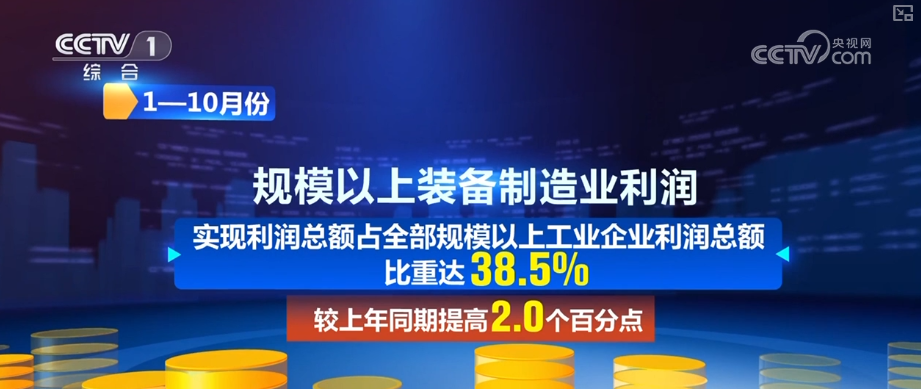
Group 1: Industrial Profit Growth - In the first ten months of the year, profits of large-scale industrial enterprises increased by 1.9% year-on-year, marking three consecutive months of growth since August 2025 [1] - Profits in the equipment manufacturing sector grew significantly, with a year-on-year increase of 7.8%, accounting for 38.5% of total profits in large-scale industrial enterprises, an increase of 2.0 percentage points from the previous year [3] - Seven out of eight major categories in the equipment manufacturing sector reported profit growth, particularly in railways, shipping, aerospace, and electronics, which saw double-digit profit increases [3] Group 2: High-tech Manufacturing Performance - Profits in the high-tech manufacturing sector rose by 8.0% year-on-year during the same period, with strong growth observed in smart electronics, unmanned aerial vehicles, smart vehicle equipment, semiconductor manufacturing, and precision instruments [5] Group 3: Consumption Promotion Policies - The Ministry of Industry and Information Technology, along with five other departments, introduced a plan to enhance the adaptability of supply and demand in consumer goods, aiming to boost consumption [6][10] - The plan outlines 19 key tasks across five areas, focusing on accelerating the application of new technologies and models, expanding the supply of unique and new products, and precisely matching the needs of different consumer segments [10] - By 2027, the goal is to establish three trillion-yuan consumption sectors and ten hundred-billion-yuan consumption hotspots, with a vision for a high-quality development pattern by 2030 [13][15] Group 4: Credit Repair Mechanism - The State Administration for Market Regulation announced a new Credit Repair Management Measures to assist more enterprises in correcting mistakes and restoring their credit [16][19] - The measures include a systematic approach to credit repair, detailing conditions, procedures, and special circumstances, allowing businesses to rebuild their credit in a structured manner [21] - The new regulations categorize violations into "minor, general, and serious," with varying public disclosure periods, and reduce the processing time for credit repair from 15 working days to 7 [23]