多元资产配置

Search documents
发力多元资产配置券商资管转型加速
Zhong Guo Zheng Quan Bao· 2025-07-23 21:00
Core Insights - The bond market is experiencing increased volatility, prompting securities firms' asset management to accelerate transformation and diversify asset allocation to enhance active management capabilities [1][2][3] - The shift towards net value management of fixed-income products requires improved risk control and liquidity management in product design [2][3] - Securities firms are exploring innovative investment strategies, such as all-weather strategies, to balance risks and returns across various asset classes [2][3] Market Challenges - The bond market has transitioned from a strong upward trend to a high-volatility environment, complicating the investment landscape for securities firms [1][2] - Increased market volatility has raised challenges in generating returns, managing product net values, and controlling credit risks [1][2] Strategic Adjustments - Securities firms are advised to increase allocations to non-traditional fixed-income assets like convertible bonds, ABS, and overseas bonds to address yield challenges [2][3] - The focus on equity investments is growing, with an emphasis on identifying niche opportunities that can enhance performance [3] Risk Management - A robust risk management framework is essential for dynamic portfolio adjustments to mitigate investment risks and enhance return stability [3][4] - Continuous innovation in asset management products is necessary to meet diverse investor preferences and risk tolerances [3][4] Competitive Advantages - Securities firms possess a unique competitive edge through their comprehensive securities company ecosystem and deep involvement in capital markets [4] - The potential for growth in various business directions includes overseas high-yield asset investments and innovative tools like ABS and public REITs [4]
活动邀请 | 晨星投资洞察分享会:北上互认基金的数据解码与研究实践
Morningstar晨星· 2025-07-23 09:59
Core Insights - The article emphasizes the importance of global investment trends and diversified asset allocation, highlighting the role of data, tools, and research in enhancing financial institutions' investment research systems and service efficiency [1] Group 1: Market Trends - Since 2025, the sales ratio limit for cross-border investments has been relaxed to 80%, leading to a rapid growth in the scale of northbound mutual funds due to the increasing demand for cross-border asset allocation from mainland investors [2] Group 2: Challenges in Cross-Border Funds - Cross-border funds face three major business challenges: - Diverse investment strategies and styles make it difficult to unify evaluation standards [3] - Fund information disclosure is fragmented, resulting in high data integration costs [3] - A lack of analytical tools leads to low research efficiency for cross-border funds [3] Group 3: Focus of the Sharing Session - The current sharing session will focus on northbound mutual funds, aiming to help fund sales institutions better understand cross-border fund products and enhance their research selection and service capabilities [4] Group 4: About Morningstar - Morningstar, Inc. is one of the leading investment research firms globally, providing financial information, fund, and stock analysis to various professionals, including individual investors and institutional investors [5] - As of December 31, 2024, Morningstar managed and provided investment advice on assets totaling approximately $338 billion across 33 global markets [5]



观势向新,2025年三季度“中银投策会”北京站活动成功结束
第一财经· 2025-07-22 05:23
Core Viewpoint - The event "Zhongyin Investment Strategy Conference" held in Beijing focused on the theme "Observing Trends Towards New Opportunities," discussing the current global economic situation and future asset trends [1] Group 1: Event Overview - The conference featured renowned economists and over a hundred private banking and potential clients, emphasizing the complexities and opportunities in the current global economic landscape [1] - The Deputy General Manager of the Beijing Branch highlighted the importance of asset allocation services and the bank's commitment to identifying market risks and investment opportunities for wealth preservation [1] Group 2: Insights and Strategies - Economists provided in-depth analysis of the global political and economic landscape, helping attendees understand market dynamics [1] - Investment strategy experts from the bank presented quarterly research findings, focusing on multi-asset allocation as a practical approach to navigate market volatility and create value [1] Group 3: Future Directions - The bank has been conducting a series of "Zhongyin Investment Strategy Conference" events nationwide, showcasing its investment strategy research capabilities and comprehensive wealth management services [1] - The bank aims to collaborate with clients to create wealth value and explore future possibilities, looking forward to future engagements [1]

做配置如何避免追涨?“很像桥水打法”的基金经理,给出了5个诚恳建议
聪明投资者· 2025-07-18 14:23
Core Viewpoint - The article discusses the importance of avoiding "chasing gains" in asset allocation and emphasizes the need for a scientific and objective analysis framework to make independent investment decisions [9][38]. Group 1: Asset Allocation Strategy - The author, 唐军, manages a diversified asset allocation strategy that includes various asset classes such as A-shares, Hong Kong stocks, US stocks, US bonds, and ETFs focused on high dividends and electricity [5][6]. - 唐军's approach, termed "Configuration First," is based on a three-step framework: assessing credit expansion and liquidity trends, evaluating whether market expectations are excessive, and ensuring asset diversification and complementarity [7][6]. Group 2: Chasing Gains Phenomenon - The article highlights that even sophisticated models like the Markowitz portfolio optimization theory can lead to "chasing gains" due to reliance on historical data for expected returns and volatility [11][20]. - The tendency to chase gains is exacerbated by behavioral biases, such as the "availability heuristic," where investors rely on easily accessible information rather than comprehensive data [25][10]. Group 3: Avoiding Chasing Gains - To avoid chasing gains, the article suggests establishing an objective analysis framework that incorporates quantitative indicators and macroeconomic drivers [26][30]. - It emphasizes the importance of distinguishing between long-term logic and short-term variables, as well as the need to diversify asset allocation to mitigate pressure during market fluctuations [31][34]. Group 4: Market Expectations and Investment Decisions - The article warns that consistent market expectations can often serve as a contrary indicator, suggesting that investors should be cautious during periods of high consensus [35][36]. - It also discusses the importance of recognizing the difference between style beta and alpha when selecting funds, as this understanding can prevent chasing based solely on past performance [37].

500亿外资入场,A股要变玩法了!
Sou Hu Cai Jing· 2025-07-16 15:14
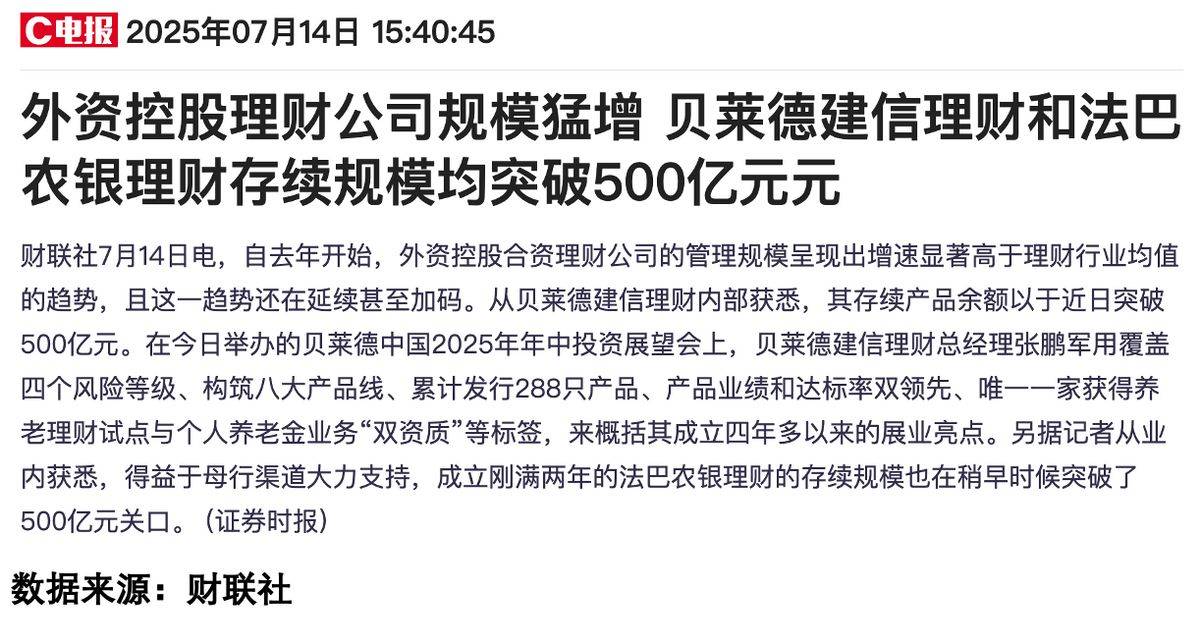
Core Insights - Recent news highlights that foreign asset management companies, specifically 法巴农银 and 贝莱德, have surpassed a management scale of 500 billion [1][3] - These foreign institutions are significantly impacting the domestic wealth management market by focusing on fixed income and retirement planning [3][4] Group 1: Market Dynamics - Foreign institutions are likened to "crocodiles" disrupting the previously calm wealth management market, leveraging their global investment strategies [3] - The financial market is fundamentally a game of liquidity, with foreign firms easily accessing high-yield opportunities while domestic investors struggle [4] Group 2: Data Utilization - The use of big data tools reveals that institutional investors often exit positions before significant downturns, as seen with the stock 紫天科技 [5][7] - In contrast, stocks like 瑞丰高材 show strong institutional support throughout their price increases, indicating the importance of following money flows rather than speculation [7] Group 3: Investment Strategies - Foreign firms emphasize quantitative thinking and diversified asset allocation, which allows them to navigate the market effectively [9] - The article suggests that retail investors should adopt tools to visualize market trends and institutional movements, moving away from traditional speculation [10]


活动邀请 | 晨星投资洞察分享会:北上互认基金的数据解码与研究实践
Morningstar晨星· 2025-07-16 09:44
Core Insights - The article emphasizes the importance of global investment trends and diversified asset allocation, highlighting the role of data, tools, and research in enhancing financial institutions' investment research systems and service efficiency [1]. Group 1: Market Trends - Since 2025, the sales ratio limit for cross-border investments has been relaxed to 80%, leading to a rapid growth in the scale of northbound mutual funds due to the increasing demand for cross-border asset allocation from mainland investors [2]. Group 2: Challenges in Cross-Border Funds - Cross-border funds face three major business challenges: - Diverse investment strategies and styles make it difficult to establish unified evaluation standards [3]. - Fund information disclosure is fragmented, resulting in high data integration costs [3]. - There is a lack of analytical tools, which lowers the research efficiency of cross-border funds [3]. Group 3: Focus of the Sharing Session - The current sharing session will focus on northbound mutual funds, aiming to help fund sales institutions better understand cross-border fund products and enhance their research selection and service capabilities [4]. Group 4: About Morningstar - Morningstar, Inc. is one of the leading investment research firms globally, providing financial information, fund, and stock analysis to various professionals, including individual investors and institutional investors [5]. - As of December 31, 2024, Morningstar managed and provided investment advice on assets totaling approximately $338 billion across 33 global markets [5].

手搓「永久组合」,这届年轻人的投资赢学
雪球· 2025-07-14 09:19
Core Viewpoint - The article discusses the rising popularity of the "Permanent Portfolio" investment strategy among young investors, particularly in the context of social media platforms like Xiaohongshu, emphasizing its simplicity and effectiveness in wealth management [2][5]. Group 1: Permanent Portfolio Concept - The "Permanent Portfolio" is a classic multi-asset allocation strategy created by Harry Browne in the 1970s, designed to provide stability and growth through diversified asset allocation [3][5]. - This strategy is not merely a simple four-part allocation but represents a flexible approach that can be tailored to individual preferences, allowing for personal variations in asset allocation [5][12]. Group 2: Market Trends and Historical Context - The resurgence of interest in multi-asset portfolios is linked to macroeconomic conditions reminiscent of the 1970s, particularly the significant rise in gold prices, which increased from $35 to $512, a cumulative increase of 1363% [13][15]. - The current economic environment, characterized by slowing growth and high interest rates, has led to a renewed focus on multi-asset strategies, paralleling the historical context of the 1970s [15][14]. Group 3: Investment Behavior of Young Investors - Young investors today prefer to create their own "safe havens" through personalized investment strategies, reflecting a desire for autonomy and reduced external influence in their financial decisions [17][18]. - The article highlights a cultural shift where younger generations are more inclined to engage in self-directed investment strategies, aligning with the principles of the Permanent Portfolio, which emphasizes diversification and minimal intervention [18][19].

配置策略越发多元FOF上半年交出亮眼成绩单
Shang Hai Zheng Quan Bao· 2025-07-13 14:22
Group 1 - The average net value of public FOF products increased by 3.64% in the first half of the year, with 15 products showing a net value growth of over 10% [2][3] - Gold-themed FOF products and those incorporating gold-related funds performed exceptionally well, with E Fund Gold Theme LOF leading at a 29.39% net value increase [2][3] - A total of 31 FOFs were issued this year, with a combined issuance of 30.82 billion shares, indicating a growing interest in FOF products [3] Group 2 - The diversification of investment strategies in FOF products is becoming more pronounced, with examples like Fidelity Renyuan's mixed FOF incorporating low-correlation alternative assets such as gold and commodities [3] - The transition of Xingzheng Global Active Allocation FOF to an open-ended product reflects an innovative approach by including MSCI World Index returns and Shanghai Gold Exchange spot prices in its performance benchmark [3][4] - The current favorable conditions for FOF products include the integration of various asset classes such as commodities, REITs, and QDII products, enhancing risk diversification and uncovering potential returns from niche assets [4]

新发提速VS存量萎缩 公募FOF“加减法”怎么做?
Jing Ji Guan Cha Wang· 2025-07-09 06:37
Group 1 - The public FOF (Fund of Funds) market is experiencing a significant increase in new issuance, with 31 new FOF products launched this year, surpassing the total issuance scale of 115.98 billion from 38 products in 2024 [2][3] - As of the end of Q2, the total net asset value of FOF funds reached 168.76 billion, marking a year-to-date increase of 26.74% and hitting a high point since September 2023 [2][3] - The growth in FOF scale is driven by both new issuances and performance improvements of existing FOFs, supported by a stabilizing A-share market and expanding personal pension fund listings [2][4] Group 2 - The majority of new FOF products are mixed-type, with 23 out of 31 being mixed FOFs, and several "popular" FOFs have raised over 60 billion in initial offerings, setting new records for single product fundraising in the past three years [3][4] - The average return for FOFs in the first half of the year was 3.11%, with some aggressive FOFs achieving returns over 14% by investing in thematic ETFs and overseas assets [4][5] Group 3 - Despite the growth in new FOF products, many existing FOFs are facing pressure due to small asset sizes, with 57 funds having net asset values below 50 million, and 170 funds below 200 million, leading to 13 funds being liquidated this year [5][6] - The small size of many FOF products is attributed to poor historical performance, inadequate risk management, and high levels of product homogeneity, which have resulted in low investor acceptance [6][7] Group 4 - Industry experts suggest that FOF products need to clarify their positioning, objectives, and investment strategies, while also enhancing investor engagement to improve the overall investment experience [7][8] - The FOF market is expected to continue evolving towards diversified asset allocation, with a focus on incorporating various investment tools such as ETFs and optimizing product structures to reduce competition among similar products [8]

从“大美丽法案”到关税新信函,海外变局下的应对与思考
Sou Hu Cai Jing· 2025-07-09 01:02
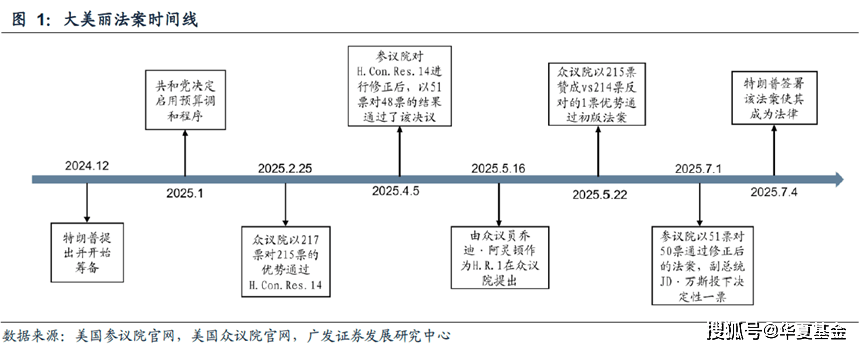
Group 1 - The "One Big Beautiful Bill Act" (OBBB) was signed by Trump on July 4, 2025, marking a significant legislative change in the U.S. [1][2] - The OBBB focuses on three main areas: large-scale tax cuts, adjustments to government spending, and an increase in the debt ceiling to $5 trillion, which is the largest adjustment in U.S. history [4][8] - The act has a dual impact on various industries, providing significant tax benefits to traditional energy, manufacturing, real estate, defense, agriculture, and semiconductors, while reducing incentives for clean energy, electric vehicles, healthcare, and food sectors [4][5] Group 2 - The Federal Reserve has paused interest rate cuts four times, with market expectations leaning towards two rate cuts by the end of the year, likely starting in September [10][12] - Trump's administration is advocating for immediate rate cuts to manage the increased debt from the OBBB and to counter potential economic stagnation due to tariffs and immigration policies [12][16] - The current economic environment presents challenges for the Fed, including fiscal expansion, changing economic fundamentals, and uncertainties from tariffs, which complicate the decision-making process [16] Group 3 - The expiration of tariff exemptions on July 9, 2025, has led to renewed concerns about global trade dynamics, with Trump announcing new tariffs on imports from 14 countries starting August 1 [17][19] - The ongoing trade negotiations, particularly between the U.S. and China, are expected to continue until August 12, 2025, amidst fluctuating market reactions to Trump's tariff strategies [20][21] Group 4 - The investment landscape is undergoing a profound transformation, with a shift from "American exceptionalism" to a more regionalized global economy, necessitating a reevaluation of asset allocation strategies [22][24] - Investors are encouraged to adopt a diversified approach to mitigate uncertainty, focusing on sectors aligned with emerging trends such as AI and high-end manufacturing [25][26] - Maintaining liquidity and a long-term investment perspective is crucial for navigating the current market volatility and capitalizing on future opportunities [27][28][30]