
线上线下融合

Search documents
【干货分享】中国图书零售行行业市场运行态势及发展趋势预测报告(智研咨询)
Sou Hu Cai Jing· 2025-07-17 02:17
Industry Overview - The book retail industry refers to the process of selling books directly to end consumers, utilizing careful selection, pricing, promotion, and distribution to meet consumer demand while achieving commercial benefits for publishers and distributors [3] - Since 2020, China's book retail market has experienced fluctuations, with the market size declining from 98.7 billion yuan in 2021 to 87.1 billion yuan in 2022 [6] - In 2023, the market began to recover, with the retail market size slightly increasing to 91.2 billion yuan, representing a growth rate of 4.7% [6] Market Trends - By 2024, the integration of online and offline book sales channels has been established, driven by the rise of short video e-commerce and innovations in physical bookstores, leading to a significant market growth [6] - The industry code volume has reached 112.9 billion yuan in 2024, with a year-on-year growth rate of 23.8% [6] - The market is undergoing transformation, reflected in changes in consumer habits, marketing models, channel diversification, policy support, and technological advancements [8] Sales Channel Structure - In 2024, the market share of different sales channels is as follows: platform e-commerce accounts for 40.92%, short video e-commerce for 30.48%, vertical and other e-commerce for 14.71%, and offline physical stores for 13.99% [8] - The significant increase in the market share of short video e-commerce and offline physical stores compared to the previous year indicates a dynamic growth in the book retail sector [8] Key Players - Notable listed companies in the industry include CITIC Publishing (300788), China South Publishing (601098), Xinhua Wenhui (601811), and others [2] - Other relevant enterprises include Zhejiang Xinhua Bookstore Group, Beijing Ren Tian Bookstore Group, and various local bookstores [2]


国泰海通|轻工:新旧共振,轻工掘金
国泰海通证券研究· 2025-07-16 12:39
Group 1: Furniture Industry - The furniture industry is experiencing a recovery supported by the demand from the existing housing market and the ongoing "old-for-new" national subsidy policy [1] - Leading companies possess comprehensive channel layouts, stronger brand power, and mature marketing systems, while smaller firms may face "traffic bottlenecks," amplifying the advantages of top players [1] Group 2: Personal Care Industry - The demand in the personal care sector is relatively inelastic, with companies focusing on product innovation and precise consumer targeting, while the integration of online and offline channels is becoming a trend [1] Group 3: Export Chain - Starting from Q4 2024, the performance of the export chain will be affected by a weakening low base effect, with internal growth becoming more significant, depending on downstream industry demand and the company's efforts in category, channel, and customer expansion [1] - Increased tariff disruptions are expected, benefiting companies with overseas production capacity, leading to further excess revenue performance [1] Group 4: Two-Wheeled Vehicles - The "old-for-new" policy is being intensified, and major automotive companies are set to launch significant new products in early 2025, with inventory replenishment at the channel level to meet peak season demand, resulting in an upward trend in performance [1] - In the medium to long term, the competitive advantages of leading brands are expected to expand due to new national standards and manufacturing capacity constraints, leading to a continued concentration in the market [1] Group 5: Millet and Stationery - The millet market has a broad outlook, with traditional stationery moving towards cultural and creative products, while the pan-entertainment toy market is expected to grow faster due to its entertainment and interactivity [2] Group 6: Smart Glasses - The smart glasses industry is witnessing an explosion in trends, with major manufacturers accelerating the integration of products with AI models, and the first generation of products has been released, with others expected to launch by 2025 [2] Group 7: Paper Industry - A turning point in cost has been confirmed, with a positive outlook for the profitability of specialty paper compared to bulk paper, as profitability is expected to improve starting Q4 2024 [2] - Price increases for paper are anticipated, with pulp prices peaking in Q1 2025, leading to improved profit margins [2] Group 8: Packaging Industry - The packaging industry is currently stable, with an expected improvement in profitability driven by optimized market structure, as capital expenditure is slowing down and companies focus on efficiency and shareholder returns [2] - As the industry enters a competitive phase in the existing market, mergers and acquisitions among leading companies are accelerating, which may lead to an upward shift in the overall profitability of the industry [2]

“穷鬼超市” Iceland入华首店:一个长在直播间的超市
36氪未来消费· 2025-07-15 08:42
Core Viewpoint - Iceland has opened its first store in Asia-Pacific, named "Iceland Lab," in Beijing, which combines retail, e-commerce, and live streaming, marking a significant shift from traditional supermarket models [3][4][5]. Group 1: Store Concept and Operations - The Iceland Lab is a collaborative project involving the Iceland brand, Shoulu Group, and the Mentougou government, focusing on attracting investment rather than solely retail sales [4][12]. - The store features a limited selection of products, with only about 30% being Iceland's own products, while the rest comes from local partners, including traditional brands [5][33]. - The store operates under a unique model that prioritizes online sales and content creation over traditional in-store sales, with a focus on creating a lively atmosphere for live streaming [7][17]. Group 2: Market Strategy and Consumer Engagement - The store aims to change consumer perceptions of frozen food, positioning itself as a "global gourmet good base" rather than a traditional supermarket [24][30]. - The strategy includes leveraging live streaming to enhance customer engagement and drive online sales, with a significant portion of live streams conducted by influencers rather than the brand itself [20][21]. - The company plans to gradually introduce more local products and strengthen the Iceland brand as it establishes its presence in the Chinese market [33][34]. Group 3: Challenges and Future Plans - The company faces challenges in supply chain management and product localization, which are being addressed through partnerships and the establishment of local supply chains [34]. - Future expansion plans are cautious, focusing on opening stores in key regions rather than a widespread rollout, adapting product offerings to local tastes [35].

广州零售市场观察:空置率趋稳,超市“新鲜”升级抢客源
Sou Hu Cai Jing· 2025-07-11 17:43
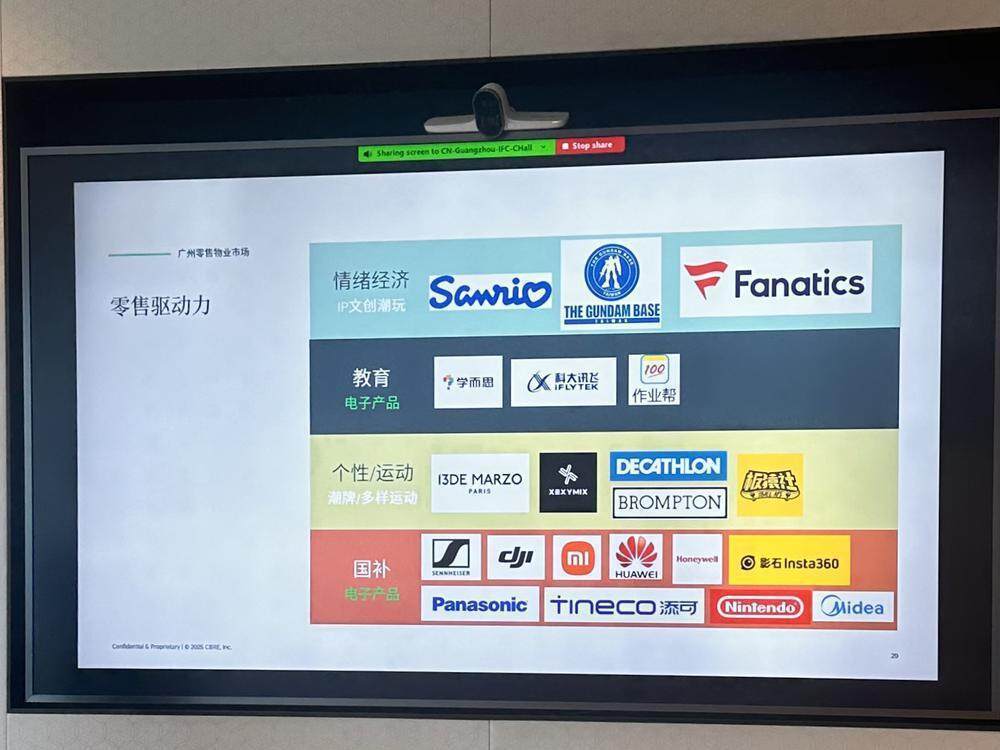
Core Insights - The retail market in Guangzhou shows stability with a slight increase in vacancy rates and a decrease in average rental prices, indicating a cautious but evolving landscape for retail properties [1][2]. Retail Market Overview - The retail property vacancy rate in Guangzhou for the first half of 2025 is reported at 12.7%, with a minor increase of 0.1 percentage points year-on-year and a decrease of 0.2 percentage points quarter-on-quarter, demonstrating better stability compared to the office market [1][2]. - Average rental prices in Guangzhou have decreased by 0.3% year-on-year, now standing at 619.1 yuan per square meter per month [2]. Changes in Consumer Behavior - The restaurant sector is experiencing significant changes, with major dining establishments adopting a more cautious approach due to declining profit margins, contrasting with the more optimistic outlook of upgraded dining brands [2]. - National retail innovation pilot policies are driving changes in consumer behavior, promoting trade-in programs and the integration of online and offline shopping experiences [5]. Retail Innovations and Trends - The first batch of 38 cities has been designated as national retail innovation pilot cities, reflecting a shift in consumer trends towards green and circular consumption [5]. - New retail formats are emerging, including second-hand stores and the integration of live streaming in physical retail, enhancing the online-offline fusion trend [5]. Supermarket Sector Developments - The supermarket sector is undergoing significant transformations, with a focus on enhancing the freshness of products and introducing new operational concepts [7][9]. - Notable changes include the introduction of a higher proportion of imported goods, an increase in fresh and baked goods, and the implementation of a "fresh" shopping experience in stores like Dailian [7][9]. - Dailian's recent store renovations aim to cater to younger consumers by expanding product offerings, including a significant increase in baked goods and ready-to-eat meals [9]. Challenges and Future Outlook - While many supermarkets are pursuing renovations, the success of these changes will ultimately depend on consumer acceptance and the ability to meet market demands while maintaining competitive pricing [11].
大品牌换经销商很正常,但无人接盘已成为新常态
阿尔法工场研究院· 2025-07-11 03:30
Core Viewpoint - The fast-moving consumer goods (FMCG) industry is facing a significant crisis as distributors are increasingly unwilling to take on major brands, leading to a potential collapse of the distribution channel system [10][11][52]. Group 1: Distributor Dynamics - Historically, when manufacturers wanted to change distributors, there were many willing to take over, but now major brands are struggling to find new distributors as many are voluntarily exiting [3][5]. - Distributors are now actively reducing their operations, cutting ties with brands that do not provide immediate profitability, regardless of whether they are large or small [28][48]. - The shift from distributors merely complaining about profitability to outright refusing to engage in business marks a critical change in the industry [26][27]. Group 2: Channel Environment Stages - The deterioration of the channel environment can be categorized into three stages: 1. Deterioration of manufacturer-distributor relationships due to issues like stock pressure and unprofitability [15]. 2. A worsening channel environment characterized by increased control by manufacturers over distributor sales teams and the rise of direct supply models that limit distributor opportunities [20][22]. 3. Active contraction by distributors, who are now cutting brands that do not yield profits, indicating a severe crisis in the deep distribution model [25][29]. Group 3: Challenges in Brand Management - Major brands are losing their ability to innovate and push new products, which is essential for maintaining market relevance [36][40]. - The traditional dual-driven model of brand and channel distribution is failing, leading to an over-reliance on channel-driven strategies that disrupt the overall distribution system [41][40]. - Frequent changes in distributors are damaging brand reputation and market stability, making it increasingly difficult to find new distributors willing to take on the brands [43][45]. Group 4: Future Directions for Manufacturers and Distributors - Manufacturers need to rethink their channel strategies, focusing on direct supply to large retailers and fostering new types of operators who can drive innovation [58][59]. - Distributors have several options moving forward, including engaging with B2B platforms, transitioning to operational roles, or reducing their market presence [61][62][64]. - The emergence of new operational models that integrate online and offline strategies is crucial for revitalizing the industry and ensuring sustainability [66][70].
阿里、京东、美团杀入新战场
Sou Hu Cai Jing· 2025-07-11 01:37
Core Viewpoint - The takeaway from the article is that the food delivery battle has entered a new phase, characterized by significant competition and strategic shifts among major players like Meituan, Alibaba, and JD.com in the instant retail sector. Group 1: Market Dynamics - Meituan announced that its daily order volume for instant retail has surpassed 120 million, with over 100 million in food delivery orders [1] - Taobao Shanguo reported a daily order volume exceeding 80 million, with non-food orders surpassing 13 million, and over 200 million active users on the platform [1] - JD.com launched the "Double Hundred Plan" to support quality food merchants through a comprehensive service system aimed at sustaining online business growth [1] Group 2: Subsidy Strategies - Taobao Shanguo initiated a large-scale subsidy plan of 50 billion yuan to strengthen its competitive position in instant retail [3] - Meituan is also increasing its delivery subsidies, offering a long-term coupon package valued at 600 yuan for just 9.9 yuan [3] Group 3: Offline Expansion - The article emphasizes that offline supermarket and front warehouse construction are crucial for enhancing delivery efficiency, with major players accelerating their offline strategies [3] - Hema, as a leader in new retail, has opened over 430 stores and plans to open nearly 100 more by 2025 [3][12] - JD.com’s 7Fresh has rapidly expanded, with plans to achieve full coverage in Beijing by the end of the year [4][12] Group 4: Business Models and Strategies - Hema's CEO has implemented a dual-driven strategy focusing on Hema Fresh and Hema NB to maximize market share and profitability [7][8] - JD.com’s 7Fresh employs a unique "1+N" business model, combining large central stores with smaller satellite stores to enhance delivery efficiency and reduce operational costs [15] - Meituan is restarting its offline supermarket business to enhance market competitiveness and user loyalty [6][18] Group 5: Future Outlook - The competition in instant retail will hinge on the integration of online and offline resources, supply chain efficiency, and the ability to offer a diverse range of high-quality products and services [18]


研判2025!中国图书零售行业产业链图谱、市场规模、竞争格局及未来前景分析:短视频电商加速崛起,图书零售市场实现高速增长[图]
Chan Ye Xin Xi Wang· 2025-07-11 01:13
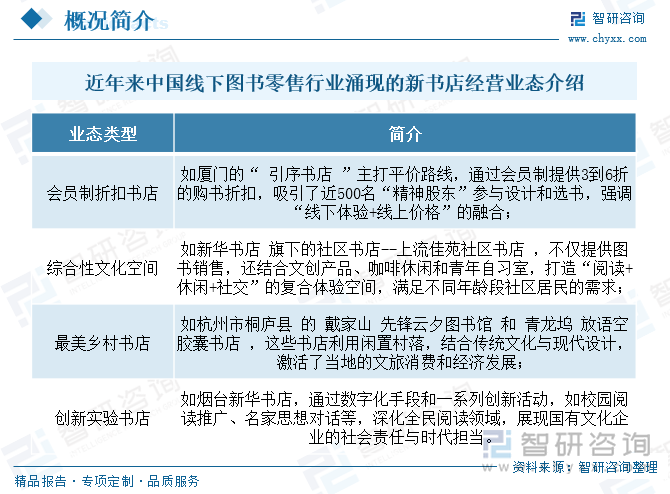
Core Insights - The Chinese book retail market has experienced fluctuations since 2020, with a decline in market size from 987 billion yuan in 2021 to 871 billion yuan in 2022, followed by a slight recovery to 912 billion yuan in 2023, representing a growth rate of 4.7% [1][5] - In 2024, the market is expected to achieve rapid growth, with the industry scale reaching 1,129 billion yuan, a year-on-year growth rate of 23.8%, driven by the rise of short video e-commerce and innovations in physical bookstores [1][5] Industry Overview - Book retail refers to the process of selling books directly to end consumers, involving careful selection, pricing, promotion, and distribution to meet consumer demand while achieving commercial benefits for publishers and distributors [2] - The industry has seen a stable growth in the number of physical bookstores, with a rise of distinctive and diverse new bookstores, contributing to a preliminary establishment of an integrated online and offline sales channel [2] Market Dynamics - The book retail market is undergoing transformation, reflected in changes in consumer habits, marketing models, channel diversification, policy support, and technological advancements [7] - In 2024, the market structure shows that platform e-commerce accounts for 40.92% of the market, short video e-commerce for 30.48%, while vertical and other e-commerce and offline physical stores account for 14.71% and 13.99%, respectively [7] Book Categories - The largest category in the book retail market is children's books, accounting for 28.16% of the market in 2024, followed by educational materials at 25.33%, supported by a large user base of students [9] Competitive Landscape - The market competition is characterized by diversification and the integration of online and offline sales. Major online platforms like Dangdang and JD Books dominate the market, while physical bookstores like Xinhua Bookstore and independent bookstores enhance their competitiveness through cultural experiences and events [11] - Companies such as CITIC Publishing, Zhongnan Media, and Xinhua Wenhui are key players in the market, each with distinct business focuses ranging from educational materials to digital publishing [13] Development Trends - The integration of online and offline channels is accelerating, with a predicted stable online channel share of 65%-70% and offline bookstores achieving 30%-35% in the next five years [17] - Digitalization and personalized services are emerging trends, with the digital education market expected to exceed 5 billion yuan by 2025, accounting for 15% of the overall market [18][19] - Government policies are continuously supporting the industry's transformation and high-quality development, with initiatives like a 5 billion yuan fund for physical bookstore upgrades [20]
外卖战场迎来“奇点时刻”:两个月订单翻倍,淘宝闪购吃下超60%增量
Feng Huang Wang· 2025-07-07 06:36
Group 1 - The core transformation in China's food delivery market is driven by the rapid growth of Taobao Flash Purchase, which has significantly increased its daily order volume from 20 million to 80 million within two months, contributing to a potential doubling of the overall market orders to between 200 million and 250 million [1][2] - Meituan, previously the market leader with a daily order volume of 90 million, has seen its orders rise to 120 million, reflecting a growth rate of approximately 33%, which is notably higher than the overall market's compound annual growth rate of 13% [1][3] - The competition between Meituan and Taobao Flash Purchase is reshaping the market dynamics, with Taobao leveraging its e-commerce platform to integrate food delivery services, indicating a trend towards creating a comprehensive "big consumption platform" that transcends traditional online and offline boundaries [3][5] Group 2 - Taobao's integration of delivery services provides it with inherent advantages in supply and traffic, as it capitalizes on its user base, which is estimated to exceed 1 billion, making it the second platform after WeChat to achieve this milestone [5][6] - The synergy between online and offline consumption is evident, as the interaction between these two channels has led to a significant increase in consumer engagement, with Taobao reporting that non-food orders have reached 13 million, approaching Meituan's previous high of 18 million [6][8] - The ongoing competition is expected to expand the market size, with analysts suggesting that Taobao's subsidies could unlock consumption increments worth hundreds of billions, while Meituan's strong ground team could help more merchants tap into new growth opportunities [11][12]

研判2025!中国葡萄籽保健品行业产业链图谱、市场现状及发展趋势分析:消费者需求升级,葡萄籽保健品行业规模不断上涨[图]
Chan Ye Xin Xi Wang· 2025-07-01 01:03
Core Insights - The demand for grape seed health products is increasing due to rising living standards and health awareness among consumers [1][16] - The market size of grape seed health products in China is projected to grow from 5 billion yuan in 2019 to 9 billion yuan by 2024, with a compound annual growth rate of 12% [1][16] - Technological advancements in extraction efficiency and purity are supporting the growth of the grape seed health product market [1][16] Industry Overview - Grape seed health products are derived from grape seeds and contain beneficial components such as vitamins, minerals, amino acids, and antioxidants, offering various health benefits [3][10] - The industry can be categorized by product form (tablets, capsules, liquid), efficacy (antioxidant, anti-aging), and usage scenarios (daily health, beauty, sports nutrition) [5][10] Market Dynamics - The grape seed health product market is experiencing rapid expansion due to the growth of e-commerce and diversified marketing channels [1][16] - The increase in grape production in China, from 13.16 million tons in 2015 to 16.17 million tons in 2023, is expected to provide ample raw materials for grape seed health products [12][14] Regulatory Environment - Recent policies in China aim to promote the integration of the food industry with health and wellness sectors, enhancing the market for functional foods and health products [6][9] Competitive Landscape - Major players in the grape seed health product market include well-known domestic brands such as汤臣倍健 (Tongrentang), 康恩贝 (Kang En Bei), and 九芝堂 (Jiu Zhi Tang), as well as international brands like Nature's Way and NOW Foods [18][19] - Companies are enhancing their competitiveness through improved production technologies and brand marketing strategies [18][19] Consumer Trends - There is a notable increase in consumer demand for high-quality grape seed health products, particularly among women and young adults aged 18 to 35, who represent 83.7% of the health supplement market [24][25] - Consumers are increasingly focused on product quality, efficacy, and safety, necessitating continuous improvement in product formulations [24][25] Future Outlook - The industry is expected to benefit from technological advancements that enhance product absorption and bioavailability [25][26] - The trend of online and offline integration in sales channels is becoming crucial for market growth, providing consumers with a more convenient shopping experience [26][27] - International expansion is a growing trend, with Chinese companies leveraging their resources and technology to compete in global markets [27]




陕品好物数字化运营中心投入运营
Shan Xi Ri Bao· 2025-06-30 22:46
Core Viewpoint - The establishment of the Shaanxi Product Digital Operation Center aims to enhance consumer demand and promote high-quality development of the consumer goods industry in Shaanxi province [1][2] Group 1: Digital Operation Center Overview - The Shaanxi Product Digital Operation Center officially commenced operations on June 26 in Xi'an, focusing on integrating digital platforms and supply chains to promote Shaanxi products nationally and globally [1] - The center employs a "supply chain + base + operation" model to provide online marketing, brand promotion, and supply chain collaboration services for upstream and downstream enterprises [1] Group 2: Product and Market Development - The center has partnered with numerous quality brands to establish permanent display centers for Shaanxi premium products in locations such as Xi'an Aerospace Base and Xi'an Xianyang International Airport, showcasing over 1,000 unique consumer goods [1] - The showcased products include categories like liquor, refined tea, dairy products, selenium-rich products, and traditional crafts, and the center utilizes an "online + offline" integration model to provide direct supply services to consumers in Hainan Free Trade Zone and the Yangtze River Delta [1] Group 3: Future Plans and Goals - The center has launched over 4,000 quality specialty products and promoted more than 500 quality enterprises across 12 key industry sectors [2] - Future efforts will focus on activating consumer market potential, enhancing consumer experiences, and driving economic high-quality development through a more trustworthy and impactful display and sales center for Shaanxi premium products [2]