以价换量

Search documents
加盟商管理顽疾难改,韵达股份业务量增速掉队
凤凰网财经· 2025-07-06 12:39
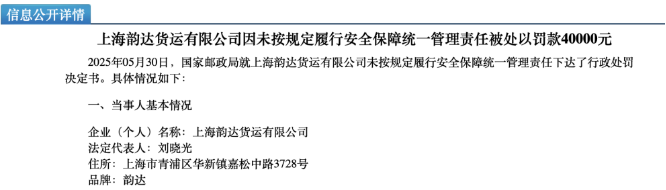
Core Viewpoint - Yunda Express has faced significant challenges in franchise management, leading to regulatory penalties and a decline in market position, as it lost its second-place ranking in the industry to YTO Express in 2023 [1][4]. Group 1: Franchise Management Issues - The National Postal Administration penalized Yunda Express for allowing fraudulent promotional materials to enter the delivery channel, resulting in fines for 58 franchise stores and the parent company [2][3]. - Yunda Express has acknowledged its shortcomings in managing franchisees and has initiated internal investigations and corrective measures to enhance compliance and training [2][3]. - The company operates a franchise model that has expanded rapidly but has also increased the complexity of compliance management across its extensive network of over 95,000 facilities [3]. Group 2: Revenue and Volume Decline - Yunda Express's revenue and business volume growth have lagged behind competitors, with its market position slipping to third place in 2023, losing significant volume to YTO Express and Shentong Express [4][5]. - The gap in business volume between Yunda Express and Shentong Express has narrowed significantly, from 4.66 billion pieces in 2022 to just 390 million pieces by May 2023 [4][5]. - In May 2025, Yunda Express reported a revenue of 4.415 billion yuan, a year-on-year increase of 6.75%, but its single-piece revenue fell by 5.42% to 1.92 yuan [5]. Group 3: Profitability Challenges - Yunda Express's first-quarter net profit for 2025 dropped by over 22% year-on-year, marking the first decline in five quarters, attributed to competitive pricing pressures in a seasonal downturn [6][7]. - Despite a revenue increase of 9.26% in Q1 2025, the company's cost control measures have not been effective, leading to a decrease in gross margin and overall profitability [7]. - The company has attempted various strategies to improve its competitive position, including optimizing franchisee profit-sharing and launching premium products, but these efforts have yet to yield significant advantages [7].



Hope Sea港股IPO:冯苏军家族控股100% “掏空”利润2年分红超5亿元 董事会成“一言堂”?
Xin Lang Zheng Quan· 2025-07-04 03:52
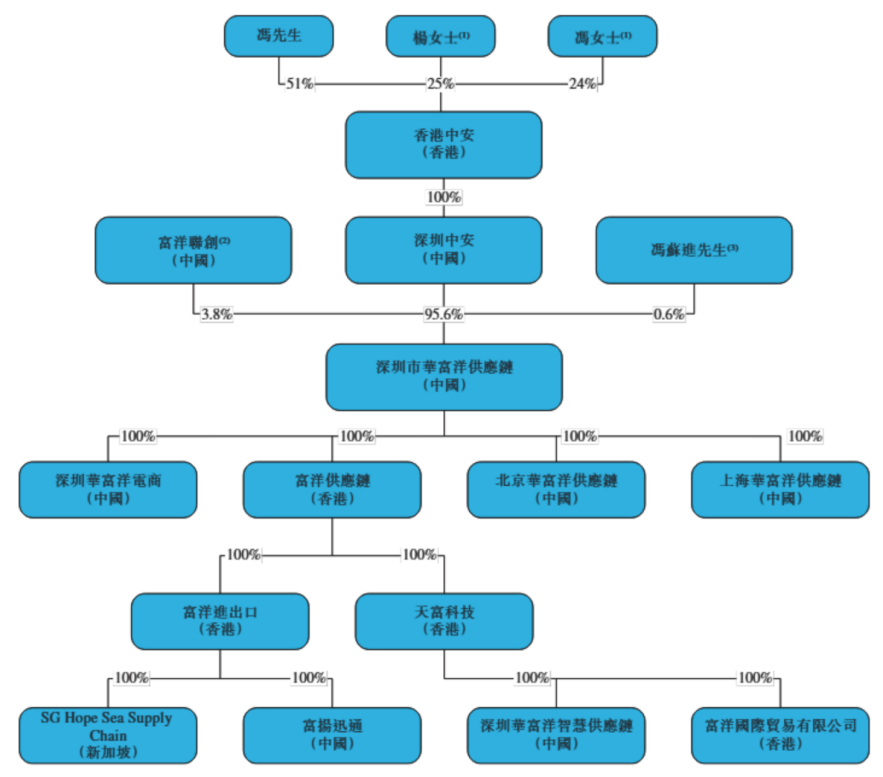
Core Viewpoint - Hope Sea Inc. is preparing for an IPO on the Hong Kong Stock Exchange, with plans to raise funds for service expansion, IT system upgrades, international expansion, and general corporate purposes [1][2]. Company Overview - Hope Sea is a comprehensive supply chain solution provider based in China, focusing on cross-border supply chain solutions for electronic products, particularly integrated circuits [2]. - The company is controlled 100% by the Feng family through family trusts, with the founder Feng Sujun and his family holding all shares [2][4]. Financial Performance - In 2023 and 2024, Hope Sea distributed a total of 525 million yuan in dividends, significantly exceeding its net profit of 169 million yuan during the same period, raising concerns about potential profit extraction [5]. - The company's revenue showed a trend of decline followed by recovery, with total revenues of 253 million yuan, 221 million yuan, and 235 million yuan for the years 2022, 2023, and 2024 respectively [7]. - The gross merchandise volume (GMV) for imports reached approximately 34.8 billion yuan in 2024, making it the largest provider of electronic product import supply chain solutions in China [2]. Governance Structure - The board of directors consists of six members, including family members and independent directors, raising concerns about the independence of the board due to family control [4][5]. - The independent non-executive director's connection to the auditing firm may pose risks related to conflicts of interest and independence [6]. Business Model and Strategy - Hope Sea's business model includes supply chain solutions and cross-border fund arrangements, generating revenue primarily through service fees based on GMV [7]. - The company adopted a "price for volume" strategy, leading to increased GMV but a decrease in average fee rates, indicating potential weaknesses in bargaining power [8]. Cost Structure and Risks - Transportation costs rose significantly, accounting for 13.01% of total revenue in 2024, up from 9.92% in 2023, indicating increased operational costs [8]. - The company faces currency exchange risks due to its reliance on USD for cross-border transactions [9]. Debt and Financial Health - As of the end of 2024, Hope Sea's debt-to-asset ratio was high at 94.75%, with total borrowings of 13.134 billion yuan, primarily related to cross-border fund arrangements [12]. - The company has significant restricted cash, amounting to 13.147 billion yuan, closely tied to its borrowing activities [13].
最低2.68%!银行卷完消费贷又卷经营贷
第一财经· 2025-07-03 13:03
Core Viewpoint - The article discusses the recent trend of banks lowering interest rates on credit operating loans, particularly in response to regulatory constraints on consumer loans, with some banks offering rates as low as 2.68% for select clients [1][3][4]. Group 1: Market Dynamics - Following regulatory restrictions on consumer loan interest rates, banks are shifting focus to operating loans, initiating a new round of interest rate reductions [3][4]. - Major banks like China Bank, Construction Bank, and China Merchants Bank have introduced credit operating loan products with annual interest rates around 3%, with some offering lower rates through promotional coupons [1][3][4]. - The competition in the consumer loan market has led to some banks engaging in indirect price competition, such as government-subsidized interest rates and personal subsidies from bank employees [5][6]. Group 2: Loan Products and Strategies - China Merchants Bank's "Business Loan" product has a base annual interest rate starting at 3%, with specific clients receiving rates as low as 2.68% through special coupons [3][4]. - Construction Bank's "Credit Quick Loan" offers a minimum interest rate of 3% and a maximum loan amount of 3 million yuan, requiring various eligibility criteria [3][4]. - China Bank has launched differentiated credit products targeting small and micro enterprises, with maximum loan amounts of 5 million yuan and interest rates not exceeding 3.6% [4]. Group 3: Industry Challenges - The credit market is facing challenges with a decline in new loan increments, as evidenced by a drop in new RMB loans by 3.3 billion yuan year-on-year in May [7][8]. - Despite increased lending efforts, the market's capacity to absorb loans remains weak, leading to a competitive environment where banks are resorting to unconventional methods to attract clients [8][9]. - The banking sector is experiencing a concerning phenomenon where the net interest margin is lower than the non-performing loan rate, indicating potential sustainability issues for the current low-rate lending model [8][9].




最低2.68%,银行卷完消费贷又卷经营贷
Di Yi Cai Jing· 2025-07-03 12:48
Core Viewpoint - The current "price-for-volume" competition model in the lending market is unsustainable due to regulatory constraints and increasing pressure on banks' profitability [1][6][7] Group 1: Lending Market Dynamics - Following the regulatory halt on consumer loan interest rate wars, banks have shifted focus to business loans, leading to a new wave of interest rate reductions [2][3] - Major banks like China Bank, Construction Bank, and China Merchants Bank have introduced pure credit business loan products with annual interest rates around 3%, with some offering as low as 2.68% for select clients [1][2] - Despite nominal interest rates being maintained at around 3%, banks are employing various strategies to lower actual financing costs for clients, including government subsidies and interest rate coupons [4][5] Group 2: Competitive Strategies - Banks are increasingly customizing loan products for specific industries and client groups, indicating a shift towards differentiated pricing strategies in the business loan sector [3][6] - Some banks are engaging in practices that blur the lines of regulatory compliance, such as providing personal subsidies to meet client demands [5][6] - The competitive landscape is characterized by a "new normal" where banks are resorting to gray market practices to attract clients, including partnerships with loan facilitation agencies [6] Group 3: Financial Performance Indicators - The overall net interest margin for banks has dropped to 1.43%, with an average non-performing loan rate of 1.51%, indicating a concerning trend of negative spread [7] - In the first quarter, 19 out of 42 listed banks reported a year-on-year decline in interest income, highlighting the financial strain within the sector [7] - Analysts suggest that the current environment does not support a widespread reduction in consumer loan rates, as banks are more likely to offer slight discounts to specific client segments to manage risk and maintain profitability [7]
市场总体稳中向好 止跌回稳大方向不变
Cai Jing Wang· 2025-07-02 03:54
Group 1: Core Market Trends - The real estate market is stabilizing in the first half of 2025, driven by policy guidance, demand adjustments, and industry transformation, with a shift from "incremental decline" to "quality enhancement" [1] - The new housing market shows a significant divergence, with a 9.1% year-on-year decline in online search heat across 66 key cities, while high-quality improvement demand projects are gaining traction in first-tier cities [2] - The average new housing price in key cities has slightly decreased by 0.5% year-on-year, indicating a transition towards "quality for quantity" [2] Group 2: Secondary Housing Market Dynamics - The secondary housing market is experiencing a price-for-volume strategy, with an increase in average listings but a slowdown in growth in first and second-tier cities [3] - The proportion of secondary housing transactions is rising, with 67% of searchers in key cities preferring secondary homes due to their immediate availability and established amenities [3] - The secondary housing market is increasingly diverting demand from new homes, with an average diversion intensity of 30% in key cities and 36% in lower-tier cities [3] Group 3: Rental Market Insights - The rental market is showing a stable trend, with a slight decline in rental prices in 22 cities, while new first-tier cities are leading in demand recovery [4] - The average listing period in new first-tier cities is 45 days, indicating stronger liquidity in the rental market [4] - Demand in lower-tier cities remains weak, highlighting disparities in rental attractiveness among cities [4] Group 4: Land Market Developments - The land market is witnessing a recovery, with a 18.4% year-on-year increase in residential land transaction volume and a 45% rise in transaction value [5] - The structure of land acquisition is improving, with a 16% decrease in local state-owned enterprises' share, while central and private enterprises are gaining ground [6] - The recovery in the land market is expected to influence the new housing market, promoting high-quality investment and refined operations [6] Group 5: Future Outlook - The year 2025 is characterized as a transitional period for real estate, with a focus on improving demand, quality value return, and differentiated urban development [7] - High-end projects in core areas of first-tier cities will continue to support price increases, while new first-tier and second-tier cities may see price stabilization due to improved project quality [7] - The real estate brokerage industry faces challenges, with a need for transformation towards "precise matching and value-added services" to meet evolving consumer demands [8]
韵达股份:Q1净利跌超两成,加盟商管理顽疾难改,业务量增速掉队
Zheng Quan Zhi Xing· 2025-06-30 08:35
Core Viewpoint - Yunda Holdings (002120.SZ) faces significant challenges in franchise management, leading to regulatory penalties and a decline in market position, as it has been surpassed by competitors in revenue and business volume [1][4][7]. Franchise Management Issues - The National Postal Administration has penalized Yunda Holdings for allowing fraudulent promotional materials to enter its delivery channels, resulting in fines for 58 franchise stores and the parent company [2][5]. - The company has acknowledged its shortcomings in managing franchisees and has initiated internal investigations and corrective measures to enhance compliance and operational oversight [4][6]. Market Position and Competition - Yunda Holdings has lost its position as the second-largest express delivery company in China, falling behind YTO Express in 2023, and is now engaged in a fierce competition with Shentong Express for the third position [1][7]. - The gap in business volume between Yunda and Shentong has narrowed significantly, with only 39 million parcels separating them as of May 2024 [1][7]. Revenue and Business Volume Trends - In May 2025, Yunda reported a revenue of 4.415 billion yuan, a year-on-year increase of 6.75%, while its business volume reached 2.303 billion parcels, up 12.78% [8]. - Despite aggressive pricing strategies, Yunda's single parcel revenue has declined by 5.42%, indicating that price competition alone is insufficient for maintaining market share [8]. Profitability Challenges - In Q1 2025, Yunda's net profit fell by over 22%, marking the first decline in five quarters, attributed to competitive pressures and declining parcel prices [10]. - The company's cost control measures have not yielded the expected results, as revenue growth has not translated into profit growth, highlighting the need for improved operational efficiency and service quality [9][10].
“3秒钟内飞机突然下坠”!食物、手机等物品飞散,涉事航空公司回应
21世纪经济报道· 2025-06-29 03:17
乘客回忆:大家手里的餐盒、手机纷纷"飞"向空中 近日,有网友在社交平台称,6月25日当晚乘坐吉祥航空途中遭遇了罕见的剧烈颠簸,餐盒、 手机等物品在客舱内飞散落了一地。 6月27日上午,乘坐该航班的乘客戴先生回忆起这一惊险经历仍心有余悸。戴先生乘坐的是航 班为HO1887,由上海虹桥飞往深圳宝安。 他说,当晚8时左右,飞机突遇强气流,引发剧烈颠簸。"先是普通颠簸,紧接着三秒钟内飞 机突然下坠,所有人都感受到明显失重,我的屁股都离开座椅了。" 戴先生表示,当时正值发餐时段,大家手里的餐盒、手机等物品纷纷"飞"向空中,有女乘客 被洒落的咖喱等餐食弄脏衣物,客舱内瞬间尖叫声四起。 戴先生表示,随后便有广播第一时间对此状况进行播报解释,并向乘客致歉。 另据搭乘该航班的网友发帖称,"当时飞机已经进入平飞,空乘开始发饭。在用餐过程中,飞 机开始小小下降调整,忽然一个大拉升,紧接着急速下降,失重感直接拉满,有一瞬间看到 了面条在飘!" 吉祥航空回应:无人受伤 据南方都市报,28日,吉祥航空工作人员告诉记者,事件中无人员受伤。"在巡航阶段突遇晴 空颠簸,持续约10秒。机组立即启动应急预案,妥善处置客舱状况,航班于20时47分安 ...


背靠昔日“零售之王”,规模净利双降的招银理财如何破局?
和讯· 2025-06-26 09:57
Core Viewpoint - Recent adjustments in fee rates by leading bank wealth management companies reflect a strategy to mitigate investor sensitivity to declining yields, driven by falling policy rates and lower fixed-income asset returns. This "price for volume" approach is seen as a survival tactic in the current market environment [1]. Group 1: Company Performance - By the end of 2024, China's asset management scale is expected to exceed 150 trillion yuan, with bank wealth management accounting for nearly one-fifth, yet it has not surpassed public funds to reclaim its former status as the largest segment [1]. - As of March 2025, the product scale managed by China Merchants Bank Wealth Management (招银理财) was 2.36 trillion yuan, a decrease of 4.45% from the end of 2024. This decline is notable as it marks the first financial regulatory penalty received by the company since its establishment nearly five years ago [1][2]. - 招银理财 received a fine of 8.5 million yuan for regulatory violations, including inadequate identification of underlying assets and non-compliance in information disclosure. This penalty is the largest single fine issued to a bank wealth management subsidiary in 2024 [1][2]. Group 2: Market Trends - The bank wealth management sector has seen a significant decline in product rates, with an overall decrease of approximately 8% in management fees in the first quarter of 2024. Fixed-income and mixed products experienced the most substantial drops, at 7.82% and 11.65%, respectively [9]. - The number of bank wealth management products increased to 42,431 by June 23, 2024, up by over 1,700 from the beginning of the year, with an overall scale of approximately 31.32 trillion yuan [5]. - In response to market conditions, 招银理财 has reduced fixed investment management fees for several products, with one product's fee dropping from 0.2% to 0.01% (annualized) for a limited time [6][8]. Group 3: Strategic Adjustments - The strategy of lowering fees is primarily aimed at attracting customers and responding to short-term pressures from interest rate cuts. This trend may lead to a normalization of ultra-low fee products among leading wealth management firms [9]. - The shift towards lower fees is seen as a temporary measure to enhance market share and customer loyalty, while the long-term focus will need to shift towards investment research capabilities and product innovation for sustainable competition [9].
这些小区的二手房单价,都已经到了“1字头”
Sou Hu Cai Jing· 2025-06-25 03:31
Core Viewpoint - The current real estate market is characterized by a buyer's market, with significant price reductions leading to increased transaction volumes in certain neighborhoods, particularly those with lower average prices per square meter [2][10]. Group 1: Market Trends - Numerous properties priced at or below 1.7 million yuan are emerging in the market, with average prices per square meter ranging from 1.15 to 1.7 million yuan [1][2]. - Areas such as Gouzhuang, Xianlin, and Xiasha are seeing a concentration of properties with average prices in the "1" range, indicating a shift towards more affordable housing options [2][4]. - The transaction volume for properties in these areas has surged, with some neighborhoods reporting daily sales, reflecting a strong demand despite the overall market downturn [2][4]. Group 2: Price Adjustments - Homeowners are increasingly lowering prices to facilitate sales, with some properties seeing reductions of over 100,000 yuan in recent months [10][11]. - The average transaction price for smaller units has dropped significantly from over 300,000 yuan to around 160,000 yuan, indicating a substantial market correction [6][11]. - Buyers are now using previous transaction prices as benchmarks, leading to further price adjustments from sellers who wish to close deals [8][11]. Group 3: Buyer Behavior - The current market conditions favor buyers, allowing them to select properties with more confidence as sellers are compelled to reduce prices [11]. - The presence of numerous listings at lower price points is attracting first-time buyers and those seeking affordable housing options [6][10].
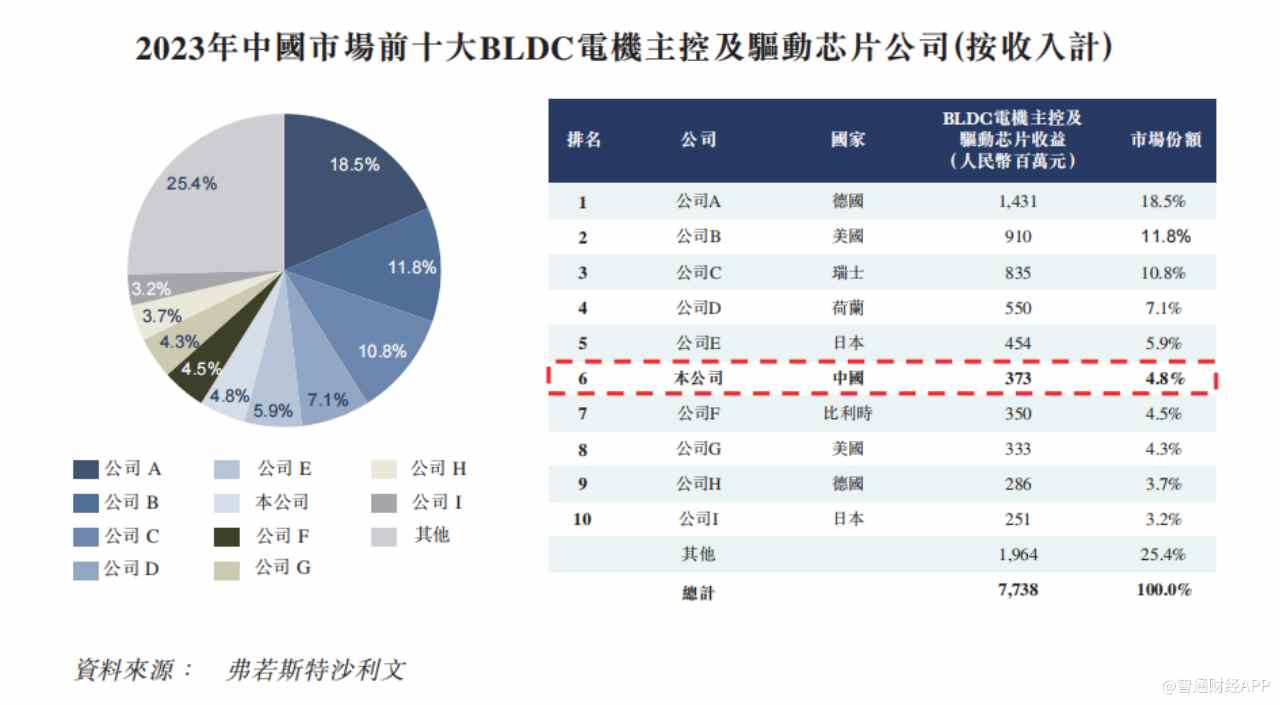
新股解读|海外厂商主导市场份额,峰岹科技“以价换量”或能穿越竞争迷雾?
Zhi Tong Cai Jing· 2025-06-24 13:16
Core Viewpoint - Fengfan Technology (688279.SH) is set to become a dual-listed chip design company on both A-shares and H-shares, with recent stock price fluctuations reflecting market sentiment and the company's upcoming capital expansion plans [1]. Company Overview - Fengfan Technology specializes in the design and research of BLDC motor drive control chips, holding a 4.8% market share in China's BLDC motor control and drive chip market, ranking sixth overall and being the only Chinese company among the top ten [2][5]. - The company has a comprehensive product matrix covering core components of motor drive control systems, including MCU, ASIC, HVIC, and MOSFET [5]. Financial Performance - Revenue is projected to grow from 322.973 million RMB in 2022 to 600.325 million RMB in 2024, with a compound annual growth rate (CAGR) of 36.4% [7][8]. - Net profit is expected to increase from 142 million RMB in 2022 to 222 million RMB in 2024, with a CAGR of 25.1% [7][8]. Market Dynamics - The global and Chinese BLDC motor market is experiencing significant growth, with projected CAGRs of 22.6% and 24.9% from 2019 to 2023, respectively [11]. - The company faces intense competition from international firms, which hold 54.1% of the market share, prompting Fengfan Technology to adopt a "price-for-volume" strategy to expand its customer base [12]. Research and Development - High R&D investment is a key driver of the company's growth, with R&D expenses increasing from 64 million RMB in 2022 to 116.73 million RMB in 2024, representing 19.4%-20.6% of revenue [11]. - The company has accumulated 110 patents, including 68 invention patents, focusing on core algorithms and chip design [11]. Sales Strategy - The company has seen a rise in sales and distribution expenses, from 12.605 million RMB in 2022 to 24.670 million RMB in 2024, reflecting efforts to optimize customer structure and expand into new markets [12][13]. - The concentration of revenue from the top five customers has decreased from 56.6% in 2022 to 46.8% in 2024, indicating progress in diversifying its customer base [13]. Future Outlook - Fengfan Technology's growth potential is supported by the high demand in the BLDC motor drive control chip sector and its innovative product offerings, as it prepares for A+H share capital expansion [14]. - The company must balance pricing strategies and expenditure to optimize profitability while navigating potential risks related to customer concentration and R&D investment returns [14].