就业

Search documents
美联储主席鲍威尔:在关于政策的讨论中,多数观点认为,当前通胀高于目标水平,就业处于目标水平,因此政策应保持一定的限制性。
news flash· 2025-07-30 19:11
Core Insights - The Federal Reserve Chairman Powell indicated that the majority opinion in policy discussions is that current inflation is above target levels while employment is at target levels, suggesting that policy should remain somewhat restrictive [1] Group 1 - Current inflation is higher than the target level [1] - Employment is at the target level [1] - The policy should maintain a certain level of restrictiveness [1]
加拿大央行7月决议看点前瞻
news flash· 2025-07-30 13:55
③关注加拿大央行对美国与欧盟、美国与日本等国家签订的贸易协议的看法。 ④关注加拿大央行通胀、经济、就业、油价、汇率等的看法。 ①市场普遍预计加拿大央行将维持利率于2.75%不变。 ②关注加拿大央行对未来降息可能性的暗示。 注:北京时间21:45,加拿大央行将公布利率决议。 ...
央行二季度问卷调查最新出炉
Zheng Quan Shi Bao Wang· 2025-07-30 05:16
Core Insights - The People's Bank of China released the results of the Q2 2025 survey indicating that over half of entrepreneurs and bankers view the current macroeconomic performance as stable and normal, holding a neutral to cautious attitude towards the overall economy [1][3][4] Group 1: Entrepreneur Insights - The entrepreneur's business climate index and profit index both increased compared to the previous quarter, with values of 49.3% and 53.2% respectively, indicating a slight improvement in business sentiment [3] - 50.8% of entrepreneurs believe the macroeconomic performance is normal, while 48.6% consider it "cold" [3] - The survey revealed that 32.5% of entrepreneurs expect to "increase profits or reduce losses," an increase of 6.5 percentage points from the previous quarter [3] Group 2: Banker Insights - The banker macroeconomic heat index for Q2 was 33.2%, a decrease from the previous quarter, with 61.9% of bankers viewing the macroeconomic performance as normal [4] - 50% of bankers rated the monetary policy as loose, with a monetary policy sentiment index of 74.6%, which is high [4] - The banker’s expectation for the macroeconomic heat index for Q3 is 37.3%, indicating a more optimistic outlook compared to Q2 [4] Group 3: Resident Insights - In a survey of urban residents, 69.7% reported that their income remained stable in Q2, with a cautious outlook on employment [5] - 51.5% of residents perceive the employment situation as severe, reflecting a cautious sentiment towards job security [5] - 32.1% of residents plan to increase spending on tourism, surpassing education as the top choice for additional expenditures [2][6]
央行二季度问卷调查最新出炉
券商中国· 2025-07-30 05:05
Core Viewpoint - The overall sentiment among entrepreneurs and bankers regarding the macroeconomic performance is neutral but cautious, with over half of the respondents perceiving the current economic situation as stable [1][11]. Group 1: Entrepreneur Sentiment - The business climate index and profit index for entrepreneurs have both increased compared to the previous quarter, indicating a slight improvement in sentiment [2][9]. - In the second quarter, 50.8% of entrepreneurs believe the macroeconomic performance is normal, while 48.6% consider it "cold" [5]. - The entrepreneur's macroeconomic heat index stands at 26.0%, which is a decrease from the previous quarter [5]. - The perception of product sales prices and raw material purchase prices remaining stable is reported by 71.2% and 75.5% of entrepreneurs, respectively [7]. Group 2: Banker Sentiment - The macroeconomic heat index for bankers is recorded at 33.2%, showing a decline from the previous quarter, with 61.9% of bankers viewing the macroeconomic performance as normal [11]. - The bankers' sentiment towards monetary policy is positive, with 50% rating it as accommodative [14]. - The bankers' macroeconomic heat expectation index for the third quarter is 37.3%, indicating a more optimistic outlook compared to the second quarter [11]. Group 3: Consumer Sentiment - The urban residents' survey indicates a cautious outlook on employment, with 51.5% perceiving the job market as severe [17]. - Approximately 69.7% of residents believe their income situation remains unchanged in the second quarter [16]. - The top spending intention among residents for the next three months is tourism, surpassing education, with 32.1% planning to increase spending in this area [19]. Group 4: Economic Policy and Market Response - The central bank has implemented a series of monetary and financial policies to stabilize the economy, which has positively impacted market confidence [12]. - The overall demand for loans has decreased compared to the previous quarter, reflecting a cautious lending environment [15].

常松、老徐|新型大学投档线超“双一流”:是就业捷径,还是新误区?
Guan Cha Zhe Wang· 2025-07-30 04:18
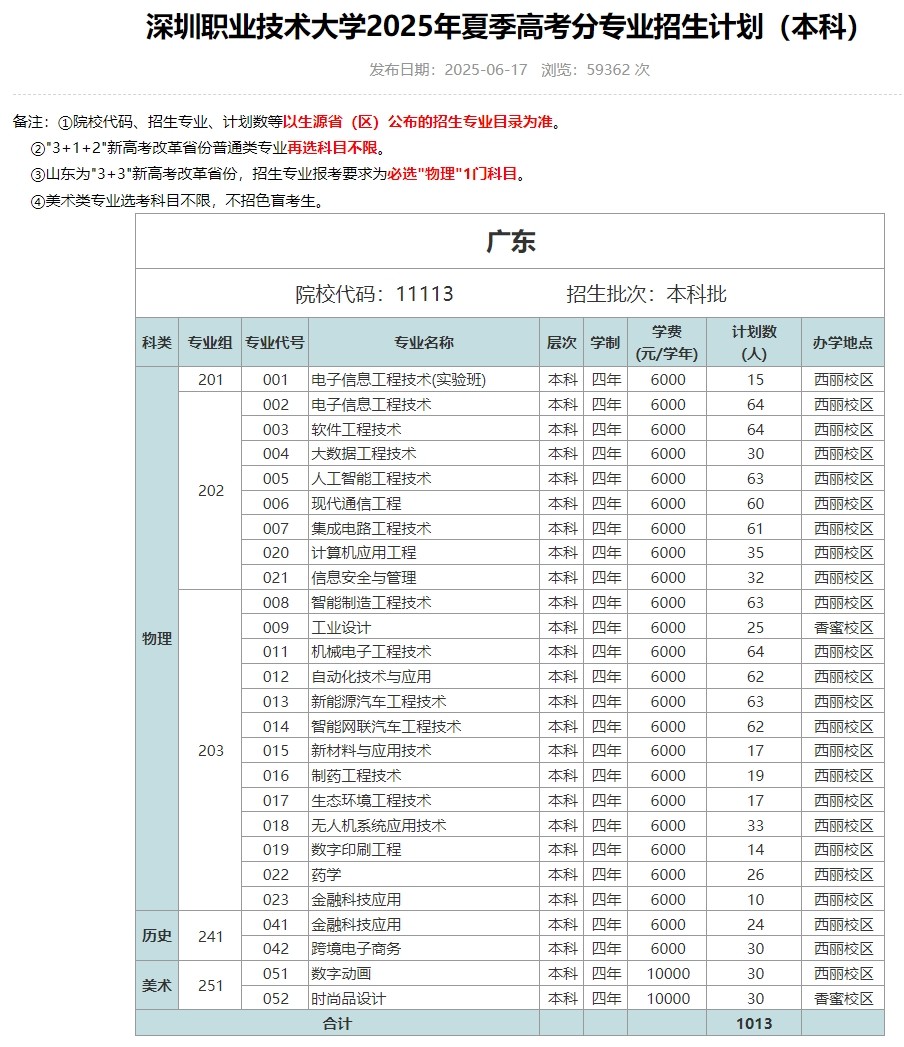
Core Viewpoint - The recent college admission scores in China indicate a shift in the higher education landscape, with new universities like Southern University of Science and Technology and Shenzhen Polytechnic surpassing traditional "Double First Class" universities in admission scores, particularly in physics and technology-related fields [1][2]. Group 1: Admission Scores and Trends - The highest admission score for physics in Guangdong Province reached 617, exceeding the special control line by 83 points, while the lowest score was 566 [1]. - Shenzhen Information Polytechnic University, newly upgraded to a vocational university, has set a total enrollment plan of 300 students across five undergraduate programs, each with a planned enrollment of 60 students [2][3]. - Comparatively, traditional "Double First Class" universities like South China Agricultural University still maintain higher admission scores in certain fields, indicating a competitive landscape [4]. Group 2: Employment and Industry Trends - The emphasis on employment outcomes has become a primary concern for students when selecting majors, with fields like computer science and engineering seeing increased interest due to their perceived job security [6][27]. - The total number of college graduates in 2025 is projected to reach 12.22 million, intensifying competition in the job market [27]. - There is a significant mismatch between the skills taught in universities and the demands of the job market, leading to challenges for graduates in securing suitable employment [37][38]. Group 3: Historical Context and Future Outlook - Historical trends show that popular majors often fluctuate based on economic conditions and industry demands, with a notable shift in the popularity of fields like construction and finance over the years [20][23]. - The current educational landscape reflects a need for universities to adapt their curricula to align more closely with industry needs, particularly in fast-evolving fields like artificial intelligence and renewable energy [10][23][50]. - The ongoing changes in the job market and educational requirements suggest that students must navigate a complex landscape of opportunities and challenges as they prepare for their futures [54][55].
美国消费行业6月跟踪报告:不确定性仍在,整体继续谨慎
Haitong Securities International· 2025-07-29 13:03
Investment Rating - The report maintains a cautious investment stance on the consumer sector, particularly highlighting concerns over inflation and the impact of tariffs on low-priced consumer goods and durable imports [4]. Core Insights - The consumer confidence index in the U.S. rebounded to 61.8 in July, indicating a slight recovery in consumer sentiment, although it remains significantly lower than historical averages [6][9]. - Retail sales data for June showed a year-on-year increase of 3.9%, reaching $720.11 billion, driven by pre-tariff purchasing behavior [6][9]. - Inflationary pressures are evident, with the June CPI rising to 2.7%, primarily due to increased energy prices and the initial effects of tariffs on imported goods [9][12]. - Employment data showed a strong increase in non-farm payrolls, with 147,000 jobs added in June, although the growth was largely driven by government sectors, while the private sector showed signs of weakness [14][16]. Summary by Sections Macro Overview - Consumer confidence index increased to 61.8 in July, reflecting a two-month rebound [6]. - Retail sales for June reached $720.11 billion, up 3.9% year-on-year, exceeding expectations [6][9]. - Inflation rose to 2.7% in June, with energy prices being a significant contributor [9]. - Non-farm payrolls added 147,000 jobs in June, with a decline in the unemployment rate to 4.1% [14]. Essential Consumption - Beverage sales showed robust growth, with a 5.2% year-on-year increase in May, while tobacco sales slowed down [2][28]. - Alcohol sales in May were $6.31 billion, reflecting a modest growth of 0.8% year-on-year, but overall sales volume continues to decline [2][24]. - Dairy product shipments totaled $13.49 billion in May, with a year-on-year increase of 1.1% [28]. Optional Consumption - Restaurant sales in June reached $98.74 billion, up 6.6% year-on-year, indicating strong consumer spending in this segment [3][32]. - Department store sales were $77.25 billion in June, reflecting a year-on-year increase of 3.2% [3][34]. - Clothing retail sales in June were $26.34 billion, with a year-on-year increase of 3.9% [3][36]. Market Performance - The optional consumption sector outperformed, with a 5.6% increase, while essential consumption saw a decline of 1.5% [4]. - The consumer sector remains under pressure from high valuations and inflationary concerns, particularly affecting low-priced consumer goods [4]. Employment and Credit - The labor market showed mixed signals, with strong overall job growth but significant weakness in the private sector [14][16]. - Consumer credit saw a sharp decline in May, with a 70% drop in growth compared to April, indicating a potential slowdown in consumer spending [20]. PMI and Economic Indicators - The manufacturing PMI for June was 49.0, indicating continued contraction, while the services PMI returned to expansion at 50.8 [22][23].
央行二季度问卷调查出炉:三季度经济预期升温,三成居民将增加旅游支出
Zheng Quan Shi Bao· 2025-07-29 10:23
Group 1: Economic Sentiment - Over half of entrepreneurs and bankers view the current macroeconomic performance as stable and normal, holding a neutral to cautious attitude towards the overall economy [1] - The entrepreneur's business climate index and profit index both increased compared to the previous quarter, indicating a slight improvement in sentiment [3] - The banker macroeconomic heat index decreased to 33.2%, with 61.9% of bankers considering the macroeconomic performance normal [4] Group 2: Price and Production Trends - The Producer Price Index (PPI) continues to show a year-on-year decline, with a significant percentage of entrepreneurs reporting stable product sales and raw material prices compared to the previous quarter [3] - The overall demand for loans has decreased, reflecting a cautious outlook in the banking sector [5] Group 3: Consumer Behavior - In a survey of urban residents, nearly 70% reported that their income remained unchanged in the second quarter, with a cautious outlook on employment [6] - The majority of residents expect prices and housing prices to remain stable in the next quarter, indicating a lack of inflationary pressure [6] - The top spending priority for residents in the next three months is tourism, surpassing education, with 32.1% planning to increase spending in this area [9]

695万人,新增就业快于时序进度
Jing Ji Ri Bao· 2025-07-22 22:05
Group 1 - The core viewpoint of the articles highlights the positive trends in employment and job creation in China, with 6.95 million new urban jobs added in the first half of the year, achieving 58% of the annual target [1] - The urban survey unemployment rate has steadily declined, reaching 5% in June, with an average of 5.2% from January to June, which is below the regulatory target [1] - Employment support policies have accelerated, with enhanced support for key groups, improved vocational training effectiveness, and increased public employment services [1] Group 2 - The government has intensified efforts to stabilize employment, focusing on supporting enterprises, developing job opportunities, optimizing services, enhancing training, and reinforcing safety nets [2] - Financial support for small and micro enterprises has been increased, with the maximum credit limit raised to 500 million yuan, and unemployment insurance rate reductions saving companies over 90 billion yuan [2] - The demand for talent in traditional service industries has increased by over 10% compared to the first quarter, while high-end manufacturing sectors like humanoid robotics have seen a staggering 398.1% year-on-year increase in job postings [3] Group 3 - Local human resources departments are actively conducting employment service campaigns to assist unemployed graduates and youth [4] - Job fairs are being organized to provide practical experience and job guidance for graduates, addressing the mismatch between graduates' skills and market demand [4] - Nationwide recruitment activities have provided over 4.58 million job opportunities, with 8,900 recruitment events held [4] Group 4 - The Ministry of Human Resources has established a real-name ledger for unemployed graduates, offering multiple support services including policy guidance and job recommendations [5] - Shanghai's "Youth Internship Program" has successfully placed 18,000 young individuals in internships, with over 60% securing employment afterward [6] - The government is promoting large-scale vocational skills training to enhance labor skills and meet the demands of an evolving economy [7] Group 5 - The focus of vocational training will be on advanced manufacturing, digital economy, and other key sectors, with a commitment to high-quality training until the end of 2027 [7] - Companies are encouraged to adapt their talent structures to align with industry demands, while job seekers are advised to enhance their skills to leverage emerging industry opportunities [7]
美联储降息救市!7月18日,今日凌晨的四大消息已全面发酵
Sou Hu Cai Jing· 2025-07-19 04:08
Group 1 - The Federal Reserve is experiencing internal divisions, with 19 decision-makers split into three camps regarding interest rate policies, indicating a significant "hawk-dove" debate [1][5] - Dallas Fed President Logan's strong stance suggests that the current interest rate level of 4.25% may persist for 6 to 12 months, providing theoretical support for high interest rate policies despite a slight decline in inflation data [1][5] - Political pressure is mounting as President Trump criticizes Fed Chair Powell and calls for immediate interest rate cuts, which could influence the Fed's decision-making process [1][3] Group 2 - The global trade landscape is volatile, with the Trump administration imposing high tariffs on several countries, while simultaneously lifting tariffs on China, leading to unpredictable market reactions [3][5] - Employment data shows a mixed picture, with non-farm payrolls increasing by 147,000 in June, but private sector job growth nearly stagnant when excluding certain sectors [5][7] - Market indicators are fluctuating, with the probability of a rate cut in September dropping from 75% to 54.4%, reflecting uncertainty in economic conditions [5][7] Group 3 - Gold prices are hovering around $3,330, while the dollar index has fallen below 97, marking a new low since February 2022, indicating shifts in investor sentiment [7] - The stock market is reacting unevenly, with the Nasdaq reaching a historical high while the Dow Jones experienced a significant drop of 436 points, showcasing the divergent performance of technology stocks [7] - Economists at the New York Fed are analyzing the complexities of the Fed's June meeting minutes to navigate the challenges of inflation, employment, and economic resilience [7][5]