
科技自立自强

Search documents
基础研究进入“从0到1”突破期
Huan Qiu Wang Zi Xun· 2026-01-22 01:12
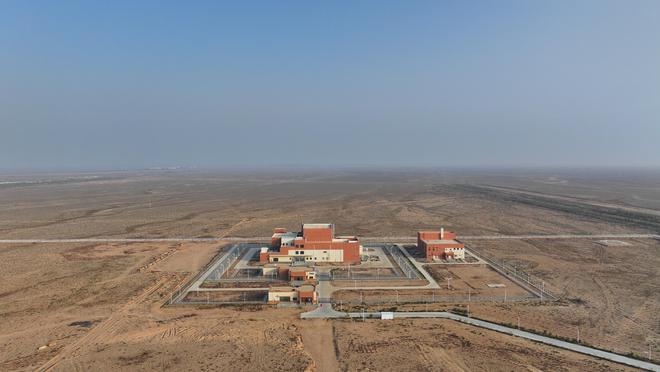
Core Insights - In 2025, China's foundational research is entering a breakthrough phase characterized by significant original achievements and increased funding, with basic research funding reaching a historical high of 7.08% of total R&D expenditure [1][12]. Group 1: Breakthroughs in Fundamental Research - China has made notable advancements in various fields, including the first successful large-scale preparation of two-dimensional metallic materials and the development of the "Zu Chongzhi III" quantum computing prototype, which set a world record [1]. - The country has achieved a world-first in thorium-uranium nuclear fuel conversion, reinforcing its leadership in molten salt reactor research and providing core technological support for future thorium resource development [3]. - In quantum technology, China maintains a leading position globally, with significant breakthroughs in computational power and secure communication networks [3]. Group 2: Major Scientific Facilities - China has over 70 major scientific facilities, which are crucial for supporting foundational research and have led to significant discoveries, such as improved measurements of neutrino oscillation parameters and insights into cosmic rays [8][9]. - The "FAST" telescope has made a significant discovery regarding a rare pulsar, showcasing the importance of major scientific infrastructure in advancing research [6]. Group 3: Systematic Enhancements in Research Framework - The Chinese government has prioritized foundational research in its strategic planning, aiming to enhance original innovation capabilities and increase funding for basic research [11]. - The revised National Natural Science Foundation regulations, effective from January 1, 2025, aim to diversify funding mechanisms and encourage original research, particularly among young scientists [11][12]. - Continuous improvements in the research system, stable funding, and a growing pool of young talent are driving the surge in original innovations [12].

着重监督纠正涉企执法司法突出问题
Xin Lang Cai Jing· 2026-01-21 23:41
会议强调,要把服务高水平科技自立自强作为重点,护航因地制宜发展新质生产力。着力加强原始创新 和关键核心技术知识产权司法保护,加强对涉人工智能、具身智能、数据知识产权等前沿司法问题的研 究指导,依法保护科技创新主体合法权益。 会议要求,聚焦做强国内大循环,依法服务建设强大国内市场、加快构建高水平社会主义市场经济体 制。坚持和落实"两个毫不动摇",落实民营经济促进法,依法平等保护各类经营主体。协同健全规范涉 企执法长效机制,强化产权执法司法保护。强化反垄断和反不正当竞争司法,依法服务全国统一大市场 建设。 本报讯(全媒体记者闫晶晶)1月19日召开的全国检察长会议强调,要深化违规异地执法和趋利性执法 司法专项监督,完善监督措施,着重监督纠正涉企执法司法突出问题、普遍性问题,推动标本兼治。 ...
种子创新和创新“种子”
Ren Min Ri Bao· 2026-01-21 11:37
2021年启动的种业振兴行动交出一份优秀"期中答卷"。农业农村部最新数据显示,2025年我国种子出口 量6.2万吨,实现贸易额顺差750万美元,在2024年出口额首次超过进口额的基础上,连续两年实现农作 物种子贸易顺差。 连续两年的贸易顺差,意味着我国种业对外合作扩面提速,更多来自中国的好种子深受全球市场认可, 丰富了世界餐桌;更意味着我国种源竞争力持续增强,"中国粮"主要用"中国种"的态势更加牢固。 打好种业翻身仗,源自人才优势。国产蛋鸡品种"京粉6号"率先实现"700天产500枚蛋",背后离不开吴 桂琴团队二十多年的接续攻关。自主培育的华西牛,打破肉牛核心种源严重依赖进口的局面,背后是来 自全国优势育种队伍的一棒棒接力。在长江中下游麦区,农民几乎年年和小麦赤霉病较劲,江苏里下河 地区农业科学研究所等科研人员,把抗病基因"装进"种子。强大的科研人才队伍,推动我国种业科技创 新水平整体进入世界第一方阵。从种业看全局,超2亿技能劳动者、超6000万高技能人才,为推动高水 平科技自立自强、建设现代化产业体系提供了坚实人才支撑,让人才优势源源不断转化为发展优势。 打好种业翻身仗,源自场景优势。种业振兴,厚植丰富的应 ...
财政金融促内需六项新政,谁获益?
Sou Hu Cai Jing· 2026-01-21 07:14
Core Viewpoint - The Chinese government is implementing a series of fiscal and financial policies aimed at boosting domestic demand, with a focus on increasing fiscal spending, supporting consumption, and enhancing residents' income through various channels [2][3][10]. Fiscal Policy Overview - In 2026, the fiscal deficit, total debt, and overall spending will be maintained at necessary levels, ensuring that overall spending increases and key areas are strongly supported [2][3]. - The deficit rate for 2025 is set at around 4%, with new government debt issuance expected to reach 11.86 trillion yuan, significantly higher than previous years [2]. Key Policies - The fiscal and financial package includes six policies, four of which focus on stimulating private investment, while the other two aim to promote consumption [5][10]. - Specific measures include loan interest subsidies for small and micro enterprises, personal consumption loans, equipment upgrade loans, and guarantees for private investment [5][7][8]. Support for Private Investment - A new special guarantee plan for private investment has been introduced, increasing the credit guarantee limit and risk-sharing ratio to encourage banks to lend more [6][10]. - The maximum guarantee amount for individual enterprises has been raised to 20 million yuan, with the government covering up to 40% of the risk [6]. Consumption Support Measures - Personal consumption loans will now benefit from a 1% interest subsidy, with the maximum subsidy amount per transaction increased from 500 yuan to 3,000 yuan [9]. - The scope of eligible consumption areas has expanded to include digital, green, and retail sectors, alongside existing categories [9]. Focus on Technology and Innovation - The government will prioritize support for technological self-reliance and innovation, with a 10% increase in central government spending on technology in 2025 [11]. - Policies will include tax incentives and financial support for technology innovation and integration with industry [11]. Regulatory Adjustments - Starting April 1, 2026, export tax rebates for certain products will be canceled to promote efficient resource use and reduce environmental impact [12]. - The government is committed to standardizing fiscal subsidies and addressing any irregularities in local subsidy practices [12][13]. Tax and Fiscal Reforms - Ongoing reforms will clarify fiscal responsibilities between central and local governments, particularly in public services [13]. - The tax system will be reformed to adapt to new economic realities, including the digital economy [13].

解码神东:以成果落地激活企业新动能——神东煤炭2025智能发展高质量之路
Zhong Guo Fa Zhan Wang· 2026-01-21 07:06
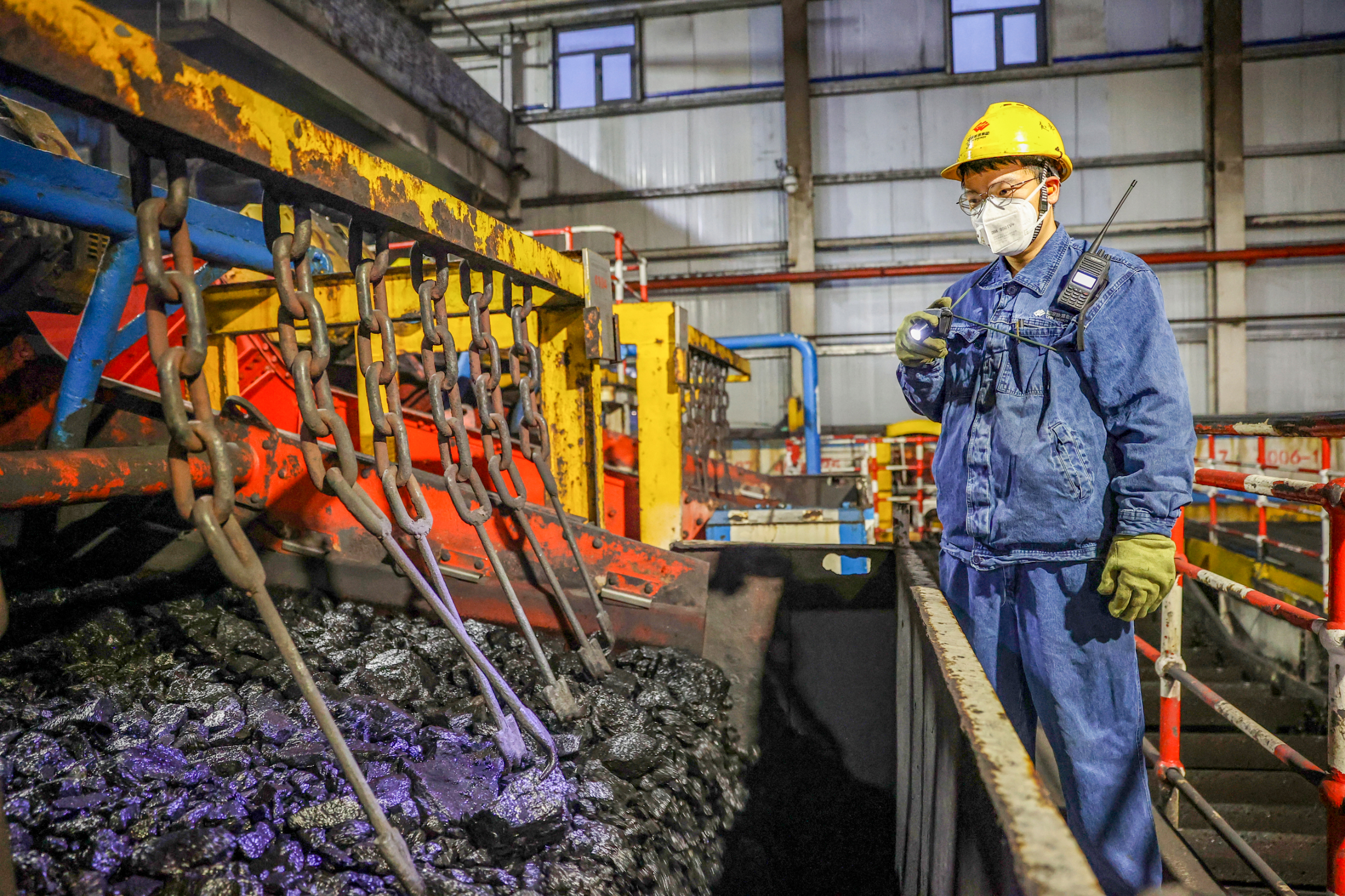
中国发展网讯 肖勇 刘惠 董博文 记者李建飞报道 在"双碳"目标引领与能源结构深度调整的时代浪潮中,煤炭作为我国主体能源,其发展方式正经历一场深 刻变革。2025年,国家能源集团神东煤炭以习近平总书记关于科技创新的重要论述为遵循,在"安全、绿色、高效、智能"开采的道路上不断探索、自主创 新,推动科技成果转化应用,全力打造煤矿原创技术策源地和新质生产力实践地,走出了一条引领行业变革的高质量发展之路。 智能采煤 让矿工从"井下鏖战"到"云端值守" "22上305工作面瓦斯浓度为0.08%,液压支架压力正常,采煤机按计划推进。"在神东大柳塔煤矿调度指挥中心地面智能"太空舱"远程控制室,综采六队煤机 司机牛鹏飞和班长刘侃盯着高清大屏,远程启动采煤机并调整割煤参数。此时,井下200多米深处,采煤机高速运转切割煤壁,实时影像同步传回地面,这 正是公司推进智能化转型的生动写照。 "太空舱"搭载综采集控、数据分析及三维数字孪生平台,可实现"自主割煤+无人跟机+远程控制。""以前一个工作面需10多名矿工轮班,现在1至2人就能远 程操控,既解放了劳动力,又大幅提升了效率。"牛鹏飞对比新旧作业模式,满是感慨。 曾经,矿工需在井下昏 ...
ETF盘中资讯|半导体大涨原因或已找到!硬科技宽基——双创龙头ETF(588330)盘中拉升3%,龙芯中科20CM涨停
Sou Hu Cai Jing· 2026-01-21 06:39
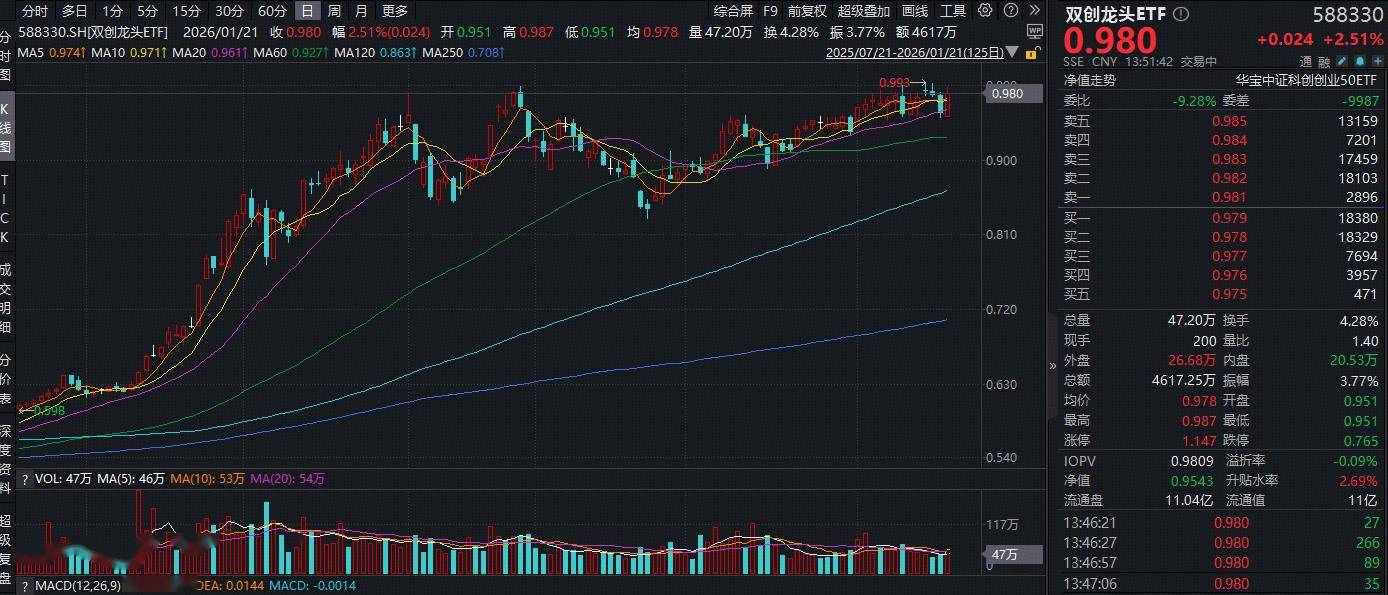
今日(1月21日)科创板大涨,创业板亦有亮眼表现,覆盖科创板+创业板高成长龙头的硬科技宽基——双创龙头ETF(588330)场内价格盘中涨超3.1%, 现涨2.51%。 | 序号 | 名称 | 涨跌幅 | 两日图 | 申万一级行业 | 由万 级行业 | 由万三级行业 | 总市值 | 成交额 | | --- | --- | --- | --- | --- | --- | --- | --- | --- | | | 成本中科 | 20.00% | | | 未言体 | 数字芯片设计 | 713亿 | 21.53亿 | | 2 | 漏起科技 | 13.96% | | | 半导体 | 数字芯片设计 | 1868亿 | 118.41亿 | | 3 | 海光信息 | 13.63% | | | 未言体 | 数字芯片设计 | 6714亿 | 153.75亿 | | 4 | 三环集团 | 6.32% | | | 元件 | 被动力性 | 1022亿 | 11.95亿 | | 5 | 芯原股份 | 5.71% | | | 半导体 | 数字芯片设计 | 1035亿 | 41.21亿 | | 6 | 去邦股份 | 5.64% | | | ...



资金大幅流入人工智能ETF易方达(159819),2025年我国人工智能核心产业规模预计突破1.2万亿元
Mei Ri Jing Ji Xin Wen· 2026-01-21 03:40
Group 1 - The A-share market saw a collective rise in the three major indices, with the semiconductor and artificial intelligence sectors leading the gains, as the China Securities Artificial Intelligence Theme Index and the China Securities Sci-Tech Innovation and Entrepreneurship Artificial Intelligence Index both increased by 2.8% [1] - The E Fund Artificial Intelligence ETF (159819) has experienced a net inflow of over 2.5 billion yuan over the past seven trading days, bringing its total scale to 25.3 billion yuan, making it the largest in its category [1] - The Ministry of Industry and Information Technology stated that by 2025, the number of artificial intelligence companies in China is expected to exceed 6,000, with the core industry scale projected to surpass 1.2 trillion yuan [1] Group 2 - The outlook for the artificial intelligence sector is positive, driven by policy support, technological advancements, and demand release, forming a "multi-dimensional resonance" [1] - The "14th Five-Year Plan" emphasizes "technological self-reliance," providing strong support for AI and related fields [1] - The China Securities Artificial Intelligence Theme Index covers leading companies across various segments of the AI industry chain, while the China Securities Sci-Tech Innovation and Entrepreneurship Artificial Intelligence Index focuses on AI-related companies in the Sci-Tech Innovation Board and the Growth Enterprise Market [1][2]
平安证券(香港)港股晨报-20260121
Ping An Securities Hongkong· 2026-01-21 02:19
Market Overview - The Hong Kong stock market experienced a downward trend, with the Hang Seng Index closing at 23,831 points, down 145 points or 0.61% [1][5] - The market turnover decreased to 82.799 billion, with net inflows of 484 million from the Stock Connect [1][5] - The technology sector led the decline, with notable drops in stocks like SMIC and Sunny Optical, while real estate stocks showed resilience [1][5] US Market Performance - The US stock market saw significant declines, with the Dow Jones falling 1.8% and the S&P 500 down 2.1%, marking the worst single-day performance since October of the previous year [2] - The technology sector was particularly affected, with Nvidia and Tesla experiencing drops of 4.4% and 4.2% respectively [2] Market Outlook - The report highlights that both Hong Kong and A-shares achieved a positive start in 2026, with net inflows of 45.1 billion HKD from southbound funds [3] - Key investment themes include "technological self-reliance" and AI applications, with leading companies in these sectors expected to benefit in the medium to long term [3] - Recommendations for investment focus on sectors supported by policies for "expanding domestic demand," including sports apparel and non-essential services [3] Company Spotlight: Li Ning - Li Ning, a leading sports brand in China, reported a revenue of 14.817 billion for the first half of 2025, reflecting a year-on-year growth of 3.3% [10] - The company's gross margin was 50%, a slight decrease of 0.4 percentage points, attributed to increased promotional competition [10] - Li Ning's net profit was 1.737 billion, down 11% year-on-year, with a net profit margin of 11.7% [10] - The company is expected to enhance its brand presence in professional sports through a partnership with the Chinese Olympic Committee [10]
系列财税“组合拳”持续支持科技自立自强
Ke Ji Ri Bao· 2026-01-21 00:04
Group 1 - The core viewpoint of the article emphasizes the effectiveness of the 2025 fiscal policy in supporting current economic growth while promoting long-term structural transformation for sustainable development [1] - The Ministry of Finance plans to utilize various policy tools, including funding support, tax incentives, and government procurement, to foster technological innovation and industrial integration [1][2] - Central government technology spending increased by 10%, significantly outpacing the growth of the general public budget, with total R&D investment expected to reach 3.63 trillion yuan in 2024, maintaining the world's second position [1][2] Group 2 - The Ministry of Finance is implementing tax incentives to reduce the tax burden on enterprises engaged in technological innovation, facilitating access to financing for small and medium-sized enterprises [2][3] - A collaborative innovation model in government procurement is being promoted, along with insurance compensation policies for first-time products, to enhance the commercialization of innovative results [2] - The Ministry of Finance will continue to adopt a more proactive fiscal policy in 2026, focusing on increasing total expenditure while ensuring the quality and effectiveness of spending [2]
刘少山:国际科技体系正出现三大变化
Huan Qiu Wang Zi Xun· 2026-01-20 23:14
Core Viewpoint - The article emphasizes the importance of technological development in the context of China's "14th Five-Year Plan," highlighting the goal of significantly improving the level of technological self-reliance and innovation as a core national strategy [1] Group 1: Changes in the International Technology System - The current international technology system, which has been dominated by a single country for a long time, is facing significant challenges due to profound changes in global technological power dynamics and international development trends [2] - The public nature of technology rules is weakening, with an increasing trend towards tool-based approaches, as some countries impose export controls and compliance reviews, raising the costs of international technological collaboration [3] - The focus of international technological discourse is shifting from technical capabilities to rule-making and platform dominance, with a few Western countries controlling key academic evaluation systems and standards, limiting the influence of emerging technological powers [3] Group 2: Needs of Developing Countries - There is a rising demand from global South countries for fair and sustainable technological cooperation, as many developing nations face high entry barriers and unstable cooperation mechanisms in the context of rapid digitalization and intelligence [4] - If the international technology system continues to operate with high barriers and a closed nature, it will not only fail to meet the development needs of these countries but also hinder the long-term healthy development of the technology system [4] Group 3: China's Role in the International Technology System - In this context, China's stronger leadership in the international technology system is both necessary and reasonable, aiming to provide more open, compatible, and sustainable rules and platforms for international technological cooperation [4] - China has made significant advancements in several key areas, achieving global influence in certain technologies, indicating that it is no longer just a follower but a competitor in core fields [4] - The core challenge lies not only in technical capabilities but also in effectively translating these advantages into rule-making influence, necessitating active participation in standard-setting and governance [5][6]