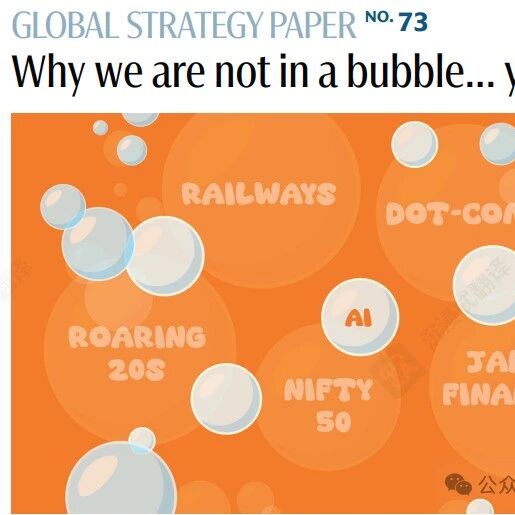
人工智能泡沫

Search documents
“看,皇帝没穿衣服”!对冲基金经理:万亿美元的AI投入,赚得回来吗?
华尔街见闻· 2025-10-16 13:36
Core Viewpoint - The podcast discusses the significant investment gap in AI data center construction, estimating that achieving a 10% capital return requires $1-2 trillion in revenue, while good returns may necessitate $3-4 trillion in revenue, highlighting the unsustainable nature of current AI business models [1][10][19]. Investment and Revenue Projections - AI data center construction is projected to require investments in the range of trillions, with $400 billion expected to be spent this year alone [7][10]. - To break even, approximately $500 billion in revenue is needed, indicating a need for a 30-fold increase in revenue to achieve profitability [10][19]. - The current AI industry revenue is estimated at $15-20 billion, which is insufficient to support the projected costs of data center construction [10][19]. AI Business Model Flaws - The AI business models, such as those of ChatGPT and similar platforms, are criticized for their high substitutability and lack of customer loyalty, leading to price wars that could reduce profit margins to just above energy costs [1][10][15]. - The rapid advancement of large language models (LLMs) means that free versions will remain sufficiently effective, discouraging users from paying for premium services [1][14]. Comparison to Historical Bubbles - The current AI investment landscape is likened to the telecom bubble of 2000, where companies created fictitious revenues through financing schemes, suggesting a potential repeat of history with significant losses for investors [2][24]. - The cyclical nature of investments in AI is highlighted, with the potential for repeated failures as companies continuously pour money into projects without clear paths to profitability [19][24]. Market Dynamics and Competition - The competitive landscape is characterized by a race to the bottom in pricing, where companies undercut each other to attract users, ultimately leading to unsustainable business practices [15][17]. - The discussion includes concerns about the long-term viability of major players like Microsoft and Meta, who may face significant write-offs as they invest heavily in AI infrastructure [19][24]. Infrastructure and Investment Strategies - There is a trend of purchasing land for data center construction, reminiscent of the housing market speculation prior to the 2008 financial crisis, indicating a speculative bubble in AI infrastructure [2][41]. - The reliance on private equity and venture capital to fund these investments raises questions about the sustainability and valuation of AI-related assets [2][19].



「全都是泡沫」?硅谷AI泡沫论正急剧升温
3 6 Ke· 2025-10-16 10:14
Core Viewpoint - The debate over whether AI company valuations are severely overestimated is intensifying in Silicon Valley, with concerns that the current AI boom may lead to a financial bubble similar to the 2000 internet bubble, potentially causing significant economic disruption if confidence falters [1][2][3]. Market Trends - AI-related companies have contributed to 80% of the remarkable gains in the U.S. stock market this year, pushing the Nasdaq 100 index up by 18% and raising its forward P/E ratio to nearly 28 times, above the 23 times average of the past decade [4][5]. - Global AI spending is projected to reach an astonishing $1.5 trillion by the end of 2025, according to Gartner [6]. Valuation Concerns - There are growing doubts about whether valuations have exceeded the earnings expectations of these companies, especially as many are investing billions in AI without seeing substantial returns. A study from MIT found that up to 95% of generative AI pilot projects fail to drive rapid revenue growth [7]. - Harvard economist Jason Furman noted that by mid-2025, U.S. GDP growth will be almost entirely driven by data centers and information processing technologies, with other sectors stagnating [9]. Industry Insights - Prominent figures, including Sam Altman and Jeff Bezos, have expressed concerns about excessive investor enthusiasm for AI, with Bezos suggesting that a bubble could ultimately benefit the industry by eliminating weaker players [3][16]. - OpenAI's recent valuation has soared to $500 billion, surpassing SpaceX, and it has secured over $1 trillion in infrastructure and chip agreements with major companies like Nvidia and AMD [14]. Investment Strategies - Family offices are increasingly investing in AI, with 86% of them engaging in some form of AI investment. Most expect to overweight technology sectors in the next 12 months [20]. - However, family offices face systemic challenges in the AI investment landscape, including limited access to top AI startups and the need for strategic adjustments to enhance competitiveness [22].

硅谷AI泡沫论正急剧升温
Hu Xiu· 2025-10-16 09:03
在AI资本狂欢之下,被誉为"全球科技之都"的硅谷,围绕"AI企业估值是否严重高估"的争论正迅速升 温。海外媒体分析称,当前人工智能热潮正推动股市逼近2000年互联网泡沫高峰的水平。如此集中押注 少数几家公司,一旦信心动摇,股价暴跌或将引发更大范围的经济震荡。 越来越多投资者担心,一场迫在眉睫的AI泡沫,可能成为下一个全球金融风险引爆点。 一、"全都是泡沫" 近月来,从OpenAI首席执行官萨姆·奥尔特曼(Sam Altman)到亚马逊创始人杰夫·贝索斯(Jeff Bezos) 等多位知名人物都表示,投资者对人工智能的热情已经过度。此外,英格兰银行、国际货币基金组织等 亦警示:我们或已处于可能导致数万亿美元市值蒸发的崩盘进程之中。 市场数据进一步加剧了这种焦虑: 这导致一些市场参与者质疑估值是否已经超过了这些公司的盈利预期,尤其是在企业投入数十亿美元发 展这项技术、却尚未看到实质性回报的情况下。 今年早些时候,麻省理工学院的一项研究发现,高达95%的公司生成式人工智能试点项目都失败了,未 能推动收入的快速增长。对许多企业而言,AI仍是"成本中心"而非"利润引擎"。 当前,美国科技巨头正在不断筹集资金来扩张数据中 ...

如果我们正处于AI泡沫之中,为何毫无泡沫之感?
阿尔法工场研究院· 2025-10-16 00:07
Core Viewpoint - The article discusses the potential existence of an artificial intelligence (AI) bubble, with OpenAI being a significant player in this phenomenon, both as a driver and a beneficiary of the bubble [2][3]. Group 1: Historical Context of Bubbles - The author reflects on past bubbles, including the internet bubble of the late 1990s, the real estate bubble, and the cryptocurrency bubble during the pandemic, highlighting the common characteristics of these bubbles [4][5]. - Each bubble was marked by widespread public enthusiasm and investment, with people discussing their experiences and investments in these sectors, creating a palpable sense of excitement [5][6]. Group 2: Current AI Landscape - Currently, AI has become a central topic of conversation, but the sense of a bubble is not as pervasive as in previous instances, as it seems confined to specific industries or circles [6][9]. - Unlike past bubbles where a significant portion of the population was directly involved in investments, the AI sector appears to be dominated by a few large tech companies, limiting broader public engagement [9][10]. - Major tech firms like Nvidia and Microsoft have driven recent market gains, with a small number of stocks holding substantial weight in the S&P index, indicating that most Americans are indirectly exposed to AI assets through retirement accounts [10]. Group 3: Perception of the AI Bubble - While there are signs of an AI bubble, characterized by massive spending and unrealistic expectations, this bubble feeling seems to be more prevalent in corporate boardrooms than in the daily lives of ordinary people [10][11]. - The article raises the question of whether the general public would feel the impact if the AI bubble were to burst, suggesting a disconnect between corporate investment and everyday experiences [11].


“看,皇帝没穿衣服”!对冲基金经理:万亿美元的AI投入,赚得回来吗?
美股IPO· 2025-10-15 12:32
Core Viewpoint - The investment return gap in AI data center construction is significant, requiring trillions of dollars in investment over the next 3-5 years, with a comparison to the U.S. Department of Defense's annual budget of $1 trillion [1][2][4] Investment Requirements - To achieve a 10% capital return, AI data centers need $1-2 trillion in revenue, while good returns may require $3-4 trillion [2][4][9] - The current AI industry revenue is estimated at $15-20 billion, indicating a need for 30-fold growth to break even [10][11] AI Business Model Flaws - AI models like ChatGPT and Claude are highly substitutable, leading to low user loyalty and intense price competition, potentially reducing profits to just above energy costs [2][4][17] - The rapid advancement of large language models (LLMs) means free versions will remain sufficient for users, limiting the willingness to pay for premium services [14][15] Circular Investment Concerns - The concept of "circular investment" is likened to the telecom bubble of 2000, where companies like Lucent and Nortel created false revenues through financing and leasing [2][4][23] - Major companies like Meta and Microsoft are accused of using equity and leasing data centers to create "safe" assets, misleading investors about the true nature of their revenues [2][4][19] Infrastructure and Market Dynamics - The construction of AI data centers is compared to building railroads, with investors facing repeated failures throughout capital cycles [18][19] - The current trend of purchasing land for data centers mirrors the housing market speculation of 2006-2007, indicating a potential bubble [6][40] Future Outlook - The expectation of massive investments in AI infrastructure raises questions about the source of funding and the sustainability of such growth [10][14] - The potential for significant losses in the AI sector is highlighted, with predictions that the financial fallout could reach trillions of dollars [23][24]

AI行情到了第几层?
3 6 Ke· 2025-10-15 09:18
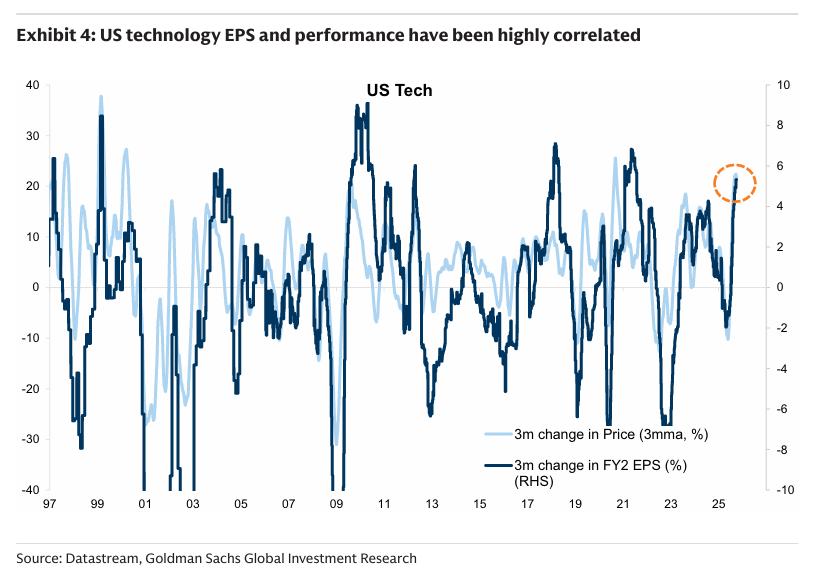
Group 1 - The market is experiencing a repetitive pattern of new highs, with investors focusing on themes such as the reshaping of the global monetary order and advancements in AI technology [1] - OpenAI has made significant investments, including a $100 billion deal with Oracle for cloud services and a partnership with AMD to deploy $100 billion worth of GPUs [1][2] - There is a growing debate about the sustainability of AI investments, with some optimistic about the commitment of tech giants, while others express concerns about potential market instability [2] Group 2 - Goldman Sachs published a report stating that AI has not yet formed a bubble, as key indicators such as rapid asset price increases, high valuations, and systemic risk from leverage have not reached critical levels [3][4] - The report highlights that the current rise in stock prices is more reflective of strong earnings growth rather than speculative behavior, with tech stock price changes closely aligned with EPS growth [3][4] - Current valuations of major tech companies are high compared to historical levels but are still below the peaks seen during the internet bubble, suggesting that as long as earnings continue to grow, a bubble is unlikely [4][8] Group 3 - Concerns have been raised about the sustainability of capital expenditures in the AI sector, with estimates suggesting that the industry may need $320 billion to $480 billion in revenue to balance current spending [12] - The rapid depreciation of data center assets and the need for significant revenue growth to justify capital investments could lead to a substantial funding gap in the future [12][13] - The AI sector is compared to historical infrastructure projects, where government support may not align with the economic returns expected from investments, raising concerns about potential financial instability [14] Group 4 - The emergence of "computing deflation" has not materialized as expected, leading to increased capital expenditures by tech companies in AI, indicating a competitive arms race for computing power [15][18] - The total market value of the largest five U.S. tech companies now exceeds that of major global indices, highlighting their significant influence on the stock market [15] - The AI industry's capital expenditures reflect a financing characteristic similar to that seen in other markets, raising questions about the potential for a bubble [18]

全球股市集体反弹,黄金突破4200
华尔街见闻· 2025-10-15 08:24
Group 1 - The Federal Reserve's dovish stance is leading to a new round of dollar weakness, paving the way for gold-centered hedging strategies [2] - Despite concerns over an AI bubble, there is a recommendation to buy stocks and increase gold holdings as a safeguard against potential market realities [2] - Asian and European stock markets are experiencing upward trends, with the European Stoxx 50 index rising by 1.27% and the German DAX index increasing by 0.2% [3] Group 2 - The French CAC40 index saw a daily increase of 2%, with the Prime Minister aiming to keep the fiscal deficit below 5% by 2026 [4] - The luxury goods sector in Europe is performing well, with LVMH shares surging by 13% due to unexpected revenue growth in Q3 [5] - The Shanghai Composite Index rose by 1.22%, returning to the 3900-point mark, while the Hang Seng Index increased by 1.83% [7] Group 3 - In the pre-market, ASML shares rose by 3.5% with Q3 orders reaching €5.4 billion, exceeding expectations, and net sales at €7.52 billion [8] - Spot gold prices surpassed $4200 per ounce, increasing nearly 1.4% due to expectations of two more rate cuts by the Federal Reserve and rising risk aversion following recent trade comments [9] - Spot silver prices increased by over 2%, driven by liquidity issues in the London market, leading to a global chase for silver [11]

IMF和世界银行年会聚焦全球经济风险
Huan Qiu Shi Bao· 2025-10-13 22:49
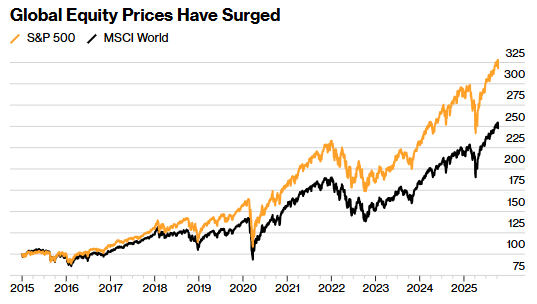
Core Insights - The upcoming meetings of global policymakers and finance ministers will focus on the escalating tensions in world trade, exacerbated by the U.S. government's threats of imposing significant tariffs, alongside political uncertainties in countries like Japan and France, raising concerns about potential shocks to the global economy [1] - The three major risks facing the global economy are identified as tariffs, government debt, and the potential bubble in technology stocks [2] - The International Monetary Fund (IMF) is expected to update its global GDP growth forecast during the annual meetings, with a previous prediction of a 3% growth rate for this year, indicating a slowdown in growth for 2024 [4] Group 1: Trade and Tariffs - The global economy has so far withstood the largest tariff shocks initiated by the U.S. since the 1930s, but experts warn that this resilience is unsustainable and a slowdown is anticipated [2] - The World Trade Organization (WTO) has projected that the growth rate of global merchandise trade will plummet to 0.5% by 2026, significantly lower than the expected 2.4% growth for this year [2] Group 2: Technology Sector - Concerns are rising regarding a potential reversal in the boom of artificial intelligence, with the S&P 500 index having risen 32% since its low in April, despite recent tariff threats impacting the market [3] - The IMF president has cautioned that U.S. stock valuations are nearing levels seen during the internet bubble 25 years ago, suggesting that a significant market correction could tighten financial conditions and hinder global economic growth [3] Group 3: Government Debt - The issue of rising public debt is a focal point of the meetings, with global debt increasing by over $21 trillion in the first half of this year, reaching a record high of nearly $338 trillion [3] - Analysts indicate that struggling governments are cutting back on healthcare and education spending, prompting calls from leading economists for debt relief measures [3]
重演25年前“崩盘预警”?本周,泡沫担忧笼罩IMF与世行秋季年会
智通财经网· 2025-10-13 02:21
Core Viewpoint - Global central bank officials and finance ministers are facing new concerns about the risk of a market crash, particularly related to a potential bubble in AI-related stocks, as they gather for the IMF/World Bank autumn meetings in Washington [1] Group 1: Market Concerns - IMF President Kristalina Georgieva acknowledged risks to financial stability, comparing current valuations to those seen during the internet bubble 25 years ago, warning that a significant correction could hinder global economic growth and exacerbate vulnerabilities, especially for developing countries [1] - The Bank of England and the European Central Bank have also expressed concerns about the risk of a "significant market adjustment," indicating a broader recognition of potential market instability [2][4] - The upcoming IMF Global Financial Stability Report and World Economic Outlook are expected to draw heightened attention due to these concerns [4] Group 2: Economic Data and Indicators - In the U.S., economic data releases are delayed due to a government shutdown, with investors focusing on Federal Reserve Chair Jerome Powell's assessment of the labor market and inflation [5] - In Asia, key data releases include China's export growth and India's consumer price index, which are anticipated to provide insights into how these economies are navigating global uncertainties [6] - In Europe, the focus will be on the upcoming statistics, including Germany's ZEW investor confidence index and the Eurozone's industrial production data, which may influence market sentiment [7]
人工智能有没有泡沫?
傅里叶的猫· 2025-10-12 14:35
Core Viewpoint - The article discusses contrasting analyses regarding the potential AI bubble, with one perspective suggesting a debt bubble in AI surpassing all banks, while another argues that AI has not yet reached bubble status [2][9]. Group 1: AI Debt Bubble Concerns - OpenAI has committed to paying Oracle $60 billion annually for cloud services, despite OpenAI not yet generating that revenue, leading to a significant increase in Oracle's stock price by 25% [3]. - Oracle's debt-to-equity ratio is at 500%, significantly higher than Amazon's 50% and Microsoft's 30%, indicating a shift towards a debt-driven arms race among major companies like Nvidia, OpenAI, and Oracle [4]. - JPMorgan reports that AI-related investment-grade corporate debt has reached $1.2 trillion, accounting for 14% of the investment-grade index, surpassing banks as the largest sector [7]. Group 2: Future Investment Needs - By 2028, global data center spending is projected to reach $2.9 trillion, with hardware accounting for $1.6 trillion and infrastructure for $1.3 trillion, indicating an investment demand exceeding $900 billion [6]. - Bain estimates that annual data center construction requires $500 billion, corresponding to $2 trillion in annual revenue, highlighting a significant funding gap of $800 billion [6]. Group 3: Historical Context of Bubbles - The article outlines historical bubbles characterized by rapid asset price increases, extreme valuations, and increased leverage, citing examples from the Dutch tulip mania to the 2000 tech bubble [12]. - Current market conditions show some similarities to past bubbles, such as rising stock prices and increased IPO activity, but also highlight significant differences [13][15]. Group 4: Current Market Dynamics - Goldman Sachs argues that the current market is not in a bubble phase, noting that tech stock increases are primarily driven by fundamentals rather than irrational speculation [15]. - The leading companies in the AI sector are established giants like Microsoft and Nvidia, rather than a flood of new entrants, which typically characterizes bubble conditions [16]. - Valuations, while stretched, have not reached historical bubble levels, with current median forward P/E ratios for leading companies significantly lower than those seen during the late 1990s [16]. Group 5: Capital Expenditure Trends - Since the emergence of ChatGPT, annual capital expenditures for large enterprises have increased from $68 billion in 2018 to an expected $432 billion by 2026, with a shift towards financing through free cash flow rather than debt [17]. - The overall leverage in the market remains low, reducing the likelihood of a systemic economic shock [17].