制造业回流

Search documents
特朗普失算了,库克宁多付25%关税,也不愿意苹果在美国制造
Sou Hu Cai Jing· 2025-07-14 18:18
特朗普这位"大嘴"总统,又搞出花样来了!他磨刀霍霍地想逼苹果重回美国制造,可库克这位苹果大管家,偏偏宁愿多掏25%的关税, 也要把iPhone的生产线留在国外——这事儿简直让特朗普的算盘全落了空。 说起来,特朗普对"美国制造"的执念可不是一天两天了。早在上一任总统期间,他就使出浑身解数,找上台湾大佬郭台铭,画了个大 饼:富士康来美国建厂吧,补贴30亿美元税收优惠给你!特朗普还吹嘘这会是"世界第八大奇迹",结果呢?工厂烂尾了,奇迹变成一堆 废墟,连个影子都没留下。这档子事,成了美国制造业的一场大笑话,特朗普脸上可不太光彩。 可特朗普哪肯认输?第二任上台后,他更是卯足了劲,各种政策轮番上阵,核心就一个:逼美国企业把工厂搬回来。苹果作为科技巨 头,自然成了他的眼中钉。特朗普不止一次公开喊话库克,语气强硬得像最后通牒:"iPhone必须在美国造,不然就吃我一记25%关税大 棒!"这威胁可不是小打小闹——特朗普在2025年5月直接放话,苹果若不从命,就得乖乖交税,连三星也被点名了。 华尔街一听风声,苹果股价立马跳水4%,整个市场都跟着抖三抖。但库克呢?没慌也没乱,反而耍起太极,一直拖着不表态,暗地里加 紧把生产线往印度 ...


特朗普失算了,美日还是没谈拢?石破茂态度强硬,中方给日本送上一份“大礼”
Sou Hu Cai Jing· 2025-07-14 11:50
Core Viewpoint - The announcement by Trump to impose tariffs on Japanese products has raised significant concerns in the international community, particularly regarding the implications for Japan's economy and its trade negotiations with the U.S. [1][3] Group 1: Tariff Announcement and Negotiations - Trump announced a tariff increase of 25%-40% on products from Japan and 13 other countries starting August 1, following the U.S. government's earlier announcement of "reciprocal tariffs" [1] - Japan initially approached the negotiations with optimism, believing its substantial investments in the U.S. would lead to favorable treatment [1][3] - Despite Japan's insistence on linking "reciprocal tariffs" with discussions on auto and steel tariffs, the U.S. rejected these demands and pressured Japan to increase imports of U.S. products [3][4] Group 2: Economic Impact on Japan - The Japanese automotive industry, a crucial sector, is particularly vulnerable, with exports to the U.S. projected to reach approximately 1.37 million vehicles in 2024, accounting for over one-third of Japan's total exports to the U.S. [4] - The imposition of a 25% tariff could severely impact Japanese automakers and their supply chains, prompting a potential shift in manufacturing to the U.S. [4] Group 3: Political Context and Responses - The timing of the tariff announcement coincides with Japan's upcoming Senate elections, where Prime Minister Kishida's approval ratings have fluctuated, creating additional political pressure [4] - Kishida has publicly stated Japan's commitment to protecting its national interests and has refused to compromise on key issues, particularly agriculture [5] Group 4: China-Japan Relations - Amidst the U.S. tariff threats, China announced a conditional resumption of imports of certain Japanese seafood products, which could provide Japan with some economic relief [5][7] - The resumption of imports is contingent upon Japan's compliance with international monitoring of its nuclear wastewater discharge, indicating a complex interplay of trade and environmental concerns [7] Group 5: Future Outlook - The ongoing trade friction between the U.S. and Japan is unlikely to resolve quickly, and Japan may gain leverage in negotiations due to support from the Chinese market [8] - The potential for trilateral cooperation among China, Japan, and South Korea could enhance their collective bargaining power against U.S. pressures [8][10] - The U.S. strategy of imposing tariffs on allies may backfire, leading to increased resistance and closer ties among affected countries, which could diminish U.S. influence in global economic and political arenas [10]
90天关税战停火到期,特朗普“彻底慌神”,小日本都没搞定?
Sou Hu Cai Jing· 2025-07-14 05:45
Core Viewpoint - The trade conflict between the US and China, ignited by tariffs, has escalated into a significant global economic reshuffle, affecting not only the two nations but also other major economies like Japan, the EU, and India [1][2]. Group 1: Trade Conflict Dynamics - The Trump administration initiated a new tariff policy in April 2025, aiming to pressure countries, particularly China, into negotiations to facilitate the return of manufacturing jobs to the US [1][2]. - Contrary to expectations, China adopted a strong stance against US pressure, reflecting a decrease in its reliance on foreign markets and a successful diversification strategy [1][8]. - By July 2025, as the 90-day grace period ended, global markets remained surprisingly calm, with Japan and the EU openly opposing the US tariffs, indicating a shift in alliances [2][4]. Group 2: International Reactions - Japan's Prime Minister publicly demanded the cancellation of new tariffs, highlighting a growing rift between the US and its traditional allies [2][4]. - The EU responded with a $95 billion tariff list, demonstrating a commitment to retaliate against US policies, further complicating the negotiation landscape [6][14]. - India's refusal to purchase US agricultural products signifies a broader trend of countries distancing themselves from US economic influence [2][4]. Group 3: Economic Implications - The US agricultural sector faced significant challenges as China halted purchases of American farm products, leading to unsold inventory and rising unemployment among farmers [4][12]. - The potential for China's export control on rare earth materials poses a significant threat to US technology and military sectors, which rely heavily on these resources [10][12]. - The overall decline in export volumes from various countries to the US indicates a growing wariness of American economic dominance and a shift towards a more multipolar global economy [6][16]. Group 4: Future Outlook - The ongoing trade war has led to a complex international landscape where unilateral actions by the US may no longer yield the expected results, as countries seek to protect their own interests [14][16]. - The future of the trade conflict remains uncertain, with potential for either continued resistance against US policies or new rounds of negotiations, reflecting the unpredictable nature of international relations [17][19].
美国近期关税政策动态对消费电子产业的影响解读
2025-07-14 00:36
Summary of Conference Call Notes Industry Overview - The conference call discusses the impact of recent U.S. tariff policies on the consumer electronics industry, highlighting an average tariff rate of around 20%, with some countries facing tariffs between 30% to 50% [1][2][3]. Key Points and Arguments - **Tariff Impact on Exports**: The consumer electronics industry is primarily affected in terms of exports, with a potential global sales impact of 27%-28%. Companies with lower export ratios to North America are expected to experience minimal effects, with sales reductions likely in the single-digit percentage range, indicating manageable risks [1][5]. - **U.S. Tariff Implementation**: Recent tariffs include a 30% tariff on EU and Mexican imports and 25%-40% on products from Japan, South Korea, and 14 other countries, effective August 1. Vietnam has a 20% tariff, with a 40% tariff on transshipment trade, reflecting a broader strategy of tariff negotiations [2]. - **Future Tariff Predictions**: The average tariff level is expected to remain around 20%. Vietnam's zero-tariff policy serves as a reference for other nations, with some potentially facing higher tariffs if no negotiations occur. The consumer electronics sector, particularly Apple, is anticipated to benefit from stable sales and high profit margins, with growth opportunities in AI strategies and new product forms [3][5]. - **Manufacturing Repatriation**: The Trump administration's 50% tariff on copper aims to encourage manufacturing repatriation. However, the long construction timelines for North American factories and similar impacts on competitors suggest limited short-term effects on manufacturing return [6][7]. - **Global Manufacturing Landscape**: The impact of U.S. manufacturing repatriation on global manufacturing is expected to be minimal in the short to medium term. Key manufacturing bases remain in mainland China, Taiwan, and Southeast Asia, with Vietnam benefiting from U.S. policy incentives [7]. - **Cost Competitiveness in North America**: Even with production shifts to North America, high costs related to raw materials, labor, and union fees may not offset the competitive disadvantages posed by tariffs, indicating a high level of certainty in current tariff policies [8]. Additional Important Insights - **Consumer Electronics Supply Chain Trends**: The supply chain is divided into "fruit chain" (e.g., Apple) and "non-fruit chain" segments. The fruit chain is expected to thrive due to stable sales and profit margins, with significant developments anticipated in 2026 related to AI and new product forms. Non-fruit chain segments may face short-term impacts from tariffs, but long-term differences are expected to be minimal [9][10]. - **Global Smartphone Market Outlook**: The global smartphone market is projected to maintain stable sales of approximately 1.24 billion units, driven by the transition from feature phones to smartphones and increasing demands for optical and AI capabilities. Product upgrades in areas like thermal management, batteries, and optical modules are expected to be key focus areas for future growth [11].
夏春解读特朗普的经济悖论:美国再次伟大?美元资产长牛?只能二选一!
Sou Hu Cai Jing· 2025-07-11 08:56
Group 1 - The article discusses the irreconcilable conflict between Trump's policies aimed at revitalizing American manufacturing and reducing trade deficits, and the long-term bullish outlook for U.S. stocks, bonds, and the dollar that Wall Street anticipates [3][41] - Trump's imposition of high tariffs has led to significant declines in U.S. stocks, bonds, and the dollar, marking the worst performance for these assets compared to previous presidents [4][9] - Despite the increasing trade deficit, U.S. households and businesses have seen their wealth rise, indicating that the U.S. has been a major beneficiary of global trade [6][18] Group 2 - The article highlights that Trump's second term has already seen five instances of simultaneous declines in stocks, bonds, and the dollar, a stark contrast to previous administrations [7][9] - The long-term decline of U.S. bonds is attributed to rising government debt and the resurgence of inflation, exacerbated by Trump's tariff policies [11][12] - The article emphasizes that Trump's goal of reducing the trade deficit through tariffs could backfire, as it may lead to less foreign investment in U.S. assets, which has historically supported the stock and bond markets [18][34] Group 3 - The article points out that the current economic model, which has benefited Wall Street, relies on a global division of labor that has allowed for low-cost imports, thus keeping inflation in check and increasing purchasing power [24][26] - It argues that if Trump succeeds in bringing manufacturing back to the U.S., it could lead to higher production costs and negatively impact corporate profits, resulting in a return to the lackluster market performance seen before 1980 [26][41] - The article also discusses the implications of high tariffs on domestic industries, using the example of the firefighting equipment market, where prices have soared due to reduced competition [28][30] Group 4 - The article concludes that Trump's approach to trade and tariffs is fundamentally at odds with the interests of Wall Street, which thrives on the current economic structure that promotes globalization and low-cost imports [41] - It suggests that a shift towards free trade and cooperation with global partners, along with internal reforms to support manufacturing workers, would be more beneficial for the U.S. economy [41]
纽约期铜三连阳!特朗普宣布对铜征50%关税,溢价效应点燃全球抢运潮|大宗风云
Sou Hu Cai Jing· 2025-07-10 14:31
Core Viewpoint - The U.S. will impose a 50% tariff on copper imports starting August 1, 2025, as part of a strategy to boost domestic manufacturing and protect local smelting operations [2][3]. Group 1: Tariff Implications - The tariff aims to encourage investment in U.S. smelting facilities by providing trade protection to domestic smelters [2]. - The U.S. Department of Commerce considers copper a "critical mineral" essential for national security, prompting the tariff under the Trade Expansion Act of 1962 [3]. - The tariff is expected to primarily affect unrefined copper, while scrap copper and copper concentrate may be exempt [4]. Group 2: Market Reactions - Following the announcement, New York copper futures surged, with prices reaching $5.62 per pound, marking a significant increase [2]. - The price difference between New York and London copper markets has widened, indicating a divergence in market reactions [5]. - The U.S. imported 45,500 tons of copper in the first four months of the year, a 104% increase year-on-year, suggesting a shift in trade dynamics before the tariff takes effect [3]. Group 3: Future Price Trends - Analysts predict that the copper market will become more regionalized, with domestic prices in China likely tracking London prices more closely [7]. - The potential for tariff exemptions for key suppliers like Chile and Mexico could influence future pricing and supply dynamics [4][8]. - Long-term demand for copper is expected to remain strong due to growth in sectors like renewable energy and AI, which may support copper prices despite short-term volatility [8]. Group 4: Corporate Strategies - Companies are advised to monitor price differentials between New York, London, and Shanghai copper prices to manage risks effectively [7]. - Firms should consider hedging strategies to protect against price fluctuations, especially in light of increased market volatility [7][8]. - The experience of domestic copper enterprises in futures hedging is expected to play a crucial role in navigating the changing market landscape [7].

特朗普宣布自8月1日起对日、韩所有输美产品征收25%关税
高工锂电· 2025-07-08 14:15
Core Viewpoint - The article discusses the escalating costs and risks associated with entering the U.S. market for companies, particularly in the context of new tariffs imposed by the U.S. government on products from Japan and South Korea, which were previously considered safe entry points for Chinese companies [2][5]. Group 1: U.S. Tariff Policy - On July 7, 2025, President Trump announced a 25% tariff on all products imported from Japan and South Korea, citing national security concerns due to trade deficits [2]. - The U.S. administration's strategy of "manufacturing return" continues to impact global supply chains, creating new challenges for companies looking to enter the U.S. market [2][4]. Group 2: Impact on Chinese Lithium Battery Industry - South Korea has become a popular location for Chinese lithium battery material companies to establish production facilities to circumvent U.S.-China trade tensions [3]. - The new tariff policy threatens to disrupt the established logic of using South Korea as a launchpad for entering the U.S. market, as products made in South Korea will also face the 25% tariff when exported to the U.S. [3][5]. - Chinese companies that have invested in South Korea for various stages of the lithium battery supply chain now face uncertainty regarding their export routes to the U.S. [3]. Group 3: Supply Chain Restructuring - The article notes a consensus in the industry that a "new round of supply chain restructuring" has begun, driven by the Inflation Reduction Act (IRA) which requires local production of key minerals and components for tax incentives [5]. - The combination of tariffs on South Korea, Japan, and Vietnam has made these regions less secure for Chinese companies looking to enter the U.S. market, leading to a re-evaluation of their export strategies [5].

7月7日美国新关税政策点评:关税新阶段
CMS· 2025-07-08 08:02
1)特朗普心中可能有一个综合税率底线。4 月上旬特朗普一系列关税政 策变化表明 10%的全球税率可能是当时心中的底线,该底线与贸易平衡有 关,但更多是为了弥补财政收入。4-6 月美国关税收入超 600 亿美元,而 1-3 月仅 288 亿美元,若按 4-6 月线性外推美国今年全年关税收入可能在 2000~3000 亿美元。但 7 月 4 日通过的 OBBBA 给出"10 年 3.4 万亿美 元、26-28 年 1.6 万亿美元"基础赤字需求,对关税维持财政运转提出更 高要求,10%底线关税税率可能会适度上调。 2)关税既是目的也是手段,贸易平衡和保护特定产业两手都要抓。本次 对等关税独立于行业关税,232 调查下的多数行业要么是钢铝、汽车等基 础行业(稳就业、票仓),要么是半导体、药品、关键矿物等重要行业 (产业链安全、制造业回流),从过去几轮行业关税实施情况看,下调概 率较小且只可能对部分盟友国或贸易协定国家给予优惠,表明保护特定产 业优先级很高。 证券研究报告 | 宏观点评报告 2025 年 07 月 08 日 关税新阶段 —7 月 7 日美国新关税政策点评 频率:每月 事件:当地时间 7 月 7 日,特 ...
深观察丨“关税绝非解决美国问题的万灵药”
Sou Hu Cai Jing· 2025-07-03 07:09
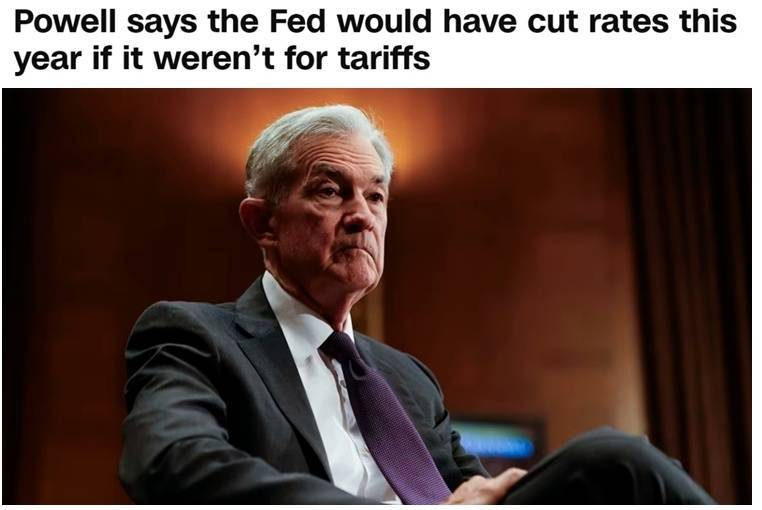
Core Viewpoint - The Federal Reserve's decision to maintain interest rates is influenced by President Trump's tariff policies, which have created significant economic uncertainty and impacted inflation forecasts [1][4][6]. Group 1: Federal Reserve's Position - Federal Reserve Chairman Jerome Powell stated that the central bank has refrained from cutting interest rates this year primarily due to the uncertainties brought about by the government's changing tariff agenda [4][5]. - Powell emphasized that the Fed's approach is data-driven rather than politically motivated, receiving support from other central bank leaders, including European Central Bank President Christine Lagarde [4][6]. - The Fed's decision to keep rates unchanged has occurred four times since the beginning of the year, despite increasing pressure from the White House for rapid rate cuts [4][5]. Group 2: Economic Impact of Tariffs - The ongoing trade tensions and tariffs have led to a reduction in the total inventory of goods in the U.S., with companies experiencing price increases of approximately 8% to 15% on many products [8]. - Consumer confidence in the U.S. has declined, with the Consumer Confidence Index (CCI) dropping to 93, the lowest level since the onset of the COVID-19 pandemic, primarily due to concerns over tariffs and their impact on personal finances [9]. - The unpredictability of the current administration's policies has cast a shadow over the economic and employment outlook, raising fears of a potential recession [9]. Group 3: Manufacturing Sector Concerns - Experts warn that tariffs are not a panacea for U.S. economic issues, as the return of manufacturing jobs will require significant time and investment, which is hindered by the unstable economic environment [12]. - Even if manufacturing were to return to the U.S., it may not lead to an increase in jobs due to higher operational costs and a shift towards automation to offset tariff impacts [13]. - Historical data indicates that during Trump's previous term, while manufacturing jobs increased by 0.4%, this was offset by rising costs and job losses due to retaliatory tariffs, suggesting that significant job growth in manufacturing is unlikely in the foreseeable future [13][14].
美国又出手!冲击全球的大动作要来了
大胡子说房· 2025-07-02 12:47
Core Viewpoint - The "One Big Beautiful Bills" legislation is crucial for the global capital market's trajectory in the second half of the year and could significantly impact wealth over the next few years [1][6]. Summary by Sections Legislation Overview - The "One Big Beautiful Bills" legislation aims to reduce taxes by $4 trillion and increase the debt ceiling by $5 trillion, primarily benefiting corporations and wealthy individuals to attract investment back into the U.S. manufacturing sector [7]. - The legislation's core logic involves providing tax cuts for the wealthy while increasing debt to maintain fiscal spending, leading to a historical high in U.S. debt exceeding $41 trillion [7]. Debt Management Strategy - The increase in U.S. debt is seen as a means to manage the debt crisis and maintain the dollar's hegemony, despite concerns about the declining credit quality of U.S. debt [9]. - The proposed "Pennsylvania Bill" aims to convert foreign-held debt into domestic debt, reducing reliance on foreign investors [11]. Economic Measures - The strategy includes depreciating the dollar and lowering interest rates to facilitate the debt replacement process, similar to Japan's long-term economic approach [13][15]. - The U.S. government may encourage domestic institutions to purchase long-term U.S. debt, potentially mandating retirement plans to allocate a significant portion to U.S. bonds [11]. Implications for Currency and Assets - The transition to domestic debt could lead to a depreciation of the dollar, impacting its status as the world's primary payment currency [16]. - The introduction of stablecoin legislation aims to maintain the dollar's relevance in international trade, allowing for indirect use of the dollar through digital currencies [16]. Investment Opportunities - The anticipated depreciation of the dollar and U.S. debt prices may create a favorable environment for safe-haven assets such as precious metals, high-dividend stocks, and stable income bonds [16]. - The recent regulatory changes regarding cash purchases of gold signal a shift towards valuing tangible assets, indicating potential investment strategies for wealth protection [16].