科技赋能

Search documents
天津银行新帅上任两年记
Xin Lang Cai Jing· 2025-12-19 14:17
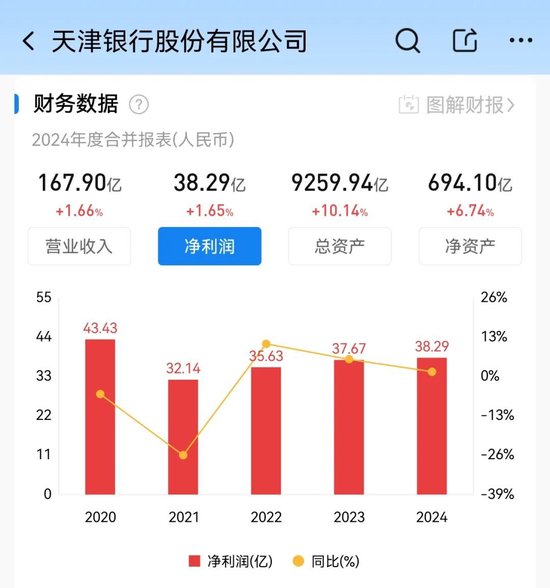
Core Viewpoint - Tianjin Bank has shown significant improvements in its operations and market presence under the leadership of Chairman Yu Jianzhong, with a focus on achieving an asset scale of over 1 trillion yuan soon [1][8]. Financial Performance - For the first three quarters of 2025, Tianjin Bank reported operating income of 12.939 billion yuan, a year-on-year increase of 0.48%, and net profit of 3.527 billion yuan, up 5.47%, with a 3.9 percentage point increase in profit growth compared to the mid-term [2][10]. - As of September 30, 2025, the total assets of Tianjin Bank reached 968.903 billion yuan, growing by 4.63% since the beginning of the year, and total liabilities were 898.289 billion yuan, up 4.87% [4][12]. - The earnings per share for the first three quarters of 2025 was 0.57 yuan, reflecting a year-on-year growth of 3.64% [4][12]. Technological Empowerment - Under Yu Jianzhong's leadership, Tianjin Bank has prioritized technological empowerment as a core strategy for transformation, winning the third prize in the 2024 Financial Technology Development Award from the People's Bank of China for its "Twin Digital Bank" project [4][12]. - The bank has invested over 6 million yuan in AI projects from August to November 2025, resulting in a 90% reduction in work order filling time with the launch of a new AI assistant [4][12]. - The number of personal mobile banking customers increased by 23.15% since the beginning of the year, enhancing service channels and creating a customized marketing strategy [4][12]. Sector Focus - In the technology finance sector, as of September 30, 2025, loans to technology innovation enterprises grew by 26.21%, and the bank underwrote technology innovation bonds worth 4.784 billion yuan [6][14]. - In green finance, the balance of green loans increased by 14.37%, with green bond underwriting and investment amounts rising by 401% and 173% year-on-year, respectively [6][14]. - In the pension finance sector, Tianjin Bank established a pension finance alliance with 10 entities, leading to a 429.15% increase in corporate loans for the pension industry [6][14]. Management Transformation - Since Yu Jianzhong's appointment, Tianjin Bank has implemented a "transformation phase" approach, focusing on changing thoughts, concepts, and methods to enhance operational efficiency [7][15]. - The bank has formed a strategic research team of 16 members to support the drafting and improvement of its "14th Five-Year Plan," producing over 100 research outcomes related to macroeconomic and policy conditions [7][15]. - Despite progress, Tianjin Bank faces challenges, including a slow A-share listing process, remaining the only city commercial bank in a direct-controlled municipality that has not achieved A-share listing since its proposal in 2015 [7][15].

金融“活水”滴灌一方沃土 看半岛象山特色产业何以向新而行
Feng Huang Wang Cai Jing· 2025-12-19 02:27
Core Viewpoint - The article highlights how financial support is driving the development of agriculture and marine economy in Xiangshan, showcasing the integration of technology and industry upgrades for rural revitalization [1]. Group 1: Agricultural Development - The "Red Beauty" citrus brand has seen rapid growth in Xiangshan, with over 37,000 acres planted, and approximately 30,000 acres ready for harvest, becoming a key pillar of rural revitalization [2] - Agricultural Bank of China (ABC) has introduced a specialized "Citrus Loan" to support the "Red Beauty" citrus industry, offering flexible repayment options based on planting cycles [2] - The investment in high-standard greenhouses exceeds 70,000 yuan per acre, with a long payback period of up to ten years, highlighting the financial challenges faced by farmers [2] Group 2: Marine Industry Development - Xiangshan has made significant advancements in breeding the bluefin mackerel, a high-value fish species, overcoming challenges in artificial breeding through controlled indoor farming techniques [3] - The company has invested over 2 million yuan annually in research and development, with approximately 700,000 yuan specifically allocated for bluefin mackerel this year [3] - ABC has provided targeted credit support to help local enterprises overcome technical bottlenecks in breeding, resulting in the successful cultivation of 27 marine fish species, with 16 being unique to the province and 5 filling domestic gaps [4] Group 3: Financial Support and Innovation - ABC's "Huinong e-loan" and other digital products have facilitated easier access to loans for local farmers, enabling them to adopt more profitable mixed farming practices [5] - The bank has committed to providing comprehensive credit support for various local industries, including blue marine farming, citrus planting, and rural tourism, to foster sustainable agricultural development [5] - As of November 2025, ABC's agricultural loans in Ningbo reached 19.535 billion yuan, an increase of 4.018 billion yuan from the beginning of the year, serving over 30,000 farmers and new agricultural operators [5]

泰安|泰安筑牢冬季森林“防火墙”
Da Zhong Ri Bao· 2025-12-19 01:05
Core Viewpoint - The article emphasizes the importance of implementing fire prevention responsibilities at every level of forest management in Tai'an, especially during the winter season when fire risks are heightened due to increased combustible materials and human activities [2][4]. Group 1: Fire Prevention Measures - Tai'an has 2.76 million acres of forest land entering a critical fire prevention period, with increased fire risk due to abundant rainfall and human activities such as worship and tourism [2]. - The city has established a comprehensive fire prevention responsibility system involving 15 member units, including emergency management, forestry, public security, and fire services, to ensure accountability [2][3]. - A total of over 3,000 target management responsibility agreements have been signed to enforce grid management at the grassroots level [2]. Group 2: Technological Integration - The "Tianyan Hushan" system in the Tai Mountain scenic area utilizes thermal imaging and smoke detection technology for 24-hour monitoring, with fire location accuracy reaching meter-level [3]. - Drones are deployed for rapid response to fire incidents, with a recent drill demonstrating a response time of just 28 minutes from detection to action [3]. - Tai'an's emergency management and forestry departments have established a data-sharing mechanism to issue daily fire risk reports in collaboration with meteorological departments [3]. Group 3: Public Awareness and Training - The city employs a "365+N" online publicity mechanism to disseminate fire prevention knowledge daily through various media channels [4]. - Local teams, including a specialized fire prevention squad of 25 members, conduct regular patrols and public awareness campaigns [4]. - Emergency drills involving nine professional teams are conducted to ensure preparedness, with a focus on maintaining operational readiness at all times [4].
甘肃有苹果,不再深闺藏
Zhong Guo Xin Wen Wang· 2025-12-18 23:25
Core Insights - Gansu apples are gaining recognition for their quality and comprehensive industry chain, with exports reaching 430 million yuan in the first ten months of the year, covering 14 countries and regions [1] - The region's favorable climate and soil conditions contribute to the superior quality of Gansu apples, which are characterized by their attractive appearance, crisp taste, and rich nutrition [2] - Technological advancements in sorting and packaging have enhanced the quality control of Gansu apples, allowing for efficient processing and distribution [3] - The apple industry in Gansu is evolving from fresh fruit to a broader range of products, including dried apples, apple juice, and high-value items like apple vinegar and cosmetics [3] - The establishment of a unified regional brand, "Guanwei," has improved the market competitiveness of Gansu apples, promoting both domestic and international sales [5] Group 1 - Gansu apples have achieved an export value of 430 million yuan, with concentrated apple juice exports at 390 million yuan [1] - The optimal growing conditions in Gansu, including suitable altitude and soil quality, contribute to the high quality of apples produced [2] - The use of advanced technology in sorting and packaging has significantly improved the quality assurance processes for Gansu apples [3] Group 2 - The Gansu apple industry is diversifying its product offerings, moving into areas such as apple distillates and high-value processed goods [3] - The "Guanwei" brand has been instrumental in consolidating Gansu's apple resources, enhancing its market presence both domestically and internationally [5] - The apple industry in Gansu has a rich history of innovation and adaptation, with local farmers increasingly adopting modern agricultural practices and e-commerce strategies [4]
给城市降噪,云南文山有妙招
Zhong Guo Huan Jing Bao· 2025-12-18 03:20
Core Viewpoint - Wenshan Prefecture in Yunnan Province is systematically advancing noise pollution prevention through a government-led, law-based, technology-enabled, and community-involved approach, resulting in continuous optimization of urban sound environment quality [1] Group 1: Governance Framework - Wenshan has established a modern governance system to address the multi-faceted nature of noise pollution, creating a responsibility framework that involves various departments such as public security, construction, and education [1] - A joint meeting system led by city leaders has been implemented to promote inter-departmental information sharing and coordinated law enforcement, particularly during critical periods like the college entrance examination [1] Group 2: Noise Source Management - The city focuses on preventive measures and categorization of noise management, with specific attention to traffic noise, construction noise, and living noise, employing a combination of daily patrols and special rectification efforts [2] - A total of 262 illegal activities related to traffic noise have been addressed, with measures in place to regulate noise around schools and residential areas [2] Group 3: Technological Integration - Modern technology is being utilized to enhance the precision and intelligence of noise management, including the establishment of seven automatic monitoring points across various functional areas [3] - A complaint handling mechanism has been developed to ensure prompt responses to noise complaints, integrating multiple reporting platforms for efficient management [3] Group 4: Community Engagement - The concept of a tranquil living environment is being extended from macro-level urban governance to micro-level community management, with pilot projects for "quiet communities" being initiated [3] - Initiatives include the creation of noise management agreements, volunteer patrol teams, and regulations on renovation times to foster self-management within communities [3] Group 5: Future Directions - Wenshan plans to continue strengthening technological support, deepening the creation of "quiet communities," and improving long-term mechanisms for noise pollution prevention to meet public expectations for a better sound environment [4]
事关网约车,武汉站正式启用
Chang Jiang Ri Bao· 2025-12-18 00:42
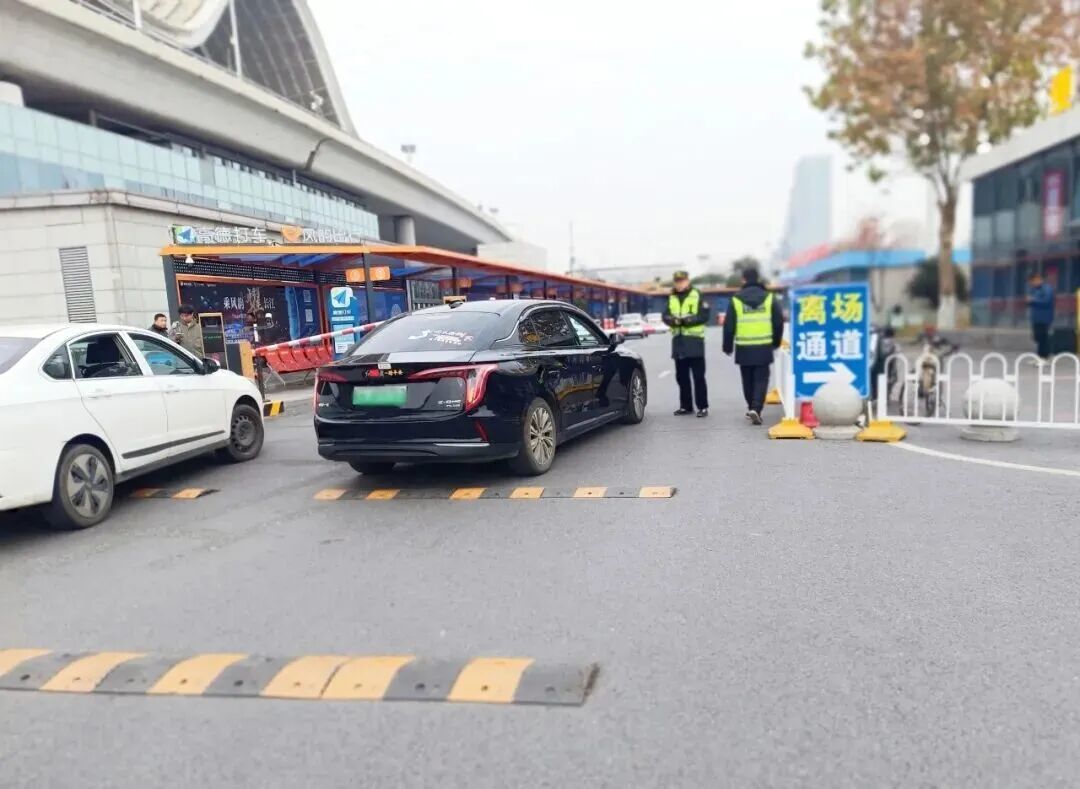
Core Viewpoint - The implementation of a new management system for ride-hailing services at Wuhan Railway Station aims to address long-standing issues of disorderly queuing and traffic congestion in the area, enhancing the efficiency of both drivers and passengers [1][3]. Group 1: New Regulations and Implementation - Starting from December 15, a designated waiting area and a "order acceptance access" management system have been officially launched in the ride-hailing zone around Wuhan Railway Station [1]. - The new regulations have led to orderly queuing for drivers and quicker boarding for passengers, resulting in smoother traffic flow in the station area [1][3]. - The governance plan focuses on "remote vehicle waiting and precise passenger pickup," designating three specific waiting areas for ride-hailing vehicles [3][4]. Group 2: Technology and Compliance - An intelligent barrier system has been integrated with major ride-hailing platforms to ensure that only vehicles with real-time orders can enter the designated pickup area [3][4]. - Compliance measures include allowing only vehicles with valid ride-hailing transport and driver certificates to access the waiting zones, thereby reinforcing industry regulations [4]. - A joint inspection team has been established to strictly monitor and penalize unlicensed operations and platform violations, ensuring adherence to industry standards [4]. Group 3: Future Optimizations - The management office plans to continuously optimize the layout and service support based on operational data and feedback from drivers and passengers, aiming to create a more organized travel environment [4].
峨眉山A董事长许拉弟: 科技赋能 融合发展 打造山岳型景区新高地
Zheng Quan Shi Bao· 2025-12-17 22:22
Core Viewpoint - The cultural tourism industry is entering a new phase characterized by expanding boundaries and deepening integration, with "cultural tourism + various industries" becoming the core driving force for development [1] Group 1: Cultural Experience Enhancement - The company aims to create immersive cultural experiences by leveraging unique resources such as heritage, martial arts, and ecological culture, utilizing technologies like AR/VR and holography to transform static heritage into dynamic narratives [2] - The development of an interactive project series called "Virtual-Reality Cross" is planned to enhance cultural engagement, alongside the establishment of an "Emei Mountain Metaverse" platform in collaboration with leading internet companies [2] Group 2: Infrastructure Improvement and Service Upgrade - The company is systematically upgrading infrastructure across the mountain, having completed approximately 6,000 square meters of trail renovations and over 2,000 updates to public service facilities [3] - A comprehensive environmental monitoring and smart scheduling network is being constructed, along with a "Warm Service" initiative to provide multilingual, accessible, and family-oriented support [3] Group 3: Cross-Industry Integration and Technological Warmth - The company is expanding the "cultural tourism +" model into areas such as health care, sports, education, cultural creativity, and festivals, creating a healing system and hosting innovative events like "VR Mountain Climbing Competitions" [4] - Emphasis is placed on the integration of technology with content and scenarios, highlighting the importance of humanistic care and emotional connections in technological applications [4] - The company is committed to preserving ecological integrity while embracing innovation, aiming to establish a world-class mountain cultural tourism benchmark through continuous exploration [4]

海南自贸港封关启幕:国人的战略红利与品牌科技新未来
Sou Hu Cai Jing· 2025-12-17 05:13
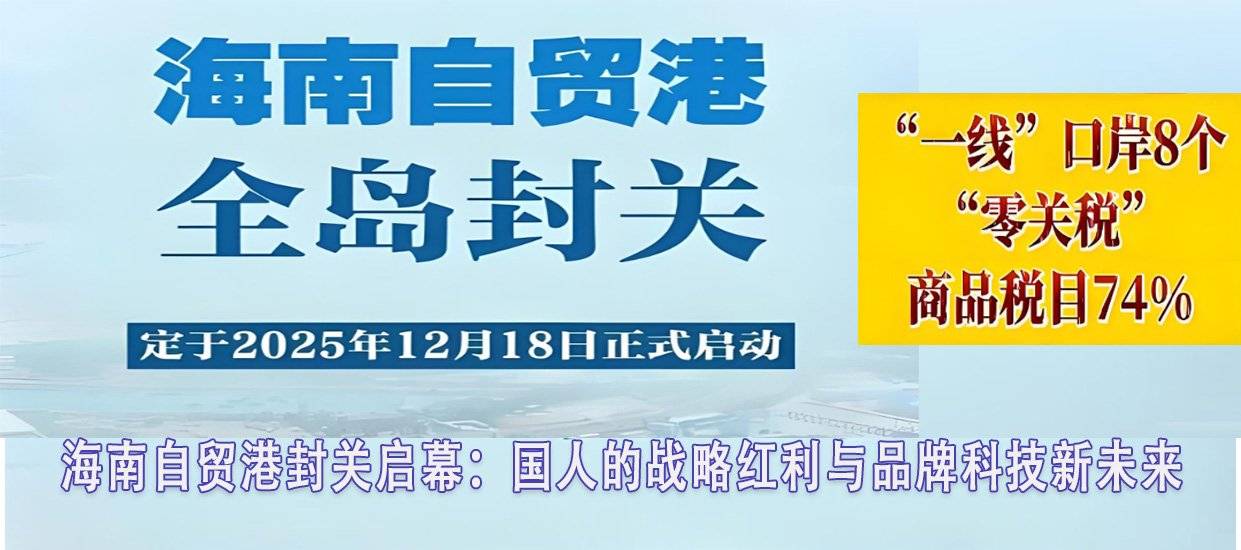
Core Insights - The official launch of the Hainan Free Trade Port on December 18, 2025, marks a significant milestone in China's reform and opening-up strategy, aiming to create a high-quality living environment for its citizens through policy dividends [1] Group 1: Institutional Innovation - The core value of the Hainan Free Trade Port is to establish a globally leading business environment through institutional innovation, exemplified by the implementation of the "Hainan Free Trade Port Taxation Professional Service Regulations" [3] - This regulation includes 23 detailed rules that define seven categories of services, encourage cross-border tax services, and recognize foreign professional qualifications, addressing the shortage of international tax talent [3] - The initiative aims to provide a more transparent tax environment and efficient public service experience for all businesses, from individual entrepreneurs to multinational corporations [3] Group 2: Technological Empowerment - The Hainan Free Trade Port represents a practice of "technological empowerment," where technology plays a crucial role in enhancing service efficiency [4] - The regulations encourage the establishment of international and digital platforms to align services with international standards, utilizing technologies like blockchain for data integrity and AI for optimizing tax consultation [4] - This technological innovation is expected to lower compliance costs for businesses and enhance consumer experiences, facilitating the transition from product export to brand output for local brands [4] Group 3: Public Welfare - The ultimate goal of the Hainan Free Trade Port is to ensure that reform dividends benefit every citizen, with "zero tariff" policies expected to lower import prices and enhance consumer welfare [6] - The tax incentives and standardized tax services are anticipated to reduce operational costs for businesses, creating more job opportunities, particularly in high-skilled positions, and providing young people with career paths aligned with international standards [7] - The dual balance of "should collect all" and "should enjoy all" in the regulations reflects a modern governance capability that prioritizes the rights of taxpayers while ensuring national tax security [7] Group 4: Expert Commentary - Renowned brand expert and CEO of Good Brand Technology Network, Fan Guibin, emphasizes that the Hainan Free Trade Port is a new engine for brand technology development, enhancing service efficiency and transparency while integrating brand building [9] - The port is seen as a model for the deep integration of economic policy, brand technology, and public welfare, aiming to position itself as a bridge for the global dissemination of Chinese brands [9] - The ultimate significance of the Hainan Free Trade Port lies in its potential to create a future characterized by "openness, innovation, and sharing," benefiting all citizens [9]
APP监测采食量与产奶量,临朐490头奶牛实现数字化管理
Qi Lu Wan Bao· 2025-12-16 13:20
Core Insights - The article highlights the transformation of traditional livestock farming in Linqu County, Shandong Province, driven by technology and innovative practices, leading to high-quality development in the livestock industry [1][5] Group 1: Technological Advancements - The integration of technology in livestock farming has enabled precise monitoring of cattle health and productivity through data-driven systems, reducing feed waste by over 5% and halving the incidence of metabolic diseases in dairy cows [2] - Unique digital identities for products like Langde goose liver and honey allow consumers to trace the entire production process, enhancing market trust and brand value [2] Group 2: Industry Integration and Value Addition - The livestock industry in Linqu is evolving from basic selling to value-added products, with innovations such as ready-to-eat lamb soup and various processed bee products, significantly increasing product value [3] - The local government plays a crucial role in supporting industry upgrades by providing funding, facilitating research and development, and breaking through core industry bottlenecks [3] Group 3: Cooperative Models and Farmer Benefits - The "enterprise + cooperative + base + farmer" model fosters a strong network of shared interests, ensuring farmers benefit from stable prices and technical support [4] - Government initiatives, such as subsidies and e-commerce platforms, create a favorable ecosystem for livestock farming, ensuring that production, processing, and income generation are effectively integrated [4] Group 4: Administrative Efficiency - The implementation of streamlined administrative processes has significantly reduced the time required for livestock-related approvals from 30 days to just 3 days, enhancing operational efficiency for businesses [5] - This reform lowers institutional transaction costs, allowing companies to expedite project launches and realize returns more quickly [5]
荣耀加冕!聚量融资租赁荣获“2025融资租赁行业卓越品牌企业奖—最具成长性卓越品牌企业”
Sou Hu Cai Jing· 2025-12-16 10:24
2025年11月28日,第七届融资租赁总经理论坛暨"金鼎奖"颁奖典礼在珠海圆满落幕。来自全国各地的800余位行业领袖、监管代表、产业专家与学术精英齐 聚珠海,共同见证并参与了一场指引行业未来发展的智慧盛宴与战略启航,共商行业发展大计。 融资租赁金鼎奖由融资租赁总经理论坛组委会设立,自2019年首届举办以来,至今已连续成功开展七届。金鼎奖旨在表彰行业杰出代表,不仅是对其卓越贡 献的肯定,亦持续激发着全行业的创新活力与转型动力,见证并推动了融资租赁在时代变革中不断开拓前行的步伐与智慧。 喜报表彰!青岛聚量融资租赁有限公司 青岛聚量融资租赁有限公司凭借其卓越的创新能力和高速成长的品牌势能,成功摘得"2025融资租赁行业卓越品牌企业奖——最具成长性卓越品牌企业"。这 一荣誉标志着公司在融资租赁行业的突出表现和品牌影响力获得了高度认可。 作为科技赋能的数字化融资租赁公司,青岛聚量成立于2020年,实缴注册资本金2亿元。公司依托大数据、物联网等技术实现租赁资产全流程数字化管理, 专注服务乡村振兴、专精特新、节能环保等领域,始终秉承业务场景化、资产数字化、风控智能化、服务生态化的核心理念和利他的企业文化。核心团队平 均从业 ...