谷子经济

Search documents
全国的二次元,最想搬到这座城
Hu Xiu· 2025-06-30 00:58
Group 1 - The article highlights the growing popularity of the "Bilibili World" (BW) convention in Shanghai, featuring renowned game producer Hideo Kojima as a guest, which has excited the anime and gaming community [1][2] - In 2024, all 250,000 tickets for the BW convention sold out instantly, indicating a significant demand that exceeded the number of available tickets by hundreds of thousands [2] - Shanghai is increasingly recognized as a "city of anime," with numerous events and themed activities attracting a large number of young people [3][2] Group 2 - The evolution of Shanghai's anime culture can be traced back to the "Wenmiao Animation Street," which transformed from a traditional market into a hub for anime-related products in the late 20th century [4][5] - The renovation of Wenmiao Street in 2021 led to the relocation of many anime shops, which subsequently spread anime culture throughout the city [5][6] - The emergence of anime-themed shopping centers, such as the "Bailian ZX Creative Park," has significantly boosted foot traffic and sales, with the park achieving sales of 300 million yuan and attracting 9.5 million visitors in 2023 [7][8] Group 3 - The transformation of traditional shopping malls into anime-themed spaces has become a trend, with several malls in Shanghai incorporating anime elements to attract customers [8][9] - The rise of the "anime economy" has led to the opening of flagship stores for major brands, enhancing the shopping experience for anime enthusiasts [11][12] - Shanghai's gaming industry is thriving, with major companies like Sony and Nintendo establishing a presence in the city, contributing to its status as a key market for international game developers [11][12] Group 4 - The article emphasizes the integration of anime culture into everyday life in Shanghai, with more people engaging in outdoor activities related to anime, such as cosplay [10][14] - Events like the "Star Rail LIVE" concert demonstrate the strong community engagement and popularity of anime-related activities in the city [15] - The article concludes that anime culture has transitioned from a niche interest to a significant aspect of urban life in Shanghai, reflecting the city's progressive and inclusive nature [18]
这类基金,申报数激增!
中国基金报· 2025-06-29 12:00
Core Viewpoint - In the second quarter, the number of consumer-themed fund applications surged significantly, reflecting a shift in market focus from export-driven growth to domestic demand, supported by favorable policies aimed at boosting consumption [1][3][8]. Group 1: Fund Application Trends - The number of consumer-themed funds submitted for approval increased threefold compared to the previous quarter [2]. - As of June 27, 16 consumer-themed funds were submitted since April, with 7 already approved, compared to only 4 in the first three months of the year [4]. - These 16 funds came from 14 different fund management companies, including 8 index funds, 5 mixed funds, 1 stock fund, and 2 QDII funds, with a focus on Hong Kong stock consumption themes [5]. Group 2: Market Dynamics and Investment Opportunities - The consumer sector has attracted significant attention from institutional investors, leading to a surge in research and analysis of new consumption trends, such as the "Guzi Economy" and pet economy [6][9]. - The consumer sector is expected to experience a "Davis Double-Click" effect, driven by supportive policies, performance improvements, and valuation recovery [7][8]. - The potential for growth in the middle and lower-income consumer segments remains largely untapped, with expectations for increased domestic demand incentives from the government [8][9]. Group 3: Sector Performance and Investment Strategy - The A-share consumer sector has shown signs of divergence, with strong growth in the beauty and personal care industry, while home appliances and food and beverage sectors have underperformed [9]. - In the Hong Kong market, emerging industries such as trendy toys, tea drinks, and jewelry have stood out as highlights in the consumer sector [9].


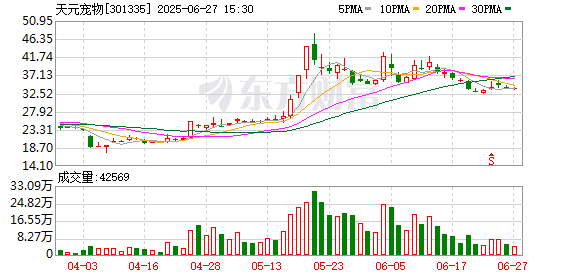
天元宠物注重品牌形象建设 积极开拓国内外市场
Zheng Quan Ri Bao· 2025-06-27 11:17
Group 1 - The core viewpoint of the article highlights the collaboration between Shandong and Zhejiang pet industry associations, focusing on the full industry chain innovation and brand strategy upgrade in the pet industry [2] - The Zhejiang exchange delegation visited leading companies such as Petstar and Tianyuan Pet Products, emphasizing the importance of product display and corporate culture [2] - Tianyuan Pet Products is a comprehensive enterprise specializing in the design, development, production, and sales of pet products, covering a wide range of categories including pet beds, toys, clothing, and food [2] Group 2 - Tianyuan Pet Products is actively expanding its business by investing in R&D, with a professional team that has developed nine product categories and holds over 200 domestic and international patents [3] - The company focuses on the lifestyle habits of pets and the interaction needs between pets and owners, continuously developing innovative products that meet various usage scenarios [3] - Tianyuan Pet has established four production bases globally, utilizing intelligent production lines and a strict quality control system to enhance its core competitiveness [3] Group 3 - The company is expanding its international market presence by leveraging platforms like the Canton Fair, establishing long-term partnerships with well-known international retailers and e-commerce platforms [3] - Tianyuan Pet has a presence in over 100 countries and regions, enhancing its brand influence through local market integration [3] - The company has developed multiple well-known brands such as Petstar and Xiaoshouxing, offering over 30,000 different SKUs to provide competitive pricing and quality products [4] Group 4 - The rapid development of Tianyuan Pet reflects the strategic transformation of China's pet industry from traditional manufacturing to comprehensive services [4] - The company is poised to benefit from new consumption trends and the growing pet economy, indicating a promising opportunity for accelerated growth in the pet industry [4]
00后情绪消费更大方?南都发布情绪经济社会认知度调研报告
Nan Fang Du Shi Bao· 2025-06-27 08:47
Group 1 - The rise of emotional economy is reshaping consumer behavior, with 64% of Chinese consumers prioritizing emotional satisfaction as their primary need [3][5][11] - The emotional economy is becoming a new economic engine, with significant growth in sectors like trendy toys, pets, and sports, as evidenced by the explosive sales during events like the Tmall 618 shopping festival [3][30] - Over 80% of surveyed consumers reported engaging in emotional consumption in the past year, with preferences varying by age group [6][8][10] Group 2 - Emotional consumption is defined as purchasing behavior aimed at achieving psychological compensation, indicating a shift from functional to emotional-driven consumption [5][10] - The "谷子经济" (Goods economy) market is projected to reach 168.9 billion yuan in 2024, reflecting a 40.63% increase from 2023, driven by the popularity of trendy toys and related products [30][34] - The pet industry is evolving into an emotional compensation system, with Gen Z spending an average of over 1,200 yuan per month on pet-related products and services [34][35] Group 3 - The silver economy is expected to reach a market size of 50 trillion yuan by 2050, driven by the new retired demographic who are financially stable and seeking quality experiences [35][36] - The healing economy is gaining traction, with a projected market value exceeding 240 billion yuan this year, fueled by rising demand for emotional wellness and immersive experiences [37][40] - Emotional marketing is widely accepted, with over 80% of respondents recognizing its influence on purchasing decisions, particularly among younger consumers [22][23]

“谷子”背后的消费牵引力
Xiao Fei Ri Bao Wang· 2025-06-27 02:49
Core Insights - The "Guzi" economy, driven by anime IPs, is reshaping offline consumption ecosystems, attracting young consumers and revitalizing commercial areas [1][2][3] - By 2029, the market size of China's "Guzi economy" is expected to exceed 300 billion yuan, becoming a new driver for regional consumption and urban renewal [1][2] - The appeal of "Guzi" products lies not in their functional attributes but in their emotional and cultural significance, resonating with the Z generation's desire for identity and community [2][3] Industry Trends - Recent consumer events have highlighted the growing trend of "Guzi" activities, with significant sales figures reported, such as over 300 million yuan in sales of related products from the animated film "Nezha 2" within a month [2] - Major cities are witnessing a surge in "Guzi" pop-up events and stores, with long queues and rapid sell-outs becoming commonplace [2][3] - The high engagement of cultural consumption is transforming the operational logic of offline shopping districts, with increased foot traffic reported in locations featuring "Guzi" stores [2][3] Market Dynamics - The "Guzi economy" is expanding into lower-tier cities, with events like anime conventions stimulating local consumption [3] - Brands are leveraging limited releases and collaborations to create a sense of novelty, enhancing customer engagement and extending their stay in stores [3] - Local governments are increasingly linking cultural resources with IPs to achieve dual goals of cultural revitalization and consumption transformation [3] Challenges and Future Directions - Some "Guzi" stores face challenges due to over-reliance on single IPs and lack of content updates, leading to a decline in foot traffic post-peak [4] - Issues such as scalping and counterfeit products are undermining consumer trust, indicating a need for sustainable development in the "Guzi economy" [4] - To unlock the long-term value of the "Guzi economy," there is a need for cities and businesses to shift from merely chasing trends to building platforms that enhance local cultural identity and provide immersive consumer experiences [4]
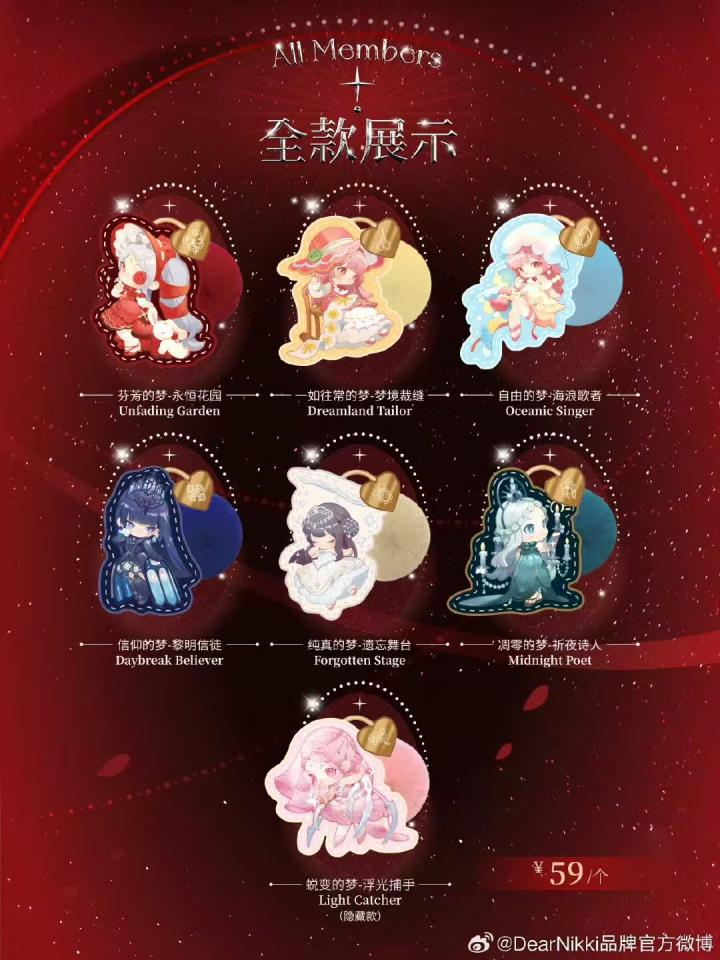
暖暖盲盒线上流水超578万,“大女主IP”如何杀入潮玩战场?
3 6 Ke· 2025-06-27 02:24
Core Insights - The article discusses the emergence of a new player in the trendy toy market, specifically the launch of the "DearNikki" brand by Paper Games, which has quickly gained traction in the market [1][2] - The "谷子经济" (Guzi Economy) is projected to experience significant growth, with the market size expected to reach 1.689 trillion yuan in 2024, reflecting a year-on-year increase of over 40% [2] - The emotional connection and engagement of female gamers with their favorite IPs are highlighted as key drivers for the success of trendy toys, particularly in the context of the "DearNikki" brand [10][15] Summary by Sections Market Performance - The "叠纸心意" flagship store topped the "618天猫潮玩抢先成交榜" (618 Tmall Trendy Toy Pre-sale Ranking) ahead of established brands like Pop Mart and miHoYo [1] - The "DearNikki" brand launched on June 1, with over 70,000 blind boxes sold, generating a transaction volume exceeding 5.53 million yuan [1] Brand Strategy - "DearNikki" focuses on female consumers, leveraging the emotional resonance of the "暖暖" IP, which allows for a unique approach to trendy toys by emphasizing emotional connection over traditional design aesthetics [3][6] - The brand's strategy includes a diverse range of products, with plans to expand into various categories such as model toys, anime merchandise, and tabletop games [3] Consumer Engagement - The emotional investment of players in the "暖暖" character creates a strong community, enhancing the appeal of the blind boxes as a means of emotional connection [6][10] - The success of the "DearNikki" blind boxes indicates a robust market for female-oriented trendy toys, with significant purchasing power demonstrated during the 618 sales event [8][10] Industry Trends - The article notes a shift towards self-owned IP models in the trendy toy market, which allows for deeper emotional connections and brand loyalty compared to traditional licensing models [15] - The potential for the trendy toy sector to become a secondary revenue stream for female-oriented mobile games is discussed, with the "谷子经济" serving as a catalyst for this growth [7][15]
纺织服饰增持:年轻化、品牌化、智能化,驱动新成长
Shanghai Securities· 2025-06-26 10:56
Investment Rating - The industry investment rating is "Overweight" (Maintain) [1] Core Insights - The report highlights the emergence of new consumption trends driven by youth, brand value, and technology, indicating a shift towards a more personalized and innovative market landscape [1][4] Section Summaries New Consumption - The rise of brand value is crucial in tapping into the young consumer demographic, which is becoming increasingly influential in the market [4][5] Gold Consumption - Gold consumption is showing significant structural differentiation, with rising demand for gold as a safe-haven asset driving prices higher. The introduction of traditional gold and small-weight gold items is leading the new trend [5][10] - Young consumers aged 18 to 34 account for over one-third of gold jewelry sales, prompting brands to innovate in design and product offerings to cater to this demographic [10] Trendy Toys Consumption - The trendy toy market is supported by three main drivers: the rising purchasing power of Generation Z, accelerated IP commercialization, and technological innovation. The market is expected to reach 110.1 billion yuan by 2026, with a CAGR of 33% from 2015 to 2021 [11][14] - The "Guzi economy," which refers to merchandise derived from various IPs, is experiencing rapid growth, with a market size of 168.9 billion yuan in 2024, reflecting a 40.63% year-on-year increase [14] Outdoor Consumption - The outdoor sports market is expanding rapidly, with retail sales projected to reach 271.1 billion yuan in 2023. The penetration rate of outdoor activities in China is still low compared to over 50% in other countries, indicating significant growth potential [20] - Key trends include the rise of "light outdoor" products, increased popularity of trail running, and a growing interest in cycling and pet-friendly outdoor activities [20] Technology Consumption - The integration of AI in consumer products is transitioning from exploration to large-scale commercialization, with humanoid robots and smart home devices becoming core growth areas. The report anticipates that 2025 will mark a significant year for humanoid robot production [25] - The development of smart home technology is evolving from individual products to comprehensive ecosystem solutions, enhancing consumer experience and engagement [25]
轻工制造、纺织服饰2025年半年度投资策略报告:聚焦内需视角下,关注以旧换新与新消费投资机会-20250626
BOHAI SECURITIES· 2025-06-26 08:06
Group 1: Market and Performance Review - The light industry and textile apparel sectors have outperformed the CSI 300 index, with textile apparel rising by 2.05% and light industry by 2.43% as of June 24, 2025 [21][22] - In Q1 2025, the light industry saw a revenue decline of 0.78% year-on-year, while the textile apparel sector experienced a 13.33% decline in revenue [25][29] - The light industry’s net profit decreased by 18.85% year-on-year in Q1 2025, while the textile apparel sector's net profit fell by 5.56% [25][29] Group 2: Home and Electric Two-Wheeler Industries - The home and electric two-wheeler sectors are expected to benefit from the deepening of the old-for-new policy, which is anticipated to improve demand and sales [37][44] - In the first five months of 2025, the retail sales of furniture increased by 21.40% year-on-year, significantly boosted by the old-for-new policy [43][44] - The electric two-wheeler industry faced challenges, with a projected 10.55% decline in sales for 2024, but the old-for-new policy is expected to support sales recovery [59][65] Group 3: New Consumption Trends - The "谷子" economy, driven by Z generation consumers who value emotional and self-satisfying purchases, is projected to reach a market size of 1,689 billion yuan in 2024, growing by 40.63% year-on-year [7][79] - The pet food market is expected to grow to 3,002 billion yuan by 2024, with a significant increase in consumer preference for domestic brands [97][105] - The sanitary products market is also evolving, with non-leading domestic brands showing potential for growth due to the rise of e-commerce and consumer preferences for single products [7][105]



财通资管林伟:新消费的“新”,藏在单品爆发逻辑里
中国基金报· 2025-06-25 11:14
Core Viewpoint - The article discusses the resurgence of new consumption trends in the market, highlighting investment opportunities in sectors such as electric two-wheelers, pet economy, and personal care products, driven by changing consumer preferences and product innovation [2][4]. Group 1: Definition and Characteristics of New Consumption - New consumption is defined as investment opportunities driven by product or channel innovation, moving away from traditional reliance on cyclical factors like real estate and liquor sales [5]. - The focus of new consumption is on personalized consumer needs, such as emotional and self-satisfying consumption, which have gained traction among younger demographics [5][10]. - The resurgence of new consumption is attributed to a shift in market perception, where previously overlooked sectors are now receiving attention due to their potential for growth [6][7]. Group 2: Market Dynamics and Investment Strategies - The current consumption market is characterized by a recovery from previous underperformance, with funds reallocating towards consumer stocks that are product-driven [7][8]. - Investment strategies have shifted from top-down cyclical analysis to a more granular bottom-up approach, focusing on individual product performance and innovation [9][17]. - The article emphasizes the importance of product iteration and consumer engagement as key factors for maintaining competitive advantage in the new consumption landscape [11][15]. Group 3: Emerging Trends and Opportunities - Key emerging trends include the rise of niche markets such as health supplements, beauty products, and innovative consumer goods, which are expected to continue growing [15][18]. - The article notes that traditional sectors like food and beverage still hold potential, particularly through structural changes and new product introductions [16]. - The investment landscape is evolving, with a focus on identifying high-growth single products that can deliver substantial returns, reflecting a shift in consumer behavior towards quality and innovation [18][19].

异动盘点0620|基石药业涨超5%;京东物流涨超3%;顺丰控股涨超6%创新高;泡泡玛特跌超5%
贝塔投资智库· 2025-06-20 03:35
Group 1 - Key Point 1: 基石药业-B (02616) rose over 5% after its drug for lung cancer,舒格利单抗, received long-term survival data recognition in The Lancet Oncology, reinforcing its position as a first-line treatment in Europe [2] - Key Point 2: 海昌海洋公园 (02255) increased by over 4% as a major shareholder, 祥源控股, is set to acquire a 38.6% stake for HKD 22.95 billion, potentially alleviating liquidity pressures [2] - Key Point 3: 冠忠巴士 (00306) surged 27% with a projected 143% increase in annual pre-tax profit to HKD 165 million, driven by revenue growth, reduced fuel costs, and autonomous driving licenses [2] Group 2 - Key Point 1: 东方表行 (00398) fell over 5% due to a 5.2% decline in revenue and a 20% drop in net profit, attributed to weak luxury goods demand amid geopolitical conflicts and interest rate fluctuations [2] - Key Point 2: 北森控股 (09669) plummeted over 17% as its adjusted annual EBITDA was only HKD 28.9 million, with Everbright Securities lowering revenue forecasts by 10%-15% due to growth challenges [3] - Key Point 3: 顺丰控股 (06936) rose over 6% to a new high, with May express delivery revenue increasing by 13.4%, and the scaling of unmanned delivery vehicles potentially opening up future profit opportunities [3] Group 3 - Key Point 1: 中国中免 (01880) increased by over 5% as it accelerates the expansion of its duty-free stores, with 4 already opened and 9 more in preparation, benefiting from favorable policies [3] - Key Point 2: 华虹半导体 (01347) rose over 7% with a capacity utilization rate of 102.7%, and Tianfeng Securities optimistic about future contributions of USD 1.28 billion from its 9th factory [3] - Key Point 3: 网龙 (00777) increased over 3% after showcasing AI digital human presentation technology at a UN conference, launching the "EDA Education Metaverse" strategy, which catalyzed a revaluation of AI [4]