产能过剩

Search documents
国新国证期货早报-20251015
Guo Xin Guo Zheng Qi Huo· 2025-10-15 01:31
Report Summary Core Viewpoints - On October 14, 2025, most futures varieties showed different trends. A - share stock indexes generally declined, while some futures like coke and焦煤 showed slight increases, and others like sugar, rubber, and palm oil were affected by various factors and showed downward or fluctuating trends [1][2][3][4]. Industry Analysis Stock Index Futures - On October 14, A - share three major indexes collectively declined. The Shanghai Composite Index fell 0.62% to 3865.23 points, the Shenzhen Component Index fell 2.54% to 12895.11 points, and the ChiNext Index fell 3.99% to 2955.98 points. The trading volume of the two markets reached 2576.2 billion yuan, an increase of 221.5 billion yuan from the previous day. The CSI 300 Index closed at 4539.06, a decline of 54.91 [1][2]. Coke and Coking Coal - On October 14, the coke weighted index showed a weak shock, closing at 1665.5, a rise of 4.8. The coking coal weighted index had a narrow - range consolidation, closing at 1167.5 yuan, a rise of 6.5. Coke's coking profit is near the break - even point, and the demand increment is insufficient. Coking coal's supply recovery is slow, and the supply - demand contradiction is not prominent [3][4][5]. Zhengzhou Sugar - Affected by the prospect of global supply surplus in the 2025/26 season and other factors, the US sugar fell on Monday. The Zhengzhou Sugar 2601 contract fell sharply on Tuesday and then had a slight rebound at night. As of the end of September, Guangxi's sugar sales volume increased, but the sales rate decreased, and the industrial inventory increased [5]. Rubber - Affected by factors such as Sino - US economic and trade relations, crude oil prices, and Southeast Asian spot prices, Shanghai rubber declined on Tuesday and had a slight decline at night. In September 2025, China's imports of natural and synthetic rubber increased compared with the same period in 2024 [6]. Palm Oil - On October 14, palm oil futures prices declined slightly. Malaysia lowered the reference price of crude palm oil in November while keeping the export tariff unchanged [7]. Soybean Meal - Internationally, on October 14, CBOT soybean futures were weakly volatile. Domestically, soybean meal futures were also weakly volatile. High imports of soybeans and the expected early listing of Brazilian soybeans help ease concerns about the supply shortage [8]. Live Pigs - On October 14, live pig futures rebounded from a low level. Currently, the live pig market is in a situation of strong supply and weak demand, but it is expected to stabilize and rebound after November, with the rebound height limited by over - capacity expectations [9]. Shanghai Copper - Fed's interest - rate cut expectations and overseas copper mine supply disturbances support copper prices, but Sino - US trade disputes and weak domestic demand lead to copper price fluctuations. The inventory has increased, and the peak - season demand is lower than expected [9]. Iron Ore - On October 14, the iron ore 2601 contract declined. The supply is relatively loose, and there is an increasing pressure on steel mills to reduce production in the future, so the iron ore price is in a volatile trend [10]. Asphalt - On October 14, the asphalt 2511 contract declined. The production and shipment of asphalt decreased, and the demand is affected by weather and funds, so the price is in a volatile trend [10]. Logs - On October 14, log futures prices continued to decline. The spot price remained stable, and the import volume from January to September decreased year - on - year. The supply - demand relationship has no major contradictions, and the market is in a pattern of inventory reduction [12]. Cotton - On the night of October 14, Zhengzhou cotton futures closed at 13240 yuan/ton. The cotton inventory decreased, and the Sino - US trade war has a certain suppressing effect on the cotton market [12]. Steel - On October 14, steel futures prices showed a general downward trend. After the holiday, steel demand is average, the inventory reduction speed may be slow, and the cost support is insufficient, so the steel price may be weakly volatile in the short term [12]. Alumina - On October 14, alumina futures closed at 2805 yuan/ton. The spot market supply is abundant, the inventory is accumulating, and the price is expected to continue to decline [13]. Shanghai Aluminum - On October 14, Shanghai aluminum futures closed at 20860 yuan/ton. The macro - situation is complex, and the supply is stable. The demand is improving, and the social inventory in the East China region has decreased [13].
龙辰科技IPO:行业产能过剩,毛利率持续下滑
Sou Hu Cai Jing· 2025-10-13 01:44
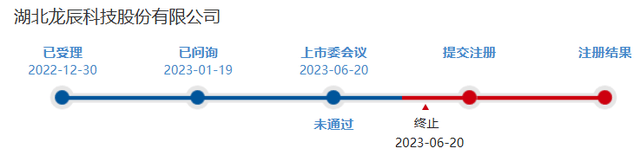
Core Viewpoint - Hubei Longchen Technology is attempting its IPO on the Beijing Stock Exchange for the second time after facing previous setbacks due to concerns over related party transactions with Jiangsu Shuangkai Electronics [3][4][10]. Company Overview - Company Name: Hubei Longchen Technology Co., Ltd. - Established: November 6, 2003 - Major Shareholder: Lin Meiyun controls 54.08% of the shares - Main Business: Research, production, and sales of BOPP film materials for film capacitors, divided into base film and metallized film [5]. - Industry Position: Recognized as a high-tech enterprise and a national-level "specialized and innovative" small giant, with a market share of 16.9% in BOPP base film products, ranking first in the industry [5]. IPO Progress - The IPO application was first accepted in December 2022 but faced multiple delays and was ultimately terminated in 2023 due to issues related to related party transactions [2][3]. - In 2024, the company acquired the remaining equity of Jiangsu Shuangkai for 45 million yuan to eliminate concerns over related party transactions and restarted its IPO plan, which was accepted again in June 2025 [4][11]. Financial Performance - Revenue from 2022 to 2024 showed a continuous growth trend, with figures of 344 million yuan, 371 million yuan, and 604 million yuan, respectively, reflecting a compound annual growth rate of over 32% [12]. - However, net profit fluctuated significantly, with figures of 70.07 million yuan, 43.48 million yuan, and 69.31 million yuan during the same period [12][14]. - The company reported negative cash flow from operating activities over the three years, totaling a net outflow of 124 million yuan [15][16]. Profitability Concerns - The company's gross profit margin has been declining for two consecutive years, with rates of 41.12%, 33.23%, and 29.66% from 2022 to 2024, a total decrease of 11.46 percentage points [20]. - The decline in gross margin is attributed to falling product prices and rising costs of polypropylene resin, which constitutes 60%-70% of production costs and is heavily reliant on imports [21][22]. Industry Challenges - The domestic BOPP industry is experiencing overcapacity, with a significant increase in production lines leading to a supply-demand imbalance [26][29]. - By 2024, the BOPP industry's capacity reached 768,040 tons, with a utilization rate of only 59.82% [29]. - The company plans to raise 375 million yuan for expansion projects, but it faces challenges in justifying this to the Beijing Stock Exchange amid industry overcapacity concerns [30].

芯片设备,产能过剩
半导体行业观察· 2025-10-12 01:17
Core Insights - The semiconductor industry is at a crossroads of unprecedented opportunities and uncertainties, driven by technological advancements and geopolitical factors affecting equipment procurement [2][4] - The WFE market is projected to reach $184 billion by 2030, with equipment shipments at $151 billion and service shipments at $33 billion, reflecting a stable growth trajectory despite structural inefficiencies and economic pressures [2] WFE Market: Overcapacity and Redundancy - The semiconductor industry is facing significant overcapacity, with foundries and IDMs experiencing low utilization rates and squeezed profitability, yet equipment investments continue [4] - This dynamic leads to redundant construction of fabs as regions seek to strengthen local manufacturing ecosystems, ensuring sustained demand for WFE tools despite short-term returns being suppressed [7] Competitive Landscape - The market concentration among the "Big Five" remains a notable characteristic of the WFE industry, reflecting the capital intensity, technical expertise, and long-term relationships required to serve leading chip manufacturers [9][10] - By 2024, the "Big Five" (ASML, Applied Materials, Lam Research, Tokyo Electron, and KLA) are expected to hold nearly 70% of the market share, with ASML leading at approximately 20% due to its dominance in EUV lithography [15] Equipment Segmentation: Technology and Applications - In 2024, lithography equipment will dominate the market with a 26.5% share, followed by deposition, etching, cleaning, and measurement [12] - The compound annual growth rates (CAGRs) for various technologies from 2024 to 2030 are as follows: lithography at +4.7%, etching and cleaning at +5.5%, deposition at +4.0%, and wafer bonding at +10.4% [16] Innovation Driven by Competition - The evolution of semiconductor devices is driving corresponding innovations in the WFE sector, with suppliers needing to respond quickly to maintain competitiveness [19] - Key innovation drivers from 2024 to 2030 include the need for WFE suppliers to provide integrated process solutions that balance specialization and flexibility [19] WFE Market Dynamics - The WFE market reflects the contradictions of modern semiconductor manufacturing, with global overcapacity and low profitability pressures on foundries, while technological autonomy and innovation support market growth [23] - By 2030, the WFE market is expected to grow to $184 billion, driven by stable CAGRs of 4-5% in equipment and services, with market leadership remaining concentrated among the "Big Five" [23]



两部门发文治理价格无序竞争,外媒评价“反内卷奏效”
Huan Qiu Wang· 2025-10-11 04:13
Core Insights - The National Development and Reform Commission and the State Administration for Market Regulation have issued an announcement to address disorderly competition in certain industries, proposing measures such as evaluating average industry costs, enhancing price regulation, and standardizing bidding behaviors to maintain fair competition [1][3] Group 1: Industrial Profit Trends - From January to August, China's industrial enterprises above designated size achieved a total profit of 4.69 trillion yuan, a year-on-year increase of 0.9%, which was better than Bloomberg's forecast of a 1.6% decline, reversing the downward trend in cumulative profits since May [1] - In August, profits of large-scale industrial enterprises increased by 20.4% year-on-year, indicating that government actions to address overcapacity and excessive competition are proving effective [1][3] Group 2: Price Index and Economic Outlook - The Producer Price Index (PPI) for August showed a year-on-year decline of 2.9%, with the rate of decline narrowing compared to July, marking the first alleviation of factory deflation pressure in six months [3] - The chief statistician of the Industrial Department at the National Bureau of Statistics emphasized the need to further expand domestic demand and standardize competition to create favorable conditions for the sustained recovery of industrial profits [3] - The chief economist at Minsheng Bank noted that with ongoing efforts to combat "involution," market competition is gradually improving, and industrial profits are expected to continue a moderate recovery trend [3]
累库预期较为明确 预计近期塑料震荡下行
Jin Tou Wang· 2025-10-11 03:11
Group 1 - The core viewpoint indicates that plastic futures experienced a rapid decline, with the main contract dropping to a low of 6998.00 yuan and closing at 7004.00 yuan, reflecting a decrease of 0.68% [1] - Guantong Futures predicts that plastic prices will experience a downward trend in the near term, citing a decrease in operating rates due to maintenance of new HDPE facilities and a current operating rate around 89% [2] - The downstream operating rate for PE has increased by 1.21 percentage points to 44.13%, with agricultural film entering peak season, leading to a rise in orders and inventory [2] Group 2 - Ruida Futures anticipates a weak fluctuation for L2601 post-holiday, with expectations of a price range between 7100-7220 yuan, influenced by OPEC's decision to slightly increase production and concerns over U.S. government shutdown affecting economic growth [3] - The supply side is expected to see a significant increase in domestic polyethylene production due to the restart of multiple facilities, while downstream demand for agricultural films is projected to reach its peak for the year [3] - The overall inventory is expected to rise due to increased supply, leading to a clear expectation of inventory accumulation [3]

破内卷死局,最终可能还是要靠消费
Sou Hu Cai Jing· 2025-10-11 01:03
Group 1 - The concept of "involution" describes a situation where increased labor input does not lead to increased output, originally identified in agricultural societies [1][10] - In the current context, involution is driven by people's desire to maintain or increase their income, leading to excessive competition in various industries [2][3] - The automotive and solar energy sectors in China exemplify this phenomenon, with over 100 car manufacturers and numerous solar component producers competing for market share, resulting in overproduction [3][4] Group 2 - Intense competition can foster innovation, but it also leads to price wars, losses, and bad debts, creating a serious issue for companies [4][6] - Continuous involution may result in a downward spiral of prices, as companies lower prices to remain competitive, which can create long-term expectations of falling prices among consumers [6][10] - The Chinese government is attempting to stabilize prices and reduce subsidies to combat involution, recognizing that reliance on investment rather than consumption has led to overcapacity [7][11] Group 3 - The challenge of addressing involution lies in the need to balance reducing production capacity with maintaining employment levels, as excessive market corrections could exacerbate job pressures [10][11] - Efforts to stabilize prices include engaging with manufacturers and forming industry alliances to mitigate price wars, while also signaling local governments to refrain from supporting loss-making enterprises [11][12] - The historical context of involution in Japan during the 1990s serves as a cautionary tale for current market dynamics [6][8] Group 4 - To stimulate domestic consumption, which currently accounts for about 40% of GDP, measures such as improving social security systems and increasing household incomes are essential [11][13] - The low level of domestic consumption is partly due to families saving to compensate for inadequate social security, highlighting the need for comprehensive reforms [13][14] - The transition from an investment-driven growth model to one reliant on consumption is crucial for achieving sustainable economic growth and addressing involution [14]

氧化铝月报:利空因素仍未反转,期价延续承压-20251010
Wu Kuang Qi Huo· 2025-10-10 14:01
1. Report Industry Investment Rating No relevant content provided. 2. Core Viewpoints of the Report - The negative factors affecting alumina prices have not reversed, and the futures prices continue to face pressure. The short - term recommendation is to wait and see, and pay attention to the resonance of macro - sentiment. The reference trading range for the domestic main contract AO2601 is 2800 - 3100 yuan/ton, with a focus on supply - side policies, Guinea's ore policies, and the Fed's monetary policy [12]. 3. Summary by Directory 3.1 Monthly Assessment - **Futures Prices**: As of October 10, the alumina index had fallen 5.52% from August 29 to 2861 yuan/ton. Multiple factors drove the futures prices down, but the decline in futures prices this month was less than that of spot prices due to cost support. The basis began to converge in September, and as of October 10, the Shandong spot price had a premium of 9 yuan/ton over the main alumina contract price. The spread between the first - and third - month contracts remained stable at - 25 yuan/ton [11][20]. - **Spot Prices**: Alumina production remained at a high level this month, and the inventory accumulation trend continued, putting downward pressure on spot prices. Before large - scale production cuts, the oversupply situation is expected to persist. As of October 10, 2025, the spot prices in different regions had significantly declined compared to early September [11][18]. - **Inventory**: As of October 10, the total social inventory of alumina had increased by 26 tons to 457.6 tons compared to early September. The alumina futures warehouse receipts had increased by 9.96 tons to 10.63 tons, and the inventory in the SHFE delivery warehouse had increased by 8.74 tons to 20.66 tons [11][63][65]. 3.2期现端 (Spot and Futures End) - **Spot Prices**: Alumina production remained high, and the inventory accumulation trend continued, causing spot prices to decline. Before large - scale production cuts, the oversupply situation was difficult to reverse. As of October 10, 2025, the spot prices in different regions had dropped significantly compared to early September [18]. - **Futures Prices**: As of October 10, the alumina index had fallen 5.52% from August 29 to 2861 yuan/ton. Multiple factors drove the futures prices down, but the decline in futures prices was less than that of spot prices due to cost support. The basis began to converge in September, and the spread between the first - and third - month contracts remained stable [20]. 3.3原料端 (Raw Material End) - **Bauxite Prices**: In September, the bauxite price in Henan decreased slightly by 15 yuan/ton to 535 yuan/ton, while prices in other regions remained stable. As of October 10, the CIF price of Guinea bauxite decreased by 1.5 dollars/ton to 73 dollars/ton, and that of Australia remained at 69 dollars/ton [25]. - **Bauxite Production**: In September 2025, China's bauxite production was 4.88 million tons, a year - on - year decrease of 2.3% and a month - on - month decrease of 3%. The total production in the first nine months was 45.74 million tons, a year - on - year increase of 3.28%. Domestic bauxite production decreased due to the rainy season and environmental policies [27]. - **Bauxite Imports**: In August 2025, bauxite imports were 18.29 million tons, a year - on - year increase of 17.65% and a month - on - month decrease of 8.84%. The total imports in the first eight months were 141.76 million tons, a year - on - year increase of 31.38%. China imported 1233 tons of bauxite from Guinea in August, a year - on - year increase of 12.02% and a month - on - month decrease of 22.68%. The cumulative imports from Guinea in the first eight months were 107.94 million tons, a year - on - year increase of 38.74% [29][32]. - **Bauxite Inventory**: As of October 3, 2025, the global bauxite shipments from major countries remained stable at a high level. China's bauxite port inventory reached a new high of 29.98 million tons this year, indicating sufficient ore supply. In September, China's bauxite inventory decreased by 1.04 million tons to 52.27 million tons, still at a near - five - year high [35][37]. 3.4供给端 (Supply End) - **Alumina Production**: In August 2025, alumina production was 7.88 million tons, a year - on - year increase of 12.53% and a month - on - month increase of 1.99%. The cumulative production in the first eight months was 59.09 million tons, a year - on - year increase of 9.45% [40]. - **New Alumina Production Capacity**: In the first half of the year, projects were successfully put into production and gradually released output. The Guangxi Guangtou project is expected to be put into production in the third quarter. The new production capacity in the fourth quarter is uncertain, and the Oriental Hope project is expected to be postponed to January 2026 [43]. - **Alumina Smelting Profits**: Alumina spot prices continued to decline, putting pressure on smelting profits. As of October 10, the production profit in Guangxi was 370 yuan/ton, while the profits in Shandong using Australian and Guinean ores were 50 yuan/ton and 120 yuan/ton respectively. The use of Guinean ore in Shanxi and Henan would result in losses [45]. 3.5进出口 (Imports and Exports) - **Alumina Imports and Exports**: In August 2025, alumina had a net export of 86,000 tons. The import volume decreased from 126,000 tons last month to 94,000 tons, and the export volume decreased from 229,000 tons to 181,000 tons. The cumulative net export in the first eight months was 1.265 million tons. With the recent opening of the import window, the import volume in September and October is expected to gradually increase, potentially exacerbating the domestic oversupply situation [48]. - **Alumina Import Window**: As of October 10, the Australian FOB price had decreased by 38 dollars/ton to 324 dollars/ton, and the import profit and loss was 6 yuan/ton. The release of new overseas production capacity drove the spot price down, opening the import window [51]. 3.6需求端 (Demand End) - **Electrolytic Aluminum Production**: In September 2025, China's electrolytic aluminum production was 3.68 million tons, a year - on - year increase of 2.73% and a month - on - month decrease of 2.86%. The total production in the first nine months was 33.07 million tons, a year - on - year increase of 2.73% [55]. - **Electrolytic Aluminum Operation**: In September 2025, the operating capacity of electrolytic aluminum was 44.56 million tons, an increase of 160,000 tons from the previous month. The operating rate increased by 0.35% to 97.47% [58]. 3.7库存 (Inventory) - **Alumina Social Inventory**: As of October 10, the total social inventory of alumina had increased by 26 tons to 457.6 tons compared to early September, with increases in various types of inventory [63]. - **Alumina Futures Warehouse Receipts and Delivery Warehouse Inventory**: As of October 10, 2025, the alumina futures warehouse receipts had increased by 99,600 tons to 106,300 tons, and the inventory in the SHFE delivery warehouse had increased by 87,400 tons to 206,600 tons. As the market supply of spot goods gradually loosened, the registration volume of warehouse receipts gradually recovered [65].
中国光伏“卷”到中东
投中网· 2025-10-10 06:33
Core Viewpoint - Chinese photovoltaic companies are increasingly establishing manufacturing bases in the Middle East, driven by the region's strong demand for energy transition and favorable policy environment, but this trend may lead to overcapacity and intense competition in the market [6][19][20]. Group 1: Company Developments - Hongjun New Energy has signed a cooperation agreement with Saudi partners to build a 6GW high-efficiency heterojunction component production base in Saudi Arabia, marking the company's first overseas factory [6][7]. - Since 2025, at least 15 Chinese photovoltaic companies have announced overseas manufacturing plans, with total investments exceeding 20.4 billion yuan, primarily in the Middle East [7][8]. - Other companies, such as Xinyi Glass and Yamaton, are also planning to establish production facilities in the Middle East, indicating a broader trend among both leading and smaller firms [11][14]. Group 2: Market Dynamics - The total planned photovoltaic capacity in the Middle East and surrounding areas is approximately 276.6GW, raising concerns about potential overcapacity and intense competition [8][20]. - The Middle East is becoming a new hotspot for Chinese photovoltaic companies due to its geographical advantages and the lack of trade barriers with the US and Europe, making it strategically valuable for exports [19][20]. - The region's energy transition needs, particularly in oil-rich countries like Saudi Arabia, are driving demand for solar energy, with significant government support for local capacity building [19][20]. Group 3: Industry Challenges - The photovoltaic glass industry is facing severe overcapacity and price pressures, prompting manufacturers to seek opportunities abroad as a survival strategy [15][17]. - The influx of Chinese companies into the Middle East could lead to a scenario similar to Southeast Asia, where previous trade investigations have negatively impacted Chinese firms [24]. - There is a need for the Chinese photovoltaic industry to shift its focus from merely increasing production capacity to enhancing value through technology and brand differentiation [22][24].

埃克森美孚推迟新建聚乙烯项目
Zhong Guo Hua Gong Bao· 2025-10-10 02:54
Core Viewpoint - ExxonMobil has announced a delay in the development of its proposed polyethylene (PE) project, the "Coastal Plains Project," due to current market conditions [1][2] Group 1: Project Details - The "Coastal Plains Project" was initially planned to include an ethane cracker with an annual ethylene production capacity of 2.2 million tons [1] - A downstream facility for metallocene linear low-density polyethylene (mLLDPE) was also planned, with a preliminary capacity range of 1.8 to 2.7 million tons per year [1] - The project is still in the preliminary planning stage, and ExxonMobil has not yet made a final investment decision (FID) [1] Group 2: Market Conditions - The delay is attributed to changes in the global market since the project application was submitted at the end of 2024, including increased tariffs by the U.S. on many regions, leading to lowered global GDP growth forecasts [2] - The ethylene and polyethylene markets are facing long-term overcapacity issues, with forecasts suggesting a recovery may not occur until 2028-2029 [2] - Dow Chemical has also paused its "Path2Zero polyethylene project" in Canada, which had already completed its final investment decision [2] Group 3: Future Plans - ExxonMobil is considering similar projects in various regions, including the Middle East, other parts of North America, China, India, and Indonesia [1] - The company signed a memorandum of understanding with the Indonesian government in November 2023 to explore potential petrochemical projects in the region [1]

曾经“买不到”,如今"有钱不敢花"!中国经济40年大反转
Sou Hu Cai Jing· 2025-10-09 10:13
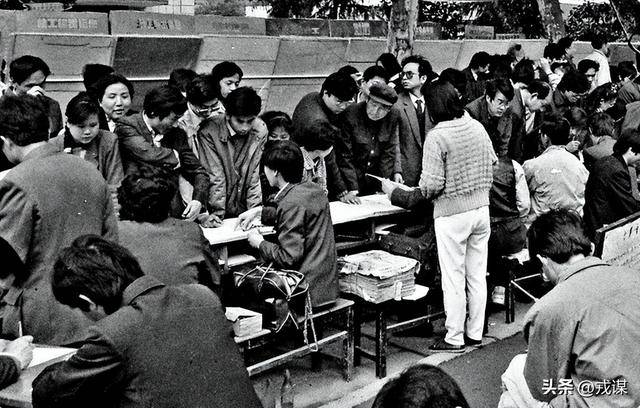
Core Viewpoint - The article contrasts the economic conditions of China in the 1980s and 1990s with the current situation, highlighting a shift from inflation and scarcity to deflation and oversupply, driven by structural issues in consumption and debt [4][11]. Economic Context - In the past, China faced severe inflation due to a lack of goods, leading to a situation where consumers had money but could not find products to buy [3][6]. - Currently, China is described as the "world's factory," producing 33% of global capacity, but is now struggling with oversupply and insufficient domestic demand [6][7]. Consumption Issues - The article identifies three major challenges affecting consumption: 1. **Income Distribution Imbalance**: Consumer spending accounts for only 33% of GDP, significantly lower than in developed countries, where it starts at 50% [7]. 2. **Debt Burden**: High levels of household debt, with a leverage ratio of 62%, are constraining consumer spending, as many individuals are burdened by mortgage repayments [9]. 3. **Aging Population**: An accelerating aging demographic is leading to reduced consumption, as older individuals typically spend less and the younger population is insufficient to drive demand [9][11]. Current Economic Phenomenon - The current deflation is attributed to a lack of consumer confidence and purchasing power, rather than a desire to buy, resulting from debt, income expectations, and pessimism about the future [11]. - The transition from a situation of scarcity to one of oversupply reflects a fundamental shift in economic dynamics, with the focus now on demand-side issues rather than supply-side constraints [11].