电动化

Search documents
汽车成绩单里 写着中国制造的未来
Ren Min Ri Bao· 2025-12-31 01:50
"路子对了,就要坚持走下去,久久为功"。协同上与下,中国制造将形成强大合力。畅通供与需,中国 制造将收获强劲动力。统筹"竞"与"合",中国制造将开拓更大空间 今天,全球每卖出3辆新能源汽车,就有2辆来自中国。中国在新能源汽车领域一马当先,成功关键之一 就在于上下协同:顶层设计上,国家层面先后出台两个中长期发展规划,各部门相继推出财税金融、积 分管理、道路通行等诸多支持政策,超前布局、长期投入、优化生态;落地执行方面,各地区找准定 位、各展所长,发展产业链相关环节,广大企业积极响应,突破关键技术,推出创新产品。正是在各方 共同努力下,中国在短短10年间形成了一条较为完整的新能源汽车产业链、供应链,实现在汽车领域 的"换道超车""后来居上"。 上下同欲者胜。"十五五"规划建议擘画了未来5年发展蓝图,围绕"建设现代化产业体系,巩固壮大实体 经济根基"作出系统部署。坚持全国一盘棋,一张蓝图绘到底,充分调动产学研各方面积极性主动性创 造性,中国制造将不断跃上新台阶,中国式现代化的物质技术基础将更为坚实。 畅通供与需,中国制造将收获强劲动力。 酷炫的车身,考究的内饰,聪明的智驾系统,先进可靠的芯片、电池……这些年,比亚迪 ...
汽车成绩单里,写着中国制造的未来(观象台)
Ren Min Wang· 2025-12-30 22:12
刘志强 "路子对了,就要坚持走下去,久久为功"。协同上与下,中国制造将形成强大合力。畅通供与需,中国 制造将收获强劲动力。统筹"竞"与"合",中国制造将开拓更大空间 站在"十四五"末,回看5年汽车业发展,可谓亮点纷呈、成绩斐然—— 实力持续增强。看整体规模,2023年,全国汽车年产销量首次突破3000万辆。2025年前11个月,年产销 量双双突破3100万辆,持续保持全球第一。看外贸出口,2023年,中国汽车出口首次超越日本,位居全 球第一,2025年前11个月汽车出口634.3万辆,同比增长18.7%,我国稳居全球第一大汽车出口国。 转型持续推进。新能源汽车产量,2020年是140万辆左右,今年前10个月,就超过1300万辆。10月份, 新能源汽车月度新车销量更是首次超过汽车新车总销量的50%。智能化方面,具备组合辅助驾驶功能的 乘用车新车占比,从2020年的16.2%提升到2025年前三季度的64%。抓住电动化、智能化转型机遇,汽 车产业乘势而上,不断打开新空间。 技术持续进化。看新能源汽车"三电"技术,过去5年,我国动力电池充电效率提升4倍以上,电机和电控 系统全球领先。加上人机交互、协同感知等技术不断 ...
汽车成绩单里 写着中国制造的未来(观象台)
Ren Min Ri Bao· 2025-12-30 21:36
"路子对了,就要坚持走下去,久久为功"。沉甸甸的"十四五"汽车成绩单,为加快建设汽车强国奠定了 厚重基础,也为我们在"十五五"时期推动中国制造由大到强注入坚定信心。 "路子对了,就要坚持走下去,久久为功"。协同上与下,中国制造将形成强大合力。畅通供与需,中国 制造将收获强劲动力。统筹"竞"与"合",中国制造将开拓更大空间 站在"十四五"末,回看5年汽车业发展,可谓亮点纷呈、成绩斐然—— 实力持续增强。看整体规模,2023年,全国汽车年产销量首次突破3000万辆。2025年前11个月,年产销 量双双突破3100万辆,持续保持全球第一。看外贸出口,2023年,中国汽车出口首次超越日本,位居全 球第一,2025年前11个月汽车出口634.3万辆,同比增长18.7%,我国稳居全球第一大汽车出口国。 转型持续推进。新能源汽车产量,2020年是140万辆左右,今年前10个月,就超过1300万辆。10月份, 新能源汽车月度新车销量更是首次超过汽车新车总销量的50%。智能化方面,具备组合辅助驾驶功能的 乘用车新车占比,从2020年的16.2%提升到2025年前三季度的64%。抓住电动化、智能化转型机遇,汽 车产业乘势而上,不 ...
揭晓!2025国际汽车十大新闻!
Zhong Guo Qi Che Bao Wang· 2025-12-30 10:55
Group 1 - The global automotive industry is undergoing significant transformation and challenges, with electric and intelligent vehicle transitions accelerating, particularly for Chinese automakers who leverage technological advantages to penetrate global markets [2] - Traditional automotive powerhouses, especially in Germany, are facing severe pressures, including a wave of layoffs and the European Union's withdrawal of the "ban on combustion engines" [2][3] - Trade tensions and market fluctuations, such as the U.S. imposing tariffs on imported vehicles, are reshaping the global automotive landscape [4] Group 2 - Chinese automakers are increasingly focusing on overseas markets as a key growth engine, with exports expected to exceed 7 million vehicles in 2025, marking a historical high [6] - Significant investments and local production facilities are being established in regions like Latin America and Southeast Asia, with Brazil and Thailand becoming strategic hubs for Chinese automotive companies [6] Group 3 - The European Union has retracted its 2035 policy to ban the sale of new combustion engine vehicles, adjusting its emissions target to a 90% reduction from 2021 levels, allowing for a mix of vehicle types to remain in the market [8] - This policy shift is influenced by various factors, including the slow adoption of electric vehicles and pressure from major automotive manufacturers [8] Group 4 - Many multinational automotive companies are scaling back their electric vehicle ambitions in favor of hybrid technologies due to challenges such as high battery costs and insufficient infrastructure [10] - Companies like Honda and Ford are adjusting their strategies to focus more on hybrid models while delaying electric vehicle launches [10] Group 5 - 2025 is recognized as a pivotal year for humanoid robots, with significant advancements leading to mass production and integration into the automotive industry [12] - Major automotive companies are collaborating with robotics firms to enhance manufacturing efficiency through automation [12] Group 6 - Tesla's sales have been adversely affected by CEO Elon Musk's political involvement, leading to a decline in global sales figures [14] - In Europe, Tesla's sales dropped by 28% year-on-year, while in the U.S., sales fell by 23%, attributed to an aging product lineup and the cancellation of purchase subsidies [14] Group 7 - The German automotive industry is experiencing a "layoff wave," with employment numbers reaching a new low since 2011, driven by the transition to electric vehicles and competitive pressures [16] - Major companies like Volkswagen and Ford are planning significant job cuts, reflecting the industry's struggles amid rising costs and declining traditional vehicle sales [16] Group 8 - The hydrogen fuel cell vehicle market is facing significant challenges, with a decline in hydrogen stations and high costs hindering commercialization efforts [17] - Major automakers are withdrawing from hydrogen projects, indicating a shift in focus towards more viable alternatives [17] Group 9 - The commercialization of Robotaxi services is accelerating, with numerous projects being launched globally, particularly in major cities [19] - Companies like Waymo and various Chinese firms are expanding their Robotaxi operations, marking a significant step towards the integration of autonomous vehicles into everyday transportation [19] Group 10 - The Russian automotive market is in decline, with new car sales dropping by 19% year-on-year, largely due to increased taxes and tariffs on imported vehicles [20] - The shift in policy aims to promote local manufacturing, but the transition is causing supply chain disruptions and rising vehicle prices [20]




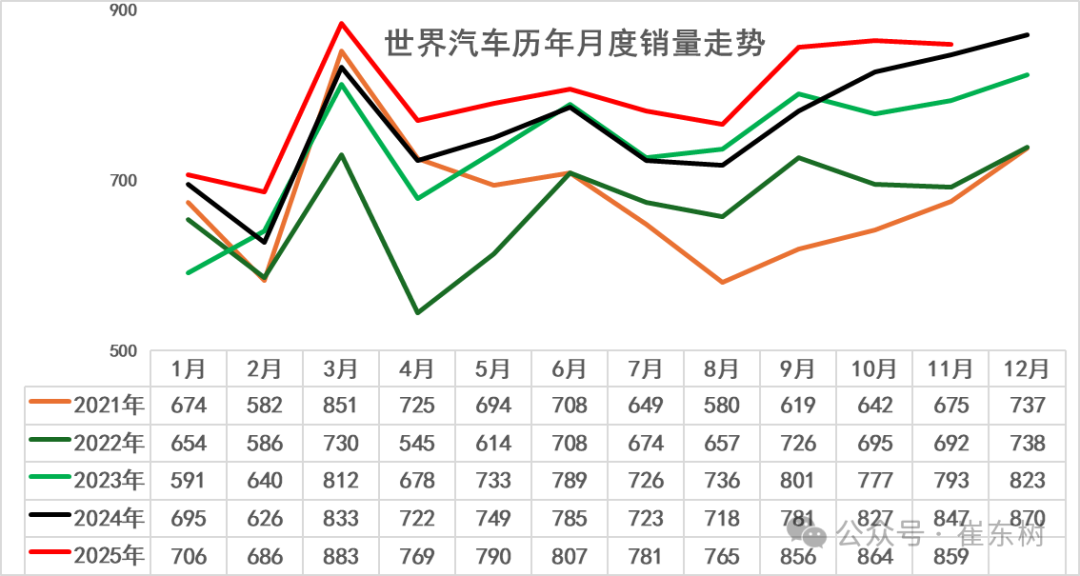
崔东树:11月中国占世界汽车份额回升至40%
智通财经网· 2025-12-30 09:28
Core Insights - Global automotive sales reached 8.59 million units in November 2025, showing a year-on-year increase of 1% and a month-on-month increase of 1% [1][3] - The automotive market in China and the US is experiencing relative slowdowns, contributing to the overall deceleration in global sales growth [1][3] - For the period from January to November 2025, global sales totaled 87.66 million units, reflecting a year-on-year growth of 6% [1][3] Global Market Performance - In the first eleven months of 2025, global automotive sales grew by 6%, with China contributing 31.08 million units, an increase of 11% [1][12] - The US automotive market saw sales of 15.18 million units, up 2%, while India and Japan reported increases of 5% and 3%, respectively [1][12] - Germany's sales remained stable at 2.89 million units, showing no change from the previous year [1][12] China's Market Share - China's share of the global automotive market rose to 40% in November 2025, an increase of 1 percentage point from the previous year [1][11] - By the end of 2025, China's market share is projected to reach 35.4%, up 1.2 percentage points compared to the same period last year [1][11] - The Chinese automotive market is expected to maintain its leading position, with significant contributions to global sales growth [1][11] Company Performance - Among the top 10 global automotive companies, three are Chinese: BYD ranked 6th, Geely 8th, and Chery 10th, indicating strong performance and market share growth [1][21] - The electrification trend is causing some international automotive brands to decline, while Chinese companies are gaining market share [1][21] - The overall performance of Chinese automotive companies has exceeded expectations, leading to a significant increase in their global market presence [1][21]


百万级市场的权力交接:中国车重新定义超豪华
21世纪经济报道· 2025-12-30 09:24
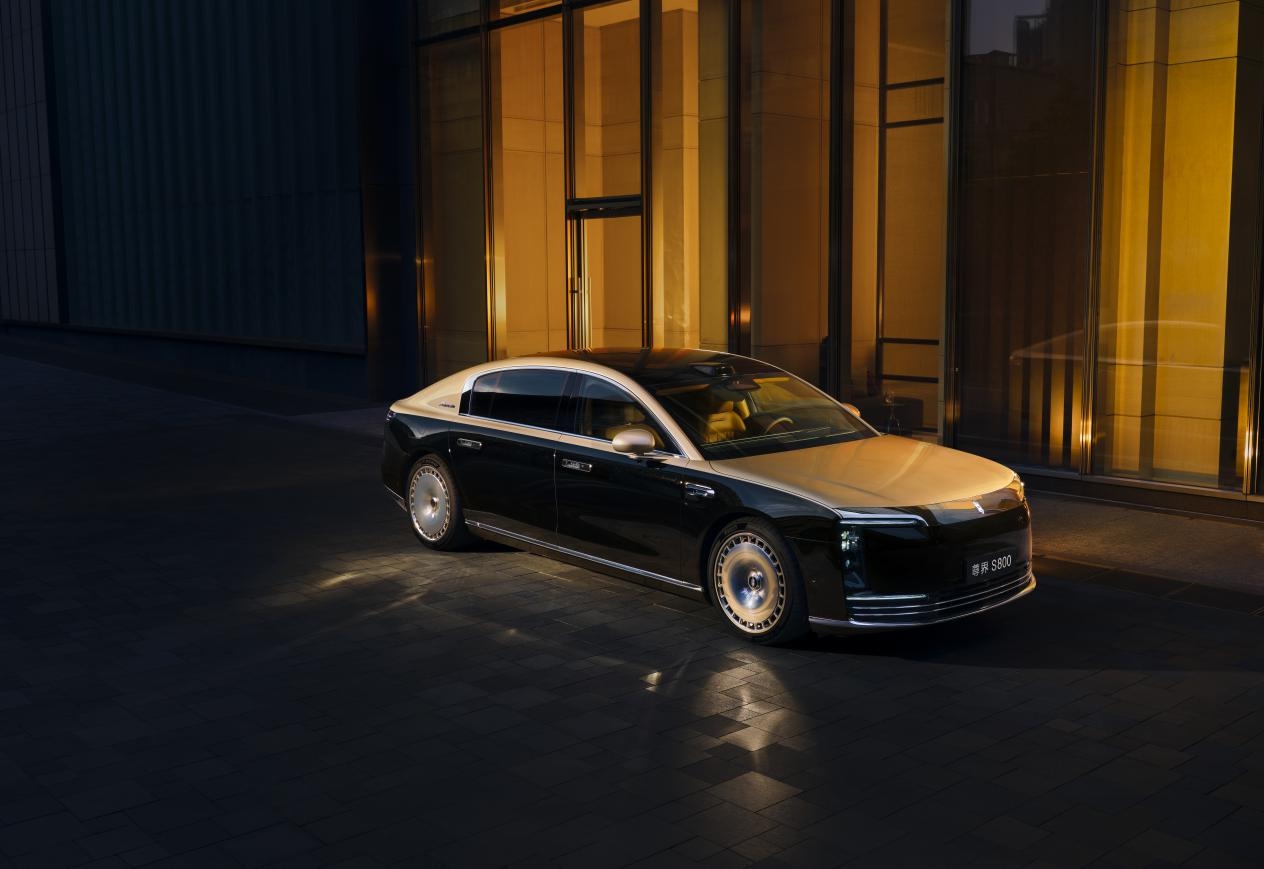
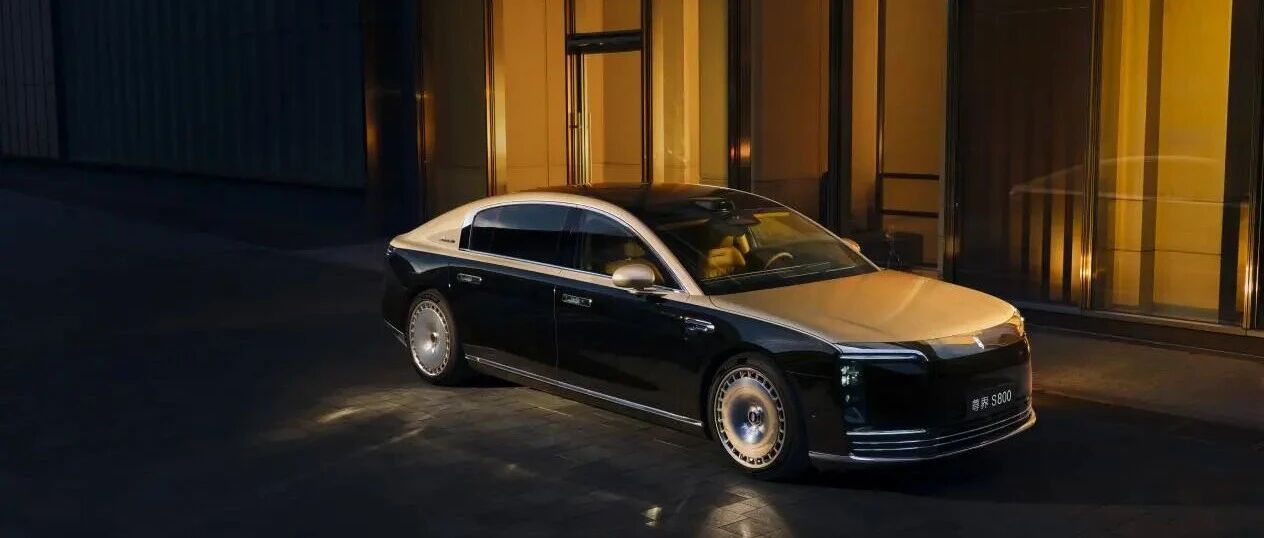
Core Viewpoint - The luxury car market in China, previously dominated by European brands, is undergoing a significant transformation with the introduction of the Chinese brand ZunJie S800, which has successfully established itself in the high-end segment, marking a new era of competition in the ultra-luxury market [1][2]. Market Dynamics - The ultra-luxury car market, historically defined by European brands, is losing its traditional barriers as Chinese brands like ZunJie S800 enter the market with competitive pricing and innovative technology [5][6]. - In 2024, Maserati's sales in China dropped to 1,228 units, a decline of over 90% from its peak, while Bentley and Rolls-Royce also experienced significant sales declines of approximately 20% and 38% respectively [5][6]. Technological Advancements - The ZunJie S800 features advanced technology such as the Huawei QianKun intelligent driving system, which aims to redefine luxury driving experiences by enhancing safety and comfort through automation [10][12]. - The vehicle's production involves a "quality alliance" with over 220 global suppliers, aiming to exceed the craftsmanship standards set by century-old luxury brands [17][19]. Consumer Behavior - The new generation of high-net-worth individuals is shifting their purchasing preferences from traditional luxury symbols to technology-driven features, valuing driving enjoyment and comfort over brand heritage [7][9]. - Approximately 80% of early adopters of the ZunJie S800 are men aged 40 to 50, many of whom are replacing vehicles from established luxury brands like Mercedes-Benz and Porsche [13][14]. Sales Performance - The ZunJie S800 achieved over 6,500 orders within the first month of its launch, indicating strong market acceptance and demand [5][9]. - By December 2025, the ZunJie S800 had delivered over 3,127 units in a single month, setting a new record for the model [9][21]. Industry Impact - The ZunJie S800 is seen as a catalyst for change in the Chinese automotive industry, pushing suppliers to innovate and improve their capabilities to meet the new standards set by the vehicle [17][21]. - The introduction of the ZunJie S800 signifies a shift in the luxury car market, where technology and user experience are becoming the new benchmarks for success [10][21].
柳工(000528):深度研究报告:国企改革重塑经营活力,多元发展打造土方龙头
Huachuang Securities· 2025-12-30 08:34
Investment Rating - The report assigns a "Strong Buy" rating for the company, marking its first coverage [1]. Core Insights - The company is positioned as a leader in the domestic engineering machinery sector, with a strategic goal to achieve revenue of 60 billion yuan by 2030, focusing on comprehensive solutions, full automation, and internationalization [7][29]. - The company has experienced a significant recovery in the domestic market, with a 21.5% year-on-year growth in excavator sales in the first three quarters of 2025, driven by infrastructure projects and equipment renewal policies [7][9]. - The mixed-ownership reform has revitalized the company's operational vitality, leading to a 52.9% year-on-year increase in net profit for 2024, indicating a shift towards high-quality growth [9][31]. Financial Summary - Total revenue projections for 2024A, 2025E, 2026E, and 2027E are 30,063 million, 34,258 million, 39,887 million, and 45,801 million yuan respectively, with year-on-year growth rates of 9.2%, 14.0%, 16.4%, and 14.8% [3]. - Net profit attributable to shareholders is forecasted to be 1,327 million, 1,627 million, 2,237 million, and 2,773 million yuan for the same years, with growth rates of 52.9%, 22.6%, 37.5%, and 24.0% [3]. - Earnings per share (EPS) are expected to be 0.65, 0.80, 1.10, and 1.36 yuan for 2024A, 2025E, 2026E, and 2027E respectively [3]. Business Overview - The company has established a comprehensive product system covering various machinery types, including excavators, loaders, and industrial vehicles, with a global presence in over 180 countries [14][16]. - The company has implemented a "three major growth curves" strategy, focusing on stabilizing its core earth-moving machinery business, accelerating growth in emerging sectors, and enhancing its international presence [7][29]. - The company is transitioning from a product-centric approach to a customer-centric model, providing integrated solutions that encompass the entire lifecycle of equipment [30]. Market Performance - The company has seen a significant increase in overseas revenue, which accounted for 46.9% of total revenue in the first half of 2025, serving as a stabilizing force against domestic market fluctuations [7][34]. - The company’s profitability has improved, with a gross margin stabilizing above 22% and a net margin increasing from 2.44% in 2022 to 4.93% in the first three quarters of 2025 [36]. Strategic Initiatives - The company has launched a convertible bond issuance to fund smart manufacturing and production upgrades, aiming to enhance operational efficiency and risk resilience [27]. - The mixed-ownership reform has led to a diversified shareholding structure, which is expected to facilitate further integration of resources and innovation [19][21]. Future Outlook - The company aims to achieve a revenue target of 60 billion yuan by 2030, with a focus on increasing the international revenue share to over 60% and improving net profit margins [29]. - The strategic emphasis on electric and high-margin products is expected to enhance competitiveness and profitability in the face of domestic price pressures [36].

柳工(000528):公司 2026 年年度财务预算议案点评:混改效果持续体现,收入和净利润维持增长
国泰海通· 2025-12-30 07:31
公 司 研 究 混改效果持续体现,收入和净利润维持增长 柳工(000528) 公司 2026 年年度财务预算议案点评 | [姓名table_Authors] | 电话 | 邮箱 | 登记编号 | | --- | --- | --- | --- | | 肖群稀(分析师) | 0755-23976830 | xiaoqunxi@gtht.com | S0880522120001 | | 赵靖博(分析师) | 021-23185625 | zhaojingbo@gtht.com | S0880525040056 | 本报告导读: 目前挖机内销温和复苏,海外销售结构性改善,公司智能化、电动化、全球化布局 完善,混改效果突出,业绩有望持续释放。 投资要点: | [Table_Finance] 财务摘要(百万元) | 2023A | 2024A | 2025E | 2026E | 2027E | | --- | --- | --- | --- | --- | --- | | 营业总收入 | 27,519 | 30,063 | 34,368 | 39,305 | 43,184 | | (+/-)% | 3.9% | 9.2 ...
格局改变,中国汽车全球销量首超日本
Guan Cha Zhe Wang· 2025-12-30 05:50
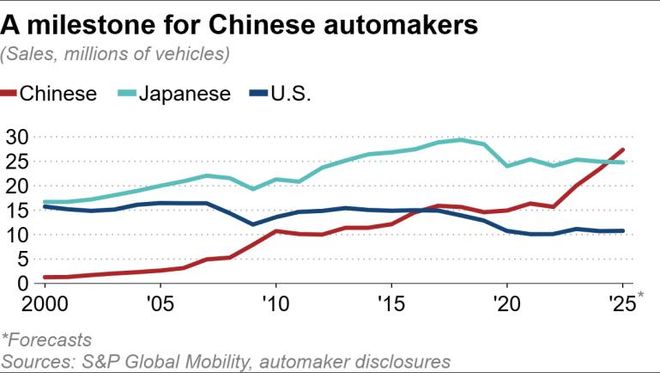
这意味着,在2023年正式确立汽车出口首位的地位后,中国汽车制造业在规模层面已经站上世界之巅。 (文/观察者网 张家栋 编辑/高莘) 据《日经新闻》等多家外媒12月30日报道,中国汽车制造商有望在2025年首次超越日本同行,占据全球 新车销量榜首。而20多年来一直位居首位的日本汽车制造商则将降至第2位。 《日经新闻》根据2025年1—11月各企业发布的资料,以及标普全球汽车(S&P Global Mobility)的数 据推测,中国汽车的全球销量预计同比增长17%,增至约2700万辆;日本车企合计销量约为2500万辆, 与上年持平。 中、美、日全球汽车销量变化趋势 日经新闻 统计数据显示,日本汽车在2018年左右达到销量巅峰时期,其在全球销量约3000万辆,截至2022年,日 本车企与中国车企的年销量差值仍有800万辆,但这份领先仅3年就被后者实现反超。 外媒将中国汽车销量的反超归结于以下三个方面,一是本土市场的高占比,二是中国市场对于新能源的 大力推广,三是在海外市场中国车企的强竞争力带来的销量激增。 首先是中国市场的高占比,今年以来,中国汽车制造商在本土的销量占据70%,展现出强烈的汽车强国 特征。 此外 ...
上探百万市场的中国车,开始争夺定义“超豪华”的权力
2 1 Shi Ji Jing Ji Bao Dao· 2025-12-30 05:10
Core Insights - The luxury car market in China, previously dominated by European brands, is experiencing a significant shift with the introduction of the Chinese brand, ZunJie S800, which has achieved a sales milestone of 10,000 units within months of its launch [1][2][8] - The ZunJie S800 represents a systemic breakthrough in the ultra-luxury segment, showcasing a comprehensive capability that includes advanced technology, stable production, and a collaborative high-end supply chain [2][15] - The traditional barriers of the ultra-luxury market, built on historical prestige and craftsmanship, are weakening as consumer preferences shift towards technology and functionality [5][6] Market Dynamics - The ZunJie S800 was launched at a price range of 708,000 to 1,018,000 yuan, quickly garnering over 6,500 orders in its first month, indicating a departure from traditional pricing barriers in the luxury segment [5][8] - Sales data shows a drastic decline in the sales of traditional luxury brands like Maserati and Bentley, with Maserati's sales in China dropping over 90% from its peak [5][6] - The penetration rate of new energy vehicles in the luxury segment reached 37.5% by May 2025, with Chinese brands capturing over 80% of the market share in the high-end new energy segment [6][8] Consumer Behavior - The new generation of high-net-worth consumers is shifting their purchasing criteria from brand prestige to technological innovation and driving experience, reflecting a change in luxury consumption patterns [6][12] - The early adopters of the ZunJie S800 are predominantly affluent males aged 40-50, many of whom are replacing vehicles from established luxury brands, indicating a significant shift in consumer loyalty [12][13] - The ZunJie S800 has become a "social currency" among its users, enhancing its appeal through word-of-mouth recommendations within affluent circles [13] Technological Innovation - The ZunJie S800 features the Huawei QianKun intelligent driving system, which utilizes 36 sensors to enhance driving safety and comfort, setting a new technological benchmark for luxury vehicles [9][11] - The vehicle's design includes innovative features such as zero-gravity seats and smart privacy glass, redefining the luxury experience in automotive design [11][12] - The production of the ZunJie S800 is supported by a state-of-the-art factory that employs a "digital twin" and "atomic-level" quality control, ensuring high standards in manufacturing [17][18] Industry Impact - The ZunJie S800 is positioned as a leader in the high-end automotive supply chain, pushing suppliers to meet new standards of excellence and fostering a "quality alliance" among top global partners [15][16] - The project has led to significant technological advancements and collaborations among suppliers, enhancing the overall capabilities of the Chinese automotive industry [16][18] - The success of the ZunJie S800 marks a pivotal moment for Chinese brands in the ultra-luxury market, establishing a new benchmark for quality and innovation [18]