软件定义汽车

Search documents
中兴通讯通过TüV莱茵汽车质量管理体系认证
Zhong Guo Qi Che Bao Wang· 2025-08-05 05:57
Core Insights - ZTE Corporation's subsidiary, ZTE (Nanjing) Co., Ltd., has received IATF 16949 automotive quality management system certification from TÜV Rheinland, indicating a mature quality management system that meets automotive industry standards [2][3] - The IATF 16949 standard, established by the International Automotive Task Force in 2016, aims to reduce quality risks and enhance production efficiency and product quality through preventive measures and continuous improvement [2] - This certification is a significant milestone for ZTE in the automotive sector, supporting its expansion into the smart vehicle domain [2][3] Company Developments - ZTE has over 30 years of R&D experience in the ICT field, showcasing strong foundational innovation capabilities in chips, algorithms, architectures, and operating systems [3] - The company aims to become a provider of digital automotive foundational capabilities and a high-performance partner for domestic manufacturers, offering hardware and software products and services related to connectivity and intelligence in vehicles [3] Partnership Insights - The long-standing collaboration between ZTE and TÜV Rheinland has been crucial for the continuous improvement of ZTE's quality management system [3] - TÜV Rheinland emphasizes its commitment to providing excellent technical support across the entire automotive industry chain, highlighting the mutual trust and successful cooperation with ZTE [3]



专论 || 方建华:发挥资本协同效能 驱动新能源汽车创新发展
Zhong Guo Qi Che Bao Wang· 2025-08-05 03:42
Core Insights - The rapid development of the new energy vehicle (NEV) industry is driving a transformation in production capacity and reshaping the global automotive industry landscape [1] - China's NEV industry has maintained its position as the world's largest producer and seller for ten consecutive years, with production and sales expected to reach 12.888 million and 12.866 million units in 2024, representing year-on-year growth of 34.4% and 35.5% respectively [1] Industry Transformation - The transition from "Made in China" to "Intelligent Manufacturing in China" signifies a significant shift in the industry [1] - The entry of tech giants like Huawei and Xiaomi is expected to deepen the ongoing transformation in the NEV sector [1] - The exit of Apple from the NEV market and the slowdown of German luxury brands (BBA) in electrification reflect a cautious adjustment to the new ecosystem led by "Intelligent Manufacturing in China" [1] Supply Chain Competitiveness - The integrity and scale of the supply chain are core competitive advantages for China's NEV industry in the global market [2] - Chinese companies have significantly reduced the cost of separator materials from 18 yuan/m² to between 0.4 and 0.9 yuan/m², showcasing breakthroughs in technology and production processes [2] - Leading companies like CATL and BYD dominate the global battery market, demonstrating strong vertical integration capabilities [2] Technological Advancements - The integration of autonomous driving and intelligent networking technologies is redefining vehicles as smart mobile terminals, leading to cost reductions [3] - The cost of lithium iron phosphate batteries has decreased from 2.2 yuan/Wh in 2014 to 0.42 yuan/Wh in 2024, while the price of BYD's Qin Plus DM-i is projected to drop from 130,000 yuan in 2022 to below 80,000 yuan by 2025 [3] - By the end of 2024, China is expected to have 12.818 million charging facilities, with a year-on-year increase of 49.1% [3] Industry Logic Restructuring - The NEV industry is transitioning from the "electrification" phase to the "intelligentization" phase, indicating a deep restructuring of industry logic [4] - The achievements of the electrification phase are attributed to policy guidance, market drive, innovation support, capital assistance, and industry collaboration [4] - The expected production and sales of over 15 million vehicles in the first half of 2025 mark a shift from growth to optimization in the industry [4] Global Expansion and Competition - The "going global" strategy for China's NEV industry is both a response to domestic market dynamics and a practice of the "dual circulation" strategy [5] - The imbalance between production capacity expansion and technological innovation efficiency highlights the competitive nature of the industry [5] - The stabilization of upstream material prices and the low operation of power batteries provide an adjustment window for industry upgrades [5] Carbon Neutrality Goals - The "dual carbon" goals are pivotal for the green revolution, with the NEV industry playing a crucial role in achieving these objectives [7] - In 2024, China's total carbon emissions are projected to be 12.6 billion tons, with the transportation sector contributing around 1 billion tons [7] - The anticipated global market share of electric vehicles is expected to exceed 40% by 2030, with China's share potentially reaching 80% [7] Capital Coordination Mechanisms - The transition to high-quality development necessitates a robust capital coordination mechanism to support the NEV industry's innovation [9] - Key mechanisms include activating venture capital, enhancing bank financing channels, and strengthening the capital market's role [9] - A collaborative mechanism involving venture capital, bank empowerment, and capital market support is essential for fostering technological innovation and industrial application [10]


智能汽车热度持续升温,镁佳股份赴港IPO能否博得市场青睐?
Zhi Tong Cai Jing· 2025-08-03 13:14
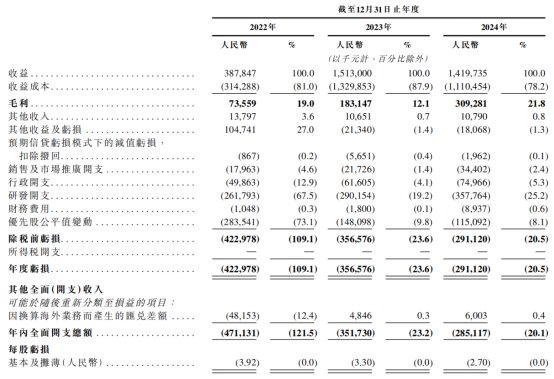
Core Viewpoint - Magnesium Technology Co., Ltd. (referred to as Magnesium) has submitted its IPO application to the Hong Kong Stock Exchange, with notable investment from various institutions and a post-investment valuation of approximately $931 million (around 6.7 billion RMB) as of the D+ round of financing [1] Group 1: Company Overview - Magnesium is one of the first companies in China's smart automotive industry to develop fully standardized, modular, software-driven integrated domain control solutions [1] - The company is a third-party supplier that has achieved mass production of integrated smart cockpit and parking solutions driven by a single automotive-grade main control chip [1] - Magnesium is one of only two third-party suppliers capable of providing a fully integrated smart voice system with a recognition accuracy rate of 99%, the highest in the industry [1] Group 2: Financial Performance - From 2022 to 2024, Magnesium's revenue is projected to grow from 388.47 million RMB to 1.42 billion RMB, with a compound annual growth rate (CAGR) of 91.3% [2] - The gross margin is expected to increase from 19.0% in 2022 to 21.8% in 2024, while net losses are projected to decrease from 423 million RMB in 2022 to 291 million RMB in 2024 [2][3] - The number of cumulative designated points is expected to grow from 15 in 2022 to 48 in 2024, with delivery volume increasing from 120,106 units to 634,337 units during the same period [5] Group 3: Market Position and Growth Potential - Magnesium's solutions have been adopted by major automotive manufacturers, with an estimated market share of 9.3% in China, ranking second among integrated domain control solution suppliers [14] - The company has seen a significant increase in wallet share from its top five customers, rising from 1.2% in 2022 to 12.7% in 2024, indicating broader adoption of its solutions across existing and new vehicle platforms [4] - The automotive industry is rapidly transitioning towards smart, electric, and connected vehicles, creating a golden development period for the smart automotive supply chain, which is expected to benefit Magnesium's IPO [1][16]
J.D. Power研究:先进配置渗透率大幅上升
Zhong Guo Qi Che Bao Wang· 2025-07-31 09:17
Core Insights - The 2025 China Automotive Intelligent Experience Study (TXI) by J.D. Power reveals a significant increase in the intelligent innovation index, marking a new high in the automotive industry's smart technology integration [1][2] - The study indicates that the penetration rate of advanced configurations has risen sharply, reflecting the rapid development of AI-assisted driving and chip computing power [2] Group 1: Intelligent Innovation Index - The intelligent innovation index increased by 38 points to 588 in 2025, following a 22-point rise in 2024 [2] - The market depth index, which measures the penetration of advanced configurations, rose by 80 points to 275 [2] Group 2: Market Trends - The new energy vehicle market depth saw a significant year-on-year increase of 86 points, reaching 339, solidifying its leading position in intelligent development [2] - There is a noticeable polarization in brand performance, with domestic brands rapidly iterating and responding to user demands, while international brands focus on technological maturity and functional stability [2] Group 3: User Experience and Expectations - User complaints regarding technology configurations have increased, with an average of 10.7 complaints per advanced technology configuration, indicating a shift towards optimizing user experience rather than merely adding features [3] - The perception of advanced driver-assistance systems (ADAS) has significantly improved, with consumers increasingly expecting human-like driving experiences [3] Group 4: Quality and Usability Challenges - Overall quality complaints in the industry rose by 34.8 per 100 vehicles, with usability issues becoming more prominent, particularly in smart cockpit configurations [4] - The proportion of complaints related to "difficult to understand/use" issues in smart cockpit configurations increased to 36% [4] Group 5: Safety as a New Focus - Consumer demand for safety features has surged, with high usage frequency and repurchase intent for safety-related configurations such as departure assistance and driver monitoring [4]

特斯拉FSD还没来,一场掀翻牌桌的战争已经打响
3 6 Ke· 2025-07-28 12:01
Core Viewpoint - The automotive industry is experiencing a significant shift in pricing strategies for advanced driving features, driven by the anticipated arrival of Tesla's Full Self-Driving (FSD) technology in China, leading to a price war among local manufacturers [1][3][16]. Group 1: Price Changes and Market Reactions - Since April 2023, a price collapse regarding advanced driving features has swept through the Chinese electric vehicle market, with many features that previously required substantial fees now being offered for free or at significantly reduced prices [2][4]. - Tesla announced a price cut for its FSD from $12,000 to $8,000 and introduced a subscription option at $99 per month, prompting immediate reactions from Chinese automakers [4]. - Following Tesla's announcement, Xpeng Motors declared that its XNGP feature would be free for all current MAX model owners, marking the beginning of a trend towards free advanced driving features [6]. Group 2: Industry Dynamics and Consumer Behavior - The automotive industry is witnessing a preemptive strike by local players to reshape the market dynamics before Tesla's FSD launch, indicating a strategic shift rather than a mere price reduction [3][17]. - A survey by Deloitte revealed that Chinese consumers prefer to pay a one-time fee for automotive features rather than subscribe, leading to a decline in willingness to pay for advanced driving technologies [9]. - The shift towards free features is seen as a way to attract users and gather valuable driving data, which is crucial for the development of autonomous driving technologies [12][10]. Group 3: Data as a Future Asset - The automotive industry's business model is evolving towards valuing data as a key asset, with companies betting on the long-term value of operational data over short-term software sales [13][17]. - The concept of "data loop" is emphasized, where real-world driving data collected from vehicles is essential for training AI models, positioning data as a critical resource for future innovations [12]. - The potential for data monetization is highlighted through models like Usage-Based Insurance (UBI), which can offer personalized insurance rates based on driving behavior, showcasing a direct financial benefit from data collection [15].


问界“与用户共话新豪华”,张兴海:不安全的车坚决不造
Qi Lu Wan Bao· 2025-07-27 23:43
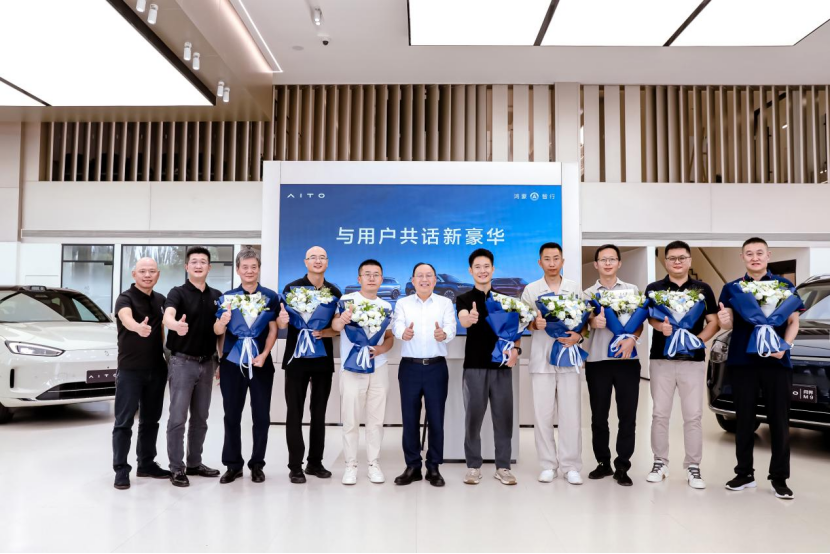
Core Insights - The article highlights the "User-Defined Luxury" initiative by the company, emphasizing user engagement in product development and service enhancement [2][3] - The company aims to redefine luxury in the automotive sector through technological innovation and user feedback, focusing on safety and comfort as primary values [5][11] User Engagement - The company has been actively engaging with users through events like "Talking New Luxury with Users," where feedback on driving assistance and services is collected [1][3] - Users expressed pride in their ownership experiences, citing the professional sales approach and superior driving qualities of the vehicles [7][9] Safety and Technology - The chairman emphasized that user safety is the core of the company's philosophy, stating that safety precedes comfort and luxury [5] - The company has developed an intelligent safety system that includes four key areas: life protection, vehicle protection, health care, and privacy protection, ensuring comprehensive safety for users [11] Product Performance - The company has launched four series of vehicles, including the new M5, M7, M8, and M9, achieving a record delivery of 700,000 units in 40 months, setting a benchmark for new luxury electric vehicles in China [11] - Users reported significant cost savings with the vehicles, highlighting low energy consumption and the elimination of the need for a driver due to advanced driving assistance features [9][11] Brand Recognition - The company has been recognized for its commitment to user service, ranking first in the development confidence index according to a recent study, indicating a strong brand reputation [13] - The ongoing "Talking New Luxury with Users" events are part of the company's strategy to maintain deep connections with users while continuing to innovate in smart electric vehicles [13]

中欧峰会重启务实沟通
citic securities· 2025-07-25 02:50
Market Overview - A-shares rose on Thursday, with the Shanghai Composite Index up 0.65% to 3,605 points, driven by the Hainan closure boosting related sectors[15] - European markets generally closed higher, with the Eurozone Stoxx 600 index up 0.24%, as the European Central Bank (ECB) maintained interest rates[9] - U.S. stock performance was mixed, with the Dow Jones down 0.70% to 44,693 points, while the S&P 500 slightly increased by 0.07%[9] Economic Indicators - U.S. economic data showed resilience, with initial jobless claims declining for the sixth consecutive week, indicating a strong labor market[29] - The ECB's decision to hold rates steady marked a shift from previous rate cuts, reflecting confidence in the Eurozone's economic resilience despite global uncertainties[9] Commodity and Currency Movements - Oil prices rose, with WTI crude increasing by 1.2% to $66.03 per barrel, supported by positive trade negotiations[26] - The U.S. dollar index rebounded by 0.2%, while gold prices fell, reflecting market adjustments following the ECB's announcements[24] Sector Performance - In the U.S., the technology sector saw gains, particularly in AI-related stocks, while the consumer discretionary sector lagged, with Tesla's stock dropping 8.20% due to disappointing earnings[9] - In Hong Kong, the Hang Seng Index rose 0.51%, with significant gains in the healthcare and materials sectors, while large tech stocks faced declines[11] Investment Opportunities - The China-Europe summit highlighted potential investment opportunities in energy equipment and engineering machinery, as China seeks to enhance its exports to Europe[6] - The beverage sector in China is expected to perform well this summer due to high temperatures and increased travel, with recommendations for leading brands like Nongfu Spring[13]




【招商电子】恩智浦(NXPI.O)25Q2跟踪报告:下游市场增长符合预期,25Q3营收预计环比增长8%
招商电子· 2025-07-24 15:06
Core Viewpoint - NXP Semiconductors reported Q2 2025 revenue of $2.926 billion, a year-over-year decline of 6.4% but a quarter-over-quarter increase of 3.2%, exceeding the midpoint of guidance [1][10] - The company anticipates a recovery in the automotive and industrial IoT sectors, with a projected revenue growth of 8%-12% CAGR from 2025 to 2027 [4][37] Financial Performance - Q2 2025 revenue was $2.926 billion, with a gross margin of 56.5%, slightly below the previous year but close to the upper limit of guidance [1][13] - Non-GAAP operating profit margin for Q2 2025 was 32%, down 230 basis points year-over-year but above guidance [10][13] - Q3 2025 revenue guidance is set between $3.05 billion and $3.25 billion, with a midpoint indicating a 3% year-over-year decline but an 8% quarter-over-quarter increase [3][16] Business Segments - Automotive segment revenue for Q2 2025 was $1.729 billion, accounting for 59% of total revenue, with a year-over-year increase of 0.1% and a quarter-over-quarter increase of 3.3% [2][12] - Industrial and IoT revenue was $546 million, down 11.4% year-over-year but up 7.5% quarter-over-quarter, exceeding expectations [2][12] - Mobile business revenue was $331 million, down 4.1% year-over-year and 2.1% quarter-over-quarter, also exceeding expectations [2][12] Market Trends - The automotive market in China is showing strong growth, driven by OEMs pushing for innovations in autonomous driving [4][36] - The overall industrial market is recovering, with growth shifting from consumer electronics to core industrial sectors [4][37] - The company expects to see a continued increase in demand for radar products due to the rising levels of ADAS [4][36] Inventory and Capacity - Inventory days decreased to 158 days in Q2 2025, down 11 days from the previous quarter, with distribution channel inventory remaining at 9 weeks [1][13] - The company aims to increase capacity utilization to nearly 80% in the future, with a long-term goal of reaching 85% [3][29] Strategic Outlook - NXP is focusing on enhancing its competitive product portfolio through recent acquisitions, including TTTech Auto, Kinara, and Aviva Links [11][15] - The company is managing its resources to maintain robust profitability and revenue, with a focus on optimizing operational efficiency [11][15] - The long-term gross margin target is set between 57% and 63%, with various factors influencing this range, including capacity utilization and product mix [29][30]

从“机械驱动”向“电子驱动”,线控底盘近期为何迅速升温?
Zhong Guo Qi Che Bao Wang· 2025-07-24 02:12
Core Viewpoint - The rise of "software-defined vehicles" and "AI-defined vehicles" has led to increased interest in steer-by-wire chassis technology, which is seen as a crucial component in the transformation of automotive electronic and electrical architecture [2] Group 1: Technology and Functionality - Steer-by-wire chassis is regarded as the "nerve center" of automotive intelligence, enabling significant improvements in response speed and control precision compared to traditional mechanical systems [2] - The response time for steer-by-wire steering can reach 20ms, more than three times faster than traditional systems, making it essential for Level 3 and above autonomous driving [2] - The electronic hydraulic brake (EHB) system enhances braking energy recovery efficiency by over 30% and addresses the vacuum source issue in electric vehicles [2] Group 2: Driving Experience Enhancement - Steer-by-wire chassis offers upgrades in precision, flexibility, and personalization, achieving a weight reduction of 15%-20% through lightweight design [3] - The modular architecture improves vehicle efficiency, extending driving range by 5%-8%, and provides a transformative control experience through lossless transmission of electrical signals [3] - The system allows for driver-customizable modes, enhancing driving styles and experiences, such as "sport mode" and "comfort mode" [3] Group 3: Safety and Challenges - Despite improvements in safety through hardware redundancy, steer-by-wire systems face risks not encountered by traditional mechanical systems, including sensor signal interference and electromagnetic compatibility issues [4] - The complexity of steer-by-wire technology results in significantly higher R&D and manufacturing costs compared to traditional chassis systems [5] Group 4: Market Trends and Future Development - The penetration rate of steer-by-wire chassis in the domestic market is projected to be only 15% by 2024, primarily in high-end models priced above 300,000 yuan [5] - Short-term developments include the One Box solution for braking systems, which will enhance integration and reduce costs, while long-term goals involve the integration of braking, steering, and suspension control into a unified chassis control system [5] - By 2028, it is expected that full-scenario steer-by-wire chassis will be available in mainstream models priced above 300,000 yuan, advancing the smart driving experience [5] Group 5: Strategic Recommendations - Industry experts suggest launching comprehensive steer-by-wire solutions for smart vehicles priced above 300,000 yuan, while also developing cost-effective options for mid-range markets [6] - A three-dimensional empowerment system involving technology, policy, and capital is recommended to encourage the adoption of steer-by-wire technology [6] - The visualization of safety benefits, such as a 30% reduction in emergency braking distance, is seen as a pathway to market acceptance [6] Group 6: Industry Transformation - Steer-by-wire technology represents not just a technical iteration but a significant shift in the automotive industry's value distribution, moving from mechanical manufacturing to digital intelligence [7] - The current period is viewed as an optimal time for companies to seize the opportunity in chassis intelligence, with the potential for domestic enterprises to overcome previous technological monopolies [7] - The evolution of steer-by-wire systems is indicative of the broader transition from mechanical to electronic driving, paving the way for a more intelligent automotive future [7]

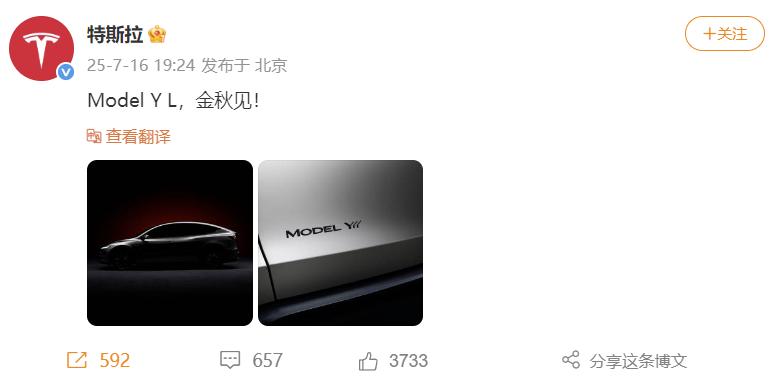
一场关于Model Y L的闭门会议纪要:前特斯拉工程师、华尔街分析师和AI专家说了什么?
3 6 Ke· 2025-07-23 23:22
Core Viewpoint - The launch of Tesla's "Model Y L" is a strategic move to capture the growing Chinese SUV market, particularly targeting family-oriented consumers, while also addressing financial performance amidst increasing competition [1][3][6]. Group 1: Market Strategy - The Model Y L is designed specifically for the Chinese market, with a pre-sale price aimed at the 400,000 RMB range, which resonates with local consumer preferences [3]. - This model enters a competitive segment dominated by local brands like Li Auto and NIO, indicating Tesla's recognition of the need to adapt to local market dynamics [6][13]. - The introduction of the Model Y L is seen as a proactive strategy rather than a defensive response to declining sales, showcasing Tesla's ability to leverage existing resources and technology [8][13]. Group 2: Manufacturing Efficiency - The Model Y L utilizes the existing Model Y platform, allowing Tesla to minimize development costs and time by reusing a highly localized supply chain [9]. - The manufacturing process benefits from Tesla's advanced "Gigapress" technology, which simplifies production adjustments compared to traditional methods [9]. - The expected increase in average selling price (ASP) by 50,000 to 80,000 RMB with minimal cost increase per unit will significantly enhance Tesla's gross margin in China [11][13]. Group 3: Brand Positioning - The launch signifies a shift in Tesla's brand perception in China, moving from a high-tech aspirational brand to a more accessible and practical option for consumers [14][19]. - While Full Self-Driving (FSD) remains a long-term goal, the immediate focus on practical features like increased seating capacity addresses current consumer needs without requiring extensive market education [15][17]. - This strategic pivot allows Tesla to compete effectively in the family vehicle segment, which is crucial for market share retention [19][20]. Group 4: Data Acquisition - Each Model Y L serves as a data collection terminal, crucial for enhancing Tesla's AI models, particularly in complex driving scenarios [20][21]. - Targeting middle-class families as users will generate high-quality driving data necessary for training FSD systems, thus creating a feedback loop for continuous improvement [23][25]. - The Model Y L not only sells a vehicle but also positions itself as a gateway to future FSD services, appealing to consumers likely to invest in advanced driving features [25][26].