
市盈率

Search documents
Banner Corporation (NASDAQ:BANR) Exceeds EPS Estimates but Misses on Revenue
Financial Modeling Prep· 2025-10-16 06:00
Core Insights - Banner Corporation reported earnings per share (EPS) of $1.54, exceeding the estimated $1.41, while revenue of $168.7 million fell short of the projected $171.5 million [1][6] Financial Performance - The company's net income for Q3 2025 was $53.5 million, an increase from $45.5 million in the previous quarter [2] - Net interest income for Q3 2025 was $150 million, up from $144.4 million in the preceding quarter, indicating improved revenue generation from core banking activities [3] - The company raised its quarterly cash dividend by 4%, increasing it to $0.50 per share [3][6] Financial Metrics - The price-to-earnings (P/E) ratio is approximately 11.90, and the price-to-sales ratio is about 2.53 [4] - The enterprise value to sales ratio is around 2.90, while the enterprise value to operating cash flow ratio is approximately 9.01 [4] - The earnings yield stands at 8.40%, suggesting a good return on investment [4] Debt and Liquidity - The company's debt-to-equity ratio is 0.43, indicating a moderate level of debt compared to equity [5] - The current ratio is 0.04, suggesting limited short-term liquidity, which may raise concerns regarding the company's ability to cover short-term liabilities [5]



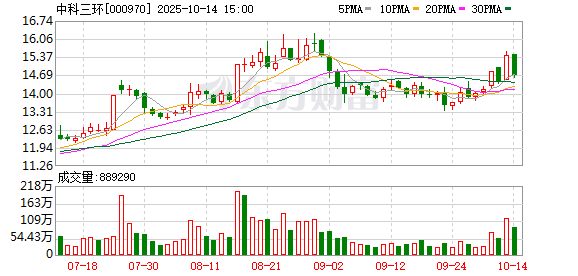
中科三环:预计2025年前三季度盈利8000万元-1亿元 同比扭亏
Zhong Guo Zheng Quan Bao· 2025-10-14 13:20
Core Viewpoint - The company Zhongke Sanhuan (000970) expects a significant turnaround in its financial performance for the first three quarters of 2025, projecting a net profit attributable to shareholders of between 80 million to 100 million yuan, compared to a loss of 42.05 million yuan in the same period last year [4][8]. Financial Performance - The projected net profit for the first three quarters of 2025 is between 80 million to 100 million yuan, with a non-recurring net profit expected to be between 60 million to 80 million yuan, compared to a loss of 62.09 million yuan last year [4][8]. - The basic earnings per share are estimated to be between 0.0665 yuan and 0.0831 yuan [4]. - The company reported a significant increase in exchange gains compared to the same period last year, and a substantial decrease in asset impairment losses [8]. Valuation Metrics - As of October 14, the company's price-to-earnings (P/E) ratio (TTM) is approximately between 115.92 and 133.22, with a price-to-book (P/B) ratio of about 2.76 and a price-to-sales (P/S) ratio of around 2.8 [4]. - Historical net profit and non-recurring profit figures indicate a recovery trend, with a notable increase in year-on-year growth rates for both metrics [9]. Business Strategy - The company is focusing on a strategy of steady progress and promoting stability through innovation and management optimization, while actively responding to market competition and external challenges [8]. - Measures such as cost reduction and efficiency improvement are being implemented to enhance market expansion efforts [8].

PNC Financial Services Group's Upcoming Earnings Overview
Financial Modeling Prep· 2025-10-14 13:00
Core Viewpoint - PNC Financial Services Group is expected to report strong quarterly earnings driven by increased net interest income and stable lending demand, despite facing higher expenses and challenges in fee income [2][3][4]. Financial Performance - PNC is projected to release earnings per share (EPS) of $4.05, representing a 16.1% increase year-over-year [2][6]. - Revenue is anticipated to be approximately $5.81 billion, reflecting a 7.3% rise from the previous year [2][6]. Growth Drivers - The anticipated growth in earnings is attributed to an increase in net interest income (NII), stable interest rates, and steady lending demand [3][6]. - Fee income is expected to rise due to improved performance in capital markets, asset management, and card services [3]. Financial Metrics - PNC has a price-to-earnings (P/E) ratio of approximately 11.95, indicating the price investors are willing to pay for each dollar of earnings [5]. - The debt-to-equity ratio stands at about 1.05, showing the proportion of debt used to finance the company's assets relative to shareholders' equity [5].

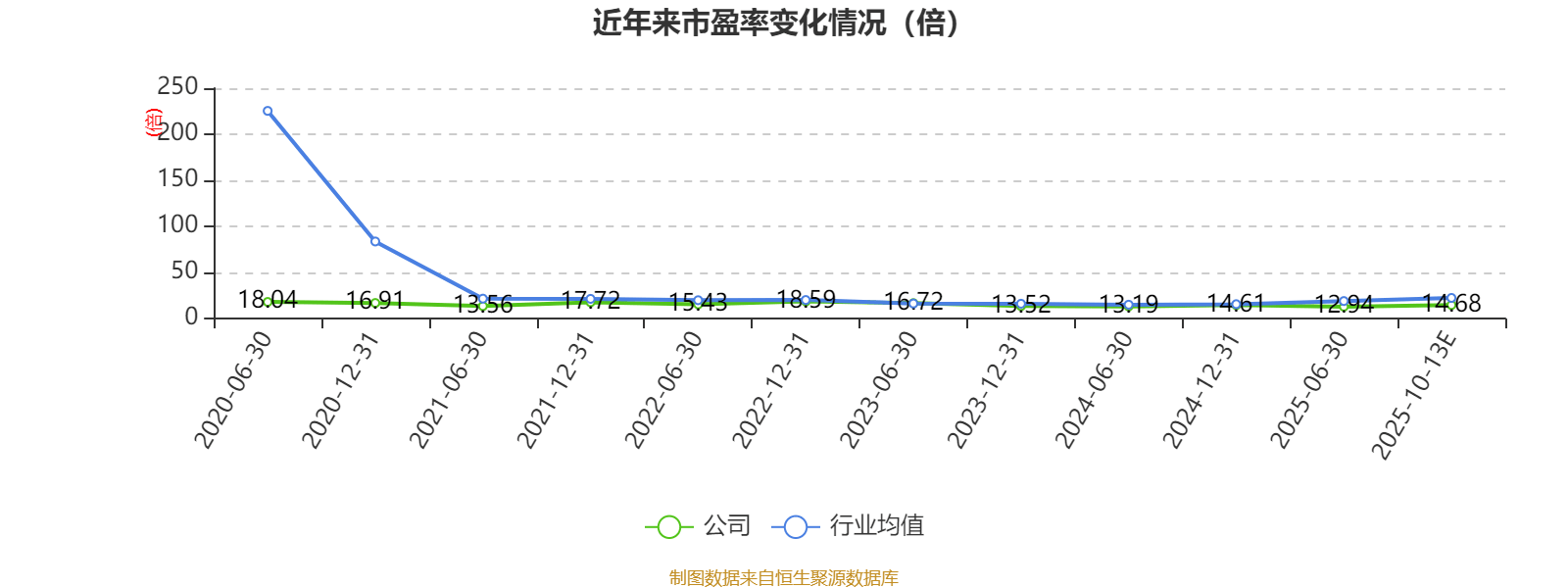
深圳燃气:2025年前三季净利9.18亿元 同比下降13.08%
Sou Hu Cai Jing· 2025-10-13 11:01
Core Insights - The company operates primarily in urban gas, gas resources, integrated energy, and smart services [8] Financial Performance - The company's total revenue and net profit have shown year-on-year growth, with total revenue growth rates reaching 42.62% [10] - The weighted average return on equity for the first three quarters of 2025 is 5.78%, a decrease of 1.29 percentage points compared to the same period last year [15] Valuation Metrics - The price-to-earnings ratio (P/E) is calculated as total market value divided by net profit, while the price-to-book ratio (P/B) is total market value divided by net assets [18] - The price-to-sales ratio (P/S) is used for companies with fluctuating profits, calculated as total market value divided by operating revenue [18]

Gerresheimer AG's Q3 2025 Earnings Overview
Financial Modeling Prep· 2025-10-12 01:00
Core Insights - Gerresheimer AG reported Q3 2025 earnings with an EPS of $0.90, slightly below the estimated $0.94, and actual revenue of approximately $655.4 million, missing the estimated $767.4 million [1][5] - The company revised its 2025 outlook downward, expecting a decline in organic revenues between 2% and 4% [2][5] Financial Performance - The price-to-earnings (P/E) ratio stands at 24.16, indicating market valuation of earnings [3] - The price-to-sales ratio is 0.70, suggesting market value relative to sales [3] - The enterprise value to sales ratio is 0.62, reflecting total value compared to sales [3] - The enterprise value to operating cash flow ratio is 5.65, providing insight into valuation relative to cash flow [4] - The earnings yield is 4.14%, indicating return on investment [4] - The current ratio is 1.01, showing the company's ability to cover short-term liabilities with short-term assets [4]

3 High P/E Stocks Justified by Future Upside Potential
MarketBeat· 2025-10-09 15:14
Core Insights - The article emphasizes that valuations in stocks, real estate, or any cash-generating business are fundamentally based on future growth expectations, urging investors to rely on data rather than opinions [1] Group 1: Valuation Misconceptions - Many retail investors mistakenly label stocks as "expensive" solely based on high price-to-earnings (P/E) ratios without considering growth trajectories [2] - A proper valuation requires weighing price against growth potential, which is the focus of the analysis [2] Group 2: Company-Specific Analyses Roku Inc. - Roku's recent quarterly earnings showed a significant EPS of $0.07, contrasting with a consensus forecast of a 16-cent net loss, indicating the company's ability to drive growth despite cautious consumer spending [3][4] - Analysts have set a price target of $145 for Roku, reflecting its potential for higher earnings as its platform scales and ad revenues strengthen, suggesting a 40% upside from the current price of $99.81 [5][6] Spotify Technology - Spotify is viewed favorably by institutional investors due to its stable subscription revenue model, despite a forward P/E of 66.2x [9][10] - Analysts have initiated coverage with a price target of $845, indicating a 24% upside potential from the current price of $674.91 [11] On Holding - On Holding has successfully transitioned from a retail-focused model to one with significant wholesale exposure, expected to enhance gross margins and boost EPS [12][13] - The current price target for On Holding is $64.20, suggesting a 52.5% upside from its current price of $43.15, as analysts anticipate further growth from its wholesale model [14]



Stolt-Nielsen Limited's Financial Performance in Q3 2025
Financial Modeling Prep· 2025-10-08 15:00
Core Viewpoint - Stolt-Nielsen Limited, a leader in the transportation and storage of bulk liquids, reported mixed financial results for Q3 2025, with revenue exceeding expectations but earnings per share slightly below estimates [2][3][6] Financial Performance - The company achieved an earnings per share (EPS) of $1.15, slightly below the estimated $1.16, while revenue reached $700 million, surpassing the estimated $689.3 million [2][6] - Stolt-Nielsen reported a net profit of $64 million for Q3 2025, a decrease from $99.2 million in Q3 2024, with revenues also down from $732.8 million [3][6] - The consolidated EBITDA for Q3 2025 was $191.7 million, down from $215.2 million in the previous year [4] Division Performance - Stolt Tankers, a division of Stolt-Nielsen, reported an operating profit of $57.2 million, down from $107.1 million in Q3 2024 [4] Valuation Metrics - The company maintains a price-to-earnings (P/E) ratio of approximately 4.13, indicating a relatively low valuation compared to its earnings [4][6] - Stolt-Nielsen's price-to-sales ratio is about 0.61, suggesting the stock is priced at a fraction of its sales [5] - The enterprise value to sales ratio is around 1.47, reflecting the company's valuation in relation to its sales [5] - The earnings yield stands at 24.21%, indicating a substantial return on earnings relative to share price [5] - The current ratio is approximately 0.91, suggesting potential challenges in covering short-term liabilities with current assets [5]

估值之底何在?大摩警示:通胀骤降才是美股最大威胁
Zhi Tong Cai Jing· 2025-10-07 07:55
Group 1 - Morgan Stanley's Chief U.S. Equity Strategist Michael Wilson suggests that nominal GDP and earnings growth may support stock valuations due to rising inflation [1] - Since the new economic cycle began in April, the expansion of market P/E ratios has been driven by three factors: the start of a new cycle, expectations of future earnings recovery, and the support of a high inflation environment for stock risk premiums [1] - The current S&P 500 index to gold ratio is nearly 70% lower than its peak 25 years ago, indicating that stock prices are significantly lower than during the 1999-2000 period [1] Group 2 - Compared to the late 1990s, the current free cash flow yield of S&P 500 large-cap stocks is significantly higher, and the adjusted P/E ratio is about 40% lower than that time [2] - Wilson believes that the core competitiveness of the market today is stronger, with better free cash flow generation, higher operational efficiency, and solid profitability, indicating that the current market quality surpasses that of the internet bubble era [2] - Wilson predicts that April 2024 will mark the low point of the rolling recession that began in 2022, signaling the official start of a new cycle [2] Group 3 - Historical experience shows that the biotechnology sector performs strongly during Fed rate-cutting cycles, benefiting from declining back-end yields [3] - Recent positive signals in the biotechnology sector include the strongest weekly performance since 2022, driven by policies from the Trump administration and Pfizer regarding drug pricing [3] - The healthcare sector's relative valuation remains in the bottom 5% of its historical range over the past 30 years, indicating a high likelihood of outperforming the market [3]
指数百分位,使用的时候要注意这四点|投资小知识
银行螺丝钉· 2025-10-06 13:42
Core Viewpoint - The article discusses the importance of historical data in understanding market cycles and the impact of index rule changes on valuation metrics. Group 1: Historical Data Reference - Historical market cycles typically last 7-10 years, making it essential to consider longer time frames rather than just 2-3 years to avoid incomplete analysis [2]. - It is recommended to find similar style indices with longer histories for reference, as they tend to exhibit similar performance patterns during different market phases [3]. Group 2: Index Rule Changes - Changes in index rules can lead to significant valuation shifts, making historical valuation data less relevant [5]. - For example, the change of the CSI 100 index name to CSI A100 altered its selection criteria from market capitalization to a leading stock strategy, affecting its valuation [5]. - The H-share index's transition from 40 to 50 stocks, including more internet companies, also resulted in a loss of reference value for historical valuations [6]. Group 3: Valuation Calculation Methods - Different weighting algorithms in index valuation can lead to changes in percentile rankings, impacting the perceived valuation metrics [6]. - The CSI Dividend Index's shift from market capitalization weighting to dividend yield weighting significantly altered its composition, affecting its valuation calculations [8][9]. Group 4: Economic Downturns - During economic downturns, declining profits can lead to an increase in price-to-earnings (P/E) ratios, which may not reflect actual stock price increases [11][13]. - For instance, small-cap indices like CSI 1000 and CSI 2000 have experienced profit declines over the past two years, necessitating the use of stable financial metrics for valuation [14]. - In cases of unstable or declining profits, the price-to-book (P/B) ratio may serve as a more reliable valuation metric [15].

摩根大通上调宁德时代H股目标价至600港元 评级“中性”
Ge Long Hui· 2025-10-06 01:19
格隆汇10月6日|摩根大通分析师将宁德时代(3750.HK)评级由增持下调至中性,称当前估值较为合理; 同时将目标价上调13%至600港元。Rebecca Wen等分析师在报告中写道,持有已发行港股近50%的基石 投资者的禁售期将于11月19日届满,或将带来一定抛压并形成技术性价格上方压力。新的目标价基于对 2026年盈利预测给予30倍市盈率。 "我们对宁德时代仍持建设性看法,看好其技术领先、稳健的盈利兑 现能力及增长潜力",并继续将宁德时代A股列为中国电池产业链的首选标的。 ...
