
AI泡沫

Search documents
英伟达市值暴跌万亿,黄仁勋紧急发声
Xin Lang Cai Jing· 2025-12-19 12:06
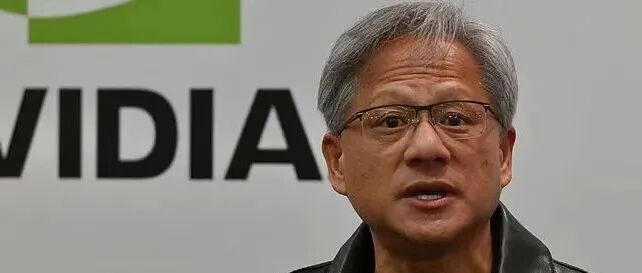
当潮水退去,才知道谁在裸泳。 出品 | 新行情 作者 | 松涛 来源:市场资讯 (来源:新行情) 今年10月,英伟达市值首次突破5万亿美元,规模超过了英、法、德等主要经济体的股市总值,也将市 场对AI算力的乐观情绪推至高潮。 然而高峰过后,形势急转直下。 短短一个多月内,英伟达市值连续经历数次大幅下跌,万亿市值蒸发,再次成为舆论焦点。 英伟达市值的剧烈波动,不仅仅是单只股票的涨跌,更反映了市场情绪的集体转变:资本从狂热追逐逐 渐转为冷静审视。 其中也透露出市场的担忧:天价芯片订单是否依赖脆弱的融资循环?激烈的竞争与国际环境波动,是否 在侵蚀其护城河?就连黄仁勋本人关于"未向OpenAI付款"的澄清,也被市场解读出了别样的信号。 一场关于"AI泡沫"的疑虑,正随着英伟达市值的剧烈波动而扩散。风暴尚未停息,它迫使整个行业在狂 飙突进之后,必须直面那些悬而未决的根本问题。 英伟达市值暴跌 12月18日,英伟达股价报收于170.94美元,当日下跌3.81%,市值在一夜之间蒸发1648亿美元(约合 1.16万亿人民币)。 | 170.940 " | 176.130 昨收 177.720 量比 1.29 | | | -- ...


这只印度妖股,连续打出149个涨停板
第一财经· 2025-12-19 06:51
2025.12. 19 本文字数:652,阅读时长大约1分钟 来源 | 财联社、科创日报 就在全球主流市场近几天为"AI泡沫"忧心忡忡之际,一只默默暴涨两年的印度人工智能妖股,刷新 了全球股民对于炒作的认知。 | RRP SEMICONDUCTOR LIMITED (CIN: L46521MII1960PLC022672) | | --- | | Registred office: A396/397, TTC Industrial Area, Mahape, Thane, Maharashtra, India, 400710 | | Email ID: gdtal2000@gmail.com Website: www.gdtal.com Contact No: 9223400434 | | UN-AUDITED FINANCIAL RESULTS FOR THE OUARTER ENDED 30 SEPTEMBER, 2025 | | | | | | Standalone | | | | --- | --- | --- | --- | --- | --- | --- | | | | Quarter ended ...

甲骨文百亿项目融资突然“告吹” 美国AI泡沫恐慌来袭
Xin Lang Ke Ji· 2025-12-19 06:22
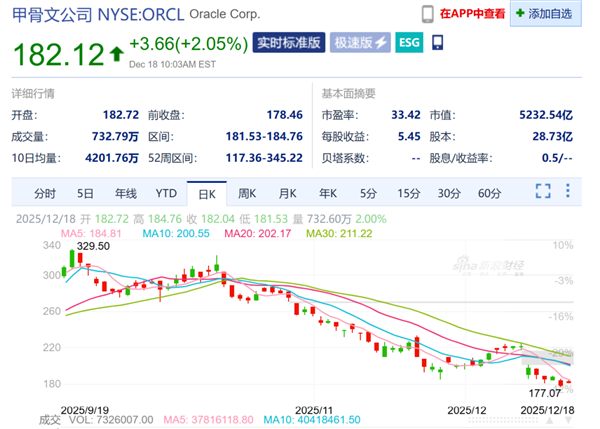
Core Viewpoint - Oracle's significant data center project in Michigan, valued at $10 billion, will not receive funding from Blue Owl Capital, raising concerns about the AI bubble and leading to a nearly 45% drop in Oracle's stock price since its peak in early September [1] Group 1: Financial Performance and Market Reaction - Oracle's stock price surged from approximately $122 on April 21 to over $320 in early September, driven by AI narratives, but has since retraced all gains as investors focus on the costs of realizing these promises [4] - Jim Chanos criticized Oracle's rapid asset expansion, indicating that the return on new capital investments is only about 8.5%, compared to nearly 40% for Microsoft, suggesting Oracle may struggle to recover its incremental capital costs [4][5] - Analysts are questioning how much Oracle is investing in AI, with management failing to provide clear financial guidance during a recent earnings call [6] Group 2: Funding and Project Viability - Blue Owl Capital, previously a key financier for Oracle's data center projects, has opted out of the Michigan project due to changing market attitudes towards AI spending and Oracle's debt levels, leading to stricter loan terms [7][9] - Concerns are growing regarding the reliability of OpenAI's commitments to Oracle, with analysts suggesting that Oracle should consider restructuring its contract with OpenAI to manage capital deployment more responsibly [11] Group 3: Competitive Landscape and Future Outlook - OpenAI's partnerships with Microsoft and Amazon indicate a diversification of its computing resources, potentially diminishing Oracle's role in OpenAI's ecosystem [12] - The competitive landscape is shifting, with stronger players like Google accelerating their AI capabilities, raising questions about OpenAI's ability to maintain its lead [13][14] - Uncertainties remain regarding a potential agreement between OpenAI and Nvidia, which could impact Oracle's future revenue from AI infrastructure [15] Group 4: Capital Structure and Investment Strategy - Oracle's traditional business model, characterized by predictable cash flows and high gross margins, is being challenged by the capital-intensive nature of AI investments, which require longer return periods [16] - The company's ability to sustain high levels of investment in AI will ultimately depend on decisions made by founder Larry Ellison, as the market shifts focus from grand AI visions to the sustainability of capital structures during prolonged return delays [16]
“AI泡沫即使存在,也将继续膨胀”
Xin Lang Cai Jing· 2025-12-19 05:35
Core Insights - The current AI boom exhibits characteristics of a historical bubble, but it is not merely a case of "overheated tech stock speculation" as the AI industry is likely to undergo structural differentiation while continuing to grow [1][8] - Despite widespread discussions about the existence of a bubble, investments continue to flow into the sector, with valuations rising and enthusiasm persisting [1][8] - Major tech companies are using their cash flow to fund AI infrastructure, contrasting with the debt-laden startups of the early internet era, leading some investors to believe "this time is different" [8][10] AI Bubble Existence - To assess whether an AI bubble exists, a reliable evaluation tool is needed, such as the four-factor framework proposed by Brent Goldfarb and David A. Kirsch [2] - The four factors include uncertainty, a significant gap between investment scale and actual revenue, the prevalence of pure investment targets, and the influx of inexperienced investors [3][4][5] Investment and Revenue Discrepancy - Large tech companies are projected to invest up to $3 trillion in AI infrastructure by 2028, while current annual AI revenue is approximately $50 billion, indicating a significant gap [4] - Morgan Stanley estimates that to achieve a 10% return on these investments, AI must generate $650 billion annually, which is 13 times the current revenue level [4] Market Dynamics - The narrative surrounding AI is powerful, with claims that AI will solve numerous global issues, which fuels investment despite the lack of clear profitability [6][10] - The current market sentiment is characterized by a fear of missing out (FOMO), leading investors to overlook potential risks associated with AI investments [7][10] Financial Structures and Risks - The financing structure for AI investments is evolving, with private equity and bond markets increasingly involved, which could spread risks beyond traditional equity speculation [11] - Oracle's significant debt and reliance on OpenAI for revenue highlight the risks associated with high leverage in the AI sector [12] Technological Progress vs. Bubble - Technological advancements in AI are real and ongoing, but this does not negate the existence of a bubble characterized by inflated market prices [13][14] - The current valuation of AI companies appears to be the highest since the internet bubble, indicating a potential disconnect between market prices and actual value [14][15] Geopolitical Influences - Geopolitical competition, particularly between the U.S. and China, is driving the narrative that justifies massive investments in AI, further complicating the bubble dynamics [16] Conditions for Bubble Disproof - For the AI bubble to be disproven, core companies must demonstrate robust financial health, productivity gains must be realized quickly, and the competitive landscape must ensure healthy profit distribution [17][18][19] - The financing structure must be de-risked to avoid systemic debt risks, and market sentiment must remain rational to prevent a full-blown bubble [20] Economic Implications of Bubble Burst - If the AI bubble bursts, it could lead to significant economic repercussions, including a potential recession, as AI-related investments have become a substantial part of U.S. GDP growth [21] - The resilience of major tech companies may mitigate systemic financial crises, but asset price corrections could still occur [21][22] Future Outlook - The AI market is expected to continue growing, albeit with structural differentiation, as some overhyped sectors may face challenges while others with clear ROI will thrive [23] - The focus will shift from storytelling to efficiency and physical implementation, with critical issues like power supply and funding gaps needing resolution [23]




王华东:今年读了30本书,这是我的年度书单丨2025尾声
暗涌Waves· 2025-12-19 04:39
Core Viewpoint - The article emphasizes the importance of "transformation" in various contexts, from national to personal levels, highlighting the need for continuous adaptation and learning in the investment landscape [2]. Group 1: Investment Philosophy - Wang Huadong, a partner at Jingwei Venture Capital, exemplifies a seamless transition across different industries and sectors, showcasing a clear logic of technological and industrial evolution rather than mere shifts between investment tracks [3][4]. - His approach to investment is characterized by a "scientific investment perspective," focusing on precise layouts derived from extensive cross-disciplinary knowledge [7]. - Wang's commitment to self-discipline is evident in his daily routine, which includes waking up at 5:30 AM and maintaining a high reading volume of over 30 books annually, viewing reading as a process of cognitive enhancement and pattern recognition [5][6]. Group 2: Insights from Literature - The article presents a curated reading list by Wang, which includes titles that explore the historical context of technology and investment, such as "Engines That Move Markets," which analyzes the cyclical nature of technological advancements and market speculation [13][15]. - Other recommended readings focus on the significance of sleep and its impact on productivity, emphasizing the need for quality rest as a foundation for efficiency and long-term happiness [18][20]. - The list also features works that delve into human evolution and the implications of AI on societal structures, highlighting the necessity for deeper contemplation on humanity's future in the face of technological advancements [29][31]. Group 3: Personal Development - Wang's reading selections include autobiographies and insights from influential figures in the tech and investment sectors, such as "The Man Who Solved the Market," which reveals how quantitative investment strategies can outperform traditional methods [37][39]. - The inclusion of works by Yuval Noah Harari underscores the importance of understanding historical narratives to navigate future challenges posed by technological changes [29][31]. - Wang's personal reflections on running and its philosophical implications suggest a holistic approach to personal development, integrating physical activity with mental resilience [23][27].

期货市场交易指引2025年12月19日-20251219
Chang Jiang Qi Huo· 2025-12-19 02:34
Report Industry Investment Ratings - Macro-finance: Bullish on stock indices in the medium to long term, with a strategy of buying on dips; expect government bonds to trade in a range [1][5] - Black building materials: Short-term trading for coking coal; range trading for rebar; sell on rallies for glass [1][8][9] - Non-ferrous metals: Reduce positions on rallies for copper and replenish on low-level stabilization; strengthen observation for aluminum; observe or sell on rallies for nickel; range trading for tin, gold; hold long positions for silver and be cautious about new positions; expect lithium carbonate to trade with a strong bias [1][11][12][18][19] - Energy and chemicals: Range trading for PVC, styrene, rubber, urea, methanol; expect polyolefins to trade with a weak bias; temporarily observe caustic soda and soda ash [1][21][22][23][25][26][28] - Cotton textile industry chain: Bullish with a bias for cotton and cotton yarn; expect PTA to rise in a range; bearish with a bias for apples and jujubes [1][30][31][32] - Agricultural and livestock products: Short-term short-selling on rallies for near-term contracts of live pigs and cautious bullishness for far-term contracts; expect eggs to trade in a range; be cautious about chasing highs in the short term for corn and hedge on rallies for grain holders; range trading for soybean meal, with a bullish bias for near-term contracts and a bearish bias for far-term contracts; be cautious about short-selling for oils and fats [1][34][35][36][37] Core Views - The report provides trading strategies for various futures products in different industries, considering factors such as supply and demand, macroeconomic conditions, and policy impacts. It emphasizes the importance of risk management and the need for investors to make decisions based on their own investment goals and risk tolerance [1][5][8][9][11][12][18][19][21][22][23][25][26][28][30][31][32][34][35][36][37] Summary by Industry Macro-finance - Stock indices are expected to trade in a range in the short term but are bullish in the medium to long term, with a strategy of buying on dips, as US inflation has slowed more than expected [5] - Government bonds are expected to trade in a range, with short - term rates potentially stabilizing if long - term yields do not reach new highs and funding rates remain stable [5] Black building materials - Coking coal market is in a tug - of - war between strong bearish factors and weak bullish factors, with short - term trading recommended [8] - Rebar is expected to trade in a range, with low valuation and weak driving forces, and a weak downward trend [9] - Glass is expected to trade weakly, with a strategy of selling on rallies due to high inventory, weak demand, and potential supply increases [9][10] Non-ferrous metals - Copper is expected to trade in a high - level range, with a strategy of reducing positions on rallies and replenishing on low - level stabilization, due to short - term overheating and potential technical adjustments [11] - Aluminum is expected to rebound, but investors are advised to strengthen observation due to factors such as changes in ore prices, production capacity, and demand [12] - Nickel is expected to trade in a range, with a strategy of observing or selling on rallies, as the medium - to - long - term supply is expected to be in surplus [16] - Tin is expected to trade in a range, with a strategy of range trading, considering factors such as supply tightness and potential demand recovery [17][18] - Silver and gold are expected to trade in a range, with a strategy of holding long positions for silver and range trading for gold, as the medium - term price centers are expected to rise [18] - Lithium carbonate is expected to trade with a strong bias, with attention paid to supply disruptions and demand trends [19] Energy and chemicals - PVC is expected to trade in a low - level range, with weak fundamentals but potential support from low valuation and policy or cost changes [19][21] - Caustic soda is expected to trade in a low - level range, with investors advised to temporarily observe due to high inventory and potential impacts from alumina production [21] - Styrene is expected to trade in a range, with a focus on changes in pure benzene prices and crude oil pricing [22][23] - Rubber is expected to trade in a wide - range, with support from supply disruptions but limited upside due to high inventory and weak demand [23][24] - Urea is expected to trade in a range, with a relatively stable supply - demand pattern [24][25] - Methanol is expected to trade in a range, with supply recovery, high - level but slightly declining downstream demand, and inventory reduction [26] - Polyolefins are expected to trade with a weak bias, with a supply - strong and demand - weak situation [26][27] - Soda ash investors are advised to temporarily observe, as the supply - demand contradiction may be alleviated after supply contraction and there is cost support [28] Cotton textile industry chain - Cotton and cotton yarn are expected to trade with a strong bias, as recent domestic cotton sales are fast and yarn prices are firm [30] - PTA is expected to rise in a range, driven by rising crude oil prices and supply - demand inventory reduction [30][31] - Apples and jujubes are expected to trade with a weak bias, with slow inventory sales [31][32] Agricultural and livestock products - Live pigs are expected to form a bottom in a range, with short - term supply pressure and long - term potential for price recovery after capacity reduction [32][34] - Eggs are expected to trade in a range, with short - term stability, medium - term improvement in supply - demand balance, and long - term supply pressure [34][35][36] - Corn is expected to trade with a weak bias, with short - term selling pressure and long - term support from demand recovery but limited upside [36] - Soybean meal is expected to trade in a range, with a bullish bias for near - term contracts and a bearish bias for far - term contracts [37] - Oils and fats are expected to have intensified corrections, and investors are advised to be cautious about short - selling [37][38][39][40][41][42]
甲骨文百亿项目融资突然「告吹」,美国AI泡沫恐慌来袭?
Xin Lang Ke Ji· 2025-12-19 01:29
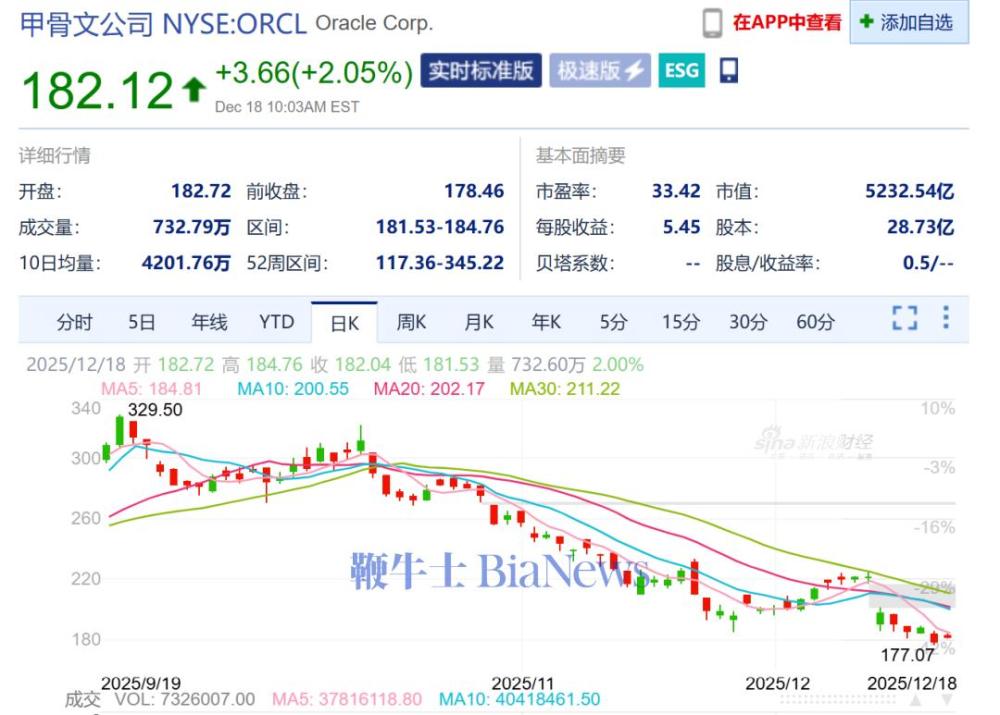
Core Viewpoint - Oracle's $10 billion data center project in Michigan has lost funding support from Blue Owl Capital, raising concerns about the AI bubble and leading to a nearly 45% drop in Oracle's stock price since its peak in early September [1][2]. Group 1: Project Financing and Market Reaction - The withdrawal of Blue Owl Capital is seen as a significant setback for Oracle, with the news amplifying market fears regarding the sustainability of AI investments [2][15]. - Oracle's stock price surged from approximately $122 on April 21 to over $320 in early September, but has since retraced all gains as investors shift focus from growth narratives to the costs of realizing those promises [8][9]. - Concerns have emerged regarding the reliability of OpenAI's commitments to Oracle, with analysts questioning whether OpenAI will fulfill its $300 billion power purchase agreement [17][18]. Group 2: Financial Performance and Analyst Concerns - Jim Chanos, a prominent short-seller, criticized Oracle's rapid asset expansion, indicating that the company's return on new capital investments is only about 8.5%, compared to Microsoft's nearly 40% [11]. - Analysts have pressed Oracle's management for clarity on AI investment costs, but the company has not provided definitive answers, leading to further skepticism [12]. - The market is reevaluating which companies can sustain prolonged delays in returns, especially as Oracle's traditional cash flow model is disrupted by heavy AI investments [22]. Group 3: Competitive Landscape and Strategic Positioning - OpenAI's partnerships with Microsoft and Amazon indicate a diversification of its computing resources, potentially diminishing Oracle's role in OpenAI's ecosystem [19]. - The competitive landscape is shifting, with Google and other well-capitalized firms accelerating their AI initiatives, raising questions about OpenAI's ability to maintain its lead [20]. - Oracle's heavy investment in AI infrastructure contrasts with its previous reliance on predictable cash flows from traditional software, making it more vulnerable to market fluctuations [22].

甲骨文百亿项目融资突然“告吹”,美国AI泡沫恐慌来袭? | 北美前哨
Xin Lang Cai Jing· 2025-12-19 00:16
Core Viewpoint - Oracle's significant data center project in Michigan, valued at $10 billion, has lost funding support from Blue Owl Capital, raising concerns about the AI bubble and leading to a nearly 45% drop in Oracle's stock price since its peak in early September [2][17]. Group 1: Oracle's AI Investment and Market Reaction - Oracle's stock price surged from approximately $122 on April 21 to over $320 by early September, driven by expectations of substantial AI-related revenue from OpenAI [7][21]. - As investors shifted focus from growth narratives to the costs of realizing these promises, Oracle's stock began to decline, indicating a critical point in the AI infrastructure cycle [22][29]. - Jim Chanos criticized Oracle's rapid balance sheet expansion, suggesting that its return on new capital investments is only about 8.5%, compared to Microsoft's nearly 40% [8][22]. Group 2: Financing and Credit Market Dynamics - The private credit market is reassessing risks, with Blue Owl Capital withdrawing from the Michigan project due to increased financing costs and stricter terms, reflecting a shift in market sentiment towards AI spending and Oracle's debt levels [10][25]. - Analysts are questioning the reliability of OpenAI's commitments, with concerns that OpenAI may not fulfill its promise of $300 billion in computing power payments to Oracle, which has a remaining performance obligation (RPO) of $523 billion as of November 30 [12][26][27]. Group 3: Competitive Landscape and Future Uncertainties - OpenAI's position in the AI market is becoming uncertain, especially with new partnerships with Microsoft and Amazon, which diversify its computing power sources and challenge Oracle's role [13][27]. - The pending agreement between OpenAI and Nvidia, which could involve up to $100 billion in investment, remains unfinalized, adding to the uncertainty surrounding Oracle's future revenue from AI [28]. - The market is increasingly focused on which companies can sustain prolonged periods of capital investment without immediate returns, with Oracle's traditional cash flow model being disrupted by the high upfront costs of AI infrastructure [14][29].
财经早报:机构密集调研AI眼镜产业链公司 多家商业航天概念上市公司提示风险丨2025年12月19日
Xin Lang Cai Jing· 2025-12-19 00:11
Group 1 - The core message of the news is the emphasis on the continuous deepening of comprehensive reforms in the capital market during the 15th Five-Year Plan period, focusing on enhancing quality and efficiency [2][39] - Experts suggest increasing the inclusiveness and adaptability of listing and trading systems to attract high-quality companies from new productive sectors [2][39] - There is a call to expand patient capital, long-term capital, and strategic capital supply, while also promoting active mergers and acquisitions and strict delisting norms [2][39] Group 2 - The A500 ETF has seen a significant surge in trading volume, with a record daily turnover exceeding 520 billion yuan on December 17, indicating strong investor interest [3][40] - The net inflow for A500 ETF on the same day surpassed 11 billion yuan, highlighting its status as a major capital attraction [3][40] Group 3 - Alibaba is shifting its investment focus towards the AI sector, with AI investments rising from 4% to 50% of its total investment portfolio since 2023 [4][41] - The company has made significant investments in embodied intelligence, as evidenced by its recent stake in Shanghai Qunchu Intelligent Technology Co., which increased its registered capital [4][41] Group 4 - The dollar index has dropped over 9% this year, closing at 98.3978 on December 17, reflecting a downward trend influenced by weak economic data and dovish signals from the Federal Reserve [5][42] - The dollar index has seen a cumulative decline of 1.72% from November 20 to December 17, indicating a shift in market expectations regarding interest rate cuts [5][42] Group 5 - The People's Bank of China has resumed 14-day reverse repos to ensure liquidity stability, conducting operations totaling 1.883 billion yuan on December 18 [6][43] - The central bank aims to maintain ample liquidity in the banking system to meet diverse funding needs of different institutions [6][43] Group 6 - Electrolytic manganese prices have surged for 13 consecutive days, reaching a new high of 17,820 yuan per ton, with a total increase of over 2,300 yuan per ton in December [7][44][45] - The price increase represents a nearly 15% rise since the beginning of December, marking the highest level since May 2022 [7][45] Group 7 - The Trump administration has reaffirmed its goal of returning to the moon by 2028, with plans to establish a permanent lunar outpost by 2030 [8][46] - The initiative aims to stimulate private sector innovation and investment in space exploration and safety [8][46] Group 8 - The CPI's unexpected decline has boosted expectations for interest rate cuts, leading to a significant surge in U.S. stock markets, including a 38% spike in Trump Media Technology Group's stock [9][47] - The merger with TAE Technologies aims to create one of the first publicly listed fusion energy companies, with plans to build a utility-scale fusion power plant by 2026 [9][47] Group 9 - Haidilao plans to distribute a special dividend of 1.754 billion yuan, with a commitment to maintain a dividend payout ratio of no less than 80% over the next three years [14][51][52] - The company has a history of generous dividends, having previously distributed 1.519 billion yuan in cash dividends for the first half of 2025 [14][52] Group 10 - The Japanese government has restructured the "Apple tax," significantly reducing commission rates for various payment scenarios, allowing developers to integrate third-party payment systems [15][53] - This change is expected to enhance competition and reduce costs for developers operating within the Apple ecosystem [15][53]


腾讯研究院AI速递 20251219
腾讯研究院· 2025-12-18 16:01
Group 1 - Google is advancing the "TorchTPU" strategy to enable PyTorch to run smoothly on TPU chips, aiming to eliminate migration barriers for developers and considering partial open-sourcing of the software [1] - Google is negotiating a collaboration with Meta to provide Meta with more TPU access, allowing Meta to reduce inference costs and dependence on NVIDIA by adapting software for TPU [1] - Wall Street analysts believe that CUDA is NVIDIA's strongest defense, and Google's previous reliance on its internal Jax framework has widened the gap with external customer usage habits [1] Group 2 - The ChatGPT app store has officially launched, categorizing applications like Adobe Photoshop and Canva, with users triggering them via "@app name" [2] - Developers can submit applications for review on the OpenAI developer platform, which offers a comprehensive resource system including best practice guides and open-source sample applications [2] - OpenAI plans to raise new funding at an estimated valuation of around $750 billion, potentially reaching $1 trillion, attempting to replicate the Apple App Store model in the AI era [2] Group 3 - Google has released the Gemini 3 Flash model, achieving a score of 33.7% on the Humanity's Last Exam benchmark, while Gemini 3 Pro scored 37.5% and GPT-5.2 scored 34.5% [3] - This model maintains the Flash series' extreme native speed, outperforming Gemini 2.5 Pro while tripling the speed, priced at $0.50 per million tokens for input and $3 for output [3] - Gemini 3 Flash is now the default model for Gemini applications and search AI modes, with response times generally under one second, available globally through Google AI Studio and Vertex AI [3] Group 4 - ByteDance has launched the universal Agent model Seed1.8, which integrates search, code, and GUI Agent capabilities, automatically adjusting processing methods based on task complexity [4] - In GUI Agent evaluations, Seed1.8 surpassed Seed1.5-VL, demonstrating reliability in multi-step tasks across computer, web, and mobile environments, scoring 67.6 on the BrowseCompen benchmark [4] - The model achieved a top score of 11.0 on ZeroBench and 87.8 on VideoMME for long video understanding, incorporating the "VideoCut" video tool [4] Group 5 - The Step-GUI cloud model has been fully upgraded, supporting over 200 task scenarios and usable across mobile, PC, and automotive platforms, with deployment of an "AI phone" possible in as little as 10 minutes [5][6] - This model features longer reasoning steps, enhanced semantic understanding, and generalization capabilities, autonomously asking questions when user instructions are vague [6] - The GUI-MCP protocol is open for end-cloud collaboration, with APIs temporarily available for free, and a call for users to create showcases and develop applications [6] Group 6 - xAI has officially released the Grok Voice Agent API, making its real-time voice capabilities available to developers for voice-first application scenarios [7] - The API includes various built-in voices and companion personalities, allowing developers to finely control system commands and behavior parameters [7] - It supports real-time voice recognition and synthesis with a streaming audio design, enabling search capabilities during conversations and significantly reducing interaction latency [7] Group 7 - Apple is reportedly abandoning its VR headset project in favor of developing AI smart glasses, with a projected launch in late 2026 or 2027 [8] - The company has paused its AR/VR headset initiatives and plans to reintroduce the iMac Pro, which has been off the market for over four years, potentially featuring the M5 Max chip [8] - A 20th-anniversary edition iPhone is expected in 2027, featuring a curved design that wraps around the device edges and a front camera positioned under the display [8] Group 8 - a16z partners assert that the AI bubble has not yet burst, as it has not reached a point where investments are wasted [9] - They believe that if companies cease developing larger models and rely solely on existing models, they could quickly achieve profitability at current profit margins [9] - Predictions indicate that GDP could grow by several percentage points by 2030, with a reasonable lower limit of 30% growth if AGI is achieved, though outcomes could vary widely [9]

