
太空数据中心

Search documents
A股盘前市场要闻速递(2025-11-14)
Jin Shi Shu Ju· 2025-11-14 02:25
Monetary Policy and Financial Data - As of the end of October 2025, M2 balance reached 335.13 trillion yuan, with a year-on-year growth of 8.2% [1] - M1 balance stood at 112 trillion yuan, reflecting a year-on-year increase of 6.2% [1] - The total social financing stock was 437.72 trillion yuan, growing by 8.5% year-on-year [1] - The balance of loans to the real economy in RMB was 267.01 trillion yuan, up 6.3% year-on-year [1] Regulatory Developments - The Financial Regulatory Bureau is set to release a revised "Commercial Bank Mergers and Acquisitions Loan Management Measures" to support mergers and transformations, including for tech enterprises [4] Corporate News - Moore Threads plans to issue 70 million shares, accounting for 14.89% of total post-issue shares, with initial pricing on November 19 and subscription on November 24 [5] - SMIC reported Q3 net profit of 1.517 billion yuan, a 43.1% increase year-on-year, with revenue of 17.162 billion yuan, up 9.9% [6] - Dahua City intends to acquire a 19.43% stake in Baicai Bang for 694 million yuan, focusing on 6G and satellite internet [8] - Lide Man plans to purchase 70% of Xiansheng Xiangrui for 1.733 billion yuan, entering the bioproducts sector [10] - Higer Communication's subsidiary aims to raise up to 800 million yuan to enhance investment in unmanned and low-altitude economy [14]




【研选行业+公司】算力上天催化柔性钙钛矿需求,这些标的值得重点跟踪
Di Yi Cai Jing· 2025-11-13 12:53
Core Insights - Energy storage is expected to drive a new round of lithium battery cycle, with structural shortages and price surges in related materials [1] - Companies such as DLF, Tianqi Materials, Putailai, and Hunan Youneng have seen significant stock price increases, with DLF rising nearly 40% and others around 20% [1] Group 1: Industry Trends - The demand for energy storage is anticipated to replace electrification as a key growth driver in the lithium battery sector [1] - Structural shortages in lithium battery materials are leading to price increases across the industry [1] Group 2: Company Performance - A notable performance turnaround is observed, with net profits increasing by 1059% year-on-year in the first three quarters [1] - The company has achieved a 100% self-sufficiency rate in infrared detectors and is rapidly increasing its market penetration in the automotive pre-installation sector [1] - Analysts project a 40% premium potential for the company based on its comprehensive industry chain layout [1]



【研选行业+公司】算力上天催化柔性钙钛矿需求,这些标的值得重点跟踪
第一财经· 2025-11-13 12:18
Core Insights - The article emphasizes the importance of timely and relevant research reports in identifying investment opportunities, particularly in the context of the energy storage and lithium battery materials sectors [1][2]. Group 1: Industry Trends - Energy storage is expected to drive a new lithium battery cycle, with structural shortages and price increases already observed in related materials [1]. - The article highlights a significant increase in net profit for a company, with a year-on-year surge of 1059% in the first three quarters, indicating a clear performance turnaround [2]. Group 2: Investment Opportunities - Companies such as Duofu Duo have seen stock prices rise nearly 40%, while Tian Ci Materials and Putai Lai have experienced close to 20% increases, showcasing the potential for investment in the lithium battery materials chain [1]. - The article suggests that the full industry chain layout of a specific company is outperforming competitors, with a 100% self-sufficiency rate in infrared detectors and accelerated penetration in the automotive pre-installation market, leading to a 40% premium space suggested by institutions [2].


顺灏股份:轨道辰光首颗试验星算力规模预计25p 用于组建太空数据中心
Mei Ri Jing Ji Xin Wen· 2025-11-13 09:01
Core Viewpoint - Shunhao Co., Ltd. has invested 110 million RMB in Beijing Rail Transit Technology Co., Ltd., acquiring a 19.30% stake, indicating a strategic move into the space data service sector [1] Investment Details - The investment amount is 110 million RMB, with a stake of 19.30% in Rail Transit Technology [1] - The investment is set to take place in June 2025 [1] Company Operations - Rail Transit Technology focuses on launching computing power satellites into the dawn-dusk orbit to establish space data centers [1] - The company’s business scope includes the production and research of small satellites, as well as internet information services [1] Project Status - The first experimental satellite of Rail Transit Technology is expected to have a computing power scale of 25 petaflops, but it has not yet been launched [1] - The launch of space projects is subject to various factors, leading to uncertainty in actual launch timelines [1]

解决“能源瓶颈”的终极方案?马斯克、贝索斯、谷歌都盯上了“太空数据中心”
Hua Er Jie Jian Wen· 2025-11-13 03:54
Core Insights - The increasing demand for AI is pushing the limits of Earth's resources, prompting tech giants to explore the establishment of data centers in space as a potential solution [1][3] - Google has announced the "Suncatcher project," aiming to launch two prototype satellites equipped with its custom TPU AI chips by early 2027 [1][5] - Elon Musk's SpaceX is also planning to expand its Starlink satellite network to create a space-based data center [1][6] - Amazon's Jeff Bezos predicts that gigawatt-level data centers will emerge in space within the next decade [1] - Startups like Starcloud are entering the race, having successfully launched test satellites equipped with NVIDIA GPUs [1][7] Energy as the Driving Force - The primary motivation for moving data centers to space is energy, as terrestrial data centers are facing unprecedented growth in scale, power consumption, and cooling costs [3] - The Sun is identified as the largest energy source in the solar system, with an output of 3.86 × 10^26 watts, far exceeding human energy consumption [3] - Google believes that space-based data centers could be the most scalable solution while minimizing the impact on Earth's resources [3] Diverse Approaches by Tech Giants - Google envisions a solar-powered, interconnected satellite network to form an orbital AI computing cluster, with prototype satellites set for 2027 [5] - Musk's approach relies on expanding the existing Starlink V3 satellites, which are designed for high-speed internet [6] - Starcloud aims to establish a 2.5-mile-wide orbital data center with a power capacity of 5 gigawatts, leveraging NVIDIA's H100 GPUs [7] Challenges Ahead - The deployment of large computing systems in space faces significant technical and economic challenges, including launch costs, heat management, and system reliability [8][9] - Google indicates that launch costs must drop below $200 per kilogram by the mid-2030s for space-based data centers to be cost-competitive with terrestrial counterparts [9][10] - Heat management is a critical technical challenge due to the vacuum of space, which complicates cooling systems [11] - Reliability, high-bandwidth ground communication, and radiation protection are essential issues that need to be addressed for long-term operation [12]

太空数据中心或成AI电力紧缺下的优解
Changjiang Securities· 2025-11-11 11:12
Investment Rating - The industry investment rating is "Positive" and maintained [10] Core Insights - The report highlights that with the continuous development of AI, its enormous power consumption on the ground may lead to space data centers becoming a viable solution. Notable advancements include Nvidia's deployment of H100 GPUs in space and Elon Musk's plans to expand the Starlink V3 satellite scale, aiming for an annual deployment of 100GW of data centers within 4-5 years. Google has also initiated the "Sun Catcher Project," planning to launch prototype satellites equipped with Trillium TPU by early 2027, suggesting that space may become the optimal location for scaling AI computing [2][6] Summary by Sections Event Description - In November 2025, Nvidia sent its H100 GPU into space. Elon Musk announced plans to expand Starlink V3 and build space data centers, targeting 100GW of deployment annually within 4-5 years. Google plans to launch two prototype satellites in early 2027 to deploy AI computing directly in space [2][6] Event Commentary - The satellite industry faces high networking costs and challenges in commercial viability. Solutions include reducing manufacturing and launch costs and improving constellation efficiency. The report suggests focusing on companies generating revenue from 2023-2025, such as Canqin Technology, which may benefit from the explosive growth in capital expenditures from downstream operators. In the application explosion phase, attention should be on core operators and manufacturers with mass production capabilities in chip and basic components, recommending Haige Communication. Additionally, Fenghuo Communication is expanding into new industries, which may become a significant growth direction [8] Technological Advancements - Space data centers can leverage the unique environment of space, achieving zero energy consumption for cooling due to near -270°C temperatures and high solar power efficiency of 95%. Low Earth orbit satellite networks can provide high-speed access to 3 billion unconnected people. The report notes that advancements in reusable rocket technology are rapidly addressing cost challenges, with SpaceX reducing launch costs to around $1,000 per kilogram [8]


通信行业周观点:光芯片满载加速扩产,轨道级计算时代启幕-20251111
Changjiang Securities· 2025-11-11 10:44
Investment Rating - The report maintains a "Positive" investment rating for the communication industry [10]. Core Insights - The communication sector has seen a 1.00% increase in the 45th week of 2025, ranking 15th among major industries in the Yangtze River region. Year-to-date, the sector has risen by 63.27%, placing it 2nd among the same industries [2][5]. - Lumentum's quarterly performance is strong, with revenue of $530 million for FY26Q1, a year-on-year increase of 58.4%. Over 60% of this revenue comes from cloud and AI infrastructure [6]. - The demand for indium phosphide (InP) laser chips is robust, with a supply-demand gap expected to widen to 25-30% in the coming quarters. Lumentum's production capacity is fully booked for the next six quarters, with an anticipated capacity increase of approximately 40% [6][8]. - The "AI x Space" initiative is accelerating, with companies like Starcloud, SpaceX, and Google launching projects to establish in-orbit computing capabilities, marking the beginning of a new era for space data centers [7][8]. Summary by Sections Market Performance - The communication sector's stock performance has been notable, with significant gains in individual stocks such as Keda (+24.6%), Yuanjie Technology (+16.2%), and Yihua Co. (+12.2%) [5]. Company Analysis - Lumentum's revenue growth is driven by strong shipments of InP laser chips, with component revenue reaching $380 million, a year-on-year increase of 64% [6]. - The company is transitioning from 3-inch to 4-inch wafer processes, focusing on cost and yield improvements [6]. Investment Recommendations - The report recommends several companies across different segments: - Telecom Operators: China Mobile, China Telecom, China Unicom - Optical Modules: Zhongji Xuchuang, Xinyi Technology, Tianfu Communication - Liquid Cooling: Yingweike - Hollow Core Fiber: Fenghuo Communication, Hengtong Optic-Electric - Domestic Computing: Runze Technology, Guanghuan New Network - AI Applications: Boshi Jie, Heertai - Satellite Applications: Huace Navigation, Haige Communication [8].






格林大华期货早盘提示-20251111
Ge Lin Qi Huo· 2025-11-11 00:02
1. Report's Industry Investment Rating - No industry investment rating information is provided in the given content. 2. Report's Core View - The global economic situation is complex. The US government's "shutdown" crisis is about to be resolved, with about $1 trillion of TGA funds expected to flow back into the economic system, injecting large - scale liquidity. However, the global economy is entering the top - region due to the US's continuous wrong policies. The AI application is moving from the concept to the practical stage, but there are signs that AI demand may be moderating. There are also significant capital flows and style changes in the stock market, such as US funds flowing into Japanese technology and AI sectors [1][2]. 3. Summary by Related Catalogs 3.1 Macro and Financial - Global Economy - **Policy and Liquidity**: The US Senate passed a temporary appropriation bill to end the government "shutdown", providing funds until January 30, 2026. About $1 trillion of TGA funds is expected to return to the economic system, and the increase in S&P 500 index futures open - interest by about $21 billion indicates new long - position entry [1]. - **AI Development**: In Q3 2025, 24% of AI - adopting enterprises have achieved quantifiable benefits. Compared with the 1999 dot - com bubble, current leading enterprises have a free cash flow yield of 3.5% (1.2% in 2000), showing fundamental support for high valuations. But the slowdown in TSMC's monthly sales growth is seen as a sign of possible easing AI demand, leading to a sell - off of tech stocks last week [1]. - **US Consumption**: Pandemic - accumulated excess savings of US households are almost exhausted, but the high ratio of household net worth to disposable income, mainly due to asset values like stocks, still supports consumption to some extent [1]. - **Stock Market Capital Flow**: US funds are flowing into Japanese technology and AI sectors at the fastest pace since "Abenomics", potentially triggering a shift from value to growth stocks. However, Citigroup warns that Japanese tech stocks are over - valued [1]. - **Fed Policy**: Powell's cautious remarks after the October rate cut suggest that December rate cut needs data support. Current alternative data shows a gradual cooling of the labor market, giving the Fed a reason to pause rate cuts [1]. 3.2 Global Economic Logic - **AI and Geopolitics**: NVIDIA CEO Huang Renxun believes China will win the AI competition due to a more favorable regulatory environment and lower energy costs [2]. - **Stock Market Outlook**: Goldman Sachs CEO is optimistic about the Hong Kong and mainland Chinese stock markets, stating that many Chinese stocks are "very attractive" with rising global valuations [2]. - **Data Center Construction**: The US is planning or building data center projects with a total capacity of over 45 gigawatts and an expected investment of over $2.5 trillion. There is a shortage of construction workers for data centers [2]. - **AI Energy Demand**: Apollo Global Management warns of a huge gap between AI's large energy demand and the current global power supply, which may not be filled in our lifetime [2]. - **US Market Valuation**: The US stock market's cyclically - adjusted price - to - earnings ratio (Shiller P/E) has reached 40 for the second time in history, similar to the 1999 dot - com bubble [2]. - **US Consumption and Employment**: Consumption in the US is slowing, especially among the 25 - 35 - year - old middle - income group. In October, US corporate layoffs reached 153,074, mainly in the tech and warehousing industries, a 183% increase from September and nearly three times that of last year, which may be an economic warning signal [2].
谷歌为发电都上天了,但AI真的缺电吗?
美股研究社· 2025-11-10 11:07
Core Viewpoint - The article discusses the intersection of AI and energy, highlighting the current electricity shortage faced by the AI industry and the innovative solutions being proposed, such as Google's "Project Suncatcher" which aims to utilize solar energy in space for AI computations [5][6][7]. Group 1: AI Industry's Energy Needs - Microsoft CEO Satya Nadella indicated that the AI industry is experiencing a power shortage due to high electricity demands from GPUs, which are not being met by current energy supply [5][17]. - OpenAI CEO Sam Altman suggests that while there is a short-term electricity shortage, the long-term outlook may improve as AI energy consumption decreases over time [6][19]. - The AI industry's energy consumption is projected to double by 2030, with significant increases in data center power demands, highlighting the urgency of addressing energy supply issues [15][16]. Group 2: Innovative Solutions - Google's "Project Suncatcher" aims to deploy satellites in low Earth orbit to harness solar energy for AI computations, potentially overcoming terrestrial energy limitations [7][9]. - The project plans to launch its first test satellites by early 2027, focusing on direct computation in space rather than transmitting energy back to Earth [9][10]. - Other companies, such as Starcloud and initiatives in China, are also exploring space-based data centers, indicating a growing trend towards utilizing space for energy-intensive AI operations [12][13]. Group 3: Energy Supply Challenges - The energy supply chain faces significant delays, with grid access approvals taking up to five years and transmission line construction taking 10 to 17 years, creating a mismatch with the rapid growth of AI demand [17]. - Despite the apparent need for energy, major energy companies have not seen corresponding stock price increases, suggesting market skepticism about the AI industry's energy crisis [16]. Group 4: Future of Energy Generation - Small Modular Reactors (SMRs) are emerging as a viable solution for providing stable, low-carbon energy, with companies like Google and Microsoft investing in this technology [18]. - The global renewable energy capacity is expected to increase significantly, potentially outpacing the energy demands of AI [17][18]. Group 5: Efficiency Improvements - AI models are becoming more efficient, with significant reductions in energy consumption per unit of intelligence, indicating a potential decrease in future energy needs [19][21]. - New AI chips, such as Meta's Athena X1, show substantial improvements in energy efficiency, which could further alleviate the energy demands of AI systems [22][23]. - Data center energy efficiency is improving, with advancements in cooling technologies and energy management systems leading to lower power usage effectiveness (PUE) [24].
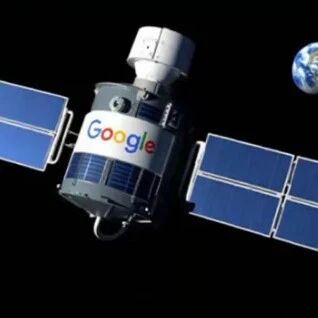
卫星导航板块盘初冲高,上海港湾2连板
Xin Lang Cai Jing· 2025-11-10 01:40
Group 1 - The satellite navigation sector experienced an initial surge, with Shanghai Port Bay achieving two consecutive trading limits, and Aerospace Hongtu rising over 10% [1] - Related ETFs showed positive performance, with the Communication Equipment ETF (159583) increasing by 0.55% and a trading volume of 7.85 million yuan, while the 5G Communication ETF (515050) had a trading volume of 15.10 million yuan [1] - According to Founder Securities, space-based data centers are expected to address AIDC energy bottlenecks due to their low operating costs, high power generation capacity, and rapid deployment speed, making them a key solution in the future [1] Group 2 - Huaxi Securities highlighted that the low-cost, resource-rich, and spacious characteristics of space computing provide a stable long-term profit model for commercial aerospace [1] - The industry is currently transitioning from "sky sensing and ground computing" to "sky computing in the sky," with plans for global coverage of space computing networks as network deployment progresses [1]
