
智能网联汽车

Search documents
宁锡苏联手,迈向智能交通“区域协同”!第七届全球智能驾驶大会在苏州举行
Yang Zi Wan Bao Wang· 2025-12-02 05:43
Core Insights - The seventh Global Intelligent Driving Conference was held in Suzhou, focusing on building a global development framework for intelligent driving and showcasing Suzhou's ambition to become a leading "smart driving city" [1][2] Group 1: Event Highlights - The conference featured various cutting-edge autonomous driving products, including airport unmanned towing vehicles and smart delivery vehicles, attracting significant attention from attendees [1] - A virtual reality driving experience allowed participants to engage with integrated vehicle-road-cloud technology, enhancing the perception of safety and convenience in transportation [1] Group 2: Collaborative Initiatives - The Jiangsu Provincial Intelligent Driving Technology Key Laboratory was inaugurated, and a global best practice initiative for the electric vehicle industry was launched [2] - A collaborative action plan was introduced to promote the high-quality international expansion of the intelligent connected vehicle industry, aiming to create a shared ecosystem and capitalize on global market opportunities [2] Group 3: Regional Cooperation - The conference initiated the interconnectivity of cloud control platforms among Nanjing, Wuxi, and Suzhou, promoting data sharing and service integration to advance vehicle-road-cloud integration [2] - The collaboration between Shanghai and Suzhou has evolved from mutual recognition of intelligent connected vehicles to the formal data interconnectivity of their cloud control platforms, facilitating cross-city testing and commercial operations [2] Group 4: Industry Development - Suzhou has established a robust foundation in the intelligent connected vehicle industry, with over 800 related enterprises and an industry scale of 110 billion yuan, covering more than 30 subfields [3] - The city has developed a spatial industrial structure centered around Xiangcheng District and has implemented over 100 application scenarios, including 11 routes for autonomous buses [3] - Suzhou aims to enhance its industrial ecosystem and accelerate technological breakthroughs in intelligent connected vehicles, reinforcing its position as a global leader in this sector [3]
工人月薪两万的密码,藏在这座皖江古镇的汽车链条里 | 中国汽车地理
Di Yi Cai Jing· 2025-12-01 12:06
Core Insights - Chery Automobile and the industrial ecosystem in Wuhu are undergoing a significant transformation, driven by innovation and the establishment of a complete automotive industry chain [1][7] - The local government is actively promoting investment and improving the business environment to attract more automotive supply chain companies [5][6] Group 1: Company Developments - Ailongsen Automotive Technology Co., Ltd. is set to begin production in October 2024, with an expected annual output of 1 million sets of interior and exterior parts for new energy vehicles [2] - Chery officially listed on the Hong Kong Stock Exchange in September 2023, raising HKD 9.14 billion, marking it as the largest IPO for an automotive company in the Hong Kong market in 2025 [7] - The automotive supply chain in Wuhu has attracted over 500 companies, accounting for a quarter of the total in the city, with significant contributions from global automotive parts leaders [4] Group 2: Industry Ecosystem - The "half-hour supply circle" around Chery allows for efficient supply chain operations, significantly enhancing production efficiency [4] - The local automotive industry is projected to reach a value of over 300 billion yuan, with strategic emerging industries contributing 40% to the GDP of Wuhu [7][8] - The intelligent connected vehicle and robotics industries are being developed in tandem, with Wuhu's robotics industry expected to exceed 40 billion yuan in 2024 [8][9] Group 3: Talent and Workforce Challenges - There is a significant talent gap in the new energy and intelligent connected vehicle sectors, with an estimated shortage of 1.03 million skilled workers [10][11] - Local companies are facing challenges in recruiting and training workers, with a need for at least three months of training for new employees [11] - The local government is implementing initiatives to attract high-level talent and graduates from key universities to support the growing industry [11]
华为再添“界”系新成员;公安部将限制汽车百公里加速小于5秒 | 11月车事月报
Zhong Guo Qi Che Bao Wang· 2025-12-01 07:37
Policy and Regulation - Six departments issued a plan to expand automotive aftermarket consumption, focusing on areas like vehicle modification and RV camping, aiming for significant optimization of consumer goods supply structure by 2027 [2][3] - The Ministry of Industry and Information Technology (MIIT) announced the creation of demonstration bases for emerging industries, targeting new technologies and industries, with plans to establish around 100 park-type and 1,000 enterprise-type bases by 2035 [4] - A UN global technical regulation on electric heavy vehicle battery durability was passed, which will standardize testing methods and requirements for battery performance, supporting the global electric truck industry [5] - A new group standard for automotive data export safety assessment was approved, providing clear guidelines for data compliance in the automotive sector [6] - The Ministry of Public Security proposed a standard limiting passenger cars' acceleration to 100 km/h in no less than 5 seconds, promoting safety in vehicle performance [7][8] - The Ministry of Commerce and other departments announced stricter controls on new cars being exported as used cars, aiming to address the issue of "zero-kilometer used cars" [9] - MIIT set new credit ratio requirements for new energy vehicles for 2026 and 2027, mandating 48% and 58% respectively, to encourage investment in new energy [10][11] Industry Information - The automotive industry donated over 80 million HKD to support Hong Kong after a severe fire incident, showcasing corporate social responsibility [13][14] - Two new academicians from the automotive industry were elected, indicating a boost in innovation and research capabilities within China's new energy vehicle sector [15][16] - At the Guangzhou Auto Show, nearly 60% of the displayed vehicles were new energy vehicles, marking a significant shift towards electric and intelligent vehicles [17] - In the first ten months of the year, China's new energy vehicle exports exceeded 2 million units, highlighting the sector's growth and importance in the global market [18][19] - China's combined driving assistance technology has reached an international leading level, with a market penetration rate of 62.58% [20][21] - The 8th China International Import Expo showcased advancements in the automotive ecosystem, emphasizing electric, intelligent, and low-carbon technologies [22][23] International News - In Europe, new car sales increased by 4.9% in October, with electric vehicle registrations surpassing gasoline and diesel vehicles, although overall sales remain below pre-pandemic levels [25] - The UK government announced an additional £1.3 billion in electric vehicle subsidies and £200 million for charging infrastructure, reinforcing its commitment to zero-emission vehicles [26][27] - Japan's exports to the US have declined for seven consecutive months, with a 7.5% drop in automotive exports, reflecting the impact of external trade policies [28] - The Eurasian Economic Union initiated an anti-dumping investigation on Chinese heavy-duty tires, indicating potential challenges for Chinese exports [29] - In the US, electric vehicle sales dropped significantly in October following the expiration of federal subsidies, highlighting the importance of policy support for market growth [30][31] Company Information - NIO reported a significant increase in gross margin and revenue for Q3 2025, with a revenue of 21.79 billion CNY, and expressed confidence in achieving profitability in Q4 [33] - GAC Group announced the completion of a pilot production line for solid-state batteries, marking a key step towards mass production [34] - Huawei applied for the "Qijie" trademark, indicating its ongoing commitment to the smart automotive sector [35] - The Aion UT super electric vehicle was launched exclusively on JD.com, aiming to invigorate the small electric car market [37] - Seres completed its IPO on the Hong Kong Stock Exchange, raising 14.016 billion HKD, marking the largest IPO for a Chinese car company to date [39] - Geely and Renault signed a strategic cooperation agreement in Brazil, with plans to invest 3.8 billion BRL in new energy technology [41][42]






格林大华期货早盘提示:钢材-20251201
Ge Lin Qi Huo· 2025-12-01 02:05
Report Industry Investment Rating - The investment rating for the steel industry in the black building materials sector is "volatile" [1] Core View - The steel market shows a situation of both supply and demand being weak. The market should focus on the time node of the shift in trading logic from industry to macro - expectations. For the rebar main contract, there is caution in chasing long positions as the change in trading logic has not been confirmed [1] Summary by Relevant Catalog 1. Market Review - Rebar and hot - rolled coils closed higher on Friday and also rose in night trading [1] 2. Important Information - The Ministry of Industry and Information Technology stated that intelligent connected vehicles will form a trillion - yuan consumption field [1] - The China Iron and Steel Association reported that in November 2025, the floating value of the coking coal long - term agreement in the coal - steel linkage was 78 yuan higher than that in October [1] - Chongqing supports using special bonds to repurchase eligible idle land [1] - Gong Sheng, the president of the All - China Federation of Industry and Commerce Metallurgical Chamber of Commerce, emphasized that private steel enterprises should increase R & D investment, promote intelligent transformation, and deepen green development [1] - The National Bureau of Statistics data showed that in November, China's manufacturing PMI was 49.2%, up 0.2 percentage points from the previous month; non - manufacturing PMI was 49.5%, down 0.6 percentage points; the comprehensive PMI output index was 49.7%, down 0.3 percentage points [1] - Last week, the blast furnace iron - making capacity utilization rate of 247 steel mills was 87.98%, a decrease of 0.6 percentage points month - on - month; the profitability rate of steel mills was 35.06%, a decrease of 2.60 percentage points month - on - month; the daily average pig iron output was 2.3468 million tons, a decrease of 16,000 tons month - on - month [1] 3. Market Logic - Rebar and hot - rolled coils rose on Friday, continued to climb in night trading and sharply pulled up near the close. It is necessary to observe whether the market is trading the macro - expectation logic in advance. Last week, the output of rebar decreased, the output of hot - rolled coils increased, and the output of five major steel products increased. The apparent demand of all steel products changed from increase to decrease, and the inventory of rebar and hot - rolled coils continued to decline, but the de - stocking speed slowed down [1] 4. Trading Strategy - Focus on the time node of the shift in market trading logic from industry to macro - expectations. The first resistance level of the rebar main contract is 3150, and the second is 3202. The 3000 level is still a strong support. Due to the unconfirmed change in trading logic, be cautious about chasing long positions [1]
拥抱万亿级消费市场 汽车产业迎新机遇
Zhong Guo Jing Ji Wang· 2025-12-01 01:09
Group 1 - The demand for "large space and multiple seats" is driving the sales of new energy MPVs, with three-row seating providing comfortable travel for families [1] - The new policy aims to enhance the adaptability of supply and demand in consumer goods, targeting the smart connected vehicle sector as one of the three trillion-level consumption areas by 2027 [1] - The implementation plan encourages the development of iconic products and innovative enterprises in the new energy vehicle sector, promoting green low-carbon consumption [1] Group 2 - China's new energy vehicle production has surged from approximately 1.4 million units in 2020 to over 13 million units in 2024, with a market scale that has more than tripled [2] - By October 2025, new energy vehicle sales accounted for 51.6% of total new car sales, marking a significant milestone [2] Group 3 - The automotive industry is enhancing supply quality to meet the growing and diverse consumer demands, with a complete smart connected vehicle industry system established [3] - New passenger cars with Level 2 driving assistance features now represent over 60% of new car sales, showcasing advancements in technology [3] - The average range of pure electric passenger vehicles is nearing 500 kilometers, with battery costs reduced by 30% and charging speeds improved by over three times [3] Group 4 - The Ministry of Commerce plans to promote automotive circulation reforms, expand the used car market, and develop the automotive aftermarket, including modifications, rentals, and camping [4]
拥抱万亿级消费大市场,汽车产业迎广阔新机遇
Xin Hua She· 2025-11-30 08:19
Core Insights - The automotive industry is poised for significant growth, driven by consumer demand for larger, more versatile vehicles, particularly in the new energy MPV and off-road segments, as well as advancements in smart technology [1][3] - The new implementation plan aims to create three trillion-level consumption sectors and ten hundred-billion-level consumption hotspots by 2027, with smart connected vehicles being a key focus area [1] - The rapid increase in new energy vehicle production in China, from approximately 1.4 million units in 2020 to over 13 million units projected for 2024, indicates a tripling of market size [3] Industry Developments - The supply side of the automotive industry is enhancing quality and adapting to diverse consumer needs, with a complete smart connected vehicle industry system established in China [4] - Significant technological advancements have been made, including a 30% reduction in battery costs, a 40% increase in battery lifespan, and a more than threefold improvement in charging speed [4] - The introduction of innovative products targeting younger consumers, such as the Lafa5 electric sedan and the Zeekr 9X with AI-driven safety features, reflects the industry's response to evolving market demands [4] Policy and Market Initiatives - The government is promoting measures to stimulate automotive consumption, including expanding the market for second-hand vehicles and enhancing the automotive aftermarket [5] - The focus on green and low-carbon consumption in the new energy vehicle sector is expected to further boost market activity [1][5] - The automotive industry is encouraged to leverage high-quality supply to better meet diverse consumer demands, aiming for a dynamic balance between supply and demand [4]
人才缺口超百万!智能网联汽车被明确列为“万亿消费领域”
Xin Lang Cai Jing· 2025-11-29 11:14
Core Insights - The smart connected vehicle sector is poised to reach a trillion-level consumption market by 2027, as outlined in a recent government plan [3][5] - The penetration rate of new passenger cars with Level 2 driving assistance features reached 62.58% in the first seven months of this year, with total sales of 7.76 million units [3] - There is a significant talent gap in the smart connected vehicle industry, with an estimated shortage of 1.03 million skilled workers [4][9] Industry Development - The automotive industry is transitioning from electrification to intelligentization, integrating advanced technologies such as autonomous driving, vehicle-road collaboration, 5G communication, and artificial intelligence [5][6] - The government has emphasized the importance of developing smart connected vehicles as a strategic emerging industry, aiming to solidify China's leading position in this sector [6] Talent Shortage - The current educational system is not keeping pace with the rapid development of the smart connected vehicle industry, with only three relevant programs producing around 120,000 graduates annually, while the industry needs significantly more [4][9] - The demand for skilled talent is evolving, with over 260 distinct job roles identified in the smart connected vehicle sector, each requiring hundreds to thousands of personnel [8][9] Educational Initiatives - New competitions and training programs are being introduced to address the talent gap, focusing on practical skills in smart connected vehicle technology [9][10] - Educational institutions are adapting their curricula to include elements of new energy and smart connected vehicles, ensuring graduates are better prepared for the current job market [10]
深圳:“海陆空铁”一体化的超级流量端口
2 1 Shi Ji Jing Ji Bao Dao· 2025-11-28 04:51
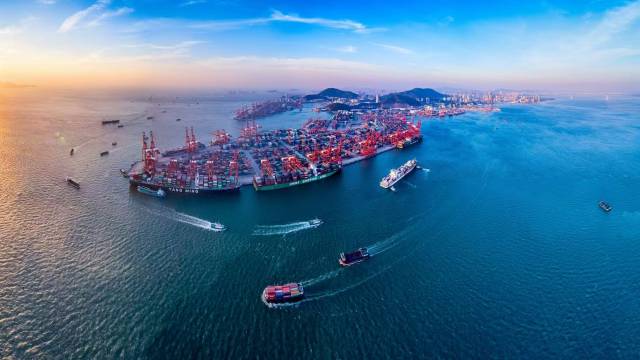
Core Viewpoint - Shenzhen aims to establish itself as a global comprehensive transportation hub by 2030, enhancing its logistics capabilities and becoming a modern international metropolis [1][11]. Transportation Infrastructure Development - Shenzhen has made significant advancements in transportation, achieving over ten domestic firsts and industry-leading accomplishments, including 100% electrification of public transport and the establishment of the first smart connected vehicle regulations in China [3][12]. - The city has developed a robust transportation network, integrating air, sea, land, and rail systems into a seamless operational framework [9][12]. Airport Development - Shenzhen Airport is evolving into a major international air hub, with plans to enhance its capacity to handle 100 million passengers and 500,000 tons of cargo annually by expanding its facilities [4][12]. - The airport has achieved record passenger and cargo throughput, with 61.47 million passengers and 1.88 million tons of cargo in 2024, marking a year-on-year increase [12][13]. Port Development - Shenzhen Port is recognized as a leading container hub globally, with a total of 144 operational berths and a focus on smart and green port initiatives [5][12]. - The port's container throughput reached 33.39 million TEUs in 2024, maintaining its position among the top four globally and third domestically [13]. Rail and Road Network Expansion - The railway system in Shenzhen is expanding, with a projected capacity to handle 120 million passengers annually, supported by a comprehensive network of high-speed rail and urban transit [7][12]. - Future plans include the construction of three logistics hubs to enhance road connectivity and efficiency in resource utilization [9][11]. Global Connectivity - Shenzhen's transportation network connects to 55 international and regional passenger destinations and 43 cargo destinations, facilitating trade and travel [9][11]. - The city aims to improve its global connectivity, increasing the 12-hour travel reach to major cities from 40% to over 90% by 2035 [11]. Technological Innovations - Shenzhen is at the forefront of low-altitude economy development, with significant advancements in drone logistics and smart transportation regulations [14]. - The city has implemented the first national regulations for smart connected vehicles, promoting innovation in the automotive sector [3][14].
推动“车路云一体化” 成渝10家企业发布一致行动
Si Chuan Ri Bao· 2025-11-27 23:41
Core Insights - The 2025 International Internet of Vehicles Technology Conference was held in Chengdu, focusing on smart connected vehicles, low-altitude economy, "vehicle-road-cloud integration," and green low-carbon initiatives [1][2] - A collaborative initiative called "Chengdu-Chongqing Vehicle-Road-Cloud Integration Unified Action" was launched by ten companies from Chengdu and Chongqing, aiming to create a world-class smart connected new energy vehicle industry cluster [1] Group 1: Event Overview - The conference gathered industry experts and representatives to create a platform for technology exchange and industrial collaboration [1] - Various activities included keynote speeches, thematic meetings, and results releases [1] Group 2: Chengdu's Initiatives - Chengdu Economic and Technological Development Zone showcased its "vehicle-road-cloud integration" achievements, establishing a cloud control platform and a regulatory service platform for smart connected vehicles [2] - The cloud control platform integrates perception, communication, and intelligent decision-making capabilities, significantly enhancing vehicle coordination and traffic efficiency [2] - The regulatory service platform includes three main components: access management, safety supervision, and decision support, forming a vehicle networking operation management system [2] Group 3: Achievements and Future Outlook - Chengdu has become one of the first national pilot cities for "vehicle-road-cloud integration," connecting over 4,000 traffic signal lights and opening 680 kilometers of testing roads [2] - A total of 110 testing and demonstration application licenses have been issued, with over 2 million kilometers of testing mileage recorded [2] - The 2025 Internet of Vehicles Blue Paper was released, providing forward-looking insights and recommendations on technological innovation, cross-industry integration, and standard regulations [2]
2025年Automechanika Shanghai以创纪录规模盛大开幕
Zhong Guo Qi Che Bao Wang· 2025-11-26 15:43
Core Insights - The 2025 Automechanika Shanghai exhibition opened on November 26, showcasing significant growth in participation and exhibition space, with 7,465 exhibitors from 44 countries, a 10% increase year-on-year, and a 9% expansion in exhibition area to 383,000 square meters [3][10]. Group 1: Exhibition Overview - The exhibition features a record number of exhibitors and has expanded its international participation, attracting 15 national and regional exhibition groups, enhancing its role as a global professional service platform [3][5]. - The event includes 94 concurrent activities, gathering over 450 industry leaders to explore market developments in China and globally, aiming to build resilient supply chains and efficient international cooperation networks [7][9]. Group 2: Industry Participation - Major automotive brands such as GAC Aion, Li Auto, Chery, and Tesla are participating, alongside key companies from the automotive supply chain, showcasing diverse products and solutions across fuel and new energy vehicles [10][11]. - The new energy and intelligent connected vehicle sector has expanded by 50%, featuring core components and systems, with nearly 30 new brands participating for the first time [13]. Group 3: International Influence - The exhibition's international appeal continues to grow, with a 20% increase in exhibition area from international groups, and a 25% rise in pre-registered attendees from nearly 160 countries [16]. - Over 24,000 professional buyers from 50 countries are expected to attend, marking a record high in both scale and international participation [16]. Group 4: Concurrent Activities - The flagship event, the 2025 Automechanika Shanghai International Development Conference, will feature high-quality forums and workshops covering various industry topics, including technology trends and talent development [18]. - Other key activities include forums on intelligent connected vehicles, automotive aftermarket, and electric vehicle innovation, aimed at fostering collaboration within the industry [19]. Group 5: Special Exhibits and Innovations - The exhibition will showcase a "Technology, Innovation, Trends" concept area with over 30 technical lectures, and a startup area to support emerging brands [21]. - The green repair area will focus on practical workshops to enhance professional service capabilities in the automotive aftermarket, promoting sustainable practices [21].
