物理AI

Search documents
热点问答|美消费电子展上演讲嘉宾如何谈AI
Xin Hua She· 2026-01-09 13:08
Core Insights - The 2026 Consumer Electronics Show (CES) highlighted the next phase of AI development, focusing on breakthroughs in computing power, the transition of "physical AI" into real-world applications, and personalized services driven by intelligent agents [1] Group 1: AI Computing Power - The CEO of AMD, Lisa Su, stated that the number of active AI users globally has surpassed 1 billion and is expected to exceed 5 billion in the future. Current computing power is insufficient to support the vision of ubiquitous AI, necessitating a 100-fold increase in global computing power in the coming years [1] - The industry is evolving from traditional methods of enhancing chip performance to a full-stack collaborative design approach, integrating chips, networks, and storage into a unified AI computing platform [2] - NVIDIA's CEO, Jensen Huang, introduced the "Vera Rubin" platform, a system-level computing platform comprising six chips, designed to significantly reduce model training time and inference costs [2] Group 2: Physical AI Implementation - Huang emphasized the evolution of AI from perception and generation to "physical AI," which understands the physical world, predicting that the "ChatGPT moment" for physical AI is imminent [2][3] - The application of "physical AI" will be prominent in fields such as autonomous driving, robotics, and industrial automation, utilizing technologies like simulation and digital twins for interaction with the real world [3] Group 3: Development of Intelligent Agents - The co-founder of Liquid AI, Ramin Hasani, declared that this year will be the year of "proactive intelligent agents," which can operate continuously and perform tasks in the background, moving beyond reactive AI assistants [4] - Lenovo introduced its first personal super intelligent agent, Lenovo Qira, capable of cross-platform and cross-device collaboration, enhancing user experience through context awareness and preference prediction [4] - The integration of personal, enterprise, and public intelligence through hybrid AI is seen as a crucial path for personalized and diverse AI development [4] Group 4: Human-Centric AI - The CEO of Havas Group, Yannick Bolloré, emphasized that AI should serve as a collaborative partner in human creativity rather than a replacement for it, reinforcing the importance of keeping humans at the center of technological advancements [5]

“一车双能”扩容叠加智能化升级 小鹏2026年新品将密集落地
Zheng Quan Ri Bao Wang· 2026-01-09 12:26
Core Insights - Xiaopeng Motors is set to launch four significant models at the 2026 Global New Product Launch, marking 2026 as a pivotal year for the company's global product and technology expansion, transitioning into a key phase of physical AI development [1] - The company reported a record global delivery of 429,400 vehicles in 2025, a 126% year-on-year increase, positioning 2026 as a critical year for strategic breakthroughs [2] Group 1: Technology and Innovation - Xiaopeng Motors is transitioning from a traditional automaker to an AI technology company, with a focus on the next three years as crucial for physical AI advancements [2] - The upcoming VLA (Vision Language Action) technology is anticipated to revolutionize autonomous driving, with plans for mass production and upgrades in 2026 [2] - The unified VLA technology platform will enable the development of both Ultra and Robotaxi versions, reducing R&D costs and facilitating rapid application of AI technologies across different product forms [2] Group 2: Robotics and Future Projects - The company is developing a production version of its robot, which aims to be humanoid and capable of communication, contrasting with traditional software-driven robots [3] - Xiaopeng Motors is also advancing its flying car project, indicating a comprehensive technology ecosystem that includes land, air, and intelligent services [3] Group 3: Globalization Strategy - Xiaopeng Motors has entered 60 countries and regions by 2025, with plans for further market expansion and a focus on local R&D and manufacturing to enhance competitiveness [4] - A strategic partnership with Volkswagen is a key element of Xiaopeng's globalization efforts, with the first collaborative model expected to enter mass production soon [4] - The company is confident in deploying its VLA technology in Europe, having conducted extensive road testing and engaged with local governments on regulatory matters [4] Group 4: Product Innovation - The 2026 Xiaopeng G7 model features advanced super-range technology, achieving a pure electric range of 430 kilometers and a combined range of 1,704 kilometers [5] - The "dual-energy" strategy has proven successful, with significant demand for the X9 super-range model, indicating strong market potential for range-extended vehicles [6] - Xiaopeng Motors is expanding its global channel and supply chain, with plans to increase the number of factories outside China and deepen market penetration into less urbanized areas [6]

记者手记|“物理AI”成为美消费电子展热议新词
Sou Hu Cai Jing· 2026-01-09 11:40
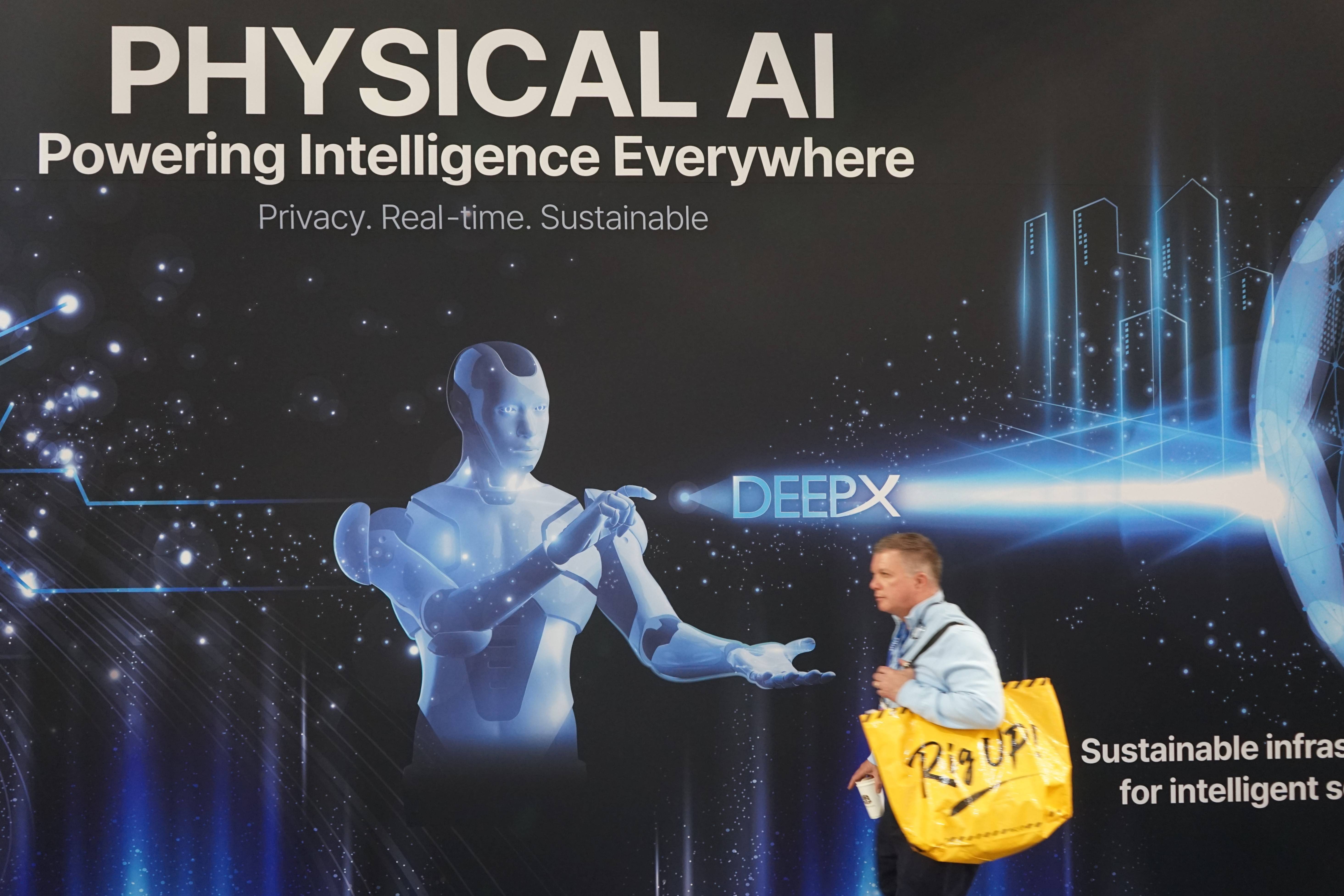
Core Insights - The 2026 Consumer Electronics Show (CES) in Las Vegas highlights "Physical AI" as a key trend, reflecting a shift in AI technology development and industry focus [1][5][10]. Group 1: Definition and Importance of Physical AI - "Physical AI" refers to enabling autonomous systems like cameras, robots, and self-driving cars to perceive, understand, reason, and execute complex actions in the physical world [5][10]. - Unlike previous AI discussions focused on algorithms and computing power, "Physical AI" emphasizes the integration of AI into robots, autonomous vehicles, and smart devices, allowing them to actively change their environments [5][14]. Group 2: Industry Applications and Innovations - At CES, various demonstrations showcased "Physical AI" in action, including smart robots navigating spaces, self-driving concept cars, and smart home devices executing commands accurately [5][9]. - Companies like Hisense and Xiaomi presented products such as companion robots and AI-driven cleaning devices, illustrating the practical applications of "Physical AI" in everyday life [9][10]. Group 3: Industry Perspectives and Future Directions - Industry leaders, such as Qualcomm and BOE, noted that "Physical AI" is evolving alongside "Personal AI," with applications expanding into wearables, personal devices, and public life scenarios [10][14]. - The integration of display technology and sensors is expected to enhance the capabilities of "Physical AI," leading to machines that not only perform tasks but also think and collaborate [14].

小鹏连发4款新车,用多线动作应对“巨大改变” | 电厂
Xin Lang Cai Jing· 2026-01-09 10:36
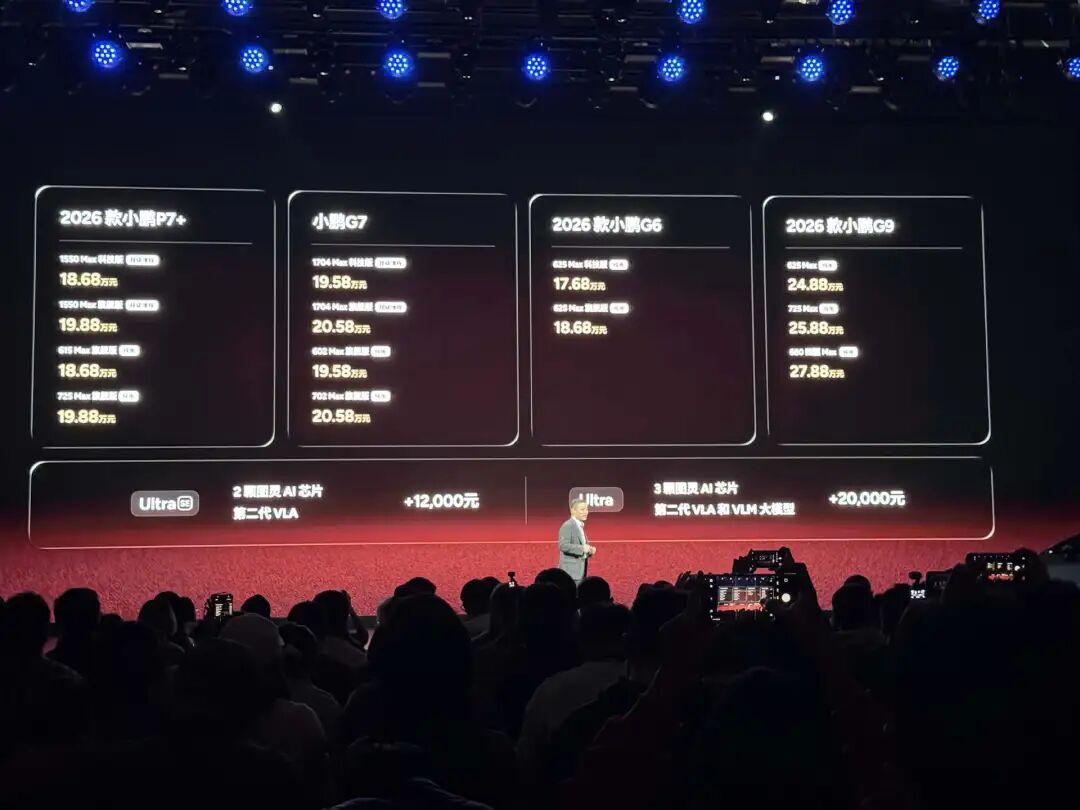
Core Insights - Xiaopeng Motors has officially entered a dual technology path of "pure electric + range extender" with the launch of multiple new models and technology updates at its 2026 Spring Product Launch, including the 2026 P7+, G7, G6, and G9 [1][2] Product Launch and Pricing - The 2026 P7+ and G7 are available in both pure electric and range extender versions, with starting prices of 186,800 RMB and 195,800 RMB respectively; the G6 starts at 176,800 RMB, and the G9 starts at 248,800 RMB [1] - The P7+ range extender version has a CLTC pure electric range of 430 km and a comprehensive range of 1,550 km, while the G7's comprehensive range reaches 1,704 km [8][10] Technological Advancements - Xiaopeng has introduced the second-generation VLA model, which eliminates the "language translation" step, allowing direct generation of control commands from visual signals, enhancing the system's ability to handle complex scenarios [2][3] - The second-generation VLA is trained on approximately 100 million real road videos, equating to thousands of years of human driving experience, and operates with a maximum computing power of 2,250 TOPS [2][3] Market Strategy and Global Expansion - Xiaopeng's "super range extender" strategy aims to expand the market reach, with the X9 super range extender achieving a record delivery of 5,424 units in December [8][12] - The company has reported a 126% year-on-year increase in global deliveries, totaling 429,400 units in 2025, and has entered 60 countries, establishing a presence in multiple European markets [12] Localization and Charging Infrastructure - Xiaopeng is focusing on local R&D and production, with nine global R&D centers and several overseas production projects underway, positioning the P7+ as the first "global car" [12] - The charging network has expanded to cover 31 countries and regions, with over 2.66 million public charging stations and a self-operated network in over 430 cities [12]
美股异动丨禾赛盘前续涨超1% 获中金看好并上调目标价
Ge Long Hui· 2026-01-09 09:42
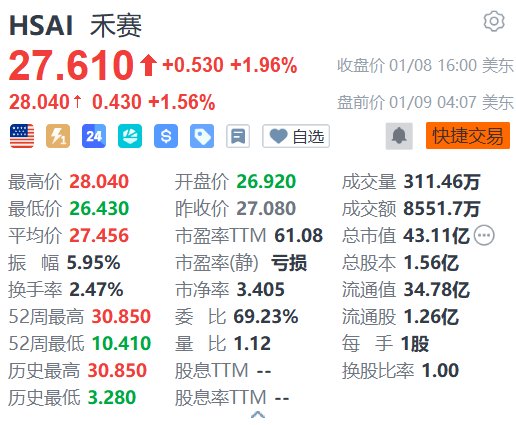
Group 1 - Hesai (HSAI.US) shares rose by 1.96% yesterday and continued to increase by 1.56% in pre-market trading today, reaching $28.04 [1] - The company showcased its latest lidar technology at CES 2026 and updated its delivery capacity, production planning, and strategic partnerships [1] - Hesai's mass production and delivery capabilities are leading the industry, with steady progress in domestic and international production capacity [1] Group 2 - The L3 model has received approval from the Ministry of Industry and Information Technology, which is expected to increase the number of lidar units per vehicle [1] - The next wave of physical AI, including Robotaxi and robotics, positions lidar as a critical engine for growth [1] - CICC maintains its revenue forecast for Hesai for 2025 while raising the 2026 revenue forecast by 6.4% [1] Group 3 - The target price for Hesai's stock has been raised to $31.56, reflecting an upward adjustment in the valuation center for the intelligent driving and robotics sectors [1]

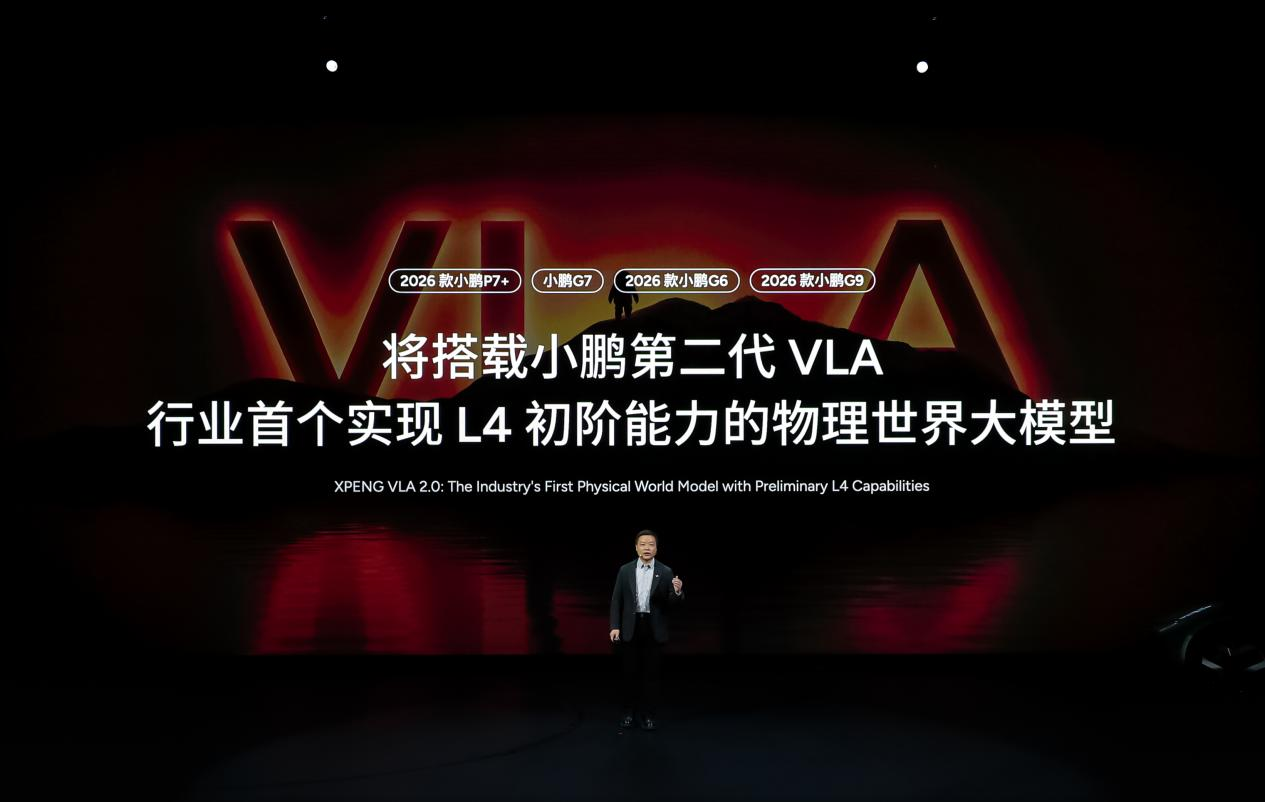
搭载第二代VLA系统 小鹏汽车全球首发四款新品
Yang Shi Wang· 2026-01-09 09:41
Core Insights - XPeng Motors officially launched the 2026 models including P7+, G7 Super Range, G6, and G9 at the global product launch event on January 8, 2026, with prices starting from 186,800 RMB for P7+ [1] - The new models feature the second-generation VLA developed by XPeng, which is the first in the industry to achieve L4 initial capabilities, enabling direct generation of action commands from visual signals [1][3] - XPeng's AIOS 6.0 system was introduced, marking a significant upgrade from passive response to proactive service in smart cabins, and will be equipped in the newly launched vehicles [7] Model Specifications - The 2026 P7+ offers a dual energy solution with a pure electric range of 430 km and a comprehensive CLTC range of 1550 km, featuring a space utilization rate of 88% [9] - The G7 Super Range model includes a 55.8 kWh battery and a 60L fuel tank, achieving a CLTC comprehensive range of 1704 km and a pure electric range of 430 km, with a spacious trunk capacity of 779 liters [9] - The G6 is priced from 176,800 RMB, while the G9 starts at 248,800 RMB, showcasing XPeng's diverse product offerings [1] Market Expansion - XPeng achieved a cumulative global delivery of 429,445 units in 2025, representing a 126% year-on-year growth, with products available in 60 countries and regions [7] - The global launch of the 2026 P7+ took place in Brussels, Belgium, on January 9, 2026, as part of XPeng's AI technology manufacturing journey [11]
从预训练到推理拐点,英伟达能靠Rubin延续霸权吗?
雷峰网· 2026-01-09 08:52
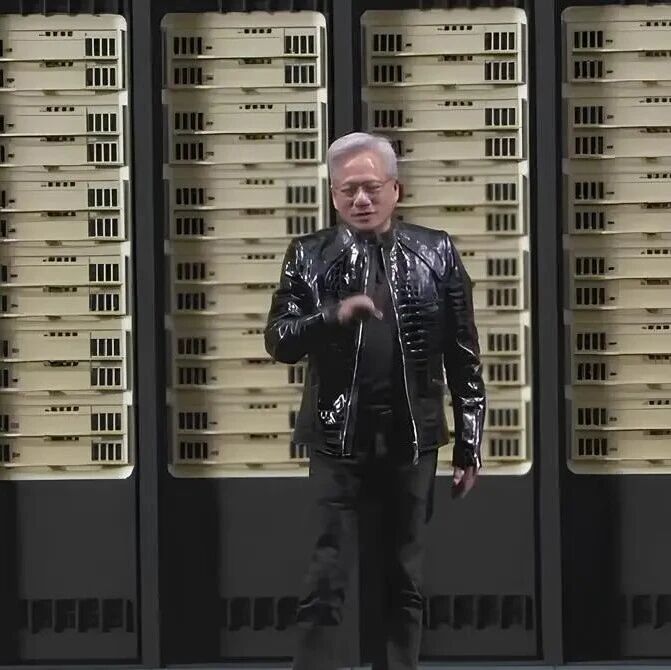
Core Viewpoint - The article discusses NVIDIA's strategic shift towards a multi-chip architecture with the introduction of the "Rubin" platform, which aims to address the challenges in AI inference and maintain its market leadership amidst increasing competition and technological limitations [2][4][6]. Group 1: NVIDIA's Strategic Shift - NVIDIA's CEO Jensen Huang emphasized the importance of "physical AI" and positioned inference AI at the core of its future strategy, introducing the autonomous driving AI Alpamayo and the Vera Rubin computing platform [2]. - The Rubin platform integrates multiple components, including Vera CPU, Rubin GPU, and various networking technologies, to enhance computational power and address the exponential growth in model size and inference complexity [2][4]. - Industry insiders view the launch of the Rubin platform as a critical step for NVIDIA to maintain its leading position in the inference market, especially as single-chip performance gains have plateaued [4][6]. Group 2: Technical Challenges and Innovations - The Rubin platform's inference performance relies on NVFP4 adaptive precision, which may compromise higher precision calculations, potentially affecting quality in sensitive applications like video generation [5][19]. - Huang claimed that the Rubin platform could reduce global data center power consumption by approximately 6% through its innovative cooling design, although experts raised concerns about the actual effectiveness of this approach [5][24]. - The platform's power consumption is reportedly double that of its predecessor, raising questions about its scalability and the need for enhanced cooling solutions to manage heat effectively [21][23]. Group 3: Market Implications and Competitive Landscape - The introduction of the Rubin platform may initially negatively impact domestic chip manufacturers, but it could ultimately benefit them as the industry shifts towards multi-chip systems [6][12]. - The article highlights a growing consensus that the core value in training is efficiency, while in inference, it is cost, indicating a shift in market dynamics that NVIDIA must navigate [7]. - The competition in the inference space is intensifying, with domestic firms also pursuing similar technological advancements, suggesting that NVIDIA's current strategies may face significant challenges [18][19].
持续深耕AI出行与全球化,2026款小鹏P7+售价18.68万起、小鹏G7超级增程售价19.58万起
数说新能源· 2026-01-09 08:35
Core Viewpoint - Xiaopeng Motors has launched four new models at the 2026 Global New Product Launch, showcasing advancements in AI technology and electric vehicle capabilities, including the P7+, G7, G6, and G9, with a focus on enhancing user experience and global market presence [1][36]. Group 1: Product Launch Details - The 2026 Xiaopeng P7+ is available in both super range and pure electric versions, with prices starting at 186,800 RMB for both variants [1]. - The 2026 Xiaopeng G7 offers four versions, with prices ranging from 195,800 RMB to 205,800 RMB, and features both super range and pure electric options [1]. - The 2026 Xiaopeng G6 is priced from 176,800 RMB, while the G9 starts at 248,800 RMB, showcasing a range of pricing and features across the models [1]. Group 2: Promotional Offers - Customers who place orders for the 2026 models by March 31, 2026, can receive various incentives, including an 8,000 RMB subsidy for the P7+, G7, and G6, and a 12,000 RMB subsidy for the G9, along with additional benefits [2]. Group 3: Technological Advancements - The second-generation VLA and AIOS 6.0 systems are introduced, enabling advanced AI capabilities for intelligent driving and user interaction, marking a significant leap in the automotive industry [4][6]. - The second-generation VLA achieves L4-level capabilities, allowing for direct generation of action commands from visual signals, enhancing the vehicle's understanding of the physical world [4]. - The AIOS 6.0 system features a redesigned interface and introduces a nationwide 3D navigation map, enhancing the user experience [6]. Group 4: Performance and Efficiency - The 2026 P7+ boasts a pure electric range of 430 km and a combined range of 1550 km, with a low energy consumption of 10.9 kWh/100 km in electric mode [12]. - The vehicle supports ultra-fast charging, allowing for a 10%-80% charge in just 12 minutes, significantly reducing range anxiety for users [12]. Group 5: Safety Features - The P7+ meets dual five-star safety standards and features a robust battery system that remains safe under extreme conditions, exceeding upcoming national standards [17]. - The vehicle's structure includes a one-piece cast aluminum floor and high-strength body, providing enhanced safety during impacts [17]. Group 6: Market Position and Global Strategy - Xiaopeng Motors has delivered 429,445 vehicles globally in 2025, marking a 126% year-on-year increase, and is expanding its presence in 60 countries [9]. - The launch of the P7+ and G7 signifies Xiaopeng's commitment to providing diverse electric mobility solutions and establishing a strong foothold in international markets [9].

【新能源】2025年11月新能源汽车行业月报
乘联分会· 2026-01-09 08:11
Sales Performance - In November, the total passenger car sales reached 2.03 million units, a year-on-year decrease of 16.1% and a month-on-month decrease of 3.5% [4] - The new energy vehicle (NEV) market sales were approximately 1.22 million units, showing a year-on-year decline of 1.9% but a month-on-month increase of 2.5% [4] - NEVs accounted for 60.0% of total passenger car sales in November, an increase of 3.5% from the previous month and an increase of 8.7% compared to the same month last year [4] New Energy Market Performance - In November, pure electric vehicle sales were about 770,000 units, a year-on-year increase of 2.3% and a month-on-month increase of 0.8% [9] - Plug-in hybrid sales were approximately 449,000 units, showing a year-on-year decline of 8.5% but a month-on-month increase of 5.5% [9] - Cumulative NEV sales for 2025 reached 11.04 million units, with a cumulative year-on-year increase of 16.8% [9] Top Cities for NEV Sales - The top 10 cities accounted for 27.2% of total sales, an increase from 26.1% in the previous month [10] - The top three cities for NEV sales were Shanghai, Guangzhou, and Beijing [10] - In the top 10 cities, the penetration rate of NEVs exceeded 60% in all cities except Xi'an, with Shenzhen leading at 72.3% [10] Pure Electric Market Analysis - The top three segments in the pure electric market were B-SUV (15.8%), A0 class (15.6%), and A00 class (13.4%) [15] - The B-SUV and B-class market shares increased significantly by 2.0% due to the recovery in Tesla's deliveries [15] - The C-SUV market share expanded from 6.1% to 13.3% year-on-year, while the A-SUV market share contracted from 13.0% to 9.6% [15] User Ownership Analysis - In November, personal users accounted for 87.1% of the pure electric market, a year-on-year increase of 5.8% [16] - Unit users represented 7.1%, showing a year-on-year decline of 25.1% [16] - Cumulatively, personal users made up 86.4% of the pure electric market, while unit users accounted for 6.3% [16] Industry Dynamics - On November 5, XPeng announced its second-generation VLA model, focusing on "physical AI" and showcasing several new products, including a self-developed Robotaxi [21] - On November 20, Huawei announced two new cooperative brands with GAC and Dongfeng, named "Qijing" and "Yijing" respectively [24] - Huawei also announced that its Harmony cockpit has entered the L3 "professional assistant" stage, promoting a shift from "function-driven" to "experience-driven" in the industry [24] Technology Developments - Chinese automakers have overcome challenges in mass production of semi-solid-state batteries, achieving an energy density of 350Wh/kg [29] - WeRide received Switzerland's first pure unmanned Robotaxi license, allowing operations on public roads [29] - The integration of cockpit and driving systems in the Extreme Fox T5 marks a significant advancement in the industry, providing a unified computing solution [29]
9亿美元!英特尔旗下Mobileye收购人形机器人公司,加码物理AI
Tai Mei Ti A P P· 2026-01-09 07:21
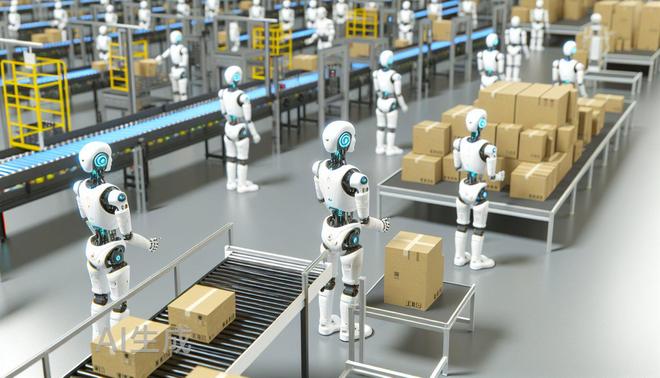
图片由AI生成 作为英伟达在自动驾驶领域的竞争对手之一,英特尔子公司Mobileye也正将"物理AI"视为下一代核心方 向。 今年CES期间,Mobileye宣布收购人形机器人公司Mentee Robotics,引发行业关注。 根据官方信息,这次收购对价总额约为9亿美元(具体金额可能因相关调整而发生变动),其中包括约 6.12亿美元现金及至多约2620万股Mobileye A类普通股(具体股数将根据交割前Mentee期权的归属情况 做相应调整)。 Mobileye强调,上述金额并非最终金额,将根据股份购买协议条款进行调整。 该交易预计于2026年第一季度完成。 收购完成后,Mentee将作为Mobileye旗下独立事业部运营,在保持团队与业务连续性的同时,依托 Mobileye的AI训练基础设施,加速其AI软硬件能力的整合。 Mobileye首席执行官阿姆农·沙书亚(Amnon Shashua)表示,"双方的强强联合将使我们把握时代赋予 的独特机遇,在全球范围内引领物理AI技术在机器人与驾驶自动化领域的演进。" "Mobileye是一家在物理AI领域工作的AI公司。"沙书亚在CES的演讲中强调,过去Mobil ...