
债券投资

Search documents
2026年度固收策略电话会议
2025-12-31 16:02
Summary of the 2026 Fixed Income Strategy Conference Call Industry Overview - The conference call focused on the fixed income market and monetary policy outlook for 2026, emphasizing government bonds and credit strategies. Key Points and Arguments Monetary Policy Expectations - A moderate easing of monetary policy is anticipated in 2026, with a potential interest rate cut likely after the Spring Festival, although the probability of a January cut is low [1][3] - The central bank may maintain liquidity through reverse repos or reserve requirement ratio cuts to support government bond issuance [1][4] Inflation and Economic Indicators - Inflation is expected to rebound in 2026, with CPI averaging around 0.5%, PPI at approximately -1.1%, and GDP deflator at about 0.3% [1][5] - This inflation rebound is projected to raise the 10-year government bond yield by nearly 10 basis points, keeping the annual interest rate around 1.8-1.85% if a 10 basis point cut occurs [1][5] Investment Strategies - A 2-3 year credit carry strategy is recommended, with a net carry of over 40 basis points, potentially yielding returns of 2-2.1% [1][10] - Focus on low-frequency, high-probability, high-reward strategies, particularly in the context of rising interest rate expectations for 5-year and 10-year bonds [1][10] Government Bond Supply and Fiscal Policy - Government bond supply pressure is expected to peak in the first quarter, May-June, and August-September, with the central bank likely providing liquidity support during these periods [1][18] - Fiscal expansion is anticipated, but at a slower pace than the previous year, with total fiscal scale projected to reach around 15 trillion yuan [1][16] Credit and Local Government Bonds - Local government bonds should be monitored for issuance rhythm and supply pressure, with a recommendation to increase allocation under a loose monetary policy [6][18] - Credit bonds should be selected based on corporate fundamentals and industry outlook, with a focus on high-quality enterprises during economic recovery [6][38] Convertible Bonds and Equity Strategies - The convertible bond market is expected to exhibit institutional characteristics, with high premium new bonds favored [3][27] - Strategies should adapt to equity market performance, increasing exposure to high-conversion value convertible bonds when market conditions are favorable [7][8] Risk Management and Market Environment - The overall market environment in 2026 is expected to remain stable, with limited upward movement in interest rates unless inflation significantly exceeds expectations [12][19] - Emphasis on capturing opportunities through logical, high-probability strategies, particularly around anticipated interest rate cuts [12][10] Specific Investment Recommendations - Short-term strategies should focus on short-end government bonds, policy financial bonds, and certificates of deposit, particularly 2-3 year credit bonds and 5-year government bonds [11][19] - Long-end active bonds may be considered if the central bank exceeds expectations in rate cuts or bond purchases; otherwise, short-term high-frequency trading is advised [11][19] Conclusion - The 2026 fixed income market is characterized by a cautious yet optimistic outlook, with strategies focusing on credit carry, local government bonds, and convertible bonds, while maintaining vigilance against potential risks in the credit market [12][38]
——央行报表及债券托管量观察:曲线陡峭化下的机构行为特征
Huachuang Securities· 2025-12-28 13:13
1. Report Industry Investment Rating - Not provided in the content 2. Core Viewpoints of the Report - The report analyzes the bond market in November 2025 based on the central bank's balance sheet and bond custody data, presenting the latest ideas of the central bank's monetary policy and the new dynamics of institutional investors' bond - market investment strategies, and predicting short - term investment opportunities and risks in the bond market [9]. - In the cross - year allocation window, some trading opportunities can be appropriately participated in, and when the 10y Treasury bond approaches 1.85%, it has a safety margin and can also be appropriately allocated. For 30y bonds, small - band operations can be carried out when the 30 - 10y spread is above 40bp, and larger positions require the start of a decline in the 10y Treasury bond yield or an improvement in the supply - demand structure of ultra - long bonds. The cross - year funds are expected to remain loose, and the coupon - holding strategy can be continued, with different strategies for different types of investors [10][8] 3. Summary According to the Directory 3.1 11 - month Central Bank Balance Sheet and Custody Volume Interpretation 3.1.1 November 2025 Central Bank Balance Sheet Change Interpretation - In November 2025, the central bank's balance sheet size increased from 47.06 trillion yuan to 47.30 trillion yuan. The main increase items on the asset side were "claims on other depository corporations", and on the liability side, they were "currency issue" and "deposits of other depository corporations", while the main decrease item was "deposits of financial corporations not included in reserve money" [15]. - On the asset side, near the end of the year, the central bank "withdrew short - term funds and released long - term funds", and the increment of "claims on other depository corporations" rebounded. The central bank increased its net purchase of Treasury bonds, and its Treasury bond holdings increased slightly after considering the maturity of the month. - On the liability side, due to the strong demand for cash by residents and enterprises at the end of the year, the "currency issue" and "deposits of other depository corporations" of the central bank increased seasonally [27] 3.1.2 Impact of the Central Bank's Operations on Custody Volume in November 2025 - In November 2025, the central bank carried out 150 billion yuan of outright reverse repurchase operations and a net purchase of 5 billion yuan of Treasury bonds, with a total net investment of 54.88 billion yuan through innovative tools. The single - month increase in the "ChinaBond - Other" (central bank) account was 59.07 billion yuan, which was relatively close to the net investment scale of innovative tools. The main incremental bond types were Treasury bonds and local government bonds [31][32] 3.2 Leverage Ratio: Driven by the Carry Trade Space, the Institutional Leverage Level Continued to Rise - In November, with the central bank's increased volume of outright reverse repurchases and MLF and the help of fiscal expenditures, the capital market was generally stable. The carry - trade strategy of institutions was dominant, the average monthly trading volume of the whole - market pledged repurchase increased from 7.3 trillion yuan in October to 7.5 trillion yuan in November, and further rose to 8.3 trillion yuan since December. The average leverage ratio of bond funds increased from 116.9% in October to 117% in November, and further to 118.7% since December [34] 3.3 By Institution: The Power of Allocation - Oriented Investors Remained, Funds Reduced Duration, and Wealth Management Reserves Coupon - Bearing Assets 3.3.1 Reasons for the Widening of the 30 - 10y Spread - In the long - run, the imbalance in the supply - demand structure of ultra - long bonds may affect the spread center, including the continuous lengthening of government bond issuance terms and the weakening of the allocation demand for ultra - long bonds. However, in the short - term, the direct reason for the widening of the 30 - 10y spread was the large - scale selling by trading - oriented investors such as funds and securities companies [43][46] 3.3.2 Banks: Large - Scale Banks' Short - Term Bond Buying Continued to Increase, and Rural Commercial Banks' Sentiment towards Allocating Certificates of Deposit Improved - Large - scale banks: In November, the single - month bond investment volume increased significantly. In the primary market, the demand for underwriting government bonds increased, and in the secondary market, the net buying of short - term bonds was strengthened. Due to the pressure of duration indicators, the continuous buying of short - term bonds by large - scale banks led to a continuous widening of the 10 - 3y Treasury bond term spread [55][58] - Rural commercial banks: The sentiment towards allocating bonds improved, and they turned to net buyers of certificates of deposit. In November, the net selling scale decreased significantly, and they increased their positions in some bonds during the bond - market adjustment. Since December, with the rising spread between certificates of deposit and Treasury bonds, rural commercial banks turned to net buyers of certificates of deposit [61] 3.3.3 Insurance: During the Bond - Market Adjustment, Insurance Increased Positions at High Yields, Mainly Increasing Positions in Exchange - Traded Local Government Bonds - In November, as the bond - market yield fluctuated upward, insurance companies increased their positions at high yields, mainly increasing their positions in exchange - traded local government bonds. The total monthly bond - allocation increment in the inter - bank and exchange markets increased, and the net buying scale also rose [70] 3.3.4 General Funds: Driven by the Defensive Mentality, Funds Reduced Duration and Sold Ultra - Long Bonds, and Wealth Management Reserves Coupon - Bearing Assets in Advance - Funds: In November, the redemption pressure of funds reappeared, and the scale of bond funds was under pressure. Driven by the defensive mentality, they reduced duration and sold ultra - long bonds, with the net buying scale significantly weaker than the seasonal level. Since mid - December, the sentiment towards allocating bonds has improved [81] - Bank wealth management: Supported by the transfer of deposits, the scale of bank wealth management increased, and the main allocation varieties switched from certificates of deposit to short - term credit bonds, preparing coupon - bearing assets for the next year in advance [84] 3.3.5 Foreign Capital: The Comprehensive Return on Investing in Certificates of Deposit Remained at a Low Level, and the Net Outflow of Foreign Capital Accelerated - In November 2025, the comprehensive return on foreign capital's investment in certificates of deposit remained at a low level, and the net outflow scale increased, mainly reducing positions in certificates of deposit and Treasury bonds [93] 3.4 By Bond Type: The Main Support for the Increment of the Bond - Market Custody Volume was Government Bonds - In November, the increment of the bond - market custody volume increased to 1.4798 trillion yuan, and government bonds were the main support, with the increments of Treasury bonds and local government bonds being 645.7 billion yuan and 590.2 billion yuan respectively [95] - Interest - rate bonds: The net financing scale increased. The net financing scale of interest - rate bonds increased from 623 billion yuan to 1495.1 billion yuan, with the net financing scale of Treasury bonds, local government bonds, and policy - bank bonds all rising [102] - Certificates of deposit: The maturity pressure increased, and the net financing of certificates of deposit decreased significantly. In November, the maturity scale of certificates of deposit increased significantly, the issuance scale decreased, and the net financing scale dropped from 796.9 billion yuan to - 511.2 billion yuan [105]
宽货币政策升温降息预期,30年国债ETF(511090)久期价值凸显,盘中涨0.27%
Sou Hu Cai Jing· 2025-12-26 02:55
Core Viewpoint - The bond market is experiencing fluctuations influenced by various factors, including monetary policy signals and external uncertainties, while the 30-year government bond ETF shows potential for investment due to its liquidity and low-risk profile [1][2]. Group 1: Market Performance - As of December 26, 2025, the 30-year government bond ETF (511090) increased by 0.27%, with an intraday turnover of 5.21% and a transaction volume of 1.391 billion yuan [1]. - The average daily transaction volume for the 30-year government bond ETF over the past year reached 8.377 billion yuan [1]. - The latest scale of the 30-year government bond ETF is 26.693 billion yuan [1]. Group 2: Bond Market Trends - On December 25, the Chinese interbank bond market continued to experience narrow fluctuations, with all main government bond futures contracts closing lower [1]. - The 30-year main contract fell by 0.24% to 112.510 yuan, while the 10-year, 5-year, and 2-year contracts also saw slight declines [1]. - Factors such as signals from the Central Political Bureau meeting, unchanged LPR, and rising uncertainties in global trade are contributing to the overall bond market's performance [1]. Group 3: Long-term Investment Perspective - The Central Economic Work Conference has indicated a continuation of moderately loose monetary policy, suggesting a high probability of rate cuts and reserve requirement ratio reductions in the coming year [2]. - The government is expected to maintain a coordinated approach of "loose monetary" and "loose fiscal" policies, which is necessary to support government debt expansion in a low-interest environment [2]. - Bond ETFs are highlighted for their low-risk and liquidity advantages, making them essential for conservative investors' asset allocation [2].
百瑞信托获评“创新投资特别贡献投资机构”
Sou Hu Cai Jing· 2025-12-20 10:13
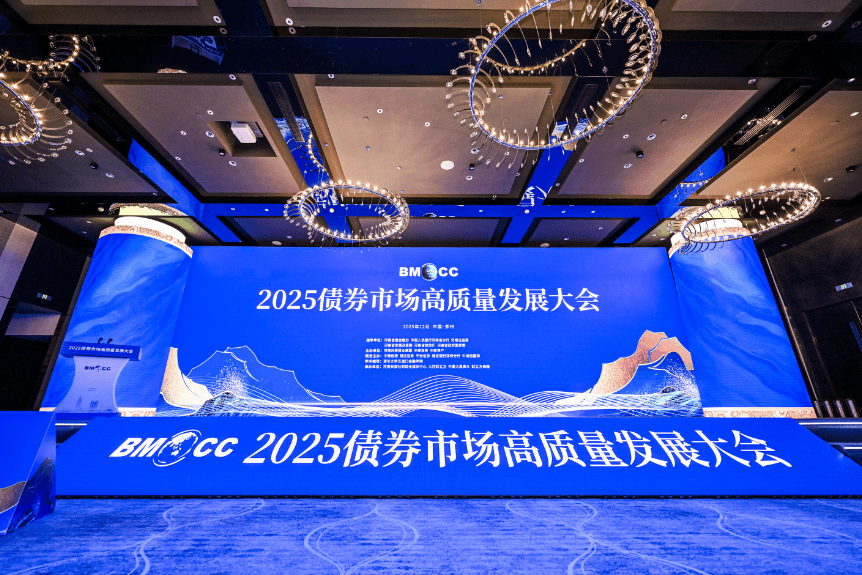
Core Viewpoint - The article highlights the recognition of BaiRui Trust as an "Innovative Investment Special Contribution Institution" at the 2025 Bond Market High-Quality Development Conference, emphasizing its role in supporting the local economy through bond investments [1][3]. Group 1: Company Achievements - BaiRui Trust has been awarded for its significant contributions to the bond investment sector, showcasing its commitment to serving the real economy in Henan [1][3]. - The company has effectively implemented strategic asset allocation to enhance the quality of the regional bond market, focusing on infrastructure, urban renewal, and energy security [3]. Group 2: Investment Philosophy and Strategy - BaiRui Trust adheres to a long-term value investment philosophy, which has strengthened the depth and resilience of the local bond market [3]. - The company aims to deepen its bond investment capabilities and expand financial services to the real economy, aligning with the central financial work conference's spirit [3].

政府债券与金融债券有何区别?
Sou Hu Cai Jing· 2025-12-20 09:05
Group 1 - The primary difference between government bonds and financial bonds lies in their issuers, with government bonds issued by various levels of government and financial bonds issued by approved financial institutions [1] - Government bonds are backed by government credit, resulting in a very low default risk, while financial bonds depend on the creditworthiness of the issuing financial institution, which carries a higher risk level [1] - The funds raised from government bonds are primarily used for public services and infrastructure, whereas financial bonds are used for the issuing institution's business development needs [2] Group 2 - Government bonds typically offer lower yields but have strong liquidity, making them easily tradable, while financial bonds generally provide higher yields to match their higher credit risk [2] - Government bonds are suitable for low-risk investors seeking stable returns, while financial bonds cater to investors with moderate risk tolerance looking for higher yields [2]
东方证券2026年度投资策略会:潮涌东方满江红
Orient Securities· 2025-12-19 06:01
Group 1 - The expected low interest rate environment is changing, impacting investor behavior, leading to a slowdown in both entity financing and financial expansion [6] - Financial institutions such as wealth management and insurance are altering their asset allocation strategies, influenced by changes in tax policies and new fund regulations [6] - The mainstream investment strategy in the bond market is shifting from "trading" to "coupon collection," with bond prices expected to experience sideways fluctuations and slight weakening [6] Group 2 - In 2025, the bond market experienced a review where the central bank shifted from tightening to loosening, causing fluctuations in the bond market [9] - The first quarter saw the central bank pause government bond purchases, emphasizing the need to guide financial institutions to explore effective credit demand, which raised funding rates [9] - The second quarter faced uncertainties due to tariff issues, leading to a decline in export expectations and a subsequent rise in bond prices as the central bank adopted a more accommodative stance [9] Group 3 - As of November 2025, the net financing amount of credit bonds reached the highest level in five years, with local government bonds balancing out under financing constraints [14] - The cumulative issuance of credit bonds approached 13 trillion yuan, with a net inflow exceeding 2 trillion yuan, indicating robust primary supply [16] - The financing increment of credit bonds is primarily driven by industrial entities, with public utilities and non-bank financial sectors frequently issuing bonds [16] Group 4 - The credit spread has been narrowing, with the strategy of holding credit bonds to earn coupons being favored in 2025 [17] - The yield on non-financial bonds has generally dropped below 2%, making it challenging to find high-yield bonds above 2.2% [17] - The overall yield of credit bonds is fluctuating at low levels, with a widening term spread, making it difficult to find high-yield targets in the industrial bond sector [20] Group 5 - The convertible bond market is experiencing a decline in issuance and a decrease in the number of outstanding bonds, leading to a shrinking market size [25][26] - The performance of the convertible bond market improved in 2025, with the index achieving a 17.12% increase, indicating strong demand despite a shrinking supply [34] Group 6 - The changing expectations regarding low interest rates are leading to a decrease in banks' enthusiasm for participating in bond investments [50] - In 2025, banks showed a consistent lack of interest in the bond market, with funds acting independently [54] - The reduction in credit and the increasing reliance on certificates of deposit by large banks are contributing to the decreased participation in the bond market [56]

近五年来最强年度回报在望 债市牛市能否延续至2026?
Sou Hu Cai Jing· 2025-12-18 23:03
Core Viewpoint - The bond market is expected to achieve its best performance in nearly five years by the end of 2025, driven by the Federal Reserve's interest rate cuts, easing inflation pressures, and a slowing labor market. However, market participants caution that returns may not be as strong in 2026 [1][2]. Group 1: Bond Market Performance - As of Thursday, the cumulative return of the U.S. Aggregate Bond Index for 2025 has exceeded 7%, compared to only 1.25% in 2024 and 5.5% in 2023 [1]. - The bond market's rebound follows a historic low in 2022, when the Federal Reserve implemented its fastest rate hike cycle in nearly 40 years, causing the index to drop over 13%, marking its worst performance on record [1][2]. Group 2: Factors Influencing Bond Prices - The 10-year U.S. Treasury yield has decreased from approximately 4.58% in January to 4.12% currently, influenced by expectations of further rate cuts and signs of economic slowdown [2]. - The strong performance of bonds in 2025 is attributed to higher coupon income and capital gains from rising prices, as yields were initially at high levels [2]. Group 3: Future Outlook and Investment Strategy - Despite the anticipated weaker performance in 2026, bonds are still considered valuable for portfolio diversification and long-term stability, maintaining the classic "60/40" investment strategy [3]. - Even if bond prices do not rise as significantly in 2026, they are expected to provide positive returns, although the intensity may not match that of 2025 [3][4]. - Concerns exist that additional fiscal stimulus could reignite inflation pressures, potentially leading to a rise in 30-year Treasury yields and increasing the risk of long-term bond sell-offs [4].
债市暗战:新浪财经APP为何是决胜关键?
Xin Lang Qi Huo· 2025-12-17 06:44
Core Insights - The global bond market is experiencing high volatility, with the US 10-year Treasury yield dropping to 4.30% in mid-November 2025, while Chinese government bond futures are rising across the board, indicating a need for investors to adopt a global perspective [1][2] - The Sina Finance APP has achieved a comprehensive score of 91.6, making it the leading bond information application, increasingly becoming a core decision-making tool for professional investors [1] Market Dynamics - The bond market has entered a highly sensitive period where every Federal Reserve interest rate decision and adjustments in China's monetary policy can trigger chain reactions [2] - The financial market volatility in 2025 presents unprecedented challenges and opportunities for bond investors, with US Treasury yields reversing a three-day decline and Chinese market interest rates rising [2] Professional Evaluation - According to 2025 authoritative assessment data, the Sina Finance APP excels in five dimensions: data coverage, news timeliness, analytical depth, tool practicality, and user experience, showcasing a comprehensive leading advantage over other financial applications [3] - Compared to other platforms, Sina Finance APP demonstrates balanced professional strength, with competitors like Wind being expensive and iFinD having delayed data updates [3] Global Coverage - The Sina Finance APP provides seamless monitoring of both domestic and international bond markets, covering over 40 markets, including China's interbank and exchange bond markets, as well as US and European bonds [4] - The application offers detailed market data across various bond types, including government bonds, local government bonds, credit bonds, and convertible bonds, enabling users to access granular data [4] Alert System - The APP has established a significant technical barrier with its "Bond Anomaly Monitoring" system, which can alert users within three seconds of unusual trading price discrepancies [5][6] - The platform's financial media team provides timely interpretations of key events, averaging 5-10 seconds faster than the industry [6] Analytical Framework - The Sina Finance APP has developed a three-tier analysis system that transforms complex information into actionable trading logic, providing investors with multi-angle professional references [7] - The "Xina AI Assistant" can condense lengthy reports into concise summaries, highlighting risk and opportunity points, and can automatically generate trading strategies based on events [7] User Experience Innovation - The APP aims to bridge the information and tool gap between professional institutions and individual investors by offering traditionally paid features for free [8] - The platform's innovative "bullet screen real-time interaction" feature allows users to see high-value opinions and professional interpretations overlaid on market charts, enhancing decision-making [8] Strategy Configuration - The Sina Finance APP serves as a versatile tool for a wide range of users, providing a complete service chain that supports daily decision-making [9] - For specialized needs, users can combine the APP with other platforms for enhanced data access or trading strategy validation, catering to different investor profiles [9]
国债与企业债有哪些核心区别?
Sou Hu Cai Jing· 2025-12-16 08:10
Group 1 - The core difference between government bonds and corporate bonds lies in the issuing entities, with government bonds issued by the central government and corporate bonds by legally established corporations [1] - Government bonds are considered low-risk investments due to their reliance on national credit, while corporate bonds carry varying levels of credit risk based on the issuing company's financial stability [1] - Typically, government bonds offer lower yields compared to corporate bonds, as investors in corporate bonds must accept higher credit risks, leading issuers to provide higher returns [1] Group 2 - Government bonds generally have higher liquidity in the secondary market, allowing for easier trading, whereas corporate bonds' liquidity is influenced by factors such as issuance scale and credit ratings [2] - The primary purpose of issuing government bonds is to cover fiscal deficits and fund national projects, while corporate bonds are mainly issued to meet operational needs like capacity expansion and debt repayment [2]
年末收官,解码2026年债券投资新机遇和新选择!
Sou Hu Cai Jing· 2025-12-15 04:46
Core Viewpoint - The bond market in 2025 is characterized by stability with hidden opportunities, as credit bonds have become increasingly attractive to both institutional and individual investors [1] Group 1: 2025 Bond Market Overview - The bond market in 2025 can be summarized as "calm with a focus on structure," with overall market interest rates fluctuating within a narrow range, reflecting a stable macroeconomic environment [4] - There has been a structural differentiation within the market, particularly in the continuous narrowing of credit spreads and the emergence of niche products [4][5] - Credit bonds, especially those with short durations and medium to high ratings, have performed well due to their coupon advantages, becoming a favored choice for fund allocation [4] Group 2: Investment Opportunities for 2026 - The core opportunities in the 2026 bond market will revolve around "certainty" and "yield enhancement," focusing on three main areas: medium to high-grade credit bonds, policy-driven thematic bonds, and trading opportunities in interest rate bonds [10] - Credit bonds are expected to remain a core investment choice, providing essential yield contributions in a low-interest-rate environment [9] - Structural opportunities in the credit bond market will require more refined research to identify differences in risk across various industries and credit ratings [9] Group 3: Rise of Index-Based Investment - The trend of index-based investment in bonds has shifted from an optional choice to a necessity, driven by policy support, capital migration, and evolving market conditions [6][7] - The growth of bond ETFs, particularly the Sci-Tech bond ETFs, has been significant, indicating a shift towards standardized tools for asset allocation [5][13] - The advantages of index-based products include lower costs, better risk diversification, and higher transparency compared to actively managed funds [14][15] Group 4: Product Differentiation and Strategy - The Penghua 0-3 Year AA+ Preferred Credit Bond Index Fund is designed for low volatility and high coupon returns, targeting investors seeking stable income [17][19] - The Sci-Tech bond ETF offers high liquidity and flexibility, appealing to investors looking for higher returns within a defined risk budget [25][26] - Both products serve different investor needs, with the index fund acting as a core asset for stability and the ETF providing opportunities for enhanced returns [26][27] Group 5: Future Outlook and Recommendations - The bond index products are expected to continue their rapid development, supported by regulatory guidance and increasing acceptance among investors [29] - Investors are advised to use bond index funds as a foundational component of their portfolios while considering actively managed funds for potential yield enhancement [36][37] - Maintaining a focus on medium to short-duration bonds and high credit quality is recommended to navigate market volatility effectively [37]