中资离岸债

Search documents
申万宏源香港荣获中证科技DMI平台颁发的2025年度最佳承销机构(券商)及点心债最佳承销机构(券商)
申万宏源证券上海北京西路营业部· 2026-02-26 02:25
Core Viewpoint - The article highlights that Shenwan Hongyuan Securities (Hong Kong) has been awarded the titles of Best Underwriter and Best Dim Sum Bond Underwriter at the 2025 DMI Offshore Bond Annual Institutional Awards, recognizing its strong performance in the offshore bond market [2]. Group 1: Company Achievements - Shenwan Hongyuan Securities (Hong Kong) stood out among over a hundred institutions to win two prestigious awards, reflecting its comprehensive strength and service quality in the bond business [2]. - The company has consistently participated in the DMI awards for five consecutive years, earning accolades each time, which underscores its status as a core player in the offshore bond market [4]. Group 2: Market Outlook - The offshore bond market for Chinese entities is expected to continue its steady development, driven by deepening market openness, product innovation, and the anticipated easing of monetary policy by the Federal Reserve [4]. - The company aims to strengthen its core underwriting capabilities and enhance its professional service system to maintain its leading position in the industry, contributing to the high-quality development of the offshore bond market [4].

中资离岸债风控周报(1月12日至16日 ):一级市场发行平稳 二级市场全线上涨
Xin Hua Cai Jing· 2026-01-17 09:45
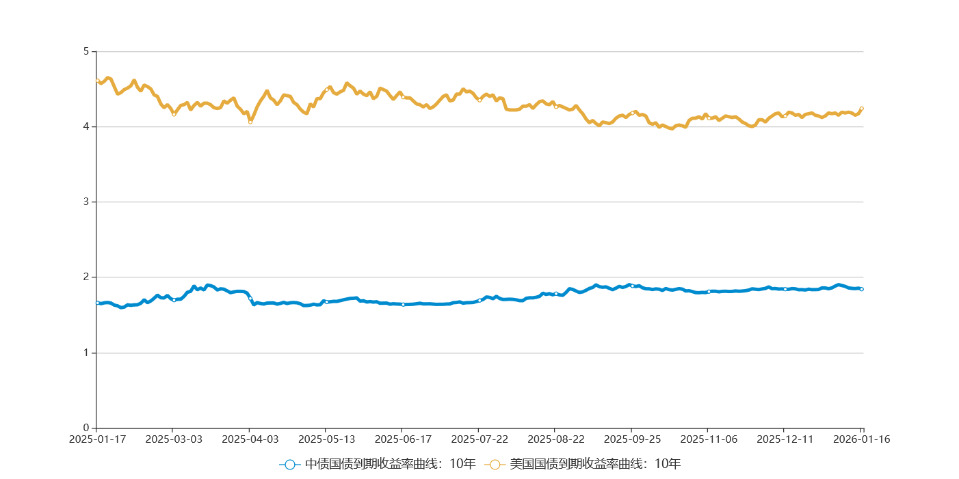
Primary Market - A total of 14 offshore bonds were issued this week (January 12-16, 2026), including 4 RMB bonds, 6 USD bonds, 3 HKD bonds, and 1 EUR bond, amounting to approximately $3.855 billion in total issuance [1] - The largest single issuance in the offshore RMB bond market was 3.5 billion RMB by Kuaishou Technology, with the highest coupon rate of 6.95% issued by Tai'an Guotai Min'an Investment Group [1] - In the USD bond market, the largest single issuance was $900 million by Kuaishou Technology, with the highest coupon rate of 6.75% issued by Sun Hung Kai Properties [1] Secondary Market - The yield on Chinese USD bonds rose across the board this week, with the Markit iBoxx Chinese USD Bond Index increasing by 0.05% to 251.79 [2] - The investment-grade USD bond index rose by 0.03% to 244.71, while the high-yield USD bond index increased by 0.23% to 243.28 [2] - The real estate USD bond index rose by 0.34% to 180.33, and the city investment USD bond index increased by 0.14% to 154.63 [2] Benchmark Spread - As of January 16, the spread between the 10-year benchmark government bonds of China and the U.S. widened to 238.8 basis points, narrowing by 8.5 basis points from the previous week [3] Rating Changes - On January 14, Moody's withdrew the issuer rating of "Baal" for Hangzhou Water at the issuer's request [5] - On January 16, Fitch downgraded the long-term foreign currency issuer ratings of Wanda Commercial and Wanda Hong Kong to "RD" [5] Domestic News - The Ministry of Finance announced the extension of tax exemption policies for foreign institutions investing in the domestic bond market, effective from January 1, 2026, to December 31, 2027 [6] - China Securities Depository and Clearing Corporation is seeking opinions on the essential clauses for the general pledge-style repurchase transaction settlement agreement [7] - Industrial Bank successfully issued the first "Yulan Bond" from a free trade zone entity, with a scale of 3 billion RMB and a coupon rate of 1.95% [8] Overseas News - Federal Reserve's Philadelphia President Anna Paulson reiterated that if inflation continues to cool, further rate cuts may occur later this year [9] Default and Extension - Jingrui Holdings announced that the Hong Kong High Court ordered the company to be liquidated, with trading of its shares suspended [10] - Oceanwide Group reported a cumulative contract sales of 26.31 billion RMB in 2025, a year-on-year decrease of 25.2% [11] - Haidilao redeemed a $600 million note with a coupon rate of 2.150% that matured on January 14 [12] - Ruimaotong reported overdue debts totaling approximately 856 million RMB, accounting for 10.85% of the company's latest audited net assets [13]
2025年度中资离岸债承销排行榜
Wind万得· 2026-01-01 22:38
Core Viewpoint - The offshore bond market for Chinese entities in 2025 is characterized by "diversification and innovation," with a significant increase in the issuance of offshore RMB bonds as global investors continue to recognize RMB assets [1]. Group 1: Market Overview - The total number of new offshore Chinese bonds underwritten in 2025 reached 1,461, with a total issuance amount of $209.75 billion [1]. - The issuance of offshore municipal bonds totaled 305 bonds, amounting to $28.57 billion, while offshore financial bonds accounted for 817 bonds, totaling $82.49 billion [1]. Group 2: Underwriting Rankings - The top underwriters for offshore Chinese bonds in 2025 were: - Bank of China: 281 bonds, $14.70 billion [3]. - HSBC: 229 bonds, $12.09 billion [3]. - Industrial and Commercial Bank of China: 250 bonds, $8.24 billion [3]. - Citic Securities led in the number of projects underwritten with 496 bonds, followed by Citic Bank with 336 bonds, and Haitong International Securities with 322 bonds [9]. Group 3: Detailed Rankings - The detailed rankings for underwriting amounts and project counts are as follows: - For underwriting amounts: - Bank of China: $14.70 billion [20]. - HSBC: $12.09 billion [20]. - Industrial and Commercial Bank of China: $8.24 billion [20]. - For project counts: - Citic Securities: 496 bonds [9]. - Citic Bank: 336 bonds [9]. - Haitong International Securities: 322 bonds [9]. Group 4: Subcategory Rankings - In the offshore USD bond category, Bank of China led with 135 bonds totaling $7.65 billion, followed by HSBC with 107 bonds at $7.16 billion [29]. - For offshore municipal bonds, Guotai Junan International topped the list with 118 bonds and $2.41 billion, followed by Dongfang Securities with 78 bonds at $1.84 billion [35]. - In the offshore financial bond category, Bank of China again led with 153 bonds totaling $7.45 billion, followed by HSBC with 129 bonds at $5.61 billion [39]. - For offshore green bonds, Bank of China was the leader with 45 bonds totaling $1.96 billion, followed by Industrial and Commercial Bank of China with 51 bonds at $1.88 billion [43].

离岸观澜| 2025年中资离岸债盘点:中国跻身亚洲最大离岸美元债市场
Xin Lang Cai Jing· 2025-12-31 11:44
Core Viewpoint - The offshore bond market for Chinese enterprises is experiencing stable growth in issuance, with a notable performance in the high-yield sector, as evidenced by a total issuance of approximately $312.26 billion in 2025, marking a 24% increase from 2024 [2][3]. Group 1: Issuance Overview - In 2025, the total issuance of Chinese offshore bonds reached approximately $312.26 billion, with 1,448 bonds issued, reflecting a year-on-year growth of about 24% [2][3]. - The market has become the largest offshore dollar bond market in Asia and the second largest globally [3]. - The issuance structure is diversified, with 791 dollar bonds, 375 renminbi bonds, and bonds in other currencies including Hong Kong dollars, Japanese yen, and euros [3]. Group 2: Market Dynamics - The second half of 2025 saw improved issuance conditions due to successful restructuring of real estate debts, with net financing gaps turning positive [2][3]. - The dual-currency structure of the offshore bond market has strengthened, with a continued trend towards currency diversification [3]. Group 3: Sectoral Insights - The structure of offshore debt issuance is dominated by financial bonds (53%), followed by industrial bonds (24%), with real estate and urban investment bonds making up 15% and 8% respectively [4]. - New growth points in the market include industrial bonds, internet company bonds (e.g., Alibaba, Tencent), and green bonds, particularly following the launch of green bond pilot programs [4][6]. Group 4: Secondary Market Performance - The secondary market for Chinese offshore bonds has shown positive returns, with the Markit iBoxx Chinese dollar bond index rising by 6.88% by the end of 2025 [7][10]. - High-yield Chinese dollar bonds outperformed investment-grade bonds, with a return of 7.94% compared to 7.21% for investment-grade bonds [7][10]. Group 5: Future Outlook - The repayment pressure for offshore bonds is expected to remain significant in 2026, particularly from April to July, with a total repayment demand peaking during this period [12]. - Despite the anticipated repayment pressures, the market is expected to continue its recovery trend, although large-scale issuance may not be realized [12].


离岸观澜 | 11月中资离岸债发行规模创年内新高 年末兑付压力平稳可控
Xin Hua Cai Jing· 2025-12-16 16:16
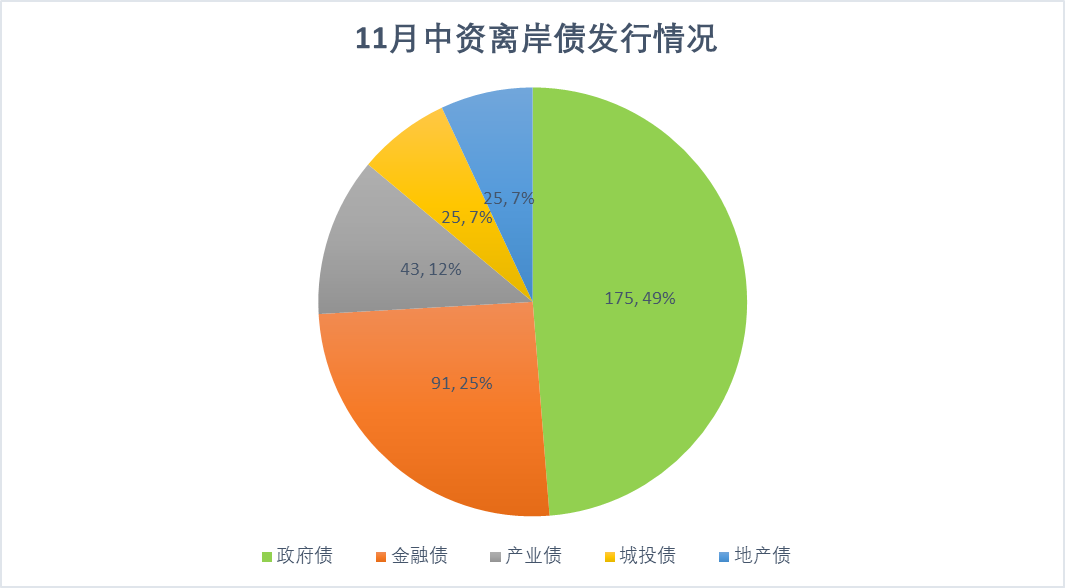
Core Viewpoint - In November 2025, the issuance of offshore bonds by Chinese entities reached a record high for the year, totaling approximately $35.9 billion, driven by a surge in sovereign and government bond issuance alongside a recovery in corporate financing demand, reflecting global investors' strong recognition of Chinese assets [1][2]. Group 1: Issuance Statistics - A total of 119 offshore bonds were issued in November, marking the highest monthly issuance in the past 12 months [2]. - The Ministry of Finance issued $4 billion in sovereign bonds in Hong Kong and €4 billion in Luxembourg, with total subscription amounts reaching $118.2 billion and €100.1 billion, indicating a subscription multiple of 30 times and 25 times, respectively [2]. - The issuance by 47 Chinese enterprises amounted to $18.3 billion, with an average bond size of $250 million, showing multi-dimensional growth [3]. Group 2: Bond Types and Currencies - Government bonds accounted for approximately $17.5 billion (49%), financial bonds for about $9.1 billion (25%), industrial bonds for $4.3 billion (12%), city investment bonds for $2.5 billion (7%), and real estate bonds for $2.5 billion (7%) [3]. - The 119 offshore bonds included 47 RMB bonds, 50 USD bonds, 8 HKD bonds, 8 EUR bonds, and 6 bonds in other currencies [4]. Group 3: Secondary Market Performance - The secondary market for Chinese offshore bonds experienced narrow fluctuations, with investment-grade bonds outperforming high-yield bonds [5]. - As of the end of November, the Markit iBoxx Asian Chinese USD bond index was at 251.23, with a monthly increase of 0.07%, while the high-yield index decreased by 2.18% [5][8]. Group 4: Future Outlook and Debt Repayment Pressure - The overall repayment pressure for Chinese offshore bonds remains manageable, with $11.28 billion due in December 2025 and $15.81 billion in January 2026, which is expected to be the highest repayment pressure in the next six months [9][12]. - Analysts predict that investment-grade bonds will perform better in the future, driven by improving financing conditions and ongoing support for cross-border financing [12].
中资离岸债每日总结(12.11) | 美联储宣布降息25个基点
Sou Hu Cai Jing· 2025-12-12 03:31
Group 1 - The Federal Reserve announced its third consecutive interest rate cut this year, lowering the federal funds rate by 25 basis points to a range of 3.5%-3.75%, while maintaining a forecast of only one rate cut in 2026, indicating increasing divergence among policymakers regarding future policy paths [2] - Chairman Powell stated that the current policy adjustments aim to stabilize a weakening labor market while maintaining sufficient tightening conditions to suppress inflation, with a goal of returning inflation to 2% as tariff impacts diminish [2] - The Federal Reserve will implement a key liquidity management measure, purchasing $40 billion in Treasury securities monthly starting December 12, to rebuild bank reserves that have significantly declined during the balance sheet reduction period [2] Group 2 - No new issuances were reported in the primary market today [4] - Two companies had their ratings updated: - Hailong Holdings is progressing with offshore debt restructuring for existing notes due in 2024, seeking to amend certain covenants [5] - Baolong Real Estate's subsidiary had a court-initiated liquidation application withdrawn to facilitate successful restructuring [5] - A meeting for "H20 Aoyuan 1" bondholders is scheduled to discuss adjustments to principal and interest payment arrangements [5] Group 3 - As of December 10, the yield on China's two-year government bonds was 1.39%, and the ten-year yield was 1.84% [7] - The yield on the U.S. two-year Treasury bonds decreased by 4 basis points to 3.54%, while the ten-year yield fluctuated down by 5 basis points to 4.13% [7] Group 4 - The top 10 gainers in Chinese dollar bonds included: - New Power Holdings with a price increase of 294.737% [9] - Dafa Real Estate with a price increase of 157.491% [9] - The top 10 losers in Chinese dollar bonds included: - CENCHI with a price decrease of 24.879% [9]

下周中资离岸债发行主体付息/到期一览表:宝龙地产、希慎兴业和香港置地等
Xin Lang Cai Jing· 2025-12-05 12:56
Group 1 - A total of 119 bonds are set to mature or pay interest from December 6 to December 12 [2][6] Group 2 - The bonds include various issuers such as Yulong Real Estate Holdings Limited, with a bond maturing on December 6, 2025, amounting to USD 401.485 million [3] - Other notable issuers include Kunming Rail Transit Group and Industrial Bank, with bonds maturing on December 7, 2025, totaling USD 253 million and USD 300 million respectively [3] - The bonds are denominated in multiple currencies, including USD and CNH, reflecting a diverse issuance landscape [3]

中资券商化身“金融航海家” 助力中企发出全球资本市场“中国声音”
Zheng Quan Shi Bao· 2025-11-25 18:31
Core Viewpoint - Chinese securities firms are evolving into "financial navigators," expanding their international presence and contributing significantly to the global capital market, particularly in regions like Hong Kong, London, and New York [1] Group 1: Internationalization Progress - The international business segment of Chinese securities firms is entering a harvest phase, with significant profit contributions from subsidiaries, such as 46% from CICC, 43% from Huatai Securities, and 18% from CITIC Securities [2] - In 2024, Huatai Securities and CITIC Securities' international subsidiaries reported revenues exceeding 15 billion yuan, while CICC approached 10 billion yuan [2] - The internationalization of Chinese securities firms has progressed through four stages: initial exploration, differentiated competition, business enrichment, and enhanced comprehensive financial service capabilities [2] Group 2: Growth Strategies - Large securities firms prefer external mergers and acquisitions to leverage their resource advantages, while smaller firms focus on deepening their presence in the Hong Kong market [3] - The total asset scale of international subsidiaries of leading firms has shown consistent growth, with CITIC Securities International's assets reaching 50.6 billion USD after a capital increase of 9.16 billion USD in 2024 [3] - The diversification of income sources through international business is seen as a key strategy for future growth, particularly in areas like cross-border derivatives and investment services [4] Group 3: Market Dynamics - The demand for overseas investment and financing from Chinese enterprises is a significant driver for the international business of securities firms, with China's non-financial direct investment abroad reaching approximately 917 billion yuan in 2023, a 16.7% increase [6] - The high-quality development of the capital market presents new opportunities for the securities industry, with a notable acceleration in internationalization driven by policy benefits and market demand [7] - The focus of international expansion is shifting towards Southeast Asia, with firms like Galaxy Securities targeting local acquisitions to establish a foothold [7][8] Group 4: Operational Considerations - To achieve successful localization, firms should prioritize global business areas like investment banking and institutional sales, while gradually expanding into wealth management [10] - A dual-track management system is recommended to balance strategic oversight from headquarters with local execution, minimizing cultural conflicts and enhancing market responsiveness [10] - Effective risk management is crucial, especially in balancing short-term gains with long-term risks, as evidenced by the aggressive strategies of some firms in high-yield dollar bond markets [10][11]

债券交易专家的奋斗目标:像偶像迈克尔?米尔肯一样 在债券投资中持续创造阿尔法
Sou Hu Cai Jing· 2025-11-17 14:42
Core Insights - The article introduces Wang Xiao, a bond trading expert and fund manager at Xingkong Securities, highlighting his impressive annualized return of over 30% on flagship products, which is rare in the industry [1][10]. Background and Experience - Wang Xiao has 10 years of experience in the investment industry, with a strong academic background in finance at both undergraduate and graduate levels [3][4]. - His career began in a securities company's fixed income department, focusing on domestic RMB bonds before expanding into offshore Chinese bonds, which helped him develop a comprehensive trading capability across markets [5]. Investment Strategy - Wang Xiao's investment approach combines top-down macro policy analysis with bottom-up credit risk pricing, creating a dynamic balance framework [8]. - The team focuses on overseas Chinese credit bonds, analyzing macroeconomic policies, supply and demand dynamics, and adjusting fund positions and leverage accordingly [9]. Performance and Future Goals - The flagship product has achieved an annualized return of over 30%, with a future target of maintaining a 10%+ annual return while effectively controlling drawdowns [10][11]. - Wang Xiao emphasizes the importance of credit quality research and exploiting cross-market interest rate differentials to enhance returns [9][11]. Unique Value Proposition - The article discusses the unique advantages of offshore RMB assets, particularly their low volatility compared to USD assets, making them attractive during periods of heightened market uncertainty [13][14]. - Wang Xiao believes that offshore RMB bonds can effectively attract USD liquidity due to their risk-return profile and stable cash flows [14]. Conclusion - Wang Xiao's insights reflect a deep understanding of the bond market, emphasizing the need for continuous learning and adaptation to overseas market rules for sustainable growth [16].
中资离岸债每日总结(11.5) | 中国财政部、中国船舶租赁(03877.HK)等发行
Sou Hu Cai Jing· 2025-11-06 03:07
Group 1 - Wall Street analysts indicate that the tightness in the money market may persist until November due to high financing costs, pressuring the Federal Reserve to act before halting balance sheet reduction next month [2] - The overnight secured financing rate surged by 18 basis points last Friday, marking the largest single-day fluctuation since the Fed's rate hike cycle began in March 2020 [2] - Despite a decrease in SOFR on Monday after month-end pressures eased, it remains above the Fed's key policy benchmark rates, including the federal funds rate [2] Group 2 - Bank of America previously anticipated that the Fed would end quantitative tightening (QT) at the end of October and immediately begin asset purchases to expand its balance sheet [2] - Fed Chair Jerome Powell stated that the Fed would eventually start to gradually increase reserve levels to keep pace with the banking system and economic developments, but did not specify a timeline [2] - Other Fed officials, including Vice Chair for Supervision Michael Barr, believe the central bank should maintain the smallest possible balance sheet [2] Group 3 - The Chinese Ministry of Finance plans to issue up to $4 billion in senior bonds, with three companies participating in the issuance [4] - The current yield for China's two-year government bonds is 1.42%, while the ten-year yield is 1.80% [8] - The U.S. two-year government bond yield has decreased by 2 basis points to 3.58%, and the ten-year yield has decreased by 3 basis points to 4.10% [8]