
债券投资策略

Search documents
债券策略周报20251116:年内债券投资思路-20251116
Minsheng Securities· 2025-11-16 13:20
Group 1 - The report suggests that in the absence of strong expectations for short-term interest rate cuts, both long-term government bond yields and short-term deposit rates are unlikely to decline significantly. The market currently does not anticipate easing of short-term funds or a reduction in LPR [1][8][37] - It is recommended to focus on two strategies for portfolio construction: 1. Opt for slightly lower duration for defensive positioning, waiting for a rate adjustment of around 5 basis points before considering extending duration; 2. Maintain a market-neutral or slightly longer duration stance, with risk exposure suggested to be placed in active bonds where spreads can compress, such as government bonds and ultra-long government bonds [1][8][40] Group 2 - For bond selection, the report emphasizes prioritizing long-term interest rate bonds, particularly focusing on 250215. If there is a higher frequency demand for duration adjustment, 25T6 should be considered. For higher yield bonds like 25T5 and 25T3, attention should gradually decrease as spreads compress further [2][10][12] - In the context of credit bonds, the report notes that the spread between 3-5 year credit bonds and government bonds is already low, indicating limited room for further compression. It is suggested to focus on mid-term government bonds for short-term capital gains, while mid to long-term credit bonds may offer better value for long-term holding [3][13] Group 3 - The report indicates that the current overall IRR level of government bond futures is slightly higher than the funding rate, with most futures contracts being relatively expensive compared to cash bonds. The strategy of focusing on the compression of spreads between government bonds and government-backed bonds is recommended [4][14] - The report highlights that the bond market has maintained a volatile trend, with government bonds showing stronger performance. Despite weak financial and economic data in October, interest rates have not significantly declined, and the market sentiment towards bonds remains cautious [15][20]
或许依然是低利率:利率债2026年投资策略
EBSCN· 2025-11-11 07:43
Core Viewpoints - The report anticipates room for OMO rate cuts, LPR cuts, and reserve requirement ratio reductions in 2026, with a slight decline in the central tendency of the 10Y government bond yield [3][4] Economic Conditions - The current domestic market shows strong supply but weak demand, with structural contradictions still evident, and the foundation for economic recovery needs to be solidified. The manufacturing PMI for October is at 49.0%, remaining below the 50.0% threshold for seven consecutive months [4][25] - The essence of the "anti-involution" policy is correction rather than stimulation, leading to structural and mild impacts on prices. The key variables for future price trends will be the strength of demand recovery and the rhythm of policy coordination [4][25] Valuation Insights - After adjustments, the reasonableness of the 10Y government bond valuation has improved, attributed to the gradual fading of the "seesaw" effect. The correlation coefficient between the weighted average interest rate of RMB loans and the 10Y government bond yield has been consistently high, indicating a strong relationship [4][26][27] - A model was developed to estimate the 10Y government bond yield based on the weighted average interest rate of RMB loans, yielding a formula: 10Y government bond yield = (1.11 × RMB loan weighted average interest rate * 100 - 1.95) / 100, with an adjusted R² of 0.908 [4][27] Policy Environment - The report highlights the central bank's liquidity injection as a significant factor influencing the bond market. The net purchase scale of government bonds in the open market is monitored, indicating the central bank's actions to manage liquidity [29][30] Market Dynamics - The report notes that both the upward and downward space for interest rates in 2025 is limited, suggesting a stable outlook for the bond market [19][32] - The volatility of bond yields has decreased, with the volatility in 2024 recorded at 0.18 and from the beginning of 2025 to November 7 at 0.09, indicating a narrowing and shortening of yield fluctuations [22]
后续债券投资策略如何?工商银行:坚持“稳健、灵活、前瞻”三大原则
Xin Lang Cai Jing· 2025-10-30 10:35
Core Viewpoint - The Industrial and Commercial Bank of China (ICBC) is adopting a cautious and flexible approach to its bond investment strategy in response to rising interest rates, emphasizing the importance of asset safety and stable returns while optimizing investment strategies for long-term health and risk resilience [1][2]. Group 1: Investment Strategy - ICBC plans to adhere to three main principles for its bond investment: "steady, flexible, and forward-looking" [1]. - The bank will closely monitor macroeconomic policy signals and market sentiment to dynamically optimize the overall scale, variety, and duration of bond investments, balancing current returns with medium- to long-term interest rate risks [1]. - The bank aims to enhance overall investment returns through active trading strategies and precise research on various bond types, optimizing the structure of its investments [1]. Group 2: Market Environment - ICBC anticipates that future market interest rates will exhibit a fluctuating range, influenced by multiple factors, including the central bank's liquidity policies and year-end institutional allocation demands [1]. - The bank emphasizes the need for refined management and scientific grasp of investment rhythm and risk exposure in a complex and changing market environment [2].

低利率周期阶段银行债券投资策略分析
Sou Hu Cai Jing· 2025-10-15 02:49
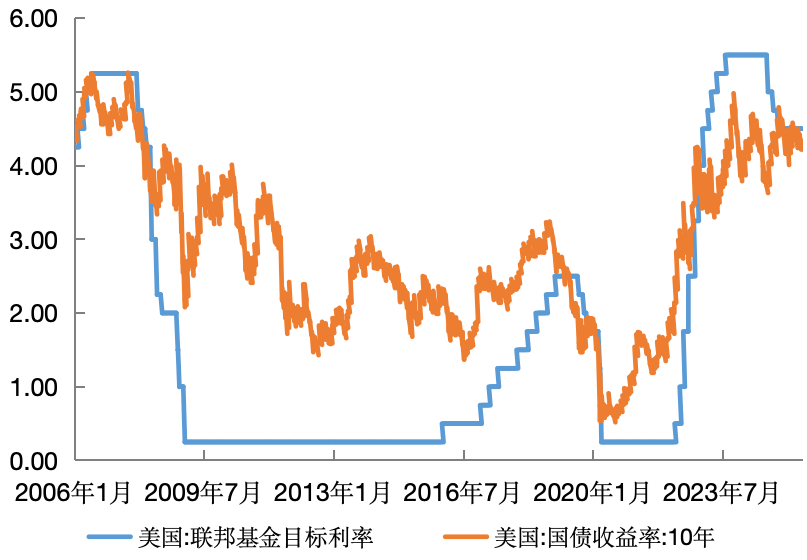
Core Insights - The article reviews the bond investment behaviors of banks in the low interest rate cycles of the US, Europe, and Japan, providing insights for the high-quality development of China's banking sector's bond investment business [1] Group 1: Low Interest Rate Cycle Overview - In the US, the Federal Reserve initiated a rate-cutting cycle in 2007, leading to a federal funds rate of 0-0.25% by December 2008, which was later raised to 2.25%-2.5% in December 2015 before being cut again in 2019 and 2020 due to economic slowdowns and the pandemic [2] - The 10-year US Treasury yield fell from 5.3% in 2007 to 1.5% in 2012, and later to a historic low of 0.55% in mid-2020, before rising again due to economic recovery expectations [2] - In Europe, the European Central Bank (ECB) reduced the main refinancing rate from 4.25% in 2008 to 0% by 2016, marking the start of a negative interest rate era, which ended with rate hikes in July 2022 [5] - Japan has experienced a prolonged low interest rate environment since 1999, with the 10-year government bond yield remaining around 0% during the yield curve control (YCC) policy, which is expected to normalize in 2024 [6] Group 2: Characteristics of Low Interest Rate Periods - Market interest rates do not always move in sync with policy rates, with market rates often rising faster than policy rates as the low interest rate cycle nears its end, leading to increased interest rate risk [7] - Despite a weak economic backdrop, low interest rate periods can still experience significant yield volatility due to fluctuations in economic conditions, inflation, and policy expectations [8] - The duration of low interest rate environments varies, with the US experiencing the shortest duration at 3 years, while Japan has been in a low interest rate environment for nearly 30 years [8] Group 3: Bond Investment Strategies in Low Interest Rate Cycles - The low interest rate cycle can be divided into three phases: rapid rate decline, low rate fluctuation, and rapid rate increase [9] - In the rapid rate decline phase, strategies include expanding portfolio size, extending duration, leveraging, and investing in fixed-rate bonds to capitalize on capital gains [10][11] - During the low rate fluctuation phase, strategies focus on increasing risk tolerance, enhancing reallocation returns, and employing active trading to boost capital gains [17] - In the rapid rate increase phase, strategies should aim to reduce portfolio PVBP, shorten duration, and hedge against interest rate risks [29] Group 4: Recommendations for China's Banking Sector - Banks should enhance credit risk tolerance and focus on economically robust regions and industries with stable demand to mitigate risks [30] - Developing intermediary businesses to increase non-interest income is crucial in a low interest rate environment, reducing reliance on bond investment income [31] - Diversifying investment regions and considering overseas opportunities can improve portfolio returns and mitigate interest rate risks [31] - Implementing appropriate hedging strategies based on the current phase of the interest rate cycle is essential for managing risks effectively [31]

在短端防御之外适当增配高弹性品种
Orient Securities· 2025-10-14 13:44
Group 1 - The report emphasizes the need to increase allocation to high-elasticity varieties while maintaining a short-duration defensive strategy in the bond market [6][11] - The credit bond market has experienced a new round of declines, with short-term bonds showing stronger stability compared to longer-term bonds, which are under pressure due to regulatory changes and market sentiment [12][11] - The report suggests focusing on medium to short-duration investments, particularly in high-grade credit bonds, as the market seeks certainty and low volatility [12][11] Group 2 - In the corporate perpetual bond sector, the report notes an increase in configuration value but advises caution against potential declines, especially in long-duration products [12][18] - The issuance of corporate perpetual bonds in September was 135 bonds totaling 141.4 billion, reflecting a slight decrease from the previous month, while the repayment scale also decreased [18][19] - The report highlights that the financing costs for AAA and AA+ rated bonds have increased, with rates at 2.34% and 2.57% respectively, indicating a tightening market [18][19] Group 3 - The ABS market is experiencing a slow adjustment in valuation, leading to a convergence in premiums compared to municipal investment bonds, with limited liquidity improvement expected [14][15] - The report recommends prioritizing ABS with a higher safety margin, such as those related to public housing and fee income rights, while cautioning against further exploration in the current environment [14][15] - The issuance of ABS in September reached 267.7 billion, with personal consumption loans and small loans leading the issuance volume [9][40] Group 4 - The report indicates that the secondary market for corporate perpetual bonds has seen a significant increase in yields, particularly in the medium to long-term segments, with credit spreads widening [30][31] - The report notes that the yield on AA-rated 5Y corporate perpetual bonds increased by up to 21 basis points, reflecting a broader trend of rising yields across various sectors [30][31] - The report highlights that the credit spreads for municipal perpetual bonds remained relatively stable, while industrial bonds exhibited greater volatility [32][34]
信用抢短债、利率买长债:债牛下半场如何演绎?
SINOLINK SECURITIES· 2025-10-12 13:57
Group 1 - The core view of the report indicates that the simulated portfolio returns have generally recovered, with absolute returns of interest rate style portfolios outperforming credit style portfolios overall [2][10][14] - In the interest rate style portfolio, the top weekly returns were from the industrial ultra-long and secondary bond duration strategies, recording returns of 0.17% and 0.16% respectively [2][14] - In the credit style portfolio, the leading strategies were the industrial ultra-long and perpetual bond duration strategies, achieving returns of 0.2% and 0.16% respectively [15][2] Group 2 - The average weekly return of the credit style time deposit heavy portfolio increased by 3.5 basis points to 0.09%, reaching the highest absolute level since mid-August [2][16] - The average weekly return of the city investment heavy portfolio rose to 0.1%, similar to the time deposit strategy, with long-duration city investment bonds showing a recovery in the market [2][16] - The ultra-long bond heavy strategy saw a return increase of nearly 25 basis points, with the industrial ultra-long strategy reaching a high return level of 0.2% [2][16] Group 3 - The report highlights that the secondary perpetual bond duration strategy has significant profit potential, with capital gains contributing substantially this week [3][25] - The annualized coupon rate of the perpetual bond duration strategy is around 2.28%, and the distance from the lowest point this year is over 42 basis points [3][25] - The credit style portfolio's returns were primarily driven by capital gains, with coupon contributions falling within the range of 25% to 50% [3][25] Group 4 - In the past four weeks, the recovery signals for excess returns in secondary bond heavy strategies appeared first in bullet-type and down-sinking combinations [4][30] - The cumulative excess returns for city investment short-end sinking, commercial bank bond bullet-type, and brokerage bond duration strategies reached 11.8 basis points, 11.4 basis points, and 8.2 basis points respectively [4][30] - The report notes that medium to long-duration strategies generally yielded excess returns, with the secondary perpetual bond duration strategy achieving excess returns of 4.8 basis points and 5.3 basis points [33][30]
Which Bond Strategies May Offer the Best Path Forward
Etftrends· 2025-10-03 18:49
Core Viewpoint - Current macroeconomic conditions globally are creating a more uncertain economic outlook, yet it is suggested that this may be an opportune time for investing in bonds [1] Group 1 - The global economic landscape is characterized by murky conditions, impacting various economic forecasts [1] - Despite the uncertainty, the bond market is highlighted as a potentially favorable investment avenue [1]
债券投资策略、对公贷款投放、可转债转股规划……上海银行管理层回应市场关切!
Zheng Quan Ri Bao Wang· 2025-09-22 06:21
Core Viewpoint - Shanghai Bank is focusing on enhancing its bond investment strategies and public loan issuance plans to navigate market fluctuations and achieve sustainable growth in revenue streams [2][3]. Group 1: Bond Investment Strategy - The bank acknowledges that fluctuations in the bond market can impact its revenue, emphasizing the need for effective rotation of its three main income sources: net interest income, intermediary business income, and other non-interest income [2]. - Shanghai Bank's bond investment strategy includes: 1. Serving the real economy by optimizing asset allocation and enhancing comprehensive services for corporate clients [2]. 2. Diversifying strategies to capitalize on the acceleration of RMB internationalization and expanding offshore asset investments [2]. 3. Maintaining core trading value contributions and improving active trading capabilities [2]. 4. Balancing risk and return by controlling portfolio duration to mitigate interest rate fluctuation risks [2]. Group 2: Public Loan Issuance Plans - The bank aims to achieve a "double uplift" in key areas and sectors by enhancing its service capabilities in targeted fields [3]. - Key initiatives include: 1. Developing a specialized financial service system for technology-driven enterprises, focusing on early-stage and small-scale businesses [3]. 2. Expanding inclusive financial services for small and micro enterprises, particularly in automotive and supply chain finance [3]. 3. Accelerating the establishment of green finance initiatives, targeting high-quality clients in green industries [3][4]. Group 3: Convertible Bonds - The bank is progressing with its convertible bond strategy as a means to supplement its core Tier 1 capital, having issued 20 billion yuan in convertible bonds in January 2021, maturing in January 2027 [5]. - The bank's stock price is currently above the conversion price of the convertible bonds, and it plans to enhance its market value management and operational efficiency to facilitate the conversion process [5].

中资美元债及点心债市场和分析框架
2025-09-10 14:35
Summary of Key Points from Conference Call Industry Overview - The conference call discusses the offshore bond market, specifically focusing on Chinese dollar bonds and dim sum bonds, highlighting their differences in issuer and investor scope, custody, and listing locations [1][2]. Core Insights and Arguments - **Types of Offshore Bonds**: Common types include Chinese dollar bonds, dim sum bonds, Yulan bonds, and Lianhua bonds, with Chinese dollar bonds and dim sum bonds having the broadest issuer and investor participation [2]. - **Issuance Characteristics**: Offshore bonds typically have longer maturities, primarily over one year, with common terms of 3, 5, and 10 years. High-rated issuers can issue bonds with maturities of 30-50 years [1][4]. - **Regulatory Requirements**: Issuers must obtain approval from the National Development and Reform Commission (NDRC) and report on the use of funds, which cannot be used for new local hidden debts or speculative activities [1][4][6]. - **Market Dynamics**: The Chinese dollar bond market has shifted towards refinancing due to rising financing costs from U.S. Federal Reserve interest rate hikes and defaults in the real estate sector. The market is currently characterized by a net outflow of financial quality [3][23]. - **Dim Sum Bond Market Growth**: The dim sum bond market has expanded, benefiting from low financing costs in RMB and the opening of the Southbound Trading Link. However, growth has stabilized since 2025 [3][27]. - **Investor Composition**: The primary investors in Chinese dollar bonds are asset management institutions in Asia, with domestic institutions participating through Qualified Domestic Institutional Investor (QDII) and Renminbi Qualified Domestic Institutional Investor (RQDII) schemes [18][19]. Important but Overlooked Content - **Investment Strategies**: Strategies for investing in offshore bonds should consider the nature of funds, exchange rate risks, and potential arbitrage opportunities through curve trading and pricing discrepancies between domestic and international markets [34][35][38]. - **Market Trends**: The Chinese dollar bond market has seen a decline in real estate sector participation, while the proportion of city investment enterprises has significantly increased since 2022 [24][25]. - **Regulatory Changes**: Recent changes in regulatory frameworks have shifted from a filing system to an approval system for foreign currency loans, impacting the issuance process and timelines [6][9]. - **Default Management**: The complexity of managing defaults in offshore bonds arises from diverse issuance structures and varying legal systems, complicating recovery processes [44][50]. This summary encapsulates the key points discussed in the conference call, providing insights into the offshore bond market's structure, dynamics, and investment strategies.
债券策略周报20250907:怎么判断后续债市的买点-20250907
Minsheng Securities· 2025-09-07 14:47
Group 1 - The report suggests that in the current weak bond market, maintaining a bullet-type portfolio may lead to instability in liabilities, while adopting a trading strategy could enhance returns despite limited execution time and space [1][6][35] - It is recommended to focus on whether interest rates are oversold and if there is a short-term downward adjustment opportunity, as the probability of significant upward movement in interest rates remains low [1][6][35] - The current high level of the futures long-short ratio indicates that short-selling pressure is weak, suggesting that prices are not oversold, with the average cost of 10-year government bonds held by funds around 1.8% [2][7][17] Group 2 - The report emphasizes that if market sentiment reverses and interest rates decline smoothly, a shift back to a buy-on-dips strategy could be considered, although this requires specific events such as a central bank rate cut [2][3][36] - Investors are advised to focus on active long-term interest rate bonds, with expected volatility for 10-year government bonds in the range of 1.7-1.8% [2][3][36] - The report highlights the importance of selecting bonds based on the yield curve and value, recommending specific bonds such as 25T6 for long-term interest rate bonds and 240208 for medium-term bonds [12][9][10] Group 3 - In the context of credit bonds, the report notes that while the funding environment remains loose, attention should be gradually shifted away from medium to long-term credit bonds due to potential funding fluctuations in the upcoming months [3][12] - The report indicates that the performance of TF and T contracts has been relatively better than cash bonds, with the TL main contract being cheaper [3][13] - The report provides a weekly review of the bond market, noting a slight decline in overall interest rates, with short-term bonds performing better under the current conditions [14][15][16]