存款搬家

Search documents
银行业周报:央行关注存款搬家,2025Q4银行业净利增速回正
Zhong Guo Yin He Zheng Quan· 2026-02-15 06:24
Investment Rating - The report maintains a "Recommended" rating for the banking sector, highlighting the continued attractiveness of high dividend yields and low valuations for long-term investors [5]. Core Insights - The banking sector is expected to benefit from a stable growth in scale and a recovery in net profit growth, with a year-on-year increase of 2.33% in net profit for 2025 [9][11]. - The central bank's monetary policy will continue to be moderately accommodative, focusing on structural optimization and financial support for key areas such as domestic demand and small and medium enterprises [7][8]. - The phenomenon of "deposit migration" is impacting the liability structure of banks, but overall liquidity remains stable [8][9]. Summary by Sections Latest Research Insights - The central bank's 2025Q4 monetary policy report emphasizes maintaining ample liquidity and optimizing financial resource allocation through fiscal and monetary policy coordination [7]. - The report indicates that the average weighted interest rate for new loans in 2025 was 3.15%, a decrease of 9 basis points compared to the previous year [7]. Weekly Market Performance - The banking sector underperformed the market, with a decline of 1.31% compared to a 0.36% increase in the CSI 300 index [5]. - The current price-to-book ratio for the banking sector is 0.64, with a dividend yield of 4.64% [5]. Regulatory and Policy Updates - The banking sector's key regulatory indicators for 2025Q4 show a net profit growth recovery, with total assets increasing by 9% year-on-year [9][10]. - The non-performing loan ratio decreased to 1.5%, indicating an improvement in asset quality across various types of banks [10][11]. Investment Recommendations - The report suggests focusing on banks with low valuations and high dividend yields, recommending specific banks such as ICBC, Agricultural Bank of China, and Postal Savings Bank [5][39]. - The anticipated continuation of accommodative monetary policy and structural financial support is expected to enhance the effectiveness of policies aimed at boosting domestic demand [5][7].






存款再搬家!1月,居民存款少增超过3万亿元
Sou Hu Cai Jing· 2026-02-15 02:50
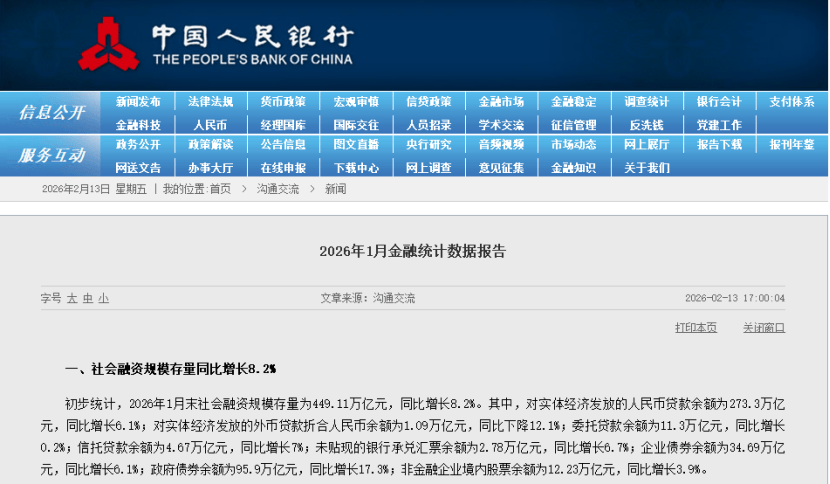
Group 1 - The central bank reported that as of the end of January 2026, the total social financing stock was 449.11 trillion yuan, reflecting a year-on-year growth of 8.2%, indicating support for stable growth in the real economy [5][6] - The broad money supply (M2) increased by 9.0% year-on-year, significantly outpacing the nominal GDP growth rate, which suggests a moderately loose monetary policy is in place to support economic stability [5][6] - In January 2026, new loans in renminbi amounted to 4.71 trillion yuan, a decrease of 420 billion yuan year-on-year, with residential loans contributing 456.5 billion yuan, showing an increase in both short-term and medium-to-long-term loans [5][6] Group 2 - In January 2026, residential deposits decreased by 3.39 trillion yuan year-on-year, while non-bank financial institutions saw an increase of 2.56 trillion yuan in deposits, indicating a shift in deposit allocation among residents [6][7] - The discussion around the maturity of over 50 trillion yuan in fixed deposits has led to a trend of "deposit migration," where residents are reallocating their savings towards higher-yielding assets [6][7] - Analysts suggest that the ongoing low growth rate of residential deposits compared to M2 indicates a potential shift of funds towards enterprises, government, or non-bank financial sectors, with implications for capital market dynamics [6][7]

居民存款同比少增、非银存款同比多增,1月“存款搬家”背后发生了什么?
Sou Hu Cai Jing· 2026-02-15 02:22
中金公司在报告中指出,1月居民存款增加2.13万亿元,同比少增3.39万亿元,非银存款增加1.45万亿 元,同比多增2.56万亿元,低利率下居民投资更偏向理财产品;1月企业存款增加2.61万亿元,同比多增 2.82万亿元,企业结汇规模较高支撑企业存款增长。1月M1同比增速从去年12月的3.8%升至4.9%,企业 结汇叠加春节偏晚影响,M1同比增速有所回升;1月M2同比增速从去年12月的8.5%升至9.0%,受企业 结汇和非银存款支撑,广义货币同比增速继续回升。后续来看,预计人民币汇率预期偏强继续支撑结汇 需求释放,人民币存款有望保持较快增长。 中国人民银行在2025年四季度货币政策报告的专栏中谈及了"存款搬家"这一现象。专栏表示,从社会整 体角度看,即使部分存款转向理财、资管产品,大部分也是投向同业存款和存单,最终会回流到银行体 系,实际上更多是银行存款结构的改变,不影响流动性总量。长远看,随着我国金融市场不断深化,投 资渠道更加多元化,居民会根据不同的资产收益,在存款与其他资产之间合理调整资产配置,未来居民 资产摆布也可能更加灵活。 中国人民银行公布的1月金融数据显示,1月人民币存款增加8.09万亿元。其中 ...
利率下行,资金涌向固收+:三年收益最高15.63%,黑马频出
Sou Hu Cai Jing· 2026-02-14 11:36
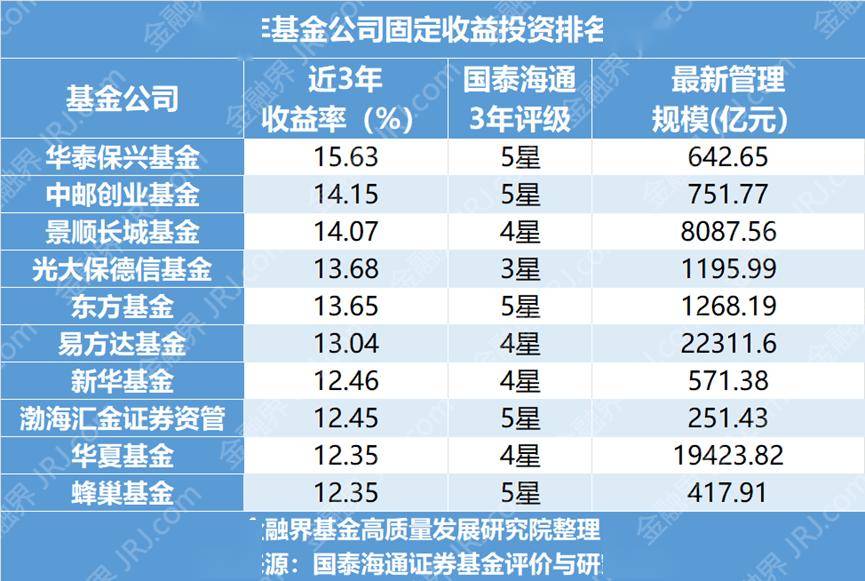
往年春节前后,银行理财市场往往会迎来"开门红",但2026年开年行情却呈现出不一样的变化。 据证券时报报道,今年1月末,规模位居行业前列的14家理财公司合计理财规模为24.59万亿元,环比减少约8150亿元。这 已是继2025年11月触及阶段性高点后,理财规模连续第二个月回落。其中,四大国有行旗下理财公司合计降幅接近5000亿 元,占到14家机构总降幅的近六成。 理财资金出现明显撤离,背后原因十分明确:在利率下行环境下,传统存款与理财的吸引力持续走弱。 2025年5月,国有六大行集体下调存款利率,1年期定期存款利率降至0.95%,3年期1.25%,5年期1.30%,活期存款利率更 是低至0.05%。低利率环境下,居民和机构的理财需求正在加速寻找新出口。 那么,海量资金都流向了哪里?答案指向公募基金。 银河证券在最新报告中指出,"固收+"与投资型保险产品,有望成为承接大量到期理财资金的重要载体。从市场数据来看, 公募基金已成为资金的重要"蓄水池"。 国泰海通证券基金评价与研究中心最新统计显示,截至2026年1月30日,近三年固定收益类基金绝对收益率排名中,入围门 槛已抬升至12%以上。在这一赛道上,不少中小基金 ...
2026年1月金融数据点评:存款搬家加速,M1、M2增速大幅回升
GF SECURITIES· 2026-02-14 05:23
Investment Rating - The industry rating is "Buy" [6] Core Insights - The overall social financing growth slightly declined to 8.2% in January, while M1 and M2 growth rates significantly rebounded, with M1 growing by 4.9% and M2 by 9.0% [6][16] - Government net financing increased significantly by 2,831 billion yuan year-on-year, contributing to the overall social financing growth [6][17] - The report indicates a shift in deposit structure due to accelerated deposit migration, impacting M1 negatively while having limited effect on M2 [6][16] Summary by Sections Overall Situation - Social financing growth decreased slightly to 8.2%, while M1 and M2 growth rates increased significantly [15][16] - M1 and M2 growth rates rose by 1.1 percentage points and 0.5 percentage points respectively compared to the previous month [6][16] Government Sector - Fiscal strength showed a year-on-year decline, impacting overall financing dynamics [39] Household Sector - Demand remained stable year-on-year, with short-term loan demand increasing [39] Corporate Sector - Short-term loan demand increased year-on-year, while bill financing saw a significant reduction [39] Non-Bank Sector - The acceleration of deposit migration was noted, with non-bank deposits increasing by 1.45 trillion yuan year-on-year [6][39]



1月信贷社融点评:温和开门红
ZHESHANG SECURITIES· 2026-02-14 05:23
Investment Rating - The industry investment rating is "Positive" (maintained) [4] Core Insights - The report highlights a "strong deposit, weak loan" characteristic in the opening month of the year [4] - In January 2026, new social financing increased by 7.2 trillion yuan, a year-on-year increase of 166.2 billion yuan, with a balance growth of 8.2% [4][5] - New RMB loans in January 2026 amounted to 4.7 trillion yuan, a year-on-year decrease of 420 billion yuan, with a balance growth of 6.1% [4][5] - The report indicates that consumer demand has shown some recovery, particularly in short-term loans, but overall consumer credit demand may remain pessimistic throughout the year [1][2] Summary by Sections Credit Overview - Entity credit remained stable, with a significant reduction in bill financing [1] - Retail loans saw an increase of 456.5 billion yuan in January, with short-term loans contributing 109.7 billion yuan [1] - Corporate loans totaled 4.5 trillion yuan, a year-on-year decrease of 330 billion yuan, influenced by a substitution effect between short-term loans and bill financing [2] Social Financing - Government bonds contributed significantly to social financing, with new issuance of 976.4 billion yuan in January, a year-on-year increase of 283.1 billion yuan [5] - The report notes a trend of "deposit migration," with non-bank deposits reaching 36 trillion yuan, accounting for 10.7% of total deposits [5] Investment Recommendations - The report recommends a "New Momentum Portfolio" including banks like Nanjing Bank, Shanghai Bank, and others, highlighting their potential for value recovery [3][5] - It emphasizes the importance of high-dividend bank stocks in the current environment, suggesting that banks with new growth drivers may achieve greater value restoration [5]





“存款搬家”主要是结构调整,而非系统性的流动性迁移
2 1 Shi Ji Jing Ji Bao Dao· 2026-02-13 10:56
Core Viewpoint - The rapid growth of non-bank financial institution deposits in China reflects a significant shift in the financial landscape, driven by factors such as the deepening of financial market reforms, the demand for wealth management, and the challenges posed to banks' liquidity management and profitability strategies [1][5]. Group 1: Non-Bank Deposit Growth - By the end of 2025, the balance of deposits in non-bank financial institutions reached 34.6 trillion yuan, a year-on-year increase of 22.8%, marking the highest growth in a decade [1]. - The increase in non-bank deposits is attributed to a "deposit migration" phenomenon, where residents and enterprises reallocate funds from traditional bank deposits to higher-yielding financial products like wealth management and funds [2][3]. - The balance of asset management products sourced from households and enterprises reached 56.3 trillion yuan by the end of 2025, growing by 9.7% year-on-year, indicating a clear trend of wealth migration from traditional deposits to asset management products [3]. Group 2: Impact on Banking Sector - The rapid growth of non-bank deposits has altered the liability structure of banks, with household and enterprise deposits decreasing in proportion while non-bank deposits are on the rise [6]. - Non-bank deposits are characterized by higher volatility and uncertainty compared to traditional deposits, necessitating enhanced liquidity management by banks [7]. - The increase in non-bank deposits poses challenges to banks' net interest margins and profitability, as the decline in deposit rates does not match the decrease in asset yields [7][8]. Group 3: Risk Management and Regulatory Response - The rise of non-bank deposits requires banks to expand their risk management frameworks to include monitoring of the asset management industry and systemic risks in financial markets [8]. - The People's Bank of China has accelerated the improvement of macro-prudential management frameworks, indicating a heightened focus on systemic risks associated with non-bank financial institutions [8]. - Banks are advised to enhance their liquidity risk management systems and conduct regular stress tests to prepare for potential scenarios of rapid deposit migration [15][16].
内险股集体走低 中国人寿跌超4% 四季度资本市场波动阶段性影响投资表现
Zhi Tong Cai Jing· 2026-02-13 06:56
Core Viewpoint - The insurance stocks in China have collectively declined, with significant drops observed in major companies, indicating potential pressure on profits due to market fluctuations and changes in capital allocation strategies [1] Group 1: Stock Performance - China Life (601628) fell by 4.14% to HKD 32.92 [1] - China Pacific Insurance (601601) decreased by 2.41% to HKD 37.26 [1] - New China Life (601336) dropped by 2.1% to HKD 58.15 [1] - China Ping An (601319) saw a decline of 3.52% to HKD 6.56 [1] Group 2: Profit Forecasts - Shenwan Hongyuan's report predicts a 22.7% year-on-year growth in net profit for A-share listed insurance companies in 2025, reaching CNY 426.4 billion [1] - The growth rate is expected to decrease by 10.9 percentage points compared to the third quarter of 2025 [1] Group 3: Market Dynamics - The narrative of "deposit migration" continues to evolve, with rumors about the scale of maturing deposits rising from CNY 10 trillion to CNY 70 trillion [1] - Bank of America reports that 70%-80% of maturing deposits are likely to remain within the banking system, with approximately CNY 1 trillion expected to flow into "non-deposit assets" [1] - If CNY 500 billion of this amount flows into insurance, it could lead to noticeable elasticity in life insurance sales [1]



港股异动 | 内险股集体走低 中国人寿(02628)跌超4% 四季度资本市场波动阶段性影响投资表现
智通财经网· 2026-02-13 06:39
Group 1 - The core viewpoint of the article indicates that Chinese insurance stocks have collectively declined, with specific companies like China Life, China Pacific Insurance, and New China Life experiencing notable drops in their stock prices [1] - According to a report by Shenwan Hongyuan, the fourth quarter of 2025 is expected to see phase fluctuations in the capital market, which, combined with some insurance companies significantly increasing their equity allocation in the secondary market, may lead to a temporary pressure on profits for listed insurance companies [1] - The report projects that the net profit attributable to shareholders of A-share listed insurance companies will grow by 22.7% year-on-year to 426.4 billion yuan in 2025, although this represents a 10.9 percentage point decrease in growth rate compared to the third quarter of 2025 [1] Group 2 - The narrative of "deposit migration" continues to gain traction, with rumors about the scale of maturing deposits soaring from 10 trillion to 70 trillion yuan, reflecting expectations for "faster capital reallocation" that could significantly alter the supply, demand, and pricing of different assets [1] - A recent report from Bank of America suggests that 70%-80% of maturing household deposits will remain within the banking system, with approximately 1 trillion yuan expected to flow into "non-deposit assets" [1] - If 500 billion yuan of this amount flows into insurance, it could lead to a "visible" elasticity in life insurance sales [1]
国泰海通|银行:从流动性总量视角看待“存款搬家”
国泰海通证券研究· 2026-02-12 14:02
Core Viewpoint - The central theme of the articles emphasizes the continuation of a moderately accommodative monetary policy by the central bank, aiming to support economic growth and optimize credit structures while addressing personal credit issues through specific policies [1][2]. Group 1: Monetary Policy and Credit - The central bank plans to maintain a moderately accommodative monetary policy, integrating both incremental and stock policies to enhance effectiveness [1]. - New loan interest rates have decreased, with the weighted average interest rate for new loans in December at 3.15%, down 10 basis points from September [1]. - The growth rates for various loan categories, including technology loans (11.5%), green loans (20.2%), and digital economy loans (14.1%), have outpaced the overall loan growth rate [1]. Group 2: Asset Management Products and Deposits - The rapid growth of asset management products has influenced the structure of bank deposits, with a notable decline in the growth rate of resident deposits [1]. - By the end of 2025, the total assets of asset management products reached 120 trillion yuan, reflecting a year-on-year growth of 13.1% [8]. - Over 80% of asset management products are allocated to fixed-income assets, indicating that funds, even when shifted to asset management products, ultimately flow back into the banking system [8]. Group 3: Policy Measures and Support for Credit - In January 2026, the central bank and the Ministry of Finance announced a package of policy measures aimed at boosting domestic demand, including support for small and medium-sized enterprises and consumer spending [2]. - A one-time credit repair policy was introduced to help individuals improve their credit status by removing records of overdue debts under specific conditions [2]. - Investment recommendations for the banking sector in 2026 focus on identifying targets with potential for growth, banks with convertible bond expectations, and continuing dividend strategies [2].