
就业市场疲软

Search documents
鲍威尔的最后一搏?新美联储通讯社:降息是权衡“政治”和“经济”压力后的艰难选择
美股研究社· 2025-09-19 10:23
Core Viewpoint - The article suggests that Powell's decision to cut interest rates, despite the absence of clear recession signals, represents a high-risk policy gamble aimed at demonstrating the Federal Reserve's independence and fulfilling its dual mandate [3][4]. Economic Context - Powell faces unprecedented political opposition and economic uncertainty as his term nears its end, making current policy decisions more complex and risky than ever [3][4]. - The significant slowdown in the job market is a key factor prompting the Fed's rate cut, with recent data showing a drastic reduction in average job growth from 150,000 to 29,000 [4][5]. Structural vs. Cyclical Concerns - There are concerns that the Fed may misinterpret structural changes in the economy as temporary cyclical slowdowns, influenced by policies from the Trump administration that could permanently alter production capabilities [5]. - Experts warn against the risks of excessive rate cuts, as persistent inflation concerns among consumers and businesses may lead to sustained higher inflation [5]. Political Pressures and Internal Consensus - Maintaining internal consensus within the Fed amidst political pressures is a significant challenge for Powell, who has managed to secure support for the rate cut despite differing views on the economic outlook [7]. - The division among Fed officials regarding future rate cuts indicates ongoing debates and potential challenges for Powell's leadership [7]. Market Reactions and Future Implications - The thriving stock market raises questions about consumer spending stability, as businesses invest heavily in AI infrastructure, but income growth may eventually lead to reduced spending [8]. - Powell's policy experiment could determine the future independence and effectiveness of the Fed, impacting not only the U.S. economy but also global monetary policy [8]. Historical Outcomes - The article outlines three potential historical outcomes of Powell's policy gamble: a successful "soft landing" akin to the mid-1990s, the risk of igniting inflation similar to the late 1960s, or the failure of rate cuts to prevent recession as seen in 1990, 2001, and 2007 [10].


利率下调25点!鲍威尔淡定,特朗普狂怼,新人米兰强行刷存在
Sou Hu Cai Jing· 2025-09-19 04:51
Core Viewpoint - The Federal Reserve's decision to cut interest rates by 25 basis points to a range of 4.00%-4.25% reflects a cautious approach amid economic slowdown and inflation concerns, indicating a need for careful management rather than aggressive recovery measures [1][3]. Group 1: Economic Context - The rate cut is likened to a small health boost in a game, suggesting that while it provides some relief, it is not sufficient for a full recovery [3]. - Economic growth is slowing, the job market is weakening, and inflation remains a concern, leading the Federal Reserve to adopt a patchwork approach to stabilize the market [3]. Group 2: Labor Market Dynamics - The Federal Reserve acknowledges a decline in both labor supply and demand, attributing this to external factors such as tariffs and immigration policies, indicating a cooling labor market [3][5]. - The commentary suggests that the labor market's current state resembles a game where both players and monsters are diminishing, highlighting the challenges faced [3]. Group 3: Political Influences - The Federal Reserve's independence is under scrutiny due to political pressures, particularly from former President Trump, who has criticized the Fed's cautious stance and called for more aggressive actions [5]. - The internal dynamics within the Federal Reserve are compared to a political drama, with new appointments and differing opinions on rate cuts, reflecting the complexities of maintaining independence amid external pressures [5]. Group 4: Future Outlook - The Federal Reserve's strategy is characterized by keywords such as caution, prudence, and flexibility, indicating a careful balancing act between employment and inflation while navigating political interference [7]. - The contrasting styles of Fed Chair Powell and Trump illustrate the ongoing tension between cautious economic management and calls for rapid action, leaving the outcome uncertain [7].

How Low Can Interest Rates Go? The Fed's Balancing Act in an Unusual Economy
Youtube· 2025-09-18 19:49
Core Viewpoint - The Federal Reserve has cut interest rates for the first time in 2025, prioritizing a weakening job market over persistent inflation concerns, with further cuts anticipated [1][5]. Economic Conditions - Recent data indicates a significant weakening in the labor market, with non-farm payroll employment growth at approximately 0.5% year-over-year as of August, down from a previous estimate of 1% [3]. - Unemployment has averaged 4.2% over the past three months, slightly up from 4.1% in the first quarter, suggesting a stable but precarious job market [4]. Federal Reserve's Actions - The Fed is expected to implement two more rate cuts, bringing the federal funds rate down to between 3.5% and 3.75% by the end of 2025 [6][7]. - The Fed's projections indicate a potential for the federal funds rate to reach 3% to 3.25% by the end of 2026, aligning with market expectations [9]. Market Implications - The 10-year Treasury yield has decreased from around 4.4%-4.5% to just over 4%, contributing to lower mortgage rates, which is crucial for the struggling housing market [10]. - There are concerns that inflation could remain elevated if economic conditions heat up, particularly due to factors like AI-driven business investment and consumer spending [12][13]. Future Outlook - Inflation is expected to peak in 2026 but may decline rapidly thereafter, influenced by economic slack and labor market conditions [11]. - However, if inflation remains unanchored from the Fed's 2% target, it could necessitate a halt to further rate cuts or even a reversal of rates back to around 4% [13].
美联储降息释放哪些信号?
Xin Lang Cai Jing· 2025-09-18 07:24
Group 1 - The Federal Reserve announced a 25 basis point reduction in the federal funds rate target range to 4.00% to 4.25%, marking the first rate cut of 2025 and following three cuts in 2024 [2] - The primary concern for the Federal Reserve is the weak employment market, with non-farm payrolls increasing by only 22,000 in August, significantly below market expectations [2][3] - The inflation rate remains above the Fed's long-term target of 2%, with the Consumer Price Index (CPI) rising by 2.9% year-on-year in August, the largest increase since January [3] Group 2 - Observers note that while the rate cut aligns with expectations, it may not alleviate the Trump administration's dissatisfaction with the Fed, which has been under pressure to lower rates significantly [4] - The Fed's decision-making body indicated that future adjustments to the federal funds rate will depend on ongoing data assessments and changing economic conditions [6] - The median forecast from the Fed's dot plot suggests a cumulative rate cut of 50 basis points in the remaining two policy meetings of the year [7] Group 3 - The probability of another 25 basis point rate cut in the October meeting has risen to 87.7%, up from 74.3% the previous day [8] - Analysts believe that while rate cuts may lower borrowing costs and stimulate demand, ongoing issues such as tariffs and immigration policies could negatively impact consumer and business confidence, complicating the Fed's inflation control efforts [9] - Economists suggest that the Fed may adopt a more cautious approach, with fewer than two rate hikes anticipated in 2025 [10]
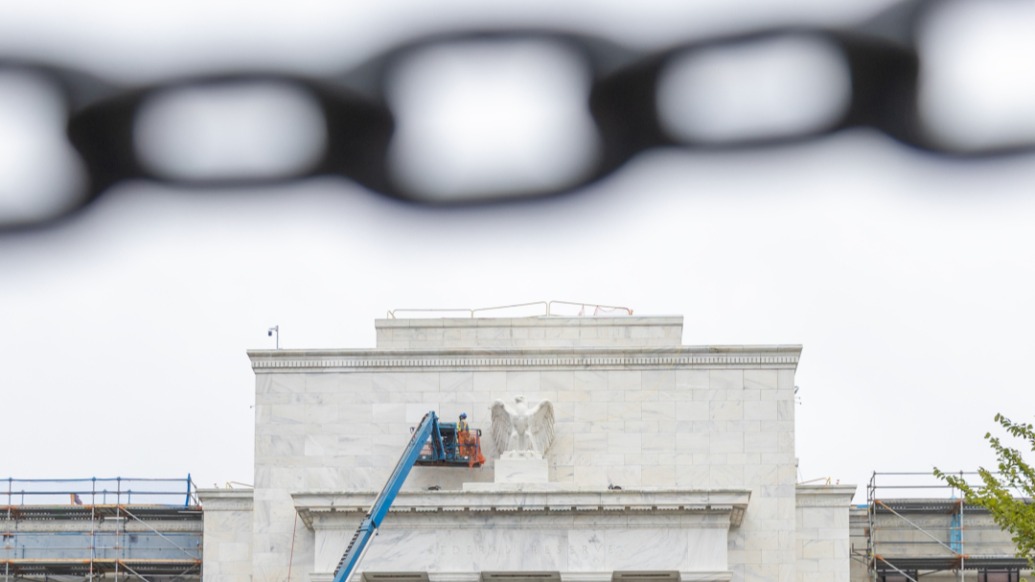
今夜,史上最“分裂”的一次美联储利率决议来了!
美股IPO· 2025-09-17 12:45
Core Viewpoint - The upcoming Federal Reserve interest rate decision is highly anticipated, with a general expectation of a 25 basis point cut, amidst concerns of weak employment, persistent inflation above target, and increasing political pressure [1][3][5]. Group 1: Interest Rate Decision Expectations - The market widely anticipates a 25 basis point cut to a range of 4.00%-4.25%, marking the first cut since December of the previous year, with 105 out of 107 analysts predicting this outcome [3]. - There is a potential for unprecedented voting divisions within the FOMC, with differing opinions on whether to maintain rates, cut by 25 basis points, or even cut by 50 basis points [3][10]. - The FOMC statement may acknowledge rising risks in the labor market, which could signal the beginning of a new easing cycle [5][9]. Group 2: Employment and Inflation Concerns - Recent employment data has shown significant weakness, with a downward revision of 910,000 jobs over the past year, leading to increased expectations for a rate cut [7]. - Despite the push for rate cuts due to employment concerns, inflation remains a critical challenge, with debates surrounding the impact of tariffs on prices [8]. - Officials are cautious about the potential for persistent inflationary pressures, indicating that any rate cuts will be carefully evaluated based on incoming data [8][9]. Group 3: Political Influences on Monetary Policy - Political pressures from the Trump administration have intensified, potentially complicating the FOMC's voting dynamics, with new appointments aligning with the administration's views on interest rates [6]. - The ongoing legal battles surrounding board member Cook's position may further influence the voting landscape, adding uncertainty to the decision-making process [6]. Group 4: Market Reactions and Projections - Goldman Sachs projects three consecutive 25 basis point cuts in September, October, and December, with a potential for further cuts in 2026, depending on employment market conditions [13][14]. - Market reactions to the Fed's decisions are expected to vary, with a 47.5% probability of a dovish 25 basis point cut potentially leading to a 0.5%-1% increase in the S&P 500 index [15][16].
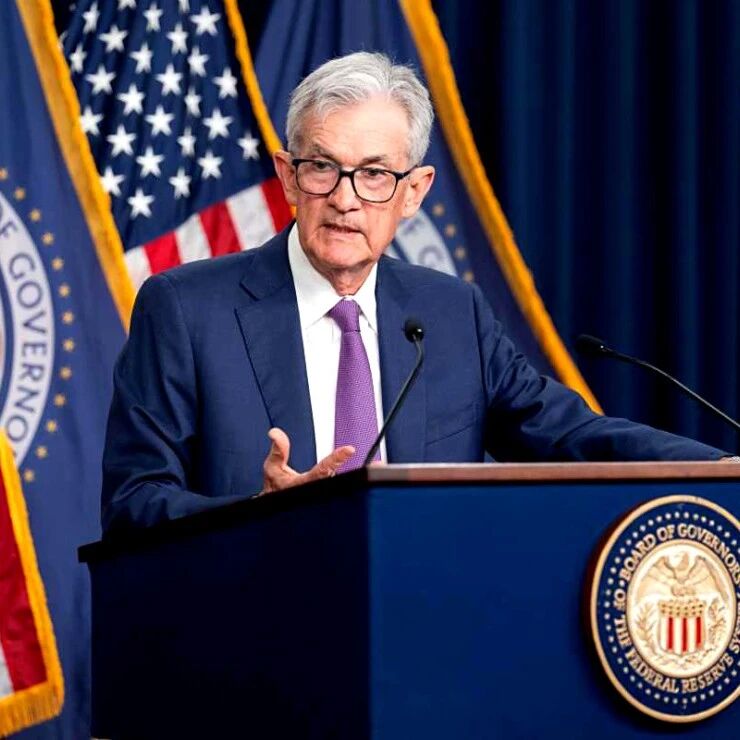
就业数据取代通胀成焦点!美联储降息预期巩固,市场押注年内或降息三次
智通财经网· 2025-09-12 11:59
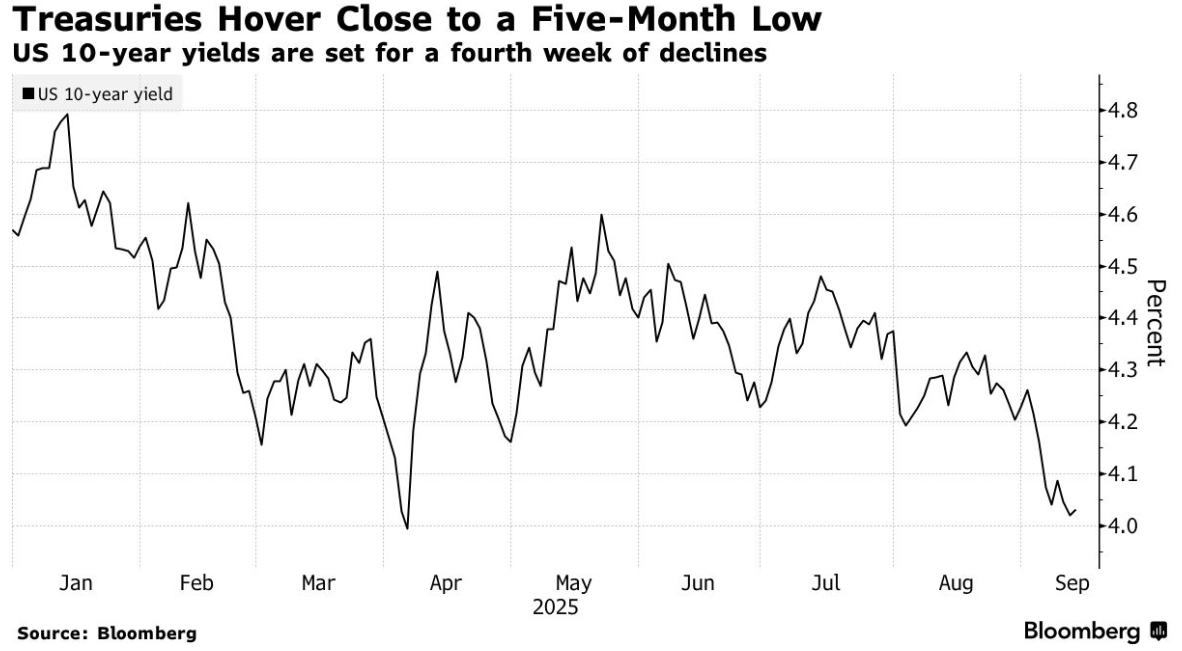
Group 1 - The U.S. Treasury bonds are expected to continue their upward trend, marking a potential fourth consecutive week of gains, supported by unemployment claims data that solidify market expectations for a Federal Reserve rate cut next week [1] - The 10-year Treasury yield slightly increased by 2 basis points to 4.04%, while the 2-year yield rose to 3.55%, indicating a longer-term downward trend in yields since February [1] - Market participants are now focusing on the potential for further easing measures for the remainder of the year, with an 80% probability of two additional rate cuts by year-end [3] Group 2 - Economists predict that the Federal Reserve will likely implement three rate cuts this year, with nearly 90% of respondents expecting a modification in the post-meeting statement to emphasize labor market risks [6] - The unemployment rate rose to 4.3% in August, and recent data revisions indicate a significant slowdown in hiring, challenging previous assessments of a robust labor market [6] - A majority of respondents believe that the Federal Reserve faces upward risks regarding both unemployment and inflation, with expectations for the federal funds rate to drop to 3.5% by June 2026 [9] Group 3 - There is a growing concern about political pressure influencing monetary policy decisions, with 71% of respondents expressing worry that political loyalty may affect future policy decisions [11] - The financial markets have shown a relatively calm response to these political threats, with the 10-year Treasury yield declining and market inflation expectations remaining stable [11] - Economists warn that the pressure for monetary easing from the executive branch could dangerously approach a scenario of stagflation, where economic growth stagnates while inflation remains high [11]
The 911K signal: Downward revision on US payrolls concerning
Youtube· 2025-09-10 04:10
Group 1 - The preliminary report from the US Bureau of Labor Statistics indicates a significant downward revision of 911,000 jobs in the payroll data for the year ending March, marking the largest revision on record since 2002 [1] - The White House has commented on the revisions, suggesting they highlight the need for new leadership at the Bureau of Labor Statistics, which is responsible for the monthly jobs data [2] - The political implications of the job market data are being discussed, with the White House asserting that the job market weakness predates the Trump administration, thus distancing the current administration from the economic issues [3][4] Group 2 - The ongoing debate regarding the quality of the jobs report has been influenced by political narratives, particularly those from President Trump and his allies [5] - The market is now questioning whether the Federal Reserve is adequately responding to the labor market situation, with discussions about potential rate cuts becoming more prominent [6] - There is a 10% chance of a 50 basis point rate cut being considered, with a strong likelihood of a 25 basis point cut later this month, and market expectations are shifting towards pricing in three cuts in the current cycle [7]
疲软非农点燃降息预期 本周通胀数据成美联储下一步行动关键
智通财经网· 2025-09-07 23:24
Economic Overview - The U.S. stock market closed lower last Friday due to a weak non-farm payroll report for August, indicating a significant cooling in the job market and raising concerns about the U.S. economy [1] - Following the release of the August non-farm payroll report, the market now anticipates a 100% probability of a rate cut by the Federal Reserve in September [1] Employment Market - The August non-farm payroll report showed only 22,000 new jobs added, marking the weakest job market since the pandemic began [2] - Excluding healthcare, the total employment has seen negative growth for the first time in 25 years, except during recession periods [4] - The healthcare sector has been the primary source of job growth in recent months, but it is now also experiencing a noticeable decline [4] Inflation and Federal Reserve Policy - Economists expect the August Consumer Price Index (CPI) to rise by 2.9% year-over-year and 0.3% month-over-month, indicating limited progress in curbing inflation [2] - The core CPI, excluding volatile items like food and energy, is projected to increase by 3.1% year-over-year, remaining consistent with July's levels [2] - The Federal Reserve's dual mandate of achieving full employment and maintaining a 2% inflation rate is under pressure due to the current economic conditions [2] Consumer Sentiment - The upcoming Michigan University Consumer Sentiment Index for September will provide insights into consumer psychology amid a slowing job market and uncertain inflation outlook [1] - Despite a relatively low unemployment rate of 4.32%, there is growing concern among workers about future job losses, which negatively impacts consumer confidence [4]
爆冷非农数据强化美联储降息预期
Bei Jing Shang Bao· 2025-09-07 15:56
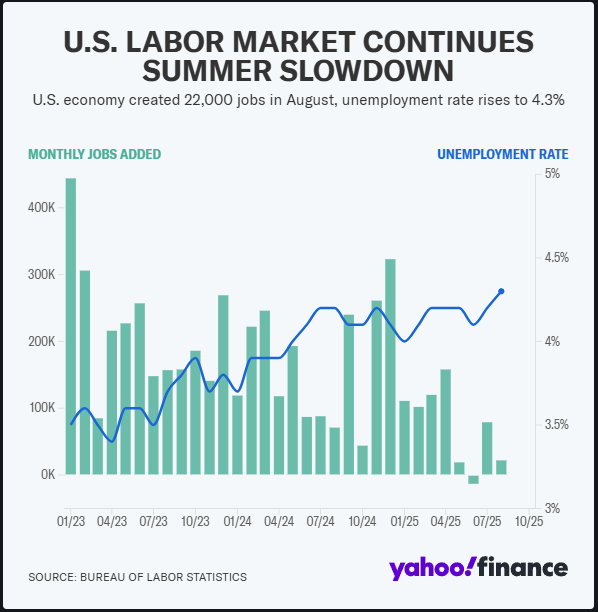
Economic Outlook - The recent weak employment reports have increased Wall Street's confidence that the Federal Reserve will lower interest rates this month, with expectations of a 25 basis point cut fully priced in by the market [1][2] - The U.S. labor market is showing signs of cooling, with job openings falling to a 10-month low and non-farm payrolls adding only 22,000 jobs last month, the lowest in nearly four years [1][2] - The unemployment rate has risen to its highest point in almost four years, indicating a cautious approach to hiring among companies due to weak sales and uncertainties related to tariffs [1][2] Market Reactions - The S&P 500 index reached a historical high last week but faced a sell-off that reversed gains, reflecting market volatility [3] - Communication services and consumer discretionary sectors led the gains, with Google shares rising 10% after a favorable court ruling [3] - Small-cap stocks are expected to benefit from interest rate cuts, with significant buying activity observed in small-cap stocks and ETFs, reaching the second-largest weekly purchase since 2008 [4] Interest Rate Expectations - The market is increasingly pricing in the possibility of a 50 basis point rate cut by the Federal Reserve, as indicated by the decline in U.S. Treasury yields [2][5] - The upcoming Consumer Price Index (CPI) report is not expected to hinder the Fed's decision to cut rates, with projections of a 0.3% increase in both overall and core CPI [3] - Concerns remain about the labor market's deterioration, which could overshadow the benefits of additional rate cuts [5]
Nasdaq 100 and S&P Show Volatility as Jobs Data Cements Fed Pivot
FX Empire· 2025-09-05 18:46
Group 1 - Trump's tariff policies have contributed to current hiring weaknesses, with historic tariff rates leading to inflation fears and a pause in Fed rate cuts, but easing inflation risks now allow for potential rate cuts in September [1] - The shift in policy outlook has bolstered bullish sentiment in equities, particularly in the S&P 500 and Nasdaq, although there was a pullback from intraday highs due to caution near technical resistance [2] - Structural weaknesses in the job market are emerging, with potential job cuts estimated to reach up to 800,000, indicating a much weaker job market than previously thought [3] Group 2 - Political tensions have increased following Trump's decision to fire BLS Commissioner Erika McEntarfer after major data revisions, with his nominee suggesting the end of the monthly jobs report, leading to a focus on long-term trends rather than monthly figures [4] - Investors in tech and growth stocks within the Nasdaq are closely monitoring job revisions, as confirmation of deeper labor weakness could heighten expectations for prolonged Fed easing [5] Group 3 - The Nasdaq 100 has shown volatility, forming an inverted head and shoulders pattern and breaking above the neckline near the 22,700 region, indicating strong volatility [6] - Following the release of jobs data, the Nasdaq 100 experienced a sharp move higher but later pulled back, with key resistance at 24,500 and strong support around 22,700, suggesting potential for continuation or deeper correction [7]