
年轻化

Search documents
茅台集团:新征程上,坚定市场化、拥抱年轻化、走向国际化
Zheng Quan Shi Bao Wang· 2026-01-01 07:13
Core Viewpoint - Moutai Group emphasizes commitment to practical work, innovation, and cultural heritage in its New Year message for 2026, aiming to build a sustainable future and enhance brand responsibility [1] Group 1: Commitment to Quality and Innovation - The company will focus on craftsmanship to ensure quality as a foundational element [1] - Innovation will be a key strategy for future growth and development [1] Group 2: Cultural and Ecological Responsibility - Moutai Group aims to preserve its cultural heritage as a core aspect of its identity [1] - The company is committed to ecological sustainability as a basis for its development [1] Group 3: Market Strategy and Digital Transformation - The company plans to adopt a market-oriented approach while embracing youth culture [1] - Moutai Group is set to pursue internationalization and deepen its digital transformation efforts [1] Group 4: Green Development - The company is dedicated to green practices as part of its overall strategy [1] - Moutai Group seeks to create new advantages that align with contemporary trends [1]

西南酒价年度图谱:价格失守、库存高企,白酒明年靠啥翻盘?
Nan Fang Du Shi Bao· 2025-12-31 07:34
Core Viewpoint - The Chinese liquor market in 2025 is facing dual pressures of "price stability" and "inventory reduction," leading to a challenging environment for the industry. The market is experiencing a shift from "volume and price increase" to "price stability for survival" as major brands see a decline in prices and face high inventory levels [1][2]. Group 1: Market Trends - The key terms for 2025 are "price stability" and "inventory reduction," with companies focusing on maintaining a stable pricing system to boost market confidence and product value [2]. - Major liquor brands like Moutai and Wuliangye have seen significant price drops, with Moutai falling from over 2500 yuan to below 2000 yuan per bottle, and Wuliangye dropping from nearly 1000 yuan to below 900 yuan [2]. - Inventory levels among 20 A-share listed liquor companies reached 168.39 billion yuan, an increase of 19.29 billion yuan year-on-year, indicating a continuing upward trend in inventory [2]. Group 2: Inventory Challenges - The meaning of inventory has shifted for liquor distributors from being a source of profit to a burden, as high inventory levels lead to increased storage and management costs [3]. - Companies are moving away from traditional inventory pressure tactics and are actively assisting distributors in reducing inventory, but this poses a balancing act as aggressive inventory reduction can depress market prices [3]. Group 3: Price Control Strategies - The "control quantity and protect price" strategy has become crucial, with companies like Wuliangye reducing contract volumes by 0% to 50% for certain channels to maintain price stability [4]. - Various companies have implemented strict measures against price chaos and counterfeit products, including fines and termination of partnerships with non-compliant distributors [5][6]. Group 4: Future Outlook for 2026 - In December 2025, major liquor companies held meetings to outline strategies for 2026, emphasizing the importance of channel profits and a shift towards a sustainable profit model rather than short-term gains [7][8]. - Companies are focusing on consumer-centric strategies, with an emphasis on young consumers and innovative marketing approaches to adapt to changing consumption patterns [9][10]. - The industry is expected to see improvements in supply and demand dynamics in 2026, with analysts suggesting a gradual recovery in sales and pricing [10][11].
热搜爆了!店员偷牛肉被拍,紫燕百味鸡又“翻”车了
凤凰网财经· 2025-12-25 12:25
Core Viewpoint - The article highlights ongoing issues with food safety and customer trust at Ziyan Food, particularly following a recent incident where an employee was caught stealing meat, raising questions about management practices and operational integrity [1][5][36]. Group 1: Incident and Response - A video surfaced showing an employee at Ziyan Food's store in Jiangsu secretly taking beef from a customer's order, leading to public outrage and suspicions about the store's practices [1][2][4]. - In response, Ziyan Food established a special task force to investigate the incident, confirmed the misconduct, and took immediate actions including closing the store, firing the employee, and offering compensation to affected customers [5]. Group 2: Food Safety Issues - Ziyan Food has a history of food safety problems, with previous incidents including microbial contamination in products, where five items failed safety tests, with one sample exceeding the safe limit by 290 times [8][10]. - The company has faced multiple complaints regarding food safety, including issues of underweight products and reports of foreign objects in food [20][22]. Group 3: Business Model and Management Challenges - Ziyan Food operates primarily through a distribution model, with 79.32% of revenue coming from distributors, which limits direct control over franchise operations and contributes to management challenges [24][28]. - The company has acknowledged risks associated with its sales channel management, noting that as the number of franchise stores increases, maintaining oversight becomes more difficult [28]. Group 4: Financial Performance - For the first three quarters of 2025, Ziyan Food reported a revenue of 2.514 billion yuan, a decline of 6.43% year-on-year, with net profit dropping by 44.37% to 194 million yuan [36]. - The company's cash flow from operating activities decreased by 39.23%, and its debt ratio rose to 49.31%, indicating financial strain and challenges in sustaining growth [38]. Group 5: Strategic Transition and Leadership - Ziyan Food is undergoing a strategic transformation focusing on youth engagement, globalization, and digitalization, but faces significant upfront costs and cash flow challenges [40]. - The company has recently transitioned to a new management team, which must balance immediate operational crises with long-term strategic goals, amidst increasing competition and market pressures [42].



从价格倒挂到渠道冲突,“十五五”酒业面临哪些待解难题?
Xin Lang Cai Jing· 2025-12-20 12:58
Core Insights - The article emphasizes that the challenges faced by the Chinese liquor industry, particularly the baijiu sector during the "14th Five-Year Plan" (2021-2025), are structural and stem from strategic misalignments in industry transformation, market changes, and consumer trends rather than specific corporate failures [1] Group 1: High-End Strategy and Market Dynamics - Many liquor companies equate growth strategies during the "14th Five-Year Plan" with product premiumization and continuous price increases, leading to price bubbles and inventory accumulation [2] - Some enterprises have strayed from their core consumer base by overly pursuing high-end products, resulting in a disconnect between product structure and actual consumer demand [4] - The industry has been slow to react to potential policy impacts, such as real estate adjustments and strict alcohol bans, leading to over-optimistic production and sales targets based on past growth expectations [5] Group 2: Youth Engagement and Internationalization - While companies recognize the need to attract younger consumers, many efforts remain superficial, failing to address the fundamental consumption experience and cultural narratives that resonate with this demographic [6] - Progress in internationalization has been slow, with Chinese baijiu primarily relying on the Chinese diaspora rather than penetrating mainstream markets in Europe and America, facing significant cultural and regulatory barriers [8] Group 3: Innovation and Competition - Traditional liquor companies, especially in the baijiu, yellow wine, and wine sectors, show conservative and slow innovation in response to competition from diverse alcoholic beverages, leading to a loss of market share [9][10] - The beer industry has seen relative success with a solid high-end strategy, but some regional markets may have overextended their premium offerings, creating gaps for competitors [13] Group 4: Digital Transformation and Channel Conflicts - Many liquor companies have pursued digital transformation, but some have inadvertently created conflicts with traditional distribution channels by bypassing distributors, undermining long-standing channel ecosystems [11] - The baijiu sector has particularly struggled with this issue, as some second-tier brands have blindly followed high-end pricing strategies, leading to market vulnerabilities [11] Group 5: Overall Industry Challenges and Future Outlook - The core issues in the Chinese liquor industry can be attributed to a reliance on successful past strategies, resulting in collective unpreparedness for new environments and trends [13] - As the industry enters the latter half of the "14th Five-Year Plan," adjustments are being made, including inventory reduction, price stabilization, and a focus on mid-range products, indicating a shift towards healthier and more sustainable development [13]

古越龙山:一坛黄酒酿造产业复兴之道
Shang Hai Zheng Quan Bao· 2025-12-02 09:27
Core Viewpoint - The company Gu Yue Long Shan is committed to the revival of Huangjiu (yellow wine) as both a cultural heritage and a business, focusing on high-end, youthful, global, and digital strategies to expand the market and promote Huangjiu culture [2][6]. Group 1: Business Strategy - Gu Yue Long Shan views its competition not as other Huangjiu brands but as a challenge to promote the category and culture of Huangjiu to a broader audience [2]. - The company has seen significant growth in new business formats, with a 22.64% year-on-year increase in new business sales and a 15.31% increase in online sales [2]. - The introduction of innovative products, such as the "Wu Gao Di" targeting younger consumers, has resulted in over 330,000 bottles sold in its first year, with more than 70% of orders coming from the younger demographic [6]. Group 2: Technological Innovation - Gu Yue Long Shan is investing in smart manufacturing, with a 22 billion yuan project set to be completed by the end of 2024, which will enhance automation and efficiency in production [3]. - The company has maintained the largest capacity for hand-crafted Huangjiu production while addressing challenges such as high costs and low efficiency through technological upgrades [3][4]. - Research and development expenditures reached 17.46 million yuan in the first half of the year, marking a 33.61% increase year-on-year, reflecting the company's commitment to innovation [4]. Group 3: Market Expansion - The company has opened 66 tasting and slow wine bars across the country, with revenue from markets outside Jiangsu, Zhejiang, and Shanghai reaching 40.74% in 2024 [7]. - Gu Yue Long Shan is actively expanding its market presence through initiatives like "Bai Cheng Gong Pin," aiming to enhance brand visibility and consumer engagement nationwide [8]. - The company is also exploring cross-industry collaborations, such as a partnership with China Resources Beer to create a new product that combines Huangjiu and beer [6]. Group 4: Cultural Significance - Gu Yue Long Shan emphasizes the cultural heritage of Huangjiu, viewing it as a living cultural legacy and a historical narrative rather than just a commodity [8]. - The company has a significant inventory of over 11 million jars, approximately 260,000 tons of original wine, which it considers a valuable asset [8]. - The company aims to contribute to the broader Huangjiu industry, with a goal of achieving 10 billion yuan in annual sales by 2027 and capturing over 50% of the national market share [8].

健康升级与情绪共鸣激活消费新引擎
Xiao Fei Ri Bao Wang· 2025-11-25 03:43
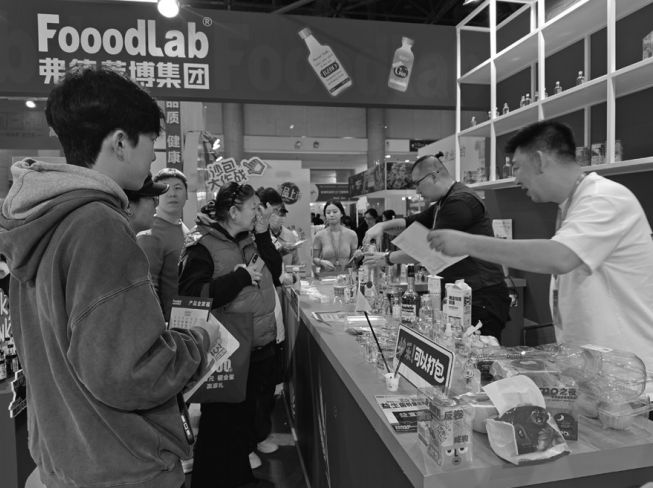
Group 1: Core Trends in the Consumer Market - The current consumer market is characterized by health-consciousness, youthfulness, and emotional engagement [1][2][8] - The health trend is evident in the dairy and beverage sectors, with brands launching products that emphasize "sugar-free," "low-fat," and "added probiotics or dietary fiber" [1][2] - The rise in health awareness is supported by a report indicating a nearly 13% increase in public knowledge of dairy product nutrition compared to the previous year [1] Group 2: Innovations in Dairy and Beverages - The health trend extends to a broader range of beverages, with products like 100% coconut water and "0 additives" soda water attracting young consumers [2] - New categories of drinks, such as plant-based beverages featuring traditional health ingredients, are emerging and gaining popularity among younger demographics [2] Group 3: Youth-Oriented Product Development - Retail products are increasingly targeting the "Z generation," particularly in the alcoholic beverage sector, where brands are focusing on new flavors, packaging, and experiential marketing [2][5] - Interactive experiences, such as on-site cocktail mixing, are drawing significant interest from young consumers [5] Group 4: Emotional Consumption Trends - Products are increasingly seen as vehicles for emotional expression and comfort, reflecting a deeper consumer trend towards "experience-driven" and "self-indulgent" consumption [8] - The retail sector faces challenges such as digital transformation and product homogenization, necessitating a deeper connection with consumer needs for sustainable growth [8]
国潮中医市集走红宝山:让传统养生“潮”起来、“活”起来
Xin Hua Cai Jing· 2025-11-23 06:13
Core Viewpoint - The "YOUNG生'庙'会" Traditional Chinese Medicine (TCM) market integrates TCM concepts with modern lifestyle, aiming to make TCM more accessible and appealing to the younger generation [1][4]. Group 1: Youthful Expression - A TCM product, a herbal bracelet made from sandalwood and dried tangerine peel, has become popular among young people, showcasing the blend of health benefits and modern aesthetics [2]. - The market features innovative food and drink options, such as herbal milk tea and traditional desserts, tailored to the consumption habits of younger demographics [2]. - High-tech health assessment tools, like tongue and pulse analysis devices, are used to provide personalized wellness recommendations, breaking the stereotype of TCM being outdated [2]. Group 2: Practical Integration - The market emphasizes convenience, offering on-site consultations for common health issues and free health screenings, making professional TCM services easily accessible to residents [3]. - Popular activities include hands-on experiences with TCM techniques like ear acupressure and DIY moxibustion, attracting significant participation from the community [3]. - The event has received positive feedback from attendees, highlighting the practical benefits of TCM in daily health management [3]. Group 3: Localized Development - The market showcases local medical resources and traditional techniques, such as "Five Elements Pastry" and regional acupuncture practices, enhancing community engagement with TCM [3]. - Community health enthusiasts are recruited as "curators" to lead interactive projects, fostering intergenerational transmission of TCM culture [4]. - Future plans include regular and ongoing TCM markets to further integrate TCM culture into modern life, enhancing community health awareness and participation [4].
11月20日正式发布!华为广汽联合造车一年 启境强势入局高端新能源汽车
Zhong Guo Qi Che Bao Wang· 2025-11-20 07:03
Core Insights - The launch of the "Qijing" brand at Huawei's QianKun Ecological Conference marks its entry into the high-end smart electric vehicle market, targeting young consumers with a focus on technology and innovation [2][3] - Huawei and GAC's collaboration aims to leverage their strengths in smart driving solutions and automotive manufacturing to create a unique brand that resonates with the needs of younger consumers [4][6] Group 1: Brand Positioning and Strategy - The brand "Qijing" is positioned to appeal to younger consumers, who are currently the main demographic in automotive consumption, emphasizing a youthful and technological identity [3][4] - Huawei's deep understanding of young consumers' demands for new technologies will be integrated into the design and development of the Qijing brand [3][6] Group 2: Technological Integration and Development - Qijing's product development will utilize Huawei's QianKun technology, which has seen significant investment and development, including a team of over 8,000 people and more than 20 billion yuan in R&D [6] - The QianKun smart driving solution has achieved notable milestones, including 1 million units expected to be equipped by August 2025 and significant user engagement metrics [6] Group 3: Collaborative Approach - The partnership between Huawei and GAC employs an "embedded collaboration" model, allowing for seamless integration of technology and manufacturing processes, enhancing product development efficiency [7][8] - This collaboration involves a co-located team from both companies, ensuring that product definition, development, and marketing are closely aligned with consumer needs [7] Group 4: Manufacturing and Production Efficiency - Qijing will adopt an AI-driven manufacturing model to enhance production efficiency and reduce reliance on foreign technologies, aiming for high-quality output [11] - The brand's approach combines smart manufacturing with user insights, positioning it to potentially reshape the competitive landscape of high-end electric vehicles [11]


川酒集团瞄准口粮酒等千亿市场,2030年冲刺450亿营收
Nan Fang Du Shi Bao· 2025-11-19 12:01
Core Insights - Sichuan Liquor Group aims to achieve a revenue of 45 billion yuan and a profit tax of 3 billion yuan by 2030, positioning itself among the top players in China's liquor industry [3] - The company reported a revenue of 35.02 billion yuan in 2023, marking an 8.3% year-on-year increase, with a total profit of 609 million yuan [3] Group 1: Strategic Goals - The company has set a target of 38 billion yuan in revenue for 2024 [3] - The strategic focus is on "strengthening fundamentals and increasing efficiency" with a five-ring approach covering raw liquor, staple liquor, customized liquor, bulk liquor, and quality technology [3][5] Group 2: Market Opportunities - The staple liquor market is projected to exceed 150 billion yuan in revenue by 2024, with over 70% of sales coming from this category in the first half of 2025 [5] - The customized liquor market is expected to reach 100 billion yuan, supported by a new "Sichuan Liquor Customization" program that offers low barriers to entry and quick delivery [5][7] Group 3: Consumer Trends - There is a shift towards personalized, youthful, and customized consumption in the liquor market, moving from brand-centric to emotional and shared experiences [7] - The bulk liquor market is anticipated to surpass 80 billion yuan in 2024 and exceed 100 billion yuan in 2025, with a compound annual growth rate of over 15% [7] Group 4: Trust and Quality Assurance - Sichuan Liquor Group aims to become the leading supplier of bulk liquor in China by leveraging its full industry chain advantages and government quality endorsements [8] - The company plans to rebuild consumer trust in bulk liquor through transparency, standardization, and digitalization, ensuring quality and traceability [8]
推动年轻化 汾酒“沪上青花”新品发布
Bei Jing Shang Bao· 2025-11-10 07:43
Core Viewpoint - The opening of the Fenjiu (Shanghai) Digital Cultural Museum and the launch of the "Shanghai Blue and White" series mark a significant step for Fenjiu Group in integrating digital technology with traditional culture, aiming for brand internationalization, youth appeal, and modernization [1] Group 1 - The Fenjiu (Shanghai) Digital Cultural Museum represents an important practice of revitalizing traditional culture through digital technology [1] - The "Shanghai Blue and White" series is a result of Fenjiu's deepening engagement in regional markets and embracing contemporary changes [1] - The initiatives are part of Fenjiu's strategy to promote cultural integration and enhance brand image [1]
