
消费变革

Search documents
衢州首富王敏良,又有大动作
Shen Zhen Shang Bao· 2025-09-28 02:36
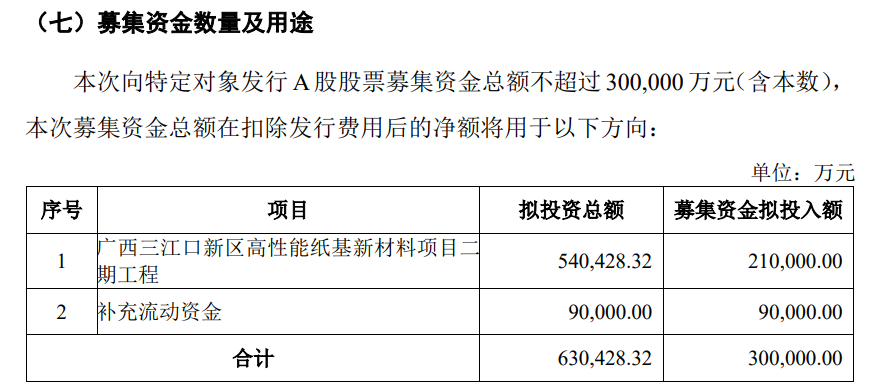
Core Viewpoint - Xianhe Co., Ltd. plans to issue A-shares to raise up to 3 billion yuan for the second phase of its high-performance paper-based new materials project and to supplement working capital [1][6]. Group 1: Fundraising Details - The company intends to issue no more than 211,792,834 shares to no more than 35 specific investors, with total fundraising not exceeding 3 billion yuan [1]. - The total investment for the second phase of the Guangxi Sanjiangkou New Area high-performance paper-based new materials project is 5.404 billion yuan, with 2.1 billion yuan allocated from the raised funds [3][9]. Group 2: Project Overview - The project aims to achieve an annual production capacity of 600,000 tons of pulp and 700,000 tons of paper, totaling 1.3 million tons [9]. - The project will utilize local raw material resources to enhance production capacity and improve profitability and risk resistance [9]. Group 3: Market Context - The shift towards paper alternatives to plastic and the dual carbon policy are creating significant market opportunities for paper-based materials, especially in packaging [10]. - Consumer behavior changes are driving demand for high-quality, food-safe packaging materials, particularly in e-commerce and food delivery sectors [11]. Group 4: Strategic Objectives - The fundraising aims to strengthen the company's market leadership and support its strategic development plan amid favorable industry conditions [12]. - The company seeks to optimize its financial structure and reduce operational capital pressure through this fundraising initiative [13]. Group 5: Company Background - Xianhe Co., Ltd. has over 20 years of experience in the specialty paper industry and is one of the largest companies in China for research and production of specialty paper [6]. - The company is controlled by Wang Minliang, whose family ranks 294th on the New Fortune 500 list with a wealth of 11.4 billion yuan [5]. Group 6: Recent Performance - In the first half of 2025, the company reported a revenue of 5.991 billion yuan, a year-on-year increase of 30.14%, while net profit decreased by 13.80% [19].


茅台高层调研透露稳价决心!吃喝板块震荡下探,板块大跌背后暗藏良机?
Xin Lang Ji Jin· 2025-09-22 05:42
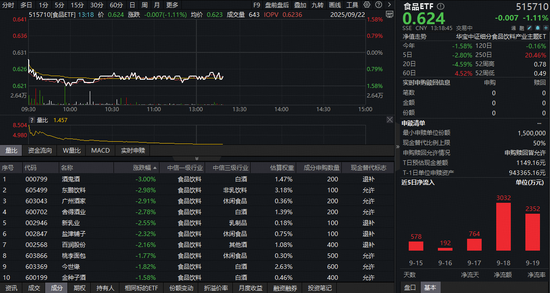
Group 1 - The food and beverage sector is experiencing a low-level fluctuation, with the Food ETF (515710) down by 1.11% as of the report time [1] - Key stocks in the sector, including liquor and consumer goods, are underperforming, with notable declines such as a 3% drop in JiuGuiJiu and over 2% declines in DongPeng Beverage and SheDe Liquor [1] - The overall valuation of the food and beverage sector is at a low point, suggesting a potential good time for investment, with the food ETF's price-to-earnings ratio at 20.74, which is in the 7.06% percentile of the last decade [3] Group 2 - Pacific Securities indicates that the liquor sector is at a dual bottom of fundamental stabilization and low valuation, with demand expected to show weak recovery as the Mid-Autumn Festival and National Day approach [3] - Xiangcai Securities suggests focusing on high-quality stocks with alpha opportunities, emphasizing the importance of innovation in categories, channels, and consumption scenarios [4] - The management of Moutai Group is committed to maintaining a price above 1800 yuan, emphasizing a balance between volume and price, which may positively impact the liquor market [1][4]

深圳水贝“黄金平替”热销!金价狂飙下的消费变局
Sou Hu Cai Jing· 2025-09-18 10:20
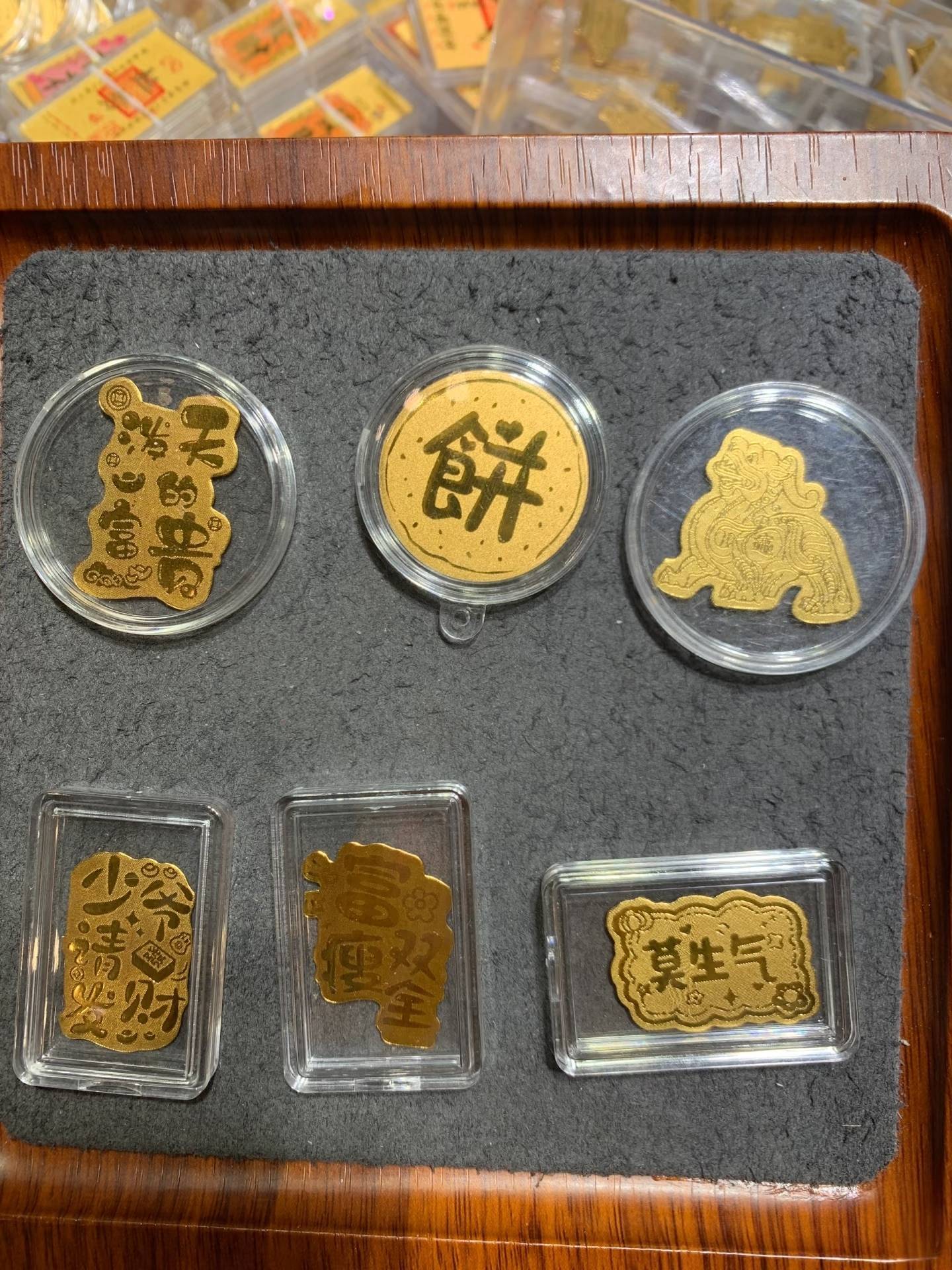
Core Insights - The market for "gold alternatives" is gaining traction, particularly among younger consumers who are shifting from traditional gold purchases to more affordable options like gold-plated and platinum jewelry [5][6][11] - The price of gold has surged, with the spot price reaching $3,642.63 per ounce, marking a nearly 40% increase year-to-date, which has led consumers to explore alternative products [4][5] - The "pain gold" trend, characterized by gold jewelry linked to anime and gaming IPs, is becoming increasingly popular among young consumers, with a shift from weight-based pricing to fixed pricing models [6][7][11] Market Dynamics - The Shenzhen Water Bay jewelry market, housing over 7,000 gold and jewelry enterprises, accounts for approximately 70% of the national physical gold trading volume, making it the largest offline gold trading center in China [4] - The market is witnessing a transformation as traditional gold stores adapt by introducing "light gold laboratories" and focusing on minimalist designs to attract a younger demographic, primarily aged 25-35 [5][11] - The rise of online sales and live streaming has significantly increased foot traffic, with some stores reporting a threefold increase in customer visits despite a 15% decrease in profit margins per item due to fixed pricing [7][11] Consumer Behavior - Young consumers are redefining the value of gold, viewing it as a means of personal expression rather than just a hard currency, leading to a demand for products that combine design and affordability [5][6] - The "lipstick effect" is evident as economic slowdowns prompt consumers to opt for lower-priced alternatives, reflecting a broader trend of practical consumption among the younger generation [11][12] Industry Challenges - The rapid growth of the "gold alternative" market is accompanied by challenges, including intellectual property disputes and a rise in counterfeit certification cases, necessitating the establishment of third-party verification systems [12] - The increase in silver prices by 28% this year is putting pressure on the profit margins of alternative products, highlighting the need for industry standards and regulations [12] - Efforts are underway to create a standardized naming convention for composite materials and to promote a "rational gold purchasing guide" to enhance transparency in the market [12][13] Future Outlook - The transformation of the Water Bay market is not just about selling gold but about building a new ecosystem that integrates materials, craftsmanship, channels, and consumer trust [13] - The shift from manufacturing to standard output and industry services in the Luohu District reflects a broader trend in the Chinese jewelry industry, adapting to financial fluctuations and generational changes [13]
8月CPI同比下降0.4%,白酒价格有望逐步修复
Xiangcai Securities· 2025-09-14 10:43
Investment Rating - The industry investment rating is maintained as "Buy" [2][40] Core Views - The food and beverage industry saw a rise of 1.08% from September 8 to September 12, 2025, underperforming the CSI 300 index by 0.30 percentage points [2][8] - The overall valuation of the food and beverage industry is at a low level, with a PE ratio of 22X, ranking 22nd among Shenwan's primary industries [3][16] - The Consumer Price Index (CPI) decreased by 0.4% year-on-year in August, indicating potential gradual recovery in liquor prices [4][30] Summary by Sections Industry Performance - From September 8 to September 12, the food and beverage sector increased by 1.08%, while the Shanghai Composite Index rose by 1.52% and the Shenzhen Component Index by 2.65% [2][8] - Within the food and beverage sub-sectors, liquor increased by 2.56%, meat products by 2.45%, and baked goods by 1.84% [2][8] Valuation Analysis - As of September 13, 2025, the food and beverage industry's PE ratio is 22X, with other liquor categories at 59X, health products at 45X, and snacks at 37X, while liquor is at 19X, processed foods at 21X, and beer at 24X [3][16] Price Trends - In August, the CPI fell by 0.4% year-on-year, with food prices down by 4.3% [4][30] - The average price of fresh milk in major production areas was 3.03 yuan/kg, down 3.50% year-on-year, while yogurt and milk prices showed slight fluctuations [5][30] Investment Recommendations - The report suggests focusing on two main lines: stable demand leaders with strong risk resistance and companies actively innovating in new products, channels, and consumption scenarios [6][40] - Recommended companies include New Dairy, Shanxi Fenjiu, Guizhou Moutai, Andeli, Yanjinpuzi, and Qingdao Beer [6][40]
热点关注 | 泡泡玛特业绩暴增 LABUBU泡沫与理性何在?
Xin Lang Cai Jing· 2025-09-08 01:13
Core Viewpoint - The article highlights the remarkable performance of Pop Mart, particularly driven by the LABUBU series, which has seen explosive growth in revenue and market interest, reminiscent of past trends in collectible markets like "sneaker flipping" and "bearbrick speculation" [3][4][12]. Group 1: Financial Performance - Pop Mart reported a revenue of 13.88 billion RMB for the first half of 2025, marking a year-on-year increase of 204.4% [3][4]. - The adjusted net profit surged by 362.8% to 4.71 billion RMB during the same period [3]. - The LABUBU series alone generated 4.81 billion RMB in revenue, a staggering growth of 668%, accounting for 34.7% of total revenue [4]. Group 2: Market Demand and Sales - The launch of the mini LABUBU on August 28 sold out within 60 seconds, with a peak resale price reaching 1,388 RMB, a 1,657% markup from the original price of 79 RMB [3][5]. - Over 580,000 consumers added the mini LABUBU to their shopping carts before the sale, indicating high demand [5]. - The secondary market saw prices for complete sets of LABUBU toys reaching an average of 1,920.77 RMB, with some transactions exceeding 2,580 RMB [6]. Group 3: Global Expansion - Pop Mart operates 571 retail stores and 2,597 robot stores across 18 countries and regions as of mid-2025 [9]. - Revenue from the Asia-Pacific region reached 2.85 billion RMB, up 258%, while the Americas saw revenue of 2.27 billion RMB, increasing by 1,142% [9]. - The company’s global strategy includes opening flagship stores in major cities, such as London and Paris, to enhance brand visibility [9]. Group 4: IP Development and Future Outlook - Pop Mart emphasizes a balanced development of its IP matrix, with five IPs generating over 1 billion RMB in sales each during the first half of 2025 [10]. - The LABUBU brand is seen as a "gold mine" with potential for further exploration and innovation in product applications [11]. - The company is building a "LABUBU universe" to expand its product offerings and enhance consumer engagement [11]. Group 5: Consumer Behavior and Market Trends - The success of LABUBU reflects a shift in consumer behavior, particularly among Generation Z, who prioritize emotional connection and self-rewarding purchases [12]. - The article notes a trend towards more rational consumption, with consumers becoming less impulsive and more focused on the actual value of collectible items [12].


RUI快报:中国消费者对自有品牌的接受度正在提升
Sou Hu Cai Jing· 2025-07-23 03:05
Group 1: Beer Export Growth - In June, China's beer export volume reached 8,877 million liters, representing a year-on-year increase of 56.5% [5] - The export value for June was 46,328 million yuan, showing a significant growth of 64.3% compared to the previous year [5] - For the first half of the year, cumulative beer export volume was 40,122 million liters, up 24.1%, while the cumulative export value reached 201,545 million yuan, an increase of 27.7% [5] Group 2: Market Dynamics and Trends - Major brands like Tsingtao and Snow Beer are strengthening their domestic presence while actively exploring emerging markets in Southeast Asia, Europe, and Africa [3] - High-value products, such as craft beer, are driving export growth and contributing to a steady increase in export prices [3] - The development of cross-border e-commerce platforms is providing new channels for small and medium-sized breweries to reach overseas consumers [3] Group 3: Consumer Behavior and Brand Perception - A Nielsen IQ global survey indicates that 56% of Chinese consumers are willing to increase their purchases of private label brands, which is above the global average [6] - Nearly 70% of consumers believe private label brands offer outstanding value for money, and 62% see them as potential substitutes for branded products [6] - The sales growth of private label brands has significantly outpaced that of manufacturer brands, although their average price remains 16% lower than that of manufacturer brands [8] Group 4: Industry Innovations and Future Outlook - The Chinese beer industry is transitioning from scale expansion to value creation, becoming a global leader in innovation [3] - Companies that integrate Chinese cultural elements, modern brewing technology, and sustainable development concepts are expected to gain a unique competitive advantage in the global market [3] - The ongoing construction of the Fenjiu 2030 technical transformation project, with a total investment of 9.1 billion yuan, aims to achieve an annual production capacity of 51,000 tons of raw liquor [9]

日本年轻人最爱逛的宝藏街区,不欢迎品牌连锁店
创业家· 2025-05-01 09:45
Core Viewpoint - The article discusses the concept of "involution" in consumer culture, highlighting how businesses often replicate each other, leading to a lack of uniqueness and excitement in shopping experiences [4][20]. Group 1: Examples of Involution - Many famous shopping streets in China look almost identical, offering the same local snacks and souvenirs, which detracts from the authentic local experience [2]. - Renowned shopping centers also exhibit a high degree of similarity, with luxury brands and common products dominating the landscape, making shopping feel monotonous [3][4]. Group 2: Causes of Involution - Involution occurs because businesses tend to engage in the same practices, leading to a homogenized market [5][20]. - The article references the work of Japanese sociologist Minoru Miura, who emphasizes the importance of unique offerings in combating this trend [5][20]. Group 3: Case Study of Shimokitazawa - Shimokitazawa, a vibrant Tokyo neighborhood, initially saw a decline in popularity due to the influx of chain stores, which made the area less distinctive [10][11]. - To regain its charm, the community began to reject chain stores and welcomed unique local shops, which successfully revitalized the area [12][15]. Group 4: Unique Business Strategies - The article highlights a Tommy flagship store in Tokyo that offers exclusive items not available in other locations, demonstrating the value of uniqueness in retail [16][17]. - It argues that in a world filled with sameness, distinctiveness is a rare and valuable resource [19]. Group 5: Learning from Japan - The article promotes a study trip to Japan, focusing on how the country has addressed low-growth challenges and the emergence of unique business models in a "low-desire society" [20][25]. - It suggests that understanding Japan's approach to consumer needs and societal changes can provide insights for future business strategies in China [20][25].
去过日本才明白:内卷的尽头,不是拼低价,而是……
创业家· 2025-04-21 09:45
今天的逛购物中心,已经变成了一个换个地方去买同样的东西的无聊游戏,这就是内卷。 为什么会卷?是因为大家都做着同样的事情。 内容来源:刘润公众号(runliu-pub) 到底什么叫做卷? 举几个例子, 中国好几个非常知名的风情街,看上去是不是长得几乎一模一样? 我们去风情街,不就是为了尝一尝本地的特色美食,买一些本地的特色纪念品,体验下本地的 原生原味吗? 但是, 今天的风情街都是一样的臭豆腐,一样的玻璃珠,一样的砖瓦墙。 我们再看 中国四个非常著名的购物中心,也非常雷同。 我们去购物中心,你会发现一楼几乎是同样的奢侈品,楼上几乎是同样的服装品牌,电影院放 着是同样的电影,地下的超市卖的是同样的日用品。 三浦展老师 是非常著名的日本社会心理学家, 他写过一些大家可能听说过的书,比如 《孤独 消费论》、《第四消费时代》、《下流社会》 等。 老师跟我们分享了很多,但是只有当他聊起 "下北泽" 这个地方的时候,两个眼睛才开始放 光。 下北泽,是在东京的一个社区,这个社区有两条地铁线经过,很多集市都在这个地方。 这让下北泽一直都是一个非常热闹的集市,非常热闹的社区。 但是也因为这个原因,越来越多的加盟连锁店进入到了下北 ...
中酒协宋书玉:酒业不能陷入低价竞争,也不能盲目追求高价
Xin Jing Bao· 2025-03-28 10:09
新京报讯(记者秦胜南)在第二十二届中国国际酒业博览会期间举行的中国国际酒业发展论坛上,中国 酒业协会理事长宋书玉表示,酒业迎来传统与科技的深度融合、年轻化与国际化双轮驱动、文化输出构 建新型话语体系、可持续发展成为核心命题四个趋势性变革。他建议,行业应当在品质上求变,重塑消 费维度;在价值上求变,重塑市场认知;在服务上求变,重塑产业引擎;在竞合中求变,重塑产业生 态。 校对 穆祥桐 论坛期间,围绕如何发挥名酒企业的引领价值,带领中国酒业开拓进取、实现"稳中求变,重塑未来"这 一话题,茅台集团党委书记、董事长,贵州茅台酒股份有限公司党委书记、董事长张德芹认为,当前面 临的新一轮调整,本质上是时代进步催生的消费变革和科技发展带来的动能转换,如何在"稳"与"变"中 找准方向、开创未来,是这代酿酒人必须答好的时代"考卷"。结合茅台实践,他认为,要以敬畏之心筑 牢传承根基,焕新中国白酒的"传统魅力";要以开放姿态拥抱时代变革,激发中国白酒的"创新活力"; 要以责任担当提升产业形象,增强中国白酒的"品牌张力"。 郎酒集团董事长汪俊林认为,一是实事求是,准确认识中国白酒的质和量,对消费者负责,质量比增长 更重要;二是利他主 ...