
股市回调

Search documents
高盛突发警告:股市将回调
Zhong Guo Ji Jin Bao· 2025-10-04 23:03
Group 1 - Goldman Sachs CEO David Solomon warns of a potential market pullback in the next one to two years following a surge in stock prices driven by the AI boom [1][3] - Solomon highlights that historical trends show markets often overreact to new technologies, leading to a separation of winners and losers [1][3] - The current AI hype has pushed major stock indices to record highs, despite concerns about a possible bubble [3][4] Group 2 - Solomon refrains from labeling the situation as a "bubble," acknowledging the excitement that leads investors to overlook risks [4] - Other industry leaders, including Jeff Bezos and Leon Cooperman, share similar cautious sentiments regarding the current market conditions and potential for a bubble [4] - Despite the anticipated losses, Solomon remains optimistic about the long-term potential of AI technology and its impact on businesses [5]



突发警告!高盛:股市将回调!
Xin Lang Cai Jing· 2025-10-04 16:20
Core Viewpoint - Goldman Sachs CEO David Solomon warns of an impending market correction within the next one to two years, following a surge in stock prices driven by the AI boom [1][3]. Group 1: Market Trends and Predictions - Solomon highlights that markets operate in cycles, and significant technological advancements often lead to capital influx, resulting in a market that may outpace actual potential [1][3]. - He draws parallels to the late 1990s internet boom, which created major companies but also led to significant losses during the subsequent bubble burst [3][4]. - The current AI hype has pushed major stock indices to record highs, despite earlier weaknesses due to external factors like trade policies [3][4]. Group 2: Investor Sentiment and Risks - Solomon expresses concern that excessive excitement among investors may lead to a misjudgment of risks, suggesting that a market reset or correction is inevitable [4][5]. - Other industry leaders, including Jeff Bezos and Leon Cooperman, echo similar sentiments, indicating that the AI sector may be experiencing a "bubble" phase [5]. - There are warnings from investment professionals about the potential for rapid devaluation in AI-related stocks, likening the current situation to historical speculative bubbles [5]. Group 3: Optimism for AI Technology - Despite the anticipated market challenges, Solomon remains optimistic about the long-term potential of AI technology, emphasizing its transformative capabilities when integrated into businesses [6].
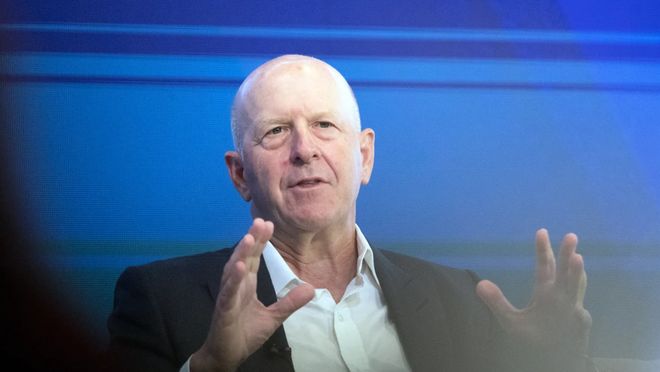
突发警告!高盛:股市将回调!
中国基金报· 2025-10-04 16:09
围绕AI的热度已将华尔街乃至海外的股指推至纪录高位,尽管今年早些时候美国主要股指一度受特朗普的贸易政策拖累走弱。不过,随着投 资者不断在AI领域寻找机会,也有声音开始担心某个时点可能出现"泡沫破裂"。 近期,所罗门在意大利都灵的"意大利科技周"上表示:"市场是有周期的。历史上每当某项新技术显著加速、带来大量资本涌入,并由此出 现一批有趣的新公司时,市场往往会跑在实际潜力前面……最终会分出赢家和输家。" 他举例说,20世纪90年代末到本世纪初互联网的普及, 既催生了世界上一些体量最大的公司,也让不少投资者在后来所谓的"互联网泡 沫"中亏了钱。 他说:" 这次你也会看到类似的现象。如果在接下来的12到24个月里,股票市场出现回撤,我一点也不会意外……我认为会有大量资金投 出去,最后却证明回报不佳;一旦这种情况发生,人们的感受就不会好。 " 近年来,全球市场被一轮AI热席卷,层出不穷的新技术、数十亿美元级的交易,以及ChatGPT开发商OpenAI的持续崛起,让投资者重仓押 注科技股,把资金涌入微软、Alphabet、Palantir和英伟达等公司。 【导读】 高盛掌门人大卫·所罗门警示股市将回调:"到时候大家心里 ...

股市放量回调,股指冲高回落
Bao Cheng Qi Huo· 2025-09-18 11:14
1. Report Industry Investment Rating - Not provided in the content 2. Core Viewpoints of the Report - On September 18, 2025, the stock indexes fluctuated and declined throughout the day, with the Shanghai, Shenzhen, and Beijing stock markets having a total turnover of 3166.6 billion yuan, a significant increase of 763.7 billion yuan from the previous day. The decline was mainly due to large stock price increases and significant valuation improvements, causing investors to lose confidence in chasing prices and increasing their willingness to take profits. [3] - In the medium to long term, stock indexes are strongly supported by favorable macro - policies and net inflows of funds. Given the weak credit and inflation data in August and the slowdown in consumption growth, there is a high expectation of policies to stabilize demand, with the key window period for policy introduction expected to be in October. The significant increase in non - bank deposits in July and August and the high - level operation of margin trading balances indicate continuous inflows of incremental funds into the stock market. [3] - However, due to the significant increase in the valuation of some stocks, there is still a willingness among profitable funds to take profits, leading to short - term technical adjustment pressure on stock indexes. The subsequent focus should be on the game between the rhythm of profit - taking and the fermentation of policy expectations. In general, stock indexes are expected to experience wide - range fluctuations in the short term. [3] - Currently, the implied volatility of options has increased. Considering the long - term upward trend of stock indexes, investors can continue to hold bull spreads or ratio spreads. [3] 3. Summary According to Relevant Catalogs 3.1 Option Indicators - On September 18, 2025, most ETFs and stock indexes declined, except for the科创 50ETF and the 易方达科创 50ETF, which rose by 0.69% and 0.64% respectively. For example, the 50ETF fell 1.30% to 3.048, and the 300ETF (Shanghai Stock Exchange) fell 1.27% to 4.594. [5] - The trading volume PCR and open - interest PCR of various options changed compared to the previous trading day. For instance, the trading volume PCR of the Shanghai Stock Exchange 50ETF options was 78.41 (previous day: 87.34), and the open - interest PCR was 73.26 (previous day: 76.66). [6] - The implied volatility of at - the - money options in September or October 2025 and the 30 - trading - day historical volatility of the underlying assets were provided for different options. For example, the implied volatility of at - the - money options of the Shanghai Stock Exchange 50ETF options in September 2025 was 19.35%, and the 30 - trading - day historical volatility of the underlying asset was 15.12%. [7] 3.2 Relevant Charts - Multiple charts were presented for different types of options, including the trend of the underlying asset, volatility, trading volume PCR, open - interest PCR, implied volatility curve, and the implied volatility of at - the - money options for different terms. For example, for the Shanghai Stock Exchange 50ETF options, there were charts showing its trend, volatility, trading volume PCR, etc. [9][11][13]
市场回调下,前期弱势行业展韧性
Nan Hua Qi Huo· 2025-09-04 08:57
Report Industry Investment Rating - Not provided Core View - The decline in the stock market today has widened, which generally aligns with the idea of a fall in sentiment and a rise in risk - aversion mentioned yesterday. Banks, consumer - related industries, public utilities, and transportation, which had relatively small increases since June 20, showed resilience, while TMT continued to lead the decline. Although the trading volume of the two markets has fallen from the high of three trillion, it remains at an active level. After three consecutive negative days in the stock market, sentiment is expected to be cautious, and there is significant pressure for a short - term rebound. However, the short - selling power is not strong, as indicated by the long lower shadow of the stock index. With no strong negative factors, after a rapid and substantial short - term correction, the stock market is expected to return to a volatile state [4]. Market Review - The stock index declined with increased trading volume today. Taking the CSI 300 index as an example, it closed down 2.12%. The trading volume of the two markets increased by 180.171 billion yuan. In the futures index market, all varieties declined with increased volume [2]. Important Information - The Ministry of Industry and Information Technology and the State Administration for Market Regulation issued a notice on printing and distributing the "Action Plan for Stable Growth of the Electronic Information Manufacturing Industry from 2025 - 2026" [3]. Strategy Recommendation Futures Index Market Observation | | IF | IH | IC | IM | | --- | --- | --- | --- | --- | | Main contract intraday change (%) | -1.88 | -1.51 | -2.42 | -2.21 | | Trading volume (10,000 lots) | 21.4783 | 10.143 | 19.4079 | 38.3239 | | Trading volume change (10,000 lots) | 1.8541 | 1.5325 | 2.7933 | 4.4942 | | Open interest (10,000 lots) | 29.8905 | 11.1522 | 26.1202 | 40.4746 | | Open interest change (10,000 lots) | 1.2436 | 0.8984 | 1.6332 | 0.5496 | [5] Spot Market Observation | Name | Value | | --- | --- | | Shanghai Composite Index change (%) | -1.25 | | Shenzhen Component Index change (%) | -2.83 | | Ratio of rising to falling stocks | 0.72 | | Trading volume of the two markets (100 million yuan) | 25442.57 | | Trading volume change (100 million yuan) | 1801.71 | [6]
美国7月CPI下周来袭!美股上涨行情将受考验
Zhi Tong Cai Jing· 2025-08-09 03:44
Group 1 - The upcoming inflation trend data is expected to test the upward momentum of the US stock market, with some investors anticipating a potential pullback after the market reached record highs [1] - The S&P 500 index has risen over 8% year-to-date, nearing historical peaks, while the tech-heavy Nasdaq Composite has also hit new highs [1] - Analysts from Deutsche Bank and Morgan Stanley indicate that market valuations have been pushed to historical highs after a nearly uninterrupted rise over the past four months, suggesting a possible market correction [1] Group 2 - The July Consumer Price Index (CPI) report is set to be released next week, which could lead to market volatility, especially if inflation exceeds expectations [2] - Economists predict a year-over-year increase of 2.8% in the July CPI, and investors are closely monitoring the impact of tariffs on imported goods [2] - Following weak employment data, there has been a rise in bets on Federal Reserve rate cuts, with market expectations indicating at least two cuts this year [2] Group 3 - If the CPI increase exceeds expectations, it may pose risks to the prevailing narrative, potentially causing the Federal Reserve to hesitate on rate cuts [3] - The impact of higher tariffs on the economy remains a significant concern, despite the stock market reaching new highs [3] - Recent tariff increases have raised the average import tariff level in the US to its highest in a century, with new tariffs on semiconductor chips and pharmaceuticals announced [3]
多头小心!美股的“夏季狂欢”即将迎来历史考验
Jin Shi Shu Ju· 2025-07-30 12:31
Core Viewpoint - The S&P 500 index is entering its historically toughest period of the year after achieving its best consecutive gains since 2020, with analysts noting a seasonal risk as fund managers reassess their portfolios during August and September [1] Group 1: Market Performance - The S&P 500 index has experienced a remarkable rebound, rising 28% over the past 75 trading days, marking the largest increase over such a time span since the market recovery from the pandemic-induced sell-off in 2020 [1] - Historically, the S&P 500 has shown poor performance in August and September, averaging a decline of 0.7% in each month, compared to an average increase of 1.1% in other months [1][3] Group 2: Investor Sentiment - Investor sentiment is cautious as any changes in tariff news, economic data, or corporate earnings could trigger sell-offs during these sensitive months [3] - Fund managers are likely to reassess their portfolios upon returning from summer vacations, which may lead to a defensive posture and potential selling of losing positions to minimize capital gains distributions [3] Group 3: Future Outlook - Despite historical trends, there have been positive returns in August in 5 out of the last 10 years, suggesting that the current market may not follow past patterns [4] - Analysts believe that while a pause or pullback in the current rally is expected, any downturn may be short-lived and modest in scale [4][5] - The current high level of stock long positions held by commodity trading advisors (CTAs) indicates confidence in the market, but also raises the risk of sharp reversals if market conditions change [5]
史诗级涨势与魔咒的碰撞!标普500即将迎战“最弱两月”
智通财经网· 2025-07-30 11:25
Group 1 - The S&P 500 index is entering its traditionally challenging period, with historical data showing an average decline of 0.7% in August and September, compared to an average increase of 1.1% in other months [1] - The recent strong rally, with the S&P 500 rebounding 28% over the past 75 trading days, is the largest increase in a similar timeframe since the severe market downturn during the pandemic [4] - Investors are likely to reassess their portfolios during this sensitive period, influenced by potential tariff news, economic data, and corporate earnings [5] Group 2 - Despite a rise in stock exposure among traders, it remains only moderately overweight, with active managers having reduced their U.S. stock exposure to the lowest level since May [6] - There is a belief that any market pullback may be shallow and short-lived, with the potential for further upward movement in the market [6] - Historical data indicates that in the past decade, August has seen positive returns in five out of ten years, suggesting that past performance does not guarantee future results [5] Group 3 - The current high level of long positions held by commodity trading advisors (CTAs) indicates confidence in the market but also raises the risk of a sharp reversal if market conditions change [7] - Seasonal patterns suggest that U.S. stocks often peak around mid-August, and rising bond yields could negatively impact the market outlook [7] - Key warning signals to monitor include significant increases in yields, shifts towards more defensive positions, and weakening market breadth, although these conditions have not yet materialized [7]
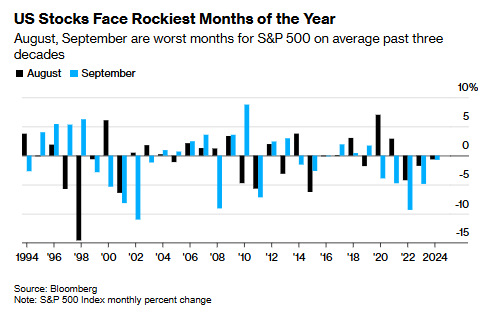
美股又双叒创新高!但“9月魔咒”警报拉响,10%回调倒计时?
智通财经网· 2025-07-22 08:12
Core Viewpoint - Despite significant risks, the U.S. stock market continues to reach new highs, but seasonal trends suggest a potential 7% to 10% pullback at the end of summer, particularly after strong performance from May to July [1][3]. Group 1: Seasonal Trends and Market Performance - Historical data indicates that the U.S. stock market often peaks between July and August, with September being the worst-performing month over the past 50 years [1][3]. - Strong performance from May to July increases the likelihood of a sell-off at the end of summer, while the best gains typically occur from November to May of the following year [1]. Group 2: Risks and Indicators - The imminent August 1 tariff deadline set by President Trump poses a significant risk, as increased tariffs could trigger a trade war and lead to foreign investors selling U.S. financial assets [3]. - Technical indicators have shown signs of excessive optimism in the market, with warnings of overbought conditions emerging again in late June and July [4]. - A notable decline in the advance-decline line on the New York Stock Exchange suggests weakening upward momentum, indicating potential market troubles ahead [7]. Group 3: Market Participation and Valuation Concerns - The current bull market has been characterized by a lack of breadth, with most gains concentrated in 40 to 50 large tech stocks, while over 4,000 other stocks have seen slow growth [9]. - Historical patterns suggest that a severe lack of participation is a typical characteristic of market tops, which may take 5 to 10 years to recover from a downward trend [9]. - The S&P 500 index has previously experienced declines of 8% to 20% following similar levels of put/call option trading [5]. Group 4: Broader Economic Concerns - Concerns about President Trump's health and potential actions against Federal Reserve Chairman Powell could undermine investor confidence and lead to market volatility [11]. - A forecasted weak economic growth of 1% for the first half of 2025 raises the risk of recession and significant stock market declines if trade tensions lead to reduced consumer and business spending [11]. - The current high valuation of the U.S. stock market, nearing historical peaks, suggests that any unexpected issues could result in substantial market downturns [11].
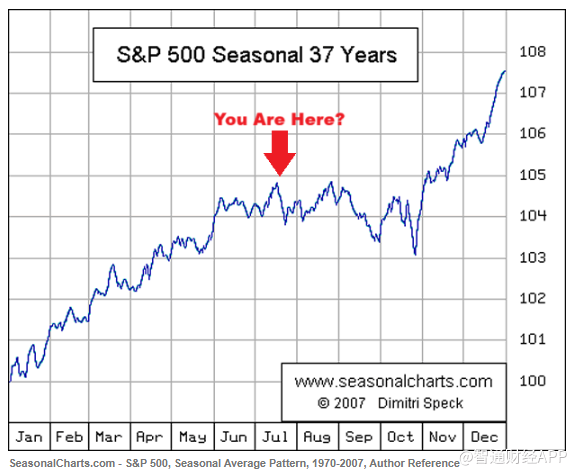
美股前瞻 | 三大股指期货齐跌 比特币创新高
智通财经网· 2025-07-11 11:46
Market Overview - US stock index futures are all down, with Dow futures down 0.62%, S&P 500 futures down 0.59%, and Nasdaq futures down 0.51% [1] - European indices also show declines, with Germany's DAX down 0.91%, UK's FTSE 100 down 0.45%, France's CAC40 down 0.85%, and the Euro Stoxx 50 down 0.95% [2][3] Oil Market - WTI crude oil increased by 1.11% to $67.31 per barrel, while Brent crude oil rose by 0.96% to $69.30 per barrel [3][4] Economic Insights - Thrasher Analytics reports that the volume of declining stocks has reached a low of 42% of total trading volume, indicating potential overconfidence in the market [5] - The upcoming earnings season is expected to be a significant test for the market [5] Federal Reserve Outlook - San Francisco Fed President Mary Daly suggests that two rate cuts this year are still possible, with manageable impacts from tariffs on inflation [5] Liquidity Concerns - The potential rebuilding of the Treasury General Account (TGA) could lead to a liquidity loss of approximately $510 billion by the end of September, impacting market liquidity [5] Oil Demand Forecast - OPEC predicts that global oil demand will continue to rise, projecting an increase from 103.7 million barrels per day last year to 113.3 million barrels per day by 2030, and nearing 123 million barrels per day by 2050 [6] Cryptocurrency Market - Bitcoin has reached a new high of $118,000, driven by strong institutional demand and favorable policies from the Trump administration [7] Company Developments - Apple plans to launch a series of new products in early 2026, including a new low-end iPhone and upgraded Mac computers, aiming to revitalize growth [8] - Tesla has applied to test its Robotaxi service in Arizona, indicating a push to catch up with Waymo in the autonomous vehicle market [9] - BP expects an increase in oil production and strong trading performance in Q2, signaling a positive outlook for the company [10] - SAP's CEO is optimistic about revenue growth driven by customer migration to cloud services, with a focus on deep analytics and data services [11]


