跷跷板效应

Search documents
信用周报:急跌后信用左侧窗口打开?-20250729
China Post Securities· 2025-07-29 07:03
Group 1: Investment Rating - There is no information about the industry investment rating provided in the report. Group 2: Core Views - Last week, the bond market adjusted continuously. Credit bonds experienced an unexpected "steep decline" with larger drops than interest - rate bonds. Affected by the "anti - involution" sentiment, the equity and commodity markets strengthened, causing the bond market to weaken due to the "see - saw" effect. Tightening liquidity in the second half of the week and strong profit - taking in funds and wealth management also contributed to the decline. The central bank's liquidity support on Friday stabilized the bond market temporarily [2][11]. - The adjustment of ultra - long - term credit bonds exceeded that of interest - rate bonds of the same maturity, with the highest adjustment in perpetual and secondary capital (perpetual and Tier 2, "Perp & T2") ultra - long bonds. The yields of AAA/AA + 10Y medium - term notes, AAA/AA + 10Y urban investment bonds, and AAA - 10Y bank Tier 2 capital bonds all increased significantly [3][12]. - The Perp & T2 bond market weakened and showed a "volatility amplifier" characteristic, with the declines of 3Y and above maturities exceeding those of general credit and ultra - long - term credit bonds of the same maturities. The trading sentiment was weak throughout the week, only easing on Friday [4][17]. - The selling intention of ultra - long - term credit bonds was strong, while the buying intention was weak. High - activity trading was mainly concentrated in 3 - 5Y low - quality urban investment bonds and some short - term real estate and financial bonds with flaws [5][22]. - Public funds continued to reduce their credit bond holdings, especially for bonds with maturities over 5 years. However, the turnover rate of 3 - 5Y Perp & T2 bonds increased significantly, indicating a shift to more liquid varieties. The trading value of credit - market - making ETFs decreased by nearly 4 billion, and the growth rate of the trading value of sci - tech innovation bond ETFs slowed down [5][27]. - In the short term, liquidity is still the key strategy. After the steep decline, 3 - 5Y bank Tier 2 capital bonds present certain investment opportunities, and there are also good opportunities for 1 - 3Y low - quality urban investment bond sinking and riding strategies. It is recommended to wait for better entry points for ultra - long - term bonds [5][27]. Group 3: Summary by Directory 1. Bond Market Adjustment and Performance - From July 21 to July 25, 2025, the yields of 1Y - 5Y treasury bonds increased by 3.5BP, 5.5BP, 7.3BP, 7.9BP, and 7.9BP respectively, while the yields of the same - maturity AAA and AA + medium - term notes increased more significantly [11]. - The yields of 10Y AAA/AA + medium - term notes, AAA/AA + urban investment bonds, and AAA - 10Y bank Tier 2 capital bonds increased by 11.99BP, 9.99BP, 11.14BP, 10.14BP, and 14.47BP respectively, while the 10Y treasury bond yield only increased by 6.72BP [3][12]. 2. Curve Shape and Credit Spread Analysis - The steepness of the 1 - 2Y all - grade and 2 - 3Y low - grade curves was the highest, and the steepness was basically the same as that at the end of May. Except for the relatively flat short - end (less than 1 year), the rest of the maturities were at the highest steepness since the current bull market [14]. - The 3Y - 5Y credit spread protection cushion has been strengthened. The yields of 1Y - AAA, 3Y - AAA, 5Y - AAA, 1Y - AA +, 3Y - AA +, 5Y - AA +, 1Y - AA, and 3Y - AA medium - term notes were at the 19.89%, 26.02%, 25.25%, 12.75%, 15.05%, 18.62%, 13.77%, and 17.85% levels since 2024 respectively. The historical quantiles of their credit spreads were 11.14%, 24.66%, 28.64%, 6.89%, 13.52%, 21.48%, 7.69%, and 26.79% respectively [16]. 3. Perp & T2 Bond Market Analysis - The Perp & T2 bond market weakened, and the declines of 3Y and above maturities exceeded those of general credit and ultra - long - term credit bonds of the same maturities. The 1 - 5Y, 7Y, and 10Y AAA - bank Tier 2 capital bond yields increased by 6.73BP, 11.11BP, 13.80BP, 15.27BP, 13.67BP, 14.21BP, and 14.47BP respectively [4][17]. - The trading sentiment was weak throughout the week, only easing on Friday. From July 21 to July 25, the low - valuation trading ratios of Perp & T2 bonds were 4.88%, 7.32%, 0.00%, 0.00%, and 100.00% respectively, and the average trading durations were 0.77 years, 0.63 years, 0.53 years, 0.50 years, and 4.05 years respectively [4][19]. 4. Ultra - long - term Credit Bond Market Analysis - The selling intention of ultra - long - term credit bonds was strong, and the discount trading ratios from July 21 to July 25 were 92.68%, 60.98%, 90.24%, 97.56%, and 65.85% respectively. The discount amplitude was also significant, with some trading at over 5BP [5][22]. - The buying intention of ultra - long - term credit bonds was weak. The low - valuation trading ratios from July 21 to July 25 were 29.27%, 4.88%, 2.44%, 2.44%, and 4.88% respectively, and most of the low - valuation trading amplitudes were within 2BP [5][23]. 5. Institutional Behavior and ETF Analysis - Public funds continued to reduce their credit bond holdings, especially for bonds with maturities over 5 years. However, the turnover rate of 3 - 5Y Perp & T2 bonds increased significantly, indicating a shift to more liquid varieties [5][27]. - Affected by the market adjustment, the trading value of credit - market - making ETFs decreased by nearly 4 billion in a week, and the growth rate of the trading value of sci - tech innovation bond ETFs slowed down, with the subsequent increase in ETFs possibly falling short of expectations [5][27].
6月金融数据解读:企业“跷跷板”效应弱化,带动信贷超季节性回升
Guoxin Securities· 2025-07-15 09:27
Group 1: Financial Data Overview - In June, China's new social financing (社融) reached 4.20 trillion yuan, exceeding the expected 3.71 trillion yuan[2] - New RMB loans amounted to 2.24 trillion yuan, surpassing the forecast of 1.84 trillion yuan[2] - M2 growth year-on-year was 8.3%, slightly above the expected 8.1%[2] Group 2: Private Sector Dynamics - The willingness of the private sector (both enterprises and households) to expand balance sheets has improved, with social financing growth rising to 8.9% year-on-year[5][9] - In June, social financing increased by 900.8 billion yuan compared to the same month last year, with government contributions at 56.3% and credit contributions at 31.6%[5][9] - New loans for enterprises rebounded to historical median levels, with non-financial enterprise loans increasing by 1.77 trillion yuan, a year-on-year increase of 1.4 trillion yuan[11] Group 3: Household Loan Trends - New household loans rose to 597.6 billion yuan, reflecting an increase of 26.7 billion yuan year-on-year, indicating improved household willingness to expand[12] - Short-term household loans increased by 262.1 billion yuan, while medium to long-term loans rose by 335.3 billion yuan, showing resilience in consumer spending[12] Group 4: Government Financing Impact - Government financing continued to dominate new social financing, with an increase of 1.35 trillion yuan in government debt financing, up 503.2 billion yuan year-on-year[17] - The "seesaw effect" between government financing and enterprise loans has weakened, leading to improved enterprise loan growth[11][20] Group 5: Monetary Indicators - Total deposits increased by 3.21 trillion yuan, with M2 growth rebounding to 8.3%[22] - M1 growth rate rose by 2.3 percentage points to 4.6%, indicating enhanced actual currency circulation[23][24]
超2600只个股上涨
第一财经· 2025-07-14 04:08
Core Viewpoint - The A-share market shows mixed performance with the Shanghai Composite Index breaking through the 3500-point level, indicating potential upward momentum in the market [1][10]. Market Performance - As of the midday close on July 14, the Shanghai Composite Index stood at 3525.4 points, up 0.43%, while the Shenzhen Component Index was at 10671.48 points, down 0.23%, and the ChiNext Index at 2190.82 points, down 0.74% [1][2]. - The overall market saw over 2600 stocks rising, indicating a relatively balanced performance between gainers and losers [2]. Sector Performance - The PEEK materials sector led the gains, followed by precious metals, small home appliances, humanoid robots, and the power sector [4]. - Conversely, the diversified financial sector was sluggish, with cultural media and real estate sectors showing weakness [4]. Capital Flow - Main capital inflows were observed in machinery, electrical equipment, and automotive sectors, while outflows were noted in computing, non-bank financials, and media sectors [6]. - Specific stocks such as Siyuan Electric, Greenland Holdings, and Xiangyang Bearing saw net inflows of 8.63 billion, 7.38 billion, and 7.26 billion respectively [7]. - On the outflow side, stocks like Dazhihui, Dongfang Caifu, and BYD faced sell-offs amounting to 11.1 billion, 9.1 billion, and 7.77 billion respectively [8]. Institutional Insights - Analysts suggest that the Shanghai Composite Index's breakout above 3500 points could open further upward space, with long-term funds continuously buying into bank-led dividend sectors [10]. - The market is advised to focus on sector rotation opportunities, particularly in innovative pharmaceuticals, computing power chains, PCB, and solid-state batteries [10]. - Technical analysis highlights the importance of the 3490-point support level for the Shanghai Composite Index, with potential buying opportunities if the index dips [10].






国家队暂停托市!7月12日,下周行情或不容乐观?
Sou Hu Cai Jing· 2025-07-12 22:48
Group 1 - The national team has paused market support, leading to a long upper shadow on the FTSE A50 index, indicating potential downward trends if the market does not rebound significantly next week [1] - The trading volume in the Shanghai and Shenzhen markets exceeded 1.7 trillion, with retail investors entering the market significantly above 3,500 points, resulting in a large outflow of funds totaling 12.9 billion [1] - The banking sector has seen a significant rise, creating a contrasting effect where individual stocks have not followed suit, leading to a "decline in rising" market dynamic [5][3] Group 2 - The Shanghai Composite Index rose by 0.01%, while the Shenzhen Component Index and the ChiNext Index increased by 0.61% and 0.8% respectively, indicating a potential divergence where the Shanghai index may be peaking while the Shenzhen and ChiNext indices could continue to rise [7] - The market has shown a positive trend over the past three weeks, with the Shanghai index's trading volume gradually increasing, while the ChiNext index's volume has been decreasing, suggesting a growing divergence in market dynamics [7]

全球央妈密会,股市要迎来巨资?
Sou Hu Cai Jing· 2025-07-02 11:19
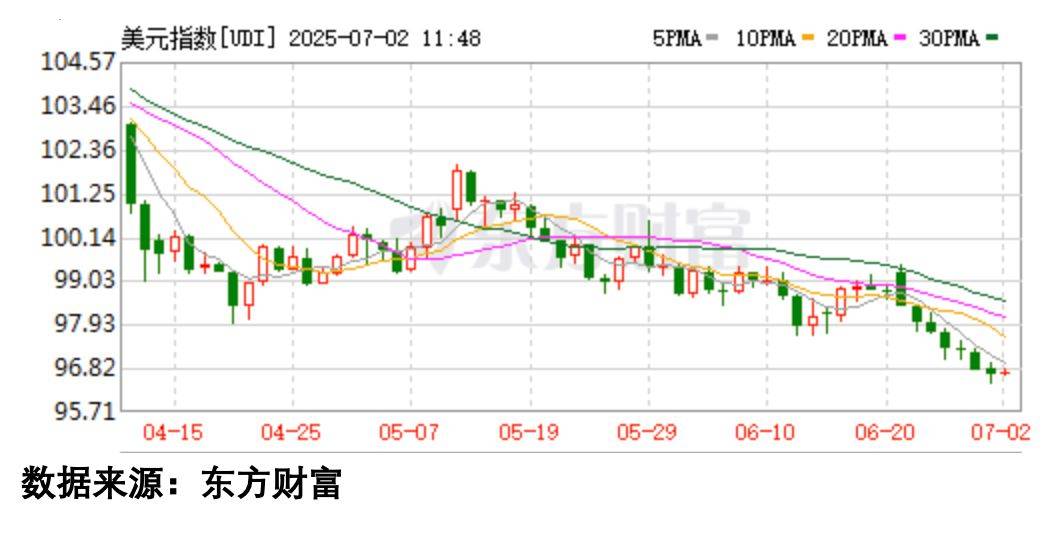
Group 1: Dollar Depreciation and Global Financial Trends - The dollar is expected to depreciate by over 10% in the first half of 2025, marking the largest decline for this period since 1973 [1] - Despite the dollar's depreciation, central bank leaders believe that its status as the world's reserve currency is unlikely to change in the short term, with the dollar accounting for 58% of global foreign exchange reserves compared to 20% for the euro [1] - The market sentiment often diverges from actual performance, as evidenced by the strong performance of the US stock market despite predictions of a declining dollar [3] Group 2: Real Estate Market Concerns - A report from a major overseas bank indicates that real estate demand may decline by an additional 50%, which could significantly impact consumption and investment, given that approximately 60% of wealth is concentrated in real estate [5] Group 3: A-share Market Resilience - A-share market shows signs of resilience, with ETF fund flows shifting from net outflows to net inflows since June 13, indicating that smart money is quietly positioning itself [6] - The relationship between real estate and stock market investments suggests that as real estate becomes less attractive, funds will seek new opportunities in the stock market [8] Group 4: Retail Investor Challenges - Retail investors often fall into cognitive traps, such as equating stock price movements with trading activity, which can lead to misinterpretations of market trends [10] - The phenomenon of institutional buying not leading to stock price increases highlights the importance of trading activity over mere holding volume [10] - In a volatile market, institutions are continuously testing and adjusting their strategies, which can provide insights into the quality of their holdings [12] Group 5: Recommendations for Ordinary Investors - Ordinary investors are advised to focus on building their own investment analysis frameworks and utilizing professional quantitative tools to better understand market dynamics [14] - Emphasizing patience and discipline is crucial in navigating the complexities of the current financial landscape, where valuable data often lies in the details [14]
科技、红利跷跷板显现,如何实现全都要?
2 1 Shi Ji Jing Ji Bao Dao· 2025-06-27 17:28
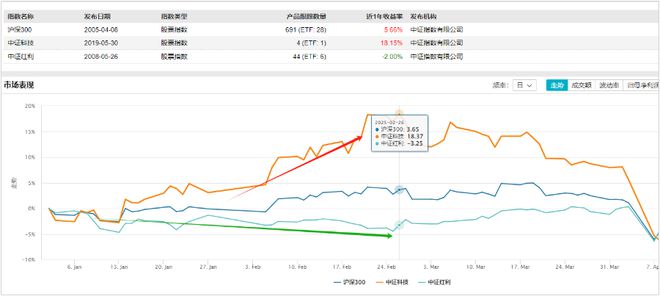
Group 1 - The technology sector is experiencing significant growth, driven by DeepSeek, while the dividend sector is underperforming, creating a "see-saw effect" between the two [2][4] - Technology stocks are characterized by high growth and volatility, while dividend stocks represent low-risk assets with stable cash dividends [5][6][7] - The current market environment suggests that a "barbell strategy" combining both technology and dividend stocks may be an effective approach for investors to manage risk and pursue returns [8][9] Group 2 - The technology sector benefits from economic recovery, technological breakthroughs, and policy support, making it sensitive to market dynamics [7] - Dividend stocks, primarily from traditional industries like banking and coal, serve as a defensive measure in volatile markets due to their high dividend yields [8] - Investors are advised to either engage in rotation strategies or maintain a focus on familiar sectors while considering a combination of dividend and technology stocks to navigate market uncertainties [9]
“跷跷板效应”再现!白酒指数周线三连跌,啤酒股却一直“涨不停”|酒市周报
Mei Ri Jing Ji Xin Wen· 2025-06-02 11:58
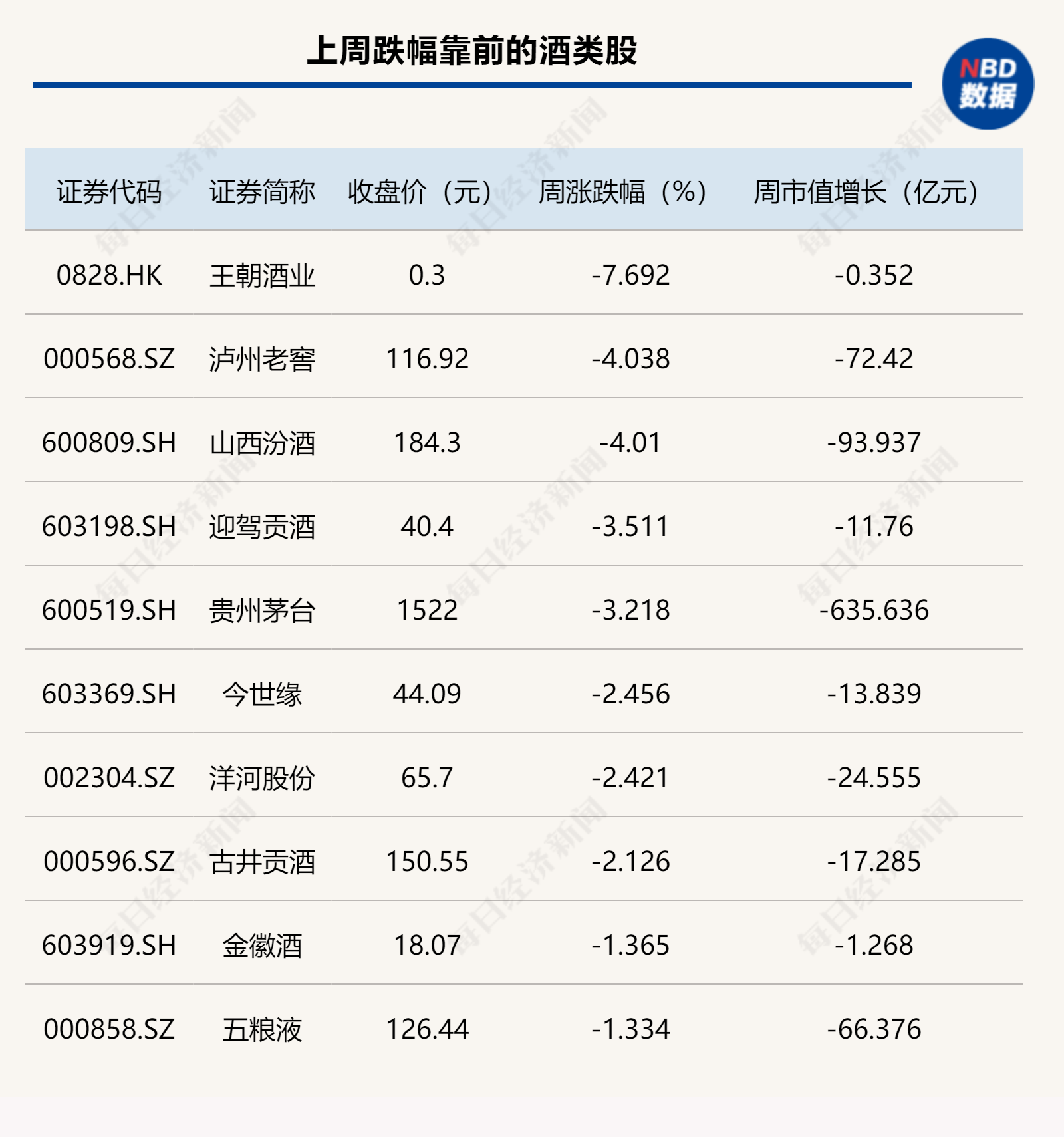
Group 1 - The white liquor sector is experiencing a decline, with the WIND white liquor index showing a weekly drop for three consecutive weeks, while the beer sector is on an upward trend, with all beer stocks achieving gains [1][2] - Major white liquor stocks such as Luzhou Laojiao, Shanxi Fenjiu, and Guizhou Moutai have seen significant weekly declines, with Guizhou Moutai's market value decreasing by 63.6 billion yuan [2][4] - In contrast, the WIND beer index has achieved a four-week winning streak, with a weekly increase of approximately 3.86%, and all beer stocks reporting gains [4][7] Group 2 - The "seesaw effect" between the white liquor and beer sectors has become evident since May, with investors favoring the beer sector during the downturn of the white liquor sector [2][8] - The white liquor index recorded a monthly decline of 2.65% in May, underperforming the food and beverage index, indicating a challenging environment for the white liquor industry [8][9] - High-end liquor companies like Guizhou Moutai and Wuliangye exhibit high gross margins and low marketing expenses, while some regional brands face pressure on profitability due to increased competition and lower brand strength [9]



电池值得追吗?从资金角度找找线索
Hu Xiu· 2025-05-21 11:10
Group 1 - The article discusses the new phase of the U.S.-China confrontation and questions the ongoing support for gold [3][4] - Recently, gold prices have surged by 3% in the domestic market, making it a relatively stable investment option amid market volatility [3][4] - Two driving forces for gold are identified: a short-term factor related to geopolitical tensions and a long-term factor concerning the instability of U.S. dollar assets [4] Group 2 - Short-term factors include potential military actions by Israel against Iran, which have created a sense of insecurity, thus boosting gold and oil prices [4] - Long-term factors highlight the instability of U.S. dollar assets, which have reached high levels after a month of rebound, creating a precarious situation [4] - The current state of U.S.-China relations shows a lack of recent communication, particularly regarding tariff discussions, which may lead to unmet expectations [5]
中概股美股盘前大涨
Sou Hu Cai Jing· 2025-05-12 22:15
一:风险偏好提升。当贸易紧张缓和,经济前景变得明朗。投资者更愿意承担风险。资金,从避险资产(如黄金)流向成长性资产(如科技、新兴市场)。 #换个角度看世界#美股盘前:冰火两重天 市场,风云变幻。前一刻,也许平静。后一刻,已是波涛汹涌。 这种变化,有时发生在盘中。有时,甚至在盘 前,正式交易开始之前。 近日,美股盘前,一场大戏,悄然上演。有人,冲向云霄。有人,跌入深渊。 主角之一。中概股,在美上市的中国公司股票。曾 几何时,备受冷落,甚至质疑。 现在呢?它们,大涨,像沉睡的雄狮,突然惊醒。小鹏汽车,涨幅约8%。阿里巴巴,涨幅约7%。数字跳跃,惊人。 另一 拨科技股,也跟着狂欢。苹果,这样的巨头,也涨了约5%。科技的力量,依然不可小觑。 | U. W. W. T. | | | | | --- | --- | --- | --- | | 証指数 000001 | TEN | 4414980.67 | 250M4436 . 27 | | 456815 | 47102 | | | | 454675 | 460122 | | | | 451759 | 9348092 | | | | 59066103 | | | | | ...