
燕京啤酒U8

Search documents
【光大研究每日速递】20260122
光大证券研究· 2026-01-21 23:07
Group 1: Banking Sector - The "package" loan interest subsidy policy aims to enhance support for small and micro enterprises, with an expected subsidy scale of 100 to 200 billion in 2026, significantly higher than previous scales, which may catalyze a positive market trend for banks [5] Group 2: Real Estate Sector - In 2025, the total land transaction area in 100 cities decreased by 14.2% year-on-year, while the average transaction price increased by 3.4% to 5,605 yuan per square meter; the core 30 cities saw a similar trend with a transaction area decline of 8.7% and an average price increase of 6.4% to 9,404 yuan per square meter [5] - The article indicates that with the gradual clearing of supply-side issues, leading state-owned enterprises in real estate are expected to stabilize and improve their operational performance [5] Group 3: Pharmaceutical Sector - The introduction of price project guidelines is expected to boost the commercialization of domestic surgical robots, which have significant growth potential and low penetration rates; the industry is transitioning from a "consumables-driven" model to a more mature "technology and consumables separation" model [6] Group 4: Company Performance - Ningbo Bank reported a revenue of 71.97 billion, an 8% year-on-year increase, and a net profit of 29.33 billion, up 8.1%, indicating stable growth in revenue and profit for 2025 [7] - Yahua Group's lithium hydroxide business is benefiting from rising lithium prices, with its self-owned mining operations providing dual raw material security; the company is also expanding into solid-state battery technology [8] - Anta Sports reported a stable retail performance in a weak market, with overall retail revenue growth reaching double digits for the year, driven by multiple brands and a global expansion strategy [8] - Yanjing Beer expects a net profit of 1.584 to 1.742 billion, a year-on-year increase of 50% to 65%, supported by land reserve income and product matrix optimization [8]

年度投资策略报告:底部向阳,寻找结构性亮点-20260105
Tai Ping Yang Zheng Quan· 2026-01-05 14:15
Overall Industry Review - The food and beverage sector significantly underperformed the market, with a year-to-date decline of -0.62%, lagging behind the Shanghai Composite Index by 15.0 percentage points [7][11] - The snack sector showed strong performance with a year-to-date increase of 28.88%, driven by channel expansion and a total revenue growth of 30.97% in the first three quarters of 2025 [11] - The beverage sector, particularly soft drinks, benefited from travel demand and low-price, high-frequency consumption, achieving a revenue and profit growth in double digits [11][14] Alcoholic Beverages - The liquor sector exhibited weak performance, with a decline in sales and prices, particularly for white liquor, which saw a year-on-year revenue drop of -5.83% and a net profit decline of -6.93% in the first three quarters of 2025 [11][44] - The overall white liquor sector's revenue decreased by -5.8% and net profit by -6.9% in the first three quarters of 2025, with a significant drop in Q3, where total revenue fell by -18.4% [44] - The report indicates that the white liquor industry is in a prolonged adjustment phase, with the current downturn lasting 57 months, marking the longest adjustment period in history [35][40] Future Outlook - The central economic work conference emphasized the importance of boosting domestic demand in 2026, with expectations for policy support to stimulate recovery [3] - The report suggests focusing on sectors with low bases for recovery, such as frozen foods and beverages, which are expected to benefit from demand recovery and new product opportunities [3][4] - The report highlights the potential for structural opportunities in the food and beverage sector, particularly in overseas markets and cost improvements, recommending companies like Anqi Yeast and Mijiu Group for their overseas expansion strategies [4][34] Investment Strategies - The report identifies four key investment themes for 2026: opportunities in overseas markets, cost benefits, new product launches, and value-for-money consumption [4] - Companies with strong platform capabilities and innovative products, such as Dongpeng Beverage and Wancheng Group, are recommended for their potential in the beverage sector [4] - The report also emphasizes the importance of identifying companies that can adapt to a low-inflation, low-confidence environment by offering high-value products [14]






国泰海通晨报-20251231
国泰海通· 2025-12-31 01:20
Group 1: Computer Research - The report highlights that the company, Electric Science Digital, has established industry-leading capabilities in the digital product business segment, covering intelligent computing hardware and software, and is positioned at the forefront of the digitalization field and new digital infrastructure [2][4] - The core subsidiary, Baifei Electronics, is a leader in domestic embedded computing, benefiting from the rising demand in the special electronic equipment sector, with a rapid increase in orders [4][5] - The future growth potential is significant, driven by AI and the "Xinchuang" initiative, with new orders related to AI exceeding one hundred [4][5] Group 2: Non-Metallic Building Materials Research - The waterproofing industry is noted as the most thoroughly cleared sub-sector within consumer building materials, with leading companies expected to continue implementing price recovery strategies in 2026, indicating a potential recovery in industry profitability [6][8] - The report estimates that the market share of the top four companies in the waterproofing sector will approach 50% by 2024, suggesting a significant increase in industry concentration [8][9] - The report anticipates that the trend of price recovery will become more evident in 2026, supported by low asphalt prices at the beginning of the year [9][10] Group 3: Transportation Research - The report forecasts that the Chinese civil aviation sector will continue to recover in supply and demand in 2025, with expectations of the industry turning profitable [11][29] - Passenger traffic is projected to grow by 5-6% in 2025, with domestic routes increasing by 4% and international routes by over 20% [11][29] - The report indicates that the industry is entering a low growth phase in supply, with a projected 3.7% increase in the fleet size of seven A-share airlines by November 2025 [11][29]


燕京啤酒(000729):盈利能力持续提升,首次季报分红提升股东回报
Tai Ping Yang Zheng Quan· 2025-10-21 14:56
Investment Rating - The report maintains an "Accumulate" rating for Yanjing Beer with a target price of 14.08, compared to the last closing price of 12.49 [1]. Core Insights - Yanjing Beer has shown continuous improvement in profitability, with a significant increase in net profit and a focus on shareholder returns through its first quarterly dividend distribution [6][7]. - The company's revenue for the first three quarters of 2025 reached 134.33 billion, a year-on-year increase of 4.57%, while the net profit attributable to shareholders was 17.70 billion, up 37.45% year-on-year [4][6]. Financial Performance Summary - **Revenue and Profitability**: In Q1-Q3 2025, the company achieved a revenue of 134.33 billion, with a net profit of 17.70 billion, reflecting a year-on-year growth of 4.57% and 37.45% respectively. In Q3 alone, revenue was 48.75 billion, with a net profit of 6.68 billion, marking a year-on-year increase of 1.55% and 26.00% [4][5]. - **Cost and Margin**: The cost per ton decreased to 2030 yuan, down 0.8% year-on-year, with a gross margin of 47.19% for Q1-Q3 2025, an increase of 2.1 percentage points year-on-year. The net profit margin for Q3 reached 16.17%, up 2.8 percentage points year-on-year [6][8]. - **Sales Performance**: The company maintained a trend of increasing sales volume and price, with Q1-Q3 sales volume at 349.52 million tons and price at 3843 yuan per ton, reflecting a year-on-year increase of 1.39% and 3.1% respectively [5][6]. Future Projections - The report projects a revenue growth rate of 4% for 2025-2027, with net profit growth rates of 45%, 18%, and 14% for the respective years. The expected earnings per share (EPS) are 0.54, 0.64, and 0.73 yuan, with corresponding price-to-earnings (PE) ratios of 23x, 20x, and 17x [7][8].
燕京啤酒(000729):三季度行业需求偏弱,公司收入增速放缓、利润延续较高增速
Guoxin Securities· 2025-10-21 09:14
Investment Rating - The investment rating for the company is "Outperform the Market" [6][10][4] Core Views - The company reported a total revenue of 4.87 billion yuan in Q3 2025, a year-on-year increase of 1.5%, and a net profit attributable to shareholders of 670 million yuan, up 26.0% year-on-year [7][10] - Despite a slowdown in total sales growth, the high-end product U8 continues to show strong growth, contributing to an improved product mix [7][9] - The gross margin has continued to improve year-on-year, with a 2.2 percentage point increase in Q3, driven by product mix improvement and lower raw material costs [8][10] Summary by Sections Financial Performance - In Q3 2025, the company achieved a total revenue of 4.87 billion yuan, with a net profit of 670 million yuan, reflecting a year-on-year increase of 26.0% [7][10] - The sales growth rate for beer volume was 0.1% year-on-year, a decrease from 2.0% in H1, primarily due to weak industry demand and regulatory impacts [7][9] - The revenue per thousand liters of beer increased by 1.4% year-on-year, indicating a positive trend in product structure [7][9] Profitability and Cost Management - The gross margin improved by 2.2 percentage points year-on-year in Q3, continuing the trend from the previous two quarters [8][10] - The company has successfully reduced management expenses, with sales, management, and financial expense ratios decreasing year-on-year [8][10] Future Outlook - The company expects stable sales growth in Q4, with continued strong performance from the U8 product line, which is projected to achieve a sales volume of nearly 900,000 tons for the year [9][10] - Long-term profitability is anticipated to improve as the company continues to implement cost reduction and efficiency enhancement measures [9][10] Earnings Forecast - The company has slightly adjusted its revenue forecast for 2025-2027, now expecting revenues of 15.37 billion, 16.22 billion, and 17.14 billion yuan respectively, with year-on-year growth rates of 4.8%, 5.5%, and 5.7% [10][12] - The net profit forecast for the same period is adjusted to 1.57 billion, 1.85 billion, and 2.20 billion yuan, with growth rates of 49.1%, 17.7%, and 18.6% respectively [10][12]
中国酒业如何跨越“冰与火”?这场“武汉会议”,回答时代之问!
Sou Hu Cai Jing· 2025-10-20 16:32
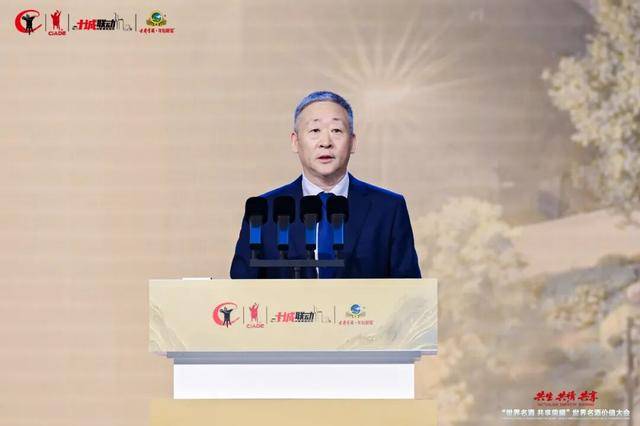
Core Insights - The Chinese liquor industry is at a historical crossroads, facing both challenges and opportunities due to rational consumption trends and the impact of artificial intelligence on industry logic [1] - The "World Famous Wine Value Conference" held in Wuhan addressed key industry questions regarding the redefinition of liquor value, the shift from scale expansion to value creation, and the globalization of Chinese liquor [1] Industry Trends - The global liquor industry is undergoing structural changes, with the high-end and luxury segments leading growth at a compound annual growth rate (CAGR) of 10.3%, particularly driven by the Asia-Pacific region [2] - The Chinese baijiu market is expanding steadily, with a CAGR of 2.3%, showcasing strong industry resilience and cultural roots [2] - Traditional business banquet markets are contracting, while personalized and emotionally connected consumption scenarios are rapidly emerging, emphasizing the need for liquor brands to adopt innovative strategies for differentiation [2] Consumer Behavior - The concept of rational consumption has gained consensus, with consumers prioritizing products that offer a balance of cost-effectiveness, quality, and emotional value [4] - The long-term development of world-famous liquors should focus on the values of "coexistence, empathy, and sharing," integrating industry with nature and society [4][5] Internationalization Challenges - China's baijiu currently holds only a 2.3% share in the international market, highlighting the need for the industry to overcome misconceptions and adopt successful strategies from international wine markets [7] - Recommendations for internationalization include aligning with international standards, innovating products and marketing strategies, and fostering collaboration among industry players [7] Innovation and Strategy - Leading companies are responding to industry changes through innovative practices, such as digital empowerment, cross-industry collaborations, and enhancing consumer experiences [10] - Anhui Gujing Group is leveraging digitalization to enhance traditional brewing processes and is actively promoting baijiu internationally [12] - Luzhou Laojiao is focusing on brand innovation through product diversification and cultural collaborations to connect with younger consumers [14] - Qingdao Beer is enhancing consumer engagement through innovative product offerings and efficient delivery systems [19] Future Directions - The conference outlined a clear roadmap for the future of Chinese liquor, emphasizing the importance of gratitude towards nature, commitment to quality, and deep emotional resonance with consumers [30] - The industry is encouraged to embrace the philosophy of "coexistence, empathy, and sharing" to navigate the challenges ahead and achieve sustainable growth [30]


东海证券晨会纪要-20250822
Donghai Securities· 2025-08-22 05:22
Group 1: Yanjing Beer (000729) - The company reported a revenue of 8.558 billion yuan for H1 2025, representing a year-on-year increase of 6.37%, and a net profit attributable to shareholders of 1.103 billion yuan, up 45.45% [5][6] - The beer business saw revenue of 7.896 billion yuan in H1 2025, with sales volume reaching 2.3517 million kiloliters, a 2.03% increase, and an average price of 3,357.57 yuan per kiloliter, up 4.75% [6][7] - The gross margin for H1 2025 was 45.50%, an increase of 2.14 percentage points, driven by product structure upgrades, while the net profit margin was 12.89%, up 3.47 percentage points [7][8] - The company is expected to continue its growth trajectory, with projected net profits of 1.503 billion, 1.807 billion, and 2.111 billion yuan for 2025, 2026, and 2027, respectively, indicating growth rates of 42.41%, 20.17%, and 16.86% [8] Group 2: Global Smart Glasses Market - The global smart glasses market experienced a 110% year-on-year growth in H1 2025, with expectations of maintaining a compound annual growth rate of over 60% from 2024 to 2029 [10][11] - Meta holds a dominant market share of 73% in the smart glasses sector, with new entrants like Xiaomi and RayNeo accelerating market expansion [10][11] - The AI glasses segment accounted for 78% of total shipments in H1 2025, indicating a strong demand for AI-integrated devices [11] - The introduction of new products, such as HTC's VIVE Eagle and Meta's upcoming "Celeste," is expected to further drive market growth [11] Group 3: Semiconductor Equipment Industry - Domestic semiconductor equipment has achieved breakthroughs with the mass production of 28nm electron beam measurement equipment and the testing of the first commercial electron beam lithography machine [12] - The domestic market for semiconductor electron beam measurement equipment is projected to reach a scale of 2.383 billion USD by 2024, with a 22.46% compound annual growth rate expected from 2024 to 2030 [12] - The first domestically produced commercial electron beam lithography machine, "Xizhi," is designed for quantum chips and new semiconductor devices, achieving processing precision at international mainstream levels [12]
中银晨会聚焦-20250815
Bank of China Securities· 2025-08-15 01:21
Core Insights - The report highlights the strong performance of Yanjing Beer in the first half of 2025, with revenue reaching 8.56 billion yuan, a year-on-year increase of 6.4%, and a net profit attributable to shareholders of 1.04 billion yuan, up 39.9% year-on-year [3][7][9] - The company continues to benefit from structural improvements in its product offerings, particularly the U8 product line, which has shown strong sales growth and contributed to an overall increase in profitability [8][10] Financial Performance - In 1H25, Yanjing Beer sold a total of 2.35 million kiloliters, reflecting a 2.0% increase year-on-year, with a unit price of 3,358 yuan per ton, which is a 4.8% increase year-on-year [8][9] - The second quarter of 2025 saw revenues and net profits of 4.73 billion yuan and 880 million yuan, respectively, representing year-on-year increases of 6.1% and 38.4% [3][7] Cost Management and Profitability - The company's gross profit margin for its beer business improved by 1.0 percentage points to 45.7% in 1H25, while the net profit margin increased by 3.5 percentage points to 12.9% [9][10] - The report notes a significant reduction in sales and management expense ratios, which were 6.0% and 9.2% respectively in 2Q25, down 4.0 percentage points and 1.9 percentage points year-on-year [9] Market Strategy and Future Outlook - Yanjing Beer plans to enhance its market presence by increasing the sales proportion of its U8 product in key markets and expanding into underperforming regions [8][10] - The company is also diversifying its product offerings, with plans to launch new beverages such as Best Soda in 2025, leveraging synergies between beer and soft drink production [10]
燕京啤酒(000729):U8势能延续,利润端表现亮眼
Bank of China Securities· 2025-08-14 01:32
Investment Rating - The report maintains a "Buy" rating for the company, with a market price of RMB 12.51 and an industry rating of "Outperform" [1]. Core Insights - Yanjing Beer has shown impressive performance in the first half of 2025, with revenue of RMB 8.56 billion, a year-on-year increase of 6.4%, and a net profit attributable to shareholders of RMB 1.04 billion, up 39.9% year-on-year. The company's sales volume reached 2.35 million kiloliters, reflecting a 2.0% increase [3][4][7]. - The company's reform benefits are continuously being realized, with improved cost efficiency and sustained high momentum for its flagship product U8. The report anticipates continued growth in profitability [3][4][7]. Summary by Sections Financial Performance - In 1H25, Yanjing Beer reported a revenue of RMB 8.56 billion, with a net profit of RMB 1.04 billion, marking a 39.9% increase year-on-year. The second quarter of 2025 saw revenues of RMB 4.73 billion and a net profit of RMB 0.94 billion, reflecting year-on-year increases of 6.1% and 43.0%, respectively [9]. - The gross profit margin improved to 45.5% in 1H25, up from 43.4% in 1H24, while the net profit margin increased to 12.9% from 9.4% in the same period [9]. Revenue and Profit Forecast - The report projects revenues for 2025 to be RMB 15.43 billion, with a year-on-year growth of 5.2%. The net profit attributable to shareholders is expected to reach RMB 1.51 billion, reflecting a growth of 42.9% [6][12]. - The earnings per share (EPS) is forecasted to be RMB 0.54 for 2025, with a significant increase from previous years [12]. Market Position and Strategy - Yanjing Beer is focusing on enhancing the market share of its U8 product in key markets while also expanding into weaker markets. The company plans to launch new products, including beverages, to diversify its offerings and leverage synergies in production and distribution [7][9]. - The company has shown strong performance in the North China region, with a revenue increase of 5.6%, and is targeting high-growth cities for further market penetration [7].
燕京啤酒(000729):量价齐升超预期,改革红利加速兑现
Haitong Securities International· 2025-08-13 13:32
Investment Rating - The report maintains an "Outperform" rating for Beijing Yanjing Brewery with a target price of Rmb 13.50, based on a current price of Rmb 12.51 [2][13]. Core Insights - The company's performance exceeded expectations, with robust growth in both volume and average selling price (ASP), highlighting operational resilience. In H1 2025, revenue reached Rmb 8.56 billion, a year-on-year increase of 6.4%, while net profit attributable to shareholders was Rmb 1.10 billion, up 45.4% year-on-year [3][10]. - The growth in beer sales volume and ton price was 2.0% and 4.8%, respectively, reaching 2.352 million tons and Rmb 3,358 [3][10]. - The product structure is continuously optimizing, with revenue from mid-to-high-end products increasing by 9.3% year-on-year, now accounting for 70% of total revenue [3][10]. Financial Performance Summary - Revenue and profit forecasts for the company are as follows: - Revenue for 2024 is projected at Rmb 14.67 billion, increasing to Rmb 15.09 billion in 2025, and Rmb 15.28 billion in 2026 [9]. - Net profit is expected to grow from Rmb 1.06 billion in 2024 to Rmb 1.51 billion in 2025, and Rmb 1.69 billion in 2026, reflecting a growth rate of 64% and 43% for the respective years [9]. - The diluted EPS is forecasted to be Rmb 0.37 in 2024, Rmb 0.53 in 2025, and Rmb 0.60 in 2026 [9]. Operational Efficiency - The company has seen a significant improvement in its net profit margin, which rose to 12.9% in H1 2025, with Q2 net profit margin exceeding 19.8% [5][12]. - The gross profit margin for the beer business improved to 45.7%, with overall gross profit margin at 45.5% [5][12]. - The expense ratios for sales and management have decreased, indicating enhanced operational efficiency [5][11]. Strategic Initiatives - The flagship product U8 is expected to achieve an annual sales target of 900,000 tons, contributing significantly to revenue growth [6][13]. - The "beer + beverage" strategy has shown initial success, with tea beverage revenue increasing by 98.7% year-on-year [6][13]. - The company is deepening its "100 cities and 100 counties" project to accelerate market penetration in weaker regions [6][13].