
险资配置

Search documents
险资运用规模突破36万亿,股票投资创新高
Zheng Quan Shi Bao· 2025-08-17 23:09
Core Insights - The total investment balance of insurance companies exceeded 36 trillion yuan, reaching 36.23 trillion yuan by the end of Q2 2025, representing a year-on-year growth of 17.4% [1] - Both life insurance and property insurance companies have seen an increase in stock investment balances and proportions, marking the highest levels since Q2 2022 [1][2] Investment Trends - By the end of Q2 2025, life insurance companies had an investment balance of 32.6 trillion yuan, with stock investments amounting to 2.87 trillion yuan, an increase of over 200 billion yuan from Q1 and over 600 billion yuan since the beginning of the year [1] - The proportion of stock investments in life insurance companies reached 8.81%, up 0.38 percentage points from Q1 and 1.8 percentage points from the same period in 2024 [1] - Property insurance companies also followed a similar trend, with stock investments totaling 195.5 billion yuan and a proportion of 8.33%, increasing by 0.77 percentage points from Q1 and 1.84 percentage points from 2024 [1] Combined Investment in Stocks and Funds - The combined balance of stock and securities investment funds for life and property insurance companies reached 4.73 trillion yuan, a 25% increase from 2024 [2] - Life insurance companies accounted for 4.35 trillion yuan of this total, with a proportion of 13.34% in their overall investment balance, marking a peak since 2023 [2] Bond Investments - By the end of Q2 2025, the total bond investment balance for life and property insurance companies reached 17.87 trillion yuan, an increase of 1.9 trillion yuan since the beginning of the year [2] - Life insurance companies held 16.92 trillion yuan in bonds, representing 51.90% of their total investments, the highest among all investment categories [2] Future Outlook - Analysts suggest that the overall asset allocation structure of insurance companies will remain stable, with the introduction of value-added tax on newly issued government bonds having a limited impact on bond investments [3] - In the long term, under a low-interest-rate environment and policies encouraging long-term funds to enter the market, insurance companies are expected to continue increasing their allocation to equity assets [3]
入市加速!超36万亿险资去向揭晓,股票配置持续升温
Bei Jing Shang Bao· 2025-08-17 13:08
Core Viewpoint - The insurance industry is increasingly focused on asset-liability matching in a low-interest-rate environment, leading to a restructuring of asset allocation strategies, with a notable increase in bond investments and a gradual rise in equity investments [1][3][7]. Group 1: Asset Allocation Trends - As of the end of Q2 2025, the total investment balance of insurance funds exceeded 36.23 trillion yuan, marking a year-on-year growth of 17.39% [3][5]. - Bonds remain the primary asset class for insurance funds, with the proportion of bond investments increasing significantly; for property insurance companies, the bond allocation rose from 33.61% at the end of 2022 to 40.29%, while for life insurance companies, it increased from 41.65% to 51.9% [3][4]. - The current low yield environment has prompted insurance companies to extend the duration of their bond investments to optimize asset-liability management [4][6]. Group 2: Equity Investment Increase - There is a growing demand for equity investments among insurance funds, with life insurance companies holding 2.87 trillion yuan in stocks by the end of Q2, representing 8.81% of their total investment balance, an increase of 0.38 percentage points from Q1 2025 [5][6]. - The number of equity stakes taken by insurance funds has reached 27 this year, with a focus on undervalued sectors such as banking, utilities, energy, and technology, which align with the investment logic of insurance companies [5][7]. - Regulatory changes have facilitated increased equity investment by insurance funds, with policies encouraging long-term capital to enter the market, including a directive for large state-owned insurance companies to allocate 30% of new premiums to A-shares starting in 2025 [7][8]. Group 3: Future Outlook - Industry experts predict that the proportion of bonds in insurance asset allocation will remain high, particularly in a declining interest rate environment, while equity investments are expected to increase steadily [4][7]. - The ongoing policy support and market changes are likely to enhance the appetite for equity investments, with a focus on high-dividend blue-chip stocks and emerging industries aligned with national strategies [7][8].


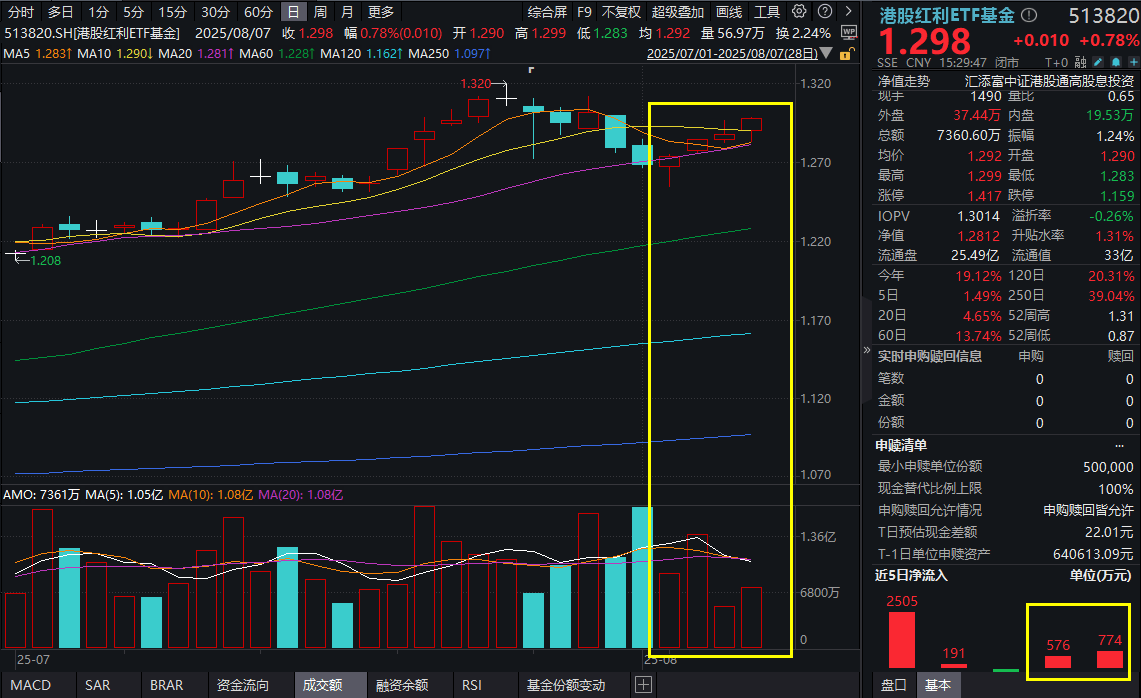
财税新规如何影响红利资产?港股红利ETF基金(513820)喜提四连阳,连续2日获资金净流入!险资“长钱”后续或增配哪些方向?
Sou Hu Cai Jing· 2025-08-07 10:08
Group 1 - The Hong Kong stock market experienced an upward trend on August 7, with the Hong Kong Dividend ETF (513820) rising over 0.78%, marking its fourth consecutive day of gains. The fund saw a net inflow of over 13 million yuan in the last two days [1][3] - Most constituent stocks of the Hong Kong Dividend ETF (513820) performed well, particularly bank stocks, with Agricultural Bank rising over 2%, and other major banks like Bank of China and Industrial and Commercial Bank of China increasing by over 1% [3][4] - The top ten constituent stocks of the Hong Kong Dividend ETF (513820) include various sectors such as transportation, coal, and non-bank financials, with notable performances from companies like Minsheng Bank and China Shenhua [4] Group 2 - A new announcement on August 1 stated that starting from August 8, 2025, interest income from newly issued government bonds, local bonds, and financial bonds will be subject to value-added tax [5] - Analysts from Guotai Junan Securities and Minsheng Securities commented that the tax adjustment is expected to have a limited impact on insurance companies' profits, while potentially increasing the attractiveness of high-dividend assets [6][8] - Insurance companies have shown a preference for high-dividend stocks, particularly in the Hong Kong market, due to factors such as lower valuations and higher dividend yields compared to A-shares [8]
债券利息收入恢复征税 对投资大户险资影响几何?
Di Yi Cai Jing· 2025-08-04 11:57
Core Viewpoint - The recent tax policy change regarding the interest income from newly issued government bonds, local government bonds, and financial bonds is expected to have a limited impact on the investment returns of insurance companies, despite the restoration of value-added tax (VAT) on these bonds [1][3][4]. Tax Policy Changes - As of August 8, 2023, interest income from newly issued government bonds, local government bonds, and financial bonds will be subject to VAT, with rates set at 6% for self-managed institutions and 3% for asset management products [2][3]. - Existing bonds issued before this date will continue to be exempt from VAT until maturity [2]. Impact on Investment Returns - Analysts estimate that the impact on net investment yield and total investment yield will be minimal, with a potential decrease of only 2 to 3 basis points (BP) [1][3]. - The expected decline in yield for insurance companies' bond investments is projected to be around 9.6 BP based on a 6% VAT rate applied to a 10-year government bond with a coupon rate of 1.7% [3]. Long-term Implications - The short-term negative impact on profitability for insurance companies is estimated to be less than 1%, with potential for a slight increase in negative effects as existing bonds mature and are reallocated [4][5]. - The overall influence on the insurance sector's investment strategy is expected to remain limited, as bonds will continue to play a crucial role in asset allocation due to their stability and alignment with liability durations [6][7]. Asset Allocation Trends - Despite the tax changes, bonds are expected to maintain their status as a " ballast" in insurance asset allocation, with a continued focus on long-duration bonds [6]. - There is a potential shift towards equity investments, but this will be influenced by various factors including solvency and market conditions, rather than solely the tax adjustments [7]. Investment Management Strategies - The adjustment in tax policy may enhance the attractiveness of credit bonds and corporate bonds, which have been subject to tax previously, potentially leading to increased allocations in these areas [6]. - The operational structure of asset management products may lead to a preference for external management options due to lower VAT implications, although other factors such as income tax and management fees will also be considered [7].
最新LP梳理系列(五):活跃的险资
FOFWEEKLY· 2025-08-01 10:12
Core Viewpoint - The article provides a comprehensive analysis of the current state and future trends of insurance capital allocation in the private equity sector, highlighting the characteristics, allocation patterns, and recent changes in investment behavior of insurance funds [4][5]. Group 1: Characteristics of Insurance Capital - Insurance capital is characterized by long-term nature, stability, and scale advantages, making it suitable for matching with long-term assets like infrastructure and private equity funds [6][7]. - Insurance funds require stable returns to cover policy costs, leading to a preference for "fixed income +" strategies, indicating low tolerance for IRR volatility [8]. - Insurance capital typically invests in large amounts, often starting from hundreds of millions, and acts as cornerstone LPs in funds, sometimes demanding preferential treatment [10]. Group 2: Overall Asset Allocation of Insurance Capital - As of the end of 2023, the total bond investment reached 11.86 trillion yuan, accounting for 45.36% of insurance assets, while stock and equity investments saw a slight decline of 0.9 percentage points compared to 2022 [12]. - The rapid growth of bonds, public funds, and bank deposits reflects a preference for stable assets among insurance asset management companies [12]. Group 3: Recent Changes in Insurance Capital Investment - Insurance capital has been the most active financial institution in equity investments, with a cumulative investment exceeding 77.7 billion yuan, primarily in collaboration with local governments [15]. - A notable trend is the collaboration among multiple insurance institutions, with nearly 50% of funds having other insurance institutions as LPs [17]. - Recent regulatory changes have increased the upper limit for equity asset allocation, allowing for greater investment in venture capital funds and enhancing the investment landscape for insurance capital [18]. Group 4: Investment Preferences and Characteristics - The top five sectors for insurance capital allocation include information technology, healthcare, electronic information, manufacturing, and enterprise services [21]. - Insurance funds are stringent in selecting GP partners, focusing on risk compatibility, industry expertise, and service responsiveness, with a tendency to invest within the insurance ecosystem [23]. Group 5: Notable Investment Events - Significant investment events in 2025 include: - People's Insurance Capital: 10 billion yuan to Zhongcheng Capital in May 2025 - Pacific Insurance: 9.8 billion yuan to Taibao Capital in May 2025 - AIA Life Insurance: 4.95 billion yuan to Ruikai Investment in June 2025 [25].

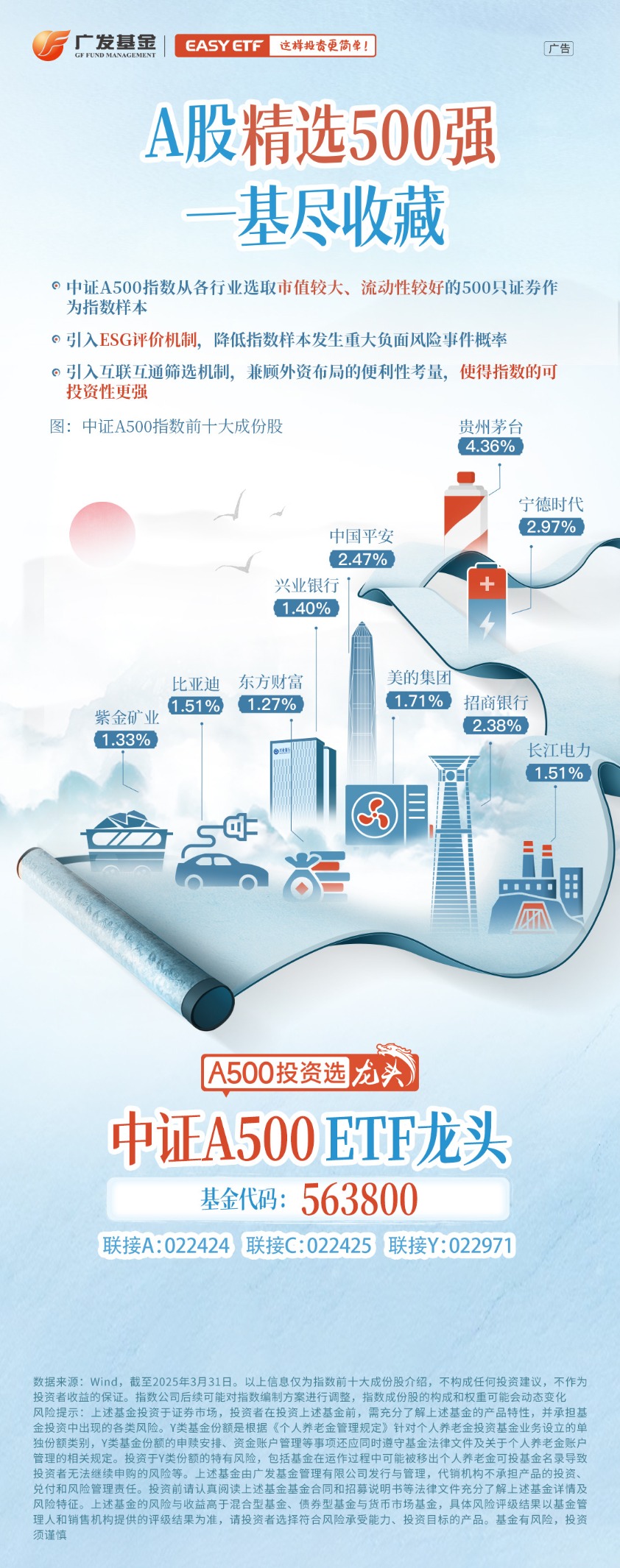
险资有望增配A500指数成分股,中证A500ETF龙头(563800)交投持续活跃
Mei Ri Jing Ji Xin Wen· 2025-05-16 02:38
Group 1 - The financial regulatory authority plans to expand the long-term investment pilot program for insurance funds by approving an additional 60 billion yuan to inject more incremental capital into the market [1] - Adjustments to solvency regulation rules will lower the risk factor for stock investments by 10%, encouraging insurance companies to increase their market participation [1] - Analysts suggest that insurance funds are likely to focus on high dividend, high ROE, and counter-cyclical assets, with a gradual increase in allocation to the CSI A500 index, benefiting from macroeconomic stabilization [1] Group 2 - The CSI A500 ETF (563800) closely tracks the CSI A500 index, selecting 500 stocks that represent industry leaders while balancing large-cap coverage across various sectors [2] - The CSI A500 ETF has seen a growth of 275 million yuan in the past two weeks, indicating strong inflows into core leading broad-based assets [2] - As of May 15, the CSI A500 ETF's latest scale exceeds 19 billion yuan, with an average daily trading volume of over 2.1 billion yuan, ranking it among the top in its category [2]
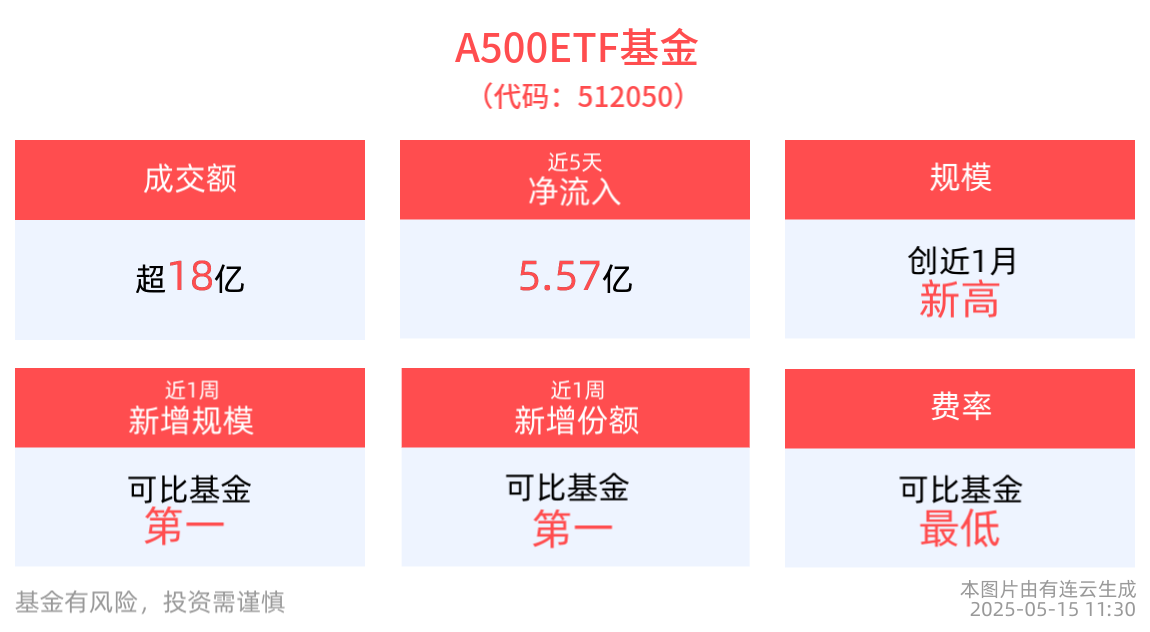
险资政策加码,中证A500指数受关注,A500ETF基金(512050)近5个交易日净流入超5亿元
Sou Hu Cai Jing· 2025-05-15 03:54
Core Viewpoint - The A500 index has shown mixed performance with a slight decline, while the A500 ETF fund has seen significant trading activity and inflows, indicating a potential shift in investment strategies towards long-term holdings in high-dividend and high-ROE assets [3][4]. Group 1: A500 Index Performance - As of May 15, 2025, the A500 index (000510) decreased by 0.72%, with notable gainers including COSCO SHIPPING Development (601866) up 9.96% and Shenghe Resources (600392) up 7.89% [3]. - The A500 ETF fund (512050) also fell by 0.73%, priced at 0.95 yuan, with a trading volume of 18.94 billion yuan and a turnover rate of 10.89% [3]. Group 2: Investment Trends and Regulatory Changes - The head of the Financial Regulatory Bureau announced plans to expand the long-term investment pilot for insurance funds by an additional 60 billion yuan, aiming to inject more capital into the market [3]. - Adjustments to solvency regulations will lower the risk factors for stock investments by 10%, encouraging insurance companies to increase their market participation [3]. Group 3: A500 ETF Fund Details - The A500 ETF fund has reached a new high in scale at 17.496 billion yuan, with a significant increase in shares by 3.66 million over the past week, ranking first among comparable funds [4]. - The fund has seen a net inflow of 458 million yuan recently, with three out of the last five trading days recording net inflows totaling 557 million yuan [4]. Group 4: Top Holdings in A500 Index - As of April 30, 2025, the top ten weighted stocks in the A500 index include Kweichow Moutai (600519), CATL (300750), and Ping An Insurance (601318), collectively accounting for 20.8% of the index [5]. - The weightings of the top stocks are as follows: Kweichow Moutai at 4.28%, CATL at 2.96%, and Ping An at 2.46% [7].





降准又降息!险资又添600亿“新弹药”,路线图详解!数据说话,节后投资主线怎么看?
Sou Hu Cai Jing· 2025-05-07 08:28
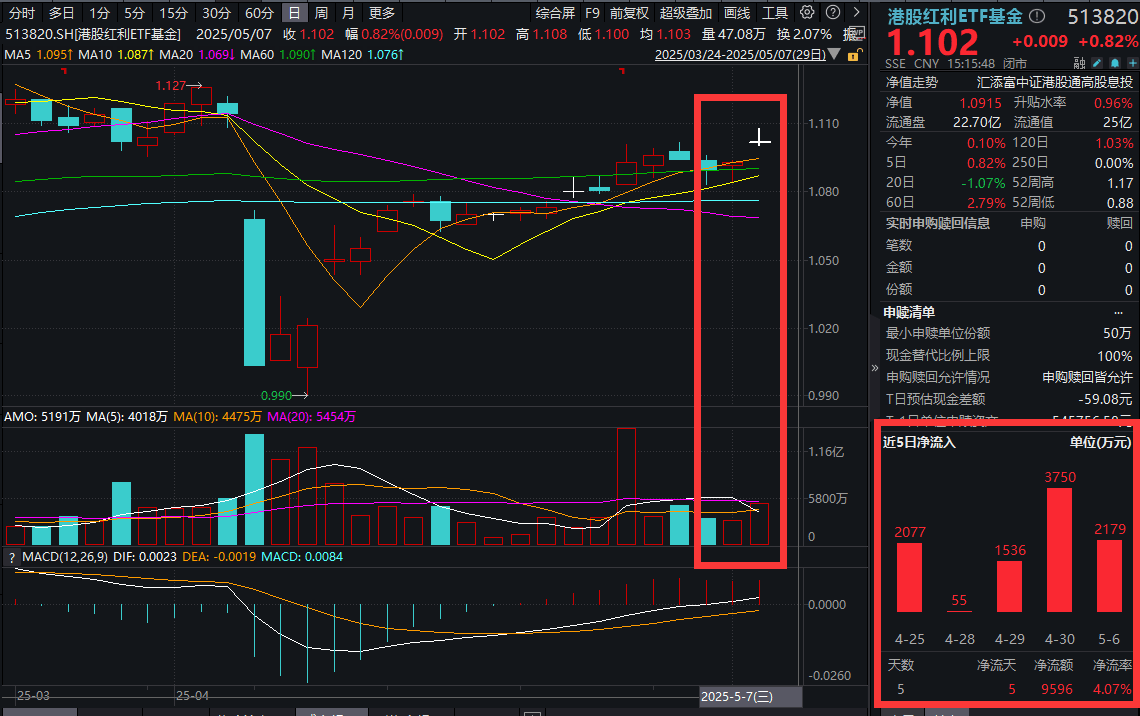
Group 1: Market Performance - The Hong Kong Dividend ETF Fund (513820) saw a volume increase and closed up 0.82%, marking two consecutive days of gains, with funds increasing by over 95 million yuan for five consecutive days [1] - The Bank ETF leader (512820) ended a three-day decline with a 1.42% increase, with a trading volume exceeding 54 million yuan, a 39% increase compared to the previous period [3] Group 2: Insurance Capital Preferences - In 2022, insurance capital initiated a new wave of "stake acquisitions," with eight insurance companies making a total of 20 acquisitions, predominantly targeting dividend assets, particularly the Industrial and Commercial Bank of China H-shares, which exhibit low valuation and high dividend characteristics [5] - In 2023, insurance giants have made 12 stake acquisitions involving 11 stocks, continuing their preference for banks and Hong Kong dividend assets [5] Group 3: Investment Environment - The insurance capital's demand for equity asset allocation has increased due to new regulations aimed at reducing profit volatility and a shift towards flexible dividend insurance products [7] - Policies are strongly supporting insurance capital and other long-term funds entering the market, with a target for large state-owned insurance companies to invest 30% of new premiums in A-shares starting in 2025 [7] Group 4: Dividend Asset Characteristics - High dividend assets are favored in a low-interest-rate environment, as they provide stable returns and lower volatility compared to growth stocks, making them attractive for insurance capital [7] - The Hong Kong dividend assets have a higher cash dividend ratio of 48.9% compared to A-shares at 41.8%, and the dividend yield of the Hong Kong Dividend ETF Fund (513820) is 8.88%, leading the market's mainstream dividend indices [8][9] Group 5: Banking Sector Insights - The banking sector is characterized by high dividends and low valuations, with the Bank ETF leader (512820) showing a dividend yield of 6.71%, the highest among all secondary industry indices [9] - The banking industry is closely tied to macroeconomic growth, and with ongoing policies to stabilize growth, there is potential for improvement in profitability and valuations within the banking sector [10]
2024年险资配置跟踪:利率波动、适时增配长债,关注权益风格轮动
Huachuang Securities· 2025-04-01 14:15
Investment Rating - The industry investment rating is "Recommended" with expectations of exceeding the benchmark index by more than 5% in the next 3-6 months [21]. Core Insights - The report emphasizes the need for insurance companies to adjust their asset allocation strategies in response to interest rate fluctuations, advocating for an increase in long-term bonds and a focus on equity style rotation [2]. - It highlights the shift in asset allocation among listed insurance companies, with a notable increase in the proportion of FVOCI (Fair Value Other Comprehensive Income) assets in their equity investments, aimed at stabilizing net profit [3][8]. - The report also discusses the performance of major insurance companies, predicting a continued focus on dividend strategies to mitigate pressure on net investment returns [7]. Summary by Sections Industry Overview - The total market capitalization of the insurance sector is approximately 27,935.74 billion, with a circulating market value of 19,257.54 billion [4]. - The report notes a mixed performance in the relative index, with a 1-month absolute performance of 2.5% and a 12-month performance of 37.0% [5]. Asset Allocation Trends - Insurance companies have increased their allocation to long-term bonds in response to declining interest rates, with the 10-year government bond yield dropping to 1.68% by the end of 2024 [7]. - The report details the asset allocation changes for major insurance companies, indicating a general trend of increasing bond holdings while adjusting equity positions [7]. Company-Specific Insights - China Life has increased its fund allocation while slightly decreasing its stock proportion, with fixed-income assets rising by 2.7 percentage points to 74.3% [7]. - China Ping An has increased its stock allocation while reducing its fund holdings, with fixed-income assets rising to 76.2% [7]. - China Taiping has also increased its stock allocation, with fixed-income assets now at 82.3% [7]. - New China Life has increased both stock and fund allocations, with equity assets rising to 20.7% [7]. - China Re has increased its stock allocation while reducing funds, with equity assets now at 28.4% [7]. - Sunshine Insurance has increased its stock allocation while maintaining fund levels, with equity assets rising to 23.7% [7]. Performance Forecasts - The report provides earnings per share (EPS) forecasts for major companies, with China Ping An expected to have an EPS of 7.56 in 2025, while China Life is projected at 3.09 [9]. - The price-to-earnings (PE) ratios for these companies are also provided, with China Ping An at 6.83 and China Life at 12.16 for 2025 [9].



保险Ⅱ:低利率时代:海外险资如何应对挑战?
Changjiang Securities· 2025-02-28 02:46
Investment Rating - The industry investment rating is "Positive" and maintained [11] Core Viewpoints - The low interest rate environment poses challenges for insurance companies, leading overseas insurers to extend bond durations and increase equity allocations. In the short term, China's bond market shows a slight shortage of long-term supply, and the current liability structure of insurers is sensitive to net assets, which poses some resistance to increasing equity allocations. However, in the medium to long term, with ongoing policy support for insurance capital market entry and improvements in capital market infrastructure, the willingness and ability of insurers to allocate equity will gradually increase, alleviating investment pressure [2][9][10]. Summary by Sections Impact of Interest Rates on Insurance Companies - The valuation of A-share listed insurance companies is generally aligned with interest rates. Since 2011, the valuation of insurance companies has maintained a consistent relationship with bond yields, with only a few exceptions during specific periods [17][19]. - The decline in interest rates can lead to increased risks of interest spread losses due to duration mismatches, negatively impacting net assets and the intrinsic value of insurance companies [6][24]. Overseas Insurance Asset Allocation Strategies - U.S. insurers have significantly increased their equity allocations from 9.9% in 1980 to 30.8% in 2021, making equities the second-largest asset class after bonds. Additionally, the duration of bonds held by U.S. insurers has been extended, with the proportion of bonds with a remaining term of over 20 years increasing by 4.8 percentage points since 1997 [7][44][57]. - Japanese insurers have also extended bond durations and increased overseas asset allocations, with the overseas allocation rising from 12.8% in 2008 to 25% in 2023 [68]. - South Korean insurers have gradually increased overseas asset allocations from 2.8% in 1999 to 11.6% in 2022, while the bond proportion has decreased from 57.9% in 2013 to 46.2% in 2022 [8][77]. Policy Support for Equity Allocation - Policies encouraging long-term capital market entry are being implemented, aiming to enhance the willingness and ability of insurers to allocate equity. The goal is to have 30% of new insurance premiums invested in the stock market annually, which could potentially increase equity allocation by approximately 295.7 billion yuan if the proportion is adjusted to 60% [9][10][9].