
扩内需

Search documents
【新华解读】21.6%!9月份我国规上工业企业利润增速缘何再加快?
Xin Hua Cai Jing· 2025-10-27 16:21
Core Insights - In September, the profit of large-scale industrial enterprises in China increased by 21.6% year-on-year, marking a 1.2 percentage point acceleration compared to August, with this indicator achieving double-digit growth for two consecutive months [1] Group 1: Profit Growth Factors - The acceleration in profit growth is attributed to a low base effect and a significant increase in industrial production indicators in September [1] - In September 2024, the profit of large-scale industrial enterprises had decreased by 27.1%, which positively impacted the year-on-year growth rate for this year [1] - The industrial added value for large-scale enterprises grew by 6.5% year-on-year in September, an increase of 1.3 percentage points from August [1] Group 2: Price and Profit Margin Trends - The profit margin for large-scale industrial enterprises from January to September was 5.26%, an increase of 0.04 percentage points year-on-year [2] - The decline in prices has slowed, and the recovery in profit margins has also supported the increase in profit growth for September [2] - From January to September, the cumulative profit of large-scale industrial enterprises grew by 3.2%, the highest growth rate since August of the previous year [2] Group 3: Cost and Expense Analysis - The cost per 100 yuan of revenue for large-scale industrial enterprises was 85.56 yuan, an increase of 0.18 yuan year-on-year, while expenses decreased by 0.16 yuan to 8.36 yuan [2] - Companies have managed to offset some cost pressures by reducing expenses during their daily operations [2] Group 4: Future Outlook - Despite positive changes, the recovery of profitability for large-scale industrial enterprises remains fragile, with profits still below the average of the past three years [3] - There is an expectation for policies to address "price stagnation" from both supply and demand sides, with potential for "anti-involution" and "expanding domestic demand" to run concurrently [3] - The profit margin for large-scale industrial enterprises is expected to continue improving in the fourth quarter, with profit growth likely to show a "high first, stable later" trend [3]
中信建投:关注“十五五”规划带来的建筑行业投资和产业变化机会
Zheng Quan Shi Bao Wang· 2025-10-27 00:00
Core Insights - The report from CITIC Construction Investment highlights investment opportunities in the construction sector arising from new directions in the "14th Five-Year Plan" as interpreted from the Fourth Plenary Session and the Central Committee press conference [1] Group 1: Modern Industrial System - The plan emphasizes the construction of a modern industrial system, which includes optimizing traditional industries and developing emerging sectors such as renewable energy, aerospace, and low-altitude economy, as well as future industries like hydrogen and nuclear fusion energy [1] Group 2: Expanding Domestic Demand - There is a focus on maintaining reasonable growth in investments, promoting high-quality construction of "two重" projects, and implementing significant landmark projects to optimize the investment structure [1] Group 3: Regional Coordinated Development - The strategy includes optimizing regional layouts, promoting the construction of "hard connectivity" facilities across regions and river basins, and emphasizing new urbanization and urban renewal, alongside fostering high-quality development of the marine economy [1] Group 4: High-Quality Belt and Road Initiative - The plan aims to enhance the quality of the Belt and Road Initiative, expanding bilateral investment cooperation, which will benefit construction companies that empower new productive forces and transition to emerging industries while participating in expanding domestic demand [1]

274亿元!诸城市前三季度社会消费品零售交出高质量“答卷”
Sou Hu Cai Jing· 2025-10-26 04:02
Core Insights - The "Old for New" consumption promotion series in Shandong aims to enhance consumer engagement by covering eight categories of products, including home appliances and digital products, until December 31, 2025 [2][4] - The initiative combines national and corporate subsidies to stimulate consumer spending and improve product quality and after-sales service [2][5] - The local government is focused on expanding domestic demand and promoting consumption as a key driver for economic growth, with a reported 7% year-on-year increase in retail sales totaling 27.4 billion yuan from January to September [4] Group 1 - The "Old for New" campaign will be implemented in communities, rural areas, and enterprises, ensuring a broad reach [2] - The program emphasizes quality assurance and customer satisfaction in the purchase of home appliances [2] - The local government is leveraging a combination of policy support, market resources, and supply guarantees to enhance the consumption environment [4][5] Group 2 - The campaign aims to activate the home appliance market by encouraging consumers to replace older products with low-carbon, smart alternatives [5] - The launch of Haier's new "Gleaning" air conditioner coincides with the promotion, highlighting the introduction of innovative products [6]


专家谈·“十五五”关键部署绘蓝图 诸多重要提法释放哪些信号?梳理解读↓
Yang Shi Wang· 2025-10-26 03:59
Group 1 - The core objective of the "15th Five-Year Plan" is to achieve significant results in high-quality development, which aligns with the primary task of Chinese-style modernization [3][5] - The plan emphasizes the importance of maintaining a reasonable proportion of the manufacturing industry and constructing a modern industrial system centered on advanced manufacturing [8] - The focus of the "15th Five-Year Plan" is on economic construction, with key areas including technology, new industrial chains, domestic markets, consumption, and people's livelihoods [10] Group 2 - The "15th Five-Year Plan" outlines strategic and innovative measures to build a strong domestic market, accelerate agricultural modernization, enhance social welfare, and promote a comprehensive green transition [12] - The plan highlights the need to combine investments in physical assets and human capital, emphasizing that expanding domestic demand and investing in people are two sides of the same coin [15][17] - The future five years will see a push for high-level opening-up, encouraging high-quality enterprises to enter China while supporting Chinese companies in forming their own industrial chains [20][22] Group 3 - The plan aims to accelerate self-reliance in high-level technology and lead the development of new quality productivity, seizing opportunities from the new round of technological revolution and industrial transformation [30] - It stresses the importance of original innovation and tackling key core technologies, promoting deep integration of technological and industrial innovation [32] - The plan calls for breaking down barriers to market flow and optimizing resource allocation to create a virtuous cycle of demand and supply [39] Group 4 - The plan identifies key areas for technological breakthroughs, particularly in artificial intelligence, quantum computing, and advanced nuclear energy technologies, which are expected to see explosive growth in the next five years [45][49]
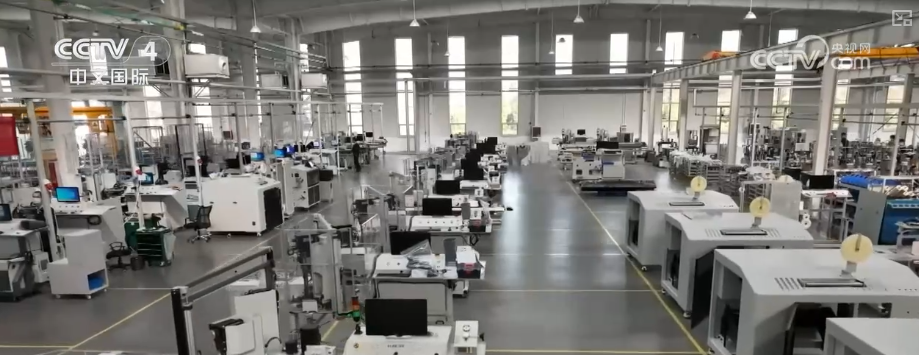
【“十五五”规划建议 未来五年有哪些关键部署?】专家解读:扩内需和投资于人 两方面都特别重要
Yang Shi Wang· 2025-10-25 21:32
Core Viewpoint - The Central Committee's press conference on October 24 emphasized the importance of combining "benefiting people's livelihoods and promoting consumption" with "investing in goods and investing in people" during the 14th Five-Year Plan period [1] Group 1 - The 20th Central Committee's Fourth Plenary Session report highlights that expanding domestic demand and investing in people are two sides of the same coin, both being critically important [1]
稳地产促消费!“十五五”GDP达目标,两招很关键!
Sou Hu Cai Jing· 2025-10-25 10:45
Group 1 - The likelihood of setting a GDP growth target for the "15th Five-Year Plan" is high, as historical trends show that previous plans typically included clear growth targets, except for the "14th Five-Year Plan" due to external shocks and economic uncertainty [3][6][8] - Historical performance indicates that past GDP targets have often been exceeded, providing confidence that the "15th Five-Year Plan" can also achieve its goals [5][6] - The proposed GDP growth target for the "15th Five-Year Plan" is around 4.8%, based on calculations to meet the long-term goal of doubling economic output or per capita income by 2035 [11][13] Group 2 - The economic growth target is expected to be set at approximately 4.8%, which aligns with potential growth estimates considering factors like aging population and external economic pressures [13][24] - The policy direction for achieving the growth target will likely be proactive, focusing on increasing government leverage, expanding domestic demand, and enhancing consumer spending, particularly in services [16][20][22] - Specific measures will include maintaining a fiscal deficit rate around 4%, supporting the real estate market, and promoting service consumption through initiatives like trade-in programs [20][22][24]

300520,垂直20%涨停!超级赛道,尾盘突发异动!什么情况?
中国基金报· 2025-10-23 15:25
Market Overview - The A-share market opened lower on October 23, with the Shanghai Composite Index maintaining above 3900 points and the Shenzhen Component regaining 13000 points in the afternoon. The market turnover fell to 1.66 trillion yuan, marking a new low in two and a half months [4]. Sector Performance - Energy, near-term new stocks, film and television, and quantum technology sectors saw significant gains, while cultivated diamonds, glass fiber, communication equipment, and engineering machinery sectors experienced declines. Quantum technology stocks surged in the last trading minutes, with Keda Guokuan (300520) hitting a 20% limit up [5]. Key Developments - On October 22, Google announced a new algorithm named "Quantum Echo" developed by its quantum computing research team, which can compute molecular structures 13,000 times faster than the best supercomputers [8]. - Major inflows of over 3.2 billion yuan were observed in non-ferrous metals, with coal, media, basic chemicals, and non-bank financials also receiving over 2 billion yuan each. However, the electronics sector saw a net outflow exceeding 6.7 billion yuan [8]. Future Outlook - According to Debon Securities, the reduced trading volume indicates cautious market sentiment, with financial and energy sectors providing support. The focus may shift to the "14th Five-Year Plan" policies, particularly in expanding domestic demand and consumer sectors [9]. - Huajin Securities anticipates that the implementation of the "14th Five-Year Plan" will strengthen the technology sector, benefiting industries such as electronics and robotics, as well as innovative pharmaceuticals and green energy sectors [9]. Company Earnings - Several new stocks reported strong growth in their Q3 earnings. Guangdong Jianke turned a profit in the first three quarters of 2025, while Aifenda reported a net profit of 96.41 million yuan, a year-on-year increase of 11.71% [11]. - Jianfa Zhixin expects a net profit of 200 to 222 million yuan for the first three quarters of 2025, a growth of 30% to 40%, with Q3 results to be disclosed on October 28 [11].


促消费政策显效 企业贷款保持增势 电商物流指数走高 多项数据释放需求端积极信号
Zhong Guo Zheng Quan Bao· 2025-10-21 22:26
Group 1: Economic Indicators - The core Consumer Price Index (CPI) has increased for the fifth consecutive month, with a year-on-year rise of 1% in September, marking the first time in 19 months that the increase has returned to 1% [2] - The narrow gap between narrow money (M1) and broad money (M2) has shrunk to 1.2 percentage points, the lowest this year, indicating improved business activity and personal investment demand [3] - The logistics industry has maintained a positive outlook, with the logistics industry prosperity index at 51.2% in September, reflecting a continuous demand for logistics services [4] Group 2: Consumer Demand and Spending - The rise in core CPI suggests accelerated consumer demand, particularly in quality and upgraded consumption, with notable price increases in sectors such as arts and crafts (14.7%), sports equipment (4%), and nutritional foods (1.8%) [2] - E-commerce logistics have shown strong demand, with the e-commerce logistics index reaching a new high of 112.7 points in September, driven by seasonal consumption and holiday factors [5][6] - The overall consumer market remains stable, with policies aimed at expanding domestic demand and promoting consumption showing positive effects [2] Group 3: Financial Sector and Lending - Corporate loans have shown a positive growth trend, particularly in key sectors like equipment manufacturing and high-tech manufacturing, with a year-on-year increase of 8.2% in medium to long-term loans for the manufacturing sector [3] - Personal credit demand has rebounded, supported by lower interest costs and adjustments in housing purchase policies in major cities, leading to a 7% year-on-year increase in housing transaction volume in September [3] - Financial mechanisms are expected to play a crucial role in stimulating effective demand in the real economy through interest rate adjustments and coordinated market rates [3]
多项数据释放需求端积极信号
Zhong Guo Zheng Quan Bao· 2025-10-21 20:18
Core Economic Indicators - The core Consumer Price Index (CPI) has increased for the fifth consecutive month, with a year-on-year rise of 1% in September, marking the first return to this level in 19 months, indicating effective policies to boost domestic demand and consumption [1] - The narrow "scissors gap" between narrow money (M1) and broad money (M2) has decreased to 1.2 percentage points, the lowest this year, reflecting improved corporate activity and personal investment demand [2] Consumer Demand Trends - There is a notable acceleration in quality and upgraded consumption demand, with prices for certain manufactured goods such as arts and crafts increasing by 14.7% year-on-year in September, indicating a positive shift in supply-demand dynamics [2] - The implementation of personal consumption loan subsidies and adjustments in housing purchase policies in major cities have led to a rebound in personal housing loan demand, with a 7% year-on-year increase in property transaction volume across 30 major cities [3] Logistics and E-commerce Performance - The logistics industry has shown sustained growth, with the logistics industry prosperity index reaching 51.2% in September, indicating a continuous positive trend in social logistics demand [4] - The e-commerce logistics index hit a new high of 112.7 points in September, driven by seasonal consumption factors, with significant increases in both total business volume and rural business volume indices [5]
华源晨会精粹20251021-20251021
Hua Yuan Zheng Quan· 2025-10-21 13:04
Group 1: Construction and Building Materials Industry - The construction and building materials industry is experiencing accelerated investment in major engineering projects, supported by policies aimed at stabilizing growth and expanding domestic demand. In the first three quarters of 2025, fixed asset investment in railway construction reached 593.7 billion yuan, a year-on-year increase of 5.8%, with 968 kilometers of new railway lines put into operation [6][7]. - The Shenyuan Construction Decoration Index fell by 1.67% this week, with sectors such as decoration, engineering consulting services, and steel structures showing positive growth of +3.40%, +2.68%, and +0.72% respectively [8]. - Investment selection in the construction sector is focused on two main lines: high-dividend, low-valuation stocks that may have allocation value, and companies that are accelerating their layout in new industries such as renewable energy and digital construction [9][10]. Group 2: New Consumption Sector - 361 Degrees - 361 Degrees reported a 10% growth in retail sales for its main brand and children's clothing in offline channels, while e-commerce platforms saw a 20% increase in overall sales in Q3 2025, maintaining a rapid growth trend despite industry pressures [12][13]. - The company is enhancing its competitiveness through technological innovation and event sponsorship, with the launch of new products and the revival of the ONEWAY brand, which has opened stores in multiple cities [13][14]. - The company is expected to achieve net profits of 1.315 billion yuan, 1.493 billion yuan, and 1.688 billion yuan from 2025 to 2027, with year-on-year growth rates of 14.50%, 13.49%, and 13.10% respectively [14]. Group 3: Electronics Sector - Sitoway - Sitoway anticipates a revenue of 6.1 to 6.5 billion yuan for the first three quarters of 2025, representing a year-on-year increase of 45% to 54%, with net profit expected to reach 656 to 736 million yuan, a growth of 140% to 169% [16][17]. - The company is leading in mobile business iteration efficiency and has significantly increased the output of automotive electronics, which is expected to become a long-term growth driver [17][18]. - Sitoway's traditional security market share remains strong, while it is also expanding into machine vision applications, maintaining close cooperation with leading clients in the field [18][19].
