扩大内需

Search documents
宏观和大类资产配置周报:本周沪深300指数下跌0.62%
Bank of China Securities· 2026-01-25 00:55
宏观经济 | 证券研究报告 — 总量周报 2026 年 1 月 24 日 宏观和大类资产配置周报 本周沪深 300 指数下跌 0.62% 大类资产配置顺序:股票>大宗>债券>货币。 宏观要闻回顾 资产表现回顾 本周沪深 300 指数下跌 0.62%,沪深 300 股指期货下跌 0.10%;焦煤期货 本周下跌 3.38%,铁矿石主力合约本周下跌 2.82%;余额宝 7 天年化收益 率与上周持平,收于 1.00%;十年国债收益率下行 1BP 至 1.83%,活跃十 年国债期货本周上涨 0.12%。 资产配置建议 2025 年经济增长目标圆满实现,2026 年稳增长需要财政政策和货币政策 协同发力。2025 年我国经济经历了美国关税政策给全球贸易带来的不确 定性冲击,出现了名义 GDP 和实际 GDP 同比增速倒挂的情况,内需对经 济增长前景预期偏弱导致需求疲弱,工业企业利润同比增速整体偏低等情 况,为稳定经济,我国实施了积极的财政政策和适度宽松的货币政策,推 出"两重""两新"政策支持经济转型升级和内需有效释放,落实"反内卷"政 策引导实体经济持续向好发展,最终实现了全年经济增长 5%的目标。2026 年全球经济 ...
大会议案聚焦“提振消费”“园林出海” 作为主席团交由苏州市人大常委会在大会会议闭会后审议决定的代表议案
Su Zhou Ri Bao· 2026-01-25 00:47
Group 1 - The first proposal emphasizes the importance of high-quality supply and boosting consumption as core strategies for expanding effective demand and stabilizing economic recovery in Suzhou [2][3] - The proposal identifies several key issues hindering the release of domestic demand potential, including structural shortages in quality goods and services, insufficient consumer confidence, and inadequate infrastructure [2] - A systematic set of countermeasures is suggested, focusing on enhancing quality supply, improving consumer support systems, optimizing investment structures, and strengthening market linkages [2] Group 2 - The second proposal aims to enhance the international influence of Suzhou's gardens, aligning with national strategies to promote Chinese culture and build a culturally strong province [3][4] - It highlights existing challenges such as insufficient coordination, inconsistent standards, and a lack of talent, which hinder the transformation of Suzhou's gardens from cultural resources to development advantages [3] - Specific actionable recommendations are provided, including promoting garden construction models abroad and extending the aesthetic economic value chain [3][4]
原来如此|让结构自己调:以制度型改革夯实内需根基
Xin Lang Cai Jing· 2026-01-25 00:44
Core Viewpoint - The discussion on China's economic growth often simplifies complex issues into short-term demand problems, neglecting structural characteristics and institutional causes [1] Group 1: Economic Structure and Institutional Reform - The "14th Five-Year Plan" emphasizes expanding domestic demand and boosting consumption while removing barriers to a unified national market [1] - China's economic potential remains, but its release is constrained by institutional friction, affecting resource allocation efficiency across industries and regions [1][2] - Recent reforms have made substantial progress in various areas, such as the relaxation of urban residency restrictions and the establishment of new trading mechanisms for data and technology [2] - Deep-seated obstacles still exist, as GDP as a total indicator embeds industrial structure and regional distribution, which are influenced by social factors like income levels and social security coverage [2] Group 2: Market Mechanisms and Government Role - The Keynesian framework is essential for addressing short-term shocks, but it struggles to explain the complexities of long-term growth dynamics [3] - Local initiatives, such as cross-province medical insurance settlements and reduced business registration times, demonstrate that removing institutional barriers can unleash market vitality [3] - The "14th Five-Year Plan" calls for increasing labor compensation in initial distribution and eliminating hidden barriers in resource acquisition and government procurement [4] - The government should not replace the market in structural adjustments but rather provide institutional support for effective market operation [4][5] Group 3: Future Directions for Reform - The focus should shift from "market failure—government intervention" to "institutional improvement—market activation" to address structural challenges [5][6] - The true essence of reform lies in allowing mechanisms that solve problems to become legalized and normalized, rather than choosing between consumption and investment [6]
省政协十三届常委会第十八次会议在西安召开
Shan Xi Ri Bao· 2026-01-25 00:44
Core Viewpoint - The meeting of the Provincial Political Consultative Conference emphasizes the importance of political leadership and aims to align actions with the major deployment of the "14th Five-Year Plan" for high-quality development and modernization in Shaanxi Province [1][2]. Group 1 - The meeting conveyed the spirit of the 14th Provincial Party Committee's 9th Plenary Session and the Provincial Economic Work Conference, discussing the handling of proposals from the 13th Provincial Political Consultative Conference [1]. - The Provincial Political Consultative Conference plans to strengthen political leadership and unify thoughts and actions towards the mission of becoming a western demonstration area [2]. - The meeting decided to hold the 4th session of the 13th Provincial Political Consultative Conference on January 26, 2026, and reviewed the work summary of various specialized committees for 2025 [2]. Group 2 - The conference aims to provide practical suggestions on major issues such as building a modern industrial system and promoting common prosperity, focusing on expanding domestic demand and enhancing innovation efficiency [2]. - The meeting highlighted the need to innovate the performance of committee members and create a strong atmosphere for publicity [2]. - Emphasis was placed on strengthening discipline and improving meeting conduct to showcase a new image of the Political Consultative Conference's performance [2].
踔厉奋发向前进 笃行实干绘蓝图
Xin Lang Cai Jing· 2026-01-24 14:28
Group 1 - The importance of the "14th Five-Year Plan" is emphasized, focusing on the development of a modern industrial system and strengthening the foundation of the real economy [4][5] - Companies are encouraged to align with national strategies, such as innovation and high-quality development, to contribute to the modernization of the industrial system [4][5] - The logistics sector is highlighted for its role in enhancing domestic and international circulation, which is crucial for economic stability [5] Group 2 - The healthcare sector is urged to improve public health services and integrate traditional medicine into insurance coverage, promoting both health and economic development [6] - The energy sector is focusing on green and intelligent mining practices, aligning local planning with national strategies to enhance energy production [7] - The construction industry is actively working on infrastructure projects, demonstrating commitment to the "14th Five-Year Plan" goals and contributing to modernization efforts [9]
宏观和大类资产配置周报:本周沪深300指数下跌0.62%-20260124
Bank of China Securities· 2026-01-24 13:32
Macro Economic Overview - The report indicates that the Shanghai Composite Index fell by 0.62% this week, with the CSI 300 index futures down by 0.10% [1][12] - The report maintains the asset allocation order as stocks > commodities > bonds > currency [3][4] Economic Growth and Policy Recommendations - The economic growth target for 2025 was successfully achieved, with a GDP growth of 5%. For 2026, a coordinated effort between fiscal and monetary policies is deemed necessary to stabilize growth [2][22] - The report emphasizes the need for the optimization and continuation of existing growth policies, such as the "two new" policies, and suggests increasing institutional openness to solidify China's position in international trade [2][22] Asset Performance - The report notes that the ten-year government bond yield decreased by 1 basis point to 1.83%, while the active ten-year government bond futures rose by 0.12% [1][12] - The report highlights that the commodity futures index increased by 10.07% this week, with specific declines in coking coal and iron ore futures by 3.38% and 2.82%, respectively [1][12] Stock Market Insights - The report identifies that the leading index this week was the CSI 500, which rose by 4.34%, while the lagging index was the SSE 50, which fell by 1.54% [39][40] - It also notes that the construction materials sector led the industry gains with a rise of 9.18%, while the banking sector saw a decline of 2.69% [39][40] Bond Market Analysis - The report states that the ten-year government bond yield is expected to fluctuate around 2%, with a low allocation recommendation for bonds due to potential short-term impacts from stock-bond dynamics [4][44] - The credit spread decreased by 1 basis point to 0.40%, indicating a slight improvement in credit market conditions [44] Commodity Market Trends - The report indicates that the social inventory of construction materials remained stable at 5.84 million tons, while coal inventory at major ports was also stable at 69.39 million tons [28][29] - The report suggests that the implementation of fiscal policies will be crucial for the commodity market's performance in the coming weeks [4][39] Currency and Foreign Exchange - The report notes that the seven-day annualized yield of money market funds, such as Yu'ebao, remained stable at 1.00% [1][12] - The report highlights that the Chinese economy's fundamentals support a wide fluctuation in the exchange rate, maintaining a standard allocation for foreign exchange assets [4]
2026我国吸引外资新观察:支持外资企业参与提振消费行动 深入挖掘服务业引资新增长点
Sou Hu Cai Jing· 2026-01-24 09:18
朱文龙表示:"根据全国外资工作会议有关部署,我们将进一步坚持与地方和企业共商共建、共享共 赢,不断创新投资促进服务方式、不断优化投资促进服务内容、不断提升投资促进服务能力,助力地方 和园区开放型经济发展、帮助内外资企业优化区域生产布局。" 朱文龙还介绍,今年的招商引资活动将更加突出产业鲜明特性,更加契合地方需求。 从来源地看,瑞士、阿联酋、英国实际对华投资分别增长66.8%、27.3%、15.9%(含通过自由港投资数 据)。 近年来,我国引资结构不断优化,"投资中国"金字招牌持续擦亮。2026年,如何推动外资工作固稳促 优?商务部表示,将把稳外资工作与扩大内需、提振消费、科技创新等各项经济工作贯通起来综合施 策,积极支持外资企业参与提振消费行动,深入挖掘服务业引资新增长点,精心打造"投资中国"品牌, 积极促进外资境内再投资和本地化生产。 2026年,投资促进机构、地方政府等也将通过举办各类招商引资活动持续提升外资吸引力。在日前举行 的2026外商投资促进工作交流会上,商务部投资促进事务局国内联络部主任朱文龙表示,在今年投洽会 期间,将积极支持各地市、园区借助投洽会平台举办各具特色的招商引资活动。在中部博览会、 ...
全球邀约·扬州有礼:来扬州,过个有“味”又有“礼”的春节
Xin Lang Cai Jing· 2026-01-24 05:10
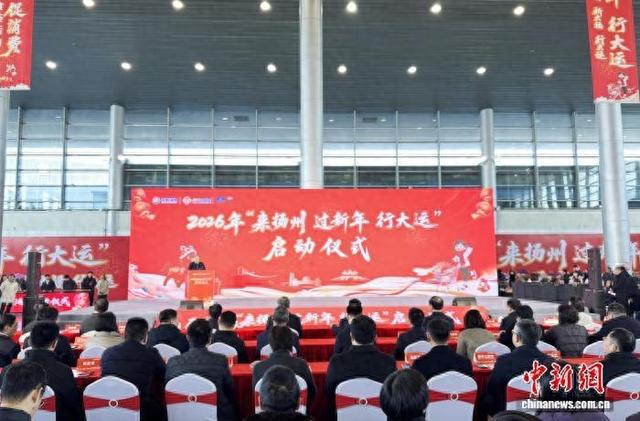
启动仪式同期举办"悦购扬州·年货优品"促消费活动,设置200多个特色摊位,汇集160多家商户,展销 本地特色年货与美食,并推出以旧换新补贴、加油卡充值赠送等福利。现场还通过数字人民币红包发 放,进一步激发消费活力。 1月24日, 2026年"来扬州过新年行大运"系列活动启动。 崔佳明 摄 中新网扬州1月24日电 (徐珊珊 崔佳明)新春将至,年味渐浓。24日,2026年"来扬州过新年行大运"系列 活动在扬州国展中心正式启动,旨在扩大内需、提振消费。扬州市委书记王进健现场化身推荐官,向全 球发出邀请,欢迎来扬州体验新春。 选购年货 的市民现场品尝淮扬美食。 崔佳明 摄 今年扬州围绕"吃、住、行、游、购、娱"推出系列春节活动,包括赶大集、送大礼、看大展、听大戏、 祈大福等。其中"送大礼"环节将发放多种消费券、优惠券、园林券、加油卡及数字人民币红包,为市民 和游客提供实实在在的优惠。 扬州年货 大集,满足市民一站式购齐年货的需求。 崔佳明 摄 展馆内划分多个特色专区,扬州9个县市区集中呈现地方风物:包括高邮的"好事成双"系列产品、蜀冈 —瘦西湖风景名胜区的趣园茶点、邗江区冶春食品、广陵区酒店年菜礼盒、生态科技新城的农 ...

严查地方违规补贴、整顿政府采购秩序,多部委发布会为2026年“反内卷”划重点
Xin Lang Cai Jing· 2026-01-24 04:11
Core Viewpoint - The Chinese government is enhancing its procurement policies to ensure equal treatment of domestic and foreign products, aiming to eliminate discrimination and promote a unified national market by 2026 [2][3]. Group 1: Government Procurement Policy - Starting January 1, 2026, the government procurement policy will officially implement equal treatment for all types of suppliers, prohibiting discrimination based on ownership, organization form, equity structure, investor nationality, or other unreasonable conditions [3]. - The Ministry of Finance has encouraged foreign entities to report any violations of these procurement regulations, emphasizing transparency and fairness in the procurement process [2]. Group 2: Economic Development and Market Competition - The Chinese government is focusing on building a unified national market and addressing "involution" in competition as key tasks for high-quality economic development [3][4]. - Recent data indicates a positive trend in economic indicators, with the core Consumer Price Index (CPI) rising by 1.2% year-on-year in December 2025, and manufacturing profits increasing by 5.0% from the previous year [4][5]. - The government acknowledges existing issues of weak demand and insufficient supply, emphasizing the need to expand domestic demand and optimize supply to achieve a dynamic balance in the economy [5]. Group 3: Regulatory Measures and Market Order - The government plans to implement targeted measures to enhance the effectiveness of the unified market, including refining market operation rules and addressing barriers in procurement and investment [7][8]. - A comprehensive approach will be taken to regulate local government economic promotion behaviors, particularly concerning illegal subsidies and incentives in attracting investments [8]. - The establishment of a clear framework for encouraging and prohibiting local government actions in investment will be prioritized to ensure compliance and fair competition [8].

北方首个,“10万亿俱乐部”再扩容
Mei Ri Jing Ji Xin Wen· 2026-01-24 00:25
Economic Growth in Shandong - Shandong Province is projected to achieve a GDP of 10,319.7 billion yuan in 2025, marking a 5.5% increase from the previous year, making it the third province in China and the first in Northern China to surpass the 10 trillion yuan GDP milestone [1] - By 2025, the primary industry in Shandong is expected to reach an added value of 677.5 billion yuan (up 4.0%), the secondary industry 40,541 billion yuan (up 5.0%), and the tertiary industry 55,881 billion yuan (up 6.1%) [1] Industrial and Economic Indicators - Shandong's industrial added value is anticipated to grow by 7.6%, retail sales of consumer goods by 5.1%, and total foreign trade by 4.5%, all exceeding the national average [3] - The province has faced challenges due to a high reliance on traditional industries, which constituted 70% of its economy, prompting a necessary transition towards modernization and innovation [3] Transition and Development Strategy - The establishment of the Shandong New and Old Kinetic Energy Conversion Comprehensive Experimental Zone in 2018 initiated a dual approach to upgrade traditional industries while fostering new sectors [3] - During the 14th Five-Year Plan period, Shandong's industrial added value increased from 2.3 trillion yuan to 3.3 trillion yuan, reflecting a growth of over 40% [3] - By 2025, advanced production capacity in key industries like steel and petrochemicals is expected to exceed 40%, with high-tech industries accounting for 55.3% of the total output [3] Future Economic Goals - Shandong aims to become a significant economic growth pole in Northern China, with plans to elevate Qingdao to a 2 trillion yuan economy and support cities like Weifang, Linyi, and Jining in reaching the trillion yuan mark [3][4]