
自动化

Search documents
汇川技术: 2025年半年度报告摘要
Zheng Quan Zhi Xing· 2025-08-25 17:19
Core Viewpoint - The company reported significant growth in revenue and net profit for the first half of 2025, driven by strong performance in the new energy vehicle sector and general automation business. Company Overview - Company Name: Shenzhen Inovance Technology Co., Ltd - Stock Code: 300124 - Stock Exchange: Shenzhen Stock Exchange - Total Assets: 60.36 billion yuan, up 5.57% from the previous year - Net Assets: 30.23 billion yuan, up 8.00% from the previous year [1] Financial Performance - Total Revenue: 20.51 billion yuan, an increase of 26.73% year-on-year - Net Profit Attributable to Shareholders: 2.97 billion yuan, up 40.15% year-on-year - Basic Earnings Per Share: 1.10 yuan, a growth of 39.24% year-on-year - Cash Flow from Operating Activities: 3.02 billion yuan, up 65.24% year-on-year [1][2] Business Segments General Automation Business - Revenue: Approximately 8.8 billion yuan, a year-on-year increase of about 17% - Key Products: Variable frequency drives (VFDs), servo systems, PLCs, industrial robots, and precision machinery [6][3] - Growth Drivers: Enhanced marketing network, local service capabilities, and comprehensive product solutions [3][4] New Energy Vehicle Business - Revenue: Approximately 9 billion yuan, a year-on-year increase of about 50% - Key Products: Electric drive systems and power systems [11][6] - Market Expansion: Diverse customer base including domestic and overseas automakers, with significant growth in electric drive assembly products [7][10] Smart Elevator Business - Revenue: Approximately 2.3 billion yuan, a slight decline of about 1% year-on-year - Focus: Exploring opportunities in the elevator stock market and enhancing digital solutions [12][11] Rail Transit Business - Revenue: Approximately 220 million yuan, remaining stable year-on-year - Market Development: Secured multiple orders for urban rail projects and maintenance services [13][12] Future Strategies - Focus on high-growth sectors such as new energy vehicle components, logistics, and precision metal processing [4] - Emphasis on digital transformation and energy management solutions to align with global trends [16][17] - Expansion into overseas markets, particularly in Asia and Europe, leveraging existing product solutions [14][15]


国机重装上半年营收净利润双增 实现合同签约额165亿元
Sou Hu Cai Jing· 2025-08-25 12:40
Core Viewpoint - The company reported significant growth in revenue and net profit for the first half of 2025, driven by strong market expansion and contract signings in various sectors [1][2]. Financial Performance - The company achieved an operating income of 7.073 billion yuan, representing a year-on-year increase of 13.21% [1] - The net profit attributable to shareholders was 242 million yuan, reflecting a growth of 13.37% year-on-year [1] - The total contract signing amount reached 16.502 billion yuan, marking a substantial increase of 43.57% compared to the previous year [1] Business Segments - The company's main business segments include research and development, manufacturing, engineering and services, and investment and operation, primarily serving major technical equipment and infrastructure construction [1] - The nuclear equipment market share has been steadily increasing, with contracts signed for various projects including the Guangxi Bailong nuclear power stabilizer and Shandong Haiyang core water replenishment tank [1] - The pressure vessel market has also seen breakthroughs, with contracts for heavy container projects signed with major companies like CNOOC and Sinopec [1] Market Expansion - The company is actively promoting the "going out" strategy for equipment manufacturing and services, successfully signing three major agreements for the Cambodia Shanda Dai pumped storage power station BOT project [1][2] - The Turkish Safi Port container crane project has also been successfully implemented [1] Industry Context - The heavy machinery industry is currently facing an oversupply and intense competition, with traditional product homogenization leading to declining prices and increased profitability challenges [2] - The company is focusing on green, high-end, intelligent, and automated demands through continuous technological upgrades and effective market expansion to maintain its competitive advantage [2]

物流行业带来机器人行业的第一个爆发时刻
新财富· 2025-08-25 08:19
Core Viewpoint - The logistics industry has a significant demand for automation and unmanned technologies to reduce costs and improve efficiency, especially given the high labor costs associated with logistics operations [1][2]. Summary by Sections Logistics Cost and Automation Demand - In the first half of 2025, China's social logistics total cost as a percentage of GDP was 14%, a decrease of 0.2 percentage points compared to the same period in 2024, saving approximately 130 billion yuan [2]. - The logistics industry, valued in trillions, is actively seeking new technologies to reduce costs, with annual transportation costs reaching hundreds of billions [2]. - The push for automation and unmanned solutions is seen as a key method for cost reduction and efficiency improvement, particularly in a labor-intensive industry where labor costs exceed 50% [2]. Unmanned Vehicle Applications - Unmanned vehicles, including low-speed logistics vehicles and intelligent driving trucks, are crucial for smart logistics, although their current application is mostly in pilot projects due to high technical requirements [2][6]. - The economic viability of L2+ assisted driving in long-haul transportation is emphasized, with potential fuel savings of 7% and a 35% reduction in labor costs [7]. Market Dynamics and Trends - The penetration rate of unmanned vehicles in logistics is currently low, with companies like TuSimple and Embark facing significant challenges, leading to bankruptcies and market exits [6][7]. - Major logistics companies are increasingly investing in unmanned vehicle technology, with significant orders and deployments planned, such as SF Express's investment in unmanned vehicles and partnerships with tech firms [11]. Mobile Robot Advancements - Mobile robots, particularly AMRs (Autonomous Mobile Robots), are leading in commercial applications due to their lower technical complexity compared to unmanned vehicles [13][14]. - The market for AMR solutions is projected to grow significantly, with a compound annual growth rate (CAGR) of 30.6% from 2020 to 2024, reaching a market size of 162.1 billion yuan by 2029 [24]. Competitive Landscape - The AMR market is fragmented, with Geek+ holding the largest market share at 9% in 2024, while overseas markets are becoming a primary growth area for Chinese mobile robot companies [24]. Conclusion - The logistics sector is witnessing a shift towards automation through unmanned vehicles and mobile robots, driven by cost reduction and policy support, marking a significant step towards the industrial application of autonomous technologies [26].

Analog Devices, Inc.:FY2025Q3业绩点评及业绩说明会纪要:工业领域复苏势头强劲,收入及 EPS 均超指引上限
Huachuang Securities· 2025-08-22 12:35
Investment Rating - The report assigns a strong buy rating for Analog Devices, Inc. (ADI) based on its robust performance and growth prospects [2][3]. Core Insights - The company reported revenue of $2.88 billion for FY2025Q3, representing a year-over-year increase of 24.57% and a quarter-over-quarter increase of 9%, exceeding guidance [3][13]. - Adjusted gross margin for FY2025Q3 was 69.2%, with adjusted EPS at $2.05, reflecting a year-over-year increase of 29.75% [3][13]. - All four business segments achieved double-digit growth, indicating strong overall performance [3][4]. Revenue Breakdown - **Industrial Segment**: Revenue of $1.285 billion (45% of total revenue), YoY growth of 22.94%, driven by recovery across all sub-industries and regions, particularly in automated test equipment due to increased AI investments [4][12]. - **Automotive Segment**: Revenue of $850 million (30% of total revenue), YoY growth of 22.45%, supported by leading connectivity and functional safety power solutions [4][18]. - **Communications Segment**: Revenue of $372 million (13% of total revenue), YoY growth of 40.38%, with strong performance in wired and data center businesses due to ongoing AI demand [4][18]. - **Consumer Segment**: Revenue of $372 million (13% of total revenue), YoY growth of 21.17%, benefiting from strong performance in mobile, gaming, audio, and wearable devices [4][18]. Company Guidance - For FY2025Q4, the company expects revenue between $2.9 billion and $3.1 billion, representing a YoY increase of 18.7% to 26.9% [5][16]. - Adjusted EPS is projected to be between $2.12 and $2.32, reflecting a YoY increase of 26.9% to 38.9% [5][16].

华测检测(300012) - 2025年8月22日投资者关系活动记录表
2025-08-22 09:36
Financial Performance - In the first half of 2025, the company achieved a revenue of CNY 2.96 billion, representing a year-on-year growth of 6.05% [2] - The net profit attributable to shareholders was CNY 467 million, up 7.03% year-on-year [2] - The net profit after deducting non-recurring gains and losses was CNY 439 million, reflecting a growth of 9.08% [2] - The net cash flow from operating activities reached CNY 175 million, a significant increase of 686.93% year-on-year [2] Segment Performance - Life Sciences segment revenue was CNY 1.273 billion, growing by 1.11% [3] - Consumer Products Testing segment revenue was CNY 522 million, with a growth of 13.15% [3] - Trade Assurance segment revenue reached CNY 426 million, up 13.48% [3] - Industrial Testing segment revenue was CNY 601 million, reflecting a growth of 7.47% [3] - Pharmaceutical and Medical Services segment revenue was CNY 137 million, with a growth of 1.30% [3] Strategic Initiatives - The company is implementing the "123 Strategy" to enhance service quality and drive innovation [2] - Focus on AI, digitalization, and automation to improve operational efficiency [2] - Continuous investment in talent development to enhance organizational capabilities [2] International Expansion - The company has accelerated its overseas acquisitions, signing contracts in South Africa, Vietnam, and Europe [9] - Plans to increase the proportion of overseas business revenue, which is currently on a growth trajectory [11] - Strategic acquisitions include Openview in Vietnam and Emicert in Europe to enhance compliance certification capabilities [10] Investor Relations - The company maintains a stable and increasing cash dividend policy, with a mid-term dividend of CNY 0.5 per 10 shares announced for the first time this year [8] - Aiming to enhance the stability and predictability of dividends to better reward investors [8] Challenges and Responses - The company is addressing price pressures in the domestic market by optimizing service offerings and reducing reliance on highly competitive sectors [22] - Emphasizing innovation and entering less competitive fields to mitigate pricing pressures [22] Future Outlook - The company expects continued growth across all segments, driven by strategic initiatives and market demand [23] - Focus on enhancing operational efficiency and expanding into high-growth regions like Southeast Asia and Africa [10]

中国日本商会会长答一财:多个日本经济团体计划赴华考察,关注中国创新活力
Di Yi Cai Jing· 2025-08-22 09:22
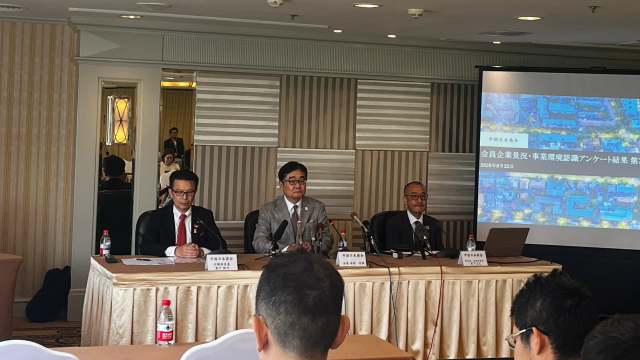
Core Insights - Japanese companies maintain a positive long-term investment outlook in China, with 54% of surveyed firms considering China as one of their top three important markets, an increase of 1 percentage point from the previous survey [1][3] - There is a notable interest from Japanese economic groups in China's innovation capabilities, with plans for multiple delegations to visit China for potential collaboration opportunities [1][3] Investment Intentions - 16% of surveyed companies plan to "significantly increase" or "increase" their investments this year, while 40% intend to maintain their investment levels compared to last year [3] - The most optimistic sectors for investment include household services (38%), non-durable goods (37%), and the steel, non-ferrous metals, and metal products sectors (26%) [3] - Companies expressing intentions to increase investment specifically mentioned plans to invest in startups, enhance R&D, and focus on areas such as artificial intelligence, automation, and solar energy [3] Business Environment Evaluation - 63% of companies reported being "very satisfied" or "satisfied" with the business environment, consistent with the previous survey [4] - The resumption of visa-free policies has led to a significant increase in business travel, and companies can now source necessary components domestically, reducing reliance on imports [4] - The Chinese government plans to expand visa-free access for Japanese citizens starting from November 30, 2024, which is expected to further facilitate personnel exchanges [4] Differentiated Development Trends - Despite the overall positive investment sentiment, 60% of companies reported facing pressure from declining sales prices, with only 28% experiencing revenue growth, a decrease of 6 percentage points from the last survey [5] - The disparity in business performance across different industries and regions is highlighted, with China's GDP being five times that of Japan, indicating dynamic changes in industry evolution and regional development [5] - Companies are advised to adapt to current market conditions by enhancing product value and differentiating designs rather than engaging in price wars, while also taking advantage of lower prices for certain components to reduce manufacturing costs [5]
诺禾致源(688315):业务平稳增长,静待行业回暖,业绩拐点显现
Xinda Securities· 2025-08-22 09:04
Investment Rating - The investment rating for the company is not explicitly stated in the provided documents, but the report indicates a positive outlook on the company's performance and growth potential. Core Viewpoints - The company achieved a revenue of 1.04 billion yuan in the first half of 2025, representing a year-over-year growth of 4.36%. The net profit attributable to the parent company was 78.73 million yuan, with a slight increase of 1.03% year-over-year. However, the non-recurring net profit decreased by 4.52% year-over-year to 62.93 million yuan [1][2]. - The company is experiencing stable growth across its three main business segments, with significant contributions from overseas markets, which accounted for 51.28% of total revenue in the first half of 2025, growing by 6.48% year-over-year [2]. - The company is investing in automation and intelligence to enhance its competitive edge, with increased sales and R&D expenses aimed at product upgrades and market expansion [2]. Financial Performance Summary - The company’s total revenue for 2025 is projected to be 2.314 billion yuan, with a year-over-year growth rate of 9.6%. The net profit attributable to the parent company is expected to reach 221 million yuan, reflecting a growth of 12.3% [3]. - The gross profit margin is forecasted to be around 42.5% for 2025, with a return on equity (ROE) of 8.1% [3]. - Earnings per share (EPS) is projected to be 0.53 yuan for 2025, with a price-to-earnings (P/E) ratio of 30.24 times based on the closing price on August 21, 2025 [3]. Business Segment Performance - The sequencing platform service revenue reached 520 million yuan in the first half of 2025, growing by 6.77% year-over-year. The life sciences basic research service revenue was 354 million yuan, up by 3.19%, while the medical research and technology service revenue was 139 million yuan, with a modest growth of 0.39% [2]. - The company has established a global technical service network with laboratory deployments in key international markets, which is expected to drive future growth as global economic conditions improve [2].

上半年收入78.8亿元 工场店增至7205家:途虎开盘大涨11%
Zheng Quan Shi Bao Wang· 2025-08-22 03:59
Core Viewpoint - Tuhu Car Service demonstrated strong growth in the first half of 2025, with significant increases in revenue and profit, despite challenges in the overall automotive aftermarket [1][2]. Financial Performance - In the first half of 2025, Tuhu achieved revenue of 7.88 billion yuan, a year-on-year increase of 10.5%, marking a return to double-digit growth [2]. - Adjusted net profit reached 410 million yuan, up 14.6% year-on-year, with a net profit margin of 5.2%, indicating improved operational efficiency [2]. - Free cash flow for the period was 350 million yuan, a substantial increase of 32.2%, with total cash reserves exceeding 7.5 billion yuan, providing a solid financial foundation for strategic initiatives [2]. User Growth and Engagement - Tuhu's registered user base surpassed 150 million, reflecting an 18.8% year-on-year growth, while the number of active transaction users reached 26.5 million, up 23.8% [2][3]. - The repurchase rate increased to 64%, and user satisfaction remained above 95%, indicating strong customer loyalty and service quality [3]. Market Expansion and Store Network - As of June 30, 2025, Tuhu operated 7,205 service stores, a net increase of 894 stores, covering 1,855 county-level administrative regions [3]. - The coverage rate in counties with over 20,000 passenger vehicles rose to 70%, showcasing Tuhu's penetration into lower-tier markets [3]. Technological Advancements - Tuhu has integrated AI and automation into its operations, enhancing customer service and supply chain efficiency [4]. - The implementation of an automated retail warehouse in Guangzhou has increased operational efficiency by 2.5 times compared to traditional warehouses, while reducing labor costs by 60% [4][5]. - The logistics delivery rate improved to 83%, with a reduction in fulfillment costs by 0.5 percentage points [5]. Business Segments and Growth Drivers - The fast repair segment saw revenue growth exceeding 60%, with some categories growing over 100%, driven by increased demand due to rising vehicle age [5]. - The new energy vehicle segment also experienced rapid growth, with transaction users increasing by 83.5% to 3.4 million, significantly above the industry average [5].
隐秘的“资源战争”:稀土巨头MP半年涨3倍及背后万亿产业变局
3 6 Ke· 2025-08-22 01:57
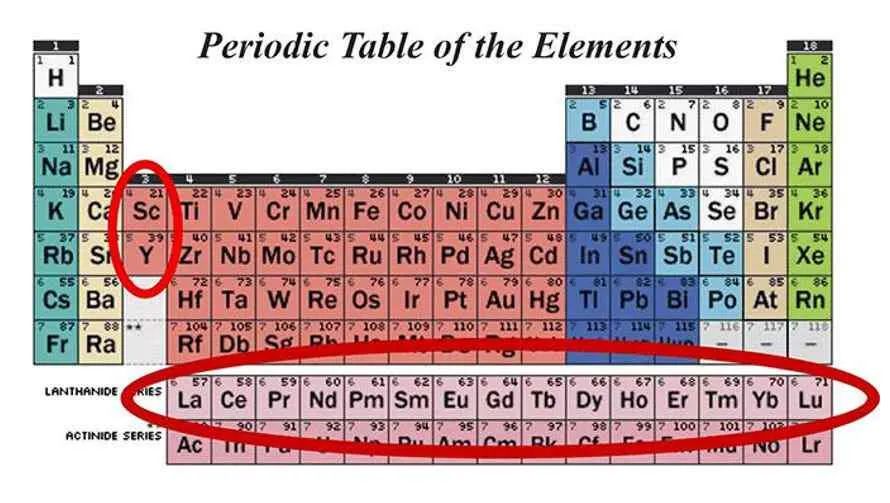
Core Insights - Rare earth elements play a critical role in the global economy and security, driving the clean energy revolution, advancements in artificial intelligence and automation, and increasing national defense needs [1][5][30] - China dominates the rare earth industry not only in mining but also in refining and processing capabilities, controlling the majority of global rare earth processing facilities [1][12][30] - The RockFlow research team identifies MP Materials as the most active rare earth mining company in the U.S., benefiting from government support and significant growth potential [1][20][30] Group 1: Importance of Rare Earth Elements - Rare earth elements, despite their name, are not rare in geological terms but are crucial for modern technology and defense applications [3][5] - They are essential in three key areas: clean energy technologies, robotics and AI, and military applications [5][6][7] - The extraction and processing of rare earths are capital-intensive and environmentally sensitive, leading to a global supply bottleneck [11][12] Group 2: U.S. Supply Chain Challenges - The U.S. has become increasingly aware of its dependence on China for rare earth supplies, prompting efforts to diversify supply chains [15][20] - MP Materials has emerged as a key player in this context, with significant government investment and strategic partnerships [17][24][27] - The U.S. Department of Defense's investment in MP Materials highlights the strategic importance of securing domestic rare earth supply chains [20][24] Group 3: Investment Opportunities - MP Materials is positioned as a leading rare earth producer in North America, with a fully integrated supply chain and government backing [21][27] - Other companies like USA Rare Earth and Ucore Rare Metals are also seen as potential high-growth opportunities in the rare earth sector [25][28][29] - The REMX ETF offers a diversified investment approach in the rare earth and strategic metals space, appealing to investors looking for exposure to this critical industry [26][30]
全球市场紧盯杰克逊霍尔:鲍威尔能否顶住压力|直击华尔街
2 1 Shi Ji Jing Ji Bao Dao· 2025-08-21 13:04
Core Viewpoint - The Jackson Hole Global Central Bank Conference is a significant event that influences global capital flows, focusing this year on the transformation of the labor market amid challenges like aging populations and productivity slowdowns [1][2]. Group 1: Conference Details - The conference will take place from August 21 to 23, gathering central bank leaders, policymakers, economists, and market experts to discuss pressing global economic challenges and policy choices [1]. - The theme of this year's conference is "Labor Market Transformation: Demographics, Productivity, and Macroeconomic Policy," addressing real-world issues such as aging, productivity growth, and the rise of AI and automation [1]. Group 2: Historical Significance - Historically, key statements made at this conference have led to significant market movements, such as Paul Volcker's defense of aggressive rate hikes and Ben Bernanke's hints at quantitative easing during the global financial crisis [2][3]. - The conference serves as a pivotal moment for market direction, with past remarks from Federal Reserve chairs often marking turning points in market trends [3]. Group 3: Current Economic Context - Recent data shows that the U.S. Producer Price Index (PPI) for July exceeded expectations, indicating a potential resurgence of inflation, which has led to a shift in market expectations regarding interest rate cuts [4]. - The Federal Reserve's July meeting minutes revealed that most participants view inflation risks as outweighing employment risks, highlighting internal divisions on the path to interest rate cuts [4]. Group 4: Political Pressure on the Fed - There is increasing political pressure on the Federal Reserve, particularly from the Trump administration, which is advocating for quicker rate cuts, raising concerns about the Fed's independence [5][6]. - The upcoming conference will be closely watched for how Fed Chair Jerome Powell addresses these political pressures and maintains the Fed's credibility [6]. Group 5: Key Investor Focus Areas - Investors should pay attention to three main areas during the conference: 1. The signaling of interest rate paths and whether Powell will downplay expectations for a September rate cut [8]. 2. The impact of tariffs on corporate costs and inflation, particularly how Powell articulates this relationship [8]. 3. The Fed's independence in the face of political noise and how Powell responds to these challenges [8].