量化紧缩

Search documents
黄金大反弹
Shang Hai Zheng Quan Bao· 2025-10-29 15:33
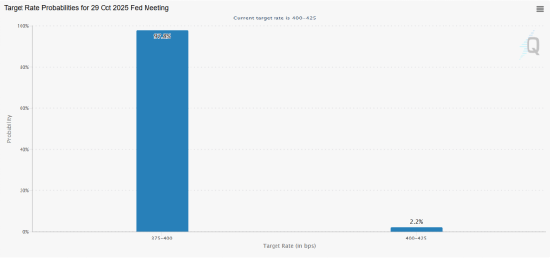
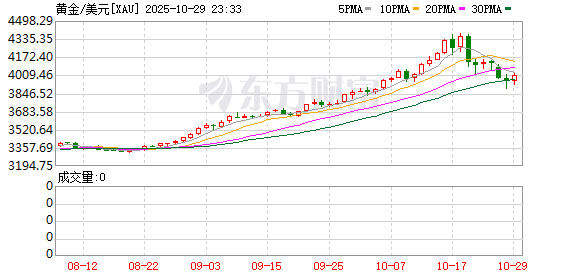
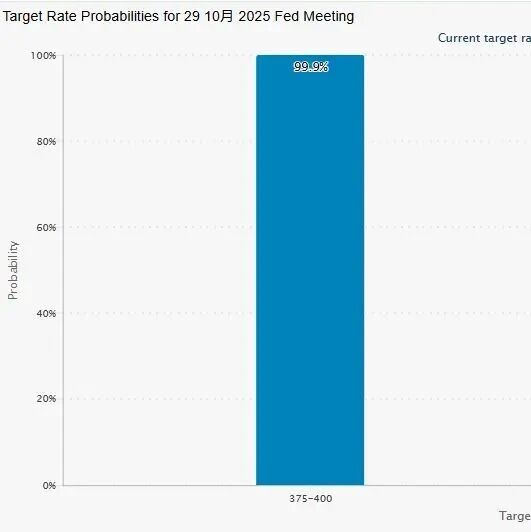
Core Viewpoint - The recent rebound in London gold prices, surpassing the psychological threshold of $4000 per ounce, is attributed to market expectations of a Federal Reserve interest rate cut and the potential end of quantitative tightening, which has led to renewed buying interest in gold [1][3][4]. Group 1: Federal Reserve Actions - The Federal Reserve is expected to announce a 25 basis point rate cut, with a probability of 99.9% according to the CME Fedwatch tool [3]. - There is anticipation that the Fed will end its quantitative tightening, which involves reducing its balance sheet of approximately $6.6 trillion [3][4]. - Market analysts suggest that a shift towards a more dovish monetary policy from the Fed will support gold prices, as it may weaken the dollar and lower the holding costs of gold [4][7]. Group 2: Gold Market Dynamics - Since September, London gold has seen a strong increase of approximately 29%, reaching a historical high of $4381 per ounce on October 20, before experiencing a significant sell-off [4]. - The recent drop below $4000 per ounce was not unexpected, but this level remains a critical psychological barrier for investors [5]. - Analysts indicate that if gold stabilizes around the $4000 mark, it may attract buyers back into the market [5]. Group 3: Long-term Outlook for Gold - Despite short-term pressures, the long-term outlook for gold remains positive, driven by ongoing concerns about inflation and currency devaluation [6][7]. - Historical trends show that gold typically performs well in the early stages of a rate-cutting cycle, and current economic indicators suggest further rate cuts may occur [7]. - The World Gold Council reports that while gold ETF inflows have been strong, total holdings are still below historical peaks, indicating potential for future growth in gold investments [7][9].

美联储今夜必降息?三大终极悬念即将揭晓!
财联社· 2025-10-29 15:31
Core Viewpoint - The Federal Reserve is expected to announce a 25 basis point rate cut during its October meeting, lowering the federal funds rate target range to 3.75%-4% with a 99.9% probability according to market expectations [1][2]. Group 1: Rate Cut Expectations - The market anticipates a rate cut, but there may be internal disagreements within the Fed regarding future monetary policy direction due to a lack of economic data caused by the government shutdown [2][5]. - Fed Chair Jerome Powell has expressed concerns about the labor market, indicating a potential consensus for the rate cut, while private sector data shows a decline in employment [2][3]. Group 2: Inflation Concerns - Despite acknowledging risks in the labor market, some Fed officials remain concerned about inflation, with the core CPI rising 3% year-over-year, exceeding the Fed's target by one percentage point [3][5]. - There is a significant divide within the Fed, with some members advocating for immediate rate cuts while others prefer to wait due to inflation risks [3][5]. Group 3: Economic Data Challenges - The government shutdown has created a data void, complicating the Fed's ability to assess the current economic situation, with only limited CPI data available [6][7]. - Analysts expect Powell to communicate uncertainty regarding future policy paths, especially in light of missing employment data [6][7]. Group 4: Balance Sheet Reduction - A key point of discussion is whether the Fed will officially announce an end to its balance sheet reduction, with major banks predicting this could happen during the meeting [8][11]. - The Fed's decision on balance sheet reduction will be influenced by the level of bank reserves, which have recently fallen below $3 trillion [9][11].

今夜,见证历史!刚刚,暴涨!
券商中国· 2025-10-29 15:01
Core Viewpoint - Nvidia has made history by becoming the first publicly traded company to surpass a market capitalization of $5 trillion, driven by strong revenue signals released during the recent GTC conference, which exceeded market expectations and fueled bullish sentiment in the market [2][4]. Group 1: Nvidia's Market Performance - Nvidia's stock surged over 5%, pushing its total market capitalization to approximately $5.15 trillion (around 36.6 trillion RMB), with a single-day increase of nearly $270 billion (about 1.9 trillion RMB) [4]. - The company achieved this milestone in just 113 days after crossing the $4 trillion mark, compared to 410 days to move from $3 trillion to $4 trillion [4]. Group 2: Revenue Guidance and Analyst Predictions - Nvidia's CEO Jensen Huang indicated a clear visibility towards achieving a cumulative revenue of $500 billion from data center operations between 2025 and 2026, significantly higher than previous market expectations [4][5]. - Goldman Sachs reported that this revenue target is 12% above the market consensus of $447 billion and 10% higher than their own previous forecast of $453 billion [4][5]. - Analysts believe that the improved visibility on long-term revenue is a positive incremental factor for Nvidia's stock price, with potential for further upward adjustments to their forecasts [5][6]. Group 3: Strategic Partnerships and Investments - Nvidia announced a $1 billion equity investment in Nokia, aimed at accelerating the development and deployment of next-generation AI-native mobile networks and related infrastructure [8]. - The company is collaborating with the U.S. Department of Energy to deploy seven new supercomputer systems at Argonne and Los Alamos National Laboratories, with significant GPU allocations for these systems [8]. Group 4: Federal Reserve's Interest Rate Decision - The market is closely watching the Federal Reserve's interest rate decision, with a consensus expectation of a 25 basis point cut, bringing the federal funds rate target range to 3.75% to 4% [10]. - Analysts anticipate that Fed Chair Jerome Powell may provide insights into future monetary policy directions during the press conference following the rate announcement [10][11].

Homebuyers "Coming Off the Sidelines," Fed's Tone & CapEx Key in Mag 7 Earnings
Youtube· 2025-10-29 14:30
Housing Market Insights - Pending home sales remained flat at 0% for the month, contrary to market expectations of a 1.6% increase, although the previous month's figure was revised up from 4% to 4.2% [2][3] - Mortgage rates have been decreasing, yet there is a notable increase in contract cancellations, reaching the highest level since 2008, which may be reflected in the current pending home sales [3] - Refinance activity has surged, with a week-over-week increase of 9% and a year-over-year increase of 111%, indicating that lower rates are encouraging homeowners to access equity [5] Mortgage Applications - Total mortgage applications increased by 7.1% week-over-week, with purchase applications rising by 5%, marking a 20% increase year-over-year [5] - The refinancing trend is currently leading the market, but there is potential for first-time home buyers to enter as supply increases and rates continue to decline [6] Federal Reserve and Interest Rates - The market anticipates a 25 basis point rate cut in the upcoming Federal Reserve meeting, with another expected in December [8][9] - Concerns exist regarding the rising unemployment rate and persistent inflation, which may influence the Fed's decisions on rate cuts and quantitative tightening [10] Treasury and Mortgage-Backed Securities - The Fed is currently running off approximately $5 billion in Treasuries monthly, which is a small fraction of typical auction sizes, but is rolling off $30 billion in mortgage-backed securities, which could impact rates if the policy changes [11][12] Earnings Expectations - Major companies like Meta, Microsoft, and Alphabet are expected to report significant capital expenditure increases, with a focus on how they will monetize artificial intelligence projects [15][17] - Meta's ability to generate cash flow and its future spending plans are seen as potential risks, while Alphabet is viewed as well-positioned in the current market environment [17][19]

投资者盼望利率决定落地 中长期美债收益率小幅上扬
Sou Hu Cai Jing· 2025-10-29 13:24
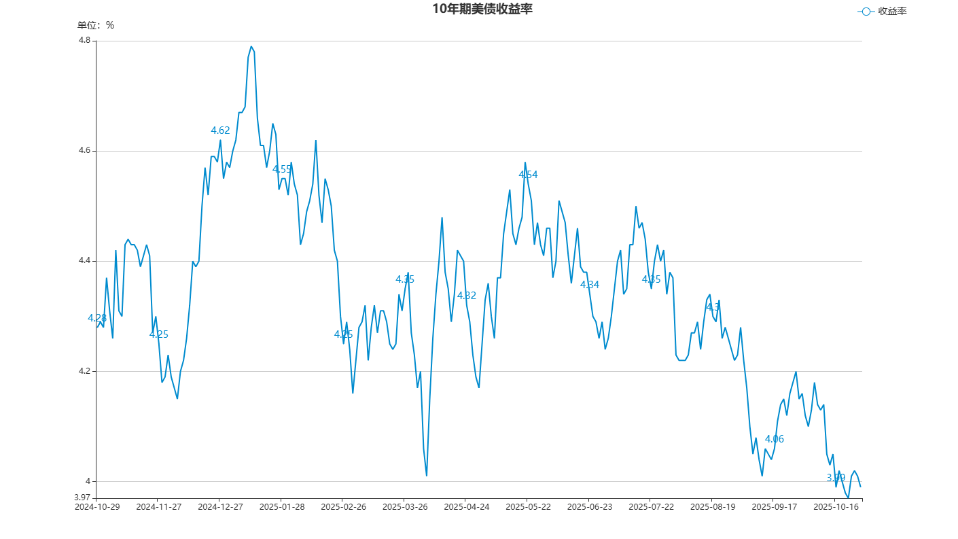
Group 1 - US Treasury yields saw a slight increase as investors await the Federal Reserve's interest rate decision and potential signals regarding balance sheet reduction [1][3] - The 2-year Treasury yield rose by 0.4 basis points to 3.498%, the 10-year yield increased by 0.6 basis points to 3.989%, and the 30-year yield went up by 0.9 basis points to 4.556% [1] - The market anticipates a nearly 100% chance of a 25 basis point rate cut by the Federal Reserve, bringing the target range to 3.75% to 4% [3] Group 2 - The Mortgage Bankers Association reported a 7.1% increase in mortgage applications, with mortgage rates falling to their lowest level in over a year [3] - The average contract rate for a 30-year fixed mortgage with a balance of $800,000 or less decreased from 6.37% to 6.30% [3] - Refinance demand surged by 9% week-over-week, up 111% compared to the same period last year [3] Group 3 - Analysts expect the Federal Reserve to announce the end of quantitative tightening (QT) soon, with indications that reserve levels may have reached a sufficient point [4][5] - Deutsche Bank analysts noted that the government shutdown has hindered the Fed's ability to track economic data, impacting the focus of upcoming communications [3][4] - The European Central Bank reported a tightening of corporate credit in the Eurozone, particularly among German banks due to economic uncertainties [6] Group 4 - The Nikkei 225 index in Japan rose by 2.17%, reaching a historical high, driven by optimism surrounding US-Japan trade relations and the Fed's anticipated rate cut [8] - Japanese government bond yields mostly increased, with the 2-year yield rising by 1 basis point to 0.947% and the 10-year yield increasing by 1.5 basis points to 1.659% [10]
巴克莱:股市将出现“年末涨势”,整体市场环境对股市进一步上涨构成有利支撑
Ge Long Hui A P P· 2025-10-29 13:20
Core Viewpoint - Barclays anticipates a year-end rally in the stock market due to several factors including cleaner market positioning, seasonal positive influences, resilient corporate earnings, the resumption of share buybacks, and the potential early end to quantitative tightening [1] Group 1 - Market positioning has returned to neutral levels following a correction in October, establishing a healthier foundation for the market [1] - Strong capital inflows in the U.S. market are expected to continue, while sentiment in the EU and UK markets is also improving [1] - Funds chasing corporate performance are likely to favor cyclical stocks as the year-end approaches, creating a favorable environment for further market gains [1]
印钞机引擎预热:美联储放弃紧缩,为下一场资产泡沫铺路?
Hua Er Jie Jian Wen· 2025-10-29 13:02
Core Insights - The Federal Reserve is signaling a potential early end to its quantitative tightening (QT) policy, with Chairman Powell indicating that the reduction of the balance sheet may stop when reserves are slightly above what is deemed sufficient [1][2] - Analysts suggest a clear policy roadmap: interest rate cuts are currently happening, followed by the cessation of QT, and potentially a new round of quantitative easing (QE) starting in early 2026 [1][2] Economic Pressures - The U.S. job market is showing signs of distress, with companies announcing 946,426 layoffs this year, a 55% increase compared to the same period in 2024, marking the highest level since 2020 [2] - The housing market is under significant pressure, with searches for "mortgage assistance" reaching their highest level since the 2008 financial crisis, and current mortgage rates at approximately 6.3%, more than double the 3% rates locked in by many homeowners during 2020-2021 [2] Balance Sheet Status - The Federal Reserve's balance sheet remains far from normal levels, currently at $6.6 trillion, down only $2.2 trillion since the start of QT in June 2022, which is only a 27% reduction from pre-pandemic levels of about $4 trillion [3][6] - Powell's comments suggest a new "normal" for the balance sheet, which is 60% higher than pre-pandemic levels, indicating a shift in expectations for future monetary policy [6] QE Implications - The potential restart of QE from a high balance sheet level of $6.6 trillion, rather than a more normalized $4 trillion, could lead to double-digit inflation, as the system is still saturated with liquidity from the pandemic [7] - Investors may need to prepare for high inflation and new asset price volatility as the Fed's monetary expansion resumes [7]
美联储今夜必降息?三大终极悬念即将揭晓
凤凰网财经· 2025-10-29 12:09
Core Viewpoint - The Federal Reserve is expected to announce a 25 basis point rate cut during its October meeting, lowering the federal funds rate target range to 3.75%-4% with a 99.9% probability according to market expectations [1][3][4] Group 1: Rate Cut Expectations - The market anticipates a rate cut, but there are internal divisions within the Federal Reserve regarding future monetary policy direction due to a lack of economic data caused by the government shutdown [3][4] - Analysts expect that the Fed will provide more guidance on future policy directions during the press conference, particularly regarding employment risks and inflation pressures [4][8] Group 2: Economic Data and Labor Market - Recent private sector data indicates a decline in private sector jobs, with ADP reporting a loss of 32,000 jobs in September, reflecting a weakening labor market [4][8] - Despite acknowledging risks in the labor market, some Fed officials express concerns about inflation, with the core CPI rising 3% year-on-year, exceeding the Fed's target by one percentage point [4][9] Group 3: Balance Sheet and Quantitative Tightening - There is speculation that the Fed may announce an end to its balance sheet reduction (quantitative tightening) during this meeting, as recent trends show a decline in bank reserves [10][13] - Major banks like JPMorgan and Bank of America have adjusted their forecasts, suggesting that the Fed may halt its asset reduction process due to rising borrowing costs in the dollar financing market [10][15]
美联储即将退出“疫情救市模式”,9万亿缩表工程如何软着陆?
美股研究社· 2025-10-29 10:34
Core Viewpoint - The Federal Reserve is set to conclude its quantitative tightening program, marking the end of large-scale financial market interventions initiated in March 2020 due to the COVID-19 pandemic. The Fed aims for the market to operate independently while returning to traditional interest rate tools to stimulate or cool the economy [5][6]. Summary by Sections Quantitative Easing and Tightening - To counter the economic impact of the pandemic, the Federal Reserve implemented quantitative easing, purchasing trillions of dollars in securities to maintain low long-term interest rates, which expanded its balance sheet to nearly $9 trillion. Since 2022, the Fed has reversed these measures through quantitative tightening, reducing its balance sheet by $2.2 trillion [6]. Bank Reserves and Economic Signals - The Fed intends to reduce bank reserves from "ample" to "adequate," but determining the end point for quantitative tightening remains challenging. Currently, bank reserves account for about 10% of nominal GDP. The Fed is cautious to avoid a repeat of the 2007-2009 financial crisis, where a significant drop in bank reserves led to market volatility [7]. Market Reactions and Future Expectations - Experts suggest that the end of quantitative tightening may be interpreted by the market as a sign of the Fed's intention to boost the economy. Some traders might view this as another economic stimulus measure [7][8]. Concerns Over Liquidity - There are warnings that the current state of the money market indicates the Fed may be repeating past mistakes of excessive liquidity withdrawal. Some analysts argue that the Fed has allowed too much reserve to dissipate and should resume purchasing Treasury securities to replenish market liquidity [8]. Future Monetary Policy - The Fed has indicated that it does not currently see the need to increase its securities purchases, with predictions that it will not expand its balance sheet before the end of 2026. However, it will monitor year-end financing costs closely to respond to market pressures if necessary [8][9]. Caution in Future Interventions - The Fed's experience with previous rounds of bond purchases has made it more cautious about using quantitative easing as a monetary policy tool. Critics argue that such interventions leave a significant footprint in financial markets. The Fed is unlikely to face a situation requiring a return to quantitative easing in the foreseeable future, as current economic conditions are more likely to present inflationary pressures rather than deflationary ones [9].

FOMC会议前瞻:美联储将降息,但鲍威尔会结束缩表吗?
Sou Hu Cai Jing· 2025-10-29 09:35
Core Points - The Federal Open Market Committee (FOMC) is expected to conclude its meeting on October 29, 2025, with a press conference by Chairman Powell at 2:30 PM ET [1] - Traders and economists are highly confident that the Federal Reserve will lower interest rates to a range of 3.75-4.00%, with a 98% probability of a 25 basis point cut [1][3] - The focus will shift to the Fed's monetary policy statement and Powell's press conference to gauge potential market changes following the expected rate cut [3] Interest Rate Expectations - The market anticipates a gradual decline in U.S. interest rates, with a 95% confidence level for another 25 basis point cut in December [3] - The FOMC's path for the remainder of the year appears set unless unexpected circumstances arise [3] - The expected rate cut may not significantly support the economy due to challenges from immigration and AI replacing human labor [3][4] Quantitative Tightening (QT) - A key point of interest in the upcoming FOMC meeting is whether the Fed will announce an end to its QT program, which involves allowing certain debt holdings to mature and reducing the balance sheet [5] - Ending QT could be perceived as a stimulus to the economy, potentially boosting risk-sensitive assets like equities and high-yield currencies while negatively impacting bonds and the dollar [6] Economic Commentary - Fed officials express caution regarding further rate cuts, indicating limited space for additional easing unless there is a deliberate shift towards inappropriate loosening [8] - Concerns about inflation and inflation expectations are highlighted by various Fed officials, suggesting a careful approach to policy adjustments [8] Currency Market Analysis - The USD/JPY currency pair is seen as a pure reflection of U.S. economic trends, with recent price action indicating a potential downward movement towards the 150.00 support level [9] - Any unexpected actions from the FOMC or the Bank of Japan could invalidate current technical strategies [9]