
社会融资规模

Search documents
央行最新报告!保持社会融资条件相对宽松
Zheng Quan Shi Bao Wang· 2025-11-11 11:28
Core Viewpoint - The People's Bank of China (PBOC) emphasizes the importance of maintaining a moderately loose monetary policy to support economic growth and stabilize financial conditions, while also addressing the financing needs of small and medium-sized enterprises [2][9]. Monetary Policy Execution - The PBOC's report indicates that the financial total has grown rapidly, with the social financing scale and broad money supply (M2) increasing by 8.7% and 8.4% year-on-year, respectively, as of September [3]. - The report highlights that the current balance of RMB loans has reached 270 trillion yuan, and the social financing scale stands at 437 trillion yuan [3]. Economic Outlook - The report suggests that the national economy is progressing steadily, with a solid foundation to achieve the annual growth target of around 5% [4]. - It notes that the macroeconomic policies, including fiscal and monetary measures, are expected to work in coordination to support this target [4]. Financial Structure and Monetary Creation - The report discusses the relationship between base money and broader money supply, indicating that changes in base money can influence the creation of broad money, but they are not directly correlated [5][6]. - It emphasizes that banks have diversified channels for money creation, which can include both indirect financing through loans and direct financing through bond purchases [6]. Interest Rates and Resource Allocation - The report outlines the significance of interest rates and their relative relationships in guiding resource allocation within the economy [7]. - It explains that changes in interest rates can lead to shifts in asset allocation, impacting the flow of funds between deposits and investments in the stock market [7][8]. Future Monetary Policy Directions - The PBOC plans to maintain a relatively loose social financing condition and will focus on enhancing the credit system for small and medium-sized enterprises [9][10]. - The report outlines a commitment to balancing short-term and long-term economic goals, ensuring a stable monetary environment, and preventing excessive fluctuations in the exchange rate [10][11].
央行最新部署:保持社会融资条件相对宽松
Zheng Quan Shi Bao· 2025-11-11 11:28
Core Viewpoint - The People's Bank of China (PBOC) emphasizes the importance of maintaining a moderately loose monetary policy to support economic growth and stabilize financial conditions, while also addressing the evolving needs of the real economy [1][2][4]. Monetary Policy Execution - The PBOC's report indicates that the financial aggregate has grown rapidly, with the social financing scale and broad money supply (M2) increasing by 8.7% and 8.4% year-on-year, respectively, as of September [3]. - The report highlights that the current balance of RMB loans has reached 270 trillion yuan, and the social financing scale stands at 437 trillion yuan [3]. Economic Outlook - The report suggests that the national economy is progressing steadily, with a solid foundation to achieve the annual growth target of around 5% [4]. - It notes that the macroeconomic policies, including fiscal and monetary measures, are expected to work in coordination to support this growth [4]. Financial Structure and Monetary Creation - The report discusses the relationship between base money and broader money supply, indicating that changes in base money can influence the creation of broad money, but they are not directly correlated [5]. - It emphasizes that the channels for bank money creation are becoming more diversified, reflecting changes in financing and economic structures [5]. Interest Rates and Resource Allocation - The report outlines the significance of interest rates and their relative relationships in guiding resource allocation within the economy [6]. - It explains that changes in interest rates can lead to shifts in capital flows towards higher return assets, impacting various financial markets [6]. Future Monetary Policy Directions - The PBOC plans to maintain a relatively loose social financing condition and implement appropriate monetary policies to support economic stability [8]. - Key measures include enhancing credit support for small and medium-sized enterprises, expanding financial supply for consumption, and stabilizing the RMB exchange rate [8][9]. Risk Management and Financial Stability - The report emphasizes the importance of preventing and mitigating financial risks through a robust macro-prudential policy framework [9]. - It highlights the need for continuous innovation in financial tools to maintain market stability and address systemic risks [9].


央行最新部署:保持社会融资条件相对宽松
证券时报· 2025-11-11 11:24
Core Viewpoint - The People's Bank of China (PBOC) emphasizes the importance of maintaining a moderately loose monetary policy to support economic growth and stabilize financial conditions, while also addressing the financing needs of small and medium-sized enterprises [2][12]. Group 1: Monetary Policy and Economic Outlook - The PBOC's report indicates that the national economy is progressing steadily, with a solid foundation to achieve the annual growth target of around 5% [5][6]. - The report highlights that the monetary policy will focus on maintaining relatively loose social financing conditions and enhancing financial support for consumption [2][12]. - As of September, the total social financing stock and broad money supply (M2) grew by 8.7% and 8.4% year-on-year, respectively [4]. Group 2: Financial Indicators and Trends - The report notes that the cost of social financing remains low, with new corporate loans and personal housing loan rates decreasing by approximately 40 and 25 basis points year-on-year, respectively [4]. - The RMB against the USD appreciated by 1.2% year-to-date, with the loan balance reaching 270 trillion yuan and the total social financing stock at 437 trillion yuan [4]. - The report stresses the need to view financial total indicators comprehensively, suggesting that social financing scale and money supply are more representative than bank loans alone [4]. Group 3: Financial System and Risk Management - The report discusses the relationship between base money and broader money supply, indicating that changes in base money can influence the creation of broad money, but they are not directly correlated [8]. - It emphasizes the importance of a diversified approach to bank money creation, where both loan issuance and bond purchases can support credit expansion [8]. - The report outlines the necessity of enhancing macro-prudential policies to mitigate financial risks and maintain market stability [14].
重磅!央行释放新信号 保持合理的利率比价关系
Shang Hai Zheng Quan Bao· 2025-11-11 11:09
Core Viewpoint - The People's Bank of China (PBOC) emphasizes the need for a balanced monetary policy to support economic recovery while managing risks, with a focus on enhancing financial reform and maintaining a stable macroeconomic environment [1][2]. Group 1: Monetary Policy Strategy - The report outlines the importance of balancing short-term and long-term goals, growth and risk prevention, internal and external equilibrium, and supporting the real economy while ensuring the health of the banking system [2]. - The PBOC plans to implement a moderately accommodative monetary policy to stimulate economic growth, with a target of around 5% for the year [2]. - The report highlights the need for effective policy implementation to maximize the impact of monetary measures [2]. Group 2: Financial Indicators - The report stresses the importance of viewing financial total indicators, such as social financing scale and money supply, as more comprehensive measures compared to traditional bank loans [3]. - Direct financing's share in the social financing scale has increased significantly, reaching 44.4% in the first three quarters of 2025, up by 9.6 percentage points from the same period in 2024 [3]. Group 3: Financing Structure - The shift towards direct financing has made it easier for companies to issue bonds, leading to lower financing costs and a preference for bond issuance over bank loans among medium and large enterprises [4]. - The total amount of RMB loans has reached 270 trillion yuan, while the social financing scale stands at 437 trillion yuan, indicating a substantial financial system [4]. Group 4: Interest Rate Relationships - The report emphasizes maintaining reasonable interest rate relationships, which are crucial for macroeconomic balance and resource allocation [6]. - Key interest rate relationships to monitor include the relationship between central bank policy rates and market rates, as well as the yields of different asset types [6][7]. Group 5: Monetary Creation Dynamics - The report discusses the relationship between base money and broader money supply, indicating that base money influences the ability of commercial banks to create money, which is contingent on effective financing demand from the real economy [9][10]. - The process of money creation is complex and involves interactions between the central bank, commercial banks, and the real economy [9][10].

本周热点前瞻20251110
Qi Huo Ri Bao Wang· 2025-11-10 00:58
Group 1: Financial Data Release - In November, the People's Bank of China is expected to release financial statistics for October, including social financing scale, M2, and new RMB loans, with anticipated figures of 16,500 million yuan for social financing and 4,700 million yuan for new loans, both lower than previous values [1] - The M2 balance is projected to grow by 8.0% year-on-year, a decrease from the previous growth rate of 8.4% [1] - A decline in these financial metrics may slightly suppress the rise of commodity futures and stock index futures, while supporting the increase in government bond futures [1] Group 2: Oil Market Reports - OPEC is set to release its monthly oil market report, which will be closely monitored for its impact on oil and related commodity futures prices [2] - The EIA will announce the weekly change in U.S. crude oil inventories, with a previous increase of 5.202 million barrels; further increases may hinder the rise in oil and related commodity futures prices [4] Group 3: U.S. Economic Indicators - The U.S. Labor Department will publish the October CPI, with expectations of a year-on-year increase of 3.0%, consistent with the previous value [3] - The core CPI is also expected to rise by 3.0% year-on-year, with a month-on-month increase of 0.2% [3] - If the U.S. government continues its shutdown, the release of the CPI data may be delayed [3] Group 4: Domestic Economic Performance - A press conference will be held to discuss the national economic performance for October, with expectations of a 5.5% year-on-year increase in industrial value added, down from 6.5% [5] - Retail sales are projected to grow by 2.8% year-on-year, slightly lower than the previous 3.0% [5] - The urban fixed asset investment for January to October is expected to decline by 0.8%, compared to a 0.5% drop for January to September [5]
前三季度江苏社会融资规模和新增贷款增量均居全国第一
Xin Hua Ri Bao· 2025-11-02 23:21
Core Insights - Jiangsu Province's social financing scale increased by 2.99 trillion yuan in the first three quarters, a year-on-year increase of 550.5 billion yuan, ranking first in the country [1] - The balance of various loans from financial institutions in Jiangsu reached 28.31 trillion yuan by the end of September, with a year-on-year growth of 9.4% [1] - New loans in the first three quarters amounted to 2.31 trillion yuan, an increase of 682 billion yuan year-on-year, also the highest in the nation [1] Financing Structure - Jiangsu's credit allocation has been optimized to support key sectors such as manufacturing, infrastructure, technology, and small and micro enterprises [1] - Long-term loans to the manufacturing sector and loans for infrastructure grew by 14.4% and 11.5% year-on-year, respectively, outpacing overall loan growth by 5 percentage points and 2.1 percentage points [1] - Loans to the scientific research and technical services sector saw a significant increase of 34.8% year-on-year, well above the average loan growth rate [1] Small and Micro Enterprises - Financing for small and micro enterprises has expanded, with loans under 10 million yuan increasing by 24% year-on-year and the number of loan accounts rising by 13.3% [1] - The average interest rates for newly issued corporate loans and inclusive small and micro loans in September were 3.08% and 3.25%, respectively, down by 45 and 53 basis points year-on-year [1] Bond Market Development - Jiangsu is accelerating the development of a multi-tiered bond market to broaden direct financing channels for enterprises, with bonds becoming the second-largest financing channel after credit [2] - In the first three quarters, Jiangsu issued 1.36 trillion yuan in corporate credit bonds, with non-financial corporate debt financing tools totaling 779.07 billion yuan, expected to maintain the highest total in the country for 14 consecutive years excluding state-owned enterprises [2]
前三季度 山西社会融资增量规模4719.3亿元
Sou Hu Cai Jing· 2025-11-02 09:42
Core Insights - The financial market in Shanxi province has shown stable operation in 2023, characterized by expansion in scale, steady growth rate, and improved structure, providing continuous financial support for the province's high-quality economic transformation [1] Group 1: Social Financing - The total social financing increment in Shanxi for the first three quarters reached 471.93 billion yuan, with loans to the real economy accounting for 93.6% of this increment [2] - As of the end of September, the total social financing stock in Shanxi was 7 trillion yuan, marking an 8.1% year-on-year increase, setting a new record [2] Group 2: Loan Growth - Financial institutions in Shanxi have actively met the funding needs of the real economy, with the total balance of loans reaching 4.9 trillion yuan by the end of September, an increase of 316.2 billion yuan from the beginning of the year, and a year-on-year growth of 6.7% [3] - Green loans in Shanxi reached a balance of 567.05 billion yuan by the end of September, increasing by 63.98 billion yuan since the beginning of the year [4] - Inclusive small and micro loans saw a significant year-on-year growth of 21.5%, reaching a balance of 534.06 billion yuan by the end of September [5] - Loans to technology enterprises amounted to 277.27 billion yuan by the end of August, reflecting a year-on-year growth of 10.3% [6] - The balance of medium and long-term loans for the manufacturing sector was 259.91 billion yuan by the end of September, with a year-on-year increase of 12.7% [6] Group 3: Policy Support - The People's Bank of Shanxi has established a policy framework for the "Five Major Articles" to support high-quality economic development, utilizing structural monetary policy tools to enhance financial support for key areas [7] - By the end of August, the loan balance under the "Five Major Articles" reached 1.56 trillion yuan, with a year-on-year growth of 14.7%, surpassing the overall loan growth rate by 7.4 percentage points [7] - Loans in the subfields of technology finance, green finance, inclusive finance, pension finance, and digital finance grew by 10.6%, 18.4%, 17.9%, 13.7%, and 31% respectively, all exceeding the overall loan growth rate [7]
前三季度广西金融运行平稳
Sou Hu Cai Jing· 2025-11-01 00:26
Group 1: Financial Performance - In the first three quarters, Guangxi's social financing scale increased by 424.85 billion yuan, with total deposits and loans reaching 4.92 trillion yuan and 5.66 trillion yuan respectively, reflecting year-on-year growth of 6.4% and 6.0% [1] - The financing structure in Guangxi has improved, with net financing from corporate and government bonds and domestic stock financing totaling 165.564 billion yuan, an increase of 42.526 billion yuan year-on-year, accounting for 39% of the social financing scale increment [1] - The weighted average interest rate for newly issued loans in Guangxi was 3.1%, a decrease of 51 basis points year-on-year [1] Group 2: Sectoral Insights - Guangxi's medium to long-term loans for the manufacturing sector grew at a rate 11.9 percentage points higher than the overall loan growth [1] - Loans to small and micro enterprises and inclusive small micro loans increased by 11.3% and 11.1% year-on-year respectively, while green loans increased by 93.3 billion yuan since the beginning of the year [1] - The foreign exchange market in Guangxi showed a positive trend, with a total foreign exchange receipt and payment scale of 52.758 billion USD, a year-on-year increase of 17.67% [2]
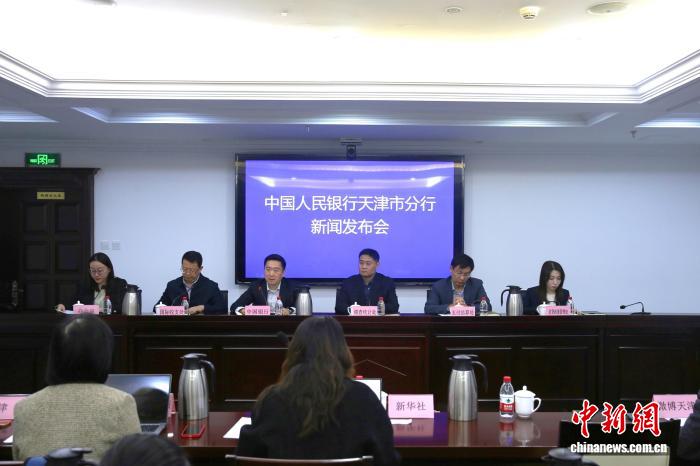
天津前三季度金融数据出炉 社会融资规模增量创同期新高
Zhong Guo Xin Wen Wang· 2025-10-30 11:49
Core Insights - Tianjin's financial indicators showed stable growth in the first three quarters of 2025, significantly supporting the recovery and high-quality development of the real economy [1][4]. Financial Data Summary - As of the end of September, the total deposit balance in Tianjin reached 5.00 trillion yuan, a year-on-year increase of 7.2%, with an increase of 265.28 billion yuan since the beginning of the year, which is 52.69 billion yuan more than the same period last year [3]. - Household deposits amounted to 2.58 trillion yuan, increasing by 151.74 billion yuan since the beginning of the year, with a year-on-year growth of 8.3% [3]. - Non-financial enterprise deposits reached 1.63 trillion yuan, up by 65.38 billion yuan since the beginning of the year, reflecting a year-on-year growth of 10.5% [3]. - The total loan balance in Tianjin was 4.82 trillion yuan at the end of September, with a year-on-year increase of 3.3% and an increase of 197.14 billion yuan since the beginning of the year [3]. - Loans to enterprises and institutions amounted to 3.67 trillion yuan, showing a year-on-year growth of 4.0% [3]. Sector-Specific Loan Growth - Notable growth in loans was observed in various sectors: industrial loans increased by 5.2%, accommodation and catering loans surged by 60.8%, and loans for information transmission, software, and IT services grew by 41.6% [3]. - Loans for scientific research and technical services rose by 41.5%, while education sector loans increased by 22.5% [3]. - In key areas, technology loans grew by 9.2%, loans for the elderly care industry surged by 123.5%, and digital industry loans increased by 28.0% [3]. Social Financing Scale - From January to September, the cumulative increase in social financing in Tianjin reached 436.75 billion yuan, which is 111.12 billion yuan more than the same period last year, marking a historical high [4]. - The financing for the real economy from banking institutions increased by 245.36 billion yuan, while net financing from corporate bonds rose by 20.22 billion yuan [4]. - Local government bond net financing increased by 142.12 billion yuan, and trust loans in off-balance-sheet financing rose by 59.23 billion yuan, which is 28.86 billion yuan more than the previous year [4].
9月末湖南存款余额8.89万亿元 同比增长7.8%
Zhong Guo Xin Wen Wang· 2025-10-29 10:23
Core Insights - The financial institutions in Hunan Province reported a total deposit balance of 8.89 trillion yuan (889.18 billion yuan) by the end of September, reflecting a year-on-year growth of 7.8% [1] - New deposits from January to September amounted to 656.7 billion yuan, which is an increase of 177.7 billion yuan compared to the previous year [1] - The loan balance reached 7.87 trillion yuan (786.58 billion yuan) by the end of September, with a year-on-year growth of 5.7% [1] Deposit Structure - All categories of deposits showed an increase, with personal deposits rising by 485.5 billion yuan, an increase of 47.2 billion yuan year-on-year [1] - Non-financial enterprise deposits increased by 40.5 billion yuan, up by 35.2 billion yuan year-on-year [1] - Fiscal deposits grew by 48.3 billion yuan, which is an increase of 19.5 billion yuan year-on-year [1] Loan Growth - The overall loan growth remained stable, with new loans totaling 428.1 billion yuan in the first three quarters [1] - Loans to enterprises showed a significant increase, with a year-on-year growth of 7.9%, surpassing the overall loan growth rate by 2.2 percentage points [1] - Short-term loans increased by 179.5 billion yuan, while medium to long-term loans rose by 191.6 billion yuan [1] Social Financing - The social financing scale maintained a high level, with an increase of 626.2 billion yuan from January to August [1] - Indirect financing contributed 353.4 billion yuan, while government bond financing added 251.8 billion yuan [1] Credit Structure Optimization - The growth rate of loans to the manufacturing sector continued to outpace overall loan growth, with a year-on-year increase of 8.9% [2] - Corporate credit loans also showed strong growth, with a year-on-year increase of 12.4%, exceeding the overall loan growth rate by 6.7 percentage points [2]